
Review · LANGTANG VALLEY TREKS
Langtang Valley Trek
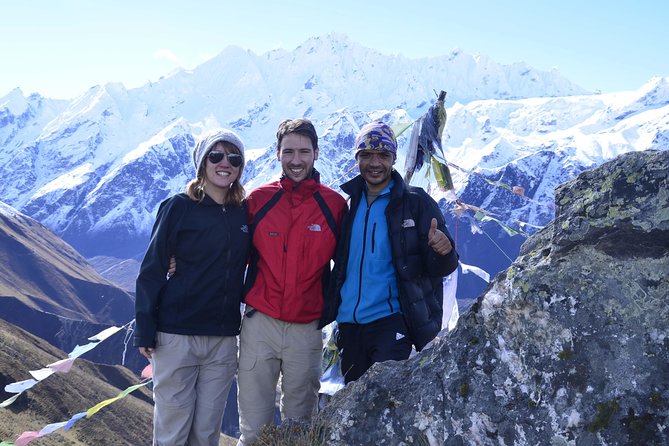
Langtang brings Himalayas close to village life. I love this trek’s Langtang National Park setting, and I love the way it spotlights Tamang communities as the trail climbs. This is the kind of trip where mountain views aren’t distant postcards; they’re part of daily life, from prayer walls to yak-milk cheese.
The trade-off is long walking days and basic lodge comfort, plus food isn’t included. If you go in with steady expectations about meals and effort, the whole route feels rewarding.
In This Review
- Key things you’ll really notice
- Langtang Valley Trek: why this route feels different
- Price and value: what $715.59 covers, and what it doesn’t
- Day 1 in Kathmandu: temples, Thamel, and a smooth landing
- Day 2: Kathmandu to Gatlang via Dhunche and Langtang National Park
- Days 3–5: forests, grassland views, and Tibetan-flavored Tamang villages
- Day 3: Gatlang to Nagthali
- Day 4: Thuman to Briddhim through rhododendron and meadows
- Day 5: Briddhim to Khanjum via Sherpa Gaun and prayer-marked trails
- Day 6: Sherpa Gaun to Langtang Village, plus the sound of the river
- Day 7: Langtang to Kyanjin Gompa, prayer walls and yak cheese
- Day 8: Kyanjin Gompa rest day, including the optional Tserko Ri climb
- Day 9: Kyanjin Gompa to Lama Hotel through dense forest
- Day 10: Lama Hotel to Syabrubesi and back to Kathmandu
- Day 11 in Kathmandu: Thamel time plus optional extras
- Day 12: departure support and airport transfer
- The guides: why names like Hari and Norris matter
- Altitude, pacing, and how to plan your effort
- What’s included (and what you should budget for)
- Who should choose the Langtang Valley Trek
- Should you book this trek?
- FAQ
- Do I need TIMS and a national park permit for this trek?
- What about food—are meals included?
- How many people are in the group?
- Is there an optional hike day at higher altitude?
- How does transportation work between Kathmandu and the trek?
- What’s the cancellation window for a full refund?
Key things you’ll really notice
- Private jeep transfers between Kathmandu and the trail start/end to reduce hassle
- Small group size (max 10 people) for a calmer pace and less crowding on tea-house hikes
- Permits handled and included, with a reminder to keep TIMS and your national park permit handy for the park gate
- Kyanjin Gompa altitude day plus an optional climb to Tserko Ri (5,000m)
- A guide-led culture focus, including Tibetan-influenced villages like Thuman, and monastery time
- Porter support (2 trekkers : 1 porter) so you’re not hauling everything yourself
More trails out of Kathmandu, boots ready
- Everest Base Camp Trek – 14 Days★ 5.0 · 1,499 reviews
- Everest Base Camp Trek★ 5.0 · 842 reviews
- Everest Base Camp Trekking★ 5.0 · 485 reviews
- Nagarkot Sunrise View and Day Hiking from Kathmandu★ 5.0 · 471 reviews
Langtang Valley Trek: why this route feels different
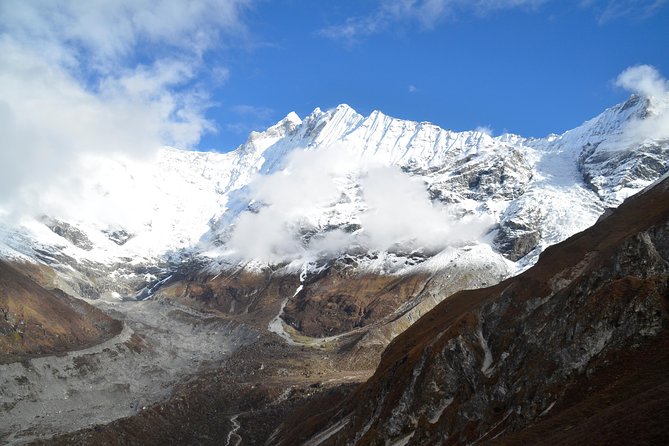
Langtang Valley is often described as the valley of glaciers, but what you’ll feel is more human than icy. The trail links mountain views with Tamang and Tibetan-influenced village life, so you’re always moving between scenery and people.
What also makes this trek stand out for me is the balance of days. You get a real uphill push (including steep, forested climbs), but you also get a rest day in Kyanjin Gompa and enough downhill sections to keep your legs functional.
And yes, the mountains are the headline here. You’re looking for Ganesh Himal, the Langtang Range, Sanjen ranges, and multiple Langtang peaks on good-visibility days—so bring layers for cold mornings and expect changing weather.
Price and value: what $715.59 covers, and what it doesn’t
At $715.59 per person for about 12 days, the value mostly comes from the logistics you don’t have to solve. This package includes private jeep transport (Kathmandu to Gatlang, and Syabrubesi back to Kathmandu), 8 nights of local lodge accommodation during the trek, and 3 nights in Kathmandu at Hotel Yatri Suites & Spa (or similar) on breakfast basis.
You’re also paying for the people who keep the trip smooth. An experienced English-speaking, government-licensed guide is included, along with porter service (2 trekkers to 1 porter). Permits matter in Nepal, and here you get Langtang National Park permits and TIMS included.
What’s not included is usually the biggest surprise: all food and drinks during the trek and Kathmandu time beyond the included breakfasts. Tipping isn’t included either. So you’ll want to budget for meals in the villages, not just the trek cost.
If you like a trip where someone handles the route, permits, and transport, this pricing structure makes sense. If you’re counting every rupee and already have your own systems for trekking, you might find cheaper alternatives—but they usually trade away support and included groundwork.
Day 1 in Kathmandu: temples, Thamel, and a smooth landing
Your first day is about getting oriented without rushing. After landing, you meet the operator’s representative with a name sign, then get transferred by private vehicle to your hotel.
On the way, you pass Pashupatinath Temple (UNESCO), and you get an outside view of the Narayanhity Royal Palace Museum. You’ll also spot the Garden of Dreams as you approach Thamel, which is a nice gentle way to see Kathmandu’s mix of old and everyday life.
This day is also where the operator helps you get set up for the trek. You’ll get assistance at the hotel and time to settle before the long drive the next morning.
Day 2: Kathmandu to Gatlang via Dhunche and Langtang National Park
Day 2 is a long travel day, but it’s not wasted time if you’re paying attention. You’ll take an 8–9 hour drive from Kathmandu to Gatlang, with big mountain views when the road climbs—Ganesh Himal, Manaslu, and Annapurna show up along the way.
There’s also an important admin moment built in. You’ll need your TIMS and Langtang National Park permit ready to show at the park gate before reaching Dhunche. Keeping those documents accessible saves stress later.
After that, you drive downhill for about an hour from Dhunche and reach Sayabru Besi (Sayabru Besi/Syabrubesi area). From there, the road leads into Langtang National Park, and settlements become less frequent as altitude increases.
You’ll end at Gatlang, a Tamang village with terraced hills and warm hospitality. This is a good first village step—enough to feel grounded, before you start stacking hiking days.




Days 3–5: forests, grassland views, and Tibetan-flavored Tamang villages
Day 3: Gatlang to Nagthali
This day turns from village to wilderness quickly. You hike from Gatlang to Nagthali, using a path that includes Chilime. Expect a thick forest stretch where Nepal gray langur monkeys are possible, followed by a more open grassland area.
The grassland is the payoff: wide views of Ganesh Himal, the Langtang Range, and the Sanjen ranges. When you reach Nagthali, you’re in a place that used to be a meditation center—so the atmosphere can feel more quiet and reflective than a typical mountain viewpoint.
Day 4: Thuman to Briddhim through rhododendron and meadows
Day 4 starts with a short downhill walk to Thuman (about an hour). Thuman is influenced by Tibetan culture, and the vibe here is different from the earlier valley areas.
Then you move into rhododendron forests and meadows toward Briddhim, another Tamang community with Tibetan influences. You also get cultural energy on this stretch—people there love singing and dancing, which is one of those things that makes the trek feel like more than exercise.
Day 5: Briddhim to Khanjum via Sherpa Gaun and prayer-marked trails
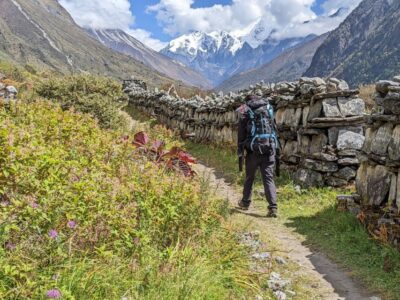
Day 5 has a bit more effort. You start from Briddhim and hike through forests, terraced fields, and villages like Sherpa Gaun, which sits higher and offers standout mountain views.
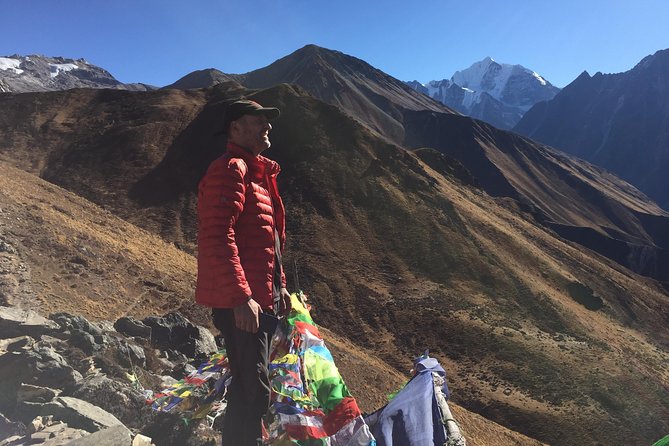
The trail is filled with religious trail markers: chortens, mani walls, and prayer flags. It’s generally rated moderate, and wildlife sightings are possible (birds and Himalayan monkeys are mentioned as potential sightings).
You’re also climbing into better view territory. On a good day, you should be able to see Langtang Lirung, Langtang II, Ganesh Himal, and other peaks in the Langtang range. This is a day where your camera battery and your warm layer should both be ready.
Day 6: Sherpa Gaun to Langtang Village, plus the sound of the river
Day 6 is one of the tougher hiking days. The route goes from Sherpa Gaun to Langtang Village, taking about 6–7 hours and gaining around 1,000 meters in total through a steep, forested slope.
The Langtang River sound stays with you, which helps you get through a climb. You’ll cross a refreshing stream and see water-driven prayer wheels, which are practical and spiritual at the same time.
When you arrive at Langtang Village, you’re in an old settlement with mountain views right in front of you. This is where you start understanding why “Valley of Glaciers” feels real: the surrounding peaks aren’t just visible—they’re looming.
Day 7: Langtang to Kyanjin Gompa, prayer walls and yak cheese
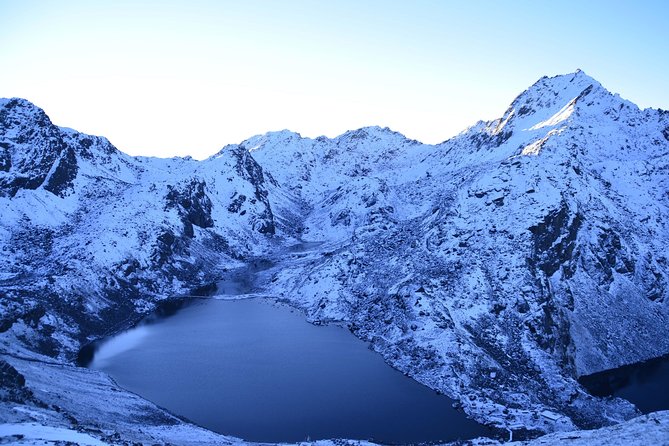
Day 7 shifts to a satisfying segment. You hike from Langtang to Kyanjin Gompa (about 3 hours in this itinerary), and the trail is scenic and textured.
You’ll see a big wall covered in prayers and writing on stones, plus several river crossings. In practical terms, this can be a little more tiring than the time estimate sounds—because footing and water crossings slow you down.
When you reach Kyanjin Gompa, it feels peaceful and focused. There’s also a food win: you can try cheese and curd made from yak milk, which is one of the best “taste the place” moments on this trek.
Day 8: Kyanjin Gompa rest day, including the optional Tserko Ri climb
Day 8 is a true breather, which matters because altitude has been building. You’ll relax, get used to being higher, and explore the area around Kyanjin Gompa.
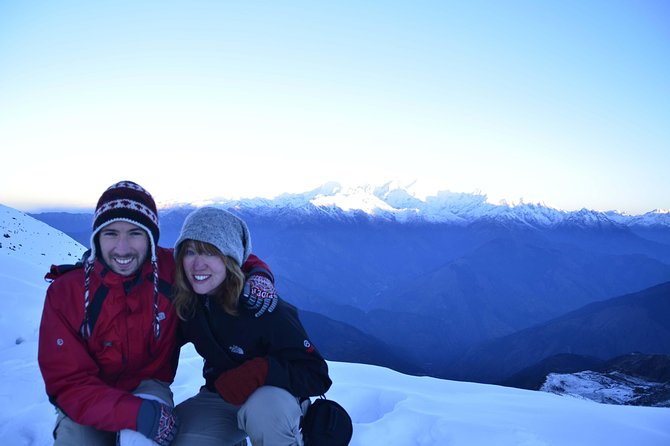
The optional highlight is a hike up to Tserko Ri (5,000m), the highest point mentioned for the trek. From the top, you can enjoy views of mountains, glaciers, and the Langtang Valley.
This day also includes other optional culture and food stops without extra cost: you can visit an ancient monastery, check out a cheese factory, and even see a glacier. Even if you don’t go to Tserko Ri, the area still gives you plenty to do.
Day 9: Kyanjin Gompa to Lama Hotel through dense forest
Day 9 is mostly downhill: Kyanjin Gompa to Lama Hotel takes about 6–7 hours. You’ll go through dense forest, and you’ll pass Tamang settlements shaped by Tibetan religious and cultural practices.
This is a good day to slow down and manage your knees. Downhill can feel easier than uphill, but it can also be harder on joints—so take it steady, especially with changing light and slick trail sections.
Day 10: Lama Hotel to Syabrubesi and back to Kathmandu
Day 10 ends the trek with a downhill push. You hike from Lama Hotel to Syabrubesi in about 3–4 hours, moving through lush green forest and getting your final valley views.
Then you switch back to comfort: a scenic drive from Syabrubesi to Kathmandu takes about 6–7 hours. This drive is long, so you’ll want to keep your layers handy and plan for a quiet ride.
Once you reach Kathmandu, you can finally treat sore legs like sore legs instead of trying to power through the day.
Day 11 in Kathmandu: Thamel time plus optional extras
Day 11 is free time in Kathmandu. You can rest, wander Thamel, and shop for souvenirs—this is the easiest day to turn the trip into something personal.
There are also optional activities listed:
- full-day Kathmandu sightseeing
- a Mountain Flight (Everest Flight)
- a Nepal food cooking workshop
- a momo cooking workshop
- a handicraft tour
This is also where guide-style explanations can really help. If you’re the type who likes context, ask your guide for practical recommendations the night before, so you don’t just move through the city blindly.
Day 12: departure support and airport transfer
Your final day ends after breakfast. You’re advised and assisted with onward travel arrangements and transferred to Tribhuvan International Airport by private vehicle about 3 hours before your flight.
It’s a small detail, but it matters. When you’ve just finished a trek, not having to figure out transport timing is a real relief.
The guides: why names like Hari and Norris matter
The trekking guide is a big deal on this kind of route, because you’re moving through both nature and culture. In this operator’s past experiences, guides like Hari have been praised for making the tour feel smooth through strong local insight. Another guide, Norris, has been recognized for leading groups through Langtang well and adjusting to what the hike needs at the time.
You’ll still do the work on your own legs, of course. But a good guide helps you understand what you’re seeing—prayer flags, meditation sites, monastery areas, and why certain communities live where they do.
Also, with a maximum of 10 people, you’re less likely to feel like you’re moving in a chain. That makes it easier to keep your pace and ask questions without getting rushed.
Altitude, pacing, and how to plan your effort
This itinerary includes a planned high optional hike: Tserko Ri at 5,000m. It’s also a trek that includes steep climbing on at least one day (about 1,000m of gain on Day 6).
The good news is that the schedule includes a rest day in Kyanjin Gompa. That’s not just a comfort perk; it’s a smart pressure-release valve for your body.
Your best strategy is boring and effective:
- walk slow and consistent, not fast
- drink regularly even when you don’t feel thirsty
- keep warm layers accessible for mornings and transitions
Since food isn’t included for the trek, plan to eat when you can and don’t rely on one perfect meal to carry you. Tea-house trekking works, but you still need calories.
What’s included (and what you should budget for)
Included highlights:
- Private jeep transfers: Kathmandu to Gatlang and Syabrubesi to Kathmandu
- 8 nights in local lodges during the trek
- 3 nights in Kathmandu at Hotel Yatri Suites & Spa (or similar) with breakfast
- Government-licensed English-speaking guide
- Porter service (2 trekkers : 1 porter)
- Langtang National Park permits and TIMS, plus local taxes
- Breakfast (listed as 3) plus Kathmandu breakfast basis
- Mobile ticket and optional pickup
Not included (budget for these):
- All food, drinks, and beverages during the trip
- Tipping for guide, driver, and support staff
- International flights and visa
- Travel insurance and any emergency rescue insurance
- Personal gear and personal hiking supplies
- Temple/school/monastery donations if you choose to make them
Who should choose the Langtang Valley Trek
This trek fits you well if you want:
- mountain views with cultural stops rather than only point-to-point hiking
- Tamang and Tibetan-influenced village experiences (Thuman, Briddhim, monastery time)
- a manageable group setting (up to 10 people) and porter support
- at least one optional big view day, especially if you want Tserko Ri
It may be less ideal if you prefer a fully supported, all-meals-included hiking package or if you hate long driving days. You’ll have real travel time before and after the trek, plus multiple hiking days ranging from about 3 hours to 7 hours.
Should you book this trek?
I’d book it if you want Langtang’s mix of glacier-style mountain drama and real village rhythms—especially with a guide who can explain what you’re seeing and a small group that keeps the trek from feeling crowded.
If you’re sensitive to effort, bring a realistic mindset: this is a hike with steep climbing, river crossings, and a high optional viewpoint. If you’re ready for that, the payoff is practical and memorable—prayer-marked trails, monasteries, and yak dairy in the quiet of Langtang.
FAQ
Do I need TIMS and a national park permit for this trek?
Yes. The route notes that you should keep your TIMS and Langtang National Park permit handy, because you’ll need to show them at the park gate before reaching Dhunche. The permits are included in the package.
What about food—are meals included?
No. All food, drinks, and beverages are not included. Breakfast is included for part of the trip, and Kathmandu lodging is on a breakfast basis.
How many people are in the group?
The trek has a maximum of 10 people.
Is there an optional hike day at higher altitude?
Yes. On the rest day in Kyanjin Gompa, you can choose to hike to Tserko Ri, which is listed as the highest point of the trek at 5,000m.
How does transportation work between Kathmandu and the trek?
You get private jeep transfers from Kathmandu to Gatlang and from Syabrubesi back to Kathmandu. The driving time is listed as roughly 8–9 hours to Gatlang and about 6–7 hours back to Kathmandu.
What’s the cancellation window for a full refund?
You can cancel up to 6 days in advance of the experience for a full refund. To receive a full refund, you must cancel at least 6 full days before the experience’s start time.
More Trekking Out of Kathmandu






More Tour Reviews in Kathmandu




Just Reviewed in Kathmandu
- Mountain Bike Tour
★ 5.0 · 3 reviews - Annapurna Panaroma
★ 5.0 · 3 reviews - Mount Everest Scenic Flight 50 Minutes
★ 5.0 · 3 reviews - Kathmandu : Swambhunath & Durbar Square Guided Half Day Tour
★ 3.3 · 3 reviews - Chandragiri Cable Car & Monkey Temple Tour – Private/Group
★ 5.0 · 3 reviews - Kathmandu: Shivapuri National Park Hiking Day Trip
★ 3.3 · 3 reviews
Langtang Valley Treks, compared.
 ★ 5.0Langtang Valley TrekFrom $555140 reviews
★ 5.0Langtang Valley TrekFrom $83061 reviews
Langtang Valley TrekFrom $70050 reviews
 ★ 5.08 Days Tour in Langtang Valley TrekFrom $69845 reviews
 ★ 5.0Private 8 – Day Langtang TrekkingFrom $58429 reviews
★ 5.0Langtang Valley TrekFrom $1,00023 reviews
 ★ 5.06-Day Limitless Langtang TrekFrom $18121 reviews
★ 5.0Langtang Valley TrekFrom $56020 reviews
Browse the lists this tour appears in