
Review · MARDI HIMAL TREKS
Mardi Himal Base Camp Trek -9 Days
Mardi Himal Base Camp delivers big mountains on a short schedule. I like how this trek brings you into Gurung-culture country without dragging on for weeks, and how the route keeps turning up sharp views of Machhapuchhre (Fishtail) and the Annapurna massif. The one real heads-up: the climb toward High Camp and then on to base camp is steep enough that you’ll feel it in your legs, not just your lungs.
What makes it workable is the support system. You get hotel stays in Kathmandu and Pokhara, lodge/tea house accommodation on trek, meals, and an experienced guide plus a porter setup (1 porter for 2 clients). Permits and paperwork are handled too, including TIMS and ACAP, so you spend your energy on the trail—not forms.
In This Review
- Key highlights worth planning for
- Why Mardi Himal Base Camp feels different in the Annapurna region
- The main consideration: altitude, not distance
- Price and logistics: what $900 really covers
- Kathmandu to Pokhara: the “warm-up” legs you shouldn’t skip
- Where Pokhara helps you
- Day-by-day feel of the trek: what each section does to your body
- Kande to Pitam Deurali: forests and first real ascent
- Pitam Deurali to Forest Camp (via rhododendron and oak)
- Forest Camp to High Camp: where the trek turns serious
- High Camp to Mardi Himal Base Camp: close views near the snowline
- The descent to Siding village: views fade, culture steps in
- Your knees will have opinions
- Road days back to Kathmandu: a long finish with a smooth end
- How this tour staff supports you (and why it shows up in the reviews)
- What to pack and how to think about effort (so you enjoy it more)
- Who should book this Mardi Himal Base Camp trek
- Should you book?
- FAQ
- FAQ
- How long is the Mardi Himal Base Camp trek?
- Where does the tour start and when?
- What’s included in the trek meals and accommodation?
- Do I need to arrange permits for TIMS and ACAP?
- Is there guide and porter support?
- Are hotel stays included before and after the trek?
- Is the trek food vegetarian-friendly?
- What about a Nepal visa and international flights?
- Is travel insurance included?
- What’s the cancellation policy?
Key highlights worth planning for
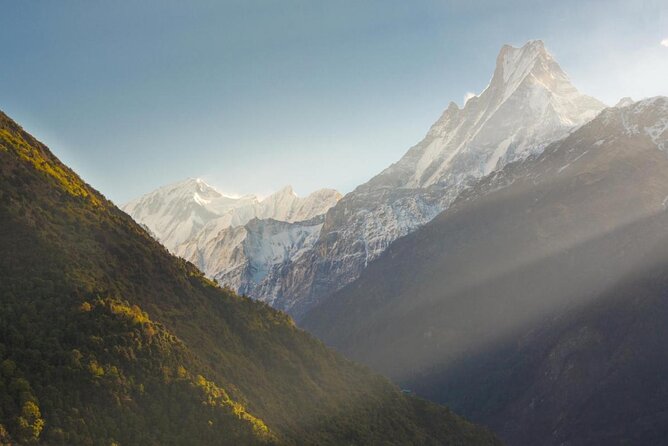
- Close-up views of Machhapuchhre and Mardi Himal from the higher camps
- Gurung culture in Siding village at the end of the trek
- Tea house/lodge stops with included meals so you’re not negotiating food every day
- Guide + porter staffing (1 porter for 2 clients) to keep you moving steadily
- Permits and paperwork handled (TIMS and ACAP included)
- A well-timed road plan: Kathmandu to Pokhara, then back, plus transfers to the trek start
More trails out of Kathmandu, boots ready
- Everest Base Camp Trek – 14 Days★ 5.0 · 1,499 reviews
- Everest Base Camp Trek★ 5.0 · 842 reviews
- Everest Base Camp Trekking★ 5.0 · 485 reviews
- Nagarkot Sunrise View and Day Hiking from Kathmandu★ 5.0 · 471 reviews
Why Mardi Himal Base Camp feels different in the Annapurna region
If you’re aiming for a classic Annapurna-area trek but don’t want the longest, most crowded slog, Mardi Himal is a smart target. This route takes you to the east of the Annapurna range, putting the Annapurna scenery and Mt. Machhapuchhre in your line of sight as you gain altitude. It’s also known as a relatively short adventure—meaning you still get the altitude pay-off, but you’re not stuck out there for many more days than you expected.
Culturally, it’s also not just a mountain stamp. At the end, you drop into Siding village and get time with local life—exactly the kind of human scale that makes trekking feel like travel, not just exercise. And yes, you’ll still earn the views. But the pace and support help you do it without turning every step into a life-or-death negotiation.
The main consideration: altitude, not distance
The trek length is manageable on paper, but your body still has to adjust to elevation. The biggest jump happens as you move up to High Camp and then push to Mardi Himal Base Camp. That final climb is steep over rugged terrain, and the best way to handle it is simple: take your time, sip water, and follow your guide’s pacing. If you’re expecting “easy” to mean “effortless,” you’ll be disappointed.
Price and logistics: what $900 really covers
At $900 per person, the value is mostly in the structure. You’re not just paying for a path; you’re paying for a whole operating system that runs daily without you micromanaging it.
Here’s what’s included that matters:
- Airport pickup and hotel transfer in Kathmandu
- Two nights 3-star hotel in Kathmandu with breakfast
- Two nights 3-star hotel in Pokhara with breakfast
- Lunch, dinner, and breakfast during the trek
- Guide and porter support (1 porter for 2 clients)
- All accommodations in lodges/tea houses during trekking
- TIMS permit + ACAP permit and handling of paper work
- First aid kit / medical supplies
- Duffle bag (returned after the trek)
- Company T-shirt
- Farewell dinner with authentic Nepalese food and cultural performance
- Government taxes
- Ground transport support: road travel between Kathmandu/Pokhara, plus private rides for key trek access legs
What’s not included (and you should plan for it):
- Nepal visa fee (you can get it in Kathmandu airport)
- International flights
- Travel and rescue insurance
- Personal expenses (phone use, laundry, drinks, battery charging, extra water/shower items)
- Tips for guide and porter
My practical take: the cost makes sense if you want a smooth, pre-arranged plan where permits, meals, and trek logistics are handled. If you prefer total DIY freedom (your own permits, your own route planning, your own gear strategy), you might find cheaper options—but you’d be trading that convenience for extra work and risk.
Kathmandu to Pokhara: the “warm-up” legs you shouldn’t skip
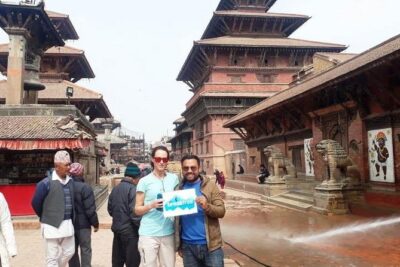
The itinerary starts with landing at Tribhuvan International Airport and being met for a hotel transfer in Kathmandu. That first evening is less about sightseeing and more about getting your bearings, meeting your trek group, and sorting out gear so you can sleep well.
Then comes the road transfer to Pokhara—about 6–7 hours and roughly 200 km of scenery and valleys. It’s long, but it’s also useful. You’re waking up your travel rhythm and settling in before you start hiking day after day.
Where Pokhara helps you
Pokhara is your altitude buffer zone. The trek begins after additional transfers to reach the trailhead area, so those hotel nights also give you a chance to rest, eat well, and avoid the classic mistake of starting your first hike exhausted.
Also, if you’re the type who likes a little context while traveling, some groups have added a Kathmandu guided day with Mr. Kapil (mentioned as knowledgeable in a Kathmandu city tour). If that kind of add-on is available for your travel dates, it can be a nice way to understand what you’re seeing before you disappear into the mountains.
Day-by-day feel of the trek: what each section does to your body
Below is the core progression, with what to expect and what makes each step meaningful.
Kande to Pitam Deurali: forests and first real ascent
You’ll transfer from Pokhara to Kande (around 822 m), then start trekking to Pitam Deurali (around 2,100 m). This leg is about 5.6 km and usually takes 3–4 hours.
What you’ll notice most: the trail rises steadily, with dense forest and occasional openings where mountain views start to show. This is a great first-day climb because it gets your body working without throwing you into the highest altitude too fast.
Practical tip: keep your breathing calm early. If you spend Day 1 power-walking like you’re chasing a bus, you’ll pay for it on the steeper days.
Pitam Deurali to Forest Camp (via rhododendron and oak)
Next you hike from Pitam Deurali to Forest Camp (about 2,500 m). Expect roughly 6.4 km and 5–6 hours. This section is known for rhododendron and oak along the route, and it tends to feel quieter and more “inside the Nepal” than the trail-adjacent edges.
If you’re lucky with timing, this is where the season shows up. Rhododendron is specifically mentioned in the trekking experience, and that’s one of the reasons some hikers call Mardi Himal more relaxing and flower-filled than certain other Annapurna routes.
What to watch: the trail can be steep and narrow at times. Foot placement matters more than speed here. Make a habit of stepping deliberately rather than bouncing over rocks.
Forest Camp to High Camp: where the trek turns serious
From Kokar / Forest Camp at about 2,500 m you’ll move up to High Camp around 3,600 m. This leg is about 7.2 km and can take 5–6 hours.
Here’s what changes:
- The climb gets steeper
- The vegetation starts thinning as you rise
- Views start getting more frequent—Machhapuchhre, Mardi Himal, and Annapurna South show themselves when the trail opens
This is the day your legs learn the routine for the rest of the trek. You’ll want steady pace, good hydration, and layers that you can adjust as you warm up.
High Camp to Mardi Himal Base Camp: close views near the snowline
Then comes the crown move: High Camp (3,600 m) to Mardi Himal Base Camp at about 4,450 m. It’s only about 4 km one way, but it usually takes 3–4 hours because the terrain is rugged and the climb is steep.
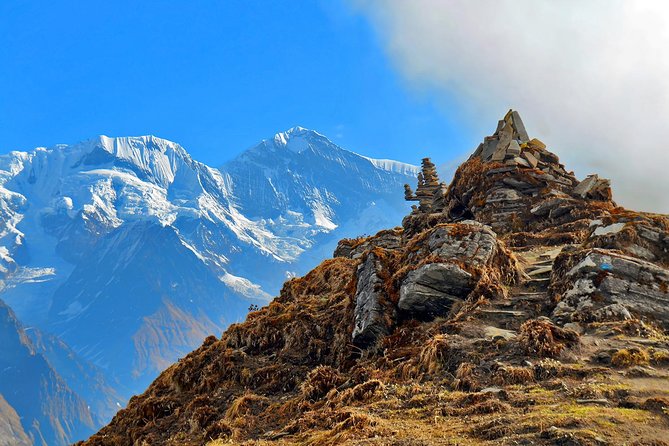
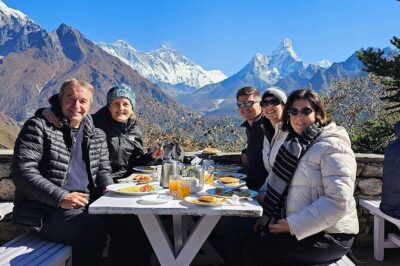
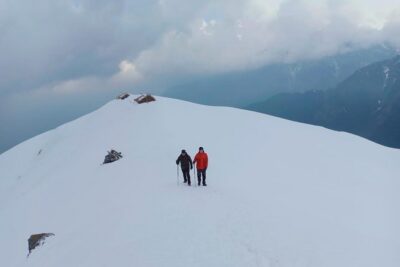
This section is where you’re most likely to feel your altitude. The trail transitions from grassy alpine meadows to rocky paths as you get closer to the snowline. And when the view opens, it’s the kind of sight that makes you stop and quietly stare.
Expect strong views of:
- Annapurna South (7,219 m)
- Machhapuchhre (6,997 m)
- Annapurna I (8,091 m)
…and also Hiunchuli in the broader panorama.
If you’re using base camp as a photo moment, don’t rush it. Spend time breathing, snacking, and letting your eyes adjust. You want to enjoy the views without turning your arrival into a sprint.
The descent to Siding village: views fade, culture steps in
After base camp, the trek’s energy shifts from high-altitude effort to a long, satisfying drop. The descent described runs from around 10,500 ft (3,200 m) down toward 5,250 ft (1,600 m) to reach Siding village.
This downhill is about 7 km and roughly 4–5 hours. The trail is mostly downhill, passing through forested sections, terraced farmlands, and traditional villages.
This is where your perspective changes. You’ve been staring up for days; now you look around. And in Siding village, you get time with local Gurung culture and lifestyle, which is a big part of why people recommend this trek as more than just a mountain mission.
Your knees will have opinions
Downhill is often harder on joints than uphill is on breath. Bring trekking poles if you have them. Shorten your stride. Let your legs work, but don’t let gravity do all the pushing for you.
Road days back to Kathmandu: a long finish with a smooth end
After you reach the lower village and you’re done trekking, you head back toward Pokhara by private vehicle, then return to Kathmandu by road.
The drive from Pokhara to Kathmandu is typically 6–8 hours (about 200 km) along the Prithvi Highway. You’ll see valleys, rivers, terraced fields, and occasional mountain glimpses if visibility is good.
The final day includes an airport escort. The representative meets you and helps you arrive about 3 hours before flight time—enough buffer for check-in and security. It’s a small thing that reduces stress, which I appreciate after a week of hiking.
How this tour staff supports you (and why it shows up in the reviews)
One of the most praised parts of this experience is human: guide quality and porter support. Names that show up include Prakash and Lakpa, and there are references to Badri as well. The common thread in those mentions is that the guide is patient, helpful, and good at keeping the day moving at a safe pace.
Porters matter here because they handle a lot of the weight logistics. With 1 porter for 2 clients, you’re not stuck carrying everything yourself, and it helps you keep your energy for the steep parts. That doesn’t remove effort, but it changes the type of effort you feel.
You also get systems: permits, paper work, meals, and lodge arrangements are handled. In trekking terms, that means less decision fatigue when your brain is tired from altitude.
What to pack and how to think about effort (so you enjoy it more)
Your physical fitness target should be “moderate,” not “athlete.” The route is active, and some days take 5–6 hours in steep terrain, but it’s built around gradual progression and supported pacing.
A few thoughts that help:
- Plan for the fact that steep segments matter more than total miles
- Wear layers so you can cool down or warm up on the trail
- Expect the weather to shift with altitude
- Keep your pace controlled on climbing days; save energy for the base camp push
There’s also seasonal variation. Monsoon timing has been mentioned in the trek experience, which suggests the route can be operated in wet conditions. Still, rainy weather can mean mud, slippery footing, and cloudier views. If you want the clearest sky, one review points to October as especially good, with bright sunny conditions and strong visibility.
Who should book this Mardi Himal Base Camp trek
This trek is a great fit if:
- You want an Annapurna-region trek that’s still short enough to manage
- You care about mountain views that include Machhapuchhre
- You want the trek to end with village culture in Siding
- You prefer guided logistics (permits, meals, lodging arranged)
- You like the idea of staying in hotels in Kathmandu and Pokhara before the hike starts
It may be less ideal if:
- You’re highly sensitive to altitude and don’t have experience trekking at elevation
- You expect “easy” in the sense of gentle grades every day
- You hate long road transfers between cities
Should you book?
I’d book this trek if you want a well-run Mardi Himal adventure that balances effort with support. The best reasons to choose it are practical: permits and meal/lodge logistics are included, you have a guide and porter setup, and the itinerary takes you to a real base camp with the kind of views that justify the hike.
If you’re debating between DIY and guided: guided wins here because the included structure reduces stress when your body is working hard. Just be honest about the steep climb days, take your time, and treat the descent with respect for your knees.
FAQ
FAQ
How long is the Mardi Himal Base Camp trek?
It’s a 9-day experience, including travel days and the trek itself (approximate).
Where does the tour start and when?
It starts back at the Tribhuvan International Airport (Ring Rd, काठमाडौँ 44600, Nepal) area. The listed start time is 7:00 am.
What’s included in the trek meals and accommodation?
You get lunch, dinner, and breakfast during the trek, plus lodges/tea house accommodations while trekking.
Do I need to arrange permits for TIMS and ACAP?
No. The tour includes TIMS permit and ACAP permit, along with the necessary paper work.
Is there guide and porter support?
Yes. You’ll have an experienced guide and a porter with a 1 porter for 2 clients setup.
Are hotel stays included before and after the trek?
Yes. It includes two nights of 3-star hotel in Kathmandu with breakfast and two nights of 3-star hotel in Pokhara with breakfast.
Is the trek food vegetarian-friendly?
A vegetarian option is available. You should advise the operator at booking if you need it, plus any dietary requirements.
What about a Nepal visa and international flights?
The Nepal visa fee is not included, and you’ll need to arrange international air fare to and from Kathmandu.
Is travel insurance included?
No. Travel and rescue insurance is not included, and you should arrange it yourself.
What’s the cancellation policy?
You can cancel for a full refund up to 24 hours in advance. If you cancel less than 24 hours before the start time, the amount paid is not refunded.
More Trekking Out of Kathmandu
More Tour Reviews in Kathmandu
Just Reviewed in Kathmandu
- Mountain Bike Tour
★ 5.0 · 3 reviews - Annapurna Panaroma
★ 5.0 · 3 reviews - Mount Everest Scenic Flight 50 Minutes
★ 5.0 · 3 reviews - Kathmandu : Swambhunath & Durbar Square Guided Half Day Tour
★ 3.3 · 3 reviews - Chandragiri Cable Car & Monkey Temple Tour – Private/Group
★ 5.0 · 3 reviews - Kathmandu: Shivapuri National Park Hiking Day Trip
★ 3.3 · 3 reviews
Mardi Himal Treks, compared.
 ★ 5.0Mardi Himal TrekFrom $1,05841 reviews
 ★ 5.0Mardi Himal Trek NepalFrom $75029 reviews
 ★ 5.0Mardi Himal Trek – 8 Days | Hidden Gem of the AnnapurnasFrom $66619 reviews
★ 5.0Mardi Himal TrekFrom $82113 reviews
★ 5.0Mardi Himal Trek – 8 Days | Hidden Gem of the AnnapurnasFrom $66619 reviews
★ 5.0Mardi Himal TrekFrom $82113 reviews
 ★ 5.0Mardi Himal TrekkingFrom $86613 reviews
 ★ 5.0Mardi Himal Trek – 12 DaysFrom $98012 reviews
 ★ 5.04 Days Mardi Himal Base Camp Trek – 4500 MetersFrom $2609 reviews
★ 5.0Mardi Himal TrekFrom $5109 reviews
★ 5.04 Days Mardi Himal Base Camp Trek – 4500 MetersFrom $2609 reviews
★ 5.0Mardi Himal TrekFrom $5109 reviews
Browse the lists this tour appears in