
Review · MARDI HIMAL TREKS
Mardi Himal Trek
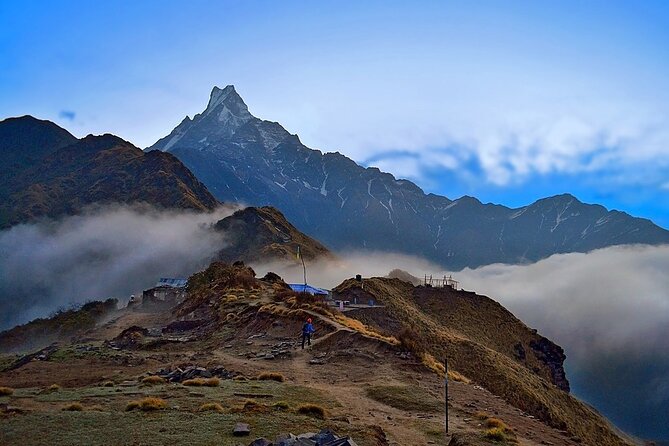
Mardi Himal hits hard in just a few days. This trek is popular because you get giant Himalayan views without spending a month on the trail, and the elevations step upward in a way that keeps the trip feeling focused. One thing I like is the route design: you go from lower foothills to serious heights quickly, then you drop back down and finish with an easier day into Pokhara.
I also like how well run this setup appears to be. Mosaic Adventure keeps the group small (up to 12 trekkers) and the experience centers on a guide and porter team—people have mentioned guides like Purna, Nabin, Keshab, Krishna, and Sondosh, with porters such as Ram and Hari, and they consistently come across as organized and supportive.
The main drawback to think about is altitude. You’ll reach 4500m for the viewpoint on day 4, so even with staged days, you still need solid moderate fitness and a realistic pace. If you hate heights or you get breathless easily, you’ll want to plan carefully.
In This Review
- Key things to know before you go
- Why Mardi Himal feels like the best-value Himalayan trek
- Day-by-day: what each stage actually does for you
- Day 1: Pokhara to Pitam Deurali (2100m)
- Day 2: Pitam Deurali to Forest Camp (2550m)
- Day 3: Forest Camp to High Camp (3580m)
- Day 4: High Camp to View Point (4500m) and back to Low Camp (2990m)
- Day 5: Low Camp to Siding Village (1280m), then Pokhara
- Meals, guide support, and what you’re paying for
- Group size and pace: small enough to care, big enough to feel safe
- Where the trek delivers the most value: the viewpoint day
- Logistics: how the trek starts and how it wraps up
- Should you book the Mardi Himal Trek with Mosaic Adventure?
- FAQ
- What is the duration of the Mardi Himal Trek?
- What does the price include?
- What is not included in the trek?
- Where is the meeting point and what time does the trek start?
- What fitness level do I need?
- Can I cancel for a full refund?
Key things to know before you go
- Short trek, big altitude jump: the route climbs from 2100m to a 4500m viewpoint fast.
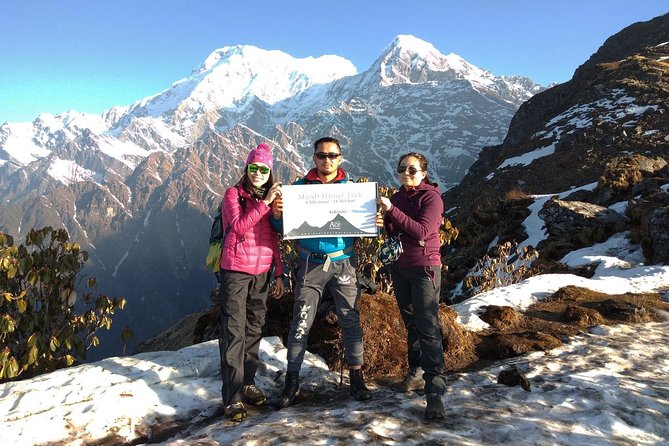
- Small group trekking: maximum of 12 travelers, so you’re not lost in a crowd.
- Food and essentials are mostly handled: guide plus meals are included; beverages aren’t.
- A real viewpoint day: day 4 includes the viewpoint and a return to lower camp the same day.
- Professional guide + porter support: multiple guide and porter names show up in strong feedback.
- Simple start and end: pickup is offered, and it ends back at the meeting point.
More trails out of Kathmandu, boots ready
- Everest Base Camp Trek – 14 Days★ 5.0 · 1,499 reviews
- Everest Base Camp Trek★ 5.0 · 842 reviews
- Everest Base Camp Trekking★ 5.0 · 485 reviews
- Nagarkot Sunrise View and Day Hiking from Kathmandu★ 5.0 · 471 reviews
Why Mardi Himal feels like the best-value Himalayan trek
Mardi Himal is one of those Nepal routes that surprises people. In a short window—about 5 days—you cycle through multiple elevations and keep seeing big peaks. The payoff is that you spend less time traveling between distant points and more time on the mountains themselves.
The trek’s “best overall” reputation makes sense when you look at the pacing. Day 1 starts at Pitam Deurali (about 2100m) after a drive from Pokhara and a few hours of walking. Day 2 rises to Forest Camp (about 2550m), day 3 climbs to High Camp (about 3580m), and day 4 pushes up to the viewpoint (about 4500m). That’s a tight vertical story.
And that’s where the value comes in. You’re not paying for a long itinerary just to keep moving. You’re paying for a guided route that focuses on the main elevation beats.
Day-by-day: what each stage actually does for you
Day 1: Pokhara to Pitam Deurali (2100m)
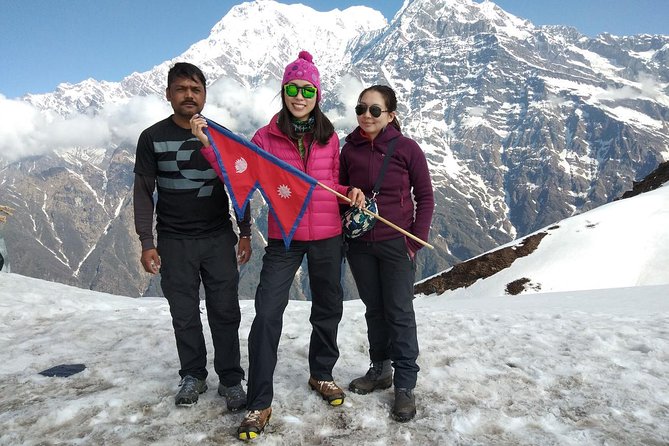
You start at 8:15am from Mosaic Adventure in Kathmandu, and the program includes pickup offered. From there, you’ll head to Pokhara, then transfer to the trailhead near Pitam Deurali. Expect about 1 hour driving and around 3.5 hours trekking to reach Pitam Deurali at roughly 2100m.
This first day matters more than it sounds. It gets your legs going without jumping too high too fast. It also sets you up for the next camp, since Forest Camp is at 2550m.
Day 2: Pitam Deurali to Forest Camp (2550m)
Day 2 is a steady climb to Forest Camp at about 2550m, with roughly 4 hours trekking. This is your “wake up to altitude” day. If you take your time, you’ll feel the change more in your breathing than in anything technical.
The benefit here is rhythm. You’re not sprinting to the highest point on day 2, so you have a night at an intermediate elevation before the longer push.




Day 3: Forest Camp to High Camp (3580m)
This is the heavy walking day. You climb to High Camp at about 3580m over roughly 6.5 hours of trekking.
For many people, this is where the trek stops feeling like a warm-up. You’ll want to pace yourself—slow steps win at altitude. Also, since you’ll be doing the viewpoint day next, getting sleep and keeping your energy steady becomes part of the plan.
The upside: once you reach High Camp, your “big views” time starts feeling real, because you’ve already done the hard climb.
Day 4: High Camp to View Point (4500m) and back to Low Camp (2990m)
Day 4 is a two-part mission. You trek from High Camp up to a View Point at about 4500m, then continue down and return to Low Camp around 2990m. Total time is about 6 hours.
This is the day you’ll remember. The viewpoint hike can feel short on the clock and big on the effort, because you’re climbing to the highest elevation of the trek. Then the return to Low Camp brings relief—not just for your legs, but for your breathing too.
If you’re thinking of energy management, this is where you do it. Save your focus for the viewpoint push, then let the descent do its job.
Day 5: Low Camp to Siding Village (1280m), then Pokhara
The final day mixes walking and travel. You’ll go from Low Camp down to Siding Village at about 1280m (around 4 hours), then continue to Pokhara for about 3 hours.
The big win here is the drop in elevation. After day 4’s peak, day 5 feels like recovery by design. You’ll finish this trek feeling like you actually returned to earth, not just survived it.
Meals, guide support, and what you’re paying for
This trip includes a clear set of meals: breakfast (4), lunch (5), and dinner (4). It also includes the guide and all fees and taxes. That matters because trekking costs can get messy when you’re constantly paying “extra” for core items.
What’s not included is beverages (think tea/coffee and bottled water) and tipping. In other words, you’ll still want some cash or card options for drinks and gratuities.
The price is $510 per person, and for a guided trek with meals and fees included, it lands in the “fair and practical” category. The key is that you’re also paying for human support: guide navigation, camp logistics, and porter help.
And the strong feedback on the team is a big deal. People specifically named guides like Purna (with porter Ram), Nabin, Keshab, Krishna (with porter Hari), plus others such as Sondosh. Across these names, the common thread is that the team feels professional and supportive, not robotic.
Group size and pace: small enough to care, big enough to feel safe
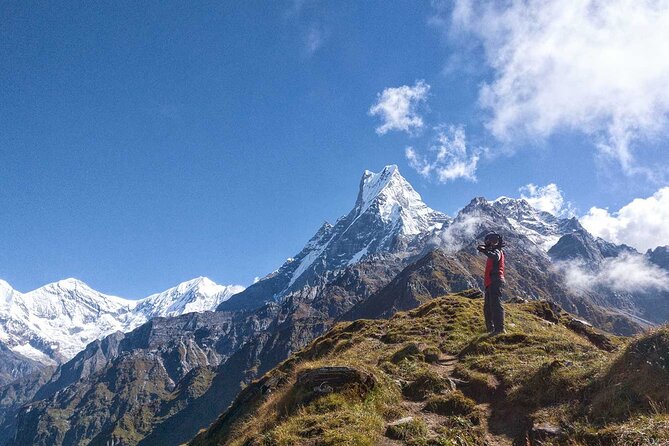
You’ll be with a maximum of 12 travelers. That’s a sweet spot on a trek like this. You’re not going to be stuck waiting forever, but you also won’t feel like you’re hiking alone.
A smaller group also makes it easier for the guide to adjust pacing. On a short high-elevation trek, that adjustment can be the difference between pushing too hard and ending the day with enough energy for the next climb.
Where the trek delivers the most value: the viewpoint day
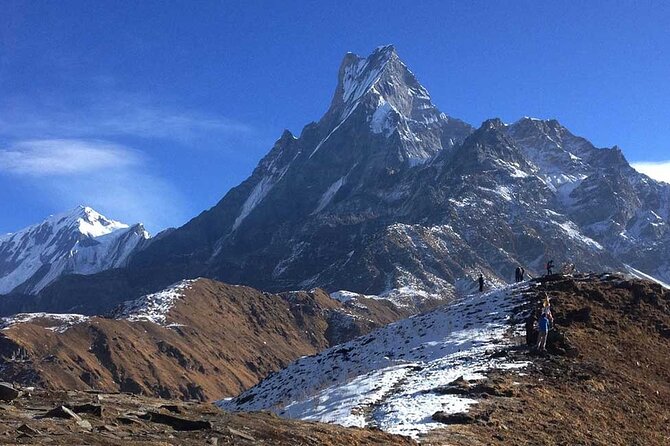
Many treks highlight views, but the View Point at 4500m is the standout anchor here. It’s not the first or second day when you’re still warming up. It’s day 4, after you’ve already climbed through Forest Camp and High Camp.
That sequencing changes how you experience the landscape. You’ve earned it. And because day 4 includes the viewpoint and then the return to Low Camp (2990m), the day is efficient: you get the big moment and you also get yourself back down where you can sleep well.
If you’re deciding between routes, this is one of Mardi Himal’s strongest selling points: you’re targeting the wow-factor at the peak day and managing the descent immediately afterward.
Logistics: how the trek starts and how it wraps up
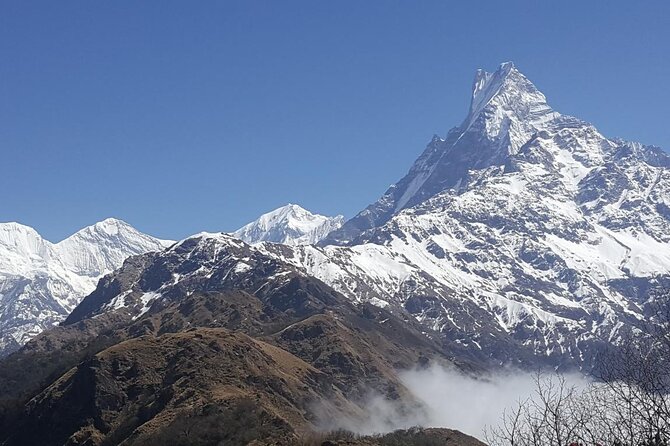
Your meeting point is Mosaic Adventure at Chi Bahal, अद्वैत मार्ग, काठमाडौँ 44600, Nepal, and the start time is 8:15am. The activity ends back at the same meeting point, which helps if you don’t want to re-plan transport.
You may have pickup offered and a mobile ticket. Confirmation is received at booking, and the trek is set up for travelers with moderate physical fitness.
One practical note: because drinks aren’t included, budget a little for hydration and warm drinks during breaks. On higher days, you’ll appreciate having something comforting.
Should you book the Mardi Himal Trek with Mosaic Adventure?
Book it if you want the best mix of serious mountain scenery and a short, structured trek. The route’s stages make sense, the team support seems strong, and the included meals and fees reduce the usual budgeting stress.
Pass if you’re very sensitive to altitude or you’re not comfortable walking multiple long days (especially day 3 at about 6.5 hours and day 4 with the viewpoint push). Also, if you hate the idea of managing your own beverages and tipping, factor that into your total comfort and budget.
FAQ
What is the duration of the Mardi Himal Trek?
The trek is listed as 5 days (approx.).
What does the price include?
It includes a guide, all fees and taxes, and meals: lunch (5), dinner (4), and breakfast (4).
What is not included in the trek?
Beverages (tea/coffee, bottled water, etc.) and tipping are not included.
Where is the meeting point and what time does the trek start?
The start is at Mosaic Adventure, Chi Bahal, अद्वैत मार्ग, काठमाडौँ 44600, Nepal, with a start time of 8:15am. The experience ends back at the meeting point.
What fitness level do I need?
The trek is for travelers with moderate physical fitness.
Can I cancel for a full refund?
Yes. You can cancel up to 3 days in advance of the experience for a full refund (cut-off times are based on local time). If you cancel less than 3 full days before the start time, the amount paid is not refunded.
More Trekking Out of Kathmandu






More Tour Reviews in Kathmandu




Just Reviewed in Kathmandu
- Mountain Bike Tour
★ 5.0 · 3 reviews - Annapurna Panaroma
★ 5.0 · 3 reviews - Mount Everest Scenic Flight 50 Minutes
★ 5.0 · 3 reviews - Kathmandu : Swambhunath & Durbar Square Guided Half Day Tour
★ 3.3 · 3 reviews - Chandragiri Cable Car & Monkey Temple Tour – Private/Group
★ 5.0 · 3 reviews - Kathmandu: Shivapuri National Park Hiking Day Trip
★ 3.3 · 3 reviews
Mardi Himal Treks, compared.
 ★ 5.0Mardi Himal TrekFrom $1,05841 reviews
 ★ 5.0Mardi Himal Trek NepalFrom $75029 reviews
 ★ 5.0Mardi Himal Trek – 8 Days | Hidden Gem of the AnnapurnasFrom $66619 reviews
 ★ 5.0Mardi Himal Base Camp Trek -9 DaysFrom $90018 reviews
★ 5.0Mardi Himal TrekFrom $82113 reviews
 ★ 5.0Mardi Himal TrekkingFrom $86613 reviews
 ★ 5.0Mardi Himal Trek – 12 DaysFrom $98012 reviews
 ★ 5.04 Days Mardi Himal Base Camp Trek – 4500 MetersFrom $2609 reviews
Browse the lists this tour appears in