
Review · ANNAPURNA CIRCUIT TREKS
10 Days Annapurna Circuit Trek
A high mountain pass in ten days. This Annapurna Circuit Trek pairs dramatic altitude days with real village time around Manang and the sacred stop at Muktinath Temple, then finishes with a flight over the Kali Gandaki Gorge.
I love how the trip is organized around the hard parts: clear pacing from Besishar upward, a dedicated overnight near Thorung La, and a route that gives you big sightlines as you go. I also like the practical support setup—your group travels with a guide and a porter system (1 porter assigned for every 2 people), plus meals and even a sleeping bag included.
One thing to consider: several days are physically tough and the main day (the climb to Thorung La at 5,416m) is not a casual walk, so you’ll want steady fitness and a willingness to take it slow. Also, bottled water isn’t included, so plan for how you’ll handle hydration on the trail.
In This Review
- Quick takeaways that matter on the Annapurna Circuit
- 10 Days Around the Annapurna Circuit: what the experience feels like
- Day 1: Kathmandu-to-Besisahar driving and the Manakamana Temple stop
- Days 2 to 4: Chame climbs, bridge crossings, and those Manang-area view days
- Day 5: Manang village time and a visit to Gangapurna Lake
- Day 6 to 7: Gunsang, Yak-Kharka, Thorung Phedi, and the lead-up grind
- Day 8: Thorung La (5,416m) and the Muktinath Temple stop
- Day 9: Kali Gandaki descent, arid terrain, and Tibetan-style villages
- Day 10: Flight to Pokhara over the gorge and your time at Fewa Lake
- Price and value: what $1,430 covers (and what you’ll still manage)
- Food, beds, and the guide/porter team (the stuff you feel every day)
- Altitude and pacing: how to approach Thorung La day without panic
- Who should book this Annapurna Circuit trek with Himalayan Trekking?
- Should you book this tour?
- FAQ
- Where does the trek start and what time does it begin?
- What’s the duration and distance for this trek?
- How much does the tour cost?
- What’s included in the price?
- What’s not included?
- Is a domestic flight included on the last day?
- What’s the highest point on the trek?
- Are temple visits part of the trek?
- What group size should I expect?
- What is the cancellation policy?
Quick takeaways that matter on the Annapurna Circuit
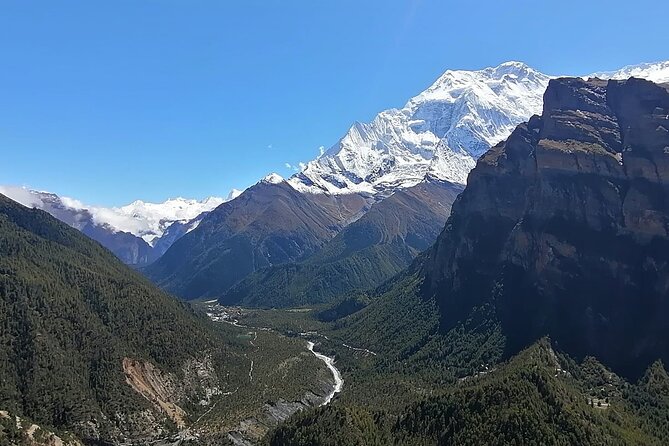
- Thorung La at 5,416m is the showstopper, reached after an overnight at Thorung Phedi.
- Temple and village moments keep the trek from feeling like nonstop hiking.
- Manang village + Gangapurna Lake gives you a grounded mountain-life day.
- Kali Gandaki descent through arid country and Tibetan-style villages shifts the vibe from alpine to dry-and-steep.
- Jomsom to Pokhara flight saves you from a longer slog back, and you get gorge views from the air.
- Max 15 travelers helps the trip feel less crowded than many popular routes.
More trails out of Kathmandu, boots ready
- Everest Base Camp Trek – 14 Days★ 5.0 · 1,499 reviews
- Everest Base Camp Trek★ 5.0 · 842 reviews
- Everest Base Camp Trekking★ 5.0 · 485 reviews
- Nagarkot Sunrise View and Day Hiking from Kathmandu★ 5.0 · 471 reviews
10 Days Around the Annapurna Circuit: what the experience feels like
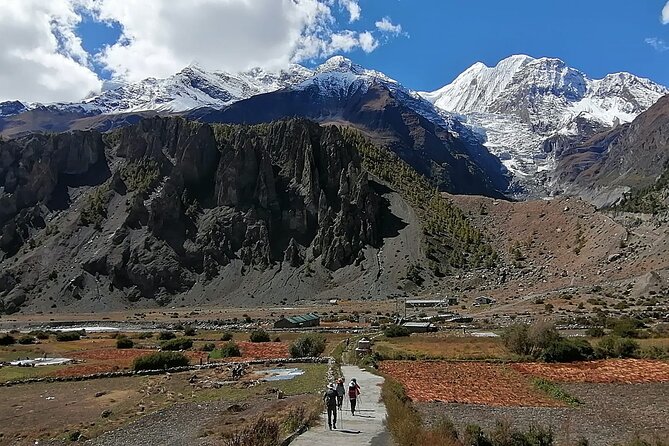
This trek covers roughly 160–230 km across the Annapurna massif area, but what you’ll remember isn’t just the distance. It’s the daily rhythm: walk up through forests and valleys, climb into open views near Manang, then hit the big altitude payoff with Thorung La, followed by a long descent through the Kali Gandaki valley. That up-and-down shape is the whole point of the Annapurna Circuit.
You’ll also feel the cultural gear shift. Early days bring smaller settlement stops and district headquarters towns like Chame. Once you’re in the Manang area, the trail spends more time with village life, including Manang village and a visit to Gangapurna Lake. Later, you step into the holy atmosphere of Muktinath Temple before dropping toward Jomsom and flying to Pokhara.
The trip is designed for people with moderate physical fitness, but the mountains don’t care about your comfort level. Expect narrow stretches, long uphill stretches, and a pass day where your breathing becomes the main soundtrack.
Day 1: Kathmandu-to-Besisahar driving and the Manakamana Temple stop
You start with a morning pickup around 7:15am from Himalayan Trekking in Kathmandu. The plan is a long drive—about 7 hours covering roughly 185 km—to Besisahar. This matters because it’s one less travel day on the trail and helps your body transition into trekking time.
Once you reach Besisahar, you’re set up for early mountain atmosphere. The next element on day one is a visit connected to Manakamana Temple. That’s a meaningful cultural anchor early in the trip: before you get deep into high passes, you get a taste of how Nepalese religious life blends into everyday travel routes.
What you’ll want to do on day one is simple: hydrate, eat a real meal, and try to get an early night. Your big walking days come soon.
Days 2 to 4: Chame climbs, bridge crossings, and those Manang-area view days
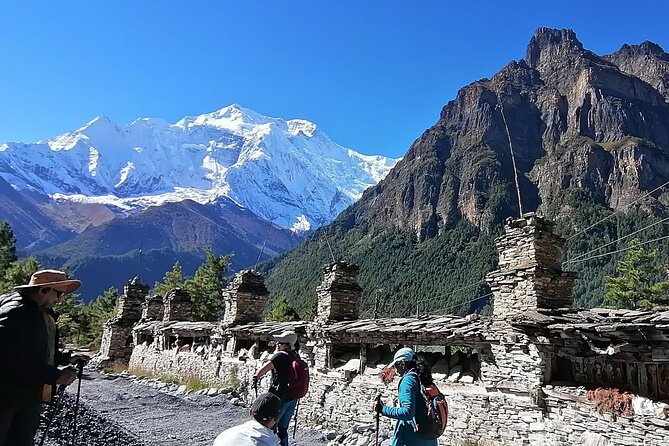
After you leave the Besisahar area, the trail begins working upward in stages. On day two, you climb to Tyanja at about 2,360m and continue up toward Kopar around 2,590m. As you move toward Chame—the district headquarters of Manang—you get the kind of view payoff that makes people start planning their next Nepal trip before this one ends. The route is described as rewarding views of Annapurna II, and you’ll feel it as soon as the trail opens.
Day three leans into the “real trail” feel: a deep forest in a steep, narrow valley. You’ll cross rivers on long bridges, including one around 2,910m, then another crossing near 3,040m. Those bridge moments sound simple until you’re standing on a moving walkway over steep terrain. They’re also reminders that you’re walking through living river systems, not just scenery.
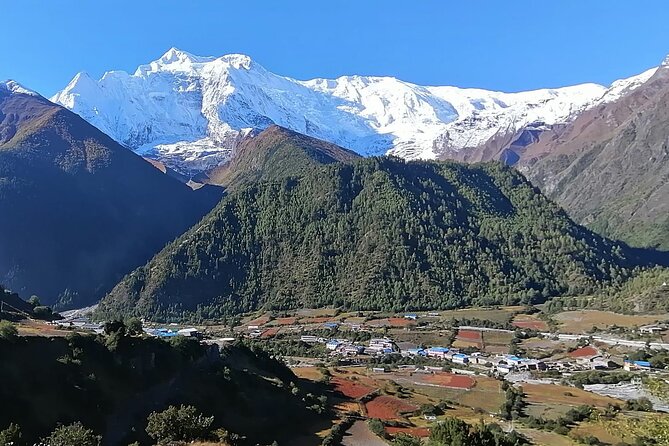
Day four is where your eyes start doing less wandering and more searching. The hike passes aromatic pine forests, then nears Manang with close-up sightlines of multiple peaks—Gangapurna, Annapurna II and III, Tilicho, Chulu East, and Pisang Peak are named in the route description. Even if clouds play games with visibility some days, the area itself is built for mountain staring. Keep your pace steady here; it’s easy to speed up when the views are good.
Day 5: Manang village time and a visit to Gangapurna Lake
Day five is the culture-and-calm day in the middle of the climb. You’ll explore Manang village and spend time interacting with local mountain life, then visit Gangapurna Lake. This is valuable because it breaks the routine of “walk, altitude, repeat.”
In practical terms, this kind of day helps your body adjust. Instead of pushing uphill every day, you get time at village height and you can focus on simple trekking basics: eating well, keeping warm, and watching how your breathing feels at rest. It also helps you reset your mental gear—after the steady climb and valley walking, you’ll likely appreciate the slower pace.
If you like trekking days that feel social and place-based rather than purely scenic, this day is a highlight.




Day 6 to 7: Gunsang, Yak-Kharka, Thorung Phedi, and the lead-up grind
Leaving Manang means the trek turns more “mountain working route.” Day six climbs toward the Marshyangdi valley, with strenuous ascends described on the way to Gunsang village, then onward to Yak-Kharka. Your arrival is at Ledar before sunset. This kind of staging day is about positioning your body for the next evening and the pass approach.
Day seven is where you feel the route getting serious. You’ll walk along the east bank of the Jorsang Khola and hike toward Thorung Phedi. The description calls out that the path can be tough—narrow paths with unstable slopes. That’s the day to go slow on foot placement, not speed. Even when your mind wants to reach the next tea shop, your steps should stay careful.
You overnight at Thorung Phedi, which sets you up for the main event on day eight. I like this layout because it reduces the need for an all-day scramble from scratch. You’re not trying to climb to the pass and recover from travel in the same day.
Day 8: Thorung La (5,416m) and the Muktinath Temple stop
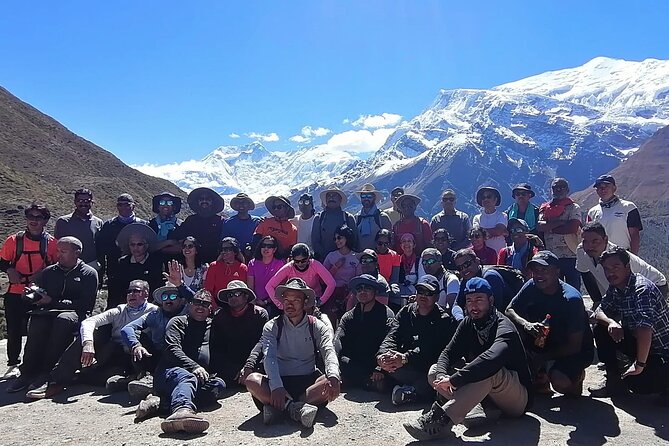
This is the day with the big checkpoint: hike to Thorung La at 5,416m, the highest point of the trek. The route is described as rocky ridges, and from the pass area you get a broad view of the Dhaulagiri range. Whether you see everything perfectly depends on weather, but the “high point” experience is real even when visibility changes.
After the pass, you continue toward Muktinath Temple. The description notes it as a holy, powerful temple in the Mustang region. Even if you’re not religious, it’s the kind of stop that makes the landscape feel less like a set piece and more like a lived-in spiritual corridor.
Practical advice for this day: keep your effort controlled on the ascent. A pass day isn’t won by speed; it’s won by consistent breathing and steady footing. If you’ve ever had altitude make you impatient, this is where you’ll learn to trade urgency for rhythm.
Day 9: Kali Gandaki descent, arid terrain, and Tibetan-style villages
Day nine shifts from high and crisp to dramatic and dry. You start descending down the Kali Gandaki Valley through arid landscapes. The trail description mentions crossing Jharkot and Khingar, then following the valley floor most of the way until reaching Jomsom.
This descent day can be emotionally tricky. The altitude may start to feel easier as you drop, but your legs still work hard. Long downhill sections punish your knees if you ignore form and stride length. Use your guide and your own experience to adjust your pace; the goal is steady control.
This is also a day where the mix of cultures shows up in the villages. Tibetan-style settlements are specifically named, so you’ll likely notice the change in architecture and the feel of local life compared with the Manang area.
Day 10: Flight to Pokhara over the gorge and your time at Fewa Lake
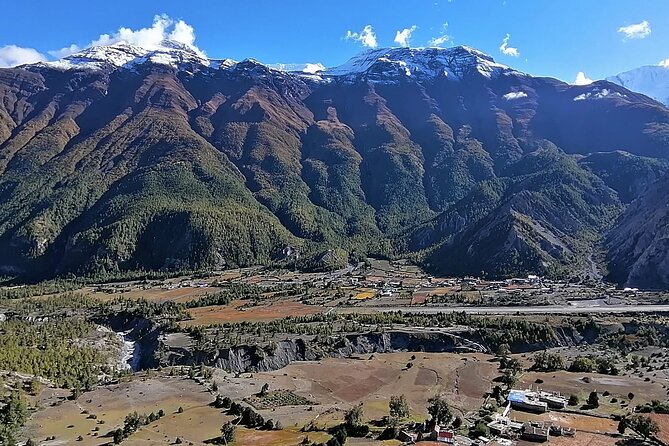
Instead of another day of walking, day ten includes a morning flight to Pokhara after breakfast. The flight is described as spectacular, especially above the Kali Gandaki Gorge, with views of Dhaulagiri and Annapurna ranges.
This is a smart value add. Trekking circuits often trap you in long return travel. Here, the Jomsom to Pokhara flight is included, which saves energy and keeps the overall trip focused.
Once in Pokhara, you get free time to explore the city, including boating at Fewa Lake. It’s a nice way to end without turning the final day into a travel grind. If you want a soft landing day—good food, a relaxed stroll, and a bit of lake time—this fits well.
Price and value: what $1,430 covers (and what you’ll still manage)
At $1,430 per person for about ten days, the value depends on what you’d otherwise pay for if you booked parts separately. Here, the big-cost items are handled:
- Guide and porters (with the stated ratio of 1 porter for 2 people)
- Private transportation included
- All fees and taxes
- Meals: breakfast (11), lunch (10), dinner (10)
- Coffee and/or tea
- Sleeping bag
- Domestic flight from Jomsom to Pokhara
What you’ll manage yourself:
- Bottled water
- Alcoholic beverages
- Air-conditioned vehicle (so don’t plan on constant AC comfort on transfers)
For many hikers, the best value part isn’t only the meals—it’s the logistics. With passes, changing terrain, and mountain timing, having a team that keeps the schedule moving matters. It also helps your day-to-day decisions, like when to stop and how to pace.
Food, beds, and the guide/porter team (the stuff you feel every day)
From the information provided, you can expect daily structure: breakfast, lunch, and dinner are included each day on schedule, and you’ll have tea/coffee as part of the trek rhythm. People using this kind of setup often care less about luxury and more about reliability—warm meals, a bed you can sleep in, and guidance when conditions change.
The guide experience seems to be a major strength. Named guides in the feedback include Babu, Resham, and Surya, and the common thread is practical help and a warm Nepal introduction. Porters are also mentioned by name—Rojit comes up—and that matters because porters shape how hard the trek feels. With 1 porter assigned for every 2 people, you should feel the benefit of not carrying everything yourself.
One more practical note: this tour lists maximum 15 travelers, which tends to make it easier to move as a group without constant traffic jams on the trail. Even when weather slows things down, smaller groups often feel calmer.
Altitude and pacing: how to approach Thorung La day without panic
This route is built around altitude milestones, not gentle strolls. You’ll climb from around 2,300m early on toward the pass at 5,416m. Even if you’re fit, altitude can turn your breathing into the main work.
So here’s how to set yourself up:
- Start slower than you think you need on the approach days (days 6–8 especially).
- Don’t treat the pass day as a race. The route is rocky ridges, and the air is thin.
- Take cues from your body. If you feel off, speak up quickly and let the guide help you pace.
It’s also worth noting that there’s been support described when altitude trouble shows up on another mountain trip with the same operator. That doesn’t guarantee your exact situation, but it signals a safety-first attitude when conditions get rough.
If you’re crossing your fingers about altitude, don’t. Train for hiking, walk at a conversational pace, and plan to take rest seriously.
Who should book this Annapurna Circuit trek with Himalayan Trekking?
This trek suits you if you:
- Want a full Annapurna Circuit experience that mixes big walking days with village and temple stops
- Like the idea of reaching a major high point (Thorung La) with an overnight buffer at Thorung Phedi
- Prefer an organized support system: guide, porter help, meals, sleeping bag, and a flight out
- Have moderate physical fitness and can handle days with narrow paths and steep sections
It may be less ideal if you’re looking for a purely easy hike. Several days include strenuous ascends, and day eight is the most demanding.
It’s a strong fit for first-time multi-day trekkers too, because the structure is clear and the team takes care of the daily rhythm. If you know you want an active trip but don’t want to plan every detail yourself, this one makes sense.
Should you book this tour?
I’d book it if you want a classic circuit with real cultural stops and a practical finish in Pokhara, without having to piece together flights, meals, and staffing. The inclusion of a sleeping bag, full meal plan, and the Jomsom to Pokhara flight is a clear value win. The pass day logistics—starting from Thorung Phedi—also reduce the chances of a chaotic start on the hardest part.
I would think twice if you’re not comfortable with altitude and steep, narrow trail sections. If that’s you, focus on building fitness and go into the pass day with patience. The mountains don’t reward bravado here.
If you’re ready for the real Annapurna experience—views, temples, villages, and a high pass that earns its reputation—this is a solid choice.
FAQ
Where does the trek start and what time does it begin?
The trek starts at Himalayan Trekking and Tours in Kathmandu, with a start time of 7:15am.
What’s the duration and distance for this trek?
It runs for about 10 days and covers roughly 160–230 kilometers.
How much does the tour cost?
The price is $1,430 per person.
What’s included in the price?
It includes coffee and/or tea, a sleeping bag, private transportation, all fees and taxes, a guide and porters (1 porter for 2 people), a domestic flight (Jomsom to Pokhara), and meals: breakfast, lunch, and dinner.
What’s not included?
It does not include bottled water, alcoholic beverages, or an air-conditioned vehicle.
Is a domestic flight included on the last day?
Yes. The trek includes a domestic flight from Jomsom to Pokhara.
What’s the highest point on the trek?
The highest point is Thorung La at 5,416m.
Are temple visits part of the trek?
Yes. The route includes visits connected to Manakamana Temple and Muktinath Temple (admission tickets for these are noted as not included).
What group size should I expect?
The tour has a maximum of 15 travelers.
What is the cancellation policy?
Free cancellation is available if you cancel at least 24 hours in advance for a full refund.
More Trekking Out of Kathmandu






More Tour Reviews in Kathmandu




Just Reviewed in Kathmandu
- Mountain Bike Tour
★ 5.0 · 3 reviews - Annapurna Panaroma
★ 5.0 · 3 reviews - Mount Everest Scenic Flight 50 Minutes
★ 5.0 · 3 reviews - Kathmandu : Swambhunath & Durbar Square Guided Half Day Tour
★ 3.3 · 3 reviews - Chandragiri Cable Car & Monkey Temple Tour – Private/Group
★ 5.0 · 3 reviews - Kathmandu: Shivapuri National Park Hiking Day Trip
★ 3.3 · 3 reviews
Annapurna Circuit Treks, compared.
 ★ 5.0Annapurna Circuit Trek with Tilicho LakeFrom $1,093368 reviews
 ★ 5.0Annapurna Circuit TrekFrom $1,17594 reviews
★ 5.0Annapurna Circuit TrekFrom $2,24067 reviews
★ 5.0Annapurna Circuit TrekFrom $1,07449 reviews
★ 5.0Annapurna Circuit TrekFrom $1,35046 reviews
★ 5.0Annapurna circuit TrekFrom $99835 reviews
★ 5.0Annapurna Circuit TrekFrom $1,15035 reviews
★ 5.0Annapurna Circuit TrekFrom $97534 reviews
Browse the lists this tour appears in