
Review · ANNAPURNA CIRCUIT TREKS
12 days Annapurna Circuit Trek
Expect very early mornings for big views. This 12-day Annapurna Circuit trek is interesting because you get a licensed English-speaking guide and real full-board tea-house meals while you follow the route toward Thorong La and the Annapurna/Poon Hill viewpoints. The main drawback to plan for is the schedule: you’ll be up around 3 a.m. for Thorong La day, and several days run long.
I like that the trip feels practical and customizable, not just a checklist. You’re also handling fewer moving parts because transport segments, trekking permits (ACAP), and TIMS are covered, so you can focus on walking, eating, and acclimatizing.
If you’re the type who likes a balance of trail time and culture, you’ll fit right in. You’re expected to have at least moderate fitness, and the best part is that the route includes an acclimatization day in Manang instead of pushing too hard too fast.
In This Review
- Key things I found especially worthwhile
- Price and logistics: what $1,100 really buys you
- Kathmandu to Dharapani: the first long transfer day
- Chame, Upper Pisang, and Geru: the Manang District shift to higher, drier air
- Chame: your first altitude wake-up call
- Upper Pisang: higher views and a bigger feeling of distance
- Geru via Upper Pisang: where big north-face views show up
- Manang and Ice Lake: acclimatization that actually has a purpose
- Yak Kharka to Thorong Phedi: the climb gets more serious
- Yak Kharka: crossing streams and moving into a northwest direction
- Thorong Phedi: ridge walking, bridges, and long day effort
- Thorong La to Muktinath: the 3 a.m. start that shapes the whole trek
- Tatopani hot springs and Ghorepani: easing fatigue without losing momentum
- Ghorepani: Thakali settlements and Kali Gandaki views
- Poon Hill sunrise and Pokhara: the payoff and the reset
- Pokhara night (and why it’s smart)
- Guides, care, and the small things that matter
- Who this Annapurna Circuit trek suits best
- Should you book this Annapurna Circuit trek?
- FAQ
- What’s included during the trek?
- Are permits and area fees covered?
- How do you get from Kathmandu to start the trek?
- Is there a porter option if I don’t want to carry everything?
- What about food and drinks—are beverages included?
- Do I need a Nepal visa?
- How do you end the trek—bus or flight from Pokhara?
- Can I cancel and get a full refund?
Key things I found especially worthwhile
- Licensed, English-speaking guidance that keeps logistics calmer on a high-altitude route
- Meals + tea-house lodging included during the trek (breakfast, lunch, dinner)
- A real acclimatization day in Manang, with an Ice Lake option if you feel good
- Thorong La planning time matters since the day starts around 3 a.m.
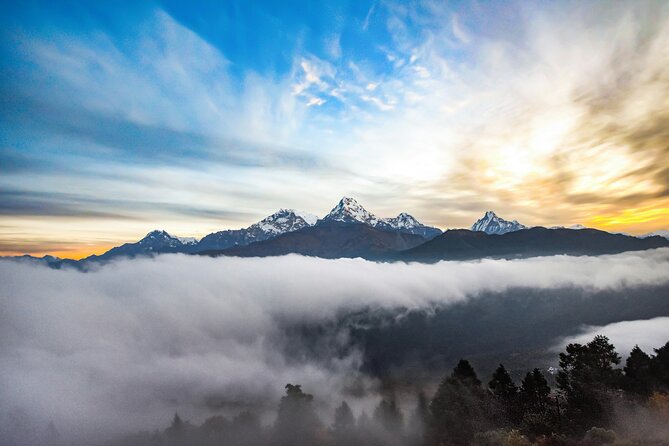
- Poon Hill sunrise ties the trek to one last payoff view over the Annapurna and Dhaulagiri range
- Permits and taxes included (ACAP and TIMS), so fewer documents are on your to-do list
More trails out of Kathmandu, boots ready
- Everest Base Camp Trek – 14 Days★ 5.0 · 1,499 reviews
- Everest Base Camp Trek★ 5.0 · 842 reviews
- Everest Base Camp Trekking★ 5.0 · 485 reviews
- Nagarkot Sunrise View and Day Hiking from Kathmandu★ 5.0 · 471 reviews
Price and logistics: what $1,100 really buys you
At $1,100 per person, this Annapurna Circuit option looks “fair” when you line it up with what’s included. The price covers more than the trail itself: you get the licensed guide, tea-house/lodge lodging with most meals taken care of, and key paperwork like the Annapurna Conservation Area Permit (ACAP) and the TIMS card. You also get several transportation legs, including Kathmandu to Dharapani and the later travel to Pokhara and back to Kathmandu.
That matters because trekking in Nepal has a lot of small costs that add up: permits, the guide team, and the day-to-day food/lodge rhythm. If you’re comparing options, I’d treat this as a “managed trek package” more than a barebones expedition.
One detail to plan around: the start time is listed as 12:15 a.m. That usually means you’ll be up late (or very early) on Day 1 for the Kathmandu-to-trek transfer. If you hate midnight check-ins, mentally prepare now.
Also, this is set up as a private tour for your group, with group discounts offered. Private can mean a more comfortable pace and fewer people around you each day, but your exact group size can still affect how lively the tea-houses feel at each stop.
Kathmandu to Dharapani: the first long transfer day
Your trek starts with a long travel day that’s more than “just getting there.” You’ll drive from Kathmandu to Besishar along the Trishuli river, then take a jeep from Besishar to Dharapani where you stay overnight.
Why I like this approach: it gets you moving into the circuit corridor right away, and it helps break the big distance into two segments. Why it can feel tough: you’re spending hours in a vehicle before your first real hike, so keep your body fueled and hydrated. If you’re prone to stiff legs, plan light walking the first afternoon/evening once you reach Dharapani.
This is also your first taste of how the route alternates between valleys and higher terrain. Even before altitude really hits, you start seeing the “rhythm” of the circuit: local roads, then mule/mountain travel energy, then tea-house life.
Chame, Upper Pisang, and Geru: the Manang District shift to higher, drier air
Once you begin trekking, the early days build the change in altitude and feel. You’ll move to Chame, then onto Upper Pisang, and then onward toward Geru.
Chame: your first altitude wake-up call
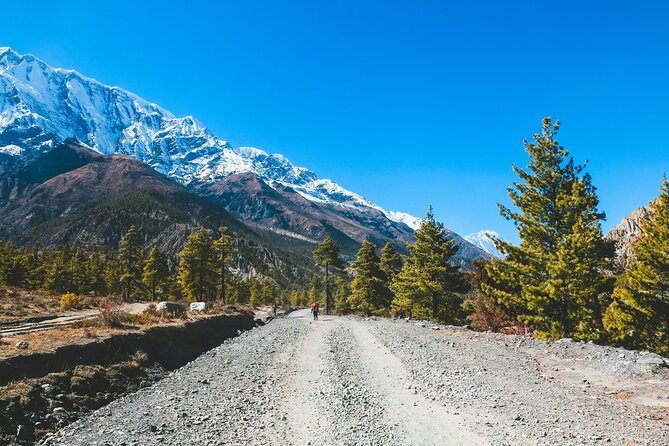
Chame is the headquarters of Manang District. Trek-wise, it’s a classic “start the climb” day. Expect rhododendron forests early on, then more open views as you gain altitude. This is the part of the circuit where your breathing starts to become something you notice—nothing dramatic for everyone, but enough that your pacing matters.
Practical tip: don’t “test yourself” by walking too fast early. You want your legs to save effort for the later days around Yak Kharka and Thorong La.




Upper Pisang: higher views and a bigger feeling of distance
Upper Pisang sits at about 3,300 meters, and you arrive with views of Lamjung Himal as well as that first early light on peaks. This is where the mountains start to look sharper and more layered. The air tends to feel thinner, and the sky more decisive.
If you’re someone who likes taking photos, this is a good day to do it—just remember that stopping often is fine, but stop slowly. The mountain punishes rushed movements.
Geru via Upper Pisang: where big north-face views show up
On the way to Geru, the information points to serious viewpoint energy—spectacular sights of multiple Annapurna and nearby peaks, plus a sense that the air gets drier and colder as you go higher.
What to consider: colder weather can sneak in fast in the high Annapurna zone. Even if the daytime feels okay, mornings and shade cool down quickly.
Manang and Ice Lake: acclimatization that actually has a purpose
Day 5 is your acclimatization day in Manang, placed where it should be. You’re at the base of Annapurna III, with views of Annapurna and Gangapurna around you. There’s even an option to stroll to Ice Lake to help acclimatize.
This matters because Thorong La isn’t a “good luck” moment—it’s a planning moment. The circuit rewards you for taking altitude seriously. A rest day in Manang gives your body time to adjust and helps reduce the chance that you’ll feel awful during the final push.
How I’d use an acclimatization day:
- keep it gentle
- avoid chasing speed records
- eat and hydrate steadily
- if you feel off, treat Ice Lake like an option, not a mission
Yak Kharka to Thorong Phedi: the climb gets more serious
As you leave Manang for higher ground, the trek shifts toward Yak Kharka, then continues to Thorong Phedi, the base area before Thorong La.
Yak Kharka: crossing streams and moving into a northwest direction
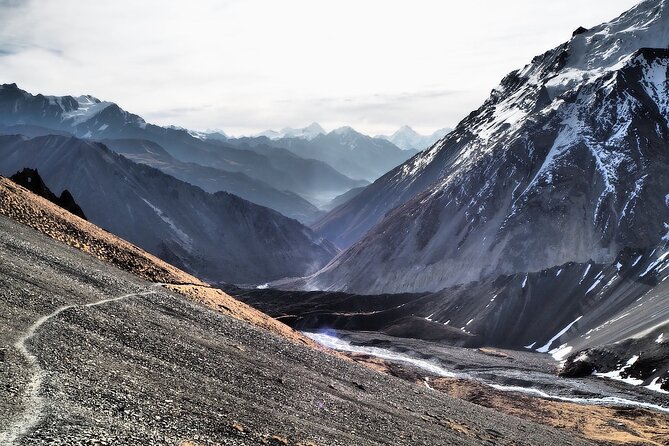
From Manang, you trek up to Tenki, then continue toward Yak Kharka. The route crosses a stream and moves out of the Marshyangdi Valley into the northwest and up the Jarsang Khola valley.
You’ll likely feel two things here:
1) your breathing changes
2) the scenery starts to look more “high and spare” as you gain elevation
This day is often a turning point mentally: you start thinking in terms of tomorrow’s pass.
Thorong Phedi: ridge walking, bridges, and long day effort
Thorong Phedi is reached after an approach that includes ascending a ridge from Yak Kharka, descending, crossing the Marsyangdi River on a wooden bridge, and then further climbing as you head toward the pass area.
Why Thorong Phedi is strategically important: it sets you up to manage the Thorong La crossing safely. You’re not just “arriving somewhere.” You’re positioning yourself close enough to start early and move efficiently.
Possible drawback: wooden bridges and ridge trails can be slow going, especially if you’re tired from altitude and the day before. Take it easy and let the guide set the pace.
Thorong La to Muktinath: the 3 a.m. start that shapes the whole trek
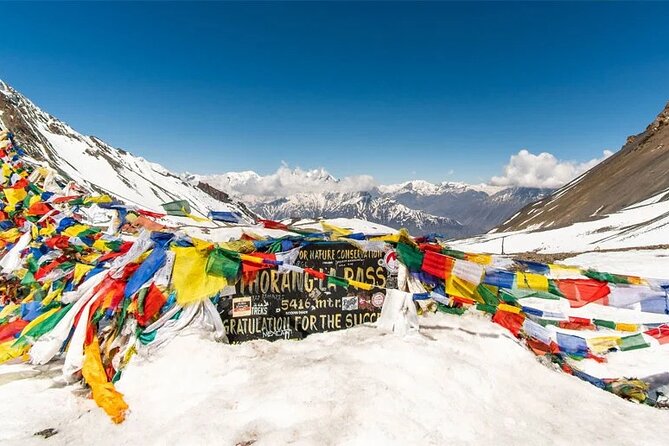
Day 8 is the big one. You’ll wake up around 3 a.m., walk up toward Thorong La, reach the summit, then descend to Muktinath—your final goal for the day.
This is where the trek becomes real. Even if you’ve trained and feel strong, you still need the right pacing, layers, and breathing control. Early starts are not just tradition; they help you start in the cold and have time to move through the pass conditions.
What makes Muktinath special (and worth the effort)
You end the day in a place with strong spiritual energy, known for its religious sites. The route to Muktinath gives you a contrast to the higher, harsher pass region: after hours of mountain exposure, arriving somewhere with cultural depth feels like a reset for your brain.
One consideration: sunrise light and views are a reward, but the pass day can feel long even for confident walkers. If you get even a little nauseous or unusually tired, don’t “push through” stubbornly. Follow your guide’s advice and keep the pace steady.
Tatopani hot springs and Ghorepani: easing fatigue without losing momentum
After the pass, Day 9 shifts to Tatopani, reached by jeep from Muktinath (about 3 hours). Then you rest at your lodge or visit the hot springs.
I like this because it’s not only a break. It’s a planned recovery buffer after a day that can take a toll on your legs. Your muscles will thank you if you take it slow and soak carefully.
Ghorepani: Thakali settlements and Kali Gandaki views
On Day 10 you head to Ghorepani. The route goes through Thakali settlements such as Sikha and Chitre, reaches the east bank of the Kali Gandaki River, and then climbs up toward Ghorepani.
Why this day feels authentic: you’re not only walking above villages—you’re moving through living communities with their own way of life. You’ll likely find the tea-house stops feel more grounded and less like an attraction.
Practical advice: Kali Gandaki area days can feel deceptively variable—some stretches are faster, then you climb again. Keep your water bottle reachable and don’t wait until you feel thirsty.
Poon Hill sunrise and Pokhara: the payoff and the reset
Day 11 is a short but high-impact day: you go early to Poon Hill (3,210m) for sunrise. The views cover the Dhaulagiri and Annapurna range, including Machhapuchhre (Fishtail) and Annapurna.
Sunrise at Poon Hill has a reason it stays famous. It gives you a wide-angle reward right after you’ve been working day after day. You also get a moment where the trek shifts from effort to awe.
After sunrise, you trek from Ghorepani to Birethani, then take a bus to Pokhara.
Pokhara night (and why it’s smart)
You stay one night in Pokhara with breakfast. Pokhara is a good “body recovery stop” because it breaks the rhythm of constant trekking. This is also where you can check how you feel after the route—walking, joints, sleep, and appetite.
Day 12 ends with a farewell: after breakfast, you take a tourist bus to Kathmandu. There’s also an option to fly (25 minutes) to Kathmandu, but that’s not included in the package.
Guides, care, and the small things that matter
The tour is run with a government-licensed, experienced English-speaking guide, and the company covers guide meals, insurance, salary, and lodging/transportation. That structure can make a difference when you’re dealing with altitude, timing, and route decisions.
The reviews also point to responsive communication during planning. The company name that shows up in those notes is Magnificent Himalayan Treks, and names like Bhim Panta, Manit, and Kumar come up as part of how they support travelers—from online consultation through the trip.
I can’t promise you’ll meet the exact same staff on your specific departure, but the pattern is clear: this isn’t only about leading you on a trail. It’s also about helping you get ready, then keeping the trip organized once you’re there.
And yes, there’s a farewell dinner in Kathmandu. It’s a small detail, but it’s a nice emotional bookend after a trek that consumes your daily attention for nearly two weeks.
Who this Annapurna Circuit trek suits best
This is a strong fit if:
- you want a guided circuit with permits handled and meals/lodging included
- you like a route that hits Thorong La and then still earns one more big viewpoint moment at Poon Hill
- you’re okay with long trekking days and very early mornings
- you want a customizable experience for your group and prefer not to manage every logistical piece yourself
It might not be ideal if:
- you’re not comfortable with altitude pacing and a cold pass morning
- you dislike very early departures and long travel days (Day 1 vehicle time, and the 3 a.m. pass day)
Should you book this Annapurna Circuit trek?
I’d book this if you want the Annapurna Circuit experience to feel guided, organized, and food/lodge-supported from start to finish. The strongest value is how much is handled for you: ACAP + TIMS permits, daily tea-house meals, and the guide team that manages the route as altitude rises. If you’re trying to reduce planning stress, this package does that.
I’d think twice if your top priority is sleeping in, moving at a relaxed stroll pace, or avoiding high-altitude pass intensity. This route expects effort. The trade-off is that it also gives you the big circuit highlights—Manang acclimatization, Thorong La, Tatopani recovery, and Poon Hill sunrise—without requiring you to coordinate everything yourself.
If you book, do one thing early: train for steady endurance, and pack layers for cold mornings. Your future self at 3 a.m. will remember you for it.
FAQ
What’s included during the trek?
Tea house/lodge accommodation with meals (breakfast, lunch, dinner) is included during the trekking portion, plus the Annapurna Conservation Area Permit (ACAP) and TIMS card, along with guide support (meals, insurance, salary, lodging, and transportation).
Are permits and area fees covered?
Yes. The trek includes the ACAP fee and the TIMS card fee, plus taxes.
How do you get from Kathmandu to start the trek?
You drive from Kathmandu to Besishar along the Trishuli river, then take a jeep from Besishar to Dharapani, where you spend the night.
Is there a porter option if I don’t want to carry everything?
Yes. Porters are available for $20/day and can carry up to 20 kg.
What about food and drinks—are beverages included?
Meals are included during the trek, but beverages are not included. Alcoholic and non-alcoholic drinks are listed as not included.
Do I need a Nepal visa?
Yes. Nepal visa is not included. You obtain it on arrival, with costs listed for different lengths of stay.
How do you end the trek—bus or flight from Pokhara?
You’ll take a tourist bus from Pokhara to Kathmandu. A 25-minute flight option from Pokhara is available, but it’s not included in the package.
Can I cancel and get a full refund?
Free cancellation is available up to 24 hours in advance for a full refund. If you cancel less than 24 hours before the start time, the amount paid won’t be refunded.
More Trekking Out of Kathmandu






More Tour Reviews in Kathmandu




Just Reviewed in Kathmandu
- Mountain Bike Tour
★ 5.0 · 3 reviews - Annapurna Panaroma
★ 5.0 · 3 reviews - Mount Everest Scenic Flight 50 Minutes
★ 5.0 · 3 reviews - Kathmandu : Swambhunath & Durbar Square Guided Half Day Tour
★ 3.3 · 3 reviews - Chandragiri Cable Car & Monkey Temple Tour – Private/Group
★ 5.0 · 3 reviews - Kathmandu: Shivapuri National Park Hiking Day Trip
★ 3.3 · 3 reviews
Annapurna Circuit Treks, compared.
 ★ 5.0Annapurna Circuit Trek with Tilicho LakeFrom $1,093368 reviews
 ★ 5.0Annapurna Circuit TrekFrom $1,17594 reviews
★ 5.0Annapurna Circuit TrekFrom $2,24067 reviews
★ 5.0Annapurna Circuit TrekFrom $1,07449 reviews
★ 5.0Annapurna Circuit TrekFrom $1,35046 reviews
★ 5.0Annapurna circuit TrekFrom $99835 reviews
★ 5.0Annapurna Circuit TrekFrom $1,15035 reviews
★ 5.0Annapurna Circuit TrekFrom $97534 reviews
Browse the lists this tour appears in