
That first long mountain road ride sets the tone. This Manaslu Circuit is a quieter, wilder-feeling trek with teahouses at nearly every stop and serious payoff views of Manaslu and neighboring peaks. I especially like the way the route stays isolated and less crowded, yet you still get practical support like a licensed guide and frequent food stops. One drawback to consider: you’ll hit long hiking days and a high, rocky pass (Larkya La), so you should be ready for big effort and cold-weather gear.
The good news is that you don’t need to travel like a camping expedition. You’re walking between villages where you can sleep in mountain guesthouses and eat warm meals without carrying tents or bulk supplies. The other clear win is the sense of cultural shift as the trek moves through Tibetan-influenced places like Sama Gaon and older monasteries around Birendra Taal. Still, the schedule favors early starts, so if you hate waking up before sunrise, build in patience.
I also like that the trek is built around real overland travel from Kathmandu—bus and jeep legs connect you to trail access so you can skip the stress of flying in and out. Group size is capped at 25, which helps keep things organized without feeling too packed. If you’re coming from abroad, plan on arranging your own insurance, since drinks, Kathmandu meals, and evacuation coverage aren’t included.
In This Review
- Key highlights to watch for
- Why this Manaslu Circuit feels quieter and more real
- Price and Logistics: what you’re really paying for at $227
- Getting from Kathmandu to the trail: bus days that actually count
- The early trek: river valleys, checkpoints, and learning your pace
- Namrung and Shyala: pine forest routes and that sunrise payoff
- Pung Gyen Gompa to Samagaun: altitude with culture and calm
- Manaslu Base Camp: the steep climb that makes it feel earned
- Birendra Taal and Samdo: old monasteries and bigger panoramic moments
- Toward Larkya La: Layung La, Dharamsala, and the long pass day
- Bimthang to Tilche and the Marsyangdi Valley unwind
- Back to Kathmandu: minibus comfort after 14 days
- Practical tips that help you enjoy the trek (and not overspend)
- Who should book this trek
- Should you book the Great Adventure Manaslu Circuit?
- FAQ
- How long is the Manaslu Circuit Trek?
- Where does the trek start and end?
- What’s the price per person?
- Is the trek done in teahouses or camping?
- What permits are included?
- Do you get a trekking guide?
- Does the package include meals?
- Are drinks included during the trek?
- What equipment is included?
- What’s the cancellation timeframe?
Key highlights to watch for
- Teahouse convenience: fewer logistics headaches because you can sleep and eat at the stops
- Isolation without isolation stress: a less-traveled circuit feel while still having village support
- Manaslu Base Camp day: a steep climb after an easier warm-up hour, then time to take it all in
- Larkya La Pass effort: windy and rocky at times, with standout morning views of Larke Peak (6249m)
- Tibetan culture touchpoints: monasteries and cultural stops around Birendra Taal and Sama Gaon
- Flexible, guide-led pacing: guides who look out for the group and help keep the day manageable
More trails out of Kathmandu, boots ready
- Everest Base Camp Trek – 14 Days★ 5.0 · 1,499 reviews
- Everest Base Camp Trek★ 5.0 · 842 reviews
- Everest Base Camp Trekking★ 5.0 · 485 reviews
- Nagarkot Sunrise View and Day Hiking from Kathmandu★ 5.0 · 471 reviews
Why this Manaslu Circuit feels quieter and more real
Most trekking routes in Nepal can feel like a conveyor belt. This circuit is different. The trek is described as less crowded and more isolated, with a trail that still has teahouses so you get a practical kind of comfort while staying away from heavy foot traffic.
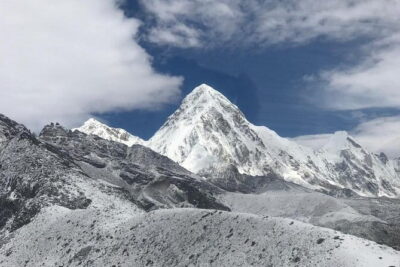
What you end up with is a more natural rhythm: walk, gain altitude, pause for tea and meals, then watch the mountains change through the day. You’ll also keep seeing multiple big peaks rather than just one hero summit. Expect views of Himalchuli, Manaslu, Chamar, Ganesh Himal II, and more as you move through the Budhi Gandaki region.
And because you’re going overland for the start and return, the trip feels connected from the first day. No airport stress, no sudden “we’re in the mountains” whiplash.
Price and Logistics: what you’re really paying for at $227
$227 for 14 days looks low on paper, so it’s worth checking where that value comes from. The package includes 13 nights in mountain teahouses, a government-licensed trekking guide, and the main trekking permits (Manaslu and Annapurna conservation areas plus a restricted area permit). It also includes trekking support like transport connections within the route and a first-aid kit.
It’s also unusually helpful that sleeping bag and down jacket are provided as part of the necessary equipment. For many people, that’s one of the biggest cost and packing headaches on a cold-weather circuit.
What’s not included matters too. Meals in Kathmandu aren’t included, and drinks on the trek (hard and soft) aren’t included. Your international airfare and visa/taxes aren’t included, and you need your own personal travel insurance because rescue and evacuation service is not covered by the operator.
So the value equation is this: you’re paying for a supported, permit-covered trek with basic comfort and equipment support, while still controlling some costs yourself (drinks, Kathmandu meals, and insurance).
Getting from Kathmandu to the trail: bus days that actually count
This trek starts with an overland journey from Kathmandu toward Gorkha and onward to the trail access area. You take local regular bus segments, then continue by road via major highway routes along river corridors like the Trisuli.
Day 1 is long in travel-time feel. You’ll likely spend much of the day on buses and highway switches, then reach the first trekking village area (Machhakhola). The advantage here is mental: you ease into Nepal rather than jumping straight into altitude.
On the return, you’ll do the same kind of overland logic. From the trekking endpoint, you hop on a sharing jeep (Dharapani to Besisahar) and then a minibus drive back to Kathmandu that follows river banks like the Marsyangdi and Trishuli.
The early trek: river valleys, checkpoints, and learning your pace
Once you’re on the trail, the first days are about rhythm. You hike between small villages and stop at teahouses for breakfast early, then move through the day with lots of ups and downs. Because there are teahouses at frequent stops, you don’t have to carry heavy food or camping gear, which keeps the effort focused on walking.
You’ll pass through key villages in sequence—Machhakhola to Jagat, then onward to Deng. Along the way you’ll cross through checkpoints (like the Jagat Checkpoint) and you’ll see water features and steep segments that feel tougher than the distance suggests.
One practical takeaway: those first 2 to 4 hiking days are where you should not go too fast. The trail has steep climbs and ridges early on, and your legs will thank you later when the days get longer and the altitude starts stacking.
Namrung and Shyala: pine forest routes and that sunrise payoff
When you move into the Budhi Gandaki area, the route leans more dramatic. From Namrung, the hike follows the Budhi Gandaki valley. You cross the river and climb through a steep valley that feels more impressive as you go—big walls, big sky, and a steadier sense of getting higher.
Then you reach Shyala, and this is one of the best-feeling moments on the circuit. The trek description highlights sunrise from Shyala, where Manaslu’s summit shifts into golden color after starting views from the high route. Even if the sunrise itself varies day-to-day, the idea is consistent: you’re walking into a “light-changing” viewpoint zone.
You’ll also pass through pine forest terrain on the route toward Shyala. Pine forest sections can be a relief from direct exposure because the trail can feel cooler and more sheltered for parts of the climb.
Pung Gyen Gompa to Samagaun: altitude with culture and calm
After Shyala, the trek includes a side visit to Pung Gyen Gompa. This is a short enough detour to be manageable but meaningful enough to change the day. You’re also in a better vantage zone for the broader peaks, and the trek schedule builds in time for breakfast and then the follow-on descent.
Then you drop down (still on foot) toward Sama Gaon. This is one of the cultural anchors of the trek. The route includes the chance to visit the village and learn about Tibetan culture and daily life, which helps balance the physical work with something human-scale.
This part matters because Manaslu’s circuit isn’t only about pushing to high points. It’s about how the region changes as you gain altitude and shift into Tibetan-influenced areas. Tea houses make it easy to keep the pace steady while still taking breaks.
Manaslu Base Camp: the steep climb that makes it feel earned
The Base Camp day is a clear highlight. You start from Sama Gaon, walk the first hour on a flatter track while Manaslu begins appearing more dominant, and then the day turns into a steeper climb.
After about three hours of steep ascent, you reach Manaslu Base Camp. The structure here is important: the first easier hour is your warm-up, but the rest of the day is about grinding upward in a sustained way. That’s a good test of whether you’re hiking smart.
Once at Base Camp, you return to Sama Gaon for lunch and additional village time. That back-and-forth structure is useful for recovery. You get the big goal moment, then you come down before the next major high pass push.
Birendra Taal and Samdo: old monasteries and bigger panoramic moments
From Sama Gaon, the trek moves toward Birendra Taal. The route includes cultural stops like an old monastery in Samagaun and a Tibetan cultural library. It’s a reminder that you’re not just walking scenery; you’re passing through places people live and worship.
Birendra Taal itself is reached after a few hours, and the trek continues toward Samdo after visiting the lake. Along the way you may stop at Kermo Kharka, highlighted for panoramic views of Manaslu and Pangpoche. That’s the kind of viewpoint moment where you feel altitude working its way into your breathing and your camera roll.
This is also a part of the trek where the “less crowded” character shows up. Village-to-village can still have other groups, but the overall feel is not like the most popular routes.
Toward Larkya La: Layung La, Dharamsala, and the long pass day
You then move into the higher, more exposed stretch toward Layung La and onward to Dharamsala / Larkya Base Camp. The trek description notes close views of Samdo’s peak zone and Gyala Peak (5973m), plus other surrounding high ground as you approach the Larkya Bazar area.
From there, the route to Dharamsala/Larkya Base Camp includes a descent portion and crossing the Budhi Gandaki again, and it features grassy terrain with juniper mentioned in the route description. This is the buildup phase. You’re not at the pass yet, but you’re in the mindset: more height, more wind exposure, and more focus on careful footing.
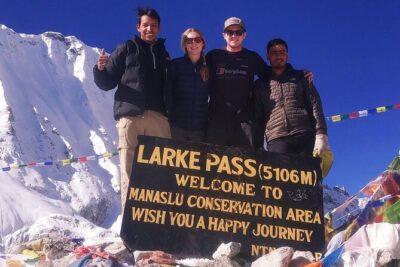
Then comes the main achievement day: Larkya La Pass. The trek description calls out that the trail can be windy at times and rocky. It also emphasizes that the morning views of Larke Peak (6249m) are spectacular.
Here’s how to think about that day. The hardest part isn’t only height. It’s the combination of rocky footing, wind changes, and the fact that you need to conserve energy while still pushing to the pass at the right time for the best visibility.
After reaching the pass area, you continue down to Bimthang. The descent is described as steep. That’s where your knees earn their keep—treat the downhill like it’s part of the challenge, not a reward.
Bimthang to Tilche and the Marsyangdi Valley unwind
After Bimthang, the trek continues through Tilche, with a 6 to 7 hour walking day described from Bhimthang to Tilche. Breakfast comes with splendid views of Manaslu, which can be a morale boost before you start the day’s movement.
This segment is described as having descent early on and then continued progress through the day. You’re transitioning from the pass area toward the lower valley zone, and that shift can be a relief for your body—still walking, but often less “climb-to-climb” pressure.
Day 13 moves through farmlands near Tilche. The route describes crossing to the east bank of a river and gradually descending toward the Marsyangdi Valley. The hiking becomes more village-and-water driven in feel as you head toward road access.
Then you connect to the sharing jeep to Besisahar. The drive time is part of the day (about 3 to 4 hours), and it includes waterfalls and lush scenery along the roads.
Back to Kathmandu: minibus comfort after 14 days
On the final leg, you drive from Besisahar back to Kathmandu by sharing minibus. The route follows the Marsyangdi and Trishuli river banks, and you get a final chance to see hills and mountains from road level.
This ending matters more than people think. After a long trek, a long, slow road ride helps you process the whole trip without immediately switching into hectic city movement. It’s a softer landing.
Practical tips that help you enjoy the trek (and not overspend)
You’ll move fast only if you’re smart. Early starts are part of the routine because breakfast is served at teahouses and you want daylight for climbs. For me, the key is to treat every day like it has two workouts: the climb effort and then the break planning.
A few practical ideas:
- Pack around the cold and wind reality of the high pass day. The trek includes a down jacket and sleeping bag, but you’ll still want personal layers that fit you well.
- Keep your pace even on the steepest early climbs. The steep sections start fairly soon, and you need your legs later.
- Budget for drinks separately. Drinks on the trek aren’t included, so bring a plan for how much you’ll buy.
- Don’t skip insurance. The operator notes emergency rescue help tied to your travel insurance, and the personal rescue/evac service isn’t included.
Also, take the cultural advice seriously. One of the strongest messages from people who did this route is to leave your western ideas and expectations behind and be flexible. That mindset makes the teahouse stops, village encounters, and slower pacing feel like part of the trek instead of an interruption.
Who should book this trek
This circuit fits best if you:
- want a less crowded, more isolated feeling without going full camping trekking
- are comfortable with a moderate fitness level and long daily hiking
- want a serious highlight day with both Manaslu Base Camp and Larkya La Pass
- like village life and Tibetan-influenced cultural stops, not only mountain photos
If you hate steep descents, rocky high-pass terrain, or early mornings, this may not be your kind of adventure. But if you can handle a challenging day and then recover in teahouses, it’s a strong match.
Should you book the Great Adventure Manaslu Circuit?
Yes, if you want value that actually shows up in the details: permits included, teahouse accommodation included, a licensed guide, and even sleeping bag and down jacket provided. The overland logistics also reduce travel stress, and the schedule clearly aims to balance big mountain days with cultural and recovery stops.
Book it if you’re prepared for physical effort—especially the pass day’s windy, rocky feel—and if you’ll handle your own insurance and personal expenses like drinks. If that’s you, this is the kind of trek that gives you both the Himalayan moments and the day-to-day human rhythm that makes Manaslu special.
FAQ
How long is the Manaslu Circuit Trek?
It’s listed as approximately 14 days.
Where does the trek start and end?
It starts in Kathmandu, Nepal, and returns to Kathmandu at the end.
What’s the price per person?
The price is $227.00 per person.
Is the trek done in teahouses or camping?
It uses mountain teahouses, and the package includes 13 nights of teahouse accommodation.
What permits are included?
Manaslu & Annapurna conservation area permit and a restricted area permit are included.
Do you get a trekking guide?
Yes. The tour includes a professional trekking guide with a government license for the 14 days.
Does the package include meals?
Breakfast is included for 14 days, lunch is included for 14 days, and dinner is included for 13 days. Meals in Kathmandu are not included.
Are drinks included during the trek?
No. All drinks during trekking (hard and soft drinks) are not included.
What equipment is included?
The tour includes necessary equipment, including a sleeping bag and down jacket.
What’s the cancellation timeframe?
You can cancel up to 24 hours in advance for a full refund. If you cancel less than 24 hours before the experience starts, it isn’t refundable.
More Trekking Out of Kathmandu
More Tour Reviews in Kathmandu
Just Reviewed in Kathmandu
- Mountain Bike Tour
★ 5.0 · 3 reviews - Annapurna Panaroma
★ 5.0 · 3 reviews - Mount Everest Scenic Flight 50 Minutes
★ 5.0 · 3 reviews - Kathmandu : Swambhunath & Durbar Square Guided Half Day Tour
★ 3.3 · 3 reviews - Chandragiri Cable Car & Monkey Temple Tour – Private/Group
★ 5.0 · 3 reviews - Kathmandu: Shivapuri National Park Hiking Day Trip
★ 3.3 · 3 reviews
Manaslu Circuit Treks, compared.
 ★ 5.0Manaslu Circuit TrekFrom $1,190292 reviews
Manaslu Circuit TrekFrom $1,081184 reviews
★ 5.0Manaslu Circuit Trek:From $1,099106 reviews
★ 5.0Manaslu Circuit TrekFrom $1,190292 reviews
Manaslu Circuit TrekFrom $1,081184 reviews
★ 5.0Manaslu Circuit Trek:From $1,099106 reviews
 ★ 5.0Manaslu Circuit Trek (15 Days)From $1,65750 reviews
Manaslu Circuit TrekkingFrom $1,49944 reviews
★ 5.0Manaslu Circuit Trek (15 Days)From $1,65750 reviews
Manaslu Circuit TrekkingFrom $1,49944 reviews
 ★ 5.016 Day Private Manaslu Circuit Trek from KathmanduFrom $1,13542 reviews
★ 5.0Manaslu Circuit TrekFrom $1,90035 reviews
★ 5.016 Day Private Manaslu Circuit Trek from KathmanduFrom $1,13542 reviews
★ 5.0Manaslu Circuit TrekFrom $1,90035 reviews
 ★ 5.0Manaslu Circuit Trek 13 DaysFrom $1,40030 reviews
Browse the lists this tour appears in