
Review · MANASLU CIRCUIT TREKS
Manaslu Circuit Trek
Manaslu feels wonderfully off the main track. Trekking here follows a less-crowded circuit that’s open under a controlled trekking system, so you spend days in villages and valleys that still feel far from mass tourism.
I love how the trip runs with a licensed English-speaking guide and a porter ratio of one porter for every two clients, which keeps logistics calmer. I also like that key gear for altitude comfort—an included down jacket and sleeping bag—means you travel lighter and sleep more comfortably in basic guesthouses.
The trade-off is simple: you’re booking for weather, not a guarantee, and the route includes serious altitude moments like Larkya La Pass plus long, bumpy 4WD days. If you’re not ready for hard walking and shared dorm style rooms at some stops, this trek may feel like too much.
In This Review
- Key takeaways before you go
- Manaslu Circuit: what makes this trek feel different
- Price and value: what $1,900 really covers
- Day 1 to Day 2: Kathmandu to Machha Khola, then into the valley
- Days 3 to 5: hot springs, river power, and Ghap’s quieter drama
- Days 6 to 8: Namrung, Lho, and Samagaon—views start owning your attention
- Days 9 to 10: Samdo and Dharmashala (Larke Phedi), the trek gets remote
- Day 11: Larkya La Pass—long, high, and worth respecting
- Days 12 to 13: Tilche and Tal, where the circuit begins to feel broader
- Days 14 to 15: back to Kathmandu and a softer landing
- Guides, porters, and the small things that make it feel safe
- What to pack when down jacket and sleeping bag are included
- Who should book Manaslu Circuit (and who might hesitate)
- Should you book this Manaslu Circuit trek?
- FAQ
- Where does the trip start and end?
- How long is the Manaslu Circuit trek?
- Is airport pickup included?
- What’s included in the trek package?
- What’s not included?
- How does cancellation work?
Key takeaways before you go
- Restricted-area permits are handled as part of the package, including the controlled access needed for Manaslu.
- A real acclimatization day at Samagaon gives you time to adjust before pushing toward higher ground.
- Larkya La Pass is the big day—long, steep sections up top, then a steep descent afterward.
- Support is built into the schedule with a licensed guide and a porter ratio of 1:2.
- Weather can make or break views, so plan for a range of visibility.
- You get practical comfort items included: down jacket and sleeping bag (returned after the trek).
More trails out of Kathmandu, boots ready
- Everest Base Camp Trek – 14 Days★ 5.0 · 1,499 reviews
- Everest Base Camp Trek★ 5.0 · 842 reviews
- Everest Base Camp Trekking★ 5.0 · 485 reviews
- Nagarkot Sunrise View and Day Hiking from Kathmandu★ 5.0 · 471 reviews
Manaslu Circuit: what makes this trek feel different
Manaslu sits in a special zone—open for trekking since 1991, but still managed with permits because the region is sensitive and relatively quiet compared with Nepal’s headline trails. That matters for your day-to-day mood. You’re less likely to feel rushed or stuck in a crowd shuffle, especially once you’re past the early valleys.
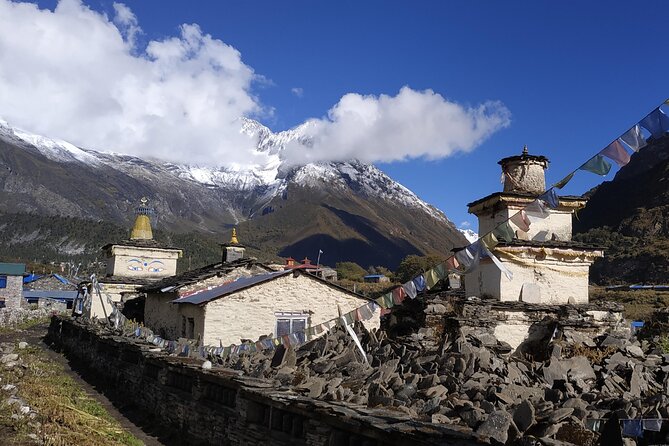
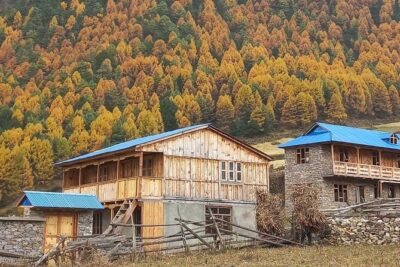
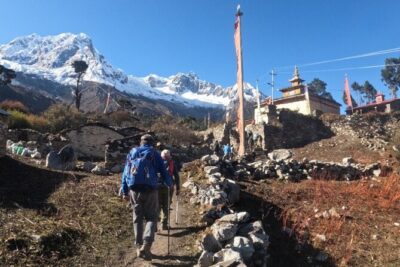
Another big plus is the mix of nature and culture. The circuit threads through forests, river valleys, and terrace villages, then rises into areas where you’ll see big mountain walls, glacier-fed views, and monasteries. Biodiversity is a real part of the region’s identity, so even the “walking days” feel like they’re changing, not repeating.
This is also a trek where the highest moments don’t arrive all at once. You build altitude gradually, with an acclimatization pause before the pass crossing. That pacing won’t eliminate altitude risk, but it makes the effort feel more sustainable.
Price and value: what $1,900 really covers
At $1,900 per person for roughly 15 days, this is not a budget trek. The value comes from what’s included up front.
What you get for your money:
- Airport transfers in Kathmandu
- Kathmandu accommodation for 2 nights in a three-star hotel, plus guided sightseeing and entrance fees
- Trek lodging for about 12 nights in guesthouses (twin-share and dorm-style rooms)
- A licensed English-speaking trekking guide
- A porter ratio of 1 porter for every two clients
- All trekking permits, including restricted-area access
- Ground transportation: transfer Kathmandu to Soti Khola from Tal to Kathmandu via 4WD
- Down jacket and sleeping bag provided for the trek (returned at the end)
What’s not included (and you should plan for):
- Meals in Kathmandu (lunch and dinner)
- Travel insurance that covers emergency high-altitude rescue and evacuation
- International airfare and Nepal entry visa
- Alcohol and cold/hot drinks
- Personal trekking equipment
- Tips for trekking staff and driver (expected)
To me, the strongest value pieces are the permits, the licensed guide, the porter support, and the included altitude kit. If you’ve ever priced airfare, insurance, guide fees, and high-altitude gear separately, it’s easier to see why this package sits where it does.
Day 1 to Day 2: Kathmandu to Machha Khola, then into the valley
Day 1 is mostly arrival and settling in. You’ll get met at Tribhuvan International Airport and transferred to your Kathmandu hotel in a private tourist vehicle. Either day 1 or day 2 includes a pre-trek meeting in the operator’s office. This is where you’ll meet your leader and handle paperwork: bring your passport, three copies of passport-size photos, and a readable copy of your travel insurance policy. You’ll also clear any due balance and sign the trip form plus the non-liability disclaimer.
Day 2 starts the long road-to-trail transition. You drive from Kathmandu to Dhading Besi, then continue to Machha Khola. The early paved road is comfortable, but the final stretch becomes a bumpy dirt drive. The trek company sends a private 4WD vehicle with an experienced driver because these roads can vary with conditions. Translation: you spend today traveling, not hiking.
Why this day matters: it sets your expectations for Nepal’s pace. If you treat Day 2 as a “warm-up” mentally, you’ll arrive at Machha Khola feeling ready instead of annoyed.
Days 3 to 5: hot springs, river power, and Ghap’s quieter drama
Day 3 takes you through river crossings and into a section with natural rewards. After crossing the Machha River and Khrola Besi, you pass Tatopani, a hot spring area. Then the trail follows through forest toward Dovan, with the Budi Gandaki becoming a powerful presence as elevation rises.
Tatopani is more than a stop on a map. It’s your first real signal that water here is not just scenery—it shapes the route, the soundscape, and the daily temperature feel.
Day 4 continues upstream into the Gandaki valley, which narrows with soaring walls. You’ll walk through bamboo forest and follow the trail along the Deng River to Deng, a tiny village.
Day 5 is longer and harder than the earlier days. You’ll start to see flowering mustard fields, then reach Ghap (2,660 m). By the time you arrive, you’ll hear a waterfall and see ancient writings and stone art. It’s one of those days where the effort pays back with a sense of place—this isn’t just altitude; it’s layers of human story in the rock.
Days 6 to 8: Namrung, Lho, and Samagaon—views start owning your attention
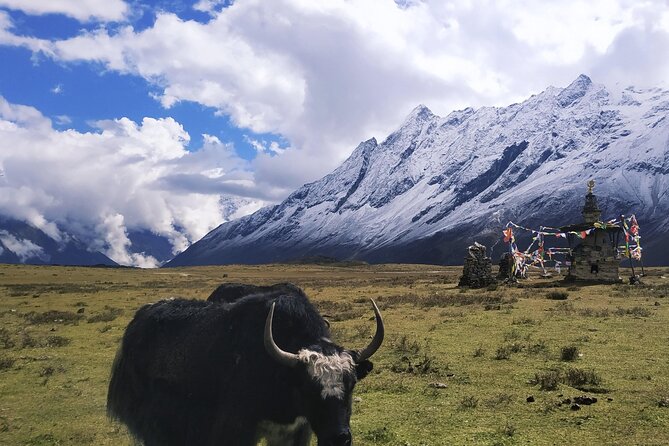
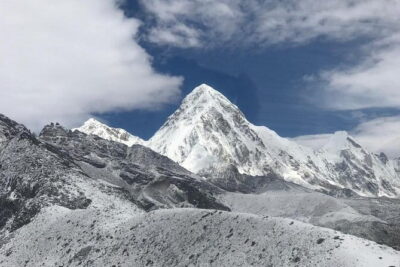
Day 6 moves you toward Namrung for lunch, with views of big peaks like Ganesh and Sringi Himal while you walk. After that, you continue on toward Lho (Lho Gaon), crossing terrain near the Hinan River that originates from Linda Glacier.
This is where the trek starts feeling like it’s “about” Manaslu, not just “in” the Manaslu region. When the valleys open and mountain faces sharpen, you’ll understand why people plan their lives around this circuit.
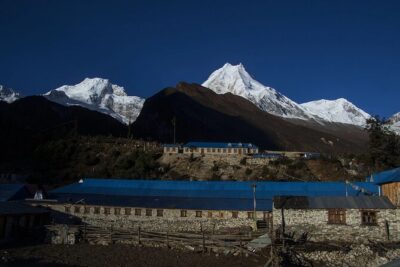
Day 7 takes you toward Samagaun. Along the way, you get a look at Naike Peak (Manaslu North) and Manaslu itself. On top of a hill, you’ll visit the Buddhist monastery Ribung Gompa before descending into your destination village, Samagaun.
Day 8 is acclimatization day. You stay in Samagaun and can choose between:
- A walk toward Pungyen Gompa and Birendra Tal (glacial lake), a side outing that can take about 4–5 hours, or
- A longer day toward Manaslu Base Camp and back, about 7–8 hours
Why I like this structure: you don’t “lose” altitude day 8. You convert it into optional experiences. If you want scenery and a lake view, go for Birendra Tal. If you want maximum trekking payoff and you’re feeling strong, aim for Base Camp.
Days 9 to 10: Samdo and Dharmashala (Larke Phedi), the trek gets remote
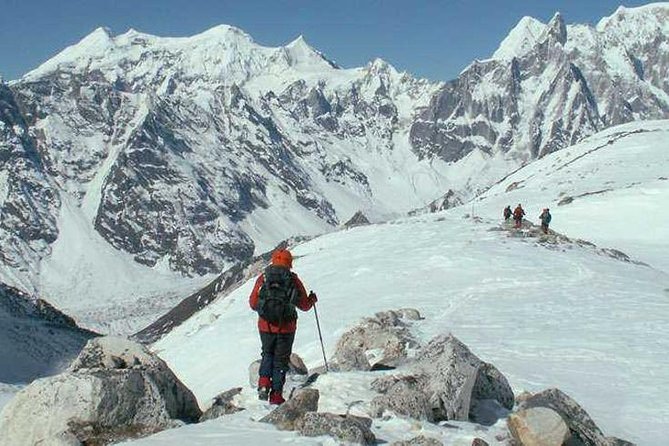
Day 9 heads toward Samdo, described as a remote permanent settlement. The route climbs a terraced hill across the opposite bank of the Budhi Gandaki River. This day tends to feel less about villages and more about scale—more sky, more mountain weight.
Day 10 moves to Dharmashala, also called Larke Phedi. You’ll walk a trail similar to the Sama Gaon to Samdo route, and here you’ll find a small stone guest house with basic facilities. This is one of those stops that rewards calm planning. Expect simplicity, not comfort-by-default.
Day 11: Larkya La Pass—long, high, and worth respecting
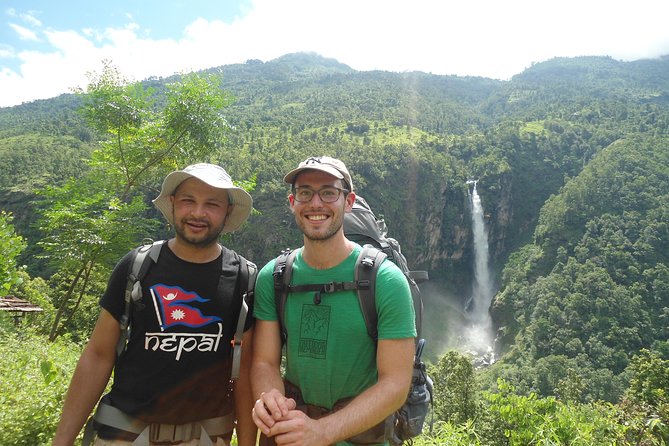
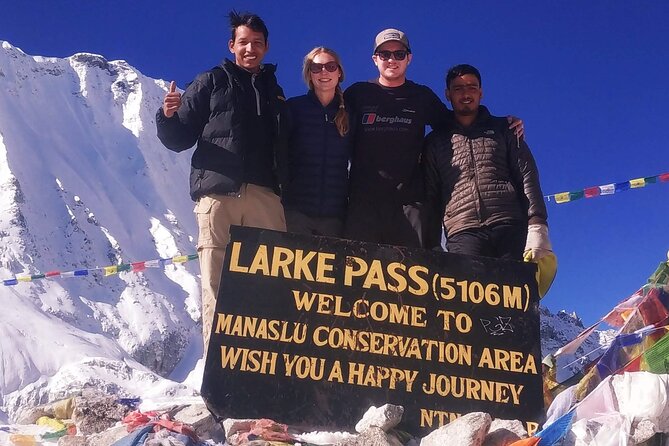
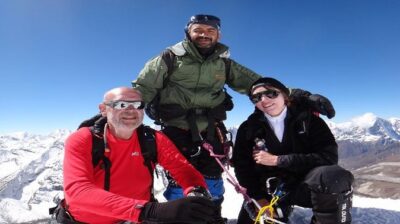
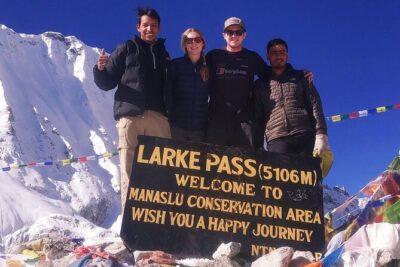
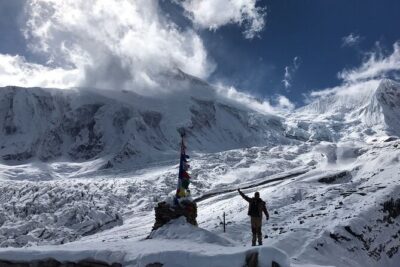
Day 11 is your big crossing: first climb toward Cho Chanda, then steeply uphill toward Larkya La Pass. From the top, the panorama includes several peaks such as Himlung Himal, Cheo Himal, Gyagi Kung, Kang Kuru, and Annapurna II. Then it’s a steep descent through moraines toward Bhimtang.
This is the day to manage your effort. The pass doesn’t care if you’re excited or tired—it wants steady movement. If the weather is hazy, visibility can limit what you see up top, but the effort still “counts” because you’re safely building toward the route’s second half.
Days 12 to 13: Tilche and Tal, where the circuit begins to feel broader
Day 12 takes you to Tilche. The route gets easier after the pass. You start with a gentle climb through paddy fields toward the Karcha La Pass, then descend through fig trees and rhododendron forest to Tilje.
Day 13 brings a shift: you pass through villages with a denser population on the way to Tal. After a few hours, you reach Dharapani (1,860 m) for lunch. From there, you enter the Annapurna Circuit section—crossing streams and fields of wheat, then moving across a suspension bridge over the Marshyangdi River before arriving in Tal.
You’ll also get a waterfall view in Tal, and the village sits on the riverbank. This is a good reminder that even after the highest pass day, Nepal still throws you moments worth pausing for.
Days 14 to 15: back to Kathmandu and a softer landing
Day 14 is a long drive. You hop into a 4WD vehicle to reach Kathmandu via Besisahar. The road can be rough and bumpy up to Besisahar, smoother afterward. Plan on a long day of sitting, even if the scenery along the way is pleasant.
Day 15 is straightforward: you’ll be dropped at Kathmandu International Airport for your final flight.
Guides, porters, and the small things that make it feel safe
This trek is built on people doing their jobs well. The operator uses a licensed English-speaking trekking guide and includes a porter ratio of 1 porter per two clients, which helps keep your logistics steady.
In real terms, that support shows up in how smoothly your days run. I especially like how the trek structure gives your guide clear milestones—things like acclimatization at Samagaun and the set route around the pass—so you’re not improvising under pressure.
Names that come up again and again with this operator include guides such as Sunil, Shyam, Janu, Sushanta, and Ram, with porters like Rohin, Dilip, Ajit Gurung (Vanja), and Ramesh mentioned in firsthand accounts. The pattern is consistent: people feel well cared for and safe on the trail. One small detail that makes camp evenings more human is that groups sometimes relax together with simple activities like playing cards with their guide and porter.
What to pack when down jacket and sleeping bag are included
You’ll receive a down jacket and a sleeping bag for the trek, then return them at the end. That’s a big help because it reduces both weight and the need to buy rental gear locally.
Since the package lists personal trekking equipment as not included, you should plan to bring your own essentials. Keep it practical: items you know you’ll need for long days, plus rain and cold protection. On a high-altitude pass day, the wrong layer can turn a manageable walk into a miserable slog, so build your kit around warmth and weather changes.
Also take the paperwork seriously at the pre-trek meeting. Bring your passport, the requested passport photos, and a readable copy of your travel insurance policy.
Who should book Manaslu Circuit (and who might hesitate)
This trek suits you if:
- You have moderate physical fitness
- You want a less-crowded Himalayan experience
- You’re comfortable with guesthouse-style accommodations, including dormitory rooms at some points
- You appreciate a controlled route where permits are part of the deal
You might want to think twice if:
- You’re not ready for long driving days and long walking days
- You need a guaranteed view of the highest peaks. Weather can vary, and the itinerary can’t control that
- Shared accommodations would stress you out more than the trek does
This route is manageable for the right people because it includes an acclimatization day and a guided schedule designed for a safe progression. But it still isn’t a stroll. Larkya La Pass is the headline event for a reason.
Should you book this Manaslu Circuit trek?
If you want Manaslu, and you want it run with permits handled, a licensed guide leading the way, and porter support built into the plan, I think this is a strong choice. The $1,900 price makes more sense when you add up the included permits, the Kathmandu hotel and sightseeing, the trekking support, and the altitude kit.
I’d book if your main priorities are:
- Less crowds, more real village days
- Clear logistics and steady guidance
- A well-structured route that includes acclimatization before the pass
I’d pause if your travel style needs easy walking, guaranteed mountain visibility, or full hotel comfort every night. This trek trades some comfort for access to a quieter corner of Nepal—and it’s worth it if that’s what you’re after.
FAQ
Where does the trip start and end?
It starts with pickup at Tribhuvan International Airport in Kathmandu and ends back at the meeting point, with an airport drop-off on the final day.
How long is the Manaslu Circuit trek?
The duration is listed as 15 days (approx.).
Is airport pickup included?
Yes. Airport transfers are included, plus transfer by 4WD for the Kathmandu-to-Soti Khola segment and for travel from Tal back to Kathmandu.
What’s included in the trek package?
Included items are airport transfers, 2 nights in a three-star Kathmandu hotel, guided Kathmandu sightseeing, guesthouse accommodation during the trek, a licensed English-speaking guide, porter support (1 porter for every two clients), all trekking permits (including restricted area), and down jacket plus sleeping bag for the trek (returned after). Meals included are breakfast and lunch during the trek days and dinner for 13 days, plus breakfast for 14 days.
What’s not included?
Not included are lunch and dinner in Kathmandu, travel insurance for emergency high-altitude rescue and evacuation, international airfare, Nepal entry visa, alcoholic and non-alcoholic drinks, personal trekking equipment, and tips for trekking staff and the driver.
How does cancellation work?
You can cancel up to 6 days in advance for a full refund. Canceling 2–6 days before the start gives a 50% refund, and canceling less than 2 days before is not refundable. The local time cutoffs apply, and if the experience is canceled due to poor weather, you’ll be offered a different date or a full refund.
If you want, tell me your travel month and your hiking background (roughly how many hours a day you can handle). I’ll help you sanity-check whether this schedule fits your pace, especially around the pass day.
More Trekking Out of Kathmandu
More Tour Reviews in Kathmandu
Just Reviewed in Kathmandu
- Mountain Bike Tour
★ 5.0 · 3 reviews - Annapurna Panaroma
★ 5.0 · 3 reviews - Mount Everest Scenic Flight 50 Minutes
★ 5.0 · 3 reviews - Kathmandu : Swambhunath & Durbar Square Guided Half Day Tour
★ 3.3 · 3 reviews - Chandragiri Cable Car & Monkey Temple Tour – Private/Group
★ 5.0 · 3 reviews - Kathmandu: Shivapuri National Park Hiking Day Trip
★ 3.3 · 3 reviews
Manaslu Circuit Treks, compared.
 ★ 5.0Manaslu Circuit TrekFrom $1,190292 reviews
Manaslu Circuit TrekFrom $1,081184 reviews
★ 5.0Manaslu Circuit Trek:From $1,099106 reviews
★ 5.0Manaslu Circuit TrekFrom $1,190292 reviews
Manaslu Circuit TrekFrom $1,081184 reviews
★ 5.0Manaslu Circuit Trek:From $1,099106 reviews
 ★ 5.0Manaslu Circuit Trek (15 Days)From $1,65750 reviews
Manaslu Circuit TrekkingFrom $1,49944 reviews
★ 5.0Manaslu Circuit Trek (15 Days)From $1,65750 reviews
Manaslu Circuit TrekkingFrom $1,49944 reviews
 ★ 5.016 Day Private Manaslu Circuit Trek from KathmanduFrom $1,13542 reviews
 ★ 5.010 Days Manaslu Circuit Trek in Larke La PassFrom $1,04930 reviews
 ★ 5.0Manaslu Circuit Trek 13 DaysFrom $1,40030 reviews
Browse the lists this tour appears in