
Review · MANASLU CIRCUIT TREKS
Manaslu Circuit Trek:
The Manaslu Circuit is for people who want real mountains. You’ll walk through terraced fields, rhododendron forests, and traditional Gurung, Tamang, and Bhote villages on a restricted route around Mount Manaslu. The big moment is crossing Larkya La Pass near 5,100–5,160m for wide, dramatic views.
I especially like how this trek mixes high-altitude effort with culture you can actually talk to. And I like that the trip is built around practical pacing—rest days and acclimatization stops—so the scenery doesn’t turn into a slog. One consideration: weather can make or break what you see, especially on pass day, and you’re committing real time at altitude.
This is a restricted trekking area in Nepal’s mid-west Himalaya. That matters, because it keeps the crowds lower and the villages more intact. The route circles Mount Manaslu (8,163m), but you’ll also get a strong sense of place: Tibetan-style villages, monasteries, and trade links close to the Tibetan border.
The itinerary you’re looking at is about 177 km on foot (typical range can be 10–15 days), and it’s designed to get you across the highest point of the trek at Larkya La Pass and then down into Nepal’s other trekking worlds. Along the way, you’ll stay in local tea houses for a total of 11 nights in twin-sharing rooms, eat mountain-friendly meals, and keep moving with a real guide system.
Guides get mentioned by name in past feedback—people praised leaders such as Suraj, Suman, Surya, Rajan Gole, Buddi(h), Indako, and Laku—and that lines up with the overall feel of this trek: someone is there to manage your day-to-day pace, not just “walk, stop, photo.”
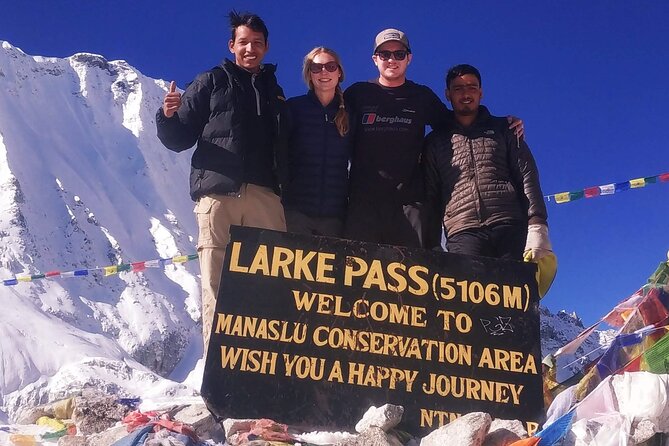
- Larkya La Pass at ~5,100–5,160m: the high point, prayer flags, and serious panoramic views if the sky cooperates.
- Culture plus altitude: Gurung, Tamang, and Bhote villages plus Tibetan-influenced stops near the border.
- Teahouse trekking, not camping: 11 nights in lodges/tea houses with meals included.
- Acclimatization built in: a rest day in Sama Gaon and careful staging before the pass.
- Permits and logistics handled: TIMS card plus Manaslu special permit and ACAP permit are included.
- Gear support is included if you need it: down jacket and sleeping bag provided by the operator.
At $1,099 per person for about 14 days, the value depends on what you want taken care of for you. In this package, you’re not just buying a route—you’re buying the “boring but essential” mountain infrastructure:
- Kathmandu: 2 nights in a hotel with breakfast, plus airport pickup and a group briefing with do’s/don’ts and a group dinner.
- Permits: TIMS card, Manaslu special permit, and ACAP permit are included.
- Trek support: government-registered guide and medical supplies/first aid kit.
- Food and sleep while trekking: 11 nights in tea houses (twin sharing) and meals during the trek (breakfast/lunch/dinner totals are included).
- Daily warmth: tea or coffee three times during the trek, plus seasonal fruit.
- Transport: all ground transportation plus a sharing jeep segment near the end.
What you should plan to pay outside the package: travel and rescue insurance, personal expenses in-country (phone/laundry/battery charging/bottled water/hot water/shower), extra Kathmandu meals, and tips for guide and porter. The listing also notes you may need extra nights in Kathmandu if your flight timing doesn’t match the schedule—so check your plan tightly.
If you’d rather arrive in Kathmandu and have someone handle permits, pacing, meals, and bed-by-bed logistics, this price can feel fair. If you’re the type who wants total DIY control, then you may feel you’re paying for convenience you wouldn’t use.
In This Review
- Day 1: Kathmandu arrival, briefing, and an easy start
- Day 2: Overland to Arughat, then into the river valleys
- Day 3: Tatopani hot springs and a calm push upward
- Day 4: Terraces, bamboo forests, and Philim to Deng
- Day 5: Bihi Bazaar, river walking, and Lo Gaon views
- Day 6: From tree lines to Sama Gaon basecamp country
- Day 7: Manaslu views from Lho and Syala to Samagaon
- Day 8: Rest and acclimatization day in Sama Gaon
- Day 9: Samdo village, Tibetan influence, and last village energy
- Day 10: Dharmasala (Larke Phedi) and a good chance at blue sheep
- Day 11: Larkya La Pass day near 5,160m, then down to Bhimtang
- Day 12: Down into forest, Karche La, Tilje, and onto the Annapurna trail near Dharapani
- Day 13: Return drive to Kathmandu and a real decompression window
- Day 14: Airport transfer for your flight home
Day 1: Kathmandu arrival, briefing, and an easy start
You land in Kathmandu, get transferred to your hotel, then join a group briefing covering trekking do’s and don’ts. There’s also a group dinner at a typical Nepalese restaurant. This is a good setup because it helps you understand gear and behavior before you’re tired and altitude is only a few days away.
Practical note: Kathmandu food is not included in the trek package, so you’ll want to budget for meals on arrival/if you eat out.
More trails out of Kathmandu, boots ready
- Everest Base Camp Trek – 14 Days★ 5.0 · 1,499 reviews
- Everest Base Camp Trek★ 5.0 · 842 reviews
- Everest Base Camp Trekking★ 5.0 · 485 reviews
- Nagarkot Sunrise View and Day Hiking from Kathmandu★ 5.0 · 471 reviews
Day 2: Overland to Arughat, then into the river valleys
Day 2 is mostly travel. You drive to Arughat in the Gorkha district, then continue along a dirt road to Machha-Khola for your first overnight. This day matters because it sets you up in the river-valley system where the trek truly starts.
Expect a “legs later” day. Hydrate, stretch, and don’t treat this as cardio. Save your energy.
Day 3: Tatopani hot springs and a calm push upward
From Machha-Khola, you begin with a walk upstream along the Buri-Gandaki River. Then you reach Tatopani, a village known for natural hot springs. If time permits, this is one of those “your body will thank you” moments.
After the hot springs, you climb to Jagat for the night. It’s not just scenic—Jagat is also a useful staging village with lodges and shops, which makes the next days easier to manage.
Day 4: Terraces, bamboo forests, and Philim to Deng
Today heads higher through rural farm villages, with a bridge crossing and a transition toward Philip/Philim. The route passes terrace fields of wheat and barley. Then bamboo and a rocky ridge show up before you reach Deng for the night.
This is a day where you’ll likely feel the altitude creeping in—not because it’s the steepest day, but because you’re steadily working uphill after already moving for two days.
Day 5: Bihi Bazaar, river walking, and Lo Gaon views
You start with a morning walk from Dyang into cooler air. The trail drops to the riverside at Bihi Bazaar, then follows the Buri Gandaki River corridor through farm villages and fields.
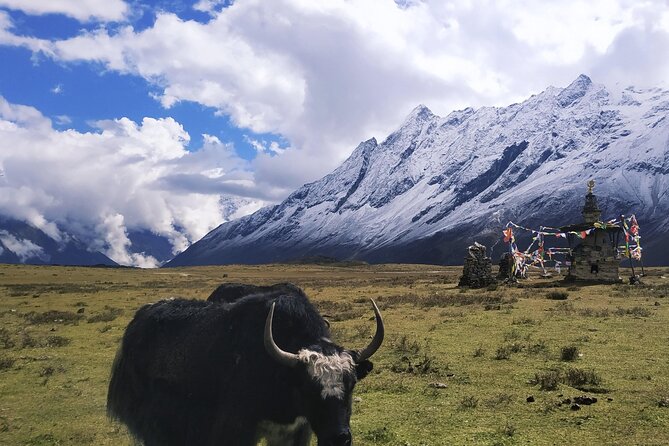
As you gain altitude, you pass smaller village names along the way and reach Lo Gaon, described as having excellent views of the Manaslu north face. If the sky is clear, this can be a big “wow” day without being a peak-stress day.
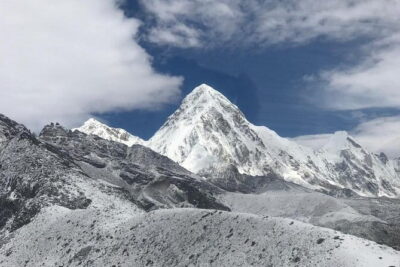
Day 6: From tree lines to Sama Gaon basecamp country
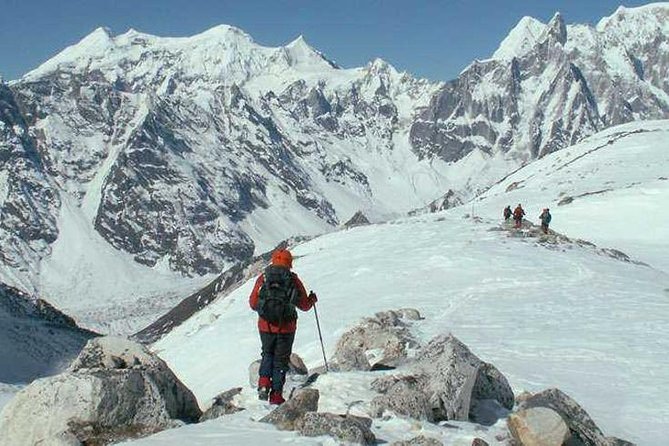
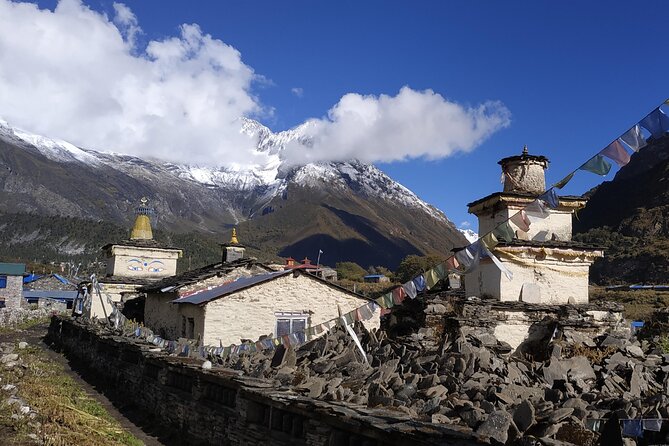
After Namrung, tree lines fade into shorter juniper and willow. You’ll walk facing distant peaks, then reach Sama Gaon for overnight. This is one of the core villages on the Manaslu route, and it’s a natural turning point into the higher zone.
If you’re sensitive to altitude, this is exactly where you start feeling it more in your breathing, not your legs.
Day 7: Manaslu views from Lho and Syala to Samagaon
This day is structured as a “scenery + village approach” day. You move toward Samagaon and get major viewpoints along the way, including stops at Lho and Syala where you can see Mount Manaslu more clearly.
This is a good day for photographers, but also for your pacing. Don’t race—take the breaks when you’re offered them. Past trekkers specifically praised guides for encouraging pauses so acclimatization stays on track.
Day 8: Rest and acclimatization day in Sama Gaon
Day 8 is a rest day to help you adjust before the higher part of the trek and the area often associated with reaching basecamp terrain around 4,800m. You’re in a village with a Tibetan feel and a traditional lifestyle, and it’s also positioned well for the next stages toward the pass.
This is one of the smartest parts of the whole trip: a day that lets your body catch up to the schedule.
Day 9: Samdo village, Tibetan influence, and last village energy
From Sama Gaon you head toward Samdu/Samdo. The trek to Samdo is described as not too far, though altitude and dry air can slow you down. Samdo is also the last village before the Larkya La pass staging area, and it’s influenced by Tibetan proximity and trade.
This is where you should start thinking like a summit-day trekker: keep warm, walk steady, and avoid acting tough when you feel sluggish.
Day 10: Dharmasala (Larke Phedi) and a good chance at blue sheep
You begin with a downhill trek to the Budhi Gandaki River, cross, then march upward through Larkya Bazaar and the Salka Khola valley toward Dharmasala (also known as Larke Phedi). It’s an easier distance day by mountain standards (the plan puts it around 4 hours on normal days).
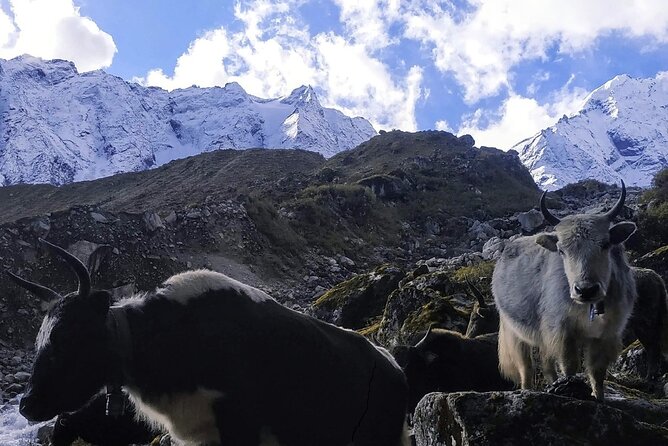
Dharmasala is also noted as a place with a high chance of seeing blue sheep. Whether you see them or not, this day is about resetting before the pass.
Day 11: Larkya La Pass day near 5,160m, then down to Bhimtang
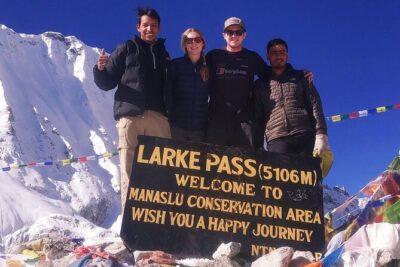
This is the headline day. You start much earlier and climb through gradual winding uphill, then reach the steep portion up to the pass at the top around 5,160m (the trip overview also cites 5,106m, so expect your plan to describe it around the 5,100m band).
At the top you’ll see Buddhist prayer flags and stacked stones, then you’ll look out toward peaks such as Himlung, Cheo Himal, Kang Guru, and Annapurna II. After that, you’ll descend into the valley area (Larcia), pass a moraine zone, reach Tambuche around 3,900m, and continue to Bhimtang for the night.
Tip: pass day is won by discipline, not speed. If you’re given breaks, take them. If your guide asks you to move a bit slower, do it. Clear skies help, but good decisions still matter if clouds roll in.
Day 12: Down into forest, Karche La, Tilje, and onto the Annapurna trail near Dharapani
You descend into forest, then climb on terraced fields to Karche La, and drop toward the Marysangdi River. After hours of walking you reach Tilje, continue through villages including Thonje, then cross a bridge and join the main trail of the Annapurna Circuit near Dharapani.
Then comes the “legs feel better” part: a sharing jeep to Besisahar (about a 4-hour drive). This is a major quality-of-life shift after pass day—don’t waste it. Eat, hydrate, and rest your feet.
Day 13: Return drive to Kathmandu and a real decompression window
The plan moves you by road back toward Kathmandu, passing through towns like Besisahar and then onward to Kathmandu. You finish with afternoon free time to relax after the trek.
This is where I’d plan a gentle day: wash up, walk a little, and eat a proper meal that feels easy.
Day 14: Airport transfer for your flight home
You depart based on your international flight time, with hotel-to-airport transfer included.
The strongest praise you’ll see again and again is about people and care, not just photos.
1) Guides who manage the day
Past feedback repeatedly points to guides like Suraj, Suman, Surya, Rajan Gole, Indako, Buddi(h), and Laku for making days manageable and safe. You should expect real help with pacing, breaks for acclimatization, and calm guidance when conditions get tough.
2) Porters as essential teammates
Names like Kami, Bardan, and others come up with appreciation. Even when you feel steady, a porter makes the trek feel like a trekking trip instead of a survival contest.
3) A route that feels different from the usual Nepal trek circuits
Because this route is restricted and circles Manaslu, you get villages and terrain that don’t feel copy-paste. You’re not only chasing altitude—you’re moving through working communities.
4) Pass-day meaning
Crossing Larkya La is the physical highlight, but it’s also the emotional one. When the sky is clear, the views described include multiple major peaks, and the prayer-flag moment becomes part of the memory.
5) Weather is a factor, so your expectations should be flexible
Clear skies give the best panoramas. If clouds move in, you’ll still get the trek—just with different lighting and fewer long-distance views. Build excitement around the effort and the villages too, not only the peak shots.
This trek uses local tea house accommodation for 11 nights, with twin-sharing rooms. You’ll be given down jacket and sleeping bags if needed, which is helpful if you don’t already own proper cold-weather gear.
Even with provided gear, keep your expectations realistic: these are mountain lodges, not full-service hotels. Your comfort will come from warmth management (layers), rest days, and a steady routine—not from luxury.
Personal expenses are on you (hot showers, phone charging, bottled water), so bring a plan for small buys. And remember: your included meals mean you’re not constantly hunting food at altitude, which helps both energy and safety.
This is best for you if:
- You have moderate physical fitness and can handle long hiking days on uneven paths.
- You want a guided route with permits and meals arranged.
- You care about culture (Gurung/Tamang/Bhote villages, monasteries, and Tibetan-influenced communities near the border).
You might think twice if:
- You want a gentle hike. Even when the route is described as not overly technical, altitude and the pass day make it serious.
- You get very stressed by weather changes. You’ll be at the mercy of visibility on the day you want the biggest views.
I’d book this trek if your priority is a true high-Himalaya circuit with fewer crowds, meaningful village days, and a clearly supported plan that handles permits, tea-house lodging, and meals. The included permits and pacing support make the trip feel “managed,” which matters a lot when you’re working at altitude.
I wouldn’t book it if you only care about summit views and you hate the idea that clouds can hide them. Also, be honest about your conditioning: Larkya La pass day is the one day you can’t shortcut.
If you’re aiming for value plus authenticity—tea houses, real communities, and one of Nepal’s more distinctive restricted circuits—this one is a strong match.
More Trekking Out of Kathmandu
More Tour Reviews in Kathmandu
Just Reviewed in Kathmandu
- Mountain Bike Tour
★ 5.0 · 3 reviews - Annapurna Panaroma
★ 5.0 · 3 reviews - Mount Everest Scenic Flight 50 Minutes
★ 5.0 · 3 reviews - Kathmandu : Swambhunath & Durbar Square Guided Half Day Tour
★ 3.3 · 3 reviews - Chandragiri Cable Car & Monkey Temple Tour – Private/Group
★ 5.0 · 3 reviews - Kathmandu: Shivapuri National Park Hiking Day Trip
★ 3.3 · 3 reviews
Manaslu Circuit Treks, compared.
 ★ 5.0Manaslu Circuit TrekFrom $1,190292 reviews
Manaslu Circuit TrekFrom $1,081184 reviews
★ 5.0Manaslu Circuit TrekFrom $1,190292 reviews
Manaslu Circuit TrekFrom $1,081184 reviews
 ★ 5.0Manaslu Circuit Trek (15 Days)From $1,65750 reviews
Manaslu Circuit TrekkingFrom $1,49944 reviews
★ 5.0Manaslu Circuit Trek (15 Days)From $1,65750 reviews
Manaslu Circuit TrekkingFrom $1,49944 reviews
 ★ 5.016 Day Private Manaslu Circuit Trek from KathmanduFrom $1,13542 reviews
★ 5.0Manaslu Circuit TrekFrom $1,90035 reviews
★ 5.016 Day Private Manaslu Circuit Trek from KathmanduFrom $1,13542 reviews
★ 5.0Manaslu Circuit TrekFrom $1,90035 reviews
 ★ 5.0Manaslu Circuit Trek 13 DaysFrom $1,40030 reviews
 ★ 5.010 Days Manaslu Circuit Trek in Larke La PassFrom $1,04930 reviews
Browse the lists this tour appears in