
One hard pass away from a very different Nepal. The Manaslu Circuit trek is a less-visited loop around Manaslu, taking you from hot rice terraces up into colder, higher country. I love the remote feel and the Buri Gandaki River gorge moments—icy water, waterfalls, and suspension bridges—that keep pulling you forward. Still, one thing to think about: this is a physically demanding trek in a restricted area, with real altitude risk if you move too fast.
What makes this trip land well on the ground is how it’s built for the trek, not just for the marketing. You get private transportation for the long, bumpy road days, and the route includes clear acclimatization breaks around Samagaun/Samdo/Base Camp options. And the human part matters too: the experience repeatedly credits guides like Dilman, Pemba, KP, Narayan, Mitra, and Sajan for pacing and support when conditions shift.
The only real drawback is also the point of the whole circuit: you’re committing to long hiking days and high altitude. The big moment is Larkya La at about 5,160–5,167m, where crampons may be needed in bad weather, and early starts are non-negotiable.
In This Review
- Quick hits before you commit
- Why the Manaslu Circuit feels quieter (and more real)
- Price and value: what $1,081 covers on this kind of trek
- Getting there the right way: road time from Kathmandu
- Days 1–5: Soti Khola to Namrung, river valleys and first bridge crossings
- Days 6–10: Lho and Samagaun, Tibetan influence, yaks, and real acclimatization
- Days 11–13: Dharamsala and the Larkya La Pass push
- Day 14: Returning to Kathmandu, less drama, more closure
- The guides matter more than you think (Dilman, KP, Pemba, Narayan, Mitra, Sajan)
- What to pack and how to think about altitude (without overthinking it)
- Should you book this Manaslu Circuit trek with Magical Nepal?
- FAQ
- How long is the Manaslu Circuit trek?
- Where does the trek start and where does it end?
- What’s included in the price?
- What’s not included?
- Is pickup included?
- How hard is the trek and what fitness level do I need?
- What’s the highest point on the route?
Quick hits before you commit
- A remote restricted-region loop that feels pioneering, not crowded.
- Buri Gandaki gorge scenery with suspension bridges and icy turquoise river energy.
- Larkya La (5,167m) is the headline, and conditions can turn fast.
- Built-in altitude rhythm: rest days that still include activity.
- Guide support you can feel (Dilman, KP, Pemba, Narayan, Mitra, Sajan).
- Meals included across the trek—use that predictability to manage energy.
More trails out of Kathmandu, boots ready
- Everest Base Camp Trek – 14 Days★ 5.0 · 1,499 reviews
- Everest Base Camp Trek★ 5.0 · 842 reviews
- Everest Base Camp Trekking★ 5.0 · 485 reviews
- Nagarkot Sunrise View and Day Hiking from Kathmandu★ 5.0 · 471 reviews
Why the Manaslu Circuit feels quieter (and more real)
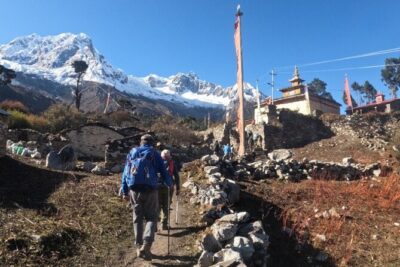
If you’ve done the classic big-name trekking routes in Nepal, Manaslu can feel like the version of Nepal that still has breathing room. The main reason is simple: this circuit stays more remote. You hike through traditional villages influenced by Buddhism, see prayer flags flutter in the wind, and spend days where the scenery keeps changing without needing crowds to make it exciting.
The other reason it feels different is the geography. You’re tied to the Buri (Bhuri) Gandaki River for long stretches. That means you’re not just walking between viewpoints—you’re moving through river valleys, forested slopes, and dramatic bridge crossings where water and rock do the talking. One day you’re following a twisting river trail in sal forests and along cliffs; another day you’re soaking up the contrast of hot springs at Tatopani. Then later, you’re climbing into yak pastures and high, pale glacial country.
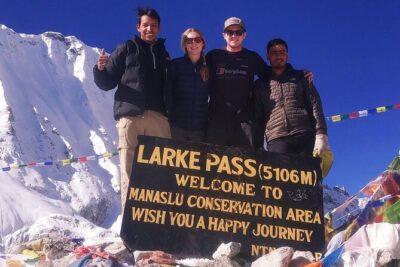
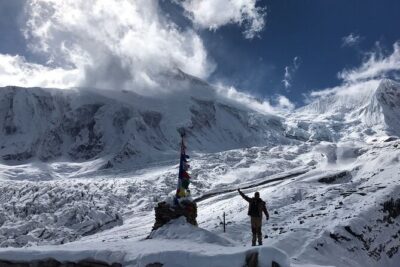
And yes, the big payoff is the pass. Larkya La is high enough that the trek turns from “hike” into “weather management.” You’re crossing before afternoon, watching the light and the mountain angles shift in real time. From there you get views behind and ahead—plus icefalls and towering peaks, including Annapurna II in the wider panorama.
Price and value: what $1,081 covers on this kind of trek
At $1,081 per person, this isn’t a bargain tea-house stroll. But it’s also not priced like a luxury mountaineering expedition. The value comes from what’s included:
- Private transportation (not just buses) for the long road segments.
- All fees and taxes—important in Nepal, especially for a route that involves restricted-area rules.
- Meals for 14 days: breakfast, lunch, and dinner counts are included across the trek days.
- Pickup offered and a mobile ticket.
What’s not included is also part of the value calculation: you do pay separately for a hotel in Kathmandu and there’s no porter included. If you’re strong and carry smart, that can work. If you’re planning to hike with a heavier pack and you want help, you may want to budget for a porter anyway.
For me, the best way to judge the price is this: you’re paying for fewer “logistics headaches.” Meals are handled, permits/fees are handled, and the road days don’t force you into cramped, slow chaos. On a trek like this, that saves energy for the part that matters—your legs and your altitude plan.
Getting there the right way: road time from Kathmandu
The Manaslu Circuit begins with movement out of Kathmandu, and the roads are part of the story. Day 1 starts around Soti Khola, and you have options: a bus, a bus + local jeep combo, or a private jeep. The private jeep is worth considering because the road is described as long, dusty, and bumpy. Public transport stops on the highway for lunch and toilet breaks, so timing feels less “together.”
This matters because you’ll start Day 2 hiking the moment you can. Day 2 is already a proper entry into the wild: rocky and narrow road segments, rivers, waterfalls, and villages of Gurung and Ghale communities. Then you’re walking along the riverside trail where mule trains pass—so you learn fast about footing and where to stand (stick to the hillside side, not the drop side).
On the way back, Day 14 returns you to Kathmandu with similar transport choices. Think of it as two big transitions: first, from city logistics into mountain routine; later, from mountain rhythm back into Kathmandu’s energy.
Days 1–5: Soti Khola to Namrung, river valleys and first bridge crossings
Day 1: Soti Khola
You’re not trekking all day 1. You’re getting set up. Expect a travel day that can feel long, especially if you take public options. Use this day to hydrate early and keep your pack light if possible.
Day 2: Machhakhola
This is where the trek clicks into gear. After the road yesterday, you step onto a trail that feels tight to the land: sal forests, cliffs, waterfalls, and villages. You’ll likely stop for lunch in a village and might even taste local dairy like fresh milk and yogurt. There’s also a river-prayer moment at Nyali Khola, where people gather to pray to river and mountain deities for safe travel. It’s a quick cultural pause that feels real, not staged.
Overnight lands in Machhakhola, literally tied to the fish-river name. You’ll also learn your first practical safety habit: when mule trains pass, stand where the ground is stable.
Day 3: Jagat (entering the Manaslu Restricted Area)
You follow the Buri Gandaki River along a twisting trail. Forest walking brings a chance of monkeys and langurs. Then you reach Tatopani for hot water soaks—one of the best ways to reward your legs without losing your day entirely. After that, you cross the river by suspension bridges: first the Bhuri Gandaki, then another cantilever bridge. These bridges are a signature of the region and a good reason the route feels more adventurous than just “forest-to-village.”
Overnight in Jagat, and here you’re entering the Manaslu Restricted Area, with permits/inspections becoming part of the trail routine.
Day 4: Manaslu / Phillim permit check to Sirdibas and beyond
This day mixes scenery and procedure. You’ll descend toward Sirdibas and see gompas along the way. Then you reach a checkpost at Phillim where your permit is inspected. After that, you continue along the western bank with uniquely water-formed boulders, through rhododendron and pine forests. Dinner at Pewa is a classic tea-house reset—dal bhat included.
Day 5: Namrung
Today includes a landslide zone, so you slow down and follow your guide’s instructions. That’s not optional. The positive side: you’ll likely see more monkeys, and you’ll finish in Namrung with a standout small-town upgrade—an operator who previously worked in Hong Kong returned to build a hotel/restaurant with good coffee and wifi. It’s not the main point of the trek, but it’s a nice comfort if you want to send a quick message and keep your batteries alive.
Days 6–10: Lho and Samagaun, Tibetan influence, yaks, and real acclimatization
Day 6: Lho
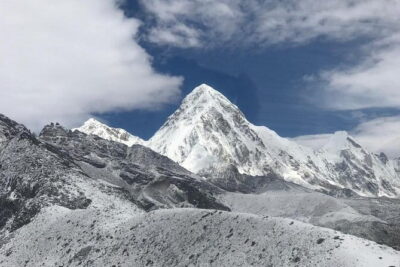
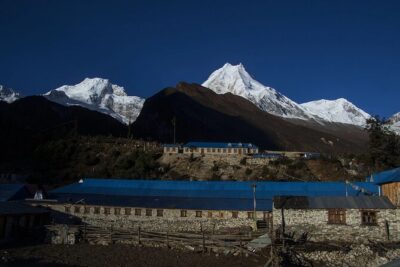
Expect Buddhist and Tibetan-looking details: mani walls (stone walls carved with Buddhist mantras) and villages influenced by Tibetan Buddhism. With Tibet close by, many locals wear Tibetan dress and keep traditional ways. The walking also shifts: lush terraces and forests of fir, oak, and rhododendron appear again and again, with rocky hillsides in between. Overnight in Lho comes with strong views of Manaslu (8,163m) and Manaslu North (7,157m)—the kind of view that makes the climb feel worth it.
Day 7: Samagaun
This is a shorter day as altitude rises. You get views of Mt Manaslu early, then move into yak pastures. Sama Gaun is the principal village of the Nubri people and includes a large gompa, shops, a health post, a heliport, and telephone/wifi access. In practice, this day helps you settle your rhythm. You’re not racing the map—you’re building your breathing control.
Day 8: Manaslu Base Camp acclimatization options
This is the day you learn the difference between rest and recovery. You’re resting, but you’re also staying active. Options include Pungyen Gompa, Manaslu Base Camp (around 4,400m), or Birendra Tal (lake). These hikes are around two hours, and you eat packed lunch near the trail.
If you feel tired, the lake walk is shorter. Base Camp requires more effort, but slow walking and hydration are the key tools. This is a pattern you’ll want to keep: steady, not heroic.
Day 9: Samdo
More high-valley walking with yak pastures. You can explore neighboring villages or hike to Samdo Peak for a view over the trail toward Larkya La and onward toward Tibet. This is a good place for photos, but also for mental calibration. When you can see the pass direction, you understand what you’re preparing for.
Day 10: Second Samdo acclimatization day
Another adjustment day at high altitude. You can look toward the Tibetan border, though the info here is clear: you can’t actually go across. You might see yak caravans crossing the border area, and if luck is on your side, you could also spot blue sheep, pica, and marmots. Looking south, you see Samdo Glacier and a hug serac near the top. This helps you picture the terrain in the next days instead of just surviving it.
Days 11–13: Dharamsala and the Larkya La Pass push
Day 11: Dharamsala (overnight), high-altitude focus
You walk slowly in the higher country, staying alert to how your body reacts. Tonight you sleep in Dharamsala, a village with great views. This is also where you mentally shift: tomorrow is the pass day.
Day 12: Cross Larkya La (5,160m) to Bimthang
This is the heart of the trek. You get an early start because you need to pass before afternoon. In bad weather or snow, this becomes very challenging and crampons may be needed. That’s not a scare tactic—it’s a practical gear and planning reality at this altitude.
After crossing, you get a wide mountain window: Himlung (7,126m), Kang Guru (6,981m), and Annapurna II (7,937m). You also see Pongkar Tal between Pongkar and Salpudanda Glaciers. Then you walk downhill for about three hours. Expect icefalls and intense glacial views on the way to Bimthang.
A note on pacing here: the people guiding this trek repeatedly talk about managing weather windows and moving as a team. That’s what keeps the pass crossing from feeling like chaos.
Day 13: Down through forests and rough track, lunch at Karche
You trek downhill through rhododendron bushes and forests. You stop for lunch at Karche Village after crossing Dudh Khola. There are signs of glacier floods, and the track can get rough. Later, the valley becomes lusher with visible agriculture, so you get a nice physical payoff: the mountain is still there, but your legs face softer terrain for a while.
Day 14: Returning to Kathmandu, less drama, more closure
Day 14 is your reset day. You head back to Kathmandu with the same sort of transport options you used going out—bus/jeep combos or private jeep—arriving by evening. This is when you’ll appreciate the structure of having meals handled during the trek. Your appetite may be different on the way back, but you still land in Kathmandu knowing you completed the full loop.
The guides matter more than you think (Dilman, KP, Pemba, Narayan, Mitra, Sajan)
On a trek like this, the guide is not just “company.” It’s decision-making. The experience highlights repeated praise for guides who stay calm, adjust plans to weather, and support altitude challenges.
For example:
- Dilman is repeatedly credited for thoughtful support, including help when altitude issues showed up for a group member.
- KP is praised for organizing, knowing the terrain, and adapting routes to maximize weather windows.
- Pemba is known for pacing with the group and finding good tea-house stops and extra sites.
- Narayan and Mitra also get strong mentions for professionalism, flexibility, and keeping tough days fun.
- Sajan is praised for cultural storytelling and strong support in every situation, with high-level English.
Even if your hiking style is confident, having someone who can manage pace, weather shifts, and safety decisions makes your odds better on Larkya La day—when conditions can change quickly.
What to pack and how to think about altitude (without overthinking it)
You should plan for real cold and real height. The route includes days above 4,000m and the pass around 5,160–5,167m. The information on crampons in bad weather at Larkya La is your big clue: bring the gear strategy you need, and listen when your guide talks.
More important than packing every theoretical item is how you walk:
- Keep your effort steady on ascent days.
- Use the acclimatization days as workdays for recovery, not as empty rest days.
- Hydrate and eat what you can during tea-house breaks. This trek includes full meals, so you don’t need to guess.
If you’re someone who tends to race at the start of a hike, this trek will train that out of you fast—in a good way.
Should you book this Manaslu Circuit trek with Magical Nepal?
You should book if you want:
- A remote, less crowded circuit that still feels structured and supported.
- A route with clear acclimatization rhythm and a big, well-marked pass day.
- Guides who are known for pacing, flexibility, and altitude care (Dilman, KP, Pemba, Narayan, Mitra, Sajan).
Skip it (or adjust your expectations) if:
- You’re not ready for a physically challenging trek with long hiking days and high altitude.
- You don’t want to plan for cold and possible snow conditions at Larkya La.
For the right fit, this trek offers exactly what many people come to Nepal for: hard scenery, honest mountain days, and villages with living culture. It’s not a quick brag trip. It’s a real Himalayan loop—built to be worth your time.
FAQ
How long is the Manaslu Circuit trek?
The experience runs for about 14 days, based on the day-by-day route from Soti Khola to Kathmandu.
Where does the trek start and where does it end?
It starts in Kathmandu near Tribhuvan Airport and ends back in Kathmandu.
What’s included in the price?
The price includes private transportation, all fees and taxes, and breakfast/lunch/dinner across the trek days.
What’s not included?
Not included are the Kathmandu hotel and a porter. Lunch and meals during the trek are included, but you’ll still need a Kathmandu hotel plan.
Is pickup included?
Pickup is offered.
How hard is the trek and what fitness level do I need?
You should have a strong physical fitness level. The trek includes high-altitude walking and a high pass day at around 5,160m.
What’s the highest point on the route?
The highest point is the Larkya La Pass, around 5,160–5,167m, with notes that crampons may be needed in bad weather or snow.
More Trekking Out of Kathmandu
More Tour Reviews in Kathmandu
Just Reviewed in Kathmandu
- Mountain Bike Tour
★ 5.0 · 3 reviews - Annapurna Panaroma
★ 5.0 · 3 reviews - Mount Everest Scenic Flight 50 Minutes
★ 5.0 · 3 reviews - Kathmandu : Swambhunath & Durbar Square Guided Half Day Tour
★ 3.3 · 3 reviews - Chandragiri Cable Car & Monkey Temple Tour – Private/Group
★ 5.0 · 3 reviews - Kathmandu: Shivapuri National Park Hiking Day Trip
★ 3.3 · 3 reviews
Manaslu Circuit Treks, compared.
 ★ 5.0Manaslu Circuit TrekFrom $1,190292 reviews
★ 5.0Manaslu Circuit Trek:From $1,099106 reviews
★ 5.0Manaslu Circuit TrekFrom $1,190292 reviews
★ 5.0Manaslu Circuit Trek:From $1,099106 reviews
 ★ 5.0Manaslu Circuit Trek (15 Days)From $1,65750 reviews
Manaslu Circuit TrekkingFrom $1,49944 reviews
★ 5.0Manaslu Circuit Trek (15 Days)From $1,65750 reviews
Manaslu Circuit TrekkingFrom $1,49944 reviews
 ★ 5.016 Day Private Manaslu Circuit Trek from KathmanduFrom $1,13542 reviews
★ 5.0Manaslu Circuit TrekFrom $1,90035 reviews
★ 5.016 Day Private Manaslu Circuit Trek from KathmanduFrom $1,13542 reviews
★ 5.0Manaslu Circuit TrekFrom $1,90035 reviews
 ★ 5.0Manaslu Circuit Trek 13 DaysFrom $1,40030 reviews
 ★ 5.010 Days Manaslu Circuit Trek in Larke La PassFrom $1,04930 reviews
Browse the lists this tour appears in