
Review · MANASLU CIRCUIT TREKS
15 Days Manaslu Circuit Trek
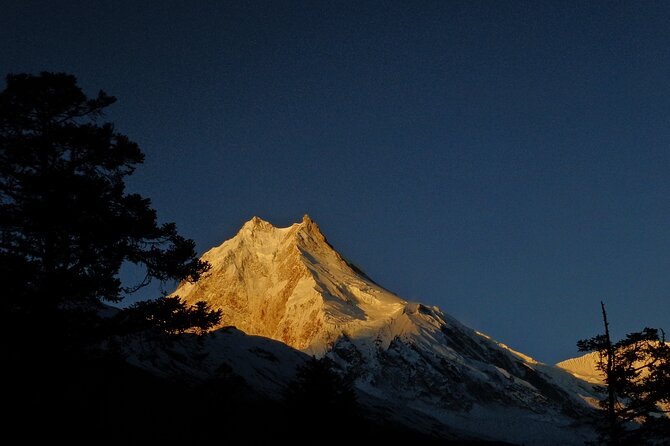
Manaslu Circuit feels quieter than most Nepal treks. This 15-day loop climbs from low country up into high alpine terrain over 5000 meters while circling Mt. Manaslu. I like that the route mixes mountain adventure with everyday village life, not just postcard scenery.
What I really like is the human side: you get local guide support plus porters, and you travel in a small group capped at 14 travelers. Based on recent feedback about guides like Suresh and Sujan, the best part isn’t only the route knowledge, it’s the stories and day-to-day flexibility when conditions change.
One possible drawback: this is not a casual hike. You need moderate fitness, and you’ll face a long, tough pass day when Larke La rises to big altitude (with the itinerary also including a rest/acclimatization day, which helps but doesn’t remove the challenge).
In This Review
- Key highlights that make this trip worth your attention
- Why the Manaslu Circuit feels different from the usual Nepal routes
- Price and logistics: what $1,450 buys (and why it’s not just about the trek)
- Your guiding team: professional support, plus what clients rave about
- Kathmandu start: airport pickup and a realistic prep pace
- Day 3 to Day 5: from Machhakhola to Jagat, hot springs included
- Day 6 to Day 8: Namrung and Shyala, plus real monastery views
- Day 9 and beyond: rest day at Samagaun, then Samdo and Dharmasala
- Larke La Pass on Day 12: expect effort, not just views
- Day 13 to Day 14: Dharapani, Tilije upgrades, and the drive back to Kathmandu
- Daily expectations: pacing, bridges, and why the trail description matters
- Who should book the Manaslu Circuit, and who should be cautious
- Should you book this 15-day Manaslu Circuit trek with Yak Ru Adventure?
- FAQ
- What is the meeting point and start time?
- How many days is the Manaslu Circuit trek?
- What’s included besides the trekking days?
- Are meals covered while you are in Kathmandu?
- What is the group size limit?
- What fitness level do you need?
Key highlights that make this trip worth your attention
- Least-visited feel: fewer crowds than the well-trodden Everest/Annapurna routes.
- Culture plus altitude: Tibetan-influenced villages, monasteries, and high pastures.
- Monastery moments: Ribung Gompa and Punggyen Gompa are built into the trek flow.
- Acclimatization day: a planned rest day at Samagaun with an excursion to Birendra Lake.
- One truly demanding day: Larke La Pass pushes you into a long, steep summit-to-descent segment.
- Comfort touches later on: Tilije onward can include hot shower, Wi‑Fi, and electricity.
More trails out of Kathmandu, boots ready
- Everest Base Camp Trek – 14 Days★ 5.0 · 1,499 reviews
- Everest Base Camp Trek★ 5.0 · 842 reviews
- Everest Base Camp Trekking★ 5.0 · 485 reviews
- Nagarkot Sunrise View and Day Hiking from Kathmandu★ 5.0 · 471 reviews
Why the Manaslu Circuit feels different from the usual Nepal routes
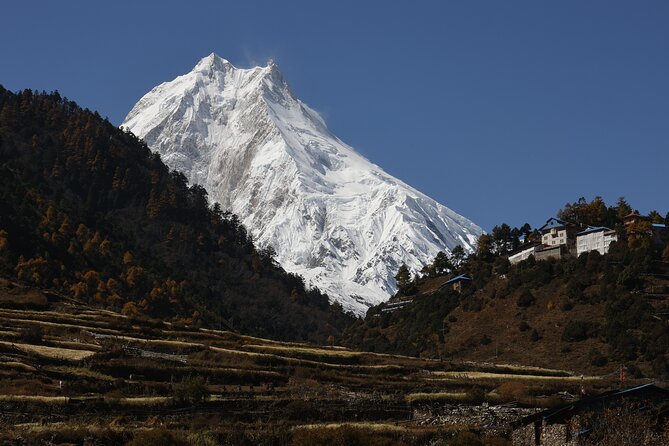
If you’re chasing famous trails, you can find them in Nepal. This one goes the other direction on purpose. The Manaslu Circuit threads through villages, farms, and forests while still giving you that big-mountain feeling as you climb.
You’ll start in the lowlands and steadily gain elevation, which matters because it lets the scenery shift in a natural way: terraced fields and river valleys first, then pine and rhododendron stretches, then the colder high country. The route also frames Manaslu in the background for long stretches, so you’re not just visiting a peak once—you’re living around it for days.
The cultural texture is a big part of the appeal. You’ll pass through communities with strong Tibetan influence, including a stop at Samdo, described as a small Tibetan refugee village. You’ll also visit gompas (monasteries) with major views—Ribung Gompa and Punggyen Gompa are on your path—so this is a trek where faith, daily life, and mountain awe show up together.
Price and logistics: what $1,450 buys (and why it’s not just about the trek)
At $1,450 per person for about 15 days, the value mostly comes from what’s handled for you. You’re not only paying for days on a trail. You’re paying for permits/paperwork, professional guiding, and daily food coverage on the trek.
Here’s what’s clearly included:
- 3 nights in Kathmandu in a 3-star hotel on bed-and-breakfast
- all ground transfers in private vehicles
- permits and paperwork
- a professional English-speaking guide with satellite phone and oximeter
- tea and coffee during the trek
- meals during the trekking portion (breakfast listed for 14 days; lunch 12; dinner 12)
- rescue and evacuation arrangements if something goes wrong
In Kathmandu, lunch and dinner are not included, so you’ll still want a small daily budget for meals there. Tips are also not included. But once you leave Kathmandu for the trail, the plan is built to remove the constant decision-making: you have a route, you have meals on scheduled days, and you have support staff.
One more detail worth noticing: the group size is kept small (maximum 14 travelers). Smaller groups usually mean fewer bottlenecks at teahouses and more breathing room when you’re adjusting to weather or pacing.
Your guiding team: professional support, plus what clients rave about
This trip runs with a professional English-speaking guide equipped with a satellite phone and oximeter. That’s not a flashy feature—it’s practical. On a high trek, fast communication and basic altitude monitoring matter.
You also get porters and assistant guides sized to the group. That typically makes a noticeable difference to how your hike feels day to day. When you’re not carrying everything, you can keep your energy where it counts: steady steps, focused breathing, and enough patience for long bridge crossings and rocky sections.
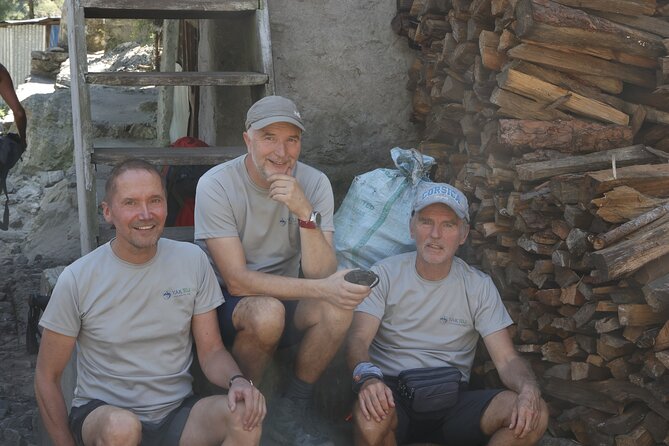
Recent feedback highlights guides who go beyond logistics. People specifically praised Suresh for being both a guide and part of the group, with lots of mountain and people/culture stories. Sujan was praised for fluent English and a fun, positive style, plus strong mountain knowledge. Another group called out that organization felt very smooth and that the guides were flexible when needed.
So the best-case version of this trek is not only safe and well-run—it also feels human. That’s hard to quantify in a brochure, but you can feel it in day-to-day tempo.
Kathmandu start: airport pickup and a realistic prep pace
Your trip begins in Kathmandu with pickup and hotel transfer from the airport. You’ll get time to rest on Day 1, then meet the guide in your hotel lobby for a briefing.
Day 2 is setup time. You’ll prepare gear with your guide and get ready for the trek. This matters more than it sounds. People often show up with bags that look right and then realize too late they missed basic trekking needs. A focused prep day gives you a chance to fix that before you’re climbing.
This plan also keeps you from rushing. Three nights in Kathmandu in a 3-star hotel on bed-and-breakfast is a strong base for jet-lagged humans. You’ll still want to take it easy that first full day—Kathmandu altitude can be sneaky if you try to cram too much sightseeing.




Day 3 to Day 5: from Machhakhola to Jagat, hot springs included
Day 3 is mostly travel. After breakfast you drive toward Machhakhola via Arughat and Sotikhola, using blacktopped roads for part of the route and then switching to dirt roads. This is typical Nepal trekking logistics: the trail starts after you’ve shaken off a chunk of the country.
Day 4 brings your first big walking day. You cross the bridge over Machha Khola, then walk a rugged vehicle road until Tatopani. Tatopani is a nice moment in the middle of the day: you get a break with natural hot springs. Then you keep climbing, crossing Budhi Gandaki and heading toward Dobhan. From there it’s a gradual ascent through a landslide area to Thulo Dhungga and Yaruphant, then another suspension bridge before reaching Jagat.
Why this section works:
- you start with manageable terrain before higher alpine fatigue kicks in
- the hot spring stop gives you a mental reset
- you’re learning the rhythm: bridges, rocky ground, steady uphill
The main consideration here is that the route includes rugged vehicle roads and landslide areas. Even when distance is reasonable on paper, your legs feel it.
Day 5 continues the pattern: Jagat to Deng via Salleri, Sirdibas, multiple bridge crossings, and forested sections with pine and bamboo. You’ll pass through places like Philim and Ekle Bhatti, then move through Nyak Phedi and reach Dang.
In short: days 3–5 are about getting into trekking mode—boots, balance, and patience with varied footing.
Day 6 to Day 8: Namrung and Shyala, plus real monastery views
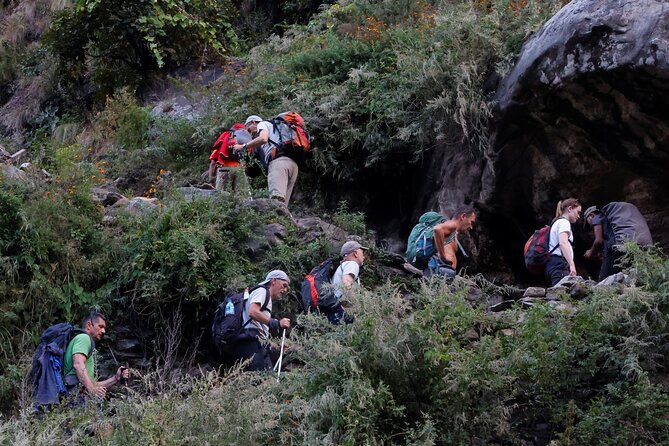
Day 6 heads to Namrung. You’ll start on narrow, relatively flat terrain, then deal with landslide sections before reaching Ghap by crossing bridges over Budi Gandaki River. After the last bridge you climb through low alpine forest to Namrung.
Namrung is described as a highland hamlet with people resembling Tibetans. You can expect that shift in culture and look as the trek gets higher.
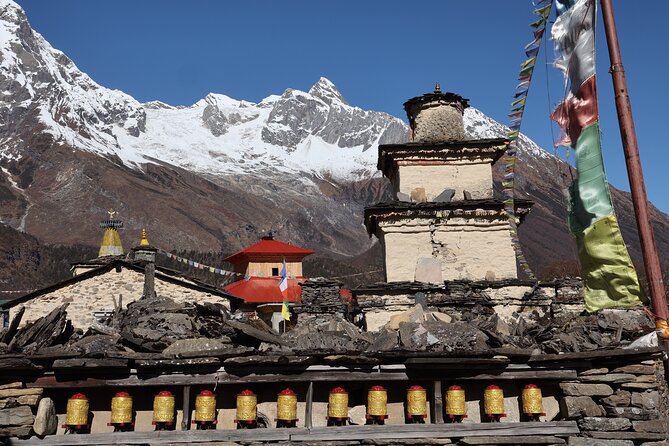
Day 7 is shorter on paper and strong on atmosphere: you go toward Shyala through Bhanzam and ethnic villages such as Lihi, Sho, and Lho. A highlight is a visit to Ribung Gompa in Lho village on a hill with a magnificent view of Manaslu. Then you move through pine and rhododendron forests to Shyala.
This is one of the best days for people who want spirituality and scenery to mix naturally rather than feel staged.
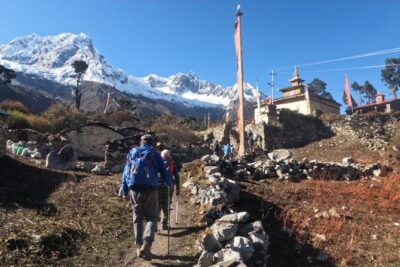
Day 8 takes you from Shyala to Samagaun with a stop at Punggyen Gompa. You’ll climb to discover it, then descend back to the main trail and continue to Samagaun, described as the last largest village in the Manaslu region. From Punggyen Gompa, the plan promises panoramic views including the eastern face of Manaslu.
If you’re the kind of traveler who likes a trek that feels like a moving viewpoint, this is your stretch.
Day 9 and beyond: rest day at Samagaun, then Samdo and Dharmasala
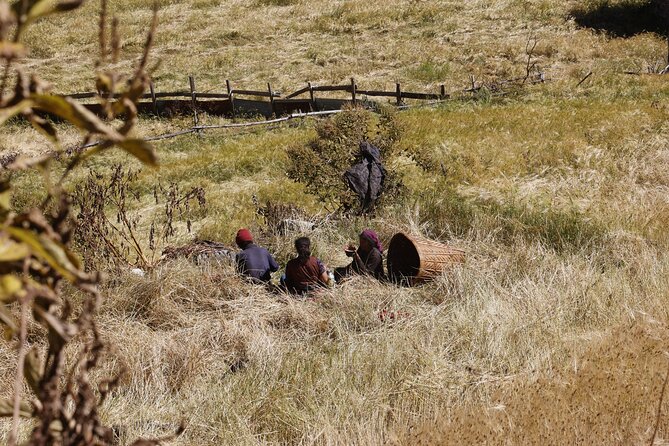
Day 9 is a rest day at Samagaun. You’ll hike to Birendra Lake for acclimatization. You might also spot wildlife like Himalayan Thar. Even if you don’t see animals, this kind of day helps your body adapt because you’re not grinding uphill all day.
Then Day 10 pushes you toward Samdo. The route passes birch and juniper forests and small villages. You cross the wooden bridge over Buddhi Gandaki River to Samdo, which is described as a small Tibetan refugee village. Expect a stronger cultural shift here as you move deeper into the high-altitude zone.
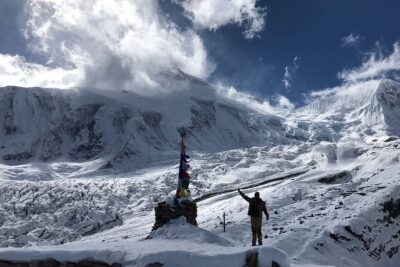
Day 11 continues to Dharmasala. You cross a suspension bridge and ascend through high pasturelands with yaks grazing. The views include Manaslu North, Larkya Peak, and Larkya glacier. You keep climbing through rivulets and arrive at Dharmasala.
This is where the trek feels more like a high-altitude journey than a village hike.
Larke La Pass on Day 12: expect effort, not just views
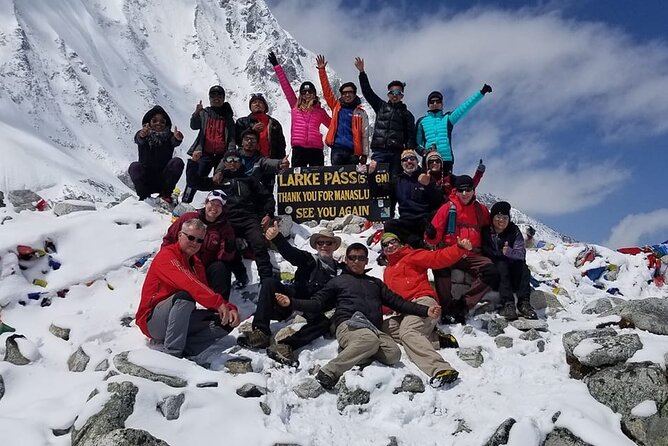
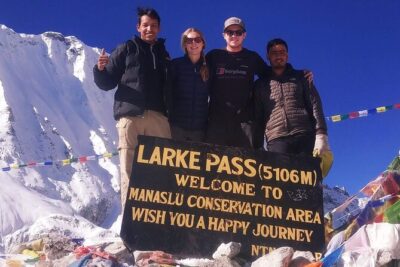
Day 12 is the big one. You start early after breakfast. You reach the north side of the Larkya glacier area, then climb a steep path up to the top of the Larke La Pass. The views are promised across multiple peaks including Himlung Himal, Cheo Himal, Kangguru, and Annapurna II.
Then you descend to Bimtang. The itinerary notes that this is a long and challenging day compared to the other days, and that matches what you should expect from a high pass day.
How to think about it:
- Pace matters more than speed. Save energy for the pass.
- Layers matter, because high ridges can feel sharp even if lower village areas were pleasant.
- Keep your breathing steady. At altitude, it’s not a sprint.
This is the day where your earlier acclimatization and your general fitness really pay off.
Day 13 to Day 14: Dharapani, Tilije upgrades, and the drive back to Kathmandu
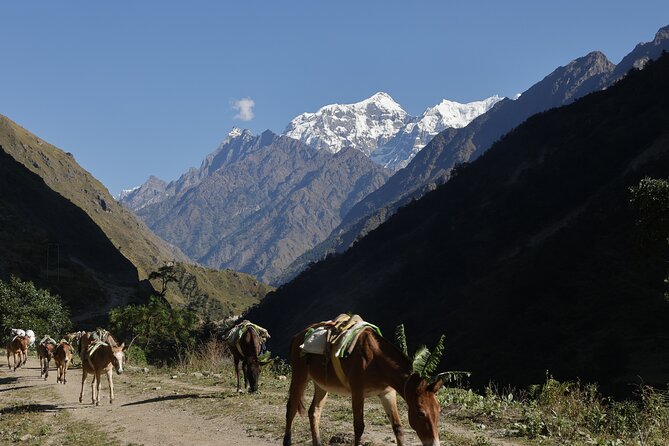
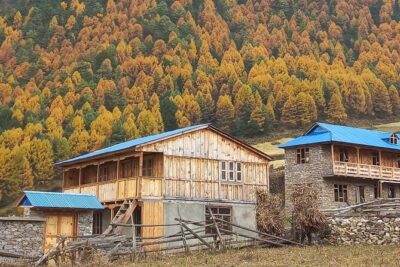
Day 13 shifts gears. After breakfast you trek past Kechakyu Khola Glacier, then move through rhododendron forest. Along the way you get views of Mt. Manaslu. The route goes to Gho village and then toward Tilije, which is described as an older Gurung village. From Tilije onward, you can find facilities for a hot shower, Wi‑Fi, and electricity.
That’s a welcome human upgrade after days where comfort is more basic.
Day 14 is your exit day. You drive back to Kathmandu via Besishahar. Once you reach Kathmandu, you’ll move to your hotel. In the evening, you’ll have a farewell dinner organized by the company.
This day is a nice way to land the trip without doing a frantic overnight transition. You’ll get a proper shower and a real meal—plus time to decompress.
Daily expectations: pacing, bridges, and why the trail description matters
The itinerary spells out walking times that range roughly from about 5 to 10 hours on trekking days, with one standout day (Day 12) being the longest and most demanding.
You’ll also spend multiple days dealing with a mix of:
- rugged vehicle roads early on
- repeated suspension bridges and wooden bridges
- landslide areas
- climbs through forests and alpine pastures
Those details aren’t just “color.” They help you prepare mentally. If you’re expecting a gentle path, you’ll feel the reality of uneven ground and bridge crossings. If you’re prepared for that, you’ll enjoy the variety.
Food rhythm is another practical element. With tea and coffee provided during the trek and breakfast/lunch/dinner scheduled for most days, you can keep moving without constantly planning meals. In Kathmandu, you’ll handle lunch and dinner on your own, so plan that into your budget and appetite.
Who should book the Manaslu Circuit, and who should be cautious
This trek is best for you if:
- you want a high-altitude circuit with village life and culture woven in
- you like less-crowded routes
- you’re comfortable with multi-day walking and some steep, long days
- you want a guide team that’s professional and responsive (Suresh and Sujan-style guiding got very strong praise)
Be cautious if:
- you struggle with long days or steep climbs
- you don’t do well with altitude, even with an acclimatization rest day
- you dislike rugged trail conditions and repeated bridge crossings
The tour notes recommend moderate physical fitness. Treat that as a real filter, not a gentle suggestion.
Should you book this 15-day Manaslu Circuit trek with Yak Ru Adventure?
If you’re looking for a Manaslu Circuit experience that feels organized without feeling cold, this one makes a strong case. The value isn’t only the price tag. It’s the full package of permits, private transfers, pro guiding with satellite phone and oximeter, and meal coverage during the trek. Add the small group cap and the strong praise for guides like Suresh and Sujan, and you get a trip that’s built to run smoothly.
My decision rule is simple:
- If you want a quieter, culturally rich trek with real mountain effort, you’ll likely be happy here.
- If you want a short, easy stroll, or you hate challenging pass days, then keep looking.
FAQ
What is the meeting point and start time?
The meeting point is Tribhuvan International Airport in Kathmandu, Nepal. The listed start time is 5:45 am.
How many days is the Manaslu Circuit trek?
The duration is listed as approximately 15 days.
What’s included besides the trekking days?
Inclusions include 3 nights in Kathmandu at a 3-star hotel (bed-and-breakfast), all ground transfers in private vehicles, permits and paperwork, and a professional English-speaking guide with satellite phone and oximeter. Tea and coffee are also provided during the trek, along with breakfasts, lunches, and dinners during the trek portion as listed.
Are meals covered while you are in Kathmandu?
Breakfast is included with the Kathmandu hotel (bed-and-breakfast). Lunch and dinner while you are in Kathmandu are not included.
What is the group size limit?
The maximum group size is 14 travelers.
What fitness level do you need?
Travelers are advised to have a moderate physical fitness level.
More Trekking Out of Kathmandu






More Tour Reviews in Kathmandu




Just Reviewed in Kathmandu
- Mountain Bike Tour
★ 5.0 · 3 reviews - Annapurna Panaroma
★ 5.0 · 3 reviews - Mount Everest Scenic Flight 50 Minutes
★ 5.0 · 3 reviews - Kathmandu : Swambhunath & Durbar Square Guided Half Day Tour
★ 3.3 · 3 reviews - Chandragiri Cable Car & Monkey Temple Tour – Private/Group
★ 5.0 · 3 reviews - Kathmandu: Shivapuri National Park Hiking Day Trip
★ 3.3 · 3 reviews
Manaslu Circuit Treks, compared.
 ★ 5.0Manaslu Circuit TrekFrom $1,190292 reviews
Manaslu Circuit TrekFrom $1,081184 reviews
★ 5.0Manaslu Circuit Trek:From $1,099106 reviews
 ★ 5.0Manaslu Circuit Trek (15 Days)From $1,65750 reviews
Manaslu Circuit TrekkingFrom $1,49944 reviews
 ★ 5.016 Day Private Manaslu Circuit Trek from KathmanduFrom $1,13542 reviews
★ 5.0Manaslu Circuit TrekFrom $1,90035 reviews
 ★ 5.0Manaslu Circuit Trek 13 DaysFrom $1,40030 reviews
Browse the lists this tour appears in