
Review · POON HILL & GHOREPANI TREKS
An 8- day itinerary for Ghorepani Pun Hill trek for Sunrise & Himalaya view Tour
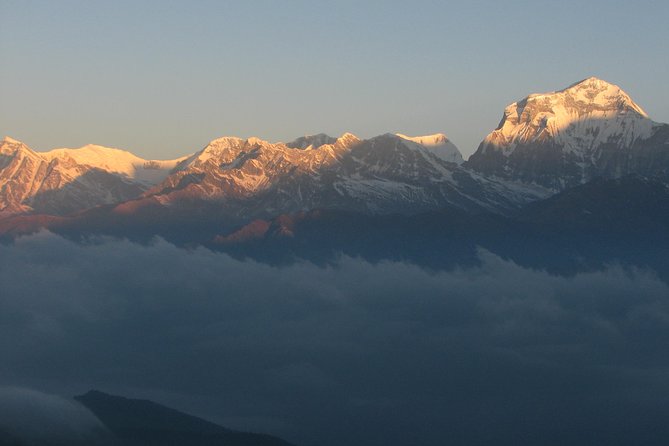
Sunrise at Poon Hill makes it special. This Ghorepani–Poon Hill trek is built around a 5:00 am hike to viewpoints over 3210m, plus classic Annapurna views of peaks like Dhaulagiri and Machhapuchhre. I also like how the route threads through Magar and Gurung community villages at Ulleri and Ghandruk, so the mountains feel human, not just postcard-perfect. One consideration: the mornings start early and there are some real climbs (especially toward Ulleri), so you’ll want strong fitness and good cold-weather patience.
What you’re really paying for is smooth trekking logistics: the trip handles the big transitions (Kathmandu to Pokhara by tourist coach, then back), includes the permits you need, and provides an English-speaking hiking guide and a shared porter (for every two people). If you want a sunrise trek where you can focus on walking and taking in the views, this format is a solid fit.
In This Review
- Key Highlights That Matter on This Trek
- Poon Hill Sunrise at 3210m: The Moment You’re Booking For
- Kathmandu to Pokhara: Let Someone Else Own the Long Transfer
- Day-by-Day Walking: What You’ll Feel on Each Stretch
- Day 2: Nayapul to Tikhedhunga via River Valleys (First Steps)
- Day 3: Tikhedhunga to Ghorepani (The Ulleri Climb Day)
- Day 4: Poon Hill Sunrise, Then Trek to Tadapani
- Day 5: Ghorepani to Ghandruk, Then Down to Nayapul and Pokhara
- Day 6: Pokhara to Kathmandu by Tourist Coach (Trek Ends)
- Ulleri and Ghandruk: The Culture Stops You’ll Remember
- Guide, Porter, and Permits: What’s Included (and Why It’s Worth It)
- Price and Logistics: Is $884.97 Good Value Here?
- Altitude, Pace, and Weather: How to Set Expectations
- Who This Trek Fits Best (and Who Might Want Another Option)
- Should You Book This Ghorepani Poon Hill Sunrise Tour?
- FAQ
- Where does the Ghorepani Poon Hill sunrise trek start and end?
- What time does the tour begin?
- How long is the experience?
- How do you get to Pokhara?
- Is pickup offered?
- What’s included in the price?
- What isn’t included?
- What permits do you need for this trek?
- What altitude and main viewpoint does the trek include?
- Is weather a factor?
Key Highlights That Matter on This Trek
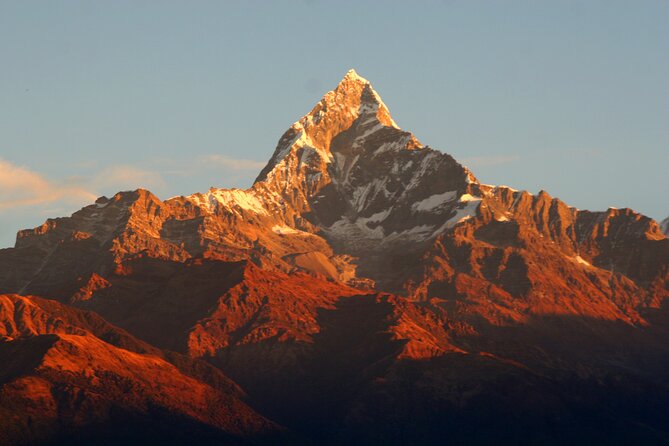
- Poon Hill sunrise at 5:00 am for panoramic Annapurna Himalaya views
- Peaks on the sightline including Dhaulagiri, Annapurna I/II, Machhapuchhre, and more
- Village culture stops in Ulleri (Magar) and Ghandruk (Gurung)
- Clockwise walking flow toward Tadapani, Ghandruk, Birethanti, and Nayapul
- Permits handled for you with Annapurna Conservation Area and TIMS included
More trails out of Kathmandu, boots ready
- Everest Base Camp Trek – 14 Days★ 5.0 · 1,499 reviews
- Everest Base Camp Trek★ 5.0 · 842 reviews
- Everest Base Camp Trekking★ 5.0 · 485 reviews
- Nagarkot Sunrise View and Day Hiking from Kathmandu★ 5.0 · 471 reviews
Poon Hill Sunrise at 3210m: The Moment You’re Booking For
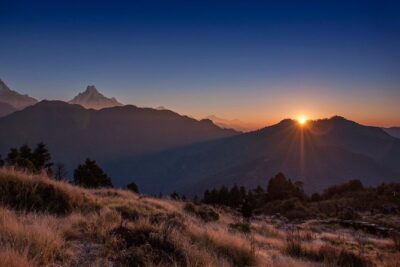
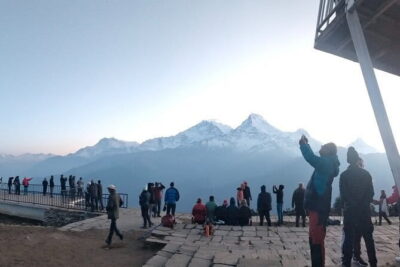
This trip is centered on one thing: getting to Poon Hill early enough to catch sunrise and a wide view across the Annapurna range. Poon Hill sits at 3210 meters, and the early start is clearly part of the design. You’ll leave around 5:00 am, then hike up to the viewpoint (about an hour on the schedule) before the mountains fully wake up.
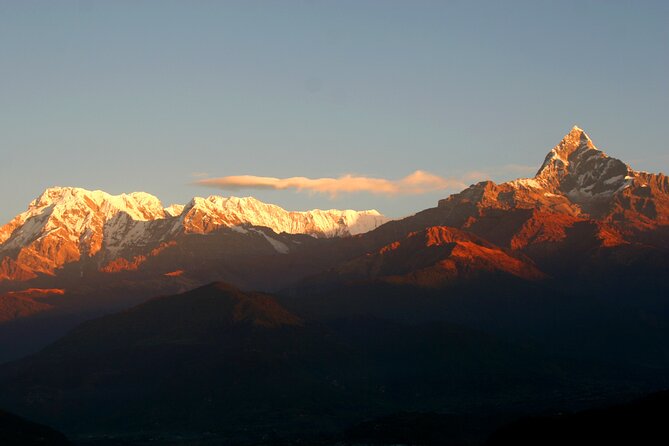
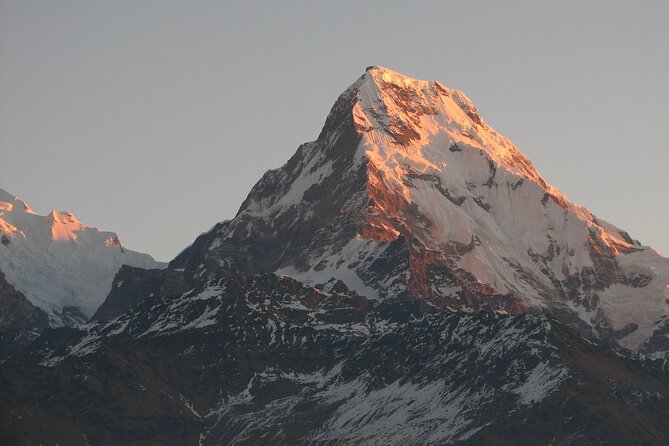
Why this matters: at this altitude, clarity can change fast. The itinerary is structured so you’re not wandering around at the wrong time. You hike when conditions are most likely to reward you with that clean, bright horizon view—where you can pick out peaks such as Mt. Dhaulagiri, Annapurna South, and Machhapuchhre.
What I’d watch for: sunrise hikes can feel colder than you expect, especially before the sun climbs. If you tend to get chilled easily on cold mornings, plan to dress in layers and be ready to stand still for a bit at the top.
After the viewpoint time, you don’t just rush back and hope for the best—you return to your guest house for a hot breakfast, then continue trekking onward. That’s a nice touch because it keeps the morning from becoming an endless grind.
Kathmandu to Pokhara: Let Someone Else Own the Long Transfer
The route starts in Kathmandu, with pickup offered, and a stated start time of 8:00 am. From there, you transfer to the tourist bus station and ride to Pokhara for about 6 hours.
This is a practical win. It means you’re not piecing together multiple transport steps right before a trek. When you arrive in Pokhara, you’re already set up for the hiking portion.
Then the next big transfer is short but important: on trekking day 2, you drive to Nayapul (about 45 minutes) and begin walking. Nayapul is where the trek’s character starts—river valleys, village paths, and steady altitude gains.
By the end, you also get a straightforward exit: after reaching Nayapul and driving back to Pokhara, you take a tourist coach return to Kathmandu and the tour ends back at the meeting point.
If you’re the type who gets stressed when plans multiply, this transport approach is exactly what you want.
Day-by-Day Walking: What You’ll Feel on Each Stretch
Below is the real rhythm of the trek: valley walking, then climbs, then ridge-and-view days. Some days lean more scenic, some more physical.
Day 2: Nayapul to Tikhedhunga via River Valleys (First Steps)
After breakfast, you drive to Nayapul and start following the Modi Khola riverbank. The schedule moves you along quickly at first, reaching Birethanti (1065m) after about 20 minutes of walking. Birethanti is described as a large village with shops and tea houses, which usually means it’s a calm place to find your footing after the initial transfer.
From Birethanti, the trail follows the north bank of the Bhurungdi Khola. Then you get into the day’s main work: the trail climbs steadily up the valley side to Hile (1495m). A short climb later, you reach Tikhedhunga (1525m).
How it feels: this day is a warm-up that still asks you to pay attention. You’re building stamina while learning what “walking uphill for real” feels like in the Annapurna region.
Other early starts worth the alarm

Day 3: Tikhedhunga to Ghorepani (The Ulleri Climb Day)
Day 3 starts with one of the trek’s main altitude pushes: a steep climb to Ulleri (2070m), described as a large Magar village. After that, the path becomes more gentle as you ascend through forests of oak and rhododendron, heading toward Banthanti (2250m) and then Nangethanti (2460m).
Then you finish at Ghorepani (2775m) after about an hour walk from Nangethanti.
Two practical considerations here:
- Ulleri is the kind of climb day where your legs will tell you the weather (and your fitness) instantly.
- Arriving at Ghorepani sets you up for the next day’s big sunrise push at Poon Hill nearby.
Day 4: Poon Hill Sunrise, Then Trek to Tadapani
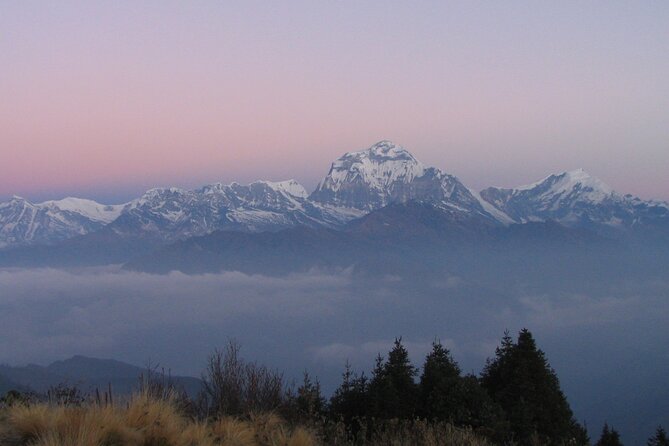
This is the headline day. You get up early around 5:00 am, hike up to Poon Hill, watch the sunrise, then enjoy panoramic views across the Annapurna Himalaya range—again including Mt. Dhaulagiri, Annapurna South, and Machhapuchhre.
When you come down, you get a hot breakfast, and only then does the walking resume. You continue onward to Tadapani.
What I like about the pacing: the sunrise moment gets protected as a real segment of the day, not tacked on as an afterthought. And the hot breakfast helps you regain energy before you start moving again.
Day 5: Ghorepani to Ghandruk, Then Down to Nayapul and Pokhara
After breakfast, you’ll take a downhill walk through forest to Ghandruk (2000m). Ghandruk is described as a beautiful Gurung village and is also positioned as a top lunch stop, with a view of the Annapurna Himalaya range.
Then after lunch, the itinerary continues downhill toward Nayapul, and you transfer to Pokhara.
This day is more about legs and timing than climbing. Downhill can be tough on knees, even when it feels easier than uphill. If you know you’re sensitive on descents, take it slow and steady.
Also, Ghandruk is the kind of place where a lunch stop actually gives you something: village life plus mountain views, without needing to keep moving every few minutes.
Day 6: Pokhara to Kathmandu by Tourist Coach (Trek Ends)
After breakfast, you head back to Kathmandu by tourist coach. The tour ends back at the meeting point.
This is a good finish if you want the trek to feel complete without a late scramble.
Ulleri and Ghandruk: The Culture Stops You’ll Remember
The best treks don’t just show peaks—they show people living with those peaks overhead. Here, Ulleri and Ghandruk do that job.
- Ulleri is described as a Magar community village at 2070m. It’s placed right on the main climb day, so it acts like a marker: you work to reach it, then you continue through forests toward Ghorepani.
- Ghandruk is a Gurung community village at 2000m, and it’s treated as the best lunch stop. That’s smart: you’re more likely to sit, eat well, and actually look around when you have time to stop.
This blend also helps you pace your attention. Instead of staring at mountains the whole time, you get breaks where the focus shifts to village routines, and those breaks make the view moments feel earned.
Guide, Porter, and Permits: What’s Included (and Why It’s Worth It)
This tour includes an English-speaking hiking guide, accommodation as per the itinerary, and one shared porter for every two people. It also includes both the Annapurna Conservation Area permit and TIMS.
Here’s why those items matter for value:
- Having an English-speaking guide reduces confusion on the trail and at key transitions (especially when you’re changing from walking segments to transport).
- A porter (shared) can take weight off your pack, which becomes a big deal when you’re doing steep climbs and long days.
- Permits being handled in the package saves time and reduces the risk of missing paperwork.
Meals are also included: 3 dinners, 4 lunches, and 5 breakfasts. That matters more than it sounds, because trekking days can turn into a guessing game if you’re hungry at the wrong time.
One more practical note: you’ll travel to and from Pokhara in a big tourist coach, and there’s pickup offered. That’s all aimed at lowering friction.
Price and Logistics: Is $884.97 Good Value Here?
The price listed is $884.97 per person, and on paper it’s not a cheap trek. But you’re not just paying for scenery—you’re paying for organized movement, permits, and real on-the-ground support.
Look at what’s covered:
- Guide (English-speaking)
- Accommodation during the itinerary
- Shared porter (for two people)
- TIMS + Annapurna Conservation Area permit
- Kathmandu–Pokhara and Pokhara–Kathmandu transport by coach
- Included meals (specific counts of lunches, dinners, breakfasts)
- Mobile ticket listed as a feature
- Group discounts listed, and the tour is described as private (only your group)
What’s not included is also clear: Nepal visa, and accommodation and food in Kathmandu, plus travel insurance.
So who benefits most from the package price? People who want a sunrise trek with minimal planning work and fewer moving parts. If you enjoy organizing everything yourself, the value may not feel as strong. If you want a guide-and-logistics setup, it starts to look reasonable fast—especially once you factor in permits, transport, and the porter.
Altitude, Pace, and Weather: How to Set Expectations
This trek reaches high points: Poon Hill at 3210m, Ghorepani at 2775m, and Ulleri at 2070m. That’s enough altitude to make the early mornings and steady climbs feel more demanding.
The trip also explicitly requires good weather. If it’s canceled due to poor weather, you’ll be offered a different date or a full refund. The itinerary also implies a sunrise-dependent experience: you’re hiking out early for the big view moment, so conditions matter.
Fitness-wise, the requirement is straightforward: strong physical fitness level. The itinerary includes a steep climb to Ulleri and multiple elevation changes across valley paths, forest sections, and descents into Ghandruk and onward.
A practical way to think about the pace: you’re not doing extreme fast miles, but you are doing sustained trekking days with one big early-morning highlight and at least one serious climb segment.
Who This Trek Fits Best (and Who Might Want Another Option)
This is a great fit if:
- you’re chasing a sunrise view at Poon Hill and want it done with structure
- you want a mix of mountain time and village time (Ulleri + Ghandruk)
- you prefer an organized itinerary with an English-speaking hiking guide and permits included
- you’re okay with early starts and steady hiking
You might hesitate if:
- you have knee issues on downhill days (Day 5 includes a full downhill to Ghandruk and then onward)
- you’re not comfortable with cold, early mornings
- you’re expecting total flexibility day-to-day; sunrise treks depend on conditions
Should You Book This Ghorepani Poon Hill Sunrise Tour?
If your main goal is that Poon Hill sunrise with wide Annapurna views, I’d say yes—with one condition: be honest about your fitness. This route has real climbs (Ulleri), meaningful altitude (Poon Hill), and early wake-up timing.
I also like the way this itinerary treats logistics as part of the experience, not extra work. With transport handled, permits included, meals counted, and a guide in place, you can focus on the walking and the view.
If you’re the type who wants to plan every detail yourself, or you’re traveling with no interest in sunrise timing, you may feel boxed in. But if you want a classic Annapurna trek built around a clear highlight and real village stops, this package is a strong choice.
FAQ
Where does the Ghorepani Poon Hill sunrise trek start and end?
It starts in Kathmandu, Nepal at the listed meeting point (Kathmandu 44600). The experience ends back at the meeting point in Kathmandu.
What time does the tour begin?
The start time is listed as 8:00 am.
How long is the experience?
The trek portion is described as about 6 days, with the overall program tied to travel to and from Pokhara.
How do you get to Pokhara?
On day 1, you take a tourist bus for about 6 hours from Kathmandu to Pokhara. Later, the return journey back to Kathmandu is by tourist coach.
Is pickup offered?
Yes, pickup is offered.
What’s included in the price?
Included items are an English-speaking hiking guide, accommodation as per the itinerary, a shared porter (for 2 persons), Annapurna Conservation and TIMS permits, travel to and from Pokhara in a big tourist coach, plus meals (3 dinners, 4 lunches, and 5 breakfasts).
What isn’t included?
Not included: the Nepal visa, accommodation and food in Kathmandu, and travel insurance.
What permits do you need for this trek?
The itinerary includes the Annapurna Conservation and TIMS permits.
What altitude and main viewpoint does the trek include?
Poon Hill is at 3210 meters and is the main sunrise and panoramic viewpoint. The schedule also lists Ghorepani at 2775m, Ulleri at 2070m, and Ghandruk at 2000m.
Is weather a factor?
Yes. The experience requires good weather. If it’s canceled due to poor weather, you’ll be offered a different date or a full refund.
More Trekking Out of Kathmandu






More Tours in Kathmandu




More Tour Reviews in Kathmandu


Just Reviewed in Kathmandu
- Mountain Bike Tour
★ 5.0 · 3 reviews - Annapurna Panaroma
★ 5.0 · 3 reviews - Mount Everest Scenic Flight 50 Minutes
★ 5.0 · 3 reviews - Kathmandu : Swambhunath & Durbar Square Guided Half Day Tour
★ 3.3 · 3 reviews - Chandragiri Cable Car & Monkey Temple Tour – Private/Group
★ 5.0 · 3 reviews - Kathmandu: Shivapuri National Park Hiking Day Trip
★ 3.3 · 3 reviews
Poon Hill & Ghorepani Treks, compared.
 ★ 5.04 Days Poon Hill TrekFrom $40594 reviews
 ★ 5.0Ghorepani(Poonhill Trek)From $60081 reviews
 ★ 5.04-day Poon Hill TrekFrom $40074 reviews
 ★ 5.0Ghorepani Poon Hill TrekFrom $39961 reviews
★ 5.0Ghorepani Poon Hill TrekFrom $70046 reviews
 ★ 5.0Poon Hill TrekFrom $1,17242 reviews
 ★ 5.0Poonhill TrekFrom $60033 reviews
 ★ 5.0Poon Hill Trek packageFrom $40527 reviews
Browse the lists this tour appears in