
Review · ANNAPURNA CIRCUIT TREKS
Annapurna Circuit Trek
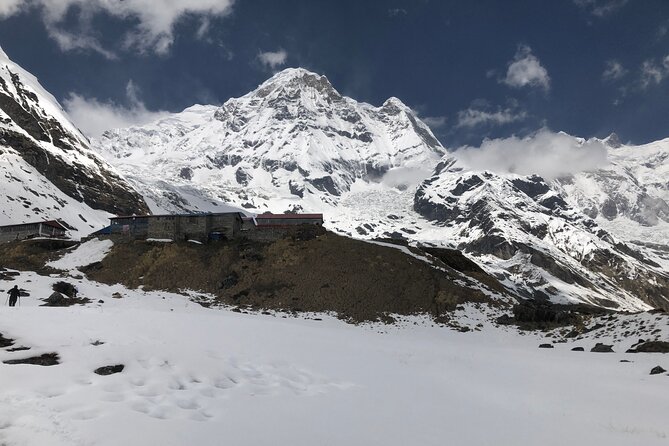
The Annapurna Circuit has that slow-motion wow factor. It’s a classic high-mountain trek where you move from warm valley fields to colder alpine villages, with big peak views that seem to keep coming. This version also runs as a private tour, and it starts early each day at 6:15 am.
I especially like that your essentials are handled: all food during the trek and tea house accommodation are included, so you’re not doing daily logistics math in the middle of your hike. I also like the practical support package: the trek includes transport, a guide (with food, salary, insurance, and trekking equipment), plus the mountain trekking permits.
The main thing to consider is what’s not included: you’ll pay extra for drinks, Wi‑Fi, battery charging, and hot shower-style comforts. And at this altitude, you’ll want real planning for pacing and acclimatization, not just good intentions and hiking boots.
Key things I’d watch for (before you book)
- Early start at 6:15 am helps you manage daily timing on the trail
- Meals and tea houses included make budgeting simpler
- Thorong-La Pass at 5,416m is the day that changes everything
- A rest day at Manang village supports acclimatization in a smart way
- Tatopani natural hot springs give sore legs a real break
- Private group only means you won’t be sharing plans with strangers
In This Review
- Annapurna Circuit in plain terms: valleys, villages, then big altitude
- Days 1–4: from Bulbule into the trekking rhythm
- Days 5–7: Pisang to Manang village (and the value of slowing down)
- Days 8–9: Yak Kharka to Thorong High Camp
- Day 10: crossing Thorong-La to Muktinath (the turning point)
- Days 11–12: Muktinath through Jomsom to Marpha, then toward Lete
- Day 13: Tatopani natural hot springs for sore-leg recovery
- Days 14–15: Ghorepani and Poon Hill, then down to Pokhara
- Tea houses, meals, and what costs extra
- Guide and permits: the quiet value in the fine print
- Price and value: what you’re paying for in the real world
- Fitness, altitude, and pacing: where planning matters most
- Who should book this Annapurna Circuit trek
- Should you book it?
- FAQ
- What is the duration of the Annapurna Circuit Trek?
- Where does the trek start, and what time do you meet?
- Is pickup and drop-off included?
- What kind of accommodation do you get during the trek?
- What meals are included?
- What’s the highest point on this itinerary?
Annapurna Circuit in plain terms: valleys, villages, then big altitude
If you’re looking for a trek that feels like you’re traveling through multiple seasons, the Annapurna Circuit delivers. Your route starts low (Bulbule at about 840m) and steadily climbs through farming areas and hillside settlements, until you’re standing at pass height and looking down on a completely different world.
A big part of the appeal is that the scenery changes even when you’re walking the same kind of trail. In the early days you’ll be in warmer, lower country. Then you move into higher villages where the air feels thinner and the pace naturally slows. By the time you reach the high camp zone and then cross the pass, it stops being a routine hike and starts feeling like a real mountain mission.
The trek also has a nice rhythm: some shorter days mixed with longer ones, plus a deliberate rest day in Manang. That matters, because the whole Annapurna Circuit experience depends on you arriving at higher elevations with your body ready for it.
More trails out of Kathmandu, boots ready
- Everest Base Camp Trek – 14 Days★ 5.0 · 1,499 reviews
- Everest Base Camp Trek★ 5.0 · 842 reviews
- Everest Base Camp Trekking★ 5.0 · 485 reviews
- Nagarkot Sunrise View and Day Hiking from Kathmandu★ 5.0 · 471 reviews
Days 1–4: from Bulbule into the trekking rhythm
Day 01: Bulbule to Nagdi (840m to 930m)
You’ll get a drive to Bulbule, then a short uphill start to Nagdi. It’s a gentle introduction: the hike part is only about 1 hour, after a longer transfer. This is where you get your boots sorted, your pack dialed, and your pace set. Even if you feel good, don’t rush—day one is about getting comfortable with the routine.
Day 02: Nagdi to Jagat (930m to 1,300m)
This day typically asks a bit more of your legs, with around 4 to 5 hours of walking. Jagat sits higher, so the air starts to feel different. You’ll notice how your breathing works at elevation even before it becomes a major challenge.
Day 03: Jagat to Dharapani (1,300m to 1,860m)
Expect another climb day, about 4 to 5 hours. Dharapani is a practical trekking stop—enough elevation to keep you moving upward, but not so high that you’re immediately punished for it. It’s the kind of day where steady walking beats strong effort.
Day 04: Dharapani to Chame (1,860m to 2,670m)
Chame is a bigger step up (around 5 hours). This is where the trek starts to feel more clearly like a mountain journey. You’re likely to feel the altitude as a gradual tax: not dramatic yet, but noticeable.
Small drawback here: early days can tempt you to overpack energy. If you’re prone to pushing too hard on day two or three, force yourself to keep it smooth.
Days 5–7: Pisang to Manang village (and the value of slowing down)
Day 05: Chame to Pisang (2,670m to about 3,230m)
About 5 hours. Pisang sits in a higher band where weather can shift quickly. The higher you go, the more your body asks for consistency—same pace, same breathing, same hydration habits.
Day 06: Pisang to Manang village (3,230m to about 3,450m)
Another 5-hour day, and you’re now in Manang’s zone. Manang is also where trekking often becomes about more than distance. It’s where acclimatization starts to feel real, because you’re stacking elevation and living at it.
Day 07: Rest day at Manang village
This is one of the smartest choices on the route. You’re not just getting a break from walking—you’re giving your body time to adjust before the high pass push. Even if you feel fine, this is still the day to treat as part of your success plan.
Why I like this structure: you don’t race from village to village like a conveyor belt. The rest day gives you a better shot at feeling steady later, especially before Thorong-La.
Days 8–9: Yak Kharka to Thorong High Camp
Day 08: Manang to Yak Kharka (3,450m to about 4,110m)
Around 4 hours. Yak Kharka sits high enough to sharpen your focus. This is the kind of day where “good enough” pace is perfect.
Day 09: Yak Kharka to Thorong High Camp (about 4,110m to 4,600m)
About 4 hours. High Camp is not a place you visit to work on speed. It’s about arriving, stabilizing, and saving energy for the big crossing.
Practical consideration: cold can be real at these elevations. The trek includes mountain accommodation in tea houses, but your comfort level will still depend on what you bring for layering and warmth (trekking equipment is not included).
Day 10: crossing Thorong-La to Muktinath (the turning point)
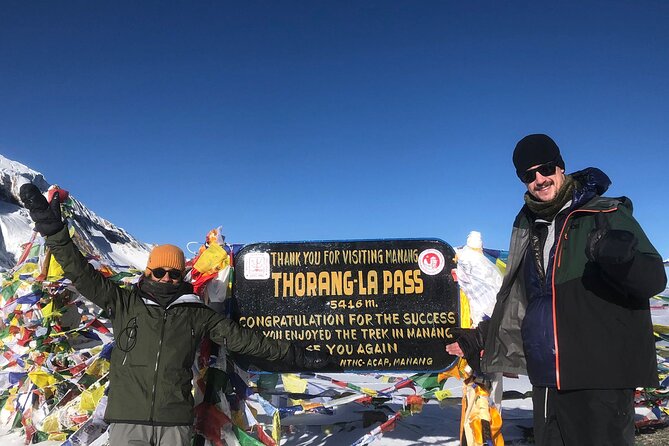
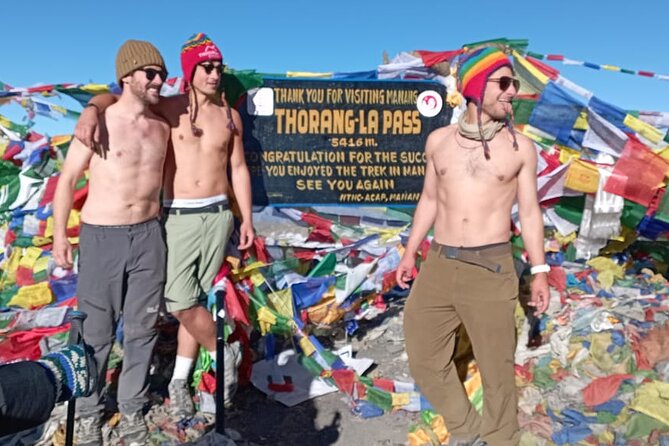
Day 10: Thorong-La Pass (5,416m) to Muktinath (about 3,800m)
This is your longest-style day on paper at about 7 hours. You go over the pass and then drop significantly toward Muktinath. The time estimate is useful, but the real challenge is the altitude itself: pass day often feels harder than the clock suggests.
What makes it memorable is the shift you feel after the pass. High, thin air at the top, then a descent that can feel like relief, even though you’re still working your legs. Muktinath at about 3,800m becomes your payoff zone: enough altitude that you’re still in the mountains, but with more human-scale trekking energy than at the pass itself.
Here’s the value of building up to it: because you had a rest day in Manang, plus staging nights in higher camps, your body is more likely to handle the transition without panicking. That’s not a guarantee—but it’s a strong design choice.




Days 11–12: Muktinath through Jomsom to Marpha, then toward Lete
Day 11: Muktinath to Marpha via Jomsom (Muktinath ~3,800m to Jomsom ~2,715m, then to Marpha ~2,670m)
About 6 hours. The route drops you out of the high-pass mood and into lower, warmer-feeling country. Jomsom is a familiar trekking hub, and Marpha is the kind of village stop that makes people slow down and look around.
Day 12: Marpha to Lete (about 2,670m to 2,480m)
About 6 hours. This day isn’t just about walking—it’s about settling back into rhythm after the pass. You’ll likely appreciate the descent phase and the chance to feel more like yourself again.
Small caution: after a dramatic day, you can feel tempted to rush. Keep it steady. You’ll have one more real summit moment later (Poon Hill).
Day 13: Tatopani natural hot springs for sore-leg recovery
Day 13: Lete to Tatopani (about 2,480m to 1,190m)
About 6 hours. Tatopani is famous for its natural hot springs, and that’s exactly why this stop belongs in a trek like this. When you drop in altitude and soak your legs, the experience starts to feel like it has a built-in recovery tool.
Even if you don’t fully soak, the key is the opportunity to reset your muscles and your attitude. Trekking fatigue can creep in mentally; a hot spring day pulls you back into a good headspace.
Budget note: your trekking package includes food and tea house accommodation, but extra conveniences like hot water (and other comfort items) can cost extra depending on what’s offered at the tea house.
Days 14–15: Ghorepani and Poon Hill, then down to Pokhara
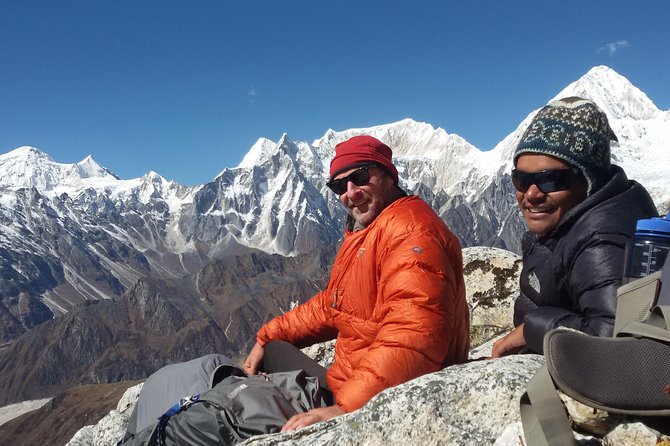
Day 14: Tatopani to Ghorepani (about 1,190m to 2,880m)
About 6 hours. You’re climbing again, which is sneaky. Tatopani gives relief, and then Ghorepani asks for effort to get back to the higher viewpoints zone. This is where a steady pace and good hydration matter again.
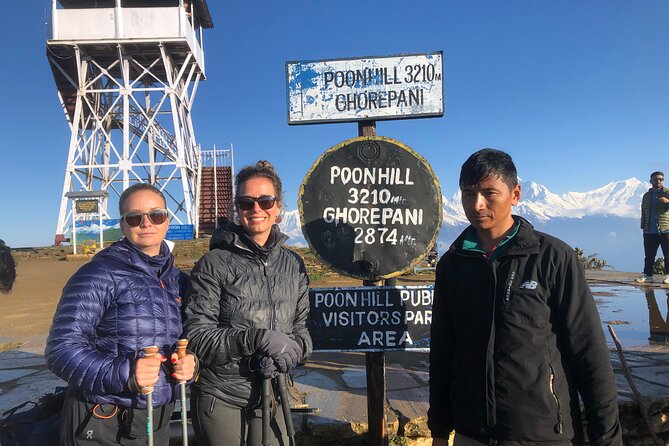
Day 15: Poon Hill (about 3,210m) to Nayapul (about 1,100m), then drive to Pokhara (~860m)
This last day is a classic finish: you walk up to Poon Hill for the views, then continue down to Nayapul and drive to Pokhara in about 6 to 7 hours.
Poon Hill is your big “see what you earned” moment. And the drive at the end is a practical bonus because you’re not relying on your own legs to finish the whole day.
Tea houses, meals, and what costs extra
A huge part of the trek’s value is that breakfast, lunch, and dinner are included. That means you can focus on hiking instead of negotiating menus at altitude. You’ll also have mountain accommodation in tea houses, which keeps things realistic and budget-friendly compared to hotels at every stop.
What’s not included is mostly the comfort stuff:
- drinks like tea, coffee, beer, cola
- mineral water
- hot water
- Wi‑Fi
- battery charging
- hot shower type extras
So I’d plan your daily spending around drinks and charging, not around your main meals. If you’re the kind of person who likes to get online every night or grab lots of bottled water, you’ll want to budget more than you think.
Also pack for the reality of tea houses. Even when meals are included, warmth depends on your layering. Trekking equipment isn’t included, so your clothing and footwear choices are on you.
Guide and permits: the quiet value in the fine print
This trek includes an excellent guide with food, salary, insurance, and trekking equipment. That’s not just a “nice to have.” When you’re dealing with high altitude and pass logistics, a good guide helps keep your plan practical and your day pacing more sensible.
The route also includes all needed trekking permits. Permit paperwork is one of those things you don’t want to handle on your own while you’re traveling in Nepal with limited time. Having permits included is one less moving part, and it helps you stay focused on the trail.
One detail I really respect from the experience people shared: support that feels human and reliable. A porter named Rishi was highlighted as helpful and friendly, and people said they felt safe with him. If you decide you want porter support, don’t wait until the last minute—check how porter help is handled, since porters are listed as not included.
Price and value: what you’re paying for in the real world
At $1,290 per person for about 15 days, the big question is what’s bundled. Here’s what you’re getting that lowers your risk and stress:
- bus transport for the trek routing
- hotel pickup/drop by taxi
- all trek meals
- tea house lodging
- a guided, permitted route with included mountain trekking permits
- a structured plan with a rest day and clear day timings
What’s not bundled (and can change your total):
- your trekking gear
- travel insurance
- porter support (listed as not included)
- drinks, Wi‑Fi, charging, and hot shower-type extras
So the real value question is: do you want someone to handle the logistics so you hike instead of managing details? If yes, this price structure makes sense. If you’re the type who already has gear, will self-navigate, and plans to carry your own everything, you might find cheaper options. But you’ll also be giving up some built-in support.
Fitness, altitude, and pacing: where planning matters most
You should have moderate physical fitness for this trek. That’s fair. You don’t need to be a mountain athlete to do it, but you do need consistency.
The altitude profile matters:
- you start around 840m
- climb past 3,000m
- reach Yak Kharka (~4,110m) and Thorong High Camp (~4,600m)
- cross Thorong-La at 5,416m
- end the day at Muktinath (~3,800m)
That pass day is the turning point. It can feel like your body hits a wall because oxygen is thinner, even if your legs still have power. The good news is that the trek includes a rest day in Manang, plus staging nights that keep your acclimatization logical instead of rushed.
Your best strategy: keep your effort controlled on the ascent days and treat every rest day as part of training. If you go too hard before the pass, you’ll pay later.
Who should book this Annapurna Circuit trek
This trek is a strong fit if you want:
- included meals and tea house stays to keep daily decisions simple
- a guided, permitted route
- a schedule that includes a rest day at Manang
- the full Annapurna progression, including Tatopani hot springs and a Poon Hill finish
It may not be your best match if you:
- hate high-altitude walking and want a gentler elevation profile
- need lots of comfort extras (Wi‑Fi, hot showers, frequent paid drinks)
- expect a porter to be automatically included, since porters are listed as not included
If you’re traveling as a couple, friends, or a small group that wants a private plan, the private tour format is also a plus because your experience won’t be blended into a larger crowd’s timing.
Should you book it?
I’d book if you want a classic Annapurna Circuit with real support, included food and lodging, and a route designed around acclimatization—especially the Manang rest day and staged approach toward Thorong-La. The price feels most fair when you value convenience and structure over trying to piece everything together yourself.
Do hold back and ask questions first if you’re planning to rely heavily on comfort extras or if you’re counting on a porter. Since porters aren’t listed as included, you’ll want clarity on how extra support is arranged.
And quick reality check: this experience is non-refundable and can’t be changed for any reason if you cancel.
If your goal is the memorable mix of villages, pass achievement, hot springs recovery, and that final Poon Hill payoff—this is the kind of trek you’ll feel grateful you planned well for.
FAQ
What is the duration of the Annapurna Circuit Trek?
It’s about 15 days (approx.).
Where does the trek start, and what time do you meet?
The experience is based in Kathmandu, Nepal, with a start time of 6:15 am.
Is pickup and drop-off included?
Yes. There’s hotel pickup/drop by taxi, and transport is handled by bus as part of the trek logistics.
What kind of accommodation do you get during the trek?
You stay in tea houses (mountain accommodation).
What meals are included?
Breakfast, lunch, and dinner during the trek are included.
What’s the highest point on this itinerary?
The trek crosses Thorong-La Pass at about 5,416m.
More Trekking Out of Kathmandu






More Tour Reviews in Kathmandu




Just Reviewed in Kathmandu
- Mountain Bike Tour
★ 5.0 · 3 reviews - Annapurna Panaroma
★ 5.0 · 3 reviews - Mount Everest Scenic Flight 50 Minutes
★ 5.0 · 3 reviews - Kathmandu : Swambhunath & Durbar Square Guided Half Day Tour
★ 3.3 · 3 reviews - Chandragiri Cable Car & Monkey Temple Tour – Private/Group
★ 5.0 · 3 reviews - Kathmandu: Shivapuri National Park Hiking Day Trip
★ 3.3 · 3 reviews
Annapurna Circuit Treks, compared.
 ★ 5.0Annapurna Circuit Trek with Tilicho LakeFrom $1,093368 reviews
 ★ 5.0Annapurna Circuit TrekFrom $1,17594 reviews
★ 5.0Annapurna Circuit TrekFrom $2,24067 reviews
★ 5.0Annapurna Circuit TrekFrom $1,07449 reviews
★ 5.0Annapurna Circuit TrekFrom $1,35046 reviews
★ 5.0Annapurna Circuit TrekFrom $1,15035 reviews
★ 5.0Annapurna circuit TrekFrom $99835 reviews
★ 5.0Annapurna Circuit TrekFrom $97534 reviews
Browse the lists this tour appears in