
Review · ANNAPURNA CIRCUIT TREKS
Annapurna Circuit Trek
If you like big days and bigger views, this trek fits. One route links Kathmandu’s famous sights to remote valley villages, then up and over Thorung La (5416m) and down to Muktinath.
I especially love the way the plan builds in altitude recovery time in Manang. It also feels well-run on the logistics side, with guides and porters handling the hard parts so you can focus on walking and taking photos.
One thing to think about: this is not a casual stroll. You get long hiking days, steep sections, and a knee-busting descent after the pass, so you’ll want real trekking fitness and the ability to take it slow at altitude.
In This Review
- Key things that make this Annapurna Circuit trek worth your time
- What you’re really buying for $994
- Kathmandu and Pokhara setup: start strong, waste less time
- Day-by-day route: what each stage feels like
- Day 1: Kathmandu to Chamje (bus + local jeep)
- Day 2: Chamje to Dharapani via steep, rocky footwork
- Day 3: Chame day with forests, prayer flags, and monastery vibes
- Day 4: The Manang region starts to open up
- Day 5: Views keep stacking near Mungji and Braga
- Day 6: Manang rest and acclimatization day (learn, look, adjust)
- Day 7: Yak Kharka day with lower oxygen, higher effort
- Day 8: Thorung Phedi, with unstable ground and a “not far, but feel it” day
- Day 9: Thorung La to Muktinath (steep exit, big views, sore knees)
- Day 10: Muktinath to Tatopani by jeep (then lodge recovery)
- Day 11: Tatopani to Ghorepani via rhododendron forests
- Day 12: Poon Hill sunrise and the walk down toward Pokhara
- Manang rest day: the altitude insurance you’ll thank yourself for
- Guide quality and safety: why the group size matters
- Transportation and transfers: mostly handled, still check your comfort
- Lodges, meals, and what to budget day-to-day
- What to pack and how to walk smarter on this route
- Who this trek suits best
- Should you book this Annapurna Circuit trek?
- FAQ
- What time does the trek start?
- Is pickup from Kathmandu included?
- How many people are in the group?
- Are accommodations included?
- Are meals included?
- Do I need a visa for Nepal?
- How much does a porter cost if I want one?
Key things that make this Annapurna Circuit trek worth your time
- Small-group format (max 10 travelers) that keeps decision-making fast when conditions shift.
- Real acclimatization in Manang, including options to learn and explore on your rest day.
- Thorung La crossing with dramatic payoff, plus a clear route that follows a well-used path.
- Lodges/tea houses all the way, so you’re not planning meals and sleeping every night.
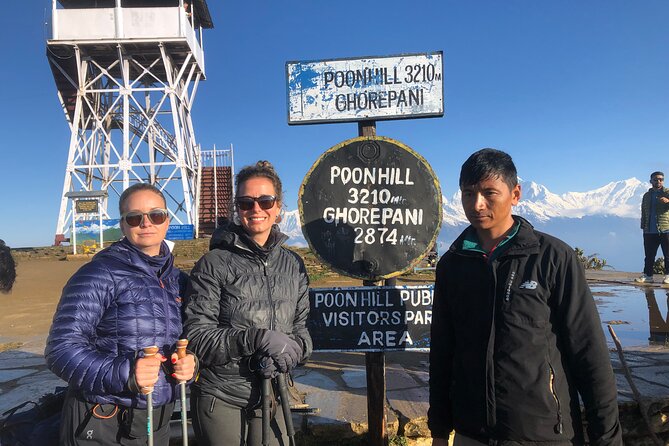
- Pokhara add-on with a Poon Hill sunrise, timed for mountain views over Dhaulagiri and the Annapurnas.
- Porter support built in (porter carries main luggage; you carry a day pack).
More trails out of Kathmandu, boots ready
- Everest Base Camp Trek – 14 Days★ 5.0 · 1,499 reviews
- Everest Base Camp Trek★ 5.0 · 842 reviews
- Everest Base Camp Trekking★ 5.0 · 485 reviews
- Nagarkot Sunrise View and Day Hiking from Kathmandu★ 5.0 · 471 reviews
What you’re really buying for $994
The price point ($994 per person) is competitive for a guided trek that includes lodge stays, an experienced guide, government taxes/VAT/service charges, and ground transport tied to the route. The big value here is that you’re paying for less guesswork: how to get from Kathmandu into the trek start area, how to move between key places, and how to coordinate daily logistics in remote regions.
Do read the inclusions closely, because this is where budgets can surprise you. In-city meals (Kathmandu/Pokhara) are not included, and alcohol, non-alcohol drinks, and desserts during the trek aren’t included either. If you want to move fast financially, you’ll likely plan on paying for most snacks and drinks yourself.
The other value driver is human support. In the reviews, guides like Balaram Khadka (Bala), Indra, Ram, and Jitu come up again and again for patient help, smooth pacing, and keeping trekkers safe and comfortable.
Kathmandu and Pokhara setup: start strong, waste less time
Before your first hiking day, you’re picked up and moved into the trek plan early. The listed start time is 6:15am, and pick-up is offered so you’re not scrambling to meet people on your own.
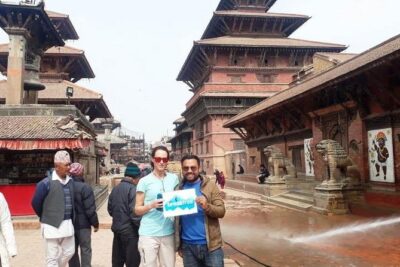
There’s also a full day of sightseeing in Kathmandu that covers UNESCO-listed attractions. That matters because it gives you context for Nepal beyond the trail, and it keeps the “what did I even do before I started walking?” feeling from creeping in.
After the trek, you finish in Pokhara with an early-morning push to Poon Hill (3232m) for sunrise views. This is a smart close: you’re not just walking until you collapse; you get a final, high-payoff morning before you settle back into lakeside routines.
Day-by-day route: what each stage feels like
Day 1: Kathmandu to Chamje (bus + local jeep)
You start with hotel pick-up around 7am, then head to the bus terminal for transport toward Besisahar. The road is described as comfortable on the highway until Dumre, then thrilling after Dumre as you follow the Marshyangdi River’s corridor.
Once you reach Besisahar, you switch to a local jeep that takes you onward to Chamje for the night. This day is mostly about getting positioned, but it’s also a good reminder to hydrate and eat well before the first serious hiking day.
Day 2: Chamje to Dharapani via steep, rocky footwork
Today begins with descent to the river, then a suspension bridge, then a climb that gets steep fast. You’ll work your way up toward Sattale (1550m.), then Tal (1700m.), and keep gaining elevation along high, winding sections.
You also pass through areas with rocky work-in-the-trail energy, including parts described as hewn from the rock. The reward is big: you’re hiking through a classic river-valley system that feels real, not staged.
Day 3: Chame day with forests, prayer flags, and monastery vibes
You climb from narrow fields near the Dudh Khola and watch the Marsyangdi River bend as bigger peaks start to appear. Annapurna II becomes visible ahead, and you arrive around Bagarchhap, described as a Bhote village with prayer flags around a Buddhist monastery.
After that, the trek leans into pine and oak forest walking before reaching Chame for an overnight lodge. This is a nice “settling into the rhythm” day—still active, but with more variety than pure steepness.
Day 4: The Manang region starts to open up
The morning sun brings Lamjung Himal into view, and you set off toward Pisang as the valley rises and scenery expands. You pass an apple orchard and move through fir and pine forest before reaching rougher, higher rocky areas.
The trail includes bridge crossings and a high, winding feel as the valley tightens and steep sides show up. You end at a lodge in the Manang area (the plan references key points like Bhratang during the day).
Day 5: Views keep stacking near Mungji and Braga
You climb ridge-top paths for strong views, including a look toward Tilicho peak (7145m.). Then you descend past Manang’s airstrip at Humde (3320m.) before moving into wider plains and dramatic mountain faces.
You cross a wooden bridge over a reduced Marsyangdi Khola and continue toward Mungji, with cultivated fields and the village of Braga mentioned as a highlight. This day is a good example of the circuit’s best feature: you’re not just gaining altitude—you’re constantly changing what you see.
Day 6: Manang rest and acclimatization day (learn, look, adjust)
This is one of the most important parts of your entire trip. You stay in the Manang area to rest and acclimatize before Thorung La, and you can choose optional day walks.
Options include:
- crossing the river for a look at an icefall,
- climbing above the village for panoramas of the Annapurna range and Manang Valley,
- visiting the Himalayan Rescue Association (HRA) aid post (educational and grounded),
- and going to Ganagapurna Glacier Lake.
If you’re the type who worries about altitude, I love this built-in breathing room. You’re not just “taking a rest day”—you’re using it to get smarter and more prepared.
Day 7: Yak Kharka day with lower oxygen, higher effort
The trail ascends gently toward Yak Kharka, passing through Gunsang (3960m.). The plan calls out panoramic views across the day, but the key truth is simple: even if the path feels smooth, oxygen drops.
So you’ll walk a bit slower than you want to. That’s not failure; it’s how you protect your body so the next days don’t feel like a crisis.
Day 8: Thorung Phedi, with unstable ground and a “not far, but feel it” day
You climb to a ridge, then descend to the Marsyangdi headwaters and cross via a covered wooden bridge. After a short ascent and a traverse described as a narrow trail across an unstable spree slope, you descend to Thorung Phedi for the night.
This is where mental focus helps. Night will come, but you’ll still want to move carefully and keep your feet under you.
Day 9: Thorung La to Muktinath (steep exit, big views, sore knees)
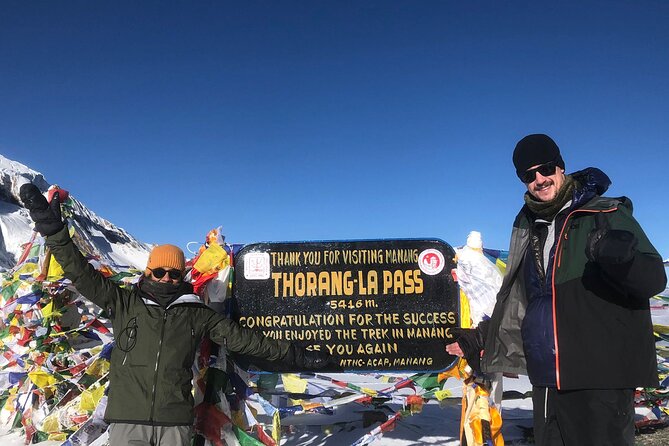
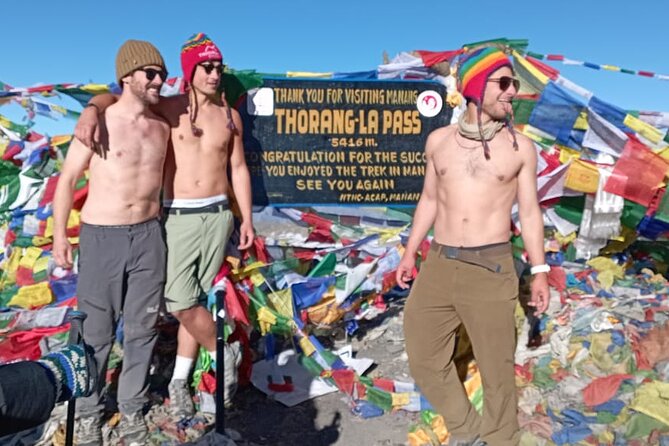
You start early and cross Thorung La (5416m.). The trail becomes steep right away, but it’s well defined because it’s been used by local people for hundreds of years.
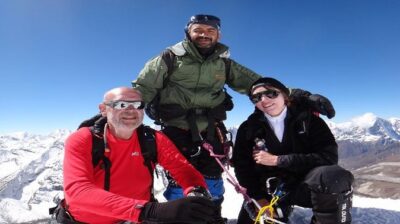
After about four hours of steady climbing, you reach the chorten and prayer flags of the pass. The views are described as dramatic: snow-covered mountains above, the Kali Gandaki valley below, and Mustang’s brown and purple hills in the distance.
Then comes the hard part: descent to Muktinath is knee pounding, around 1600m of descent. It’s also compensated by views of Dhaulagiri, which is a great trade if your knees survive.
Day 10: Muktinath to Tatopani by jeep (then lodge recovery)
After you freshen up in the morning, you head toward Muktinath to pray. Breakfast is arranged when you return to your lodge, then you pack and brace for another jeep transfer.
The ride goes from Muktinath toward Tatopani along the Kali Gandaki River. If you’ve been craving a little relief for your legs, this is one of the better “movement without hours on foot” breaks in the whole circuit.
Day 11: Tatopani to Ghorepani via rhododendron forests
You start with flatter sections, then the trail rises steeply for at least an hour. You pass through villages with people from different castes and farmland, and the plan notes many residents serve in the Gorkha Regiment and Indian Regiment.
As you continue, you move through rhododendron forests, and wildlife like monkeys and various birds appear. You climb gradually to Ghorepani, then overnight in a lodge. This day is a strong setup for the next morning’s sunrise push.
Day 12: Poon Hill sunrise and the walk down toward Pokhara
You start early with a trip to Poon Hill (3232m) for sunrise over many named peaks, including Dhaulagiri, Annapurna I, Machhapuchhre, Annapurna South, and others. After sunrise, you return to the lodge for breakfast.
Then you follow a gradual descent through rhododendron and oak forests, with the plan mentioning stopping at Banthanti for hot and cold drinks before continuing toward Ulleri area and then ending in Pokhara. This is the day where everything feels lighter because the finish is in sight.
Manang rest day: the altitude insurance you’ll thank yourself for
If you take only one lesson from this trek design, it’s this: Manang is where smart hikers win. You’ve already been gaining elevation, and you’re about to head for Thorung La. A rest day here isn’t optional if you want a smoother summit attempt.
The optional activities are also practical. The HRA aid post visit, for example, gives you a real sense of how mountain rescues work, not just myths. And glacier lake or panorama walks let you “get your legs moving” while staying within a safer altitude plan.
Guide quality and safety: why the group size matters
This operator runs a maximum of 10 travelers, and the staffing plan is porter support for each two trekkers, with a porter carrying about 20kg total (split load). You carry a day pack with essentials like water, a camera, sunscreen, and a spare jacket.
That setup is more than comfort—it’s a safety choice. When your main pack isn’t heavy, you’ll keep a steadier pace, your feet stay happier, and you’re less likely to rush at altitude.
In the reviews, people consistently highlight that guides like Bala, Indra, and Ram were professional, attentive, and focused on keeping trekkers safe. They also mention things like flexible support—meaning if your body needs a slower plan, you’re not treated like a problem.
Transportation and transfers: mostly handled, still check your comfort
You’re not starting the hike with a single bus ride and calling it done. Transfers are a mix:
- Kathmandu to Besisahar by comfortable bus along the Kathmandu–Pokhara highway,
- then Besisahar to Chamje by local jeep,
- then later jeep and local bus legs around Muktinath to Tatopani and onward toward Pokhara.
The upside is you’re not navigating your own connections. The tradeoff is you should expect a few long travel blocks mixed into the first and middle days, and plan for motion and jostling.
Also note: you’re told that airport/hotel pickup and Kathmandu sightseeing can use private vehicles, while the tourist bus route is part of the plan for Kathmandu–Pokhara movement. So your comfort may depend on which exact transport mode you get.
Lodges, meals, and what to budget day-to-day
You’ll sleep in lodges/tea houses during the trek, and you’re covered for accommodations and guide support. Meals in the city while you’re not hiking aren’t included, and alcohol/non-alcohol drinks and desserts during the trek aren’t included either.
The included meals list is specific but brief on the city days, so I suggest you treat lunch and dinner as pay-as-you-go while you’re in Kathmandu/Pokhara. On the trek days, you’re mostly buying drinks and snacks, not your whole food strategy.
If you’re sensitive to cold, remember you’ll be sleeping at high elevation. Pack for layers and keep your sleeping comfort in mind even when you’re tired.
What to pack and how to walk smarter on this route
The operator’s luggage plan is clear: main luggage goes with your porter; you carry a day pack. That means your packing strategy should focus on what you’ll need during walking hours: water, sun protection, a camera, and an extra layer.
Practical walking advice:
- Keep your pace conservative on climbing days, especially with reduced oxygen.
- Save your effort for the hours that matter most to you (sunrise at Poon Hill, pass day at Thorung La).
- Be extra careful on days described as steep, narrow, or rocky—those are your slip-and-twist risk moments.
Who this trek suits best
This is a great fit if you want a classic Annapurna Circuit experience with a guided structure, comfortable lodge sleeping, and a well-timed acclimatization plan in Manang. It also suits people who like small-group travel and value clear guidance—especially when trails get steeper or the pass day is near.
You’ll want to be honest with yourself about fitness. Even though the program says most travelers can participate, the circuit still includes steep sections and a major high pass. If your legs and knees handle downhill well, you’ll feel better on Day 9.
Should you book this Annapurna Circuit trek?
If you want less uncertainty and more support—especially with a guide-forward team, small group size, and built-in acclimatization in Manang—this is a strong choice. The pricing also makes sense for what’s covered: guide support, lodge nights, and route transport, plus Kathmandu and Pokhara experiences that don’t feel tacked on.
I’d pass (or at least ask questions first) if you know you struggle with steep descents and long travel days, or if you’re looking for an easy, low-effort hike. This is the Himalaya: you’ll work for every viewpoint.
FAQ
What time does the trek start?
The listed meeting/start time is 6:15am.
Is pickup from Kathmandu included?
Yes. Pickup is offered, and the plan also includes ground transportation from Kathmandu to the trek area and sightseeing in Kathmandu.
How many people are in the group?
This trek has a maximum of 10 travelers.
Are accommodations included?
Yes. Your trek nights are in lodges/tea houses, and accommodation is included.
Are meals included?
Meals in the city (Kathmandu/Pokhara) are not included. During the trek, the inclusions specify meals such as dinner on day 11, lunch on day 12, and breakfast on day 12, and you’ll have food options while you’re staying in lodges.
Do I need a visa for Nepal?
Yes, you’ll need a Nepal entry visa fee. It says you can issue the visa upon arrival at Tribhuvan International Airport in Kathmandu and you’ll require 2 passport-size photos.
How much does a porter cost if I want one?
If you need a porter, it’s listed as 20 USD per day.
More Trekking Out of Kathmandu
More Tour Reviews in Kathmandu
Just Reviewed in Kathmandu
- Mountain Bike Tour
★ 5.0 · 3 reviews - Annapurna Panaroma
★ 5.0 · 3 reviews - Mount Everest Scenic Flight 50 Minutes
★ 5.0 · 3 reviews - Kathmandu : Swambhunath & Durbar Square Guided Half Day Tour
★ 3.3 · 3 reviews - Chandragiri Cable Car & Monkey Temple Tour – Private/Group
★ 5.0 · 3 reviews - Kathmandu: Shivapuri National Park Hiking Day Trip
★ 3.3 · 3 reviews
Annapurna Circuit Treks, compared.
 ★ 5.0Annapurna Circuit Trek with Tilicho LakeFrom $1,093368 reviews
 ★ 5.0Annapurna Circuit TrekFrom $1,17594 reviews
★ 5.0Annapurna Circuit TrekFrom $2,24067 reviews
★ 5.0Annapurna Circuit TrekFrom $1,07449 reviews
★ 5.0Annapurna Circuit TrekFrom $1,35046 reviews
★ 5.0Annapurna circuit TrekFrom $99835 reviews
★ 5.0Annapurna Circuit TrekFrom $1,15035 reviews
★ 5.0Annapurna Circuit TrekFrom $97534 reviews
★ 5.0Annapurna Circuit TrekFrom $1,17594 reviews
★ 5.0Annapurna Circuit TrekFrom $2,24067 reviews
★ 5.0Annapurna Circuit TrekFrom $1,07449 reviews
★ 5.0Annapurna Circuit TrekFrom $1,35046 reviews
★ 5.0Annapurna circuit TrekFrom $99835 reviews
★ 5.0Annapurna Circuit TrekFrom $1,15035 reviews
★ 5.0Annapurna Circuit TrekFrom $97534 reviews
Browse the lists this tour appears in