

Review · ANNAPURNA CIRCUIT TREKS
Annapurna Circuit Trek with Tilicho Lake (16 Days)
A long climb to Tilicho Lake and Thorong La.
This 16-day Annapurna Circuit route is interesting because it mixes cultured Manang Valley days with the tough stuff: Tilicho Lake at 4,919m and the high Thorong La Pass at 5,416m. You start with a Kathmandu hotel pickup, ease into trekking from Dharapani, then stack the altitude step by step through villages and grazing ridges before the big crossing.
What I like most is the way the itinerary builds in time to get used to altitude in Manang, so you are not just rushing higher and hoping for the best. I also like the practical support built into the trip: a government-licensed, first-aid trained guide, an assistant guide per group size, and porters at a 2 trekkers to 1 porter ratio for your overnight bag.
One possible drawback to flag: this is a serious high-altitude trek. You’ll do a pre-dawn push for Thorong La Pass, and you should be ready for cold, dry conditions and long walking days where weather can force changes.
In This Review
- Key things to know before you go
- Tilicho Lake and Thorong La: the high-altitude story you’re really buying
- The value deal: what your $1,800 really covers (and what it doesn’t)
- Getting there and moving day to day: jeeps, buses, and why it matters
- Days 1–5: Kathmandu to Dharapani and into the Annapurna corridor
- Days 6–9: Manang acclimatization and Tilicho Lake at 4,919m
- Days 10–12: Thorong La Pass and the long day into Muktinath
- Days 13–15: Kagbeni and Jomsom, then Pokhara by Phewa Lake
- Teahouse reality: comfort, charging, and what to pack for cold mornings
- Who should book this trek (and who should be cautious)
- Should you book this Annapurna Circuit with Tilicho Lake?
- FAQ
- Where does the trek start and end?
- How long is the Annapurna Circuit with Tilicho Lake trek?
- What permits are included?
- What’s the highest altitude on this trek?
- Are meals included during the trek?
- Do I need travel insurance?
- What’s the maximum group size?
- What’s included for cancellation?
Key things to know before you go
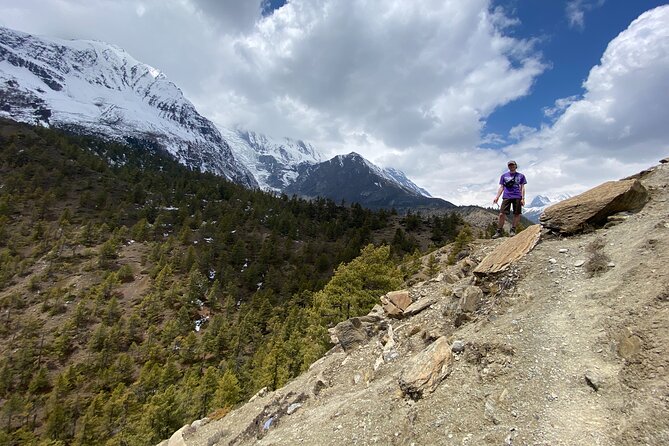
- Tilicho Lake detour: A high alpine lake day at 4,919m that adds drama beyond the classic circuit
- Acclimatization in Manang: Scheduled adjustment time before the higher ridges
- Porter + assistant guide support: Less load strain and more eyes on safety
- Thorong La Pass timing: Pre-dawn climb to reach 5,416m, then a steep descent toward Muktinath
- Pokhara finish by Phewa Lake: A real downshift after days of thin air
- Meals and water aren’t fully handled: Teahouse comfort costs extra, and drinking water isn’t included
More trails out of Kathmandu, boots ready
- Everest Base Camp Trek – 14 Days★ 5.0 · 1,499 reviews
- Everest Base Camp Trek★ 5.0 · 842 reviews
- Everest Base Camp Trekking★ 5.0 · 485 reviews
- Nagarkot Sunrise View and Day Hiking from Kathmandu★ 5.0 · 471 reviews
Tilicho Lake and Thorong La: the high-altitude story you’re really buying
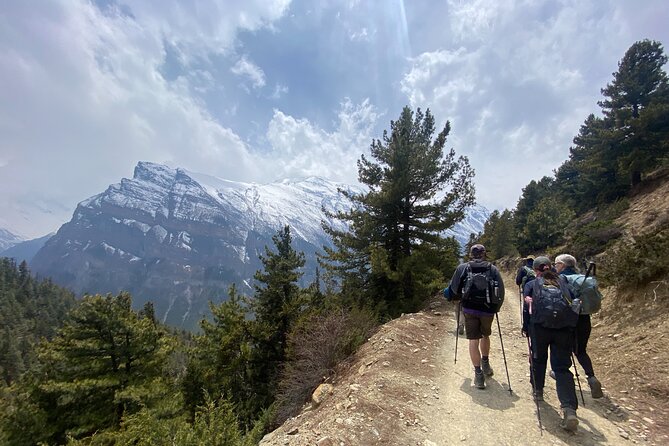
This trek’s headline is simple: you get the classic Annapurna Circuit bones, then you add a second “wow” day with Tilicho Lake. Tilicho Lake sits at 4,919m and is revered in both Hindu and Buddhist traditions. That mix matters. It means the scenery is not just scenic. You’ll see prayer-flags energy, pilgrims’ routes, and a sense that people take this place seriously—not just for photos.
Then comes Thorong La Pass at 5,416m, described as Nepal’s highest trekking pass. The pass day is the one most people remember in their legs later. Your body will feel it during that pre-dawn climb from Thorong Phedi (4,540m). The payoff is not only the summit moment; it’s the whole shift after the pass, when you drop toward the pilgrimage town of Muktinath around 3,760m.
If you like variety, this route delivers it well: green-ish valley starts, then Tibetan-influenced Manang, then harsher high-altitude ridges, then the Mustang-flavored lower valleys, and finally a proper Pokhara reset.
The value deal: what your $1,800 really covers (and what it doesn’t)
At $1,800 per person, you’re paying for logistics plus guided safety—big pieces on a remote trek like this. The package includes:
- Private transportation and transfers around Kathmandu and Pokhara (airport pickup/drop-off, and hotel connections)
- Trek core transport: shared jeep from Besisahar to Dharapani, plus public bus segments (Jomsom to Pokhara, and a tourist bus Pokhara to Kathmandu)
- Accommodation: a 3-star hotel in Kathmandu with breakfast, a 3-star hotel in Pokhara with breakfast, and standard teahouses during the trek
- A professional, government-licensed, first-aid trained guide plus an assistant guide per group size
- Porters for overnight bag carrying at 2 trekkers to 1 porter
- Permits: ACAP (Annapurna Conservation Area) and TIMS
- Insurance coverage for the trekking crew (guides, assistant guides, porters)
That last one is worth your attention. You’re not only paying for a guide; you’re paying for a team that has coverage and a first-aid setup.
What’s not included is equally important:
- Government fees mentioned separately: $50 per person
- Travel insurance: you must arrange coverage yourself, including emergency evacuation and coverage for the trek’s highest altitude reached
- Trek meals: only selected items are included (the info says 3 breakfasts and 2 dinners, plus welcome/farewell-style dinners; regular meals during the trek are not included)
- Hot showers, charging, and Wi‑Fi: often available but extra at many teahouses
- Drinking water: not included (you should bring a filter bottle or purification tablets)
So the value is there if you want a guided, organized plan with teahouse lodging and porters. If you’re the type who hates paying for structure, you might find the inclusions too “managed.” But if you want the mountain without extra admin headaches, this feels like a solid approach.
Getting there and moving day to day: jeeps, buses, and why it matters
Nepal overland can be fun and also a little chaotic. This itinerary uses a mix of transport so you do not spend every waking hour on a seat.
- You start with a private transfer from Kathmandu airport to a Thamel-area hotel.
- Day 2 is a long drive out of Kathmandu with scheduled stops like Trishuli River viewpoints and the Mugling junction area, then down to Besisahar before reaching Dharapani.
- From Besisahar to Dharapani, you ride in a shared jeep.
- After the high days, the route shifts to lower-elevation travel: Jomsom to Pokhara is a public bus.
Why it matters: the trek becomes the main event, not the suffering. You also get a built-in rhythm—long travel days early, then sustained walking in the high and remote sections, then easier travel segments at the end.
The group size cap (maximum 14 travelers) also helps. It’s not a giant herd, so teahouse logistics and morning pacing tend to feel more manageable.
Days 1–5: Kathmandu to Dharapani and into the Annapurna corridor
Day 1: Kathmandu (Thamel)
After you land at Tribhuvan International Airport, office representatives meet you and transfer you to a hotel. You get checked in, then the rest of the day is yours. This matters because your first day in Kathmandu is where you can reset sleep and gear. You’ll be doing long days from here.
Day 2: Trishuli to Mugling to Besisahar, then Dharapani
This is your “warm-up geography” day. You’ll pass the Trishuli River corridor and the Mugling junction area, then reach Besisahar (the launching point area for the Annapurna Circuit) and continue to Dharapani (1,960m). Expect a big change in feel: fewer city distractions and more mountain air as you approach the trekking villages.
Practical note: you’ll likely feel the day more than you expect. Even though the stops are short, the overall ride time is long. Keep water and a snack strategy ready.
Day 3: Tachi Bagarchhap to Chame
You start your trekking rhythm by moving through Tachi Bagarchhap (2,160m), then climb to Chame (2,670m). Chame is the administrative center of Manang District and has that Tibetan-influenced look people associate with this region.
From here, the trail begins to feel like a real ascent path rather than a road-to-hike transition. It’s a good day to get used to steady effort without going too hard.
Day 4: Bhratang to Upper Pisang
You stop at Bhratang (2,850m), known for apple orchards and small juice farms—so yes, there’s a chance to treat yourself with something fresh if the teahouse stops are stocked. Then you trek to Upper Pisang (3,300m), a Tibetan-style village perched above the Marsyangdi River with big views toward Annapurna II and Pisang Peak.
Drawback to consider: the higher you go, the more your body wants shorter steps. Don’t fight it. Go slow, keep breathing steady.
Day 5: Manang (3,540m)
Today you reach Manang (3,540m), the cultural and trekking hub under Annapurna III and Gangapurna. The route includes stone villages like Ghyaru and Ngaw. Manang is where trekking turns from “trail effort” into “altitude management with real village life.”
If you want a cultural break, this is where it happens: you’re not just passing through. You’re in the center of it.




Days 6–9: Manang acclimatization and Tilicho Lake at 4,919m
Day 6: Manang acclimatization day
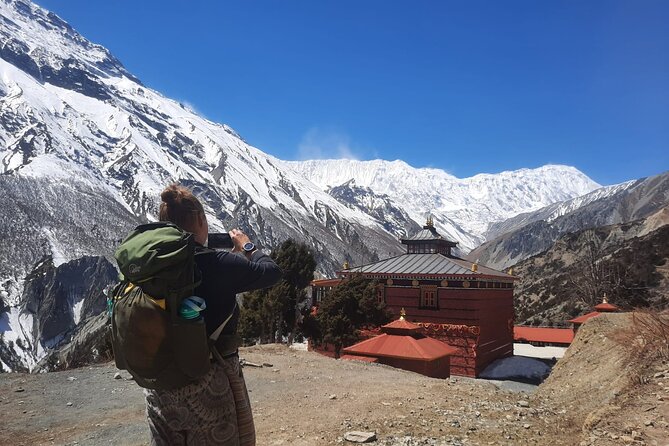
This is one of the most valuable days on the whole trek. Instead of pushing immediately higher, you do an acclimatization plan in Manang. The guide supports it with option hikes (the details are kept flexible in the plan), and you choose in consultation with them.
I like this kind of structure because it turns acclimatization into a decision you can do safely, rather than a guessing game. If you follow the guide’s pace and keep efforts moderate, you lower your odds of feeling rough later.
Day 7: Siri Kharka (4,060m)
You climb to Siri Kharka (4,060m), a remote ridge-top settlement with sweeping views of Gangapurna and the Chulu range. It’s a steady climb through juniper shrublands and exposed paths.
This is not the day to speed up to impress anyone. It’s a day to settle into high-altitude walking style: slow cadence, consistent steps, and regular water intake.
Day 8: Tilicho Base Camp (4,150m)
You reach Tilicho Base Camp (4,150m). The trail is described as short but intense, with narrow paths and landslide sections. In plain terms: it can be tiring and a little technical, even without a long day.
This is a “be focused” day. Watch footing. Keep your trekking rhythm calm.
Day 9: Tilicho Lake (4,919m)
Tilicho Lake day is a 45-minute time block in the schedule, which tells you it’s likely about reaching the lake area rather than a huge day of back-and-forth. At 4,919m, though, even short efforts feel harder than you expect.
What you’ll notice: the lake itself is surrounded by towering peaks, including Tilich Peak. And because it’s revered by Hindu and Buddhist traditions, the space feels meaningful. You’ll see how people connect the physical trek with spiritual practice.
Afterward, you descend back to Yak Kharka later (next day). Treat this day like the main event and don’t turn it into a race.
Days 10–12: Thorong La Pass and the long day into Muktinath
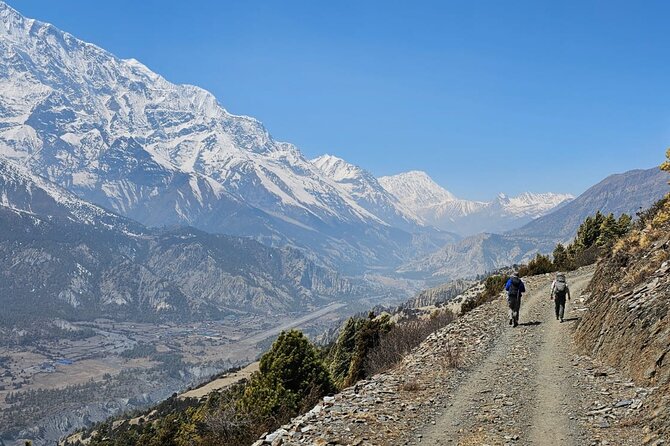
Day 10: Yak Kharka (4,050m)
You stay at Yak Kharka (4,050m), a settlement used as a staging point for Thorong La. The plan includes a 250m descent from Siri Kharka to Khangsar before climbing onward.
Why this stop matters: it’s your last proper “settle in” before the pass. If you rush here, you risk feeling flat for the biggest effort.
Day 11: Thorong Phedi (4,540m)
You reach Thorong Phedi (4,540m), meaning base of the pass. The day’s description points to barren, dusty ridgelines. This is the night where sleep is harder for a lot of people because your body knows the next day is coming.
Practical tip: plan to carry your essentials so you’re not digging for stuff in the cold. Keep a simple routine: hydration, warm layers ready, and gear organized.
Day 12: Thorong La Pass (5,416m) to Muktinath (3,760m)
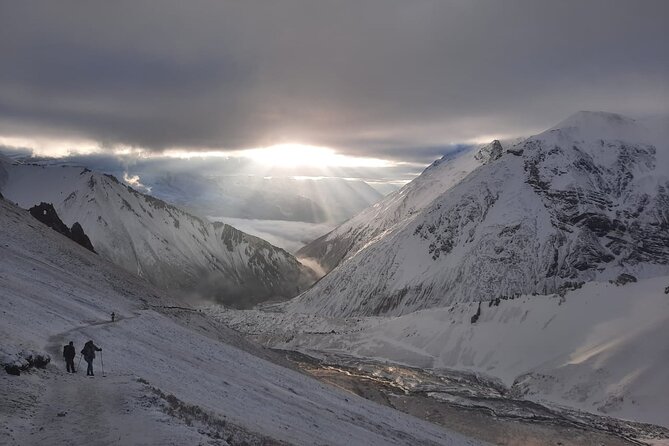
This day is the peak achievement. You start with a strenuous pre-dawn climb of over 900 meters from Thorong Phedi to the pass at 5,416m. Then you descend around 1,600 meters through rocky terrain toward Muktinath (3,760m).
You’re stacking big altitude changes: high exertion, then fast loss of elevation. The downside is obvious: knees can get annoyed. The upside is the payoff is immediate—the emotional punch of crossing the pass and then arriving in a town built around pilgrimage and ceremony.
Muktinath is a revered pilgrimage destination. So when you reach it, it’s not just a “place to sleep.” It’s a place with a reason people come.
Days 13–15: Kagbeni and Jomsom, then Pokhara by Phewa Lake
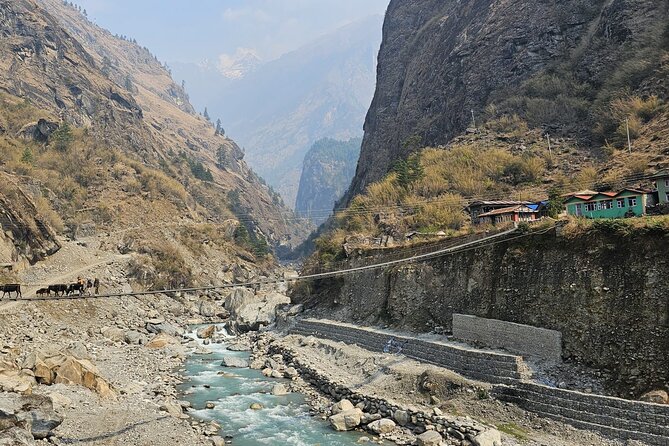
Day 13: Kagbeni (2,810m) and Jomsom (2,720m)
You pass Kagbeni, a centuries-old village at the confluence of the Kali Gandaki and Jhong rivers and a gateway to Upper Mustang. It’s known for ancient red-walled monastery structures and narrow stone streets.
Then you move to Jomsom (2,720m), described as a Mustang administrative center and stop on the lower circuit. The route follows the windswept Kali Gandaki River and you descend around 250m through wide valley terrain.
This day often feels like a transition from “high pass pride” into “bigger Nepal road valley vibe.” You’re still moving, but the environment becomes less knife-edge altitude.
Day 14: Kalopani (2,530m), Beni (850m), Pokhara (822m)
Today is a contrast day. You head through Kalopani (2,530m), which is described as one of the greenest and most beautiful villages in Mustang—an abrupt change from the arid feel above. Then you take the bus descent from Jomsom down to Beni (850m) and continue to Pokhara (822m).
This day is where you reclaim comfort. You go from trekking to riding. That’s not a weakness; it’s smart pacing.
Day 15: Pokhara lakeside downtime
You get a full Pokhara day for recovery. Pokhara is described as Nepal’s lakeside city and adventure hub, framed by views of Machapuchare and the Annapurna range. You’ll be staying lakeside beside Phewa Lake.
This part is not just decoration. It’s where you let your body stop thinking about oxygen levels. If you do only one activity, I’d keep it simple: easy walking near the lake and an early night. Your legs will vote for that.
Teahouse reality: comfort, charging, and what to pack for cold mornings
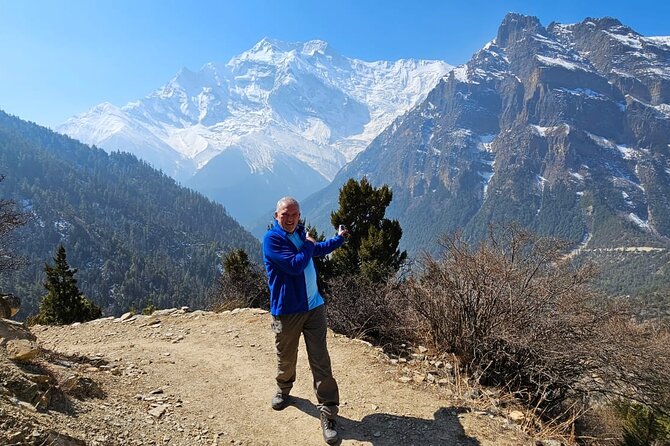
Teahouses are the standard lodging style on this route. They’re basic, but they’re part of the charm. The trade-off: comfort level can vary, and warm water and charging are not always free.
Here’s what the info tells you to plan for:
- Hot showers, battery charging, and Wi‑Fi are available for extra fees at most teahouses
- Drinking water is not included, so bring a filter bottle or purification tablets
- During the trek, only selected meals are included, so you’ll be budgeting for additional food as you go
Altitude also changes what you feel day to day. Even on days labeled shorter in schedule, you may spend more energy than you think. Keep your layers tight: warm mid-layer, a windproof layer, and a plan for chilly mornings during pass days.
And yes: your knees will feel the pass descent. Trekking poles help if you use them well.
Who should book this trek (and who should be cautious)
This is a great fit if:
- You have a strong fitness level and feel comfortable with high altitude
- You want a guided plan with porters and clear logistics
- You care about cultural stops in Manang and the pilgrimage feel of Muktinath and Kagbeni
Be cautious if:
- You’re sensitive to altitude or you’re not confident about a pre-dawn pass climb
- You dislike basic lodging and extra costs for charging and hot showers
- You don’t want to manage your own water and meal spending during the trek
One more practical detail: the group max is 14 travelers, and the plan includes 1 assistant guide per 5 trekkers. That often creates better attention, but it also means you should be ready to follow group pacing.
Should you book this Annapurna Circuit with Tilicho Lake?
I’d book it if your main goal is a classic Himalayan circuit with an added high-altitude lake day and you like the idea of a guided team handling permits, teahouse arrangements, and core transport.
I would not book it if you want a low-stress, low-altitude trip. Thorong La Pass at 5,416m is not a casual checkbox. This trek demands respect for altitude and weather.
If you do book, pick the right gear, bring water purification, and trust the acclimatization days. The itinerary is built to help you get higher safely. Your job is to cooperate with that plan.
FAQ
Where does the trek start and end?
The start meeting point is Thamel, Kathmandu 44600, Nepal. The activity ends back at the same meeting point.
How long is the Annapurna Circuit with Tilicho Lake trek?
The duration is listed as 16 days (approx.).
What permits are included?
The package includes the Annapurna Conservation Area (ACAP) Permit and the Trekkers Information Management System (TIMS) Permit.
What’s the highest altitude on this trek?
Thorong La Pass is listed at 5,416m, and Tilicho Lake is listed at 4,919m.
Are meals included during the trek?
Meals during the trek are not included. The information lists hotel breakfasts and that there are 3 breakfasts and 2 dinners included, but it also states meals during the trek are not included.
Do I need travel insurance?
Yes. Travel insurance is not included, and you must have coverage for emergency evacuation and the trek’s highest altitude reached.
What’s the maximum group size?
The tour has a maximum of 14 travelers.
What’s included for cancellation?
Free cancellation is available. You can cancel up to 24 hours in advance for a full refund, and the experience requires good weather and a minimum number of travelers (with options for a different date or a full refund if canceled for those reasons).
More Trekking Out of Kathmandu






More Tour Reviews in Kathmandu




Just Reviewed in Kathmandu
- Mountain Bike Tour
★ 5.0 · 3 reviews - Annapurna Panaroma
★ 5.0 · 3 reviews - Mount Everest Scenic Flight 50 Minutes
★ 5.0 · 3 reviews - Kathmandu : Swambhunath & Durbar Square Guided Half Day Tour
★ 3.3 · 3 reviews - Chandragiri Cable Car & Monkey Temple Tour – Private/Group
★ 5.0 · 3 reviews - Kathmandu: Shivapuri National Park Hiking Day Trip
★ 3.3 · 3 reviews
Annapurna Circuit Treks, compared.
 ★ 5.0Annapurna Circuit Trek with Tilicho LakeFrom $1,093368 reviews
 ★ 5.0Annapurna Circuit TrekFrom $1,17594 reviews
★ 5.0Annapurna Circuit TrekFrom $2,24067 reviews
★ 5.0Annapurna Circuit TrekFrom $1,07449 reviews
★ 5.0Annapurna Circuit TrekFrom $1,35046 reviews
★ 5.0Annapurna Circuit TrekFrom $1,15035 reviews
★ 5.0Annapurna circuit TrekFrom $99835 reviews
★ 5.0Annapurna Circuit TrekFrom $97534 reviews
Browse the lists this tour appears in