

Review · ANNAPURNA CIRCUIT TREKS
Annapurna Circuit Trekking: 15 days
A high pass, real village days, and tight organization. That mix is what makes the Annapurna Circuit Trek feel like a full Nepal story, not just a walk. You’re aiming for Thorong La (5,416m), plus you’ll get a cultural warm-up in Kathmandu before the hiking starts.
I really like the practical support built into the trip: private transportation where it counts and a professional guide who helps you keep moving safely at altitude. One thing to consider is that drinks, visa, flights, travel insurance, and most personal extras are not included—so your real total budget is usually a bit higher than $1,300 on paper.
In This Review
- Key highlights that matter on the ground
- Why the Annapurna Circuit hits hard: Thorong La and Kali Gandaki views
- Kathmandu prep: temples, history you can actually use, and a comfy start
- From Khudi to Sirung to Jagat: easing into trekking rhythm
- Dharapani, Chame, Pisang: mid-circuit villages and growing altitude confidence
- Manang at about 3,519m: the rest day that can save your trip
- Yak Kharka, Thorong Phedi, and the Thorong La pass: where safety and support matter
- Down toward Tatopani and on to Pokhara: finishing strong with a big altitude drop
- Price and value: what $1,300 covers, and what usually adds up
- Guides, safety, and service: what the best-run treks feel like
- It’s challenging, so prepare like an adult: fitness, altitude, and pacing
- Who this trek fits best (and who should think twice)
- Should you book this Annapurna Circuit Trek?
- FAQ
- What time does the experience start?
- How long is the Annapurna Circuit Trek?
- Where does the tour begin?
- Is pickup available?
- What’s included in the price?
- What is not included?
- What hotels are included?
- What’s the highest point on the trek?
Key highlights that matter on the ground
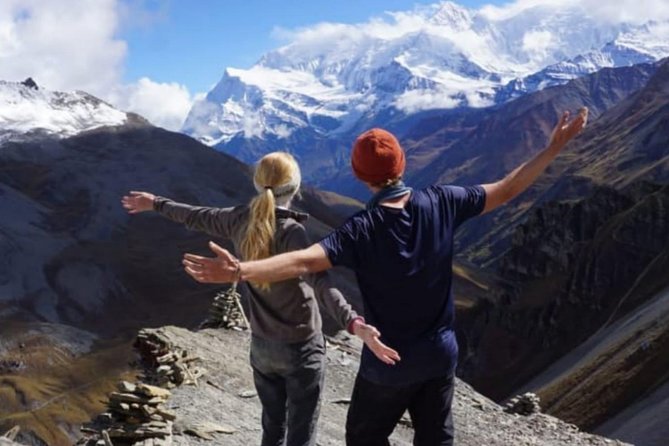
- Thorong La (5,416m) is the headline, with the route designed around step-by-step altitude gains and recovery days.
- Kathmandu temple circuit plus a guide on private car day 2 helps you get oriented fast before trekking.
- Manang rest day at about 3,519m gives your body a chance to adjust before the highest climbing day.
- Service and safety focus stands out in guide/porter support like Ramhari Neupane and backups such as Dendi and Susan.
- Good value structure: meals, guide, fees/taxes, and set hotel nights are included, while drinks and tips are clearly separate.
More trails out of Kathmandu, boots ready
- Everest Base Camp Trek – 14 Days★ 5.0 · 1,499 reviews
- Everest Base Camp Trek★ 5.0 · 842 reviews
- Everest Base Camp Trekking★ 5.0 · 485 reviews
- Nagarkot Sunrise View and Day Hiking from Kathmandu★ 5.0 · 471 reviews
Why the Annapurna Circuit hits hard: Thorong La and Kali Gandaki views
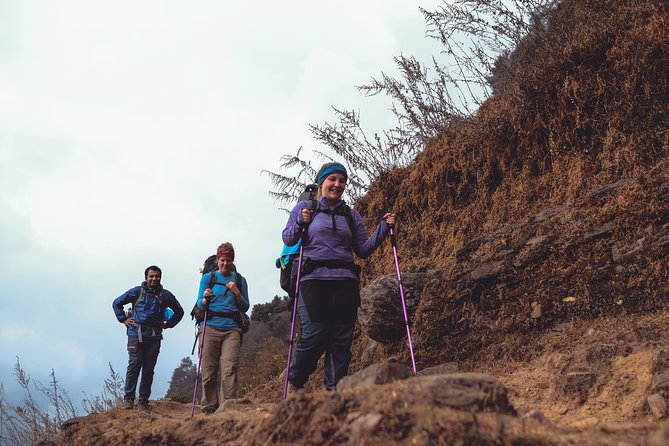
This trek is famous for a reason: you walk through big altitude zones and you still see an honest sense of place. The highest point on this route is Thorong La at 5,416m, and the trek also reaches as far as the Kali Gandaki’s deep gorge, which makes the whole journey feel wider than just “mountains close to the trail.”
You also get more than scenery. The Annapurna region is tied to the Annapurna Conservation Area, so the route naturally brings you into contact with local life—how people live, work, and adapt to harsh seasons and high elevation. If you like trekking where the views are huge and the days have texture, this route usually delivers.
Kathmandu prep: temples, history you can actually use, and a comfy start
You begin in Kathmandu (about 1,330m) with a transfer to your hotel by private car. Then you get a 7-hour Kathmandu sightseeing day with a professional guide and a private car covering the major stops: Pashupatinath, Boudhanath, Swayambhunath, and Kathmandu Durbar Square.
I like this setup because it does two things: it gets you grounded in Nepal’s culture before trekking, and it keeps logistics simple after arrival. When the next days get physical, you don’t want to waste energy figuring out how to reach the sites. This day is also useful mentally—you learn what to pay attention to when you’re later passing through villages and different ways of life.
If you’re sensitive to crowds or long walking in a city, pace yourself on day 2. You’re walking through active religious areas, and the best experience comes from moving at a comfortable tempo and leaving room for breaks.
From Khudi to Sirung to Jagat: easing into trekking rhythm
After Kathmandu, the trek starts with a long drive into the hills. You’ll head to Khudi (around 800m) and then begin walking toward Sirung (about 2,200m). Day 3 is a full day of travel (about 8 hours total), and the next day’s hike to Sirung is listed at around 7 hours.
This early section matters more than people think. The Annapurna Circuit isn’t just about “the pass.” The early days teach your body how to settle into the rhythm of steady uphill, breaks, and foot management. At these altitudes, you’re still testing your pace, your hydration habits, and whether your pack setup is comfortable.
Day 5 takes you onward to Jagat (around 1,300m) after trekking for about 6–7 hours. Notice the pattern: altitude isn’t always a straight climb. That’s normal on this circuit and it can help you avoid burning out too early.
A practical consideration: with time spent driving and trekking, your day planning needs flexibility. If you’re the type who wants a strict routine down to the minute, this first stretch may feel slow at times—but it’s part of how you set up the bigger gains later.
Dharapani, Chame, Pisang: mid-circuit villages and growing altitude confidence
From Jagat to Dharapani (about 1,960m) takes around 7–8 hours of trekking. Then you move to Chame (around 2,710m) in about 5–6 hours. Both days tend to feel like steady climbing through village rhythms, with the trail offering changing views as the altitude rises.
Why I like this part: you’re not just going higher, you’re learning how the landscape changes as weather and altitude shift. Your legs start to get used to the work, and your confidence builds.
Next comes Pisang (around 3,300m) in roughly 5–6 hours. This is where the trek starts feeling more “high altitude trekking” than “easy hike.” Expect colder air, thinner breathing, and the need to pay attention to how much you’re exerting yourself. The guide’s job here isn’t hype—it’s pace control.




Manang at about 3,519m: the rest day that can save your trip
You reach Manang (about 3,519m) after a 6–7 hour day. Then you get a rest day in Manang.
A rest day is not just a break for comfort. It’s also an altitude strategy. Your body gets time to adjust before you push toward the highest sections. If you’ve ever rushed altitude and paid for it later, you’ll understand why this day is such a big deal.
I also appreciate that the trek includes a planned pause. A rest day means you’re less likely to feel forced into “I must keep walking every day” mode. You can use the day to recover, hydrate, and keep your energy for the hard climb days ahead.
Yak Kharka, Thorong Phedi, and the Thorong La pass: where safety and support matter
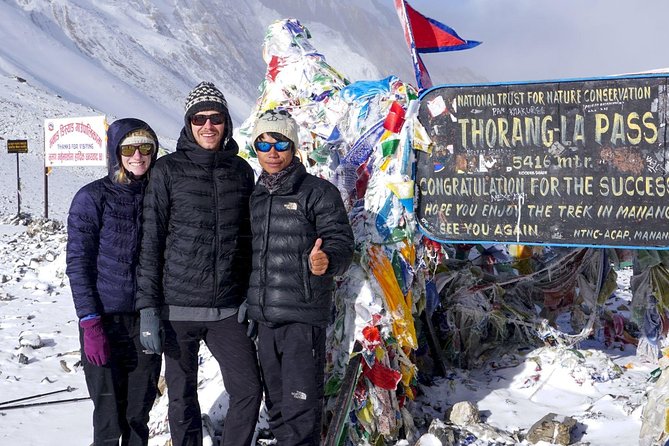
After the rest day, the trekking becomes serious.
Day 11 takes you to Yak Kharka (around 4,110m) in about 4 hours. Day 12 goes to Thorong Phedi (around 4,600m) in about 4 hours. These are shorter walking days on paper, but the altitude makes them harder. The air is thinner, and that changes everything—breathing, sleep, and how your body reacts to effort.
Day 13 is the defining day: trekking via Thorong La pass (5,416m) and then continuing to Muktinath (the route calls for about 6–7 hours). This is the day you should not treat like a “normal hike.”
From the service perspective, this is exactly where having a prepared guide matters. In past experiences with this operator’s team, the guides are described as thoughtful and supportive, and porters taking care of hikers can make a huge difference if you’re nervous about the climb. That kind of practical attention is what helps people keep moving without panicking, especially when altitude makes simple tasks feel harder.
One more reality check: weather can change fast at high elevation. Even with a strong plan, you might need to rely on your guide’s calls about pacing and timing.
Down toward Tatopani and on to Pokhara: finishing strong with a big altitude drop
After the pass and reaching Muktinath, the trip shifts into recovery mode. Day 14 includes a drive to Tatopani (around 1,200m). Day 15 takes you from Tatopani to Pokhara.
That’s a dramatic altitude drop, and it often feels like the trek finally exhales. Pokhara is also a smart end point because it’s a calmer city environment compared with Kathmandu, and it’s easier to reset after days at elevation.
Included stays help here: you get 2 hotel nights in Pokhara at Crystal Palace Hotel. The day-by-day plan also shows Tatopani and then arrival in Pokhara, so you’ll likely get at least one overnight there plus another night as part of the package. If you want total clarity for your exact schedule, you can confirm with the operator so your expectations match the nights.
Price and value: what $1,300 covers, and what usually adds up
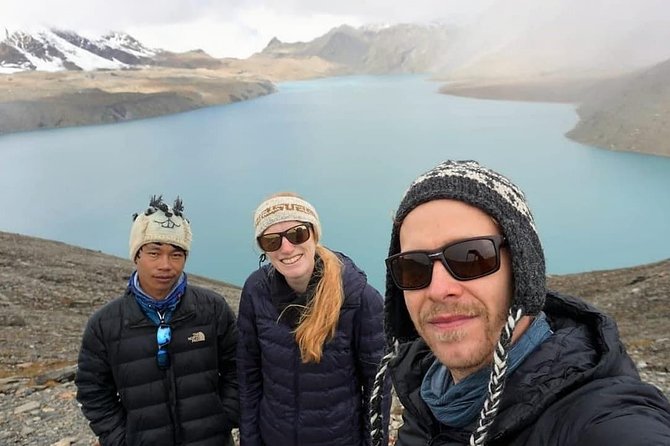
This trek lists a price of $1,300 per person for about 15 days. That’s not a “cheap hike,” but it’s also not just paying for a piece of paper. The package includes the big cost drivers: 3 meals a day (breakfast, lunch, dinner), private transportation, all fees and taxes, a professional guide, and set hotel nights in Kathmandu and Pokhara.
Hotels included:
- 2 nights in Kathmandu at Hotel Dream City
- 2 nights in Pokhara at Crystal Palace Hotel
Now the realistic part: drinks are not included (water, tea/coffee, beer, soft drinks), and Nepal visa fees, international and domestic flights, and travel insurance are also not included. Tips for staff are not included either, and city meals/drinks outside the trek are not part of the package.
So when you budget, think like this:
- If you like buying bottled drinks and paying for extras, your out-of-pocket will rise.
- If you pack smart and plan for insurance, you’ll feel more comfortable.
- If your group discount applies, you may get better value depending on group size.
For value-focused trekkers, the key is that you’re not funding every logistical piece yourself. You’re mostly paying for the trek infrastructure and guidance, while personal expenses stay on your side of the ledger.
Guides, safety, and service: what the best-run treks feel like
The most praised aspect of this experience is how people are cared for—especially around safety, efficiency, and friendly support. Past hikers have highlighted that the guide Ram Hari Neupane is prepared, reliable, and supportive. Others have mentioned Dendi and porter support like Susan as crucial in keeping things steady when altitude or fear shows up.
That matters because Annapurna doesn’t reward ego. It rewards people who keep moving at the right pace. A good guide helps you do that without making it feel like a lecture. It also helps with the small problems that can ruin a trip: delays, weather uncertainty, and fatigue.
One more service note: there are examples of extra help being arranged so hikers didn’t have to struggle unnecessarily. There’s also an example of an alternative itinerary being organized when someone couldn’t complete the circuit. That’s not something you expect to need—but it’s exactly the kind of flexibility that makes a difference if your body or conditions don’t cooperate.
It’s challenging, so prepare like an adult: fitness, altitude, and pacing
The trip is clearly pitched for people with moderate physical fitness. That’s a helpful signal, but it still assumes you can handle multi-hour trekking days and a high-altitude pass.
Here’s what I’d take from the route structure:
- You’ll walk many hours on most trek days, often 4–8 hours.
- Altitude rises gradually, but the jump to the Thorong La day is the real test.
- The rest day in Manang is there for a reason, not for decoration.
Your best strategy is to treat pacing as training. Slow down early so you can keep a steady effort later. If you notice symptoms like unusual shortness of breath beyond what you’d expect, tell your guide right away and don’t “push through” without guidance.
Also plan for the reality that the package doesn’t include many personal comforts like hot showers, laundry, or extra porters. If you want those, budget for them. If you’re already bringing rechargeable gear, plan for the fact that charger and battery items are treated as personal expenses.
Who this trek fits best (and who should think twice)
This tour fits best if you want:
- A classic Annapurna Circuit itinerary with a high pass day over Thorong La
- A guided, organized experience with private car transfers and set hotel nights
- Meals included so you can focus on trekking instead of restaurant math
It may not fit if you’re trying to keep costs ultra-low or you prefer to handle everything independently. The excluded items list is typical for Nepal treks, but your personal spending habits matter.
It’s also a strong choice if you like the idea of mixing culture and trekking—Kathmandu temples up front, then village walking through the conservation-area region.
Should you book this Annapurna Circuit Trek?
Yes, if you want a structured circuit with real support at altitude. The value comes from included meals, a professional guide, private transportation segments, and Kathmandu/Pokhara hotel nights—plus a track record of caring service that shows up in the way guides and porters are described.
Before you click confirm, sanity-check your budget for the not-included items: drinks, visa fee, flights, insurance, tips, and personal expenses. Then match your expectations to the physical demand of the Thorong La day. If you’re okay with that, this is the kind of trek where good organization lets you spend your energy on the views and the people you meet along the way.
FAQ
What time does the experience start?
The start time is listed as 6:15 am.
How long is the Annapurna Circuit Trek?
The duration is approximately 15 days.
Where does the tour begin?
The tour is based in Kathmandu, Nepal.
Is pickup available?
Yes, pickup is offered.
What’s included in the price?
Included items are breakfast, lunch, and dinner (3 meals), private transportation, all fees and taxes, a professional guide, 2 nights in Kathmandu at Hotel Dream City, and 2 nights in Pokhara at Crystal Palace Hotel.
What is not included?
Not included are drinks, Nepal visa fee, international and domestic airfares, travel insurance, extra night accommodations/activities, tips for staff, and personal expenses like recharge cards, batteries/charger, hot water/shower, extra porters, and laundry. City dinners/lunch and drinks are also not included.
What hotels are included?
Hotel Dream City in Kathmandu and Crystal Palace Hotel in Pokhara are included for the stated hotel nights.
What’s the highest point on the trek?
The highest point listed is Thorong La at 5,416m.
More Trekking Out of Kathmandu






More Tour Reviews in Kathmandu




Just Reviewed in Kathmandu
- Mountain Bike Tour
★ 5.0 · 3 reviews - Annapurna Panaroma
★ 5.0 · 3 reviews - Mount Everest Scenic Flight 50 Minutes
★ 5.0 · 3 reviews - Kathmandu : Swambhunath & Durbar Square Guided Half Day Tour
★ 3.3 · 3 reviews - Chandragiri Cable Car & Monkey Temple Tour – Private/Group
★ 5.0 · 3 reviews - Kathmandu: Shivapuri National Park Hiking Day Trip
★ 3.3 · 3 reviews
Annapurna Circuit Treks, compared.
 ★ 5.0Annapurna Circuit Trek with Tilicho LakeFrom $1,093368 reviews
 ★ 5.0Annapurna Circuit TrekFrom $1,17594 reviews
★ 5.0Annapurna Circuit TrekFrom $2,24067 reviews
★ 5.0Annapurna Circuit TrekFrom $1,07449 reviews
★ 5.0Annapurna Circuit TrekFrom $1,35046 reviews
★ 5.0Annapurna circuit TrekFrom $99835 reviews
★ 5.0Annapurna Circuit TrekFrom $1,15035 reviews
★ 5.0Annapurna Circuit TrekFrom $97534 reviews
Browse the lists this tour appears in