
Review · ANNAPURNA CIRCUIT TREKS
Annapurna Circuit with Tilicho Lake Trek
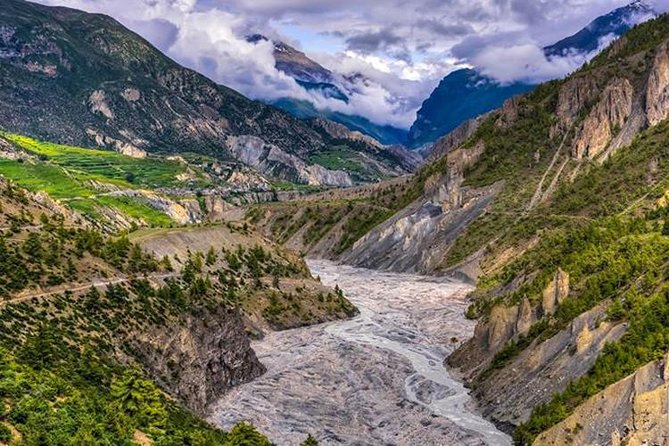
Tilicho Lake is the detour you’ll remember. This Annapurna Circuit trek mixes big mountain passes with a serious side trip to high-altitude Tilicho, run with a guide so you’re not stressing over navigation. I like that the route has structure—drives, acclimatization, and trekking days lined up—so your body can keep up.
Two things I especially like: a max group size of 8 for a less chaotic feel on the trail, and a trip plan that includes permits, meals, accommodation, and the Jomsom–Pokhara flight so you’re not constantly budgeting logistics mid-trek. One thing to consider: the trek is challenging and the Thorong La section can involve extreme snow conditions, so you’ll want to go in fit and prepared.
This is one of those Nepal treks where the planning matters. You’ll spend a lot of time moving—through river valleys, Tibetan-style villages, and long high passes—while your guide handles the day-to-day choices. When things go smoothly, you get to focus on the views and the work of walking at altitude, not on figuring out what’s next.
In This Review
- Key highlights that make this trek feel well run
- Price and what you’re really paying for
- Getting from Kathmandu to the trail: long road, then real hiking
- Day 1–3: Chame, Pisang bridges, and the first big valley views
- Day 1 (toward Chame)
- Day 2 (Pisang)
- Day 3 (Manang)
- Day 4 and Day 5: Manang rest day and Khangsar’s Tibetan village vibe
- Day 4 (Manang rest day)
- Day 5 (Khangsar)
- Tilichol and Tilicho Lake: where starting early changes everything
- Day 6 (Tilichol Lake)
- Day 7 (Tilichol/Base Camp toward Tilicho Lake)
- Day 8–10: Yak Kharka, Thorong Phedi, and the pass pressure (Thorong La)
- Day 8 (toward Yak Kharka and Thorong region)
- Day 9 (Thorong Phedi / Thorong La Trail)
- Day 10 (Muktinath via the Thorang La Pass)
- Day 11–13: Kali Gandaki to Jomsom, then flight out to Pokhara and Kathmandu
- Day 11 (Jomsom)
- Day 12 (Pokhara by morning flight)
- Day 13 (Pokhara to Kathmandu)
- Guide support: safety, pace, and the comfort of not getting lost
- Accommodation, meals, and the little comforts you’ll rely on
- Who this trek suits best (and who should reconsider)
- Should you book the Annapurna Circuit with Tilicho Lake detour?
- FAQ
- What is the price per person?
- How long is the trek?
- Is the Jomsom–Pokhara flight included?
- What’s included in the trek package?
- How big is the group?
- Is travel/medical insurance included, and are international flights included?
Key highlights that make this trek feel well run
- Small group limit (max 8): less noise at tea houses, more room to share the trail, and easier pace control.
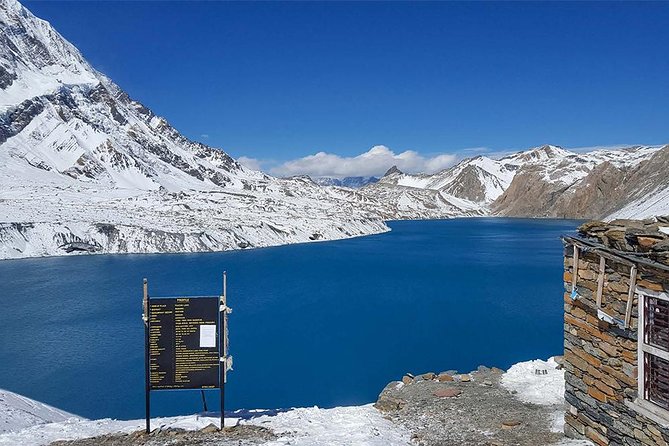
- Tilicho Lake detour with a timing tip: you’re guided to start early to reduce wind hassles later in the day.
- Real inclusions for an active itinerary: permits (TIMS + Annapurna Conservation Area), trekking support, meals, teahouse stays, and the Jomsom–Pokhara flight.
- Acclimatization built into the plan: a rest day in Manang plus gradual route transitions.
- Gear support in-country: sleeping bag and duffel bag are provided for the trek (so you can travel lighter).
- Team credibility for organization and kindness: guides and porters like NC Sherpa and MisterD Sherpa are associated with professional, kind support.
More trails out of Kathmandu, boots ready
- Everest Base Camp Trek – 14 Days★ 5.0 · 1,499 reviews
- Everest Base Camp Trek★ 5.0 · 842 reviews
- Everest Base Camp Trekking★ 5.0 · 485 reviews
- Nagarkot Sunrise View and Day Hiking from Kathmandu★ 5.0 · 471 reviews
Price and what you’re really paying for
At $1,093.34 per person, this trek isn’t “cheap,” but it’s also not just paying for walking. You’re paying for the stuff that usually costs time, admin, and stress: permits, a certified professional guide, teahouse accommodation during the trek, meals, and the Jomsom–Pokhara flight.
That last one is a big deal. Lots of Annapurna itineraries either force you to scramble transport plans at the finish or leave major parts of getting out up to you. Here, the endgame includes the flight, then private transport onward to Pokhara and Kathmandu.
What you don’t get (and should budget for) is also clear: drinks and alcoholic drinks, extra food beyond what’s listed, and Kathmandu accommodation. Plus, the tour doesn’t include international airfare, Nepal entry visa fees, or travel/medical insurance. In the Himalaya, that last item matters—so don’t treat it like a checkbox.
Getting from Kathmandu to the trail: long road, then real hiking
The experience starts with a pickup and airport drop-off and private vehicle transport as described in the plan. Day 1 is a long day on the road from Kathmandu toward Besisahar, using the Kathmandu–Pokhara Highway route via Dumre, then along the Marsayangdi River to reach Besisahar.
Even if you’re excited, treat this like a “warm-up day.” You’ll arrive with your legs untested for mountain trekking, and later days will ask more of you than you expect. The practical value here is that you’re not stuck piecing together intercity transport on day one.
After the trek, you’ll do the opposite: a morning Jomsom–Pokhara flight, then a drive from Pokhara back to Kathmandu (about 7 hours) with overnight arranged in Kathmandu in line with the agreed category and BB plan.
Day 1–3: Chame, Pisang bridges, and the first big valley views
Day 1 (toward Chame)
Your first day sets the tone: travel day plus the beginning of the trek corridor in the Annapurna region. Expect a lot of sitting early. Your “win” here is arriving ready to walk—hydrated, fed, and not carrying too much.
Day 2 (Pisang)
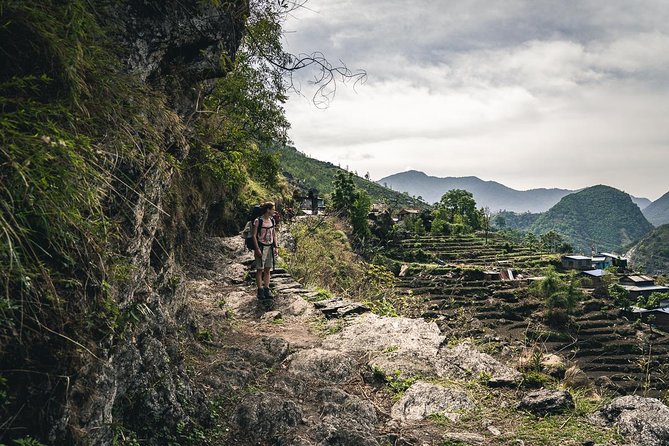
Pisang is where the trail starts feeling serious. You go through deep forest in a narrow, steep valley and cross two bridges—one at 2,910 meters and another at 3,040 meters. This is the kind of section that keeps you focused: you’re constantly stepping carefully, watching footing, and taking in the steepness around you.
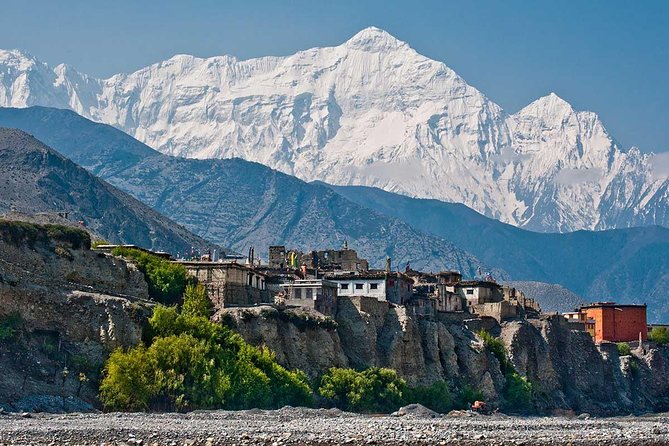
There are also mountain-view moments—like snow-capped peaks including Lamjung Himal—when the trail allows you to look up between stretches of forest and stone.
Consideration: bridge crossings mean you’re sharing narrow paths. Keep your schedule calm and don’t sprint through congestion.
Day 3 (Manang)
Day 3 brings the “ridge climb” feeling: an ascent on a steep ridge with views over Manang Valley and Tilicho Peak (7,134 meters). Then you descend through Humde toward Manang, including the Manang airstrip area at 3,280 meters.
This day is important for more than views. It’s a taste of how your body handles altitude changes—up, then down—before you settle into the Manang area.
Day 4 and Day 5: Manang rest day and Khangsar’s Tibetan village vibe
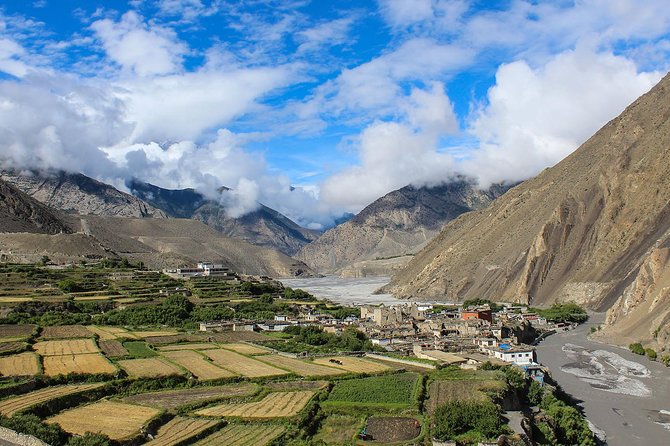
Day 4 (Manang rest day)
You get a rest day to adjust to higher altitude. Manang is described as remote but still a sizable village, so this isn’t a “sit in silence all day” situation. You can explore the village and spend time seeing daily life up high.
Practical tip: use rest day to move gently. A short wander can help you loosen up without “training” yourself to exhaustion.
Day 5 (Khangsar)
From Manang, you continue onward through the valley corridor, following the path toward the river. You cross Khangsar Khola by bridge and then ascend to Khangsar Village, described as a typical Tibetan village.
This is a helpful cultural contrast to the more “busy trekking corridor” places. Even if you don’t go deep into history, Khangsar gives you a sense of how high-altitude communities organize life: where the trail threads through the settlement, how buildings relate to the mountains, and how language and architecture echo the larger Tibetan influence.
Tilichol and Tilicho Lake: where starting early changes everything
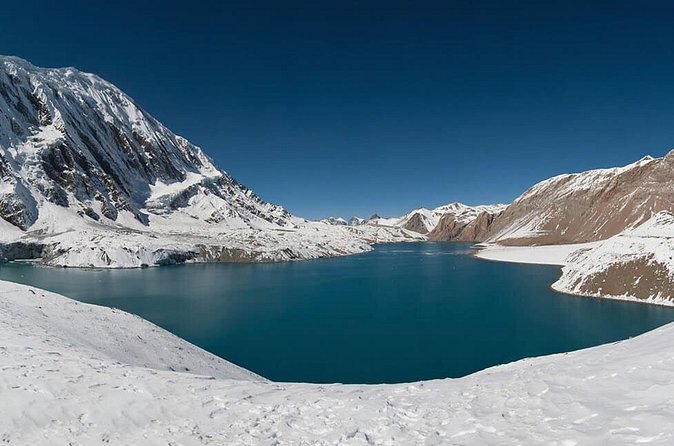
Day 6 (Tilichol Lake)
You’ll pass a gompa and follow a newly constructed trail up toward a high ridge. At one point you’ll notice two route options: an older and more challenging path versus a newer, easier option.
The value here is flexibility. Trails in this region often have multiple lines, and having a choice can help you match your energy. Your guide will handle the decision-making so you’re not stuck guessing on the spot.
Day 7 (Tilichol/Base Camp toward Tilicho Lake)
This is the day built around one key reality: wind. You’re encouraged to start early to avoid strong winds that tend to pick up later as warm and cold air mix. The trek runs from base camp toward Tilicho Lake.
Here’s what that means for you on a practical level: if you start late, your day can get uncomfortable fast. If you start early, you’ll likely feel calmer and more in control—especially when exposed sections show up.
Consideration: Tilicho territory is high and serious. Even when the trail looks straightforward, the altitude and weather can make it feel tougher than a “normal” hike.
Day 8–10: Yak Kharka, Thorong Phedi, and the pass pressure (Thorong La)
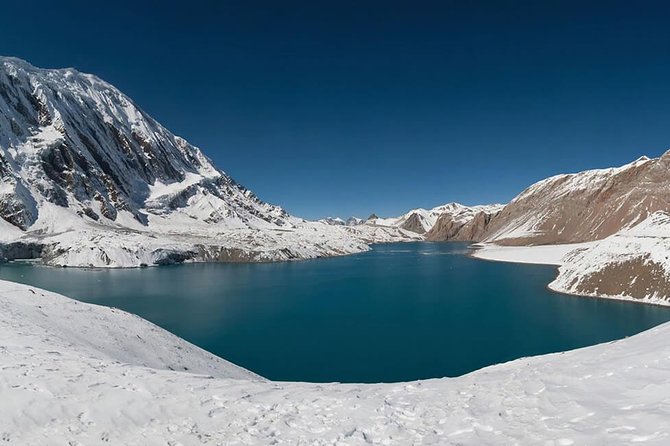
Day 8 (toward Yak Kharka and Thorong region)
To reach Yak Kharka, you descend slowly from Tilicho Base Camp and then climb about 500 meters. You’ll go through Tengi, leaving the Marsayangdi Valley as you head toward the Thorong area.
This day is about transition. Your body is recovering from Tilicho altitude demands, and you’re moving into the biggest “pass sequence” part of the trek. Expect a mix of steady effort and occasional stiffer climbs, not constant flat walking.
Day 9 (Thorong Phedi / Thorong La Trail)
You begin with breakfast, then ascend toward a ridge and gradually descend toward the Kone River. You cross via a wooden bridge and then continue along narrow sections.
The practical point: after Tilicho and while approaching Thorong, narrow trails plus altitude is a combo that rewards careful pacing. You’ll feel better if you keep your breath under control and avoid lung-burning surges.
Day 10 (Muktinath via the Thorang La Pass)
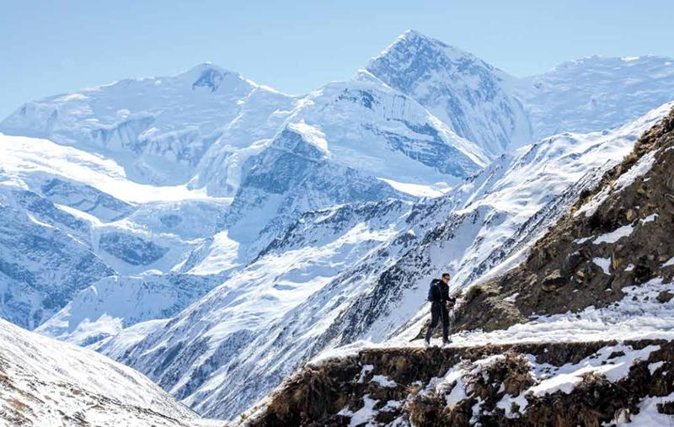
This is described as a long trek toward Muktinath, starting early. You head toward the Thorong La Pass and the plan notes that high altitude and extreme snow can pose challenges.
This is the part where preparation matters most. Don’t treat this as a “good day for a photo” hike; treat it like a safety-critical day. If conditions are rough, your guide’s decisions and route timing are the whole game.
Day 11–13: Kali Gandaki to Jomsom, then flight out to Pokhara and Kathmandu
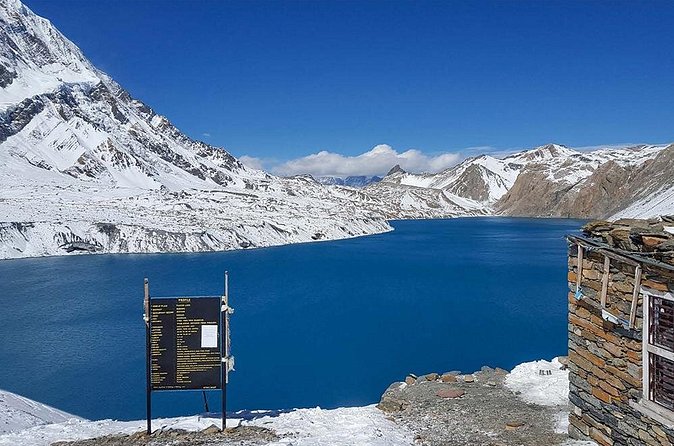
Day 11 (Jomsom)
To reach Jomsom, you can follow the trail of Kagbeni or Lupra. The trek is along the Kali Gandaki River.
Jomsom is described as a chilly valley with amenities. It also functions as a key stop because it sets up the flight onward. If you’ve been feeling “on edge” during pass days, this river corridor can be a welcome return to more predictable trail rhythm.
Day 12 (Pokhara by morning flight)
You wake early for the morning flight to Pokhara. During the flight, you get mountain views, and once you arrive you’re escorted to your accommodation in Pokhara.
This day is a reward day in motion. You’re not hiking uphill; you’re settling into the idea that the big effort is done.
Day 13 (Pokhara to Kathmandu)
After breakfast, you take a tourist coach from Pokhara to Kathmandu, about 7 hours, with overnight arranged in Kathmandu as per the agreed category with BB plan.
It’s a travel day, but it’s also the moment you can mentally process what you just walked. You’ll likely feel more tired than you expect—altitude trekking has a way of lingering in your muscles.
Guide support: safety, pace, and the comfort of not getting lost
One of the stated selling points here is trekking safely without the risk of getting lost by going with a guide—and that’s not fluff. On the Annapurna Circuit, decisions matter: what route option to take, when to push forward, and how to adjust when the weather changes.
This is also where the human side shows up. In past experiences associated with NC Sherpa and porter support such as MisterD Sherpa, the focus is described as professional and kind. That’s what you want in mountain country: clear instruction, calm problem-solving, and people who keep your energy and morale steady.
What you’ll feel: when the guide handles day-to-day planning, you stop burning mental calories on navigation. That means you can spend more effort on breath control, foot placement, and enjoying the mountain moments.
Accommodation, meals, and the little comforts you’ll rely on
During the trek, you’re covered with teahouse/guesthouse accommodation and meals (breakfast 13, lunch 11, dinner 11 are listed). The permit costs (TIMS and Annapurna Conservation Area) are also included, so you don’t arrive at the border of the trek worrying about paperwork.
Gear-wise, you get Nepal Social Treks Gears such as a sleeping bag and duffel bag for use during the trip. That can reduce what you have to carry from Kathmandu.
The practical flip side: you’ll still need money for drinks and anything not covered in the meal list. High-altitude thirst and hot tea both happen whether you budget or not—so plan ahead.
Who this trek suits best (and who should reconsider)
This trip is described as best suited to fit, active travelers, and you should have moderate physical fitness. That matches what the route demands: long trekking days, high passes, and a Tilicho detour where wind and altitude can make a normal hike feel intense.
If you love steady effort and you’re comfortable with altitude risk, this will feel rewarding—especially with the structure of a rest day in Manang and planned progression toward Thorong La.
If you’re newer to trekking, or if long days at height make you nervous, you might find this tour stressful. In that case, it’s worth considering a lower-altitude route first so you build confidence before aiming for Tilicho and Thorong.
Should you book the Annapurna Circuit with Tilicho Lake detour?
I’d book this if you want an active Annapurna Circuit that keeps logistics in order: guide + permits + meals + teahouse stays + flights are all handled, and the group stays small. The Tilicho Lake angle is the reason to do this version at all, and the plan’s note about starting early to manage wind is the kind of practical detail that makes a difference.
I’d pause if you’re not confident with high-altitude trekking or if you’re skipping insurance and going unprepared for rough weather. The plan explicitly flags that extreme snow can happen around Thorong La—so don’t gamble with that.
FAQ
What is the price per person?
The tour price is $1,093.34 per person.
How long is the trek?
The duration is listed as about 13 days.
Is the Jomsom–Pokhara flight included?
Yes. The itinerary includes the Jomsom–Pokhara flight.
What’s included in the trek package?
Included items are accommodation in teahouse/guesthouse during the trek, meals, trekking permits (Annapurna Conservation Area Permit & TIMS), a certified professional guide, porters (1 porter for 2 travelers) for personal gear and group equipment, and a first aid kit. Transport by private vehicle and airport pickup/drop-off are also included, plus trekking gear such as a sleeping bag and duffel bag for use during the trip.
How big is the group?
The maximum group size is 8 travelers.
Is travel/medical insurance included, and are international flights included?
No. Travel and medical insurance are not included, and international flight tickets are not included. Nepal entry visa fees are paid by the guest.
More Trekking Out of Kathmandu
More Tour Reviews in Kathmandu
Just Reviewed in Kathmandu
- Mountain Bike Tour
★ 5.0 · 3 reviews - Annapurna Panaroma
★ 5.0 · 3 reviews - Mount Everest Scenic Flight 50 Minutes
★ 5.0 · 3 reviews - Kathmandu : Swambhunath & Durbar Square Guided Half Day Tour
★ 3.3 · 3 reviews - Chandragiri Cable Car & Monkey Temple Tour – Private/Group
★ 5.0 · 3 reviews - Kathmandu: Shivapuri National Park Hiking Day Trip
★ 3.3 · 3 reviews
Annapurna Circuit Treks, compared.
 ★ 5.0Annapurna Circuit Trek with Tilicho LakeFrom $1,093368 reviews
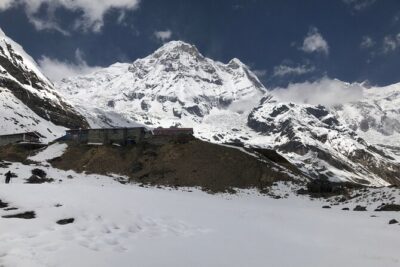 ★ 5.0Annapurna Circuit TrekFrom $1,17594 reviews
★ 5.0Annapurna Circuit TrekFrom $2,24067 reviews
★ 5.0Annapurna Circuit TrekFrom $1,07449 reviews
★ 5.0Annapurna Circuit TrekFrom $1,35046 reviews
★ 5.0Annapurna circuit TrekFrom $99835 reviews
★ 5.0Annapurna Circuit TrekFrom $1,15035 reviews
★ 5.0Annapurna Circuit TrekFrom $97534 reviews
★ 5.0Annapurna Circuit TrekFrom $1,17594 reviews
★ 5.0Annapurna Circuit TrekFrom $2,24067 reviews
★ 5.0Annapurna Circuit TrekFrom $1,07449 reviews
★ 5.0Annapurna Circuit TrekFrom $1,35046 reviews
★ 5.0Annapurna circuit TrekFrom $99835 reviews
★ 5.0Annapurna Circuit TrekFrom $1,15035 reviews
★ 5.0Annapurna Circuit TrekFrom $97534 reviews
Browse the lists this tour appears in