
Review · ANNAPURNA CIRCUIT TREKS
Annapurna Tilicho Lake Trek
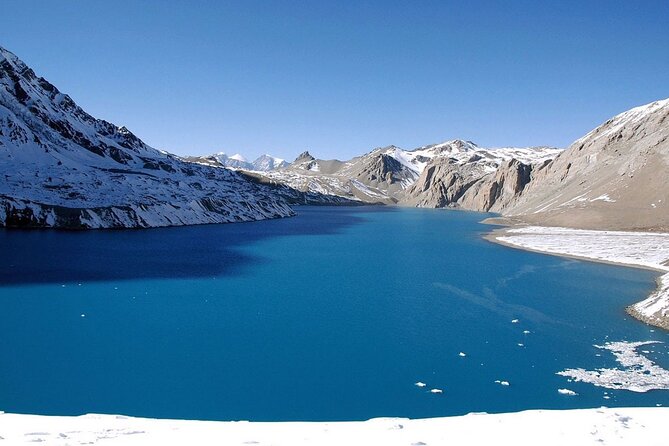
Tilicho Lake is a bucket-list detour from the Annapurna Circuit. This 20-day trek links Tilicho Lake with Thorong La and tops it off with the Poon Hill sunrise show. I like the way the route strings together big altitude moments with quieter village days in between, so you’re not always in survival mode.
Two things I really like here: the experienced, English-speaking licensed trek leadership (with an assistant and porters) and the fact that permits and essential paperwork are handled for you. One consideration: this is an altitude-heavy route, including Thorong La at 5,416m, so you’ll want to go in with patience and a steady pace, not hero energy.
You also get solid base-and-wraparound support: airport pickup in Kathmandu, deluxe hotel nights at the start and end, and a tourist bus transfer from Pokhara back to Kathmandu. And with a maximum group size of 12, it should feel organized without feeling like a cattle line.
In This Review
- Key things that make this trek worth your attention
- Annapurna Circuit meets Tilicho Lake: what the route really feels like
- Kathmandu start and Pokhara finish: logistics that keep your brain quiet
- Day-by-day flavor: what each stage teaches you
- Days 2–5: Syange, Dharapani, Chame, and the gorge-to-village rhythm
- Days 6–7: Manang—dry air, altitude prep, and optional cultural detours
- Days 8–10: Khangsar to Tilicho Base Camp and on to the lake
- Days 11–13: Yak Kharka to Thorong Phedi and over Thorong La
- Days 14–16: Muktinath, Marpha, Jomsom-side winds, and Tatopani hot springs
- Days 17–19: Ghorepani and Poon Hill at sunrise, then back to city life
- The guide-and-support setup: where the money goes
- What to pack (based on what the route actually demands)
- Who this trek is best for
- Should you book Accessible Adventure for this Annapurna trek?
- FAQ
- How long is the Annapurna Tilicho Lake Trek?
- Where does the trip start and what time does it begin?
- What is the price per person?
- What group size should I expect?
- What’s included in the price?
- What is not included?
- Do I need a permit for the trek?
- Is altitude part of the route?
Key things that make this trek worth your attention
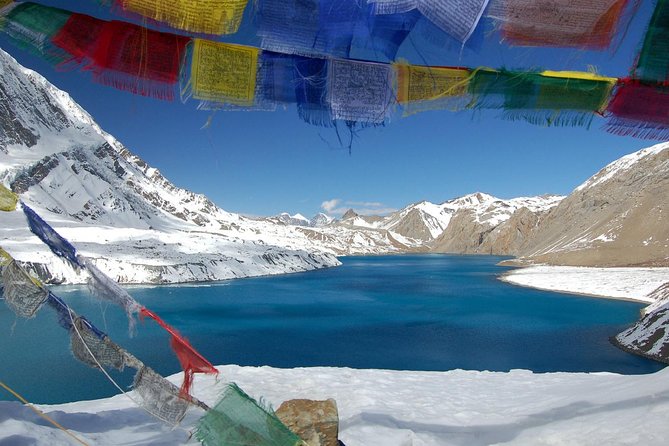
- Tilicho Lake as the headline detour: a high, dramatic side route in Manang District that breaks up the classic Annapurna Circuit rhythm.
- Manang acclimatization built in: a dedicated day to adjust before the more demanding stretch ahead.
- Thorong La + Poon Hill in one trip: you’ll earn the pass views and then chase the early-light panorama.
- Leader, assistant, and porter support: better pacing and less chaos when conditions turn tough.
- Gear support for cold nights: a down jacket and sleeping bag are included (returned after the trip).
- Small-group style: up to 12 people, with porter coverage (2 trekkers per porter).
More trails out of Kathmandu, boots ready
- Everest Base Camp Trek – 14 Days★ 5.0 · 1,499 reviews
- Everest Base Camp Trek★ 5.0 · 842 reviews
- Everest Base Camp Trekking★ 5.0 · 485 reviews
- Nagarkot Sunrise View and Day Hiking from Kathmandu★ 5.0 · 471 reviews
Annapurna Circuit meets Tilicho Lake: what the route really feels like
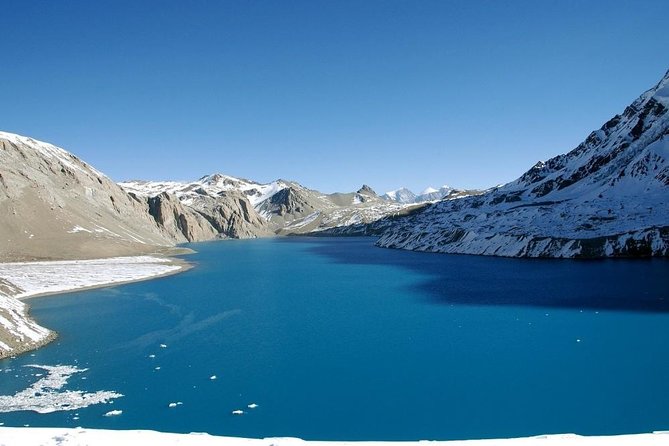
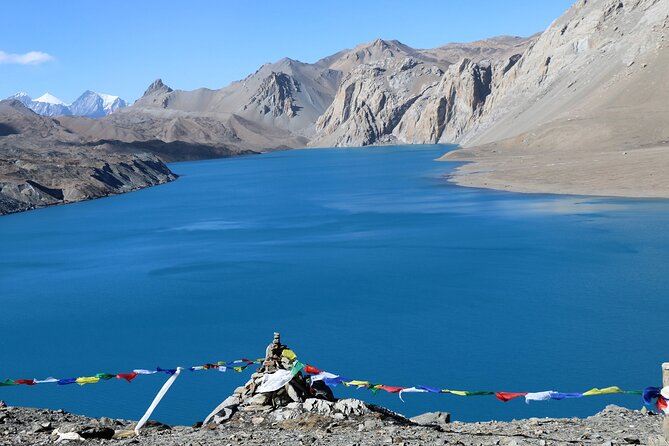
This trek is essentially the Annapurna Circuit story with a major twist: from Manang you head west into the main Tilicho region, reach the world’s highest lake in the area, and then rejoin the Annapurna Circuit after. That matters, because you get two different kinds of “wow.”
First, you’ll walk through the classic Annapurna Circuit world: waterfalls and gorge scenery early on, then rising into pine-and-fir zones, and later the drier high country of Manang. Second, the Tilicho section adds a sharper, more exposed high-alpine feel, with a lot more “stick to the plan and keep moving” energy.
The pace also gives you time to adjust. There’s a proper acclimatization day in Manang, and the days around Thorong La include a higher-base night at Thorong Phedi—designed to help you sleep at a safer altitude rather than gambling on a high camp.
Kathmandu start and Pokhara finish: logistics that keep your brain quiet
The trip begins in Kathmandu with a welcome meet-and-transfer to your hotel. After arrival formalities, you’ll get picked up and routed to a deluxe Kathmandu suite-style hotel for two nights with breakfast. You’ll also get a bus transfer from Pokhara back to Kathmandu near the end, which is one less long-distance scramble on your feet.
Pokhara gets one night at a deluxe mount-view style hotel with breakfast. Then the closing days take you back to Kathmandu for a farewell dinner in Thamel and an airport transfer with timing set for your international flight.
This is a value point that’s easy to miss. If you’ve ever tried to plan an Annapurna trek endgame on your own, you know how quickly transport coordination can turn into stress.
Day-by-day flavor: what each stage teaches you
Here’s how the trek unfolds in human terms—what you’re doing, what it feels like, and what to watch for.
Days 2–5: Syange, Dharapani, Chame, and the gorge-to-village rhythm
You start with travel from Kathmandu down to Syange, with bumpy, windy roads on a jeep segment near the end. The trek then launches into the classic valley narrowing effect: oak forest, suspension bridges, and cascading waterfalls in deeper gorge sections. Dharapani is one of those trail towns that feels tucked into the landscape.
From Dharapani, the climb to Chame is gentle but scenic—there’s an early sense of the mountains opening up, including Annapurna II (as described along the route). Day by day you’ll also notice vegetation shift: pine and fir start showing up more as you climb.
By the time you reach Pisang, the valley feels more dramatic. The route hugs the river through blue pine and fir forest, and cliffside trail sections give you that “this is real mountain hiking” feeling.




Days 6–7: Manang—dry air, altitude prep, and optional cultural detours
Manang is the big acclimatization hinge. You’ll come out of Pisang into the drier upper Manang District, where the monsoon effects are reduced by the Annapurna Range. It’s also a farming and yak-herding area for part of the year, so the villages feel more lived-in than purely tourist-coded.
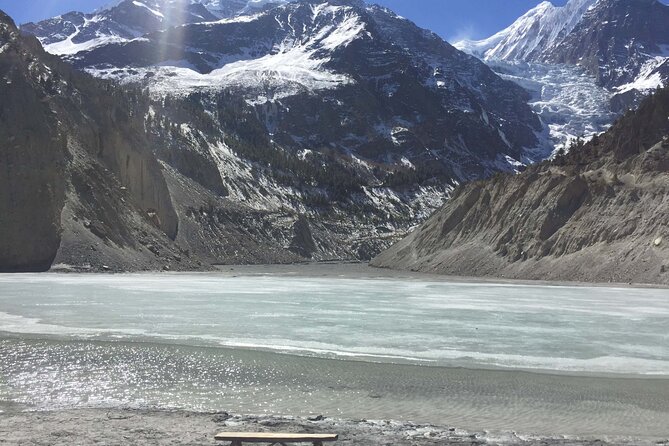
You then get a full acclimatization day in Manang. The point is simple: stay active, take short walks higher up, and don’t treat altitude like a math problem you can solve quickly. This is when a visit to Bodzo Gompa or Gangapurna Lake can fit well, since you’re already in the right area to build comfort.
Days 8–10: Khangsar to Tilicho Base Camp and on to the lake
After Manang, you head toward Khangsar, walking through conifer forest and dealing with one exposed scree slope section. The route uses bridges and high-path sections, so you’ll want steady footwear and careful foot placement.
The big Tilicho push follows. You reach Tilicho Base Camp at a “Hotel New Tilicho” stop before the final lake approach. This part involves a lot of scree walking and route-finding decisions (old vs new path options are described). The good news: you’re not just guessing; you’re moving with a guide who’s managing the route and safety choices.
On the lake day, you walk along the shore area first, then head toward a small saddle and pass a glacier-like stretch described as safe because it has no crevasses. You’ll still deal with loose scree, boulders, and steeper sections, but it’s structured in a way that keeps the effort manageable.
Days 11–13: Yak Kharka to Thorong Phedi and over Thorong La
After Tilicho, you trek down to Kangsar and then continue toward Yak Kharka. This is the “reset your body” stretch—still moving at altitude, but with gradual ascent and meadow scenery. Mani walls show up, and the pacing becomes more about conserving energy than “go go go.”
Then you move to Thorong Phedi. This is a practical choice: the day is meant to get you to the pass base so you can sleep soundly rather than taking risky sleep at a higher camp. That detail matters when you’re planning around Thorong La.
Thorong La day is the main event. You start early and climb gradually past false summits toward the pass. Once you reach the top at 5,416m, the scenery is described as breathtaking. This is also one of the longest, most strenuous stretches of the entire trek. Your job is to keep your breathing calm and your pace steady so you can enjoy the view instead of just surviving it.
Days 14–16: Muktinath, Marpha, Jomsom-side winds, and Tatopani hot springs
After Thorong La, you descend toward Muktinath. Early morning temple time is part of the experience, with a gradual downhill toward Ekley Bhatti. The route down there is steep enough that trekking poles are strongly useful. If you’ve never used poles downhill, this is the moment to learn—your knees will thank you.
You then head toward Jomsom, a windy area where the route guidance notes full-face mask and wind-stopper jacket for windblast. That’s not the kind of thing you want to ignore. Even a good trek day can become miserable if your face and layers aren’t protected.
Marpha comes next, and yes, apples are part of the vibe here. After apple day celebrations, the walk continues with bhatties (local tea shops) and viewpoints over nearby Dhaulagiri scenery. There’s also a possible stop near Tukuche and the Dhaulagiri icefall for photos.
Then you drop to Kalopani and continue onward to Tatopani, described as more than 1,000m down from Kalopani. The highlight is the natural hot spring at Tatopani—a real recovery moment after days of altitude and effort.
Days 17–19: Ghorepani and Poon Hill at sunrise, then back to city life
You climb from about 1,190m up to Ghorepani around 2,780m. Along the way you pass villages like Ghare, Shika, Phalate, and Chhitre, with Magar and Gurung communities noted along the route. It’s a cultural shift as much as a terrain shift.
Then comes the “wake up before sunrise” mission. The climb to Poon Hill happens early, and the reward is the sun rising slowly behind the Annapurna range. The timing is everything here: you’re hiking in the dark, waiting for light, and then soaking in changing mountain angles from slightly different sides. Afterward you return for breakfast and continue toward Nayapul and then Pokhara.
The final stretch brings you back to Kathmandu with the option of a farewell dinner in Thamel. The trek ends, but you’re still in Nepal mode—easy meals, shop wandering, and a little time to decompress.
The guide-and-support setup: where the money goes
The headline price is $1,430 per person for a roughly 20-day journey. That might sound steep until you look at what’s actually included.
You’re not just buying “a person with a backpack.” Your package includes:
- a government-licensed English-speaking trek leader and assistant trek leader
- porter service (2 trekkers per porter)
- required trekking paperwork and permits (ACAP and TIMS)
- a medical kit carried by the leader
- down jacket and sleeping bag included for the trek (returned afterward)
- hotel nights in Kathmandu (2) and Pokhara (1) with breakfast
- multiple transport legs handled for you (including tourist bus Pokhara to Kathmandu and private transfer Nayapul to Pokhara)
What’s not included is also clear and important: travel insurance, international airfare, and the Nepal entry visa. Meals during the trek are marked as not included too, along with hot showers and cold drinks during the trek.
So the “value math” depends on you. If you were planning to hire a guide, sort permits, and manage porters on your own, the package can feel like a shortcut to doing it safely and without paperwork pain. If you already have trekking gear and you’re confident handling route logistics, you might think of this as paying for structure and support—exactly what you want when altitude is involved.
What to pack (based on what the route actually demands)
The trek includes cold-weather gear support (down jacket and sleeping bag), but you still need to be ready for real conditions described on the route.
At a minimum, plan for:
- layered clothing for changing temps between forest sections and higher passes
- trekking poles for steep downhill sections like the Ekley Bhatti descent
- wind protection for the Jomsom area, where a full face mask and wind-stopper jacket are specifically recommended
- sturdy footwear for scree and boulder sections (especially around Tilicho)
Also bring a mindset for altitude days. The itinerary keeps mentioning gradual ascents and acclimatization care. That’s not fluff. It’s your best tool for avoiding the common mistakes: rushing climbs and underestimating how long your body needs to adjust.
Who this trek is best for
This Annapurna Tilicho Lake Trek fits travelers who want the biggest highlights—Tilicho Lake, Thorong La, and Poon Hill sunrise—without managing the hard parts alone. It’s also a good fit for first-timers who benefit from strong guidance and porters, based on how the operator’s support is described in the trip feedback you provided.
It may not be ideal if:
- you want a purely easy walk (Thorong La is strenuous and long)
- you don’t want to plan around altitude (there’s a whole acclimatization day for a reason)
- you hate early starts (Poon Hill sunrise requires waking up before sunrise)
If you’re a steady hiker and you can follow pace guidance, you’ll probably enjoy this route more than you think—because it mixes heroic sights with days that let you catch your breath.
Should you book Accessible Adventure for this Annapurna trek?
I’d book it if you want an organized, small-group trekking experience that handles permits, leadership, and key transport legs. The strongest “yes” signals are the licensed guides, porter support, and the inclusion of cold-weather basics like the down jacket and sleeping bag.
I’d pause if you’re unsure about altitude effort or you’re not willing to pay for meals during the trek. And if you want to self-direct every decision on trail, this format may feel a bit too structured.
If you’re the kind of traveler who likes knowing what comes next, then showing up ready for the climb, this is a very solid way to do Tilicho Lake plus the Annapurna highlights—without turning your vacation into a logistics project.
FAQ
How long is the Annapurna Tilicho Lake Trek?
The trek is listed as approximately 20 days.
Where does the trip start and what time does it begin?
It starts in Kathmandu, with a meeting time of 7:00 am.
What is the price per person?
The price is listed as $1,430.00 per person.
What group size should I expect?
The maximum group size is 12 travelers.
What’s included in the price?
Included items listed are welcome and farewell dinners, some transfers (including Pokhara to Kathmandu by tourist bus and private vehicle transfers where mentioned), an experienced English-speaking licensed trek leader and assistant trek leader, porter service, staff costs, permits (ACAP and TIMS), a medical kit, and hotel accommodations in Kathmandu and Pokhara. Down jacket and sleeping bag are also included for the trek (returned after).
What is not included?
Not included items listed are travel insurance, Kathmandu and Pokhara accommodation (though hotel stays are also listed as included—so you should confirm what applies to your booking), international airfare, Nepal entry visa, hot showers during the trek, cold drinks during the trek, personal trekking equipment, WiFi internet, and tips for staff and driver. Meals during the trek are also listed as not included.
Do I need a permit for the trek?
Yes. The package lists permits and paperwork, including ACAP and TIMS.
Is altitude part of the route?
Yes. The route includes acclimatization in Manang and crossing Thorong La pass at 5,416m, plus earlier and later altitude changes through the trek.
If you want, tell me your hiking background (and any altitude experience), and I’ll help you sanity-check whether this schedule matches your pace and comfort level.
More Trekking Out of Kathmandu






More Tour Reviews in Kathmandu




Just Reviewed in Kathmandu
- Mountain Bike Tour
★ 5.0 · 3 reviews - Annapurna Panaroma
★ 5.0 · 3 reviews - Mount Everest Scenic Flight 50 Minutes
★ 5.0 · 3 reviews - Kathmandu : Swambhunath & Durbar Square Guided Half Day Tour
★ 3.3 · 3 reviews - Chandragiri Cable Car & Monkey Temple Tour – Private/Group
★ 5.0 · 3 reviews - Kathmandu: Shivapuri National Park Hiking Day Trip
★ 3.3 · 3 reviews
Annapurna Circuit Treks, compared.
 ★ 5.0Annapurna Circuit Trek with Tilicho LakeFrom $1,093368 reviews
 ★ 5.0Annapurna Circuit TrekFrom $1,17594 reviews
★ 5.0Annapurna Circuit TrekFrom $2,24067 reviews
★ 5.0Annapurna Circuit TrekFrom $1,07449 reviews
★ 5.0Annapurna Circuit TrekFrom $1,35046 reviews
★ 5.0Annapurna circuit TrekFrom $99835 reviews
★ 5.0Annapurna Circuit TrekFrom $1,15035 reviews
★ 5.0Annapurna Circuit TrekFrom $97534 reviews
Browse the lists this tour appears in