
Review · UPPER MUSTANG & REMOTE TREKS
Kanchenjunga Circuit Trek 19 Days
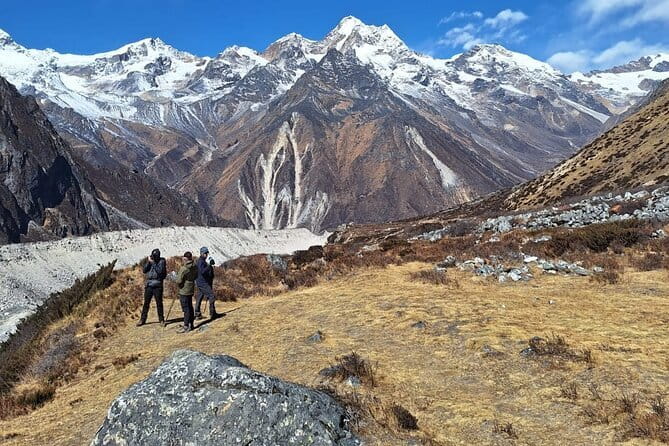
Quiet trails and big mountains in one circuit. This Kanchenjunga trek threads crystal rivers, dense jungle woodland, small Nepali villages, and sharp Himalayan panoramas, with time at both base-camp areas for multiple angles of one of Earth’s tallest giants. I like that it’s a newer trekking route than the crowd magnets, so your days often feel calmer even in peak season.
I also like the practical support baked into the plan: permits handled, a government licensed guide with first aid training, and tea-house nights arranged along the way. On top of that, you get real “mountain chasing” time, including a north base-camp hike to Pang Pema and big pass days that push you high enough for wide views.
One drawback to be aware of: you’re in for long jeep/4×4-style drives on rough roads, plus several full travel days that aren’t optional “just walk instead” moments.
In This Review
- Key highlights I’d circle on your planning map
- Why the Kanchenjunga Circuit feels different (in a good way)
- Price and logistics: what $2,000 actually covers
- The route from Kathmandu: setup days that matter more than you think
- Day 1: Thamel arrival and the easy landing
- Day 2: Kathmandu permits day
- Day 3: Fly to Bhadrapur, then road transfer toward Taplejung
- From Taplejung into the trek: Sekathum, Ghunsa Khola, and forest walking
- Day 4: Sekathum (the first real foothold)
- Day 5: Sekathum to Amjilosha, along Ghunsa Khola
- Day 6: Amjilosha to Gyabla (Kyapra), through dense forest
- Day 7: Gyabla to Ghunsa, with acclimatization support
- Day 8: Khambachen area, pine forest, and big-animal possibilities
- Day 9: Rest day at Khambachen
- Base-camp days: what Pang Pema gives you
- Day 10: Lhonak, with seasonal overlap near the glacier track
- Day 11: Hike to Kanchenjunga North Base Camp (Pang Pema)
- Day 12: Return to Ghunsa
- The middle-to-late trek: Sele Le, high passes, and the drama of altitude
- Day 13: Ghunsa to Sele Le area
- Day 14: High passes day: Sinion La, Mirgin La, and Sinelapche Bhanjyang
- Day 15: Yalung Glacier day, with views of Rathong and Kabru
- Day 16: Downhill start toward Tortong
- Day 17: Tortong to Yamphudin
- Day 18: Yamphudin to Kanyam, then toward the airport zone
- Day 19: Bhadrapur flight back to Kathmandu
- Tea-houses and meals: the part that can make or break your comfort
- Guides and porters: how the service level tends to feel on this circuit
- Who should book Kanchenjunga and who should be cautious
- Should you book this Kanchenjunga Circuit trek?
- FAQ
- Where does the trek start and how do I find the meeting point?
- How many people are in the group?
- What trekking permits and staffing are included?
- How do the flights and ground transfers work?
- What lodging and meals should I expect?
- Do I need travel insurance, and what’s the cancellation rule?
Key highlights I’d circle on your planning map
- Quieter than classic routes: the trail is newer, and the village sections are less developed for heavy tourism.
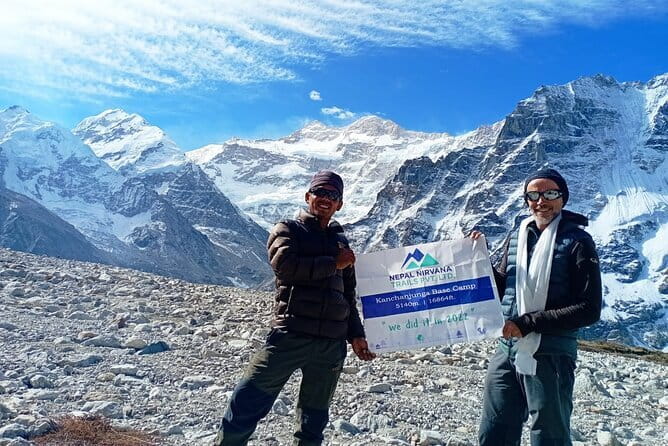
- North base camp to Pang Pema: a slow climb on moraines gives you a proper feel for Kanchenjunga’s scale.
- High passes included: Sinion La (4440m), Mirgin La (4480m), and Sinelapche Bhanjyang (4645m) are part of the trek.
- Wildlife chances, not guarantees: you may spot blue sheep, and the route description mentions snow leopard possibilities.
- Support you can lean on: guide and porter system is built in (between 2 trekkers, 1 porter).
- Meals and logistics are mostly packaged: breakfast/lunch/dinner are scheduled; tea-houses handle lodging during the trek.
More trails out of Kathmandu, boots ready
- Everest Base Camp Trek – 14 Days★ 5.0 · 1,499 reviews
- Everest Base Camp Trek★ 5.0 · 842 reviews
- Everest Base Camp Trekking★ 5.0 · 485 reviews
- Nagarkot Sunrise View and Day Hiking from Kathmandu★ 5.0 · 471 reviews
Why the Kanchenjunga Circuit feels different (in a good way)
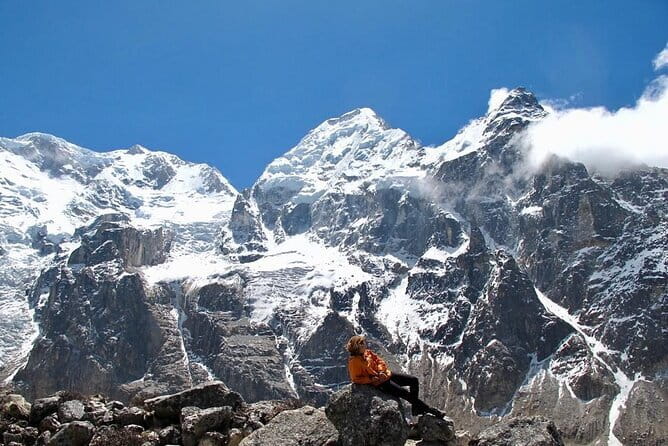
Kanchenjunga sits in that rare category of mountains that feel close even when you’re still a day or two away. This circuit also earns its reputation for variety: you’ll move from lower river valleys into denser woodlands and village lanes, then climb into rarer air with a front-row view of glacial terrain.
The big “value” here isn’t just the mountain name. It’s the fact that this trek is described as newer and less developed along the route. That matters to you because you’re less likely to deal with the nonstop flow of large crowds. On days where you’re working hard to gain altitude, a quieter trail is easier on your head. Less noise. Fewer bottlenecks at tea-house stops. More time to actually notice what’s around you.
I also like that the plan gives you multiple angles of Kanchenjunga by including both north and south base-camp areas. If you’re the type who gets obsessed with reading mountain mass and glacial shapes, those changes in viewpoint are the payoff.
Price and logistics: what $2,000 actually covers
At $2,000 per person, you’re not just paying for “someone to lead you.” This package bundles a lot of the hard parts that quietly eat budgets on independent trekking trips.
Here’s what’s explicitly included:
- All necessary trekking permits
- 3-star hotel in Kathmandu for 3 nights, breakfast included
- Tea-house accommodations during the trek
- Government licensed, first aid-trained trekking guide plus a porter (porter sharing: between 2 trekkers, 1 porter)
- Private jeep transfers for the road legs (Bhadrapur ↔ Taplejung ↔ Sekathum, and Yamphudin ↔ Kanyam ↔ Bhadrapur airport)
- Flights: Kathmandu ↔ Bhadrapur
- A first aid kit with basic medication
- Scheduled meals: breakfast (18), lunch (17), dinner (16)
Not included (important for your planning):
- Your international flights and the Nepal entry visa
- Travel and health insurance (especially emergency evacuation/rescue coverage)
- Extra personal costs like snacks, drinks, battery charging, and hot showers
- Tips for guide/porter (appreciated)
So what’s the value angle? You get mountain time with less “administrative drag.” Permits, guides, porter staffing, and key transport are handled. That means you can spend your mental energy on pacing, acclimatization, and enjoying the route’s mix of cultures and terrain.
The route from Kathmandu: setup days that matter more than you think
Day 1: Thamel arrival and the easy landing
You start in Thamel, the Kathmandu neighborhood where travel logistics are friendly and hotels are everywhere. Your arrival includes an airport rep meeting you at Tribhuvan International Airport and transferring you to your Kathmandu hotel.
Why I like this: it removes the first-day stress. A trek starts long before the first step on the trail. If you’re dealing with jet lag and language barriers on day one, it’s hard to get mentally ready for the climb.
Day 2: Kathmandu permits day
On day two, the team management meets you around 9 am. They take your original passport for permit prep, then you get it back the same day at around 5 pm.
This matters because permits can be fiddly. Having a team handle it means fewer trips to offices and fewer chances for paperwork delays.
Day 3: Fly to Bhadrapur, then road transfer toward Taplejung
You fly Kathmandu (TIA) → Bhadrapur (Chandragadhi Airport) in about 45–50 minutes, then take a local jeep drive toward Taplejung/Kanyam via the Mechi Highway corridor.
Expect a full transit day here. It’s not “wasted time.” It’s the price you pay for reaching the Kanchenjunga region without spending your whole trip in transit.
From Taplejung into the trek: Sekathum, Ghunsa Khola, and forest walking
Day 4: Sekathum (the first real foothold)
After breakfast, you start the ride and end at Sekathum. The plan notes that many trekkers prefer to walk up to Sekathum from Taplejung, but making the route by vehicle can reduce pressure early on.
This is a smart adjustment if you’re trying to save energy for later altitude work. Early days feel tough enough without adding extra climbing “for tradition.”
Day 5: Sekathum to Amjilosha, along Ghunsa Khola
You hike after breakfast, ascending along the Ghunsa Khola and crossing many bridges. That bridge network is more than scenic filler. It keeps the walking rhythm active while you gain elevation gradually.
Also, this is where you’ll feel the trek’s “new route” vibe. Less tourist density often means fewer crowds at viewpoints and fewer stacks of tour groups moving as one.
Day 6: Amjilosha to Gyabla (Kyapra), through dense forest
Today’s trail pushes into dense forest with stretches described as without human settlement. For me, that’s when Kanchenjunga stops being a headline and becomes a place. You start breathing forest air and hearing wildlife sounds instead of chatter.
Day 7: Gyabla to Ghunsa, with acclimatization support
The walk leads to Phale village, then continues to Ghunsa. Ghunsa is noted as a common stop for acclimatization, and you’ll get pacing time here.
This is one of those “quiet value” moments. You don’t just reach a tea-house. You let your body adjust.
Day 8: Khambachen area, pine forest, and big-animal possibilities
You ascend through an open pine forest and the route description mentions possible sightings of blue sheep and snow leopards. The trail also includes landslide-prone areas, so it’s not a casual stroll.
At this stage, I’d treat it like this: if you’re feeling breathless, that’s normal. The key is staying consistent and not sprinting.
Day 9: Rest day at Khambachen
You rest at Khambachen after several walking days. The plan includes a short hike toward nearby glaciers, viewpoints, and lakes for altitude adjustment.
This kind of “rest but move a bit” day is a classic approach to acclimatization: you get fresh air and new scenery without spending the entire day climbing.
Base-camp days: what Pang Pema gives you
Day 10: Lhonak, with seasonal overlap near the glacier track
You head toward the Kanchenjunga glacier trail and may meet other trekkers walking toward and returning from north base-camp routes during main season.
This is a good day to keep expectations realistic. Even on a quieter circuit, you’ll still see people sometimes at key trail junctions and popular base-camp corridors.
Day 11: Hike to Kanchenjunga North Base Camp (Pang Pema)
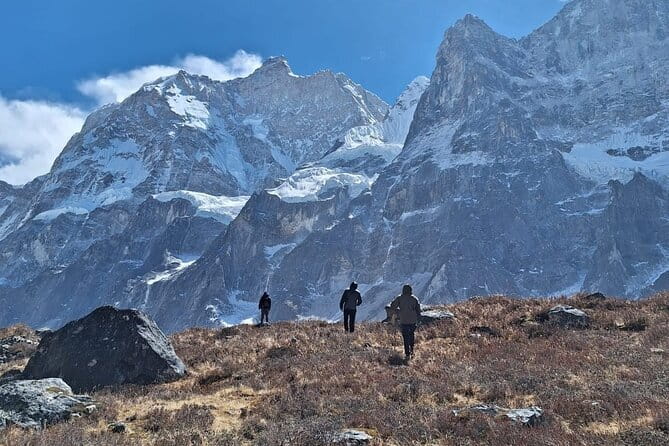
This is the big “I did the thing” day in the plan. You climb gradually along moraines and reach Kanchenjunga Base Camp, identified as Pang Pema.
What this means for you: moraines are messy terrain, and the walking can feel uneven. Your job is to keep steady effort and protect your knees. This is also your day to slow down and take in how the glacier landscape changes—often faster than you expect.
Day 12: Return to Ghunsa
You leave base camp and retrace the track back to Ghunsa. That return is not wasted. It gives you a chance to absorb what you saw while your body recovers from the base-camp push.
The middle-to-late trek: Sele Le, high passes, and the drama of altitude
Day 13: Ghunsa to Sele Le area
You reach Sele Le, leaving the trail toward Gyabla behind. The route mentions dense forest and isolated settlements with a few teahouses open only in certain periods.
A practical note: on routes like this, teahouse spacing can affect your flexibility. If a shelter is only open seasonally, you’ll rely on your schedule more tightly than in fully developed trekking hubs.
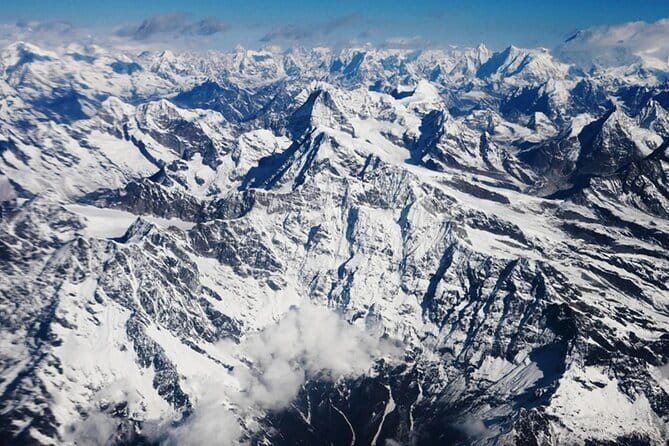
Day 14: High passes day: Sinion La, Mirgin La, and Sinelapche Bhanjyang
This is one of the most altitude-heavy sections. After leaving Sele Le Pass, you hike up to:
- Sinion La (4440m)
- Mirgin La (4480m)
- Sinelapche Bhanjyang (4645m)
If you want panoramic mountain views, this is where they’re likely to feel most dramatic. If you want a smooth day, this is where you won’t get one.
Day 15: Yalung Glacier day, with views of Rathong and Kabru
You head forward through the Yalung glacier and get higher close to the vistas. The plan specifically calls out views of Rathong (6682m) and Kabru (7412m).
This is the kind of day where footing matters. Glacier-adjacent walking can feel different than normal trail. Keep your steps short and your pace even, even if the view is making you forget you’re tired.
Day 16: Downhill start toward Tortong
You trek downhill through rhododendron forests, passing toward Tortong via Simbuwa Khola.
Downhill days feel good—until you remember your legs have opinions. Use trekking poles if you have them, and don’t overstride.
Day 17: Tortong to Yamphudin
From Tortong, you continue descending to the Amji Khola area, walking past Lasiya/Lamite Bhanjyang (3415m) and Dhupi Bhanjyang (2665m) to Yamphudin.
The wide altitude drop here is good news for recovery. Still, treat it as active trekking, not a stroll.
Day 18: Yamphudin to Kanyam, then toward the airport zone
After breakfast you explore through trails alongside Kabeli Khola. Then you transition out of the mountain villages with a drive toward Kanyam.
This is where you’ll feel the circuit completing itself. By now, you know how to pack your day, and you’re probably ready for the ride back to civilization.
Day 19: Bhadrapur flight back to Kathmandu
You have breakfast, explore the green tea cultivation area, then drive 2–3 hours to Bhadrapur. You fly back to Kathmandu in 45–50 minutes.
That tea-cultivation stop is a small reminder that the region isn’t only trekking. It’s farming communities and everyday work, too.
Tea-houses and meals: the part that can make or break your comfort
This trek uses tea-house accommodations. That’s part of why the route stays budget-friendly compared to fully supported “logistics-heavy” trekking styles. But comfort levels will be basic.
The provided guidance is direct: food is very basic, and you’ll do better if you choose vegetarian foods available during the trek.
My practical advice: plan your stomach for simple meals and steady hydration. Don’t rely on gourmet expectations at altitude. Also remember that extras—snacks, beer, soda, juice, charging, and hot showers—are not included. Decide early how you want to spend your limited comfort budget.
Guides and porters: how the service level tends to feel on this circuit
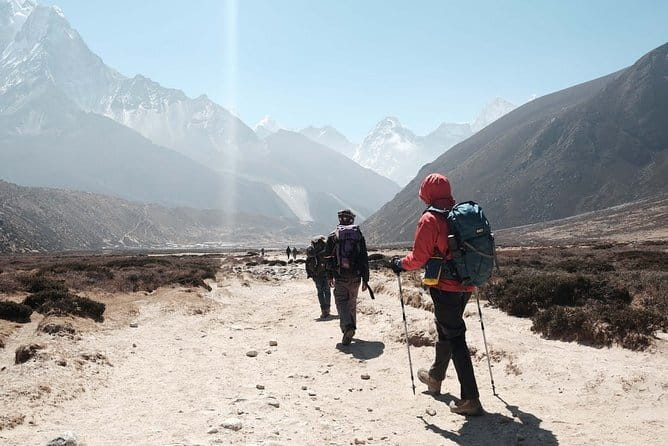
You’ll travel with a government licensed guide and porter support. The porter ratio is set as between 2 trekkers 1 porter, which helps your group move without carrying everything yourself.
The reviews also put names to the human side of this trek. People praised KP Dhital for organization and quick communication. They also highlighted guides like Raj and Jangbu for local trail knowledge and care for the group. One review even called out that the service felt premium compared to other Nepal treks they’d done, which lines up with the included staffing model.
If you want the same support vibe, ask your operator who will be guiding your specific dates. Even within the same route, personalities and pacing style matter.
Who should book Kanchenjunga and who should be cautious
This trek is best for you if:
- You have strong physical fitness and can handle full trek days plus altitude.
- You like quieter routes and don’t need constant crowds for motivation.
- You want real base-camp objectives, not only short hikes.
Be cautious if:
- You’re sensitive to rough-road travel. The trek includes multiple jeep legs, and one review explicitly warns about a long 4×4 jeep ride in remote areas.
- You know you struggle with basic food at altitude. The plan is clear: meals are simple, and you should lean on what’s available.
Should you book this Kanchenjunga Circuit trek?
I’d say yes if you’re chasing a classic Himalayan goal with a calmer trail feel. The combination of permits + guide + porter + tea-house lodging + scheduled meals plus domestic flights is the kind of package that protects your time and lowers your stress.
I’d say think twice if you expect luxury comfort, lots of hot showers, or a mostly easy travel rhythm. The circuit includes serious walking days, high pass elevations, and long transport legs. This isn’t a “book it and coast” trek.
FAQ
Where does the trek start and how do I find the meeting point?
The experience start point is Nepal Nirvana Trails on Sāात घुम्ती मार्ग in Kathmandu (44600, Nepal). You’ll also be dropped off at your hotel at the end in Kathmandu.
How many people are in the group?
This trek has a maximum of 8 travelers.
What trekking permits and staffing are included?
All necessary trekking permits are included. You’ll have a government licensed trekking guide with first aid training, plus a porter (between 2 trekkers, 1 porter).
How do the flights and ground transfers work?
You include flights Kathmandu ↔ Bhadrapur (45–50 minutes). You also use a private jeep for the road legs: Bhadrapur to Taplejung and Sekathum, and later Yamphudin to Kanyam and onward to Bhadrapur airport.
What lodging and meals should I expect?
Kathmandu includes a 3-star hotel for 3 nights with breakfast. During the trek you stay in tea-houses. Meals are scheduled as breakfast (18), lunch (17), and dinner (16).
Do I need travel insurance, and what’s the cancellation rule?
Travel and health insurance is not included, and it should cover emergency rescues and evacuations. Cancellation is free up to 24 hours in advance for a full refund; if you cancel within 24 hours, the amount paid is not refunded.
More Trekking Out of Kathmandu
More Tour Reviews in Kathmandu
Just Reviewed in Kathmandu
- Mountain Bike Tour
★ 5.0 · 3 reviews - Annapurna Panaroma
★ 5.0 · 3 reviews - Mount Everest Scenic Flight 50 Minutes
★ 5.0 · 3 reviews - Kathmandu : Swambhunath & Durbar Square Guided Half Day Tour
★ 3.3 · 3 reviews - Chandragiri Cable Car & Monkey Temple Tour – Private/Group
★ 5.0 · 3 reviews - Kathmandu: Shivapuri National Park Hiking Day Trip
★ 3.3 · 3 reviews
Upper Mustang & Remote Treks, compared.
 ★ 5.0Upper Mustang Classic Trek with Local guideFrom $2,50015 reviews
 ★ 5.0Nar Phu Valley Trek – 12 DaysFrom $1,60011 reviews
 ★ 5.0Jeep Trip to Upper MustangFrom $2,20010 reviews
 ★ 5.0Lower Mustang Motorbike Tour -8 DaysFrom $1,5009 reviews
 ★ 5.0Kanchenjunga South Base Camp Trek – 13 DaysFrom $2,0956 reviews
Upper Mustang TrekFrom $1,4766 reviews
★ 5.0Kanchenjunga South Base Camp Trek – 13 DaysFrom $2,0956 reviews
Upper Mustang TrekFrom $1,4766 reviews
 ★ 5.0Upper Mustang TrekFrom $2,2055 reviews
 ★ 5.0Upper Mustang Trek – 13 DaysFrom $2,3005 reviews
Browse the lists this tour appears in