Review · UPPER MUSTANG & REMOTE TREKS
Upper Mustang Classic Trek with Local guide
Upper Mustang doesn’t feel like Nepal you’ve seen before. This private guided trek runs from Kathmandu with logistics handled—air and land transfers, permits, tea-house accommodation during the trek, and most meals—so you can focus on the unusual mix of Buddhist shrines, monasteries, and hard-to-reach villages. I especially like the way the trip blends big sights (Boudhanath, Patan, Swayambhunath) with real time on the ground in Mustang, and I also like that your guide is local to the region (people highlight guides like Norbu, plus managers like Dawa). One drawback to consider: the high base price does not include the separate Upper Mustang special permit, so your final cost can creep up depending on how many days are covered.
What makes this itinerary practical is the structure: you’re not only hiking—you’re also getting the Kathmandu intro and the key flight legs between Pokhara and Jomsom, which saves days of bumpy driving. The pacing is designed for small-group comfort and personal attention, not a stopwatch march. Still, the route is remote, so if weather turns, expect schedule pressure, and a few parts of the plan (late-trip days) aren’t spelled out in the details you shared.
If you’re coming with moderate fitness and you want a spiritual, culturally heavy trek where travel logistics are handled for you, this is a strong match. If you want a cheap adventure or you hate early starts, you’ll likely feel the cost and the timing.
In This Review
- Key things I’d pay attention to
- Why Upper Mustang feels like another Buddhist world
- What the $2,500 price covers, and what you still need to budget
- Day 1 in Kathmandu: Boudhanath, Patan, and Swayambhunath
- Getting to Mustang: Pokhara, then the road to first trekking villages
- Village life in Lupra and the Bon monastery stop
- Trek days from Chhuksang toward Samar and beyond
- Thukchen monastery at 6 a.m., yak herds, and Tiji festival day
- Kali Gandaki river drive, Yara village, and Luri Gompa
- Charang monastery visit, Jomsom, then the flight back toward Pokhara
- Pokhara back on the map, then return to Kathmandu
- Private pacing, local guidance, and why Norbu and Dawa get mentioned
- Teahouses, meals, and the real comfort of a set routine
- Permits and remote reality: ACAP vs the special Upper Mustang permit
- Who should book this Upper Mustang Classic Trek
- Should you book this Upper Mustang trek?
- FAQ
- What does the trek include for accommodations and meals?
- Are permits included, and do I need to pay extra for Upper Mustang?
- How do you travel between Pokhara and Jomsom?
- Is this a private tour?
- Do I need a passport for the trip?
- What fitness level do I need?
- What happens if weather affects the trek?
Key things I’d pay attention to
- Upper Mustang special permit cost: listed as USD 500 per person for 10 days, and it’s not included in the base price.
- Meals aren’t fully all-inclusive: breakfasts are included daily, but lunch and dinner coverage is only listed for 11 days each.
- Local guide value: the strongest praise centers on guides from the region (Norbu is specifically highlighted), plus itinerary adjustments for group needs.
- Early-morning monastery time: the plan includes a ~6 a.m. visit to Thukchen monastery for monk chanting.
- Flight shortcuts: you’ll fly between Pokhara and Jomsom, then return by bus/drive legs.
- Tiji festival tie-in: the trek includes time around Tiji, including the last day if you’re traveling during the festival.
More days made easy with a local guide
- Kathmandu: Private City Guided Tour★ 4.9 · 174 reviews
- Full Day Guided Tour in Kathmandu★ 5.0 · 61 reviews
- Kathmandu Guided Tour★ 5.0 · 59 reviews
- 12 Day Everest Base Camp Guided Trek★ 5.0 · 40 reviews
Why Upper Mustang feels like another Buddhist world
Upper Mustang is often described as a place apart, and the reason is simple: it sits in Nepal’s high, dry rain shadow, with long routes that keep it from feeling like a drive-by destination. On this trek, you’re not just viewing monuments—you’re moving through towns and sacred sites where Tibetan Buddhist culture still shapes daily life.
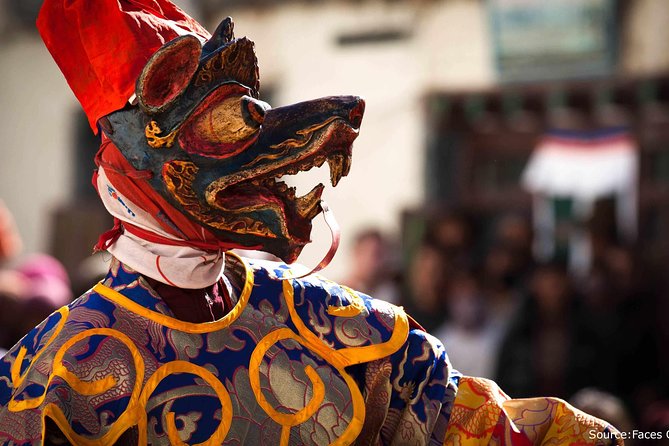
I like that the trip calls out shrines, temples, monasteries, and even cave sites as part of the experience, not as occasional side stops. That matters because in a place like Mustang, the difference between a tourist itinerary and a meaningful journey is often how much time you spend inside religious spaces, learning what you’re looking at as you go.
You’ll also spend time trekking through villages at a pace that’s set up for real recovery between days. Some trekking days are described as village-to-village segments, which keeps the trek feeling grounded rather than like a constant, single-file climb.
What the $2,500 price covers, and what you still need to budget
The listed price is $2,500 per person for a program that runs about 16 days. For many people, the value comes from how much is bundled:
Included (as listed):
- Private transportation
- Domestic flight(s)
- Trekking guide and porter
- ACAP permit
- Tea-house accommodation during the Mustang trekking portion
- Breakfasts (16)
- Lunch (11)
- Dinner (11)
Not included (as listed):
- Travel insurance
- Everything not specifically mentioned
- Upper Mustang special permit: USD 500 per person for 10 days
Here’s the math logic I’d use if I were budgeting: if you add the special permit (USD 500 pp), you should be thinking closer to $3,000 pp as a starting point, before you add travel insurance and any extra meals on days where lunch/dinner aren’t listed.
One practical consideration: the special permit is listed as covering 10 days, while the trek portion is longer (it’s described as 15 nights in Upper Mustang). That doesn’t mean something is wrong, but it does mean you should ask the operator how the permit days are handled for your exact travel dates. You’re not trying to be difficult—you’re trying to avoid a surprise payment later.
Day 1 in Kathmandu: Boudhanath, Patan, and Swayambhunath
You begin in Kathmandu with a focused, religious-intro day that makes the rest of the trip land better. Instead of jumping straight into trekking, you get oriented in a Buddhist and Newar cultural way.
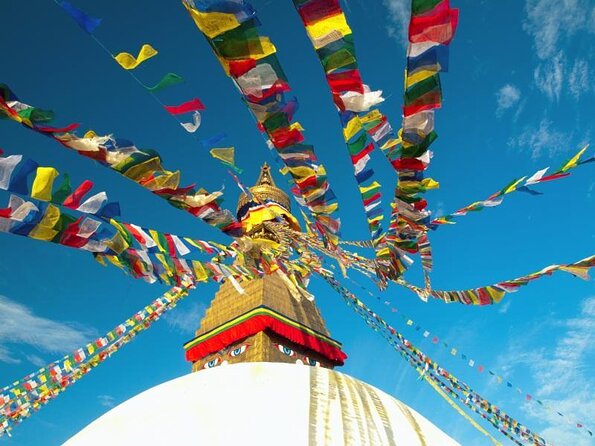
- Boudhanath Stupa is the first stop. It’s described as the largest stupa in Nepal, and the key experience here is seeing devotion in motion: people circumambulate, including visitors from Nepal’s Himalaya regions and Tibetan communities. If you like observing rituals up close, this is a strong start.
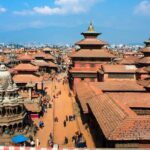
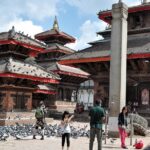
- Patan Durbar Square follows. I like this because it’s an art-and-craft stop: you get fine wood/metal work on palace structures and a well-managed Patan museum inside the palace complex. Even if you don’t study architecture, you’ll feel the craftsmanship through the details.
- Swayambhunath finishes the day with a view-focused payoff. You’ll walk up from the eastern side (described as a long staircase), and from the hilltop you get Kathmandu valley views.
A small drawback to consider: this is a lot of walking on day one (stupa areas and stair climbs), so it helps if you treat your first day as acclimation and not as a museum sprint.
Getting to Mustang: Pokhara, then the road to first trekking villages
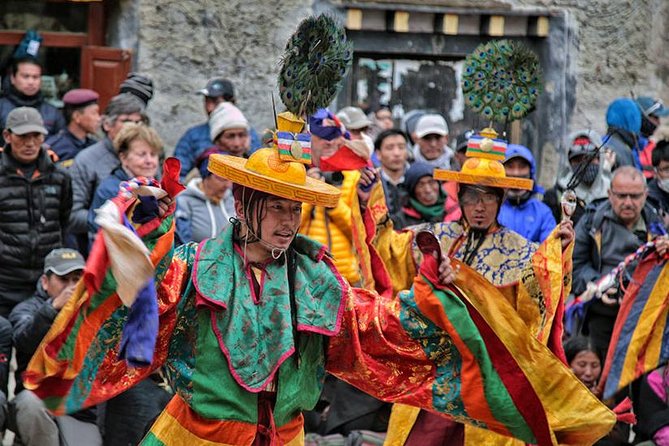
On day 2, you travel to Pokhara by tourist bus (about 6–7 hours). I like that this is included because Pokhara is where many treks start to feel real: you’re moving out of the Kathmandu rhythm into a quieter travel pace.
From there, the plan shifts into the Mustang approach. Instead of a single dramatic leap into trekking, you start with local stops and shorter transitions that break up travel fatigue. The details change day to day, but the main idea is consistent: you’ll combine driving legs with trekking segments so you don’t lose too many days just getting to the trailhead.
Also note the listed start time is 12:15 a.m. for the overall experience. That’s an early-morning cue. Even if you sleep poorly on a travel night, it’s easier if you know in advance that the schedule may begin before sunrise.
More trails out of Kathmandu, boots ready
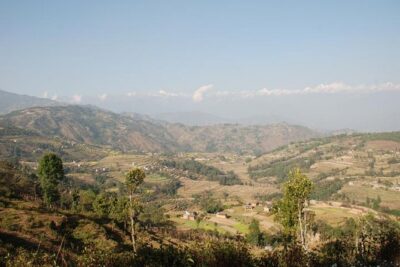
Village life in Lupra and the Bon monastery stop
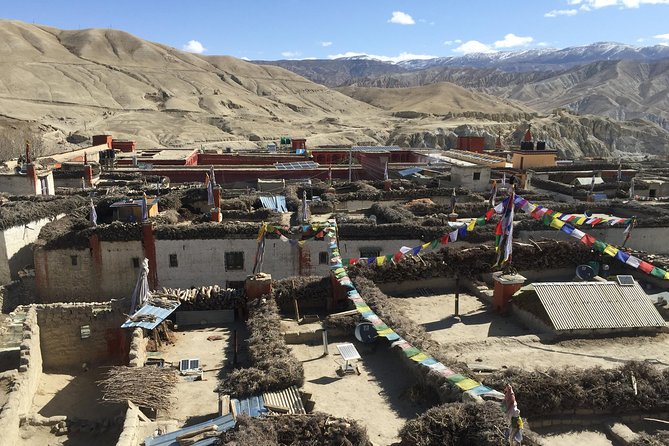
Before you’re deep in Mustang trekking country, you get a taste of village life in Lupra plus a visit to a Bon monastery.
Why this works: it adds cultural context before you jump into the heavier monastery-and-shrine rhythm later. Bon is part of the broader spiritual landscape in the Tibetan cultural sphere, so this is a smart early stop for people who like understanding more than just one tradition.
You’ll likely find this day less strenuous than the mid-trek segments, because the plan frames it as a half-day cultural visit (around 4 hours).
If you care about photos, carry spare capacity for this day: village textures, monastery architecture, and daily life are often easier to capture in quieter lighting than in high-altitude storm light.
Trek days from Chhuksang toward Samar and beyond
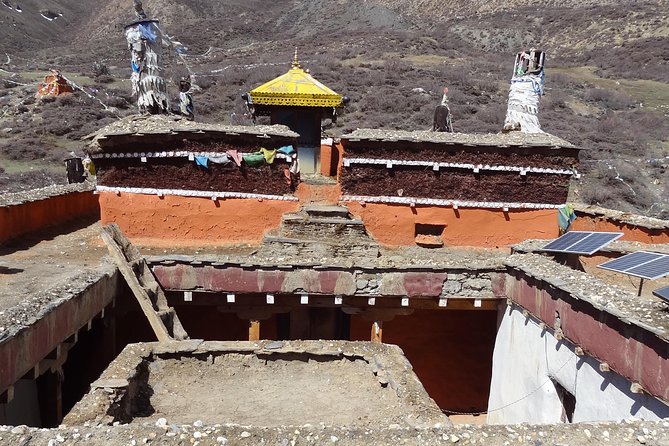
The trek portion begins after you drive to Chhuksang village, then start trekking toward Samar, via places like Chele and Gyakar Village.
This is one of the key strengths of Upper Mustang treks in general: the route is broken into human-scaled segments. You’re not just hiking a line on a map—you’re moving between places that are culturally legible. That makes the slow-to-moderate pace feel purposeful.
For days 5 through 8, the shared details are limited, but what’s clear is that these are additional trekking days in the Mustang region with time for rest and continued movement through villages. Expect a rhythm of walking, short breaks, and tea-house evenings during the trek portion.
One drawback that can affect your experience here: if your main goal is a very detailed day-by-day picture (exact stops every day), the information provided for some days is missing. In that case, ask your operator for a clearer daily breakdown before you go, especially if you want to plan around festival dates or specific spiritual sites.
Thukchen monastery at 6 a.m., yak herds, and Tiji festival day
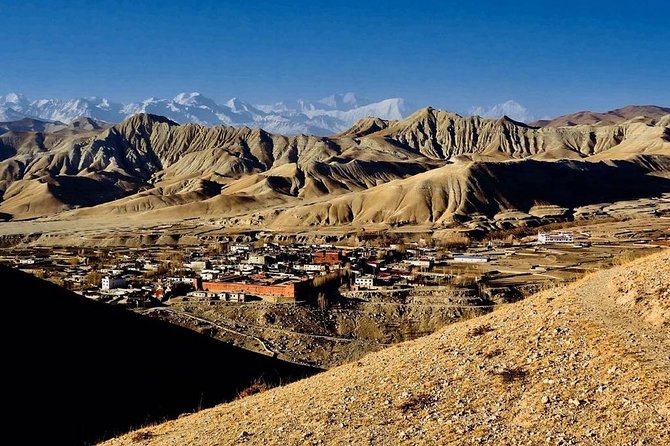
Day 9 is the sort of morning that makes a trek feel like more than exercise.
- You go to Thukchen monastery at about 6 a.m. to see monk chanting.
- Then you have breakfast.
- After that you head to a short drive for a yak herd nomadic visit.
- Later you return to the hotel for lunch, and the day includes time to watch the last day of the Tiji festival (when traveling during Tiji season).
This is also where local guidance really matters. A local guide tends to know the best way to arrive, when to position yourself respectfully, and how to time transitions so chanting and festival events fit without turning the day into a rush.
If you’re the type who loves early mornings and spiritual atmosphere, this is a major highlight. If you hate waking up early, this is still doable—but you’ll want to mentally prepare for a routine that starts before you feel fully human.
Kali Gandaki river drive, Yara village, and Luri Gompa
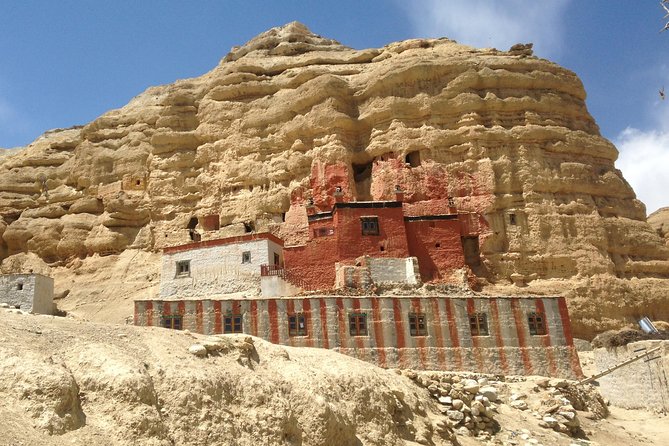
You shift to a mix of drive and visits starting with Yara village in the eastern Upper Mustang area. The plan emphasizes scenery along the Kali Gandaki river, plus a lunch stop and then a monastery visit at Luri Gompa.
This section feels less like a straight climb and more like moving through Mustang’s lived geography: river-adjacent routes, villages with distinct identities, and sacred spaces where you can slow down and look closely.
I also like the balance here: you get a break from continuous trekking while still keeping the day full of meaningful stops. For many trekkers, that kind of pacing is what prevents the second-week fatigue that can show up in long programs.
Charang monastery visit, Jomsom, then the flight back toward Pokhara
Day 11 continues the drive setup: breakfast in Yara, then a drive to Charang village for a monastery visit, followed by a drive to Jomsom.
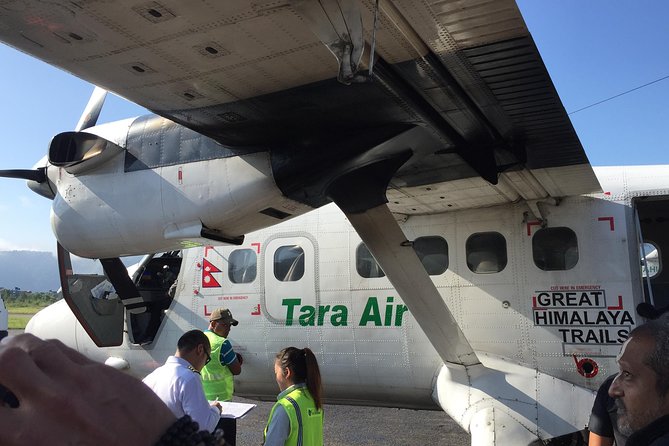
Then you transition into the air part of the journey: on day 12, you fly back to Pokhara in the morning and continue with a Pokhara city tour after breakfast.
That flight segment is not just convenience. It’s a value trade: you pay for a shortcut that protects your energy for the places that actually require slow movement. Without the flight, you’d likely spend more time in transit and less time in villages and monasteries.
The main caution: flight schedules depend on weather and operations. The info you have notes the trek is subject to favorable weather conditions, so build a flexible mindset for Mustang-related timing.
Pokhara back on the map, then return to Kathmandu
Days after Jomsom and the Pokhara segment are partly unclear in the details provided (some day descriptions appear incomplete). Still, what’s evident is the structure:
- You return to Pokhara after the flight
- Then you head back toward Kathmandu by tourist bus/drive legs
Day 13 includes a bus drive back to Kathmandu (starting at 7 a.m. for the station pickup as listed). That gives you a clear anchor for your final transition: you’re moving from Mustang back to city life without a chaotic, last-minute scramble.
One practical takeaway: treat the last days as recovery and logistics time. You’ve already done the hard part. If you plan extra activities in Kathmandu at the end, keep them light unless you know how your body reacts after multi-day walking.
Private pacing, local guidance, and why Norbu and Dawa get mentioned
This is a private trek, and private matters more than people think. It affects how your schedule is handled when the group needs changes—especially in a remote region where timing can’t be improvised as easily.
A recurring strength in the guidance team is local knowledge:
- Norbu, highlighted as a local from Upper Mustang, shows up in multiple accounts as both caring and effective in navigating cultural sites and route needs.
- Dawa, mentioned as a key point of contact and manager, is described as responsive from the pre-trip stage and helpful with what to pack and what to expect.
- Babu is also noted as top class and attentive to needs, including adapting the itinerary during travel.
What you can take from this without reading between lines: don’t underestimate how much a good local guide reduces friction. You get smoother site timing, more respectful answers in temples and monasteries, and route adjustments when energy levels vary.
Also, you have a porter and guide included. Even if you’re fit, letting someone else handle some load is part of how a trek stays enjoyable instead of becoming a daily equipment stress test.
Teahouses, meals, and the real comfort of a set routine
During the Mustang trek portion, you’ll stay in tea-house accommodation (included). This is a big deal for comfort and logistics. Tea houses give you a consistent fallback: a place to eat, sleep, and reset between trekking days.
Meals are mostly handled:
- Breakfast is included for 16 days
- Lunch and dinner are listed for 11 days each
So this isn’t a true all-you-can-eat plan. You should expect some meals may be outside the included set, depending on timing and how the trip days fall. That’s normal in Nepal trekking programs, but it matters for budgeting.
What I like about the meal setup is that it protects your time. In remote areas, searching for food takes time you could spend walking or resting. Having meals built in makes each day more predictable.
Permits and remote reality: ACAP vs the special Upper Mustang permit
You’re told ACAP permit is included. That’s one permit layer handled, which is good.
The separate Upper Mustang special permit is explicitly listed as USD 500 per person for 10 days in Upper Mustang, and it’s not included.
This is the part you should treat as a must-check item before departure:
- Ask how the special permit days match your trek length.
- Confirm what day range your permit covers.
- Confirm what you still pay on arrival (if anything).
Upper Mustang treks are regulated, and permit handling is a real part of the cost. When it’s addressed clearly upfront, you avoid the stressful scramble late in the trip.
Who should book this Upper Mustang Classic Trek
This tour is best for you if:
- You want a private guided trek rather than a shared group shuffle.
- You’re interested in Buddhism-focused travel: shrines, temples, monasteries, and cave visits.
- You want most logistics handled, including tea-house stays and key transport legs.
- You like culture as much as hiking (Kathmandu sights plus Mustang sacred sites).
- You’re traveling with moderate fitness and you want a pace that isn’t a pure grind.
It might not be the best fit if:
- You’re trying to keep costs tight, once the special permit is added.
- You can’t handle early mornings (one highlight is around 6 a.m.).
- You want a perfectly spelled-out day-by-day stop list for every trek day, because some days are not detailed in the info you provided.
- You’re solo: the program requires a minimum of two people per booking.
Should you book this Upper Mustang trek?
I’d say book it if Upper Mustang is your real goal, not just a hiking checkmark. The mix of Kathmandu cultural orientation plus a guided Mustang trek with local leadership is a strong value approach, especially with the Pokhara–Jomsom flights built in.
Before you commit, do two practical things:
- Confirm the Upper Mustang special permit details for your exact trip dates and how many days it covers.
- Ask for a clearer outline for the partially described late-trip days (days 14–16) so you know what you’re paying for beyond the main Kathmandu-to-Mustang-to-Pokhara arc.
If those questions are answered cleanly and the permit situation matches your expectations, this looks like a satisfying, culturally rich way to see one of Nepal’s most distinctive regions—without turning your trip into a logistics project.
FAQ
What does the trek include for accommodations and meals?
Tea-house accommodation is included during the Mustang trekking portion. Breakfast is listed as included for 16 days, while lunch and dinner are listed for 11 days each.
Are permits included, and do I need to pay extra for Upper Mustang?
ACAP permit is included. The Upper Mustang special permit is not included and is listed as USD 500 per person for 10 days in Upper Mustang.
How do you travel between Pokhara and Jomsom?
The trip includes flights between Pokhara and Jomsom, plus additional ground transfers before and after.
Is this a private tour?
Yes. This is described as a private tour/activity, and it’s stated that only your group participates.
Do I need a passport for the trip?
Yes. A current valid passport is required on the day of travel.
What fitness level do I need?
The information provided says travelers should have a moderate physical fitness level.
What happens if weather affects the trek?
The experience is subject to favorable weather conditions. If it’s canceled due to poor weather, you are offered an alternative date or a full refund.
More Trekking Out of Kathmandu
Simpler With a Local Guide
More Tour Reviews in Kathmandu
Just Reviewed in Kathmandu
- Mountain Bike Tour
★ 5.0 · 3 reviews - Annapurna Panaroma
★ 5.0 · 3 reviews - Mount Everest Scenic Flight 50 Minutes
★ 5.0 · 3 reviews - Kathmandu : Swambhunath & Durbar Square Guided Half Day Tour
★ 3.3 · 3 reviews - Chandragiri Cable Car & Monkey Temple Tour – Private/Group
★ 5.0 · 3 reviews - Kathmandu: Shivapuri National Park Hiking Day Trip
★ 3.3 · 3 reviews
Upper Mustang & Remote Treks, compared.
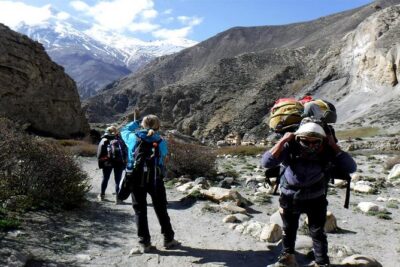 ★ 5.0Nar Phu Valley Trek – 12 DaysFrom $1,60011 reviews
 ★ 5.0Jeep Trip to Upper MustangFrom $2,20010 reviews
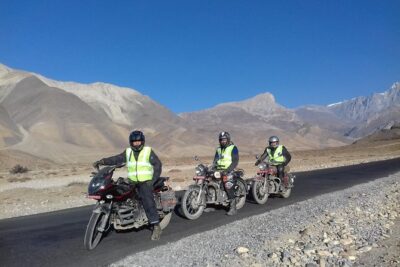 ★ 5.0Lower Mustang Motorbike Tour -8 DaysFrom $1,5009 reviews
 ★ 5.0Kanchenjunga Circuit Trek 19 DaysFrom $2,0009 reviews
Upper Mustang TrekFrom $1,4766 reviews
★ 5.0Kanchenjunga Circuit Trek 19 DaysFrom $2,0009 reviews
Upper Mustang TrekFrom $1,4766 reviews
 ★ 5.0Kanchenjunga South Base Camp Trek – 13 DaysFrom $2,0956 reviews
 ★ 5.0Upper Mustang TrekFrom $2,2055 reviews
 ★ 5.0Upper Mustang Trek – 13 DaysFrom $2,3005 reviews
Browse the lists this tour appears in