
Review · ANNAPURNA CIRCUIT TREKS
Kathmandu: 10-Day Adventurous Annapurna Circuit Trek
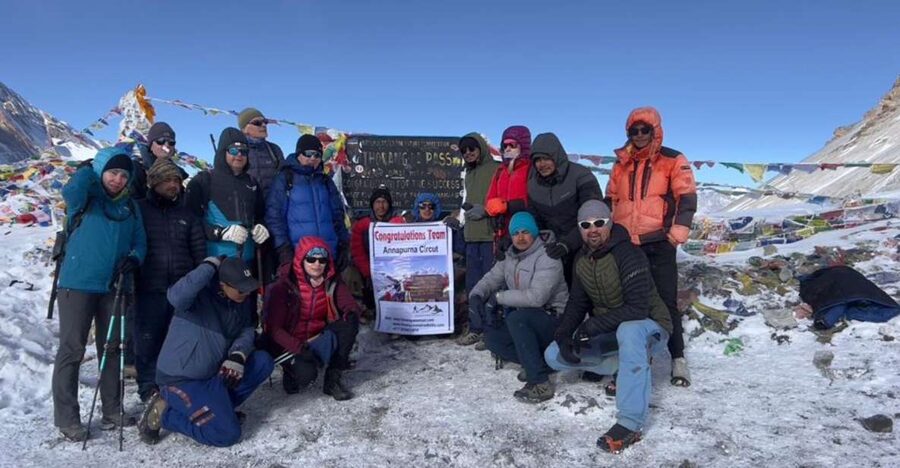
Crossing Thorong La is the whole story. This 10-day Annapurna Circuit trek takes you from Kathmandu’s bustle into quiet highland villages, then up to Thorong La Pass at 5,416m/17,769 ft—where the views are big, the weather can turn fast, and your pacing matters. What I like most is how the route builds toward that day with a clear rhythm: forests, stone villages, then high-altitude air that makes each step feel intentional.
I also like the human side of the plan. Guides—names that come up include Keshab, Prakash, Mahesh, and Milani—are described as careful with altitude timing, good at arranging comfortable tea-house stays, and good at balancing information with quiet. If you want to understand the trek without feeling lectured, that mix tends to make the days easier to enjoy.
One thing to consider: this is a serious altitude trek, and the itinerary still includes a long, early push over the pass. If you’re not comfortable with steep climbs, limited time for acclimatization outside the planned rest day, or basic mountain lodging, you’ll feel it.
In This Review
- Key Things I’d Tell a Friend Before You Go
- Why Thorong La Pass Is the Part You Remember
- Getting From Kathmandu to Dharapani: You Start Tired (So You Can Trek)
- Dharapani to Chame: Forest Steps and Suspension-Bridge Crossings
- Chame to Upper Pisang to Manang: Mountain Views and Village Rhythm
- The Manang Acclimatization Day: Why Rest Is Part of the Plan
- Manang to Yak Kharka to Thorong Phedi: From Grass Pastures to Pass Prep
- Thorong La (5,416m) to Muktinath: The Reward Comes With a Cost
- Muktinath to Jomsom: Desert-Like Air and Mustang Energy
- Jomsom to Pokhara: The Trek Ends, and You Get Your Legs Back
- Price and Value: What $467 Covers (and Why It Often Beats DIY)
- Gear You’ll Actually Use (Not Just Carry)
- The Guide Factor: When Organization Makes the Trek Feel Safer
- Who This Trek Fits Best (and Who Should Skip It)
- Should You Book This 10-Day Annapurna Circuit Trek?
- FAQ
- What is the highest point on this trek?
- How long is the trek?
- What is included in the price of $467 per person?
- Is the guide English-speaking?
- Is there a porter included?
- What kind of lodging should I expect?
- What about meals?
- How does transportation work?
- When do I get picked up in Kathmandu?
- Is it suitable for everyone?
- FAQ
- What is the cancellation policy?
- Do I need travel insurance?
- Are there trekking starting times?
Key Things I’d Tell a Friend Before You Go
- Thorong La Pass day is long and serious: start early and expect real altitude work at 5,416m.
- Manang acclimatization is built in: you get a full day to rest and adjust before going higher.
- Tea-house nights are part of the deal: basic comforts in village lodges, then a nicer Pokhara hotel at the end.
- Transport reduces stress: bus and shared jeep segments handle the long road legs for you.
- Guide quality shows up in the details: better pacing, safer decisions when conditions shift, and smoother logistics.
More trails out of Kathmandu, boots ready
- Everest Base Camp Trek – 14 Days★ 5.0 · 1,499 reviews
- Everest Base Camp Trek★ 5.0 · 842 reviews
- Everest Base Camp Trekking★ 5.0 · 485 reviews
- Nagarkot Sunrise View and Day Hiking from Kathmandu★ 5.0 · 471 reviews
Why Thorong La Pass Is the Part You Remember
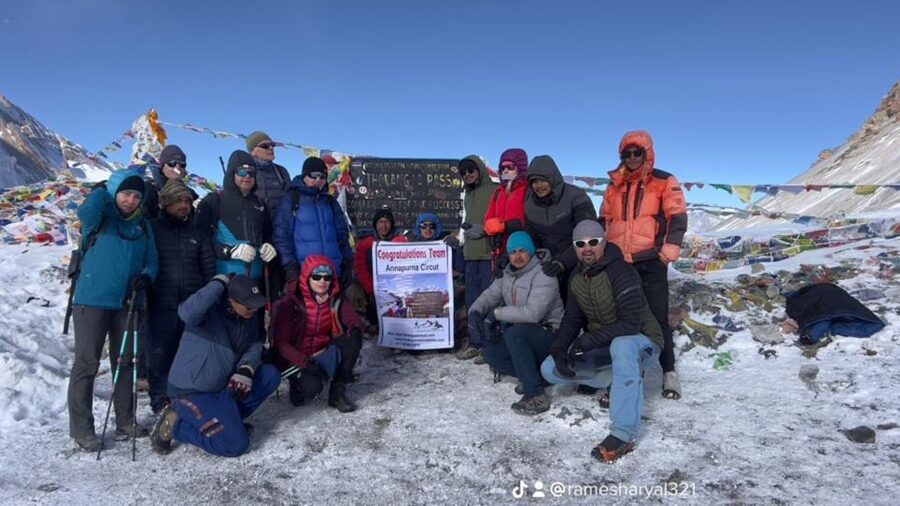
On this trek, Thorong La Pass isn’t a side quest. It’s the day your body and planning meet each other.
From a practical standpoint, the pass is at 5,416m/17,769 ft. That altitude changes how you breathe, how fast you move, and how much you notice every ache. The itinerary supports this with an acclimatization day in Manang (more on that soon), plus a gradual climb from Yak Kharka and onward to Thorong Phedi, which is essentially the staging area for the crossing.
And emotionally, this is where the trek clicks. You’ve spent days watching mountain walls grow closer, walking through different types of terrain, and sleeping in villages with their own pace. Then you wake up for the pass early, and you’re suddenly walking in open, thin-air terrain where everything feels exposed. The reward is the panorama—plus the quiet satisfaction of having earned it.
Getting From Kathmandu to Dharapani: You Start Tired (So You Can Trek)
The first day is a long travel day, but it’s set up to get you onto the trail fast.
You’re driven from Kathmandu to Besisahar by bus, then you continue toward Dharapani on a shared Jeep. Expect 10 hours of road time, and use it wisely: charge your phone, keep snacks handy, and don’t save your big conversation energy for the seats. This day is about getting your legs out of “vehicle mode” and into “walking mode.”
Why I think this matters: road fatigue is real, and the Annapurna trek rewards consistency. By the time you reach Dharapani, you’re ready to do something physical but not yet fully punishing. It’s an early win.
Dharapani to Chame: Forest Steps and Suspension-Bridge Crossings
Day 2 takes you from Dharapani (1,800m/5,905 ft) to Chame (2,670m/8,760 ft) in about a 6-hour trek.
You’ll walk through forests as the altitude increases. You’ll also cross suspension bridges along the way. Those bridges can be a small psychological challenge—nothing scary if you walk steadily, but they do break up the rhythm in a good way. They remind you the trek is moving you through a real landscape (the kind made by rivers, valleys, and people’s daily routes), not just a straight line up.
Chame is where the trek starts to feel more “Himalaya.” The air is cooler; the buildings look more purposeful; and you start noticing that you’re in a chain of villages that survive because people keep coming through.
Downside to watch for: in this zone, you can still get damp stretches. If your shoes aren’t ready for wet ground, you’ll pay for it in blisters later. Bring the socks you trust.
Chame to Upper Pisang to Manang: Mountain Views and Village Rhythm
Day 3 climbs to Upper Pisang (3,300m/10,826 ft) and day 4 continues to Manang (3,540m/11,614 ft). Each is about a 6-hour trek.
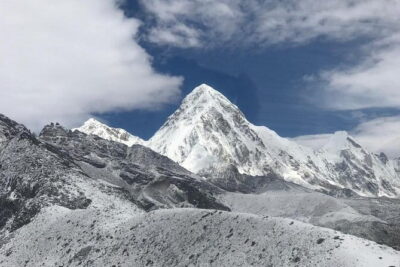
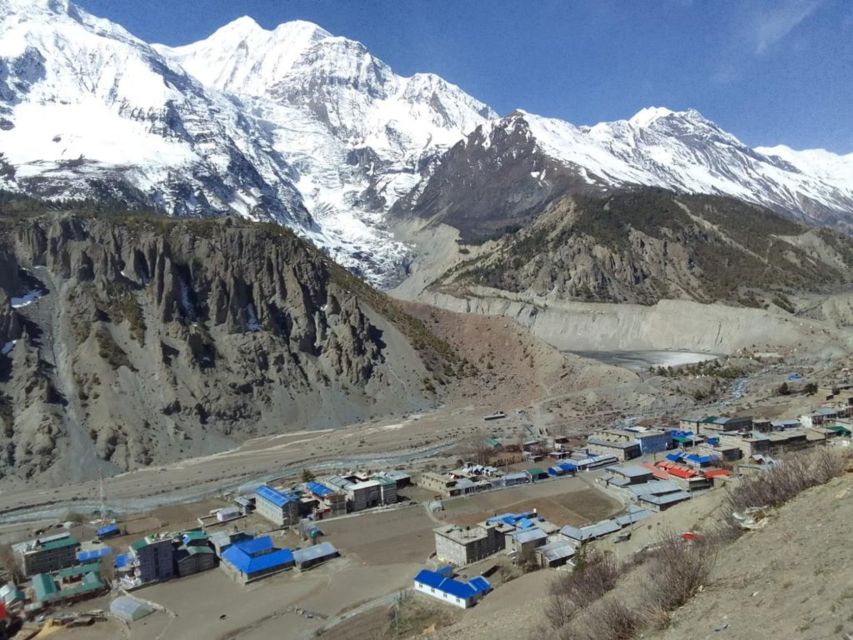
Upper Pisang is described as picturesque, and that matches what you’ll likely notice: tighter village edges, views that start to sharpen, and a feeling that you’re getting closer to the high showpieces—especially as Annapurna peaks dominate what you can see between buildings.
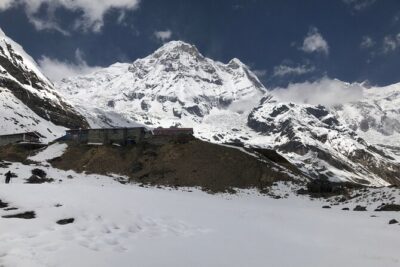
Then comes Manang, a village in a broad valley. Here the trek shifts from “get higher” to “figure out how high you should go comfortably.” The mountain views in this area include Annapurna II, Annapurna III, and Gangapurna, and even if you don’t memorize peak names, you’ll understand the scale quickly.
One practical point: Manang is where your sleep and food matter more than on earlier days. Hydrate earlier than you think you need to. Eat what sits well. And if you feel a headache creeping in, tell your guide and slow down—don’t try to out-stubborn altitude.
The Manang Acclimatization Day: Why Rest Is Part of the Plan
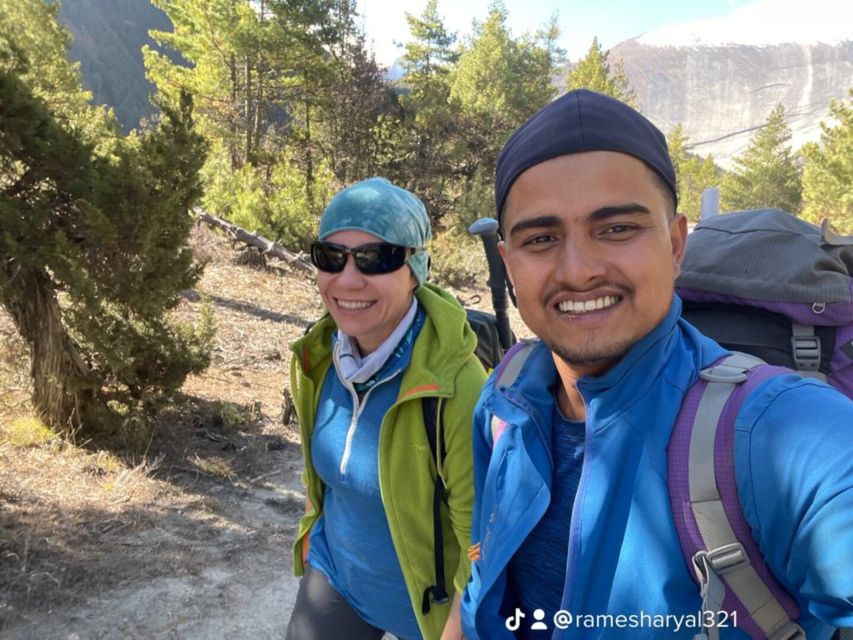
Day 5 is a dedicated acclimatization day in Manang. You rest, explore the village, and enjoy panoramic views.
This is a big deal. You’re already at 3,540m, and the trek is about to push you into higher terrain. Without this type of planned recovery, the pass crossing can feel harsher and less safe. With it, your body has a better chance to adjust.
What I like about this setup is that it gives you permission to move at human speed. You’re not forced into “busy sightseeing” all day, but you can still walk a bit, wander, and look around. It helps you break the mental rhythm of constant walking.
If you want a simple rule: treat this day like training day for tomorrow’s altitude, not like a day off where you ignore how you feel.
Manang to Yak Kharka to Thorong Phedi: From Grass Pastures to Pass Prep
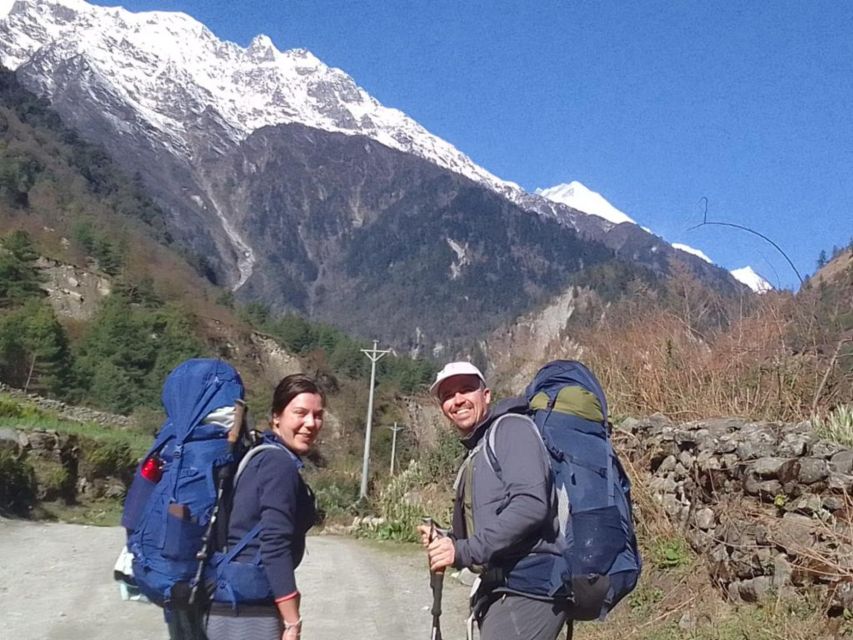
Day 6 takes you from Manang to Yak Kharka (4,050m/13,287 ft) in about 6 hours. It’s an ascent through alpine areas, reaching a grazing pasture surrounded by mountains. It’s quieter here—less village bustle, more open walking.
Day 7 continues to Thorong Phedi (4,450m/14,600 ft) in about 6 hours. Thorong Phedi is the base camp for the pass crossing. The big thing on this day isn’t just climbing; it’s preparing your mind and routine for an early start.
This section is where you should get serious about your pack setup:
- Keep your daypack light and consistent.
- Know where your warm layers are.
- Plan your water routine (you don’t want to be figuring that out at altitude).
Also, if the weather shifts, you’ll feel it more up high. The mountains can be mostly clear and sunny, but rain or snow can happen, so layer up.
Thorong La (5,416m) to Muktinath: The Reward Comes With a Cost
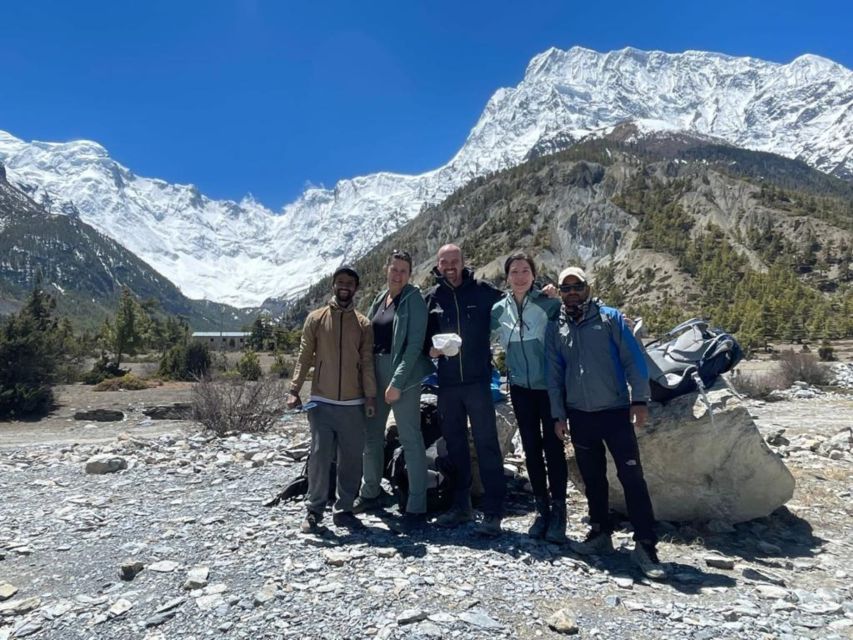
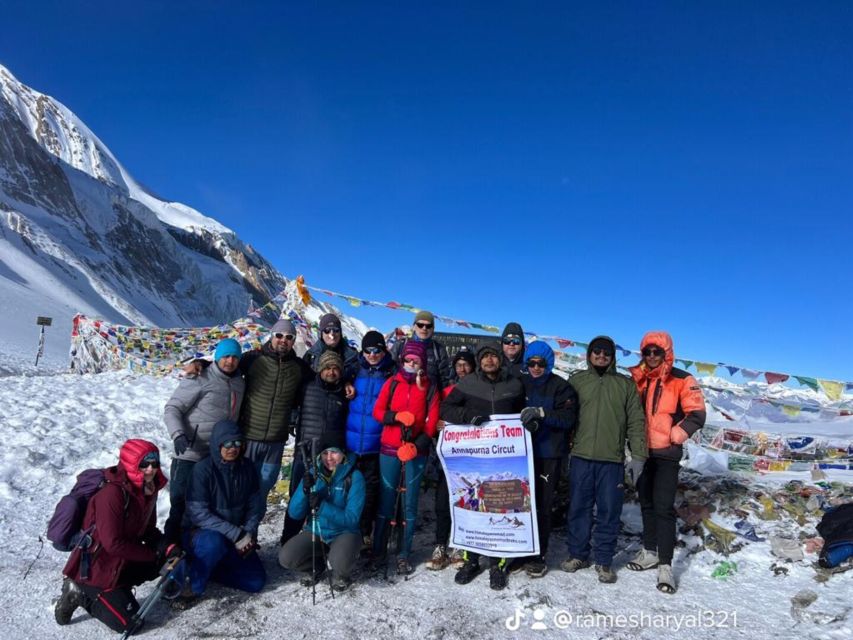
Day 8 is the big one: Thorong Phedi to Muktinath via Thorong La Pass (5,416m/17,769 ft), about a 12-hour trek.
This is why the earlier days exist. You start early for the ascent to the pass, cross it, then descend down to Muktinath (around 3,800m/12,467 ft). Expect panoramic views at the top, but also expect the kind of physical effort that makes you check your breathing every few minutes.
After the crossing, you drop in elevation, and that feels like relief. Muktinath itself is a sacred pilgrimage site for Hindus and Buddhists. That means you’re not just walking through a natural setting—you’re walking into a place with deep cultural meaning, where small rituals and steady foot traffic are part of the atmosphere.
Two practical tips for this day:
- Go slow early. Your goal is to arrive at the pass, not to sprint toward it.
- After you descend, still take your time. Fatigue can make you careless, and the day is long.
If conditions ever change during high-altitude treks, the guide’s decision-making matters. In past experiences with this trek format, guides like Milani have been described as handling disrupted sections (like landslide-affected areas) and getting people safely back on track. That kind of calm competence is exactly what you want on a demanding route.
Muktinath to Jomsom: Desert-Like Air and Mustang Energy
Day 9 takes you from Muktinath to Jomsom (2,720m/8,923 ft) in about 5 hours.
The terrain changes dramatically. You move into an arid, desert-like feel as you enter the Mustang region. Jomsom is described as a windy town, and you’ll likely notice that immediately when you settle in. This is one of those “oh wow, we crossed a big boundary” days—less about climbing, more about absorbing the shift.
Spend time in Jomsom if you can. Not for long adventures, but for grounding after a high pass. You’ve earned a slower pace.
Jomsom to Pokhara: The Trek Ends, and You Get Your Legs Back
Day 10 is transport: a bus from Jomsom to Pokhara (about 8 hours), then time to unwind.
Pokhara is where you finally get that sense of normal travel again—food you can choose more freely, showers if you’re willing to pay for the comfort, and a place to sit with a cold drink (if that’s your style).
This itinerary also includes a last-night hotel: a tourist standard luxury hotel in Pokhara (Hotel Orchid) plus a farewell Nepalese typical dinner in Lakeside Pokhara. It’s a nice close to the story: you can celebrate without overdoing it, and you can reflect on how the trek changed your body and your attention.
Price and Value: What $467 Covers (and Why It Often Beats DIY)
The price listed is $467 per person for 10 days. That’s not just “walking days”—it covers the stuff that usually eats up time and nerves if you try to piece everything together yourself.
Here’s what you’re getting value for:
- Guide support in English, plus staff costs handled by the operator.
- Trekking permits and paperwork, including the Trekkers’ Information Management System fee(s).
- Accommodation for 9 nights on the trek in comfortable lodging (tea-house style).
- A final hotel night in Pokhara (Hotel Orchid).
- Meals during the trek for the full package option (breakfast, lunch, dinner).
- Route transportation: Kathmandu to Besisahar by bus, Besisahar to Dharapani by shared Jeep, Jomsom to Pokhara by bus, plus a luxury sofa seater AC tourist bus from Pokhara to Kathmandu.
The big “watch item” for cost is that porter charges are extra. The guide is included, but carrying assistance may cost more depending on your needs. If you want to keep your daypack truly light, plan for that upfront.
So is it a good deal? For many people, yes—because the Annapurna Circuit is logistics-heavy. Having transport, permits, and lodging handled means you can focus on pacing and enjoying the villages, not spreadsheet chaos.
Gear You’ll Actually Use (Not Just Carry)
This trek has a simple gear reality: you need to stay comfortable in layers, and your feet have to work reliably for long days.
Bring:
- Sunscreen and sunglasses
- A jacket, hat, and layers for cold at altitude
- Hiking shoes plus trekking gear you’re used to
- A sleeping bag
- Trekking poles (highly helpful if you use them)
- A headlamp (flashlight also listed) for early mornings
- Water planning basics (a water bottle is on the list)
- Passport or ID card and cash
A small mindset tweak helps: don’t treat your gear like a museum exhibit. If you packed it, test it before you leave on the trail—especially boots, socks, and how you manage cold mornings.
The Guide Factor: When Organization Makes the Trek Feel Safer
This kind of trek lives or dies on decisions made day to day: pacing, where you stay, how you handle changes, and how you keep altitude risk in mind.
The guide style described with names like Keshab and Prakash includes:
- clear trek information without overwhelming you
- good accommodation planning so you’re not scrambling late
- attention to altitude sickness risk and pacing adjustments
- friendly, patient support when the trail gets hard
One detail I really appreciate from the experience descriptions is the attention to luggage and practical problems. There’s mention of coordinating transport for a bag you didn’t need during the trek, plus handling sleeping bag rentals and getting them back to the store afterward. That’s the kind of behind-the-scenes competence that keeps your trip smooth.
If you’re booking, ask your operator what happens with your extra items and how they manage luggage. With a trek like this, small logistics problems can become big stress problems.
Who This Trek Fits Best (and Who Should Skip It)
This 10-day Annapurna Circuit trek is designed for people who want a real adventure: varied terrain, village culture, and a major pass crossing at extreme altitude.
It’s not suitable for pregnant women.
It’s also best for you if:
- you can handle long walks (including a 12-hour pass day)
- you’re willing to accept basic comforts in tea houses
- you want a guided plan that handles permits, logistics, and day-to-day decisions
If you prefer a totally relaxed holiday pace with minimal elevation risk, look for a shorter and lower trek. Here, the altitude is the point.
Should You Book This 10-Day Annapurna Circuit Trek?
I’d book it if you want the full Annapurna Circuit arc and you like traveling with structure. The big reasons are practical: the plan includes a dedicated acclimatization day in Manang, the transport reduces road hassle, permits are handled, and the guide support described across multiple guide styles suggests pacing and safety are taken seriously.
I’d hesitate if you’re sensitive to long travel days, uncomfortable with basic mountain lodging, or not ready for the physical reality of Thorong La Pass crossing at 5,416m. In that case, you’d likely enjoy parts of the route—but the pass day would dominate your trip in a not-fun way.
If you can train a bit, pack smart, and respect altitude, this trek has the ingredients for a memorable 10 days.
FAQ
What is the highest point on this trek?
The trek crosses Thorong La Pass at 5,416m/17,769 ft.
How long is the trek?
The duration is 10 days.
What is included in the price of $467 per person?
It includes hotel pickup and drop-off, permits and paperwork (including TIMS fee(s)), trekking accommodation (x9 nights), a luxury hotel night in Pokhara (Hotel Orchid), a farewell Nepalese typical dinner in Lakeside Pokhara, and transportation segments as per the itinerary. Meals during the trek are included for the full package option.
Is the guide English-speaking?
Yes. The guide is listed as English speaking.
Is there a porter included?
An English-speaking guide is included, and porter charges are listed as extra.
What kind of lodging should I expect?
You get comfortable accommodation during the trek (x9 nights) in tea-house/guesthouse style settings. The last night is a tourist standard luxury hotel in Pokhara (Hotel Orchid).
What about meals?
All meals (breakfast, lunch, dinner) during the trek are included for the full package.
How does transportation work?
You’ll travel from Kathmandu to Besisahar by bus, from Besisahar to Dharapani by shared Jeep, and from Jomsom to Pokhara by bus. There’s also a luxury sofa seater tourist AC bus from Pokhara to Kathmandu. Private vehicle is available as an extra-cost option.
When do I get picked up in Kathmandu?
Pickup is optional, and you’re asked to wait in the hotel lobby 10 minutes before the scheduled pickup time.
Is it suitable for everyone?
It’s not suitable for pregnant women.
FAQ
What is the cancellation policy?
You can cancel up to 24 hours in advance for a full refund.
Do I need travel insurance?
Travel and rescue insurance is listed as not included, so you should arrange it yourself.
Are there trekking starting times?
The trek is 10 days and starting times depend on availability.
More Trekking Out of Kathmandu
More Tour Reviews in Kathmandu
Just Reviewed in Kathmandu
- Mountain Bike Tour
★ 5.0 · 3 reviews - Annapurna Panaroma
★ 5.0 · 3 reviews - Mount Everest Scenic Flight 50 Minutes
★ 5.0 · 3 reviews - Kathmandu : Swambhunath & Durbar Square Guided Half Day Tour
★ 3.3 · 3 reviews - Chandragiri Cable Car & Monkey Temple Tour – Private/Group
★ 5.0 · 3 reviews - Kathmandu: Shivapuri National Park Hiking Day Trip
★ 3.3 · 3 reviews
Annapurna Circuit Treks, compared.
 ★ 5.0Annapurna Circuit Trek with Tilicho LakeFrom $1,093368 reviews
 ★ 5.0Annapurna Circuit TrekFrom $1,17594 reviews
★ 5.0Annapurna Circuit TrekFrom $2,24067 reviews
★ 5.0Annapurna Circuit TrekFrom $1,07449 reviews
★ 5.0Annapurna Circuit TrekFrom $1,35046 reviews
★ 5.0Annapurna Circuit TrekFrom $1,15035 reviews
★ 5.0Annapurna circuit TrekFrom $99835 reviews
★ 5.0Annapurna Circuit TrekFrom $97534 reviews
★ 5.0Annapurna Circuit TrekFrom $1,17594 reviews
★ 5.0Annapurna Circuit TrekFrom $2,24067 reviews
★ 5.0Annapurna Circuit TrekFrom $1,07449 reviews
★ 5.0Annapurna Circuit TrekFrom $1,35046 reviews
★ 5.0Annapurna Circuit TrekFrom $1,15035 reviews
★ 5.0Annapurna circuit TrekFrom $99835 reviews
★ 5.0Annapurna Circuit TrekFrom $97534 reviews
Browse the lists this tour appears in