
Review · MANASLU CIRCUIT TREKS
Manaslu Circuit Trek
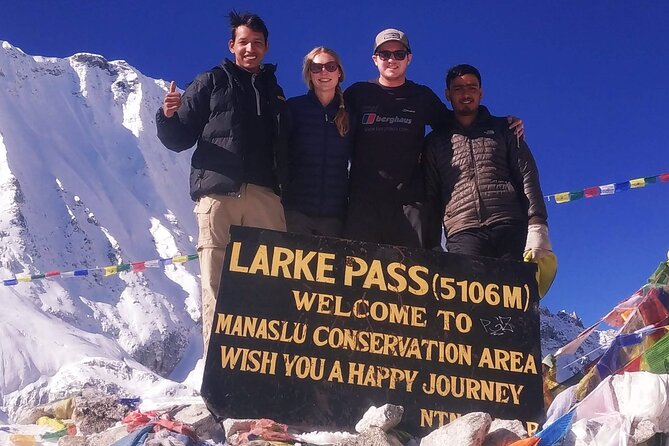
One of the best parts is the long, gradual shift from city to high pass. You start with Kathmandu heritage sites, then work your way through Gurung villages, hot springs, prayer walls, and old monasteries before reaching Larkya La Pass for big Manaslu-area views. I like how the trip mixes culture and trekking instead of treating villages as scenery, and I also like the practical support—an English-speaking guide, a porter, trekking permits, and even sleeping bags and down jackets on rent. One drawback to plan for: you’re walking lots of long days at altitude, and bad weather can mess with pass-crossing timing.
You’ll also feel the value in how it’s structured: hotel nights in Kathmandu, group size capped at 20, and a full package of food and lodging while you’re on the trail. In the field, the “make it run smoothly” theme comes up again and again, especially with staff like Suman and guides such as Mod, Chirring, and TB showing up in past experiences as calm, attentive, and safety-focused. If you’re hoping for a relaxed stroll with no weather stress, this route may be more demanding than you expect.
In This Review
- Manaslu Circuit Trek key highlights you’ll actually care about
- Kathmandu warm-up: UNESCO sights and getting your trek gear sorted
- The long drive out of Kathmandu: trading traffic for river valleys
- Machha Khola to Tatopani: first bridges, first forests, first rhythm
- Jagat and Deng: village life plus uphill grind
- Namrung and Lho: mani walls, monastery views, and apple country vibes
- Samagaon and Pungyen Gompa: culture you can actually see
- Samdo rest and Dharmashala acclimatization: how this trek reduces altitude risk
- Larkya La Pass: the high point with serious weather respect
- Bimthang, Tilije, and rhododendron ridges: big views with a gentler feel
- Tal and the Annapurna Circuit connection: river crossings and waterfalls
- Last drive back to Kathmandu: Besisahar, shopping time, and farewell dinner
- Value and price: what $1,386.67 buys you in real terms
- Who this Manaslu Circuit Trek suits best
- Should you book this Manaslu Circuit Trek?
Manaslu Circuit Trek key highlights you’ll actually care about
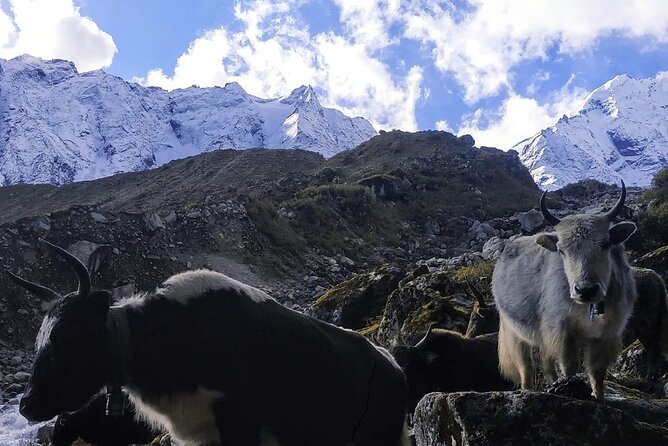
- Larkya La Pass views: a high point that can deliver close-up views of the Annapurna and Manaslu region peaks
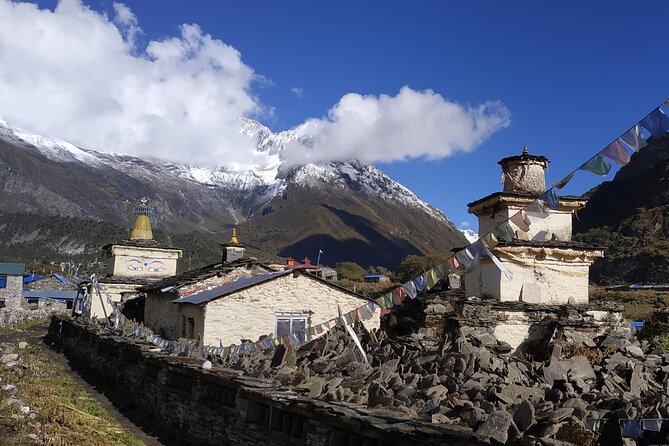
- Cultural rhythm: Gurung villages, mani walls, chortens, and a monastery visit to Pungyen Gompa
- Hot springs and reset days: Tatopani is built in for a welcome body break
- Real acclimatization: a scheduled rest at Samdo to help you adjust before higher sections
- Staff support that shows up: recurring mentions of guides like Mod and TB staying professional and patient
- A guided package with gear included: permits, meals, lodging, and rental sleeping bags and down jackets
More trails out of Kathmandu, boots ready
- Everest Base Camp Trek – 14 Days★ 5.0 · 1,499 reviews
- Everest Base Camp Trek★ 5.0 · 842 reviews
- Everest Base Camp Trekking★ 5.0 · 485 reviews
- Nagarkot Sunrise View and Day Hiking from Kathmandu★ 5.0 · 471 reviews
Kathmandu warm-up: UNESCO sights and getting your trek gear sorted
Your trek doesn’t start with a trail sign—it starts in Kathmandu, where you get matched up with Nepal Mountain Trekkers and taken from Tribhuvan International Airport to the hotel (Hotel Horizon). The point is simple: you get your bearings fast, plus you’re not dealing with logistics while jet-lagged.
The next morning is all about preparation plus classic Kathmandu UNESCO stops with a licensed guide and a car/jeep/bus depending on group size. You’ll visit sites like Kathmandu Durbar Square, Swayambhunath Stupa, Pashupatinath Temple, and Boudhanath Stupa. If you’ve never done these places before, it’s a good way to understand Nepali spirituality and daily life before you go climbing into the mountains.
Then you’ll get what you need for the trek: necessary trekking gear on rent (including sleeping bags and down jackets), plus permits handled for you. You’ll also get a company T-shirt, a duffel bag, and a trekking map, which sounds small until you’re packing in thin guesthouse rooms and want everything organized.
The long drive out of Kathmandu: trading traffic for river valleys
From Kathmandu, you take a long drive (listed as about 8 to 9 hours in the general overview, and also described as a drive toward the first trek area on the schedule). The route follows river corridors and mountain edges, so you’re gradually trading concrete for terraced hills and river banks.
You land in the first trekking-area settlement such as Machha Khola, across the Budhi Gandaki River. Expect a long day of travel, then a slower start the next day. This is one of those stages where having a group and transport arranged for you matters, because you want your first walking days to feel intentional, not improvised.
If you’re the type who gets impatient at long drives, tell yourself this: those hours are why the trek feels like a real journey once you start walking.
Machha Khola to Tatopani: first bridges, first forests, first rhythm
Once you’re in the trek zone, the route starts with suspension bridges and walking through forests and village paths. Early on, you’ll see the mix that defines the Manaslu region—river travel, terraced farms, and Gurung village life.
You also reach Tatopani Hot Spring, where you soak in natural hot springs. This stop is practical, not just scenic: after days of walking and sleeping in basic guesthouses, heat helps your legs reset. It’s also a morale booster. Trekking is physical, but comfort checkpoints matter.
One thing to keep in mind: the schedule keeps walking days long. Even when a day includes a “short” highlight, the overall day length is still designed around steady progress.
Jagat and Deng: village life plus uphill grind
From the hot springs area, you continue toward Jagat, with the trail including some challenging moments and a steady push through cultural and natural scenery. You’ll be walking beside the Budhi Gandaki corridor, crossing streams and stepping through settlements that feel lived-in rather than built for tourists.
Then comes Deng, where you’re walking uphill after river crossings and getting strong views of peaks like Singri. You’ll also start to notice how the trail teaches your body: you learn to pace ascents, to breathe through thin air, and to stop when you need to instead of sprinting because the view is calling.
For me, the value of these days is that you don’t just hike high—you earn it. The villages make the altitude feel connected to real people and real farming.




Namrung and Lho: mani walls, monastery views, and apple country vibes
Namrung is a turning point day in how the trek feels. You’ll pass mani walls, cross the Budhi Gandaki River, and walk through pasture land with Himalayan views rising around you. This is where the route starts to feel more open—like the mountains are stepping closer.
Then you reach Lho, which includes an easy half-day walk to Lho with major viewpoints of Himalchuli at the head of Hinang Glacier. The schedule also points out Ribung Monastery, plus a chance to climb toward viewpoints behind it. There’s even a chance to catch sunrise views over the Manaslu massif from a viewing spot near the monastery.
This is a good day to bring patience. You’re gaining culture and views, but you’re also learning the daily rhythm of slow trekking and quick reward.
Samagaon and Pungyen Gompa: culture you can actually see
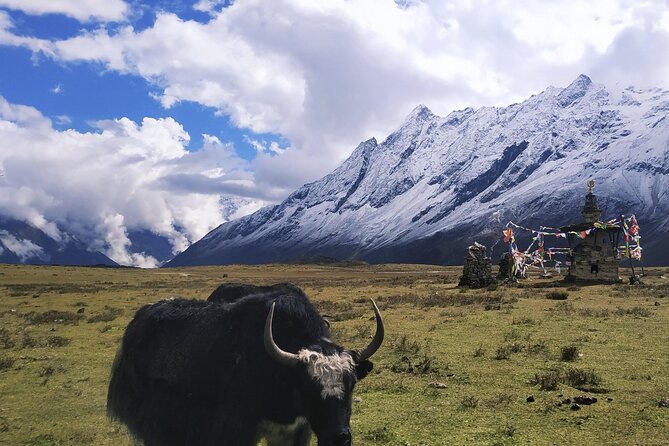
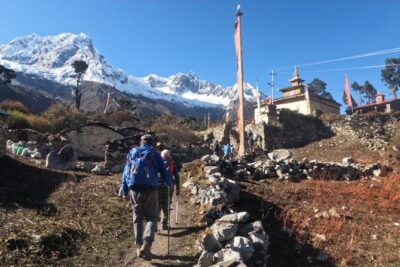
In Samagaon, you get a high, village feel with views toward peaks like Ganesh Himal, Himal Chuli, and Siring Himal. Expect terraced farming, chortens, and dense forest walking that makes the area feel spiritual and practical at the same time.
The highlight here is your excursion around Pungyen Gompa, an ancient monastery where you can watch local Buddhist rituals in a small prayer hall setting. If you care about how religion lives in the landscape—not just how it looks—this is one of the most meaningful moments on the whole trek.
I like this stop because it adds texture. High passes are exciting, but gompas are where you understand why people keep living at these elevations and how they find calm in a harsh climate.
Samdo rest and Dharmashala acclimatization: how this trek reduces altitude risk
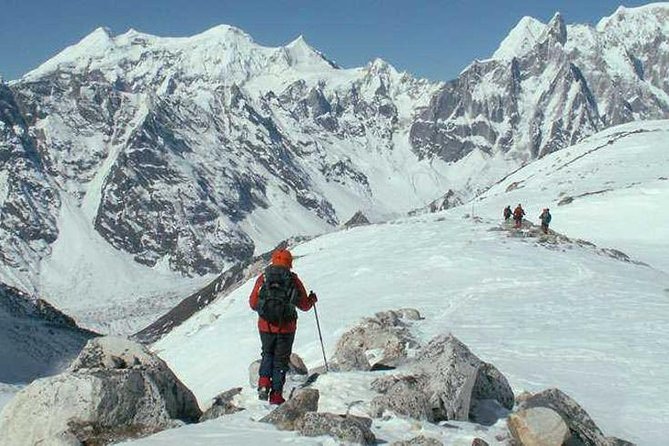
After Samagaon, the trek includes a day rest at Samdo specifically for acclimatization. That’s not a “bonus day,” it’s a safety choice. When you’re headed toward a high pass, you want your body to adjust rather than forcing it.
You then continue toward Dharmashala, listed around 5,000m, where you get more time to acclimatize during the rest of the day. This structure matters because it’s not just about distance—it’s about how your body adapts to thin air and changing weather.
Many trekking problems come from rushing. Here, the schedule gives you at least two built-in chances to slow down.
Larkya La Pass: the high point with serious weather respect
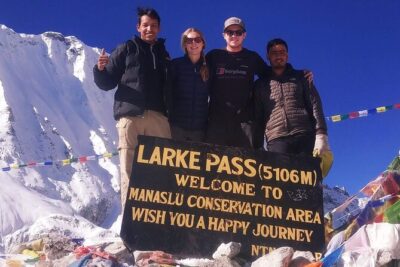
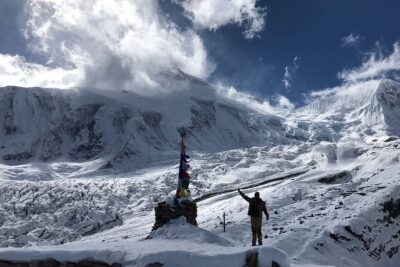
Leaving Dharmashala, you work up glacier moraines and climb toward Larkya La Pass, the highest point of the trek. The reward is the type of viewpoint trek dreams are made of: views of Annapurna 2, Cheu Himal, Himlung Himal, and other surrounding peaks, with Manaslu looking close and imposing.
Still, I’d treat pass day as weather-day first and sightseeing day second. One of the strongest signals from past experiences is that poor conditions can prevent crossing exactly as planned. Even then, organization and safety planning helped keep the trip smooth, even if the route outcome changes.
That’s the key mindset for Larkya La Pass: go for it, but don’t get stubborn. If conditions are unsafe, turning the day into a smart alternative is the right move.
Bimthang, Tilije, and rhododendron ridges: big views with a gentler feel
After the pass area, you’ll reach Bimthang, described as a place to rest and recharge with mountain views and rhododendron scenery. This day helps your body recover after the steepest effort.
Then the trail continues through ridges, pasture areas like Sangre Kharka, and into rhododendron forests. The schedule highlights that rhododendrons can blossom in spring, which can turn a normal trekking morning into something visually memorable.
Finally, you arrive at Tilije for overnight. I like this sequence because it doesn’t feel like a constant battle. Yes, you’re still trekking, but the terrain becomes more varied, and your eyes get breaks from the highest, most exposed angles.
Tal and the Annapurna Circuit connection: river crossings and waterfalls
Toward the end, you walk from Tilije down into a set of village and river scenes, including Tal. The route mentions connecting to the Annapurna circuit trail at Dharapani and crossing a Marsyandi River bridge, with waterfalls along the way.
You’ll also pass the Milky white river above the bridge while moving through Thonje village areas. That kind of detail matters in the mountains: rivers tell you where you are, how steep the land is, and what the next day might feel like.
This is also where the Manaslu Circuit starts to shift from “high trek world” into “returning world.” You’re still in the mountains, but the path starts pointing toward civilization routes.
Last drive back to Kathmandu: Besisahar, shopping time, and farewell dinner
The trek ends with a drive to Besisahar, then onward to Kathmandu. The schedule notes local transport by jeep to Besisahar, lunch there, and then the evening drive back to Kathmandu with an overnight in Hotel Green Horizon.
One of the nice touches is the free time you get the day before the final departure, when you can rest without a guide and porter and do some shopping for family and friends. You also have a farewell dinner in a Nepali culture restaurant, which gives you a structured moment to decompress and compare notes.
In past experiences, the staff focus on smooth running and safety shows up as a real comfort factor here too: when the paperwork, transport, and gear returns are handled, you can stay relaxed and actually enjoy the last dinner.
Value and price: what $1,386.67 buys you in real terms
At $1,386.67 per person for about 17 days, this is not a budget trek. But it also isn’t just “a guide walking with you.” The package includes airport pickup and drop, 4-night hotel accommodation in Kathmandu, Kathmandu sightseeing, and full trek logistics: all food and lodging during the trek (breakfast, lunch, dinner), transportation costs, all trekking permits, and a first aid medical box.
You also get rental sleeping bags and down jackets, plus a porter and a government licensed English-speaking trekking guide. Add in a rescue management service, VAT and company service charge, and a farewell dinner, and you can see why the price lands where it does: you’re paying for reduced friction in a place where small mistakes can become big problems.
What you should budget separately: your Nepal visa fee, international flights, travel insurance (and any rescue operation costs not covered), personal expenses like laundry and charging, and tips for guide and porters. Those are common add-ons, but they still matter when you’re planning total cost.
The group size cap at 20 is also part of the value story. A larger group can dilute attention; a cap helps keep things human.
Who this Manaslu Circuit Trek suits best
This trek fits best if you:
- want a serious mountain route with real acclimatization and a planned high pass day
- like cultural stops (gompas, monasteries, prayer walls) as part of the journey, not side quests
- appreciate an organized setup where permits, gear rental, and daily logistics are handled
It may be less ideal if you:
- struggle with long walking days (the schedule lists many days at roughly 12 hours of trekking time plus driving days)
- hate uncertainty from weather at high elevation
- expect a fully luxurious comfort level in mountain guesthouses (basic lodging is part of the deal, though meals and support are handled)
From the names that come up in past feedback, the staff style you’re likely to meet includes experienced coordinators like Suman and guides such as Mod and Chirring, plus a strong operations owner figure like Ramesh. TB also shows up as a guide name in one experience, mentioned for keeping people safe. That points to a practical, safety-first approach you can lean on.
Should you book this Manaslu Circuit Trek?
If you want a guided Manaslu Circuit Trek that handles permits, meals, lodging, gear rental, and transport—and you’re comfortable trading comfort for authentic mountain days—this is a strong fit. I’d book it if you take altitude seriously, walk at a steady pace, and you’re excited by the blend of Gurung village life, monasteries like Pungyen Gompa, and the big payoff of Larkya La Pass.
I’d think twice if you’re extremely sensitive to high altitude or you know you get stressed by weather changes. The pass day can shift based on conditions, and you need to be flexible enough to accept route adjustments.
If you’re on the fence, do one simple check: are you willing to walk long days and let acclimatization guide your pace? If yes, this trip’s structure makes it easier to do the right things in the right order.
More Trekking Out of Kathmandu






More Tour Reviews in Kathmandu




Just Reviewed in Kathmandu
- Mountain Bike Tour
★ 5.0 · 3 reviews - Annapurna Panaroma
★ 5.0 · 3 reviews - Mount Everest Scenic Flight 50 Minutes
★ 5.0 · 3 reviews - Kathmandu : Swambhunath & Durbar Square Guided Half Day Tour
★ 3.3 · 3 reviews - Chandragiri Cable Car & Monkey Temple Tour – Private/Group
★ 5.0 · 3 reviews - Kathmandu: Shivapuri National Park Hiking Day Trip
★ 3.3 · 3 reviews
Manaslu Circuit Treks, compared.
 ★ 5.0Manaslu Circuit TrekFrom $1,190292 reviews
Manaslu Circuit TrekFrom $1,081184 reviews
★ 5.0Manaslu Circuit Trek:From $1,099106 reviews
 ★ 5.0Manaslu Circuit Trek (15 Days)From $1,65750 reviews
Manaslu Circuit TrekkingFrom $1,49944 reviews
 ★ 5.016 Day Private Manaslu Circuit Trek from KathmanduFrom $1,13542 reviews
★ 5.0Manaslu Circuit TrekFrom $1,90035 reviews
 ★ 5.0Manaslu Circuit Trek 13 DaysFrom $1,40030 reviews
Browse the lists this tour appears in