
Review · MANASLU CIRCUIT TREKS
Manaslu Circuit Trek
If you want real Himalayan scale, Manaslu delivers. This trek loops the Manaslu massif and climbs high enough to feel the air change, with a solid 17-day rhythm of walks, drives, and rest days. I especially like that you get a full support setup—an English-speaking, government-licensed guide plus a porter—without feeling babysat, and I also like the way the itinerary builds gradually toward altitude.
The one drawback to plan for is the effort level: even with acclimatization built in, this route still throws serious days at you, including Larkya La (5160m) and long hiking blocks after high passes. If your fitness is only average, you’ll feel it.
In This Review
- Key highlights worth your attention
- Entering Manaslu: what makes this circuit special
- What the $2,300 actually buys you on the Manaslu Circuit
- Your 17 days: Kathmandu to Sotikhola, then steadily higher
- Days 1–2: Kathmandu arrival and a prep day
- Days 3–6: from Sotikhola into the trekking rhythm
- Days 7–9: Namrung, Lho, and the step into higher views
- Day 10: the acclimatization day (don’t skip it mentally)
- Days 11–13: Samdo, Larkya Phedi, and the pass day to Bimthang
- Days 14–17: Bimthang down to Dharapani, then back to Kathmandu
- Larkya La (5160m): the day you should mentally train for
- Teahouses, meals, and the included sleep system
- Guides and porters: the human factor that shapes the trek
- Transportation choices: drives that save fatigue
- Small group size (max 10): what it feels like in practice
- Who should book this Manaslu Circuit trek
- Should you book this Manaslu Circuit trek?
- FAQ
- Where does the Manaslu Circuit Trek start and when?
- How long is the trek?
- What is the maximum group size?
- What kind of lodging do I get during the trek?
- Are meals included?
- What equipment is included for cold weather?
- Is there an acclimatization day?
- How high is Larkya La?
- Are guide and porter services included?
- Is the trip refundable if I cancel or if weather is bad?
Key highlights worth your attention
- Licensed guide + porter support: one porter for every two trekkers, with all porter expenses handled.
- Gear included for cold nights: a down jacket and sleeping bag are provided (and returned after the trek).
- Clear altitude progression: higher days come with a dedicated acclimatization day to help you handle the climb.
- Teahouse lodging throughout: you sleep in simple, trail-friendly lodges rather than tent camping.
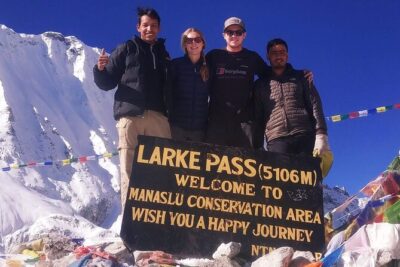
- A real high point day: crossing Larkya La (5160m) is the signature challenge.
- Small group size: up to 10 travelers, which keeps the trek feeling more personal.
More trails out of Kathmandu, boots ready
- Everest Base Camp Trek – 14 Days★ 5.0 · 1,499 reviews
- Everest Base Camp Trek★ 5.0 · 842 reviews
- Everest Base Camp Trekking★ 5.0 · 485 reviews
- Nagarkot Sunrise View and Day Hiking from Kathmandu★ 5.0 · 471 reviews
Entering Manaslu: what makes this circuit special
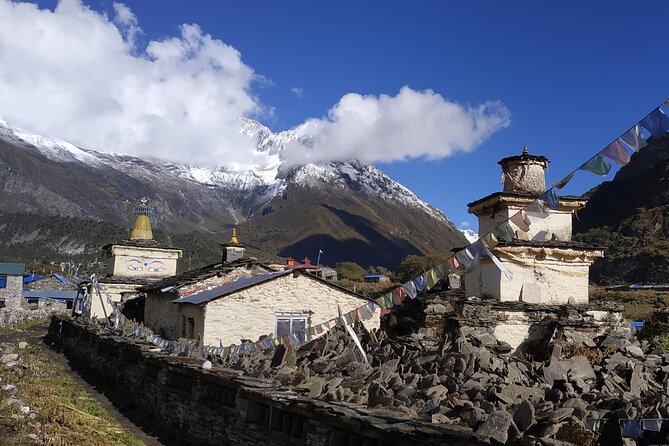
The Manaslu Circuit Trek is one of those Nepal adventures that feels less like a checklist and more like a steady climb into the high mountains. You start in Kathmandu, then transition into river valleys, villages, monasteries, and increasingly dramatic views of the Manaslu massif and surrounding peaks.
What I like is that the experience is set up as a full “trip,” not just a long hike. You get Kathmandu valley sightseeing, welcome and farewell dinners, and a Kathmandu hotel with breakfast on a twin-sharing basis. Then the route turns into walking days where the scenery keeps evolving—forests giving way to higher terrain, settlements thinning out, and mountain views growing more frequent as you go.
You’ll also appreciate the structure around altitude. The itinerary includes a dedicated acclimatization day (Day 10) and a sensible pace on the climb. That matters because the circuit doesn’t just test your legs—it tests your ability to handle elevation day after day.
What the $2,300 actually buys you on the Manaslu Circuit
At $2,300 per person for about 17 days, the value is strongest when you look at what’s included versus what’s not. Included costs cover the big-ticket items you’d otherwise have to arrange yourself: transportation between Kathmandu and trek gateways, permits/paperwork, guide and porter support, and lodging and meals while trekking.
Here’s what’s covered:
- Private airport pickup and drop (Kathmandu)
- Kathmandu hotel (3-star) with breakfast, twin sharing
- Kathmandu Valley sightseeing
- Trekking permits/paperwork handled for you
- Down jacket + sleeping bag (returned after the trek)
- 3 meals per day during the trek (breakfast, lunch, dinner)
- Teahouse accommodation while trekking
- English-speaking, government-licensed guide plus expenses
- Porter (1 porter for 2 trekkers) plus expenses
- A medical kit
- Welcome and farewell dinners
What’s not included is also important to budget for:
- Nepalese visa fee
- Lunch and dinner in Kathmandu
- Travel and rescue insurance
- International airfare
- Personal expenses like phone calls, laundry, bar bills, WiFi charge, and battery recharge
- Tipping
- Any extra night accommodation in Kathmandu if you need it
The practical takeaway: this price tends to work well if you want the “planning heavy lifting” done for you—transport, permits, guide, meals—so you can focus on showing up and walking.
Your 17 days: Kathmandu to Sotikhola, then steadily higher
This trek is built around a clear rhythm: a travel day or short drive, then several long walking days that gradually climb in elevation. The itinerary starts early—6:15 am at Hotel Thamel Park Pvt. Ltd., Chaksibari Marg, Kathmandu.
Days 1–2: Kathmandu arrival and a prep day
You arrive in Kathmandu (1334m) and transfer to your hotel. The next day is Kathmandu Valley sightseeing and preparation, which is more useful than it sounds. You get time to settle, handle last-minute logistics, and get oriented before the trek starts eating your calendar.




Days 3–6: from Sotikhola into the trekking rhythm
Day 3 is a long drive to Sotikhola (700m), followed by a trek start. Then you keep moving through river valleys:
- Day 4: Sotikhola to Machha Khola (869m), about 6–7 hours, ~12 km
- Day 5: Machha Khola to Jagat (1340m), about 7–8 hours, ~15 km
- Day 6: Jagat to Deng (1860m), about 6–7 hours, ~12 km
This early section is where you learn the pace that will carry you later. It’s also where the scenery transitions from “approachable” to “real mountain country.” Don’t treat these days like warm-up sprints—save some energy so the higher days feel manageable.
Days 7–9: Namrung, Lho, and the step into higher views
Now the climb gets more altitude-dependent:
- Day 7: Deng to Namrung (2630m), 6 hours-ish, ~12 km
- Day 8: Namrung to Lho (3180m), 4–5 hours, ~9 km
- Day 9: Lho to Samagaon (3520m), 4–5 hours, ~8 km
Notice the pattern: some days shorten in hours and distance, but the elevation keeps rising. That’s exactly what you want in a circuit like this. You get breathing room without sacrificing the upward progress.
Day 10: the acclimatization day (don’t skip it mentally)
Day 10 is your acclimatization day at Samagaon (3520m). Even though you’re not climbing on paper, you’re still learning how to move at altitude and how your body reacts. This is one of those days that can save you later—especially when the itinerary asks for a major climb to Dharamsala (Larkya Phedi) and the pass crossing next.
Days 11–13: Samdo, Larkya Phedi, and the pass day to Bimthang
From Samagaon:
- Day 11: Samagaon to Samdo (3875m), about 4–5 hours, ~8 km
- Day 12: Samdo to Dharamsala / Larkya Phedi (4460m), about 4–5 hours, ~8 km
- Day 13: Larkya Phedi to Larkya La (5160m) and then on to Bimthang (3590m), about 6–7 hours, ~12 km
The key reality here is that Day 12 and Day 13 set up your biggest challenge. Day 13 is listed as 6–7 hours, but the pass portion can feel longer than the clock. If you rush the first part of the ascent, you’ll pay for it on the descent and after.
Days 14–17: Bimthang down to Dharapani, then back to Kathmandu
After the hard high day:
- Day 14: Bimthang to Dharapani (1963m), about 7–8 hours, ~15 km
- Day 15: Dharapani to Besisahar (760m) by drive, about 5–6 hours, ~80 km
- Day 16: Drive back to Kathmandu (1334m), about 6–7 hours for ~150 km
- Day 17: Fly back home
This “back down” stretch is where you’ll notice how much you gained earlier. Even when the distance is similar, your legs may feel heavier the day after crossing a pass. Hydrate, eat well, and keep your pace steady.
Larkya La (5160m): the day you should mentally train for
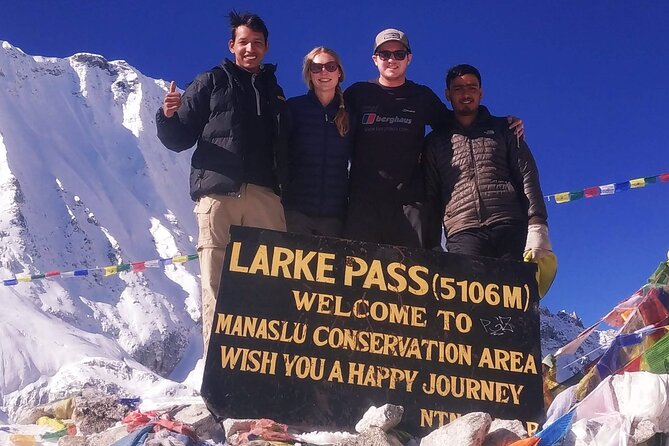
Larkya La is the trek’s signature crossing, reaching 5160m on Day 13. That number is the headline, but the experience is usually about breath control, slow steps, and staying calm on the ascent.
What I think helps most is knowing the itinerary pattern: you climb gradually into the 4000m range on Day 11 and Day 12, then tackle the pass. Because you’re not jumping from low altitude straight to the top, you’re giving yourself a better chance at feeling strong enough to enjoy the day instead of only surviving it.
The other practical consideration: this day comes after an acclimatization day. If you treat that acclimatization day as optional energy-drain instead of recovery, the pass becomes harder than it needs to be.
Teahouses, meals, and the included sleep system
This trek uses teahouse accommodation throughout the walking portion. That means you’re not carrying a tent setup, and you’re not pitching camp in cold conditions. It’s one of the reasons this route can be so popular: you still get a remote-feeling circuit, but with predictable lodging.
You also get three meals a day during the trek. That’s a big deal for energy management at altitude. When you don’t have to negotiate food logistics, you can focus on eating on schedule—especially important when hiking durations range from around 4–5 hours to 7–8 hours.
On cold nights, you’ll have help: a down jacket and sleeping bag are included (with return at the end). That’s a serious value item, since buying quality cold-weather gear can be expensive. You’ll still want layers for daytime, but having the main cold-night items handled is a big convenience.
Guides and porters: the human factor that shapes the trek
The service setup here is built around real mountain work: an experienced English-speaking, government-licensed trek guide plus a porter system (one porter for every two trekkers). That matters for both comfort and safety.
The reviews highlight that the guide often becomes the main translator of the mountains—how to pace, what to watch for, and how to keep morale steady. Names that came up include Ram, Mingma, Jeet, and Madhav, each described as knowledgeable and supportive in different ways. Porters also get credit—Keshap and Shiv were specifically mentioned for carrying the load and keeping things moving smoothly.
You can use this information to choose your mindset on the trail. Instead of only thinking about your own legs, think about teamwork: you’ll do better when you follow the guide’s pace guidance, and you’ll arrive more relaxed when your gear is handled by someone who’s done this route before.
Transportation choices: drives that save fatigue
Not every day is purely hiking. The trek starts with a drive to Sotikhola (about 6–7 hours, ~150 km). Later you also get drives:
- Day 15: Dharapani to Besisahar by road (about 5–6 hours, ~80 km)
- Day 16: Besisahar to Kathmandu (about 6–7 hours, ~150 km)
These drives are not just “convenience.” They help manage fatigue, especially after the longest walking blocks. You’ll still climb and hike, but you won’t be forced into constant walking every single day.
Small group size (max 10): what it feels like in practice
With a maximum of 10 travelers, the trek tends to stay flexible. It’s large enough for a social vibe, but small enough that your guide can manage pace and comfort without the feeling of a conveyor belt.
This matters on days like Day 13 (the pass) and Day 14 (the long descent day). You need to move with care and keep control over how quickly you’re going. A small group makes it easier to keep a consistent rhythm.
Who should book this Manaslu Circuit trek
This trek is best for people who:
- Have strong physical fitness (the itinerary includes 6–8 hour hiking days several times)
- Want a classic high-altitude circuit with teahouse comfort
- Prefer having permits, meals, and support arranged for them
- Are excited by the Manaslu massif experience and the big pass crossing
Who should think twice?
If you’re prone to altitude issues, struggle with long climbs, or want a purely easy walk, this may be too demanding. The route climbs to high elevations and includes a pass at 5160m—that’s not a casual “weekend trek.”
Should you book this Manaslu Circuit trek?
If you want a well-supported circuit that balances trekking with actual comfort—hotel in Kathmandu, meals during the trek, teahouses, and gear included—this one makes sense. The value is strongest when you trust the structure: licensed guide, porter support, a planned acclimatization day, and clear transportation.
Before you book, be honest with yourself about effort. Practice steady uphill walks at home, focus on endurance, and plan your day-by-day mindset around altitude, not just distance. If you do that, you’ll likely love what Manaslu does best: big mountains, quieter villages, and that feeling of gradually getting deeper into Nepal’s high country.
FAQ
Where does the Manaslu Circuit Trek start and when?
The trek meeting point is Hotel Thamel Park Pvt. Ltd., Chaksibari Marg 594-16, Kathmandu 44600, Nepal, and the start time is 6:15 am.
How long is the trek?
The duration is listed as 17 days (approx.).
What is the maximum group size?
This activity has a maximum of 10 travelers.
What kind of lodging do I get during the trek?
You get teahouse accommodation during the trekking portion, plus a 3-star hotel in Kathmandu with breakfast in twin sharing.
Are meals included?
Yes. During the trek you receive three meals a day (breakfast, lunch, and dinner). Lunch and dinner in Kathmandu are not included.
What equipment is included for cold weather?
A down jacket and sleeping bag are included and are to be returned after the trek.
Is there an acclimatization day?
Yes. There is an acclimatization day on Day 10 at Samagaon (3520m).
How high is Larkya La?
Larkya La reaches 5160m (on Day 13).
Are guide and porter services included?
Yes. You get an experienced, English-speaking, government-licensed trek guide and a porter (1 porter for every 2 trekkers), with their expenses included.
Is the trip refundable if I cancel or if weather is bad?
The experience is non-refundable and cannot be changed for any reason. If it’s canceled due to poor weather, you’ll be offered a different date or a full refund.
More Trekking Out of Kathmandu






More Tour Reviews in Kathmandu




Just Reviewed in Kathmandu
- Mountain Bike Tour
★ 5.0 · 3 reviews - Annapurna Panaroma
★ 5.0 · 3 reviews - Mount Everest Scenic Flight 50 Minutes
★ 5.0 · 3 reviews - Kathmandu : Swambhunath & Durbar Square Guided Half Day Tour
★ 3.3 · 3 reviews - Chandragiri Cable Car & Monkey Temple Tour – Private/Group
★ 5.0 · 3 reviews - Kathmandu: Shivapuri National Park Hiking Day Trip
★ 3.3 · 3 reviews
Manaslu Circuit Treks, compared.
 ★ 5.0Manaslu Circuit TrekFrom $1,190292 reviews
Manaslu Circuit TrekFrom $1,081184 reviews
★ 5.0Manaslu Circuit Trek:From $1,099106 reviews
 ★ 5.0Manaslu Circuit Trek (15 Days)From $1,65750 reviews
Manaslu Circuit TrekkingFrom $1,49944 reviews
 ★ 5.016 Day Private Manaslu Circuit Trek from KathmanduFrom $1,13542 reviews
★ 5.0Manaslu Circuit TrekFrom $1,90035 reviews
 ★ 5.0Manaslu Circuit Trek 13 DaysFrom $1,40030 reviews
Browse the lists this tour appears in