

Review · MANASLU CIRCUIT TREKS
Manaslu Circuit Trek 8th Highest in the World
Manaslu Circuit feels gloriously remote. You circle the world’s eighth-highest mountain with dramatic valleys, high passes, Tibetan-shaped villages, and serious mountain walking.
I like that the trip is built for the real requirements of the restricted Manaslu region, including the special permit (listed as $100) and the expectation that you trek with a registered Nepali company. I also like the human side: the team behind Adventure Glacier Treks gets praise for calm, helpful support, with names like Roshan (guide) and Sudip (porter) showing up in people’s notes about safety and comfort.
One possible drawback: you need a strong fitness level and you should expect rougher travel days (the drive toward Machha Khola can be long and bumpy), plus colder, windier conditions around the pass. Also, this trek follows strict rules—your group must meet the minimum trekking headcount requirement (not counting the guide and porter).
In This Review
- Key things that make this trek worth your time
- Why the Manaslu Circuit feels different from most Nepal treks
- Price and value: what your $1,600 covers (and why it matters)
- Kathmandu warm-up: Thamel, Durbar Square, and gear sanity checks
- Day-by-day on the trail: from Machha Khola to Tatopani to Salleri
- Namrung, forest walking, and Samagaun: Tibetan culture meets Manaslu views
- Samdo and the optional Tibetan border side trip
- Larkya La: the pass day that needs early mornings and a torch
- After the pass: Dharapani and Jagat, plus the Annapurna connection
- Comfort, safety, and team support: what the guide/porter setup really changes
- What to expect physically: fitness, altitude pacing, and real-world fatigue
- Who this trek is best for (and who should reconsider)
- Should you book this Manaslu Circuit trek with Adventure Glacier Treks?
- FAQ
- FAQ
- How long is the Manaslu Circuit trek on this tour?
- What permits are required, and are they included?
- Do I need to trek with a registered Nepali company?
- Is airport pickup and drop-off included?
- What kind of lodging will I have?
- Are meals included?
- Is there an optional side trip from Samdo?
- How hard is it, and what preparation is expected?
- Can I cancel and get a full refund?
Key things that make this trek worth your time
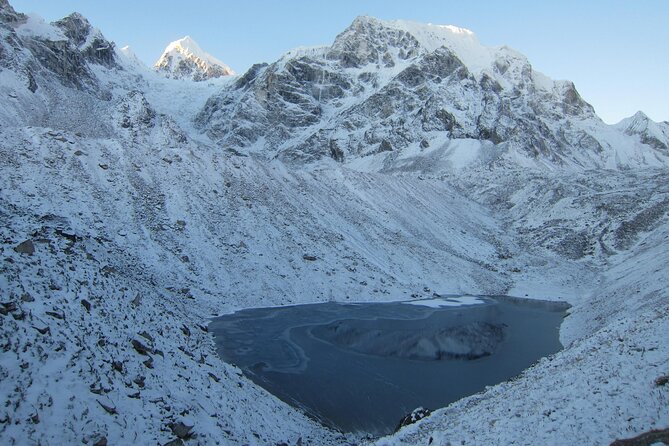
- Restricted-region permits handled: You’re not left chasing paperwork for entry to the area.
- A real circuit with a high payoff: The walk includes the big Larkya La pass and long mountain days.
- Kathmandu to trail, organized end-to-end: Airport pickup, Kathmandu nights, then road transfer into the trek.
- Samdo has optional border-side exploring: Day 9 includes an 8-hour side trip option to the Tibetan border.
- Early timing for sunrise at the pass: You’ll leave early to catch sunrise and avoid stronger wind later.
- Guesthouse trekking with full meals: Three meals a day are planned during the itinerary.
More trails out of Kathmandu, boots ready
- Everest Base Camp Trek – 14 Days★ 5.0 · 1,499 reviews
- Everest Base Camp Trek★ 5.0 · 842 reviews
- Everest Base Camp Trekking★ 5.0 · 485 reviews
- Nagarkot Sunrise View and Day Hiking from Kathmandu★ 5.0 · 471 reviews
Why the Manaslu Circuit feels different from most Nepal treks
If you want Everest-level views without the crowds, the Manaslu Circuit is one of the most convincing options in Nepal. The reason is simple: this trek runs through a restricted area, so it doesn’t feel like a constant parade of trekkers. Instead, you get that slower rhythm—small villages, long conversations over tea, and scenery that keeps changing as you gain altitude.
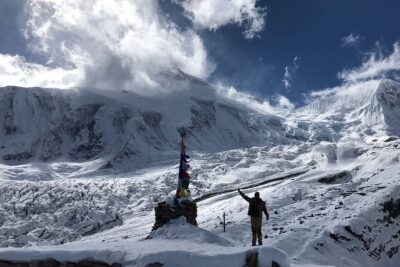
This route also centers on Manaslu (8,163 m), the world’s eighth-highest peak. Even when you’re not directly looking at the summit, the mountain shapes the day: glacial lines, ridges, and changing weather that make each stage feel earned. One day you’re walking riverside paths; the next, you’re moving through higher terrain with juniper and tundra.
Price and value: what your $1,600 covers (and why it matters)
At $1,600 per person for a roughly 14-day trek, you’re paying for more than route guidance. In the included list, the big value items are permits, ground transportation, and the support team: a professional guide, porters, and their expenses (including insurance and equipment). For a restricted-region trek, permits can be the difference between a smooth trip and a stressful one.
You also get structured meals: three meals a day during the itinerary (breakfast, lunch, dinner) plus breakfast in Kathmandu. That matters because teahouse trekking is only “budget” if you’re comfortable buying food day after day. Here, you’re not doing the constant math—your energy planning is simpler.
The trip cost does not include beverages, tips, travel insurance, or personal/nature expenses. Kathmandu food beyond the daily breakfast is also not included. So if you know you’ll want daily drinks, snacks, or extra showers, budget a little on top.
Kathmandu warm-up: Thamel, Durbar Square, and gear sanity checks
Day 1 is built to reduce travel stress. You land in Kathmandu, get met by a representative, and head into Thamel for an easy check-in at a tourist-standard hotel. You also get airport pickup/drop included, which saves you from the chaos of figuring out transport on day one.
Day 2 is where the trek becomes real. You’ll analyze what gear you need and the team can help you buy, rent, or receive items if they have ideas for what you’re missing. It’s also a day to explore Kathmandu Valley—Kathmandu Durbar Square is mentioned in the itinerary—with an important note: entrance is not included there. That’s a small detail, but it’s the kind you’ll be glad to know early.
One more thing I like here: you’re not thrown straight onto the trail. You get a gear check and a Kathmandu day, so you can adjust before the walking starts.
Day-by-day on the trail: from Machha Khola to Tatopani to Salleri
Day 3 starts with a long drive from Kathmandu to Machha Khola. The itinerary calls out that road conditions can make the bus ride lengthy and bumpy. I treat this day like a warm-up hike you do inside a vehicle: bring something to keep you comfortable and expect slow going.
Day 4 is where the trekking begins in earnest. You cross a river, ascend to Khorla Besi, and then walk along a beautiful river valley. The route is described as passing waterfalls and landslide areas—so don’t expect the trail to be perfect all the time. You end in Tatopani, a village known for its natural hot springs, which is exactly the kind of “you’ll thank yourself later” reward after big walking days.
Day 5 moves you through a first stretch of Buddhist influence. You trek down to Sirdibas (1,430 m), then continue toward Salleri (1,440 m). You’ll also get views of Sringi Himal (7,187 m), which is a nice confidence builder. When your eyes catch those taller peaks early, it helps the days ahead feel less mysterious.
Potential drawback here: these early days are still about adjusting. Even if the altitude isn’t extreme yet, your legs are learning how to work on Nepal time—steady effort, frequent stops, and a pace that doesn’t punish you.




Namrung, forest walking, and Samagaun: Tibetan culture meets Manaslu views
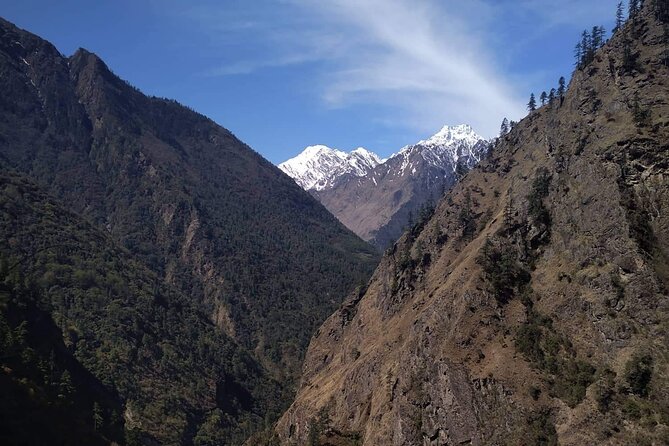
Day 6 takes you from the SringiKhola Valley area through forests and toward Ghap, after crossing a river. The itinerary mentions a feeling of ascent and cooler nights as you rise, plus Himalayan views that start showing more clearly. Forest sections can be a relief—less harsh sun, more cover—but they also mean the air can feel chilly once you’re higher.
Day 7 is about Samagaun, and this is one of the most rewarding cultural parts of the circuit. The area has strong Tibetan influence, and the itinerary specifically calls out viewpoints of Manaslu (8,163 m), Manaslu North (7,157 m), and Naike Peak (5,515 m). When a trek gives you that kind of sightline, it’s not just pretty—it’s motivational. You start connecting the walking work with the destination.
On Day 7, you’ll continue trekking onward after settling into that valley view mood. Nights here are often when people realize the real “high mountain” feel is creeping in.
Samdo and the optional Tibetan border side trip
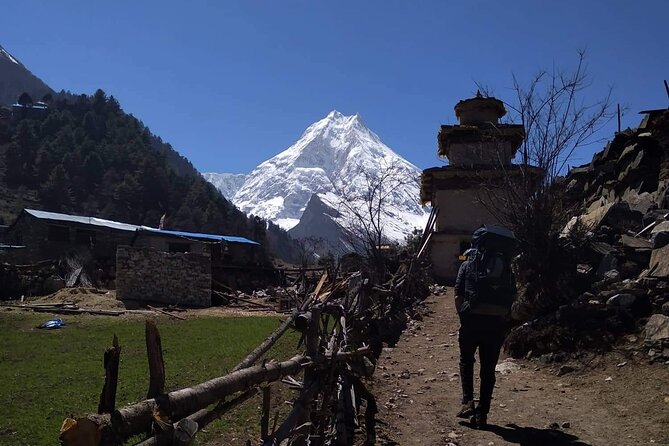
Day 8 brings you to Samdo. The itinerary describes the trail as mostly flat at first, moving through juniper and birch forests via KermoKharka. Then you hike down and cross the river. It also mentions reaching the meeting point of the Budhi Gandaki and ShyaleKhola area. If you like days that are less punishing on your knees, this is a good one.
Day 9 is your choice day. You can take an interesting 8-hour side trip to the Tibetan border with a packed lunch and plenty of drinking water. Or you can stay closer and walk around Samdo, observing daily life. I like that this isn’t a forced excursion. It gives you control over how hard you want to push before the biggest pass day.
Larkya La: the pass day that needs early mornings and a torch
Day 10 is the approach to Larkya La pass. You descend to about 3,850 meters to cross the Budhi Gandaki, then ascend through juniper and tundra in and out of ravines to the Larkya Guest House, described as the final stop before the pass. This is one of those days where you feel the altitude through effort rather than through drama—your breathing changes, and you learn quickly to stop too fast and start too hard.
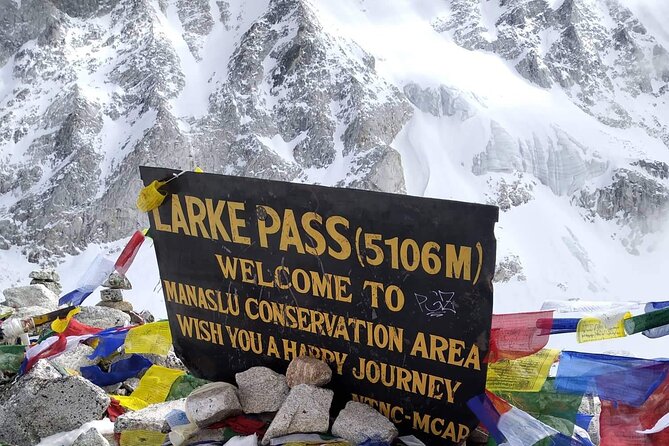
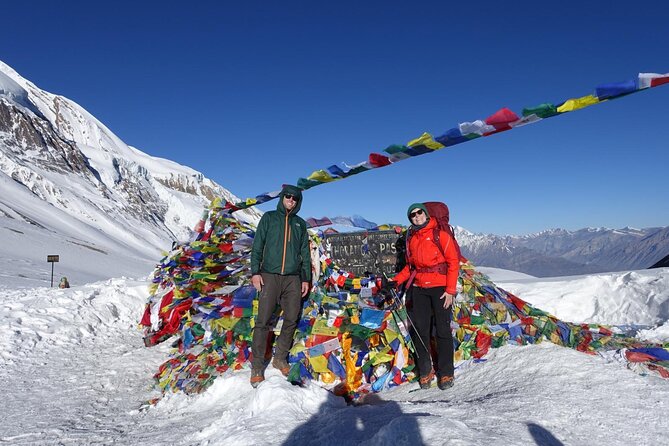
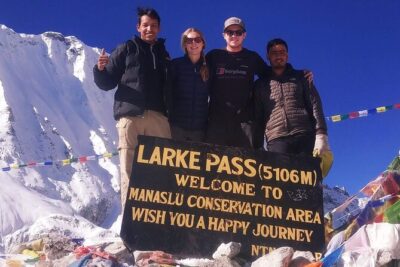
Day 11 is where timing matters. The itinerary says you must leave early in the morning to catch sunrise over the pass and to avoid strong wind after midday. There’s also a practical tip: keep your torch close by as you begin the steep, stunning walk. That’s the kind of detail that can save you from a small mistake becoming an annoying problem.
After you cross, you’ll continue into the later circuit stages. While the provided day labels show some inconsistency, the logic of the route is clear: after the pass, you spend your effort descending and resetting before joining the more popular trail sections later.
After the pass: Dharapani and Jagat, plus the Annapurna connection
Day 12 takes you from Bimtang through forests and pastures of the Dudh Khola Valley to Dharapani. The itinerary notes that you join the more popular Annapurna Circuit Trek trail thanks to the connection via Manaslu. This is a change in feel: you may notice more foot traffic and more of the “well-trodden” infrastructure. Still, it remains a mountain trek, not a stroll.
Day 13 moves you from Dharapani down to Jagat, described as descending near the Marsyangdi Nadi gorge. You’ve got about a 6-hour journey. The itinerary also mentions the possibility of chartering a Jeep depending on road conditions. That’s a comfort option if the descent is wearing you out.
Day 14 is your exit. For the first half of the day, you travel to Besisahar in a shared jeep, then bus back to Kathmandu. This day can feel long because road time adds up in Nepal, but it’s also the moment your trek-to-civilization switch flips.
Comfort, safety, and team support: what the guide/porter setup really changes
In mountain treks, “comfort” isn’t a luxury thing. It’s logistics that keep your mind calm. Here, you’re assigned a guide and porters, and they’re supported with insurance and equipment. That means you’re less likely to end up improvising major parts of the trip when something changes.
The names that show up in people’s feedback—like Roshan and Sudip—are tied to a consistent theme: people felt safe and comfortable. Another name you’ll see in notes is Dil, often praised for genuine information and helpful tips. Samir shows up as well, with references to planning carefully and making things feel easy from the beginning.
I also like the “family-run” vibe mentioned in reviews about the company. In practice, that usually means faster answers, a more personal touch when you have questions, and a team that cares about finishing your trek feeling proud rather than wrecked.
What to expect physically: fitness, altitude pacing, and real-world fatigue
The itinerary clearly expects a strong physical fitness level. That’s not corporate language—it fits the route. You’re working toward a high pass, you’ll walk long days, and you’ll do it with a backpack weight that your porters may handle depending on the trip setup. The key is that your body still has to hike the route; you can’t outsource altitude.
Also, be mentally ready for early mornings. The sunrise timing and wind avoidance around Larkya La means your sleep schedule can get disrupted. And the early steep segments are exactly where a torch can help you move safely in low light.
Finally, keep expectations realistic about the road days. The Kathmandu-to-Machha Khola transfer can be lengthy and bumpy. On the last days, jeeps and buses also mean you’ll feel “transport fatigue” on top of trekking fatigue.
Who this trek is best for (and who should reconsider)
This is a great fit if you want:
- A restricted-region trek with fewer crowds
- A circuit that includes Larkya La
- A guided setup that handles permits and logistics
- A balance of culture (Tibetan-influenced villages) and mountain views (Manaslu and surrounding peaks)
You might want to reconsider if you:
- Don’t have the fitness for steep days and high-altitude effort
- Prefer fully paved, consistently easy hiking
- Are traveling as a single trekker and can’t meet the rule about having at least two trekkers in your group (guide/porter don’t count)
Should you book this Manaslu Circuit trek with Adventure Glacier Treks?
If you want a Manaslu Circuit experience that feels organized and handled—permits, guides, porters, guesthouse stays, and your meals planned—this tour makes sense. The value stands out because the restricted-area requirements are part of the package, not a surprise add-on you scramble to solve.
I’d book if you’re ready for mountain reality: early starts, altitude pacing, and a couple of rough transport segments. I’d pause if you’re not confident in your fitness or you’re traveling with a group size that can’t meet the trek-rule requirement (again: at least two trekkers, not counting guide and porter).
FAQ
FAQ
How long is the Manaslu Circuit trek on this tour?
The duration is listed as 14 days (approx.).
What permits are required, and are they included?
The trek requires permits for the restricted Manaslu area. The included list specifically mentions necessary permits, including a special permit listed as $100.
Do I need to trek with a registered Nepali company?
Yes. The tour information notes that trekking in this restricted area requires trekking with a registered Nepali trekking company, and this tour is set up accordingly.
Is airport pickup and drop-off included?
Yes. Airport pick up and drop are included.
What kind of lodging will I have?
You’ll have 3 nights in Kathmandu at a tourist standard hotel. During the trek you stay in guesthouses.
Are meals included?
Yes. The trek includes three meals a day (breakfast, lunch, dinner) as mentioned in the itinerary. In Kathmandu, breakfast is included, but food there beyond daily breakfast is not included. Beverages aren’t included.
Is there an optional side trip from Samdo?
Yes. There’s an optional 8-hour side trip to the Tibetan border with a packed lunch and plenty of drinking water, or you can spend the time walking around Samdo.
How hard is it, and what preparation is expected?
The tour says you should have strong physical fitness. The itinerary also highlights early starts around the Larkya La day and the need for a torch at the start of a steep section.
Can I cancel and get a full refund?
Yes. The policy says free cancellation is available if you cancel at least 24 hours in advance for a full refund. Changes within 24 hours aren’t accepted, and refunds won’t be given if you cancel less than 24 hours before the experience start time.
More Trekking Out of Kathmandu






More Tour Reviews in Kathmandu




Just Reviewed in Kathmandu
- Mountain Bike Tour
★ 5.0 · 3 reviews - Annapurna Panaroma
★ 5.0 · 3 reviews - Mount Everest Scenic Flight 50 Minutes
★ 5.0 · 3 reviews - Kathmandu : Swambhunath & Durbar Square Guided Half Day Tour
★ 3.3 · 3 reviews - Chandragiri Cable Car & Monkey Temple Tour – Private/Group
★ 5.0 · 3 reviews - Kathmandu: Shivapuri National Park Hiking Day Trip
★ 3.3 · 3 reviews
Manaslu Circuit Treks, compared.
 ★ 5.0Manaslu Circuit TrekFrom $1,190292 reviews
Manaslu Circuit TrekFrom $1,081184 reviews
★ 5.0Manaslu Circuit Trek:From $1,099106 reviews
 ★ 5.0Manaslu Circuit Trek (15 Days)From $1,65750 reviews
Manaslu Circuit TrekkingFrom $1,49944 reviews
 ★ 5.016 Day Private Manaslu Circuit Trek from KathmanduFrom $1,13542 reviews
★ 5.0Manaslu Circuit TrekFrom $1,90035 reviews
 ★ 5.0Manaslu Circuit Trek 13 DaysFrom $1,40030 reviews
Browse the lists this tour appears in