
Review · MANASLU CIRCUIT TREKS
Manaslu Circuit Trek
High passes and old villages: Manaslu delivers on both. This Manaslu Circuit trek blends real Himalayan scenery with a cultural shift from Hindu Nepali life into Tibetan Buddhist gompas, while the Budhi Gandaki river valley keeps your days moving and your views changing. I also love the way the route brings you close to daily life along slate-paved streets, mani walls, yak pastures, and roadside lodges—so you’re not just hiking, you’re reading the country as you go.
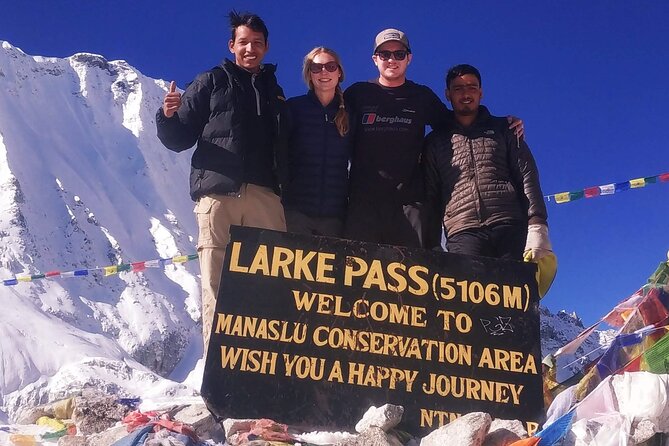
One thing to plan for: the big altitude moment is Larkya-La at 5160m, and weather can change fast in the high pass zone. If you’re expecting a smooth, predictable walk every day, this trek will politely remind you that the mountains are in charge.
In This Review
- Key things to know before you go
- Manaslu Circuit Trek in Plain Words: what you’ll actually experience
- Price and logistics: is $1,950 good value for the Manaslu Circuit?
- Day-by-day trek feel: from Kathmandu drive to Soti Khola
- Day 1: Kathmandu to Soti Khola via dusty roads and village views
- Day 2: Budhi Gandaki basin steps, waterfalls, and suspension bridges
- Day 3: cliff-side walking to Jagat and slate-paved streets
- Salleri to Namrung: forests, mani walls, and the climb toward Manaslu
- Day 4: Salleri views and the approach to Larkya-La country
- Day 5: Mani walls, fir forest birds, and arrival at Namrung
- Day 6: Lihi and Lho viewpoints, gompa country, and Shyala’s packed village feel
- A quick culture note
- Sama Gaon rest day: acclimatize, explore, and reset your legs
- Day 7: stay in Sama Gaon for real recovery
- Higher-altitude walking: Birendra Tal, Samdo, and the Larke Glacier zone
- Day 8: Birendra Tal and yak pasture quiet
- Day 9: from Samdo down to Dharamsala (Larke Phedi)
- Day 10: the long climb to Larkya-La and the glacier lakes
- Bimthang to Dharapani: forest walking and a jeep out
- Day 11: prayer-flag viewpoints and fir-forest calm
- Day 12: off-road jeep to Beshisahar
- Day 13: return to Kathmandu and a 5-star hotel night
- Guide quality, staff support, and why it matters on Manaslu
- Where you might feel friction (and how to prepare)
- Who should book this Manaslu Circuit trek
- Should you book the Manaslu Circuit trek with Base Camp Adventure?
- FAQ
- Where does the Manaslu Circuit trek start in Kathmandu?
- How long is the Manaslu Circuit trek?
- Are pickup and transfers included?
- What kind of accommodation do you get on the trek?
- Is a guide and porter included?
- What gear is provided as part of the tour?
- Does the tour include medical or health monitoring?
- What is the highest point on the itinerary?
- What’s included in terms of cancellation flexibility?
Key things to know before you go
- Licensed English-speaking guide plus porter support (1 porter for 2 trekkers)
- Down jacket, sleeping bag, and duffel bag provided so you travel lighter
- Oxymeter checks for pulse and oxygen saturation (and heart rate)
- Rest and acclimatization in Sama Gaon with options like Birendra Tal and Manaslu Base Camp area
- Crossings and cultures in every direction, from suspension bridges to mani walls and gompas
- Kathmandu logistics built in, including pickup in Kathmandu and a 5-star hotel night on return
More trails out of Kathmandu, boots ready
- Everest Base Camp Trek – 14 Days★ 5.0 · 1,499 reviews
- Everest Base Camp Trek★ 5.0 · 842 reviews
- Everest Base Camp Trekking★ 5.0 · 485 reviews
- Nagarkot Sunrise View and Day Hiking from Kathmandu★ 5.0 · 471 reviews
Manaslu Circuit Trek in Plain Words: what you’ll actually experience
The Manaslu Circuit Trek is a proper Himalayan circuit in Nepal’s northwest orbit, linked to the Great Himalaya Trail idea. Most days feel like a mix of river-walking, steep-but-doable climbs, and village-to-village rhythm. You’ll move through the Budhi Gandaki basin, then work your way toward the high Larkya-La pass before dropping into a quieter, forest-heavy side of the circuit.
What makes this trek special is how the culture changes as your altitude rises. Early on, you’re in everyday Nepali village life: houses, markets, lodge stays, and farming country. Higher up, you start seeing the Tibetan Buddhist influence clearly—gompas on hills, prayer-flags atmosphere, and mani walls with carvings that make you slow down without asking.
This is also a trek that rewards good pacing. The itinerary is paced with a true acclimatization stop in Sama Gaon, and it includes a long pass day where you’ll want steady legs, not a hero sprint. Done right, it feels intense but not chaotic.
Price and logistics: is $1,950 good value for the Manaslu Circuit?
At $1,950 per person, the price is not low. But the value picture is better than it first looks, because several costs that travelers often handle separately are included here.
You get:
- Best available guest houses on the trek, mainly twin sharing
- A local government licensed English-speaking trekking guide
- Porters (1 porter per 2 trekkers) to carry your luggage
- Trekking permits and entry fees
- Gear support: down jacket, sleeping bag, duffel bag
- An oxymeter to check pulse and oxygen saturation and heart rate
- First aid medical kits
- A route map
- Surface transfer to and from Kathmandu (including pickup offered)
On top of that, the trek ends with a transfer to a 5-star hotel in Kathmandu for your overnight stay. That matters because it’s not just a flight of fantasy—you’re tired, you’ve earned real comfort, and this avoids the usual scramble to find a decent hotel after a high pass.
If you’re the type who wants to travel lighter (and not spend time hunting for rentals), the included down jacket and sleeping bag are a real win. If you already own everything, you might feel the price less dramatically, but you’ll still benefit from the guide, permits, and staffing.
One practical note: the itinerary uses a mix of driving and on-foot travel, including off-road jeep time near the end. So you’re paying not just for hiking days, but for the whole route logistics.
Day-by-day trek feel: from Kathmandu drive to Soti Khola
Day 1: Kathmandu to Soti Khola via dusty roads and village views
Your trek starts with an early drive from Kathmandu to Soti Khola. The road is described as dirty and difficult to walk on, but the upside is the window views: rice fields, waterfalls, greenery, and village life rolling past. You’ll also have a chance to see Arkhet bazaar, an older market, and walk toward Arkhet Khola, which is the standout here.
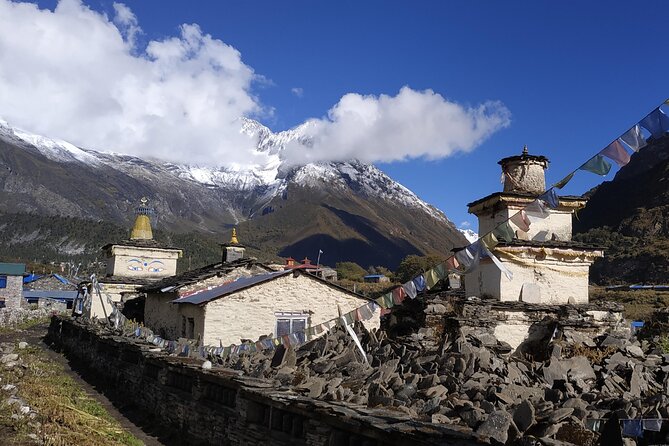
The trail continues with at least one lodge and local houses with slate roofs. When you reach Soti Khola, you’re staying in a small village where the day’s countryside scenery is the main reward. It’s a good mental warm-up: no need to go fast yet, just get your legs used to the rhythm.
Possible consideration: that first day is partly road travel, and road conditions can make you feel more tired than expected.
Day 2: Budhi Gandaki basin steps, waterfalls, and suspension bridges
Day 2 pushes into the rough part of the Budhi Gandaki basin. You’ll work along a bumpy, rocky trail and cross several waterfalls. The names you pass—Liding (camping site) and Lapubesi (village on lush hills)—set the tone: this circuit lives in small stops, not big hotel towns.
The tough part is the repeated up-and-down terrain on slippery rocks. You’ll also do the kind of thrilling suspension bridge crossing that makes your brain do a quick math check on footing, balance, and wind.
You end in Machha Khola, with accommodation options and even a medical clinic if needed. That’s good to know for peace of mind.
Day 3: cliff-side walking to Jagat and slate-paved streets
Day 3 runs along narrow trails between Budhi Gandaki and cliff areas. After an hour of walking, you reach Dobhan, then Shyaule Bhatti, and finally Yaru, where the river drops quickly in cascades. This is one of those days where the river shapes your mood—fast water makes everything feel energetic.
Then you continue for 2–3 hours to Jagat, known for its slate-paved streets. Lodges and a campsite lower in the village give you flexible sleeping options. Jagat’s local economy shows up through tourism, agriculture, education, and government services—so you get a sense of how people survive here, not just how they host hikers.
Salleri to Namrung: forests, mani walls, and the climb toward Manaslu
Day 4: Salleri views and the approach to Larkya-La country
You start by walking up the riverbed, then climbing over a rocky point to reach Salleri. This is the day you pick up stronger mountain views, including Shringi Himal (7187m). After that, you follow the left bank of the Budhi Gandaki River and ascend toward Philim.
From Philim you cross north on an obvious track indicated to Larkya-La (5160m) through thick forest, climbing toward Ekle Bhatti. Then you cross high above a gorge with pine trees before continuing the gradual climb to Deng.
This is a classic “gain altitude without feeling like you’re sprinting” day. You’ll likely feel tired by the end, but the route keeps you moving with scenery and changing vegetation.
Day 5: Mani walls, fir forest birds, and arrival at Namrung
Day 5 begins with a suspension bridge crossing of Budhi Gandaki, then you climb to Rana and Bihi. Expect more in-and-out gorges and crossing Serang Khola before a sharper climb into Ghap.
This is where you get Mani walls with intricate Buddha carvings in meditation. Take that moment. It’s easy to walk past when you’re focused on breath, but this is part of why the circuit feels meaningful.
After that you enter a fir forest with birds, cross north on a narrow canyon wooden bridge, and arrive at Namrung. Namrung feels like a “settle in and look around” place after the previous gorge work.
Day 6: Lihi and Lho viewpoints, gompa country, and Shyala’s packed village feel
From Namrung, you pass Bhanzam with barley fields and stone houses. Then you enter Lihi, where you can experience a 360-degree view that includes Manaslu (8163m)—a clean moment for photos and for checking your mental map of what you’re walking toward.
You cross Hinang Khola to reach Lho, dominated by a gompa on a hill above the village. The viewpoint from the top is described as undisturbed, which means you get less “busy trail” and more “real mountain space.” From Lho you climb through compressed forest toward Shyala, a place with stone and wood houses packed closely together.
You then continue through slopes draining Punggen Glacier territory and head onward along the circuit route. Even with less detail after Shyala in the available notes, the pattern is clear: your days keep shifting between village clusters and glacier-influenced terrain.
A quick culture note
The swing from river valley practical life to spiritual architecture is not subtle. Once you’re around gompas and mani walls, the trek becomes a two-track experience: one track is physical, the other is cultural, and they run together.
Sama Gaon rest day: acclimatize, explore, and reset your legs
Day 7: stay in Sama Gaon for real recovery
Day 7 is a rest day in Sama Gaon, and it’s there for a reason. You don’t just lounge—you explore around the village and give your body time to adjust.
You can visit places such as:
- Birendra Tal
- Manaslu Base Camp area
- PemaChyoling Lhakang
- Punggen Gompa
This kind of day pays off later when the route turns higher and the Larkya-La push takes over the schedule. It also prevents the common mistake of trying to “win” the trek by moving every single day, even when your breathing says otherwise.
Higher-altitude walking: Birendra Tal, Samdo, and the Larke Glacier zone
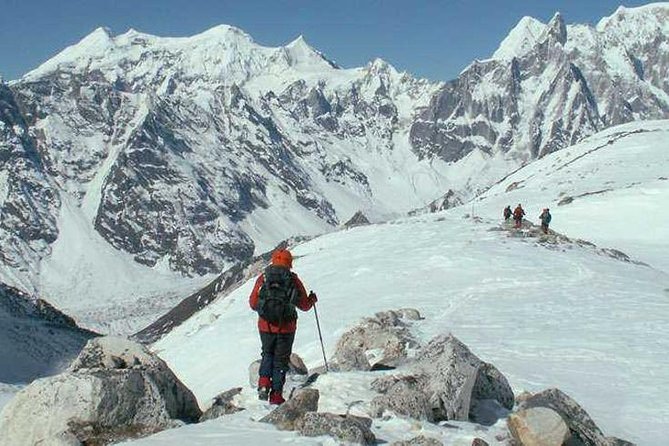
Day 8: Birendra Tal and yak pasture quiet
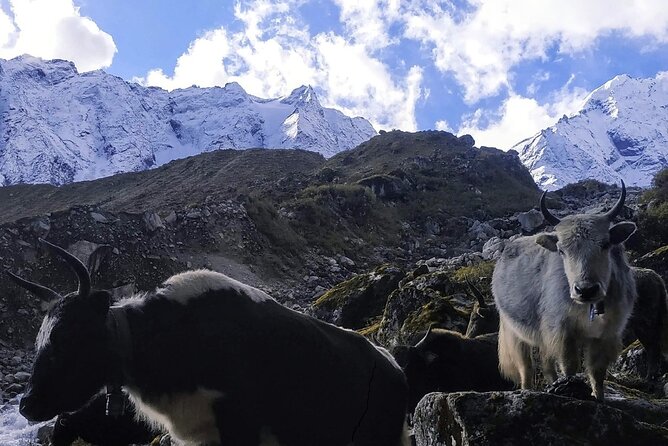
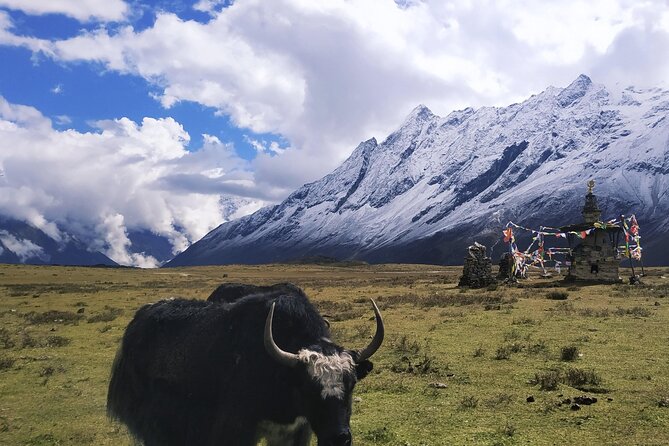
Today you walk uphill via Birendra Tal (3450m), described as frozen under the Manaslu Glacier. Then you get an easier walking segment through yak pastures, with long mani walls and marmots popping up around you.
You climb to a ridge and drop to cross Budhi Gandaki on a wooden bridge. Then you reach white Chorten, and near it is Samdo, a village dedicated to yak herding. Samdo’s feel is animal-and-hay shelter focused, with more space for livestock than for humans. That gives you a different kind of Himalayan “living” view than the earlier market towns.
Day 9: from Samdo down to Dharamsala (Larke Phedi)
Day 9 starts with a descent past Samdo on a wide trail, and the Budhi Gandaki River is described as much-reduced. You pass the trail to Tibet to the right, then climb left past a mani wall through juniper with marmots.
You cross two gorges on thin tracks to reach Dharamsala, also called Larke Phedi. Dharamsala is described as a stone hut with three rooms and an almost integral roof. From here, the views are wonderful because you can see the wider Manaslu Himal Range from this vantage.
This is the night before the pass. Treat it like the staging day it is: early sleep helps if you can manage it.
Day 10: the long climb to Larkya-La and the glacier lakes
Day 10 is the big one: you climb gradually over the edge behind Dharamsala, next to the large adjacent moraine of the Larke Glacier. The climb is long and rocky.
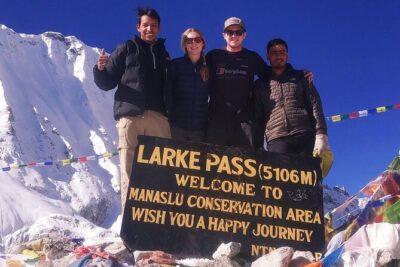
Then you descend past four frozen lakes and make a final climb up to Larkya La (5160m), marked by prayer flags. From the top you get an astonishing panorama of the Manaslu Himal Range and the Annapurna Range.
After the pass, you incline down the moraine to the west, then drop gently toward Bimthang for the night. This is where you’ll feel the most contrast: high, exposed pass air up top, then slower terrain relief as you descend.
Bimthang to Dharapani: forest walking and a jeep out
Day 11: prayer-flag viewpoints and fir-forest calm
South of Bimthang, the trek is described as mesmerizing with lush vegetation. The trail crosses the foot of Bimthang Glacier, and you’ll see an area decorated with prayer flags where mountains surround you, with Manaslu Himal Range in view to the southeast.
Then the route goes into an enchanted forest rich with firs. Eventually you reach a lonely house in Yak Kharka for lunch, and then you continue through deep forest toward Goa. The night is in Dharapani.
This day can feel like the circuit’s palate cleanser. After high ground and glacier-adjacent walking, the forest gives you shade and a calmer rhythm.
Day 12: off-road jeep to Beshisahar
Day 12 is where you stop being a pure foot trekker. You take an off-road jeep for about four hours to Beshisahar.
The drive isn’t mentioned as a comfort-boost, but it is practical. You gradually descend toward Syange village, then the route ascends to Gharmu Phant, and finally you descend to Beshisahar. You’re basically converting the hardest elevation into transport time.
Day 13: return to Kathmandu and a 5-star hotel night
On Day 13, you drive back to Kathmandu from Besisahar. The scenery shifts to lush hills and wide river networks. After you arrive, you’re transferred to a 5-star hotel for your overnight stay.
That matters because after a circuit, the best “finish line” isn’t just reaching Kathmandu. It’s sleeping well without a worry list.
Guide quality, staff support, and why it matters on Manaslu
In the trekking world, guide quality is the difference between a good trip and a memorable one. This tour is built around a licensed English-speaking trekking guide, and names that come up strongly in feedback include Prakash and Shiva, plus the wider Base Camp team led by Shree.
That shows up in two big ways:
- They keep the trek feeling organized even when conditions get tough. One set of notes specifically highlights smooth handling even during challenging circumstances.
- The guidance is described as professional and supportive, including getting people onto paths that still feel authentic and heritage-focused.
There’s also a real-sounding benefit in the gear and safety package: the oxymeter checks pulse and oxygen saturation and heart rate. You still need to hike sensibly and tell your guide if you feel off, but it’s comforting to have a tool on hand.
If you’re someone who wants a “can ask anything” guide rather than a silent group leader, this setup is designed for that.
Where you might feel friction (and how to prepare)
Manaslu is not a casual stroll. A few realities you should plan for:
- The circuit includes rocky sections, slippery rocks, gorge crossings, and long climbs (especially Day 10).
- The pass day is high, long, and weather-dependent. The experience notes that weather can impact operations.
- Guest house conditions are described as basic in some villages (which is normal for a circuit like this, not a dealbreaker).
Best prep moves:
- Train your legs before you arrive and practice hiking with a daypack.
- Pack smart for cold: the tour provides a down jacket and sleeping bag, which helps a lot.
- Keep a flexible mindset. When you’re in the Larkya-La zone, timing and conditions matter more than your plan.
If you like certainty and fixed routines, you may find the mountain environment mentally demanding.
Who should book this Manaslu Circuit trek
This tour is a strong fit if you:
- Want a classic circuit that blends culture and trekking, not just views from a single ridge line
- Prefer having a licensed guide and porter support so you spend more energy walking and less energy logistics
- Like the idea of a rest/acclimatization day in Sama Gaon
- Want help with gear needs via provided sleeping bag, down jacket, and duffel
You might think twice if you:
- Have limited tolerance for high-altitude days and weather variability near the pass
- Need very cushy accommodations every night (guest houses are the norm, and some are basic)
- Are sensitive to long days with rocky terrain
Service animals are allowed, and the trip asks for a moderate physical fitness level, so it’s not pitched as ultra-beginner friendly.
Should you book the Manaslu Circuit trek with Base Camp Adventure?
I’d book it if your priority is a real Manaslu experience with human support baked in: a licensed English-speaking guide, a porter plan, oxygen monitoring tools, and gear that reduces the hassle of arriving with the wrong stuff. The itinerary also makes smart choices about acclimatization and uses the jeep portion to avoid dragging the end of the trek out longer than necessary.
I wouldn’t book it if you want a fully predictable, low-effort trek. The route is physically serious, and the Larkya-La day means you’re signing up for high, weather-sensitive hiking.
One more deciding factor: the tour includes a 5-star hotel night in Kathmandu after you return. That’s a nice payoff for the hard miles and a practical way to reset your body before normal life.
If you want mountains, culture changes, and a guided circuit that’s set up to run smoothly, this is a strong match for the Manaslu Circuit Trek.
FAQ
Where does the Manaslu Circuit trek start in Kathmandu?
The start time is 6:00am, with the ticket redemption point at Tridevi Sadak, Kathmandu 44600, Nepal.
How long is the Manaslu Circuit trek?
It’s scheduled for 13 days approximately.
Are pickup and transfers included?
Pickup is offered, and surface transfers from and to Kathmandu are included.
What kind of accommodation do you get on the trek?
Accommodation is in best available guest houses during the trek, mainly in twin sharing.
Is a guide and porter included?
Yes. A local government licensed English-speaking trekking guide is included, and a porter carries your luggage with a ratio of 1 porter for 2 trekkers.
What gear is provided as part of the tour?
Down jacket, sleeping bag, and a duffel bag are included.
Does the tour include medical or health monitoring?
An oxymeter is included to check pulse and oxygen saturation and heart rate, along with first aid medical kits.
What is the highest point on the itinerary?
The itinerary includes reaching Larkya-La (5160m).
What’s included in terms of cancellation flexibility?
Free cancellation is offered up to 24 hours in advance of the experience start time for a full refund. If the trek is canceled due to poor weather, you’ll be offered a different date or a full refund.
More Trekking Out of Kathmandu
More Tour Reviews in Kathmandu
Just Reviewed in Kathmandu
- Mountain Bike Tour
★ 5.0 · 3 reviews - Annapurna Panaroma
★ 5.0 · 3 reviews - Mount Everest Scenic Flight 50 Minutes
★ 5.0 · 3 reviews - Kathmandu : Swambhunath & Durbar Square Guided Half Day Tour
★ 3.3 · 3 reviews - Chandragiri Cable Car & Monkey Temple Tour – Private/Group
★ 5.0 · 3 reviews - Kathmandu: Shivapuri National Park Hiking Day Trip
★ 3.3 · 3 reviews
Manaslu Circuit Treks, compared.
 ★ 5.0Manaslu Circuit TrekFrom $1,190292 reviews
Manaslu Circuit TrekFrom $1,081184 reviews
★ 5.0Manaslu Circuit Trek:From $1,099106 reviews
★ 5.0Manaslu Circuit TrekFrom $1,190292 reviews
Manaslu Circuit TrekFrom $1,081184 reviews
★ 5.0Manaslu Circuit Trek:From $1,099106 reviews
 ★ 5.0Manaslu Circuit Trek (15 Days)From $1,65750 reviews
Manaslu Circuit TrekkingFrom $1,49944 reviews
★ 5.0Manaslu Circuit Trek (15 Days)From $1,65750 reviews
Manaslu Circuit TrekkingFrom $1,49944 reviews
 ★ 5.016 Day Private Manaslu Circuit Trek from KathmanduFrom $1,13542 reviews
★ 5.0Manaslu Circuit TrekFrom $1,90035 reviews
★ 5.016 Day Private Manaslu Circuit Trek from KathmanduFrom $1,13542 reviews
★ 5.0Manaslu Circuit TrekFrom $1,90035 reviews
 ★ 5.0Manaslu Circuit Trek 13 DaysFrom $1,40030 reviews
Browse the lists this tour appears in