
Review · MANASLU CIRCUIT TREKS
Manaslu Circuit Trekking – 17 Days
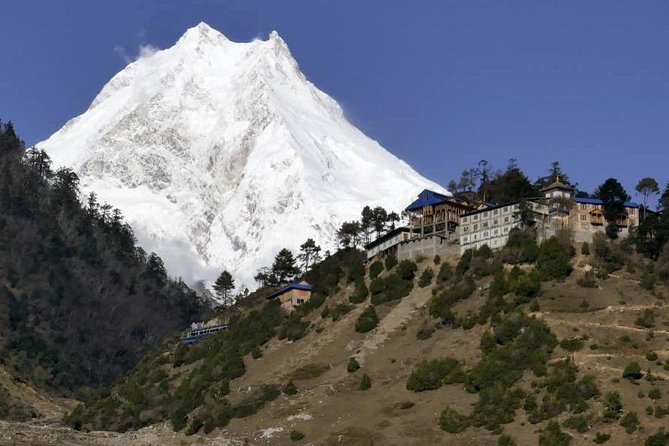
Larke La at 5,213 meters stops you cold. That high-stakes pass sits inside a trekking route with big-name peaks all around—Himal Chuli, Manaslu, Cheo Himal, and Himlung Himal—and the trail swings from alpine cold to warmer, greener valleys. I like how this trek balances grind with payoff.
What I really liked: a licensed Sherpa guide team and major scenery variety across altitudes.
One consideration: the pass day can mean snow and long hours, so you need strong fitness and you should expect weather to play a role.
In This Review
- Quick hits before you go
- Why this Manaslu Circuit trek feels serious—in a good way
- Kathmandu setup: 2 days that can save your trek
- The long road-in: Soti Khola via Arughat
- Trek rhythm: Machha Khola to Jagat to Deng
- Namrung and Lho: where the trail starts feeling high
- Sama Gaon: the acclimatization day that pays off later
- Samdo and Larkya Phedi: staging for the pass
- Larke La crossing on snow: 10–12 hours of focus
- Descent days: Bhimphedi to Gho to Tal
- The road back to Kathmandu: Besisahar and a long transfer
- Price and value: what $1,600 really covers
- Team care and support: what I’d look for in your Sherpa crew
- Who should book this trek—and who should think twice
- Should you book this Manaslu Circuit Trek?
- FAQ
- Is this trek private?
- What’s included during the trek?
- Do I need to arrange permits?
- How do you get from Kathmandu to the trail?
- Do I get a rest day for altitude?
- What if the trek is canceled due to weather or if I cancel?
Quick hits before you go
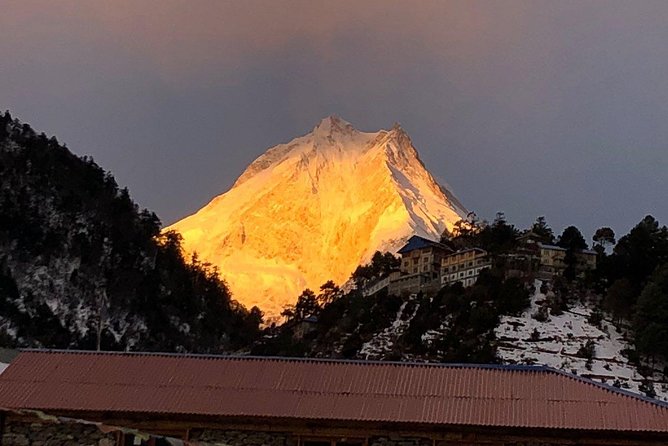
- Larke La crossing at about 5,215m on snow: the day that sets the whole tone
- A real acclimatization day in Sama Gaon (3,541m) before higher trekking
- Lodge-based trek with full meal plan (breakfast, lunch, dinner) for 13 nights
- Sherpa support with porters: one porter for every two trekkers, plus an assistant if your group is bigger than 4
- Kathmandu to trail by road (local bus by default, optional jeep upgrade)
- Energy snacks included (Snickers, Mars, Bounty) to keep morale and calories up
More trails out of Kathmandu, boots ready
- Everest Base Camp Trek – 14 Days★ 5.0 · 1,499 reviews
- Everest Base Camp Trek★ 5.0 · 842 reviews
- Everest Base Camp Trekking★ 5.0 · 485 reviews
- Nagarkot Sunrise View and Day Hiking from Kathmandu★ 5.0 · 471 reviews
Why this Manaslu Circuit trek feels serious—in a good way
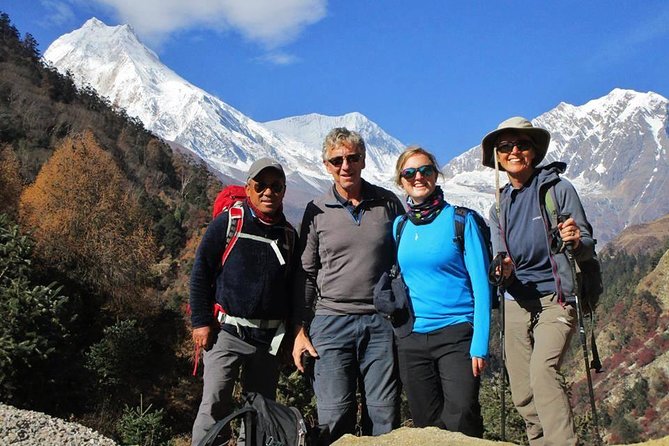
The Manaslu Circuit is not just a scenic walk. It’s a physical, altitude-aware trek where one or two days can make or break your experience. The itinerary is built around that reality, with gradual climbing up through the high villages, then an acclimatization pause at Sama Gaon, and only then a go-ahead for the pass at Larke La.
I also like that the route gives you a full “Nepal altitude story,” not just mountains for days. You’ll be up in alpine terrain with big cold-air views, then you drop down into tropical zones with ferns, bamboo, and waterfalls. Along the way, you get those descriptions of blue-green lakes edged by white shoreline-like stretches—exactly the kind of visual contrast that makes you stop walking and just look for a while.
The scenery is often described like a wall of peaks, and this trek’s timing supports it. As you head toward higher country and spend time around the main high points (Sama Gaon, Samdo, Larkya Phedi), the skyline keeps changing as angles shift, so it doesn’t feel repetitive. You’re not only going higher—you’re turning the corner on what kind of world Nepal is showing you that day.
Kathmandu setup: 2 days that can save your trek
Your trip starts in Thamel, Kathmandu, with pickup offered. Kathmandu can feel like a jolt after travel, so having a dedicated start is practical. You land at around 1,300m (4,265ft) on Day 1, then you get a preparation day on Day 2.
That buffer matters. Even if you feel fine, altitude later will feel different. A preparation day lets you do the boring stuff (final gear checks, permits handling, rest) so Day 3 doesn’t turn into a stressful scramble.
This tour includes accommodation in Kathmandu for 3 nights on bed and breakfast, with a chance to settle in before the road trip and trek begin. For most people, that’s the difference between arriving tired and arriving ready.
The long road-in: Soti Khola via Arughat
Day 3 is a drive from Kathmandu to Soti Khola via Arughat, about 8–9 hours and 145 km. This is a real transfer day. You’re not “warming up” with a short walk. You’re arriving at the start of trekking after time in a vehicle.
Why it’s worth mentioning: you should hydrate early and plan on being stiff. Sitting that long can make you feel oddly heavy on the first trek day. It’s also why the trekking “start” feels like a fresh ramp rather than a gentle progression.
The standard ground transfer is by local bus, with an optional upgrade to a private jeep for $210 total for the group. If you’re traveling with people who get carsick or hate waiting on schedules, the upgrade is one of the few spending choices that actually buys comfort immediately.
Trek rhythm: Machha Khola to Jagat to Deng
From Soti Khola, the walking begins.
- Day 4: Soti Khola to Machha Khola (about 900m, around 6 hours, 15 km)
- Day 5: Machha Khola to Jagat (about 1,340m, 6–7 hours, 22 km)
- Day 6: Jagat to Deng (about 1,860m, 6–7 hours, 20 km)
This early stretch is where you learn the trek’s rhythm: steady effort, regular snack breaks, and letting your breathing become the metronome. It also gives you a gradual altitude gain without demanding full exertion at extreme heights.
Because this itinerary includes breakfast, lunch, and dinner at local lodges for 13 nights, your main job each day is hiking and recovering—not hunting for food. That “less logistics, more legs” approach is a big value play on a multi-day trek.
Also, these stages help you gauge your pack weight. If anything feels off (too much bulk, too many layers, insufficient warm gear), you’ll spot it here before you’re committed to higher elevations.




Namrung and Lho: where the trail starts feeling high
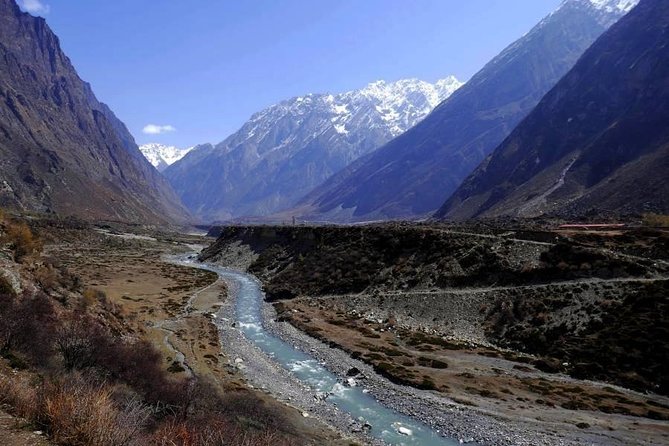
Days 7 and 8 bring a noticeable step up.
- Day 7: to Namrung (about 2,630m, 7–8 hours, 19.5 km)
- Day 8: to Lho (about 3,200m, 6–7 hours, 10 km)
Namrung is a turning point because you begin to feel the thin-air effects even if you’re not yet at the highest villages. The hiking can still feel “normal,” but everything takes a little more breath.
Then Lho is where you’re clearly in the high-trek zone. Day 8 is shorter than Day 7 in distance, but not necessarily easier in effort. At higher elevations, shorter can still mean heavy.
One thing I appreciate about this route design is that you don’t rush straight to 4,000m. You build toward it, and you do it while still eating real meals in lodges.
Sama Gaon: the acclimatization day that pays off later
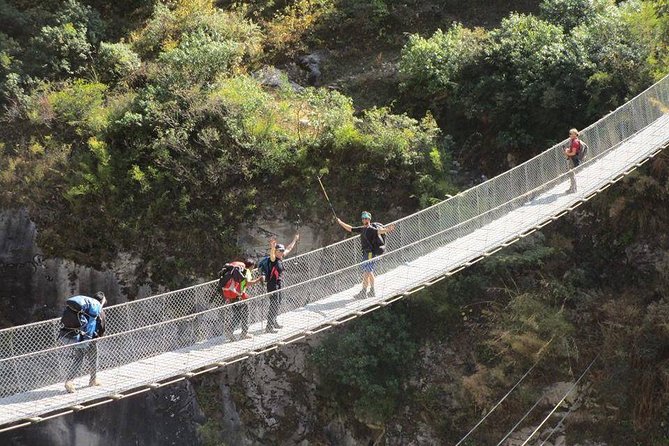
Day 9: to Sama Gaon at about 3,541m (about 5–6 hours, 8.5 km).
Day 10: an acclimatization day at Sama Gaon.
An acclimatization day is not wasted time. It’s time bought for safer, calmer climbing later. It also helps you adapt to lodge life at elevation—cooler nights, heavier air, and the need to move slowly.
Even if you feel good on arrival, this kind of scheduled pause reduces the chance that you’ll pay for “feeling fine” with symptoms on the pass push. It’s also mentally helpful: you’re not just marching upward; you’re giving your body a chance to settle.
If you take one lesson from this itinerary, it’s this: follow the plan. Don’t try to shortcut altitude. Nepal is gorgeous, but it’s also honest.
Samdo and Larkya Phedi: staging for the pass
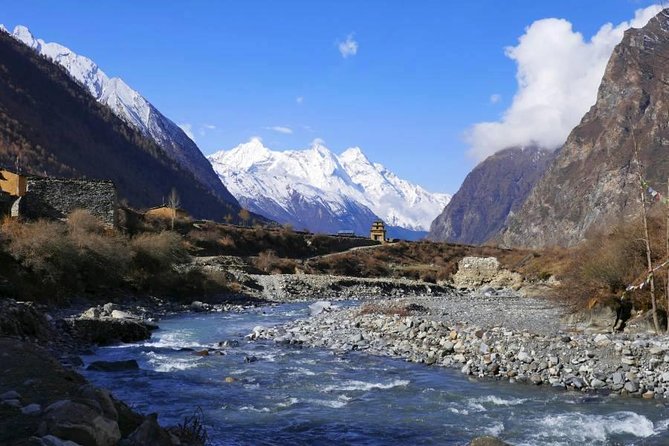
After Sama Gaon, the trek moves toward the high crossing area.
- Day 11: to Samdo (about 3,872m, 4–5 hours, 7.5 km)
- Day 12: to Larkya Phedi (about 4,500m, 4–5 hours, 7 km)
Samdo is a big “you’re really here” moment. The air feels different, and the scenery gets more stark. Larkya Phedi is even more direct staging: you’re essentially preparing for Larke La.
This is also where sleep can get tricky. At 4,500m, you might notice your body acting a bit unfamiliar. If you’re using trekking poles, this is the time to use them properly. If you’re carrying layers for cold wind, this is the time to make sure they’re accessible.
The itinerary includes a first aid medicine kit and an experienced Sherpa guide (government licensed). That’s important on a pass day where conditions can shift quickly.
Larke La crossing on snow: 10–12 hours of focus
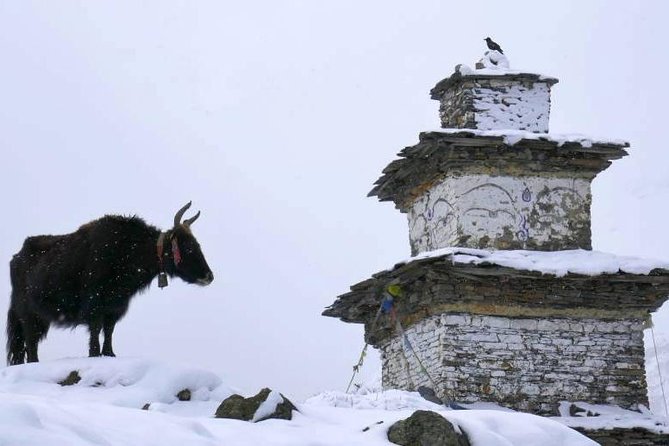
Day 13 is the signature test.
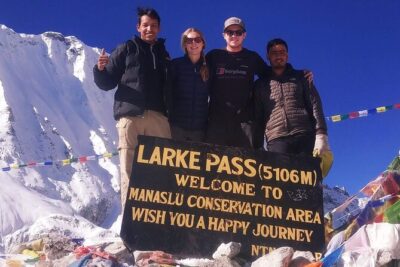
You’ll cross Larkya La at about 5,215m (5,213m is also referenced in the route description), then descend to Bhimphedi around 3,590m. Expect 10–12 hours and about 24 km total walking.
This is the day that turns the trip into a story you’ll remember clearly. It’s also where conditions matter most. The route notes specifically that crossing happens on snow, which means traction, pace discipline, and clothing strategy are not optional.
What I’d tell you to do on the morning start: keep the first hour controlled. Don’t sprint because you feel motivated. At altitude, motivation can make you careless. Your best strategy is slow and steady from the first steps.
Your guide’s job here is critical. A strong team can manage pacing, spacing, and weather judgments—things you can’t “wing.” The tour is positioned as a private trek (only your group), and it also includes Sherpa staffing, including a guide-assistant when groups are larger than 4, so there’s support capacity depending on your group size.
If you’re the kind of person who gets anxious about long days, this is where you’ll be glad the itinerary has clear milestones and an experienced team guiding the timing.
Descent days: Bhimphedi to Gho to Tal
After the pass, Day 14 and 15 help you transition out of the high altitude stress.
- Day 14: to Gho (about 2,515m, 6–7 hours, 22 km)
- Day 15: to Tal (about 1,700m, 5–6 hours, 15 km)
The descent is not “easy,” but it’s a different kind of work. Your legs get the message after big elevation changes, and your knees can feel it even if you’re physically strong.
This section is also where the trekking vibe shifts emotionally. Once you clear the hard altitude milestone, you can start appreciating the ecosystem changes again—going from alpine harshness toward warmer valleys. The route description points to ferns, bamboo, waterfalls, and vivid green as you descend into more tropical zones, and you feel that change in how the trail looks and the way the air sits on your skin.
One practical note: after a pass day, your appetite might return in full. That’s a good sign. You’ll likely be relieved to know that lodge meals are included during the trek portion, so recovery doesn’t depend on hunting down your next lunch.
The road back to Kathmandu: Besisahar and a long transfer
Day 16: drive back to Kathmandu via Besisahar, about 8–9 hours and 220 km. That’s a long day after a long trek.
This is where the optional transport upgrade can be worth thinking about. The tour lists a possible jeep and car upgrade for $280 total for the group, versus local buses. If you want the day to feel like a controlled finish instead of another endurance test, consider it.
Day 17 is departure, and the itinerary indicates it ends back at the Thamel meeting point.
Price and value: what $1,600 really covers
At $1,600 per person for 17 days, you’re paying for a lot more than “a guide and some trails.”
Here’s what’s included that directly reduces your risk and stress:
- 13 nights in local lodges with breakfast, lunch, and dinner during the trek
- English-speaking experienced Sherpa guide (government trained/license holder)
- Porters: one porter for 2 trekkers
- Trek staff costs, including salary, insurance, equipment, food, and accommodation
- Energy supplies (Snickers, Mars, Bounty) during the trek
- Permits: TIMS, special permit fee, and required official documentation
- First aid medicine kit
- Kathmandu accommodation for 3 nights on bed and breakfast
- Ground transfers: Kathmandu to Soti Khola and Tal back to Kathmandu by local bus (with upgrade options)
What’s not included:
- Personal travel insurance
- Nepal entry visa fee
- Meals in cities (budget about $10–14 per meal in tourist restaurants)
- Beverages (including bottled/mineral water and beer)
- Tips for guide/porters/driver (customary)
So is it good value? For me, yes—because the biggest “hidden costs” on treks are meals, permits, staffing, and the human coordination that helps you handle altitude and schedule. By bundling those elements, the tour makes it more likely you’ll stick to the plan instead of making do when something is missing.
The only place you might feel the cost pinch is if you hate cold or want extra comfort spending (more showers, more hot drinks, and paying for upgrades). But those are optional.
Team care and support: what I’d look for in your Sherpa crew
The operator is set up for a private experience, with staffing adjusted to group size. That matters because on a pass day, you want enough hands for pacing, support, and quick decisions.
In feedback connected to this company, names like Ngima and Jangu/Jangbu stand out for smooth organization and attentive care, including when someone fell ill. I can’t promise the same people are on your dates, but I can tell you what to listen for when you meet your team: how they explain the day-by-day plan, how they handle sickness, and how they manage pace on the ascent.
That’s the real value of the Sherpa-led structure. It’s not just “someone walks with you.” It’s trained guidance paired with practical logistics.
Who should book this trek—and who should think twice
This is best for you if:
- You’re in strong physical shape and comfortable with multi-hour hikes most days
- You want the big pass experience and the altitude progression built into the itinerary
- You like lodges and fully planned meals, instead of going fully independent
- You care about seeing the “whole Nepal altitude story,” from high views to lower, greener valleys
You might think twice if:
- Long days like 10–12 hours on the pass sound scary rather than motivating
- You’re sensitive to cold and are not able to pack warm layers
- Weather variability worries you. This experience requires good weather, and conditions around snow passes can change plans.
Should you book this Manaslu Circuit Trek?
If your goal is a serious Nepal trekking experience with a clear plan for altitude and real support, I’d say this is worth booking. The combination of a scheduled acclimatization day, a structured high-staging climb, and the included meal plan plus permits keeps the trip focused on what you came for: walking through changing Nepal and earning those mountain views.
If you’re torn, here’s your tie-breaker: be honest about how you handle long, high-effort days. If you can show up for Larke La with patience and steady pace, the rest of the trek tends to feel like a reward. If you can’t, you’ll probably spend the hardest day anxious instead of present.
FAQ
Is this trek private?
Yes. It’s listed as a private tour/activity, meaning only your group participates.
What’s included during the trek?
Local lodge accommodation for 13 nights is included, with breakfast, lunch, and dinner. The trek also includes an English-speaking Sherpa guide, porter support (one porter for every two trekkers), permits (TIMS and required official documentation), a first aid medicine kit, and trek energy supplies.
Do I need to arrange permits?
The tour includes the TIMS permit and special permit fee, plus required official documentation.
How do you get from Kathmandu to the trail?
Kathmandu to Soti Khola is by local bus by default (upgrade to private jeep is available for $210 total). The return from Tal to Kathmandu is also by local bus by default (upgrade options are listed for $280 total).
Do I get a rest day for altitude?
Yes. There is an acclimatization day at Sama Gaon (about 3,541m).
What if the trek is canceled due to weather or if I cancel?
The experience is non-refundable and cannot be changed for any reason. If it’s canceled due to poor weather, you’ll be offered a different date or a full refund.
More Trekking Out of Kathmandu






More Tour Reviews in Kathmandu




Just Reviewed in Kathmandu
- Mountain Bike Tour
★ 5.0 · 3 reviews - Annapurna Panaroma
★ 5.0 · 3 reviews - Mount Everest Scenic Flight 50 Minutes
★ 5.0 · 3 reviews - Kathmandu : Swambhunath & Durbar Square Guided Half Day Tour
★ 3.3 · 3 reviews - Chandragiri Cable Car & Monkey Temple Tour – Private/Group
★ 5.0 · 3 reviews - Kathmandu: Shivapuri National Park Hiking Day Trip
★ 3.3 · 3 reviews
Manaslu Circuit Treks, compared.
 ★ 5.0Manaslu Circuit TrekFrom $1,190292 reviews
Manaslu Circuit TrekFrom $1,081184 reviews
★ 5.0Manaslu Circuit Trek:From $1,099106 reviews
 ★ 5.0Manaslu Circuit Trek (15 Days)From $1,65750 reviews
Manaslu Circuit TrekkingFrom $1,49944 reviews
 ★ 5.016 Day Private Manaslu Circuit Trek from KathmanduFrom $1,13542 reviews
★ 5.0Manaslu Circuit TrekFrom $1,90035 reviews
 ★ 5.0Manaslu Circuit Trek 13 DaysFrom $1,40030 reviews
Browse the lists this tour appears in