
Review · MANASLU CIRCUIT TREKS
Manaslu Larke Pass Trekking
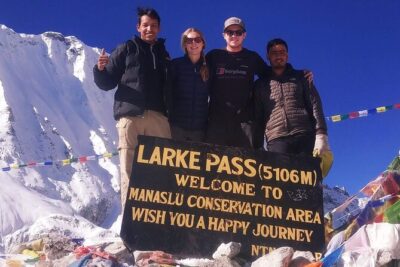
Crossing at 5,160 meters changes your perspective fast. Manaslu (also called Kutang) is the eighth-highest mountain on Earth, and this trek balances big views with village life across the Manaslu Conservation Area. I love how the route starts in low river valleys and steadily climbs into high pastures near Tibet, so the scenery and the culture both shift as you go.
The two things I like most are the support team and the real acclimatization rhythm. You travel with an experienced English-speaking guide and porters (one porter for every two clients), plus assistants—so the trek doesn’t turn into a logistics headache. And you’re given a dedicated slowdown day at Samagaun, with optional hikes up to Manaslu Base Camp and Birendra Lake.
One consideration: this is not a short walk-and-photo trip. You’ll handle long days and real altitude, including a full pass day over the Larke Pass. If your fitness is shaky or your pace is slow, you’ll feel it.
In This Review
- Key highlights you should care about
- Why Manaslu and the Larke Pass feel different
- Price and what you actually get for $1,150
- Day-by-day route: Kathmandu to Soti Khola (the slow climb starts)
- Entering the Manaslu Conservation Area: valley days to higher villages
- Samagaun and acclimatization: the day your future self will thank you
- Toward the pass: Samdo and Larkya Phedi (Dharamsala)
- The Larke Pass day (5,160 m): what to expect and how to plan
- Bimthang to Dharapani, then the return to Kathmandu
- Support team quality: guides, porters, and real English help
- Pacing and altitude: the part you shouldn’t ignore
- What’s included vs what you’ll still manage
- Who this Manaslu Larke Pass trek suits best
- Should you book this trek?
- FAQ
- FAQ
- How long is the Manaslu Larke Pass trekking itinerary?
- What’s the starting point and where does the trek end?
- What is included in the tour price?
- Are pickup and a private group included?
- Do I need permits and TIMS for this trek?
- What’s the highest point on the trek?
- Can I cancel and get a full refund?
Key highlights you should care about
- Manaslu Conservation Area route: from sub-tropical foothills up into Trans-Himalayan high pastures.
- Guided support with porters: one porter per two clients helps keep energy for walking.
- Acclimatization at Samagaun: optional hikes to higher spots before the big crossing.
- Larke Pass day (5,160 m): the main challenge and the main reward.
- Included trekking meals + Kathmandu breakfasts + dinners: fewer meals to plan and worry about.
- Private group setup: only your group participates.
More trails out of Kathmandu, boots ready
- Everest Base Camp Trek – 14 Days★ 5.0 · 1,499 reviews
- Everest Base Camp Trek★ 5.0 · 842 reviews
- Everest Base Camp Trekking★ 5.0 · 485 reviews
- Nagarkot Sunrise View and Day Hiking from Kathmandu★ 5.0 · 471 reviews
Why Manaslu and the Larke Pass feel different
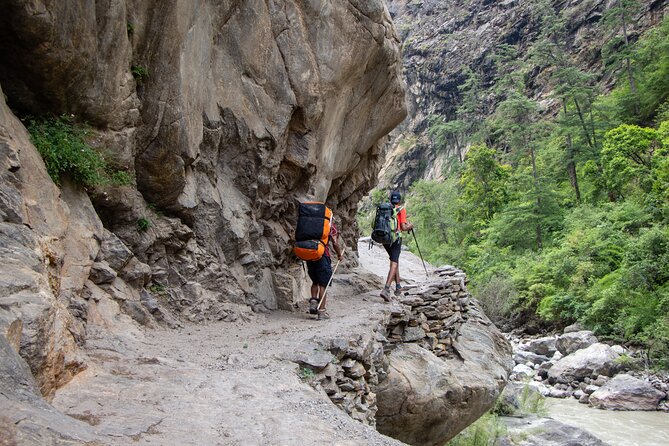
Manaslu sits in the Mansiri Himal, and trekkers know this region for two things: mountain views that get closer, and villages that don’t feel like a theme park. The trek runs through the Manaslu Conservation Area, which covers everything from lower Himalayan foothills to drier, high-altitude grazing zones. That altitude gradient matters. It’s why the air, the vegetation, and the feel of daily life change so noticeably along the trail.
Manaslu is also known as Kutang, and you’ll see that name pop up in local context as you move through the area. The eighth-highest peak (8,163 m) is the headline—but what makes this trek memorable is the way the mountains pull you forward day after day. When you’re in the higher sections, you stop thinking in kilometers and start thinking in breaths and steps.
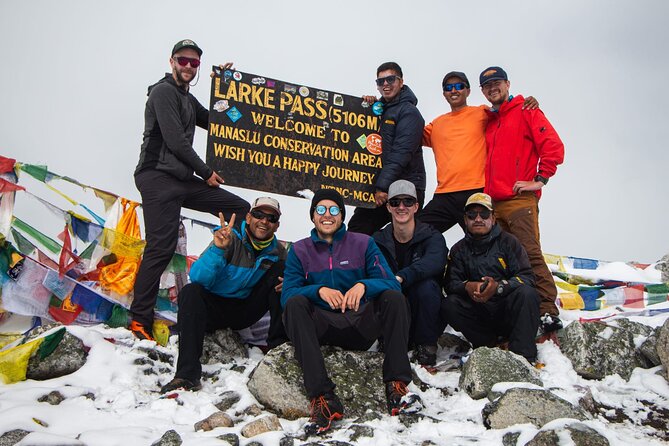
The Larke Pass crossing is the pivot point. Before the pass day, you’re building stamina and comfort with altitude. After the pass day, the route opens up again toward Dharapani and back toward civilization—except you won’t feel like you’re descending into normal life. You’ll feel like you’re returning from a very quiet, high place.
Price and what you actually get for $1,150
At $1,150 per person for around 16 days, this trek sits in the mid-to-upper range for Nepal trekking. What makes it feel like value is that several major costs are bundled in.
Here’s what’s included:
- Private vehicle transfers between key destinations on the itinerary
- Double-occupancy accommodation throughout
- Trekking permit + TIMS fees
- All meals during trekking, plus all breakfasts in Kathmandu
- One welcome dinner and one farewell dinner
- Experienced English-speaking guide
- Porters (one for every two clients) and assistants during the trek
What’s not included:
- International flights, travel insurance, and visitor visa fee
- Personal expenses
- Drinking water, plus snacks, hot showers, and WIFI during trekking
- Any extra costs from unforeseen circumstances
So the real question isn’t just whether it’s $1,150. It’s whether you’re paying to avoid headaches. You are—because permits, guide time, and the bulk of meals are handled. The trade-off is that you still need to manage your day-to-day hydration and personal comforts. Also, you’ll carry your own essentials even with porters supporting the loads.
If you want a trek where you can focus on altitude, pacing, and enjoying the villages, this package is built for that.
Day-by-day route: Kathmandu to Soti Khola (the slow climb starts)
Most trekking disasters start before the first real climb. This itinerary takes a gentler approach to setup.
Day 1: You arrive in Kathmandu (1,300 m). You get settled, and you’re near Thamel Marg in Kathmandu, a practical area for orientation.
Day 2: Kathmandu sightseeing and trek preparation. This matters more than people think. You’re getting your gear organized, your route expectations set, and your body prepared for travel fatigue.
Day 3: Transfer day. You drive from Kathmandu toward Soti Khola (around 800 m) for roughly 8–9 hours. That long road day can feel like an extra “hiking day,” especially if you’re not used to Nepal driving times. But it also prevents you from starting with an immediate big trek in the same day as travel.
Entering the Manaslu Conservation Area: valley days to higher villages
Days 4–7 move you from Soti Khola up through river valleys and rising settlements.
- Day 4: Soti Khola to Machha Khola (about 870 m), roughly 6–7 hours
- Day 5: Machha Khola to Jagat (about 1,340 m), roughly 6–7 hours
- Day 6: Jagat upward toward Deng (about 1,860 m), roughly 7–8 hours
- Day 7: Deng to Namrung (about 2,660 m), roughly 6–7 hours
What I like about this progression is that it teaches your legs the job. You’re not jumping from sea-level equivalent to pass height in a single leap. You’re learning rhythm: steady walking, frequent breaks, and getting comfortable with trail time that’s longer than your regular gym pace.
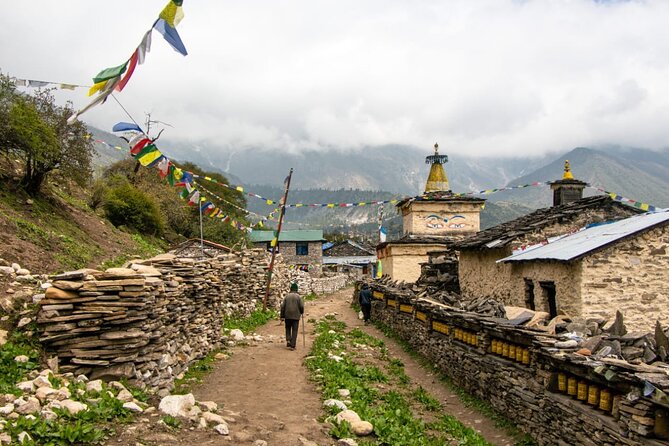
You’ll also start to notice the village-to-village feel. In this region, settlements aren’t cookie-cutter. You’re moving through hill communities with their own daily routines, and you’ll see how trekking life fits alongside local life—not replacing it.
Potential drawback here: because the trek is steady, you have to keep showing up the next day. If you go too hard early, later days won’t forgive you.




Samagaun and acclimatization: the day your future self will thank you
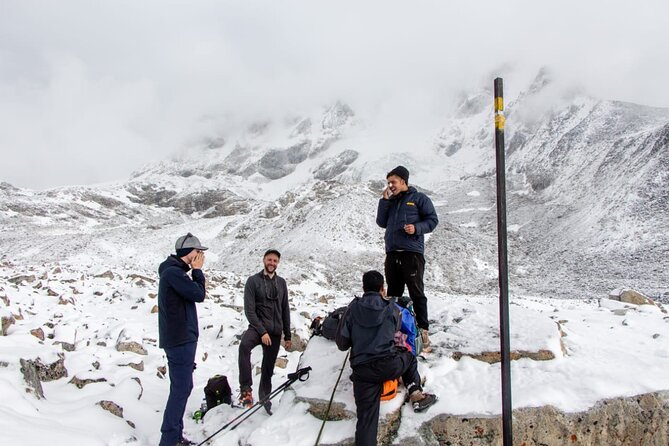
Day 8 and Day 9 raise you toward the higher zone:
- Day 8: Namrung to Lho Gham (about 3,180 m), around 3–4 hours
- Day 9: Lho Gham to Samagaun / Samagaon (about 3,530 m), around 3–4 hours
Then comes the best kind of day: a break that still helps. Day 10 is an acclimatization day at Samagaun. You can take an optional hike to Manaslu Base Camp (around 4,800 m) and Birendra Lake (around 4,450 m), then return in about 4–5 hours.
This is the moment where smart trekking decisions pay off. Even if you don’t go to the highest optional point, the value is that your body adjusts while you’re not pushing toward the pass yet. You’re also getting a psychological reset: one day where the goal isn’t “go higher today,” it’s “feel okay tomorrow.”
Tips to make this day work for you:
- Go slow. This is high altitude walking, not a cardio race.
- Drink and eat regularly even if you don’t feel like it.
- If you feel off, choose the shorter option. Acclimatization is about staying in range, not proving toughness.
Toward the pass: Samdo and Larkya Phedi (Dharamsala)
Day 11: Samagaun to Samdo (about 3,860 m), roughly 2–3 hours.
Day 12: Samdo to Larkya Phedi / Dharamsala (about 4,480 m), around 4–5 hours.
These are shorter trek days, which is good. You’re moving your base forward toward the Larke Pass without stacking too many exhaustion hours before the crossing.
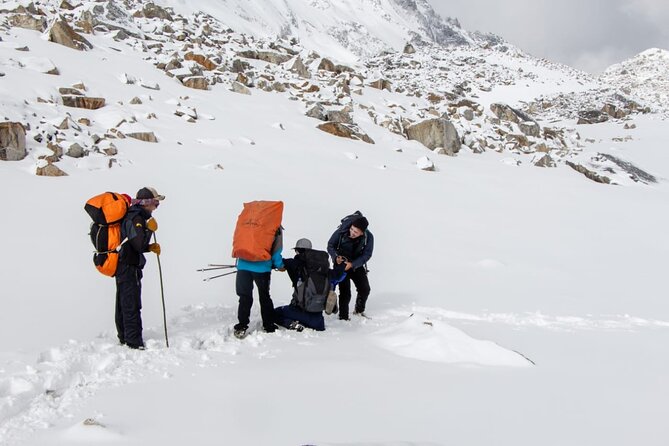
Also, you’re getting into the part of the trek where conditions can feel more serious. Higher elevations reduce your margin. Weather, wind, and temperature shifts can make this section feel colder and sharper, even when you’re not expecting it. I’d treat Day 12 as your “prepare for the pass” day. Early nights, simple meals, and paying attention to how your body feels.
The Larke Pass day (5,160 m): what to expect and how to plan
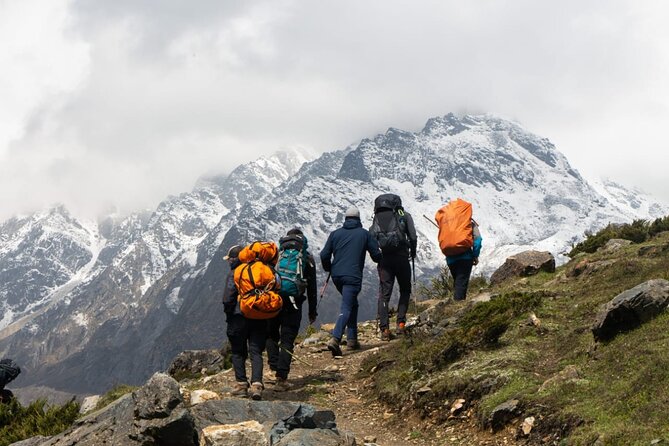
Day 13 is the big one: Larkya Phedi to Bimthang via Larke Pass (5,160 m), about 10–12 hours.
This is a long day by any standard. Even if the distance is manageable on paper, altitude makes time feel slower and breathing takes more effort. The key is pacing and staying mentally calm. Don’t sprint the early climb because you’ll pay later.
What you can do that actually helps:
- Keep your effort consistent from start to finish. Smooth beats heroic.
- Take breaks before you feel desperate, not after.
- Focus on your next step, not the whole mountain.
Once you start moving down toward Bimthang (Day 13 destination) the day can feel less punishing—but don’t mistake easier walking for “you’re done.” Your legs may still be stressed from elevation.
If you’re prone to headaches or nausea at altitude, this is the day you need to respect most.
Bimthang to Dharapani, then the return to Kathmandu
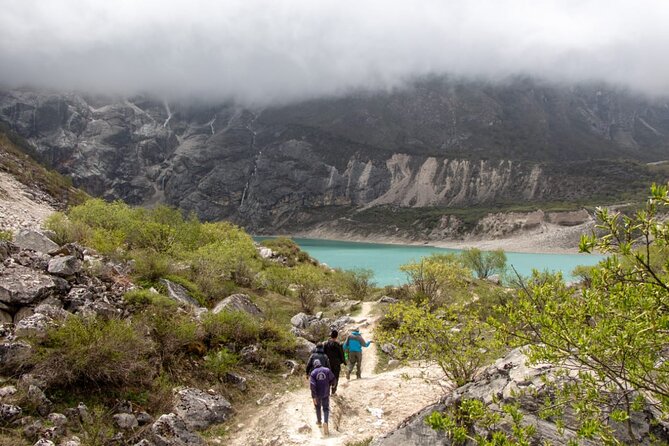
Day 14: Bimthang to Dharapani, about 8 hours.
Day 15: Drive back to Kathmandu via Besishar, about 12 hours.
Day 16: Depart or extend your trip.
This is a classic trek rhythm: big push, pass day, then a steady descent toward the end point. The day to Dharapani gives you that sense of closure—less altitude pressure and a clearer understanding that the trek is finishing.
The drive back to Kathmandu can feel long, but it’s also the practical moment where you get your supplies, your comfort, and your normal routines back. You end up back near the Thamel Marg meeting point, which is convenient if you plan to keep exploring Nepal after the trek.
Support team quality: guides, porters, and real English help
One reason this trek earns a strong rating is the people. You’ll travel with:
- An experienced English-speaking guide
- Porters (one for every two clients)
- Assistants during trekking
In the feedback I’ve seen from similar groups, the guide support is often singled out, and the guide name mentioned is Durga. That kind of consistency matters, because a good guide isn’t just translating words. A guide helps you time your day, manage pace at altitude, and stay calm when the pass day turns long.
Porters are also a huge part of why this trek works for many people. You still carry what you need, but the heavy bulk is shared. That reduces fatigue and can improve how you actually experience the trail.
Pacing and altitude: the part you shouldn’t ignore
This itinerary spends time at multiple elevations:
- Lower valley hiking around Machha Khola and Jagat
- Higher village zones by Namrung and Samagaun
- Higher acclimatization and staging near Samdo and Larkya Phedi
- The pass at 5,160 m
- Optional hikes up to 4,800 m in the acclimatization day
That’s a lot of elevation exposure. The upside is that the trek isn’t just “up, up, up.” The upside depends on how you walk. Even with acclimatization, you need to take it seriously.
If you’re deciding whether this is for you, be honest about your fitness. The trek is described for people with a strong physical fitness level. You also need to be comfortable with trekking days that run 6 to 12 hours, plus a long transfer day earlier in the route.
What’s included vs what you’ll still manage
Meal coverage is handled in a way that makes life easier. You get all meals during trekking, and breakfasts in Kathmandu, plus one welcome dinner and one farewell dinner. That removes a big part of travel stress.
But don’t count on everything being covered:
- Drinking water isn’t included
- Snacks aren’t included
- Hot showers and WIFI during trekking aren’t included
- Personal expenses are on you
So plan for hydration. Plan for warmth and basic comfort even if you’re not expecting perfect facilities. This is a mountain trek; you’ll do better with flexible expectations than with strict ones.
Who this Manaslu Larke Pass trek suits best
This trek is a strong match if:
- You want a guided trek with permits and meals handled
- You like village culture and mountain views, not just summit-chasing
- You can handle long walking days and a challenging pass crossing
- You appreciate acclimatization built into the schedule, not added by luck
- You prefer a private tour/activity where only your group participates
It’s less ideal if:
- You want short days
- You hate the idea of cold mornings and altitude effort
- You’re not ready for a long Day 13 that runs 10–12 hours
Should you book this trek?
If you want a trek where the heavy lifting is managed—permits, meals, guide support, and shared porter help—this is a good choice. The route also gives you something many treks skip: a real acclimatization window at Samagaun with optional higher hikes, which makes the pass day more realistic.
Book it if you’re physically prepared for long days and you’re the type who enjoys earning the view step by step. Consider skipping or choosing a gentler alternative if you’re unsure about altitude or you dislike endurance-style days.
FAQ
FAQ
How long is the Manaslu Larke Pass trekking itinerary?
The trek is about 16 days, including travel from Kathmandu and back, with the main trekking portion spread across multiple days from Soti Khola to Dharapani and then return by vehicle.
What’s the starting point and where does the trek end?
The tour starts at Thamel Marg, Kathmandu 44600, Nepal. It ends back at the same meeting point in Kathmandu.
What is included in the tour price?
Included are private vehicle transfers between destinations on the itinerary, double-occupancy accommodations, trekking permit and TIMS fees, all meals during trekking, Kathmandu breakfasts, one welcome dinner, one farewell dinner, and an experienced English-speaking guide with a team of porters and assistants.
Are pickup and a private group included?
Pickup is offered, and it’s a private tour/activity, meaning only your group participates.
Do I need permits and TIMS for this trek?
Yes. Trekking permit and TIMS fees are included as part of the package.
What’s the highest point on the trek?
The itinerary includes crossing Larke Pass at about 5,160 m.
Can I cancel and get a full refund?
Yes. Free cancellation is available. You can cancel up to 24 hours in advance of the experience start time for a full refund. If you cancel less than 24 hours before, the amount paid is not refunded.
More Trekking Out of Kathmandu






More Tour Reviews in Kathmandu




Just Reviewed in Kathmandu
- Mountain Bike Tour
★ 5.0 · 3 reviews - Annapurna Panaroma
★ 5.0 · 3 reviews - Mount Everest Scenic Flight 50 Minutes
★ 5.0 · 3 reviews - Kathmandu : Swambhunath & Durbar Square Guided Half Day Tour
★ 3.3 · 3 reviews - Chandragiri Cable Car & Monkey Temple Tour – Private/Group
★ 5.0 · 3 reviews - Kathmandu: Shivapuri National Park Hiking Day Trip
★ 3.3 · 3 reviews
Manaslu Circuit Treks, compared.
 ★ 5.0Manaslu Circuit TrekFrom $1,190292 reviews
Manaslu Circuit TrekFrom $1,081184 reviews
★ 5.0Manaslu Circuit Trek:From $1,099106 reviews
 ★ 5.0Manaslu Circuit Trek (15 Days)From $1,65750 reviews
Manaslu Circuit TrekkingFrom $1,49944 reviews
 ★ 5.016 Day Private Manaslu Circuit Trek from KathmanduFrom $1,13542 reviews
★ 5.0Manaslu Circuit TrekFrom $1,90035 reviews
 ★ 5.010 Days Manaslu Circuit Trek in Larke La PassFrom $1,04930 reviews
Browse the lists this tour appears in