
Review · MANASLU CIRCUIT TREKS
Manaslu, Nar Phu and Annapurna Three Passes Trek
Three passes, two hidden valleys, and one serious trek. This route links Tsum Valley’s Tibetan culture with the high, dramatic payoffs of Tilicho Lake and the three big passes that ring the Annapurna region. It’s long, yes, but it feels like you’re getting more than one trek in a single journey: Manaslu first, Nar Phu next, then the classic Three Passes finish.
I also like how the trip is built around real pacing choices. You get acclimatization days at Samagaun/Samdo and Phu, plus the schedule intentionally shifts between hiking and recovery as altitude stacks up. The result is that you’re not just chasing summits; you’re moving in a way that helps your body keep up.
One possible drawback to plan for: altitude demands are real, and the listing is also a little murky about mountain meals and lodging costs (they can be arranged, but may add to your budget). If you want predictability, ask what exact board style you’re getting for lunch and dinner in the mountains before you sign up.
In This Review
- Key highlights worth your attention
- The Big Picture: why this trek feels special
- Fitness and altitude: what you’re signing up for
- Kathmandu start: Durbar Square, Monkey Temple, and a buffer day
- From Kathmandu to Arughat to Sotikhola: easing into Nepal trekking
- Entering Tsum Valley: mani walls, gompas, and Tibetan details
- Backtracking, then rolling toward Manaslu viewpoints
- Acclimatization at Samagaun and Samdo: the smart pause before the passes
- Larkya La crossing (5,160m): camera time and weather patience
- Into the Annapurna side: pine forests, Koto, and waterfall country
- Nar Phu valley: Phu’s chortens and the spiritual side trip
- Kang La (5,306m) and Manang: the trek’s classic “high point” feel
- Tilicho Lake: why this side trip earns its place
- Yak Kharka to Thorung High Camp: building to the big final pass
- Thorung La (5,416m) and down to Muktinath
- Jomsom to Pokhara, then back to Kathmandu
- Price and value: what $2,426.67 is really paying for
- Who this trek fits best
- Should you book this trek?
- FAQ
- FAQ
- What’s the total duration of the trek?
- Is airport pickup included?
- Which high passes will I cross?
- Are permits included?
- Does the tour include guide and porter support?
- What about meals and accommodation during the trek?
- What’s not included in the package price?
- How do we return from Jomsom to Pokhara?
Key highlights worth your attention
- Tsum Valley culture time: gompas, prayer wheels, mani walls, and stops tied to Tibetan Buddhist life
- Three major high passes: Larkya La (5,160m), Kang La (5,306m), Thorung La (5,416m)
- Tilicho Lake detour: a dedicated early hike to the highest lake in Nepal (and often described as among the highest lakes worldwide)
- Nar Phu’s quieter feel: old stupa, chortens, mani prayer wheels, and a spiritual, remote vibe
- Good backup logistics: airport pickup/drop-off, permits handled, porters arranged, and rescue support listed
More trails out of Kathmandu, boots ready
- Everest Base Camp Trek – 14 Days★ 5.0 · 1,499 reviews
- Everest Base Camp Trek★ 5.0 · 842 reviews
- Everest Base Camp Trekking★ 5.0 · 485 reviews
- Nagarkot Sunrise View and Day Hiking from Kathmandu★ 5.0 · 471 reviews
The Big Picture: why this trek feels special
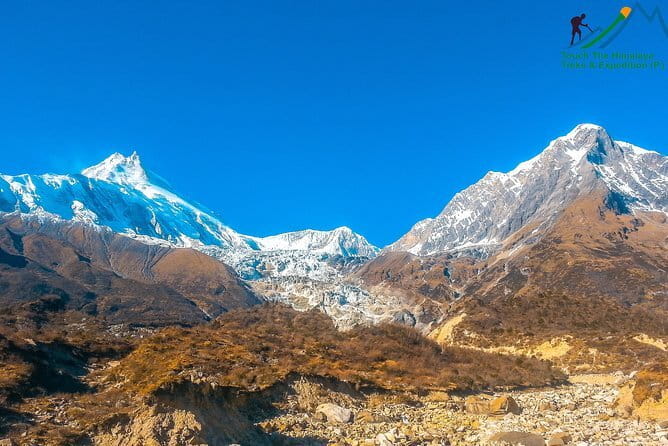
This is a long trek, roughly 34 days, that strings together three big ingredients: Manaslu region trekking, Nar Phu exploration, and the Three Passes finish (Larkya La, Kang La, Thorung La). If you want the Annapurna region views, but also want something that feels less “main trail,” this one makes sense.
The Manaslu-to-Annapurna connection matters. You don’t just cut across; you transition between valleys with very different characters. Manaslu and Tsum bring you Tibetan-influenced villages and lots of stone-and-spiritual details (mani walls and gompas). Nar Phu adds a quieter, more remote tone. Then you re-enter the Annapurna highlands near Manang and push through the passes.
Value-wise, the price sits in the “serious expedition” range. The good part: your permits and staff support are included (TIMS, ACAP/MCAP, plus restricted permits for Tsum Valley, Manaslu, and Naar Phu). Also, you’re not doing this as a DIY scramble. You have an expert local guide and a porter system.
Fitness and altitude: what you’re signing up for
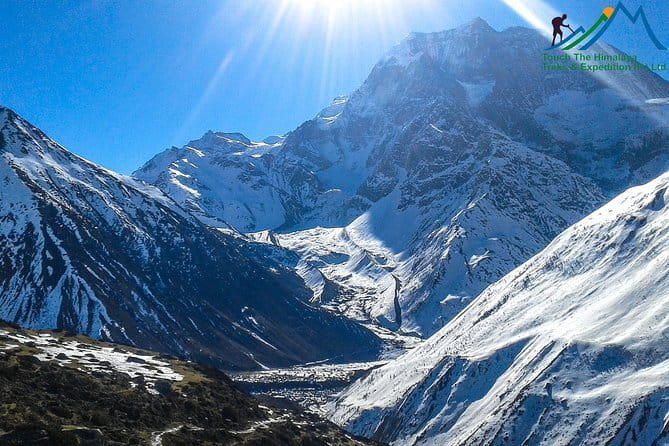
This trip requires good fitness. The schedule includes multiple days of hiking, and it isn’t a “walk in the park” itinerary even though some days are shorter. You’ll be crossing three passes at big elevations:
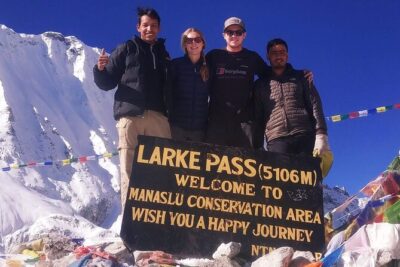
- Larkya La: 5,160m
- Kang La: 5,306m
- Thorung La: 5,416m
The trekking days list early starts for the pass-crossing sections, especially Thorung La (getting ready around 4 to 4:30am). That early push is key for weather and visibility. It’s also when your lungs do the most complaining, so the schedule’s slow climbing approach and acclimatization stops aren’t just “nice ideas.”
If you’re the type who worries about “will I be too slow,” this is a good trek to choose if you can handle sustained hiking plus a few recovery days. If you tend to sprint early, then crater late, you’ll want to practice a steadier effort right from day one.
Kathmandu start: Durbar Square, Monkey Temple, and a buffer day
Day 1 is simple and practical: airport pickup at Tribhuvan International Airport, then transfer to a tourist-standard hotel for the night. Day 2 is your briefing plus a guided sightseeing loop.
You’ll get a trek briefing in the afternoon and then visit two big Kathmandu hits:
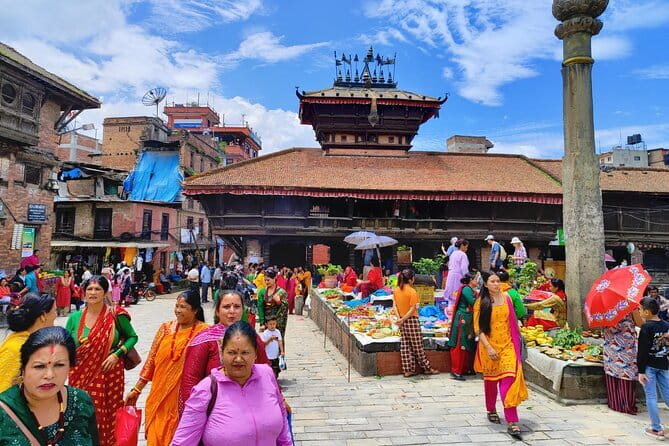
- Kathmandu Durbar Square (UNESCO site)
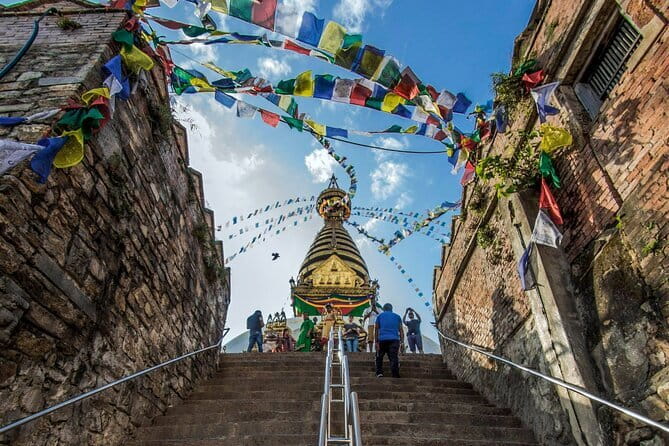
- Swayambhunath Stupa (Monkey Temple)
This matters more than it sounds. When you’re about to leave for rural Nepal and high passes, having a structured briefing day helps you get your paperwork and expectations sorted. Also, you’re awake and adjusted before long travel days start.
From Kathmandu to Arughat to Sotikhola: easing into Nepal trekking
On day 3 you take a bus toward Arughat, the trekking starting point. The drive is long enough to feel like travel, but it’s also your first glimpse of rural Nepal: terraced fields, rolling hills, and village life. Once you check in, the night before real walking sets in.
Day 4 and day 5 move along the river corridor. Sotikhola and Machhakhola are classic entry points because they let you feel your rhythm:
- You might catch early views of Ganesh Himal
- The trail style includes stone paths, mani wall moments, and river scenery
Practical note: these early days are about momentum. If you start too hard, you’ll pay later when altitude climbs. I like that the itinerary doesn’t jump straight into a “pass day.”




Entering Tsum Valley: mani walls, gompas, and Tibetan details
Day 6 is where the vibe shifts. You cross a suspension bridge over the Bhudi Gandaki and step into Tsum Valley, then reach Philim and later Lokpa. This is a major “cultural payoff” stretch, not just scenic hiking.
Over the next several days, you’ll pass through stops built around Tibetan-influenced religious life:
- Chumling: gompas and prayer wheels, with a choice of camping or continuing
- Chhokan Paro: two settlements forming a larger town feel inside the valley, plus strong Ganesh Himal views
- Mu Gompa: ceremonies and the Milarepa Cave visit
Tsum Valley is often described as the quieter, more spiritual part of the Manaslu region, and your days here are structured to support that. You’re not rushing through; you’re given time to actually look and walk slowly enough to notice details.
My practical advice: in Tsum Valley and throughout the longer cultural sections, don’t treat stops as “just photos.” Take breaks inside villages. That’s when your guide can point out what you’re seeing—mani walls, chortens, and the religious rhythm of the valley.
Backtracking, then rolling toward Manaslu viewpoints
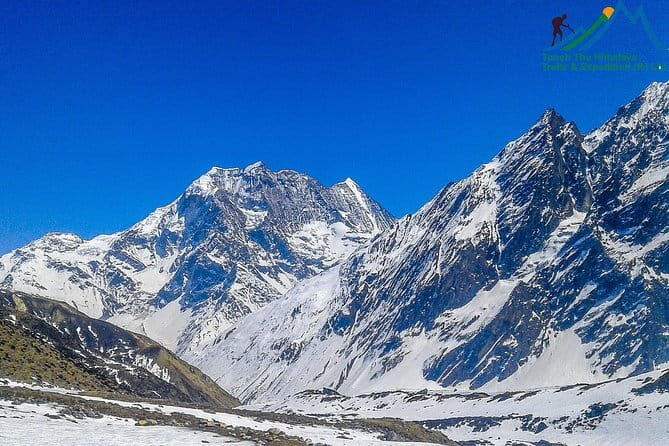
Days 10 through 12 bring a change: you retrace steps (downhill and easier going) from Mu Gompa back toward Chumling, then head toward Deng, and eventually reach Namrung.
Namrung day is a “views start stacking” kind of day: you go down to the riverside, cross a bridge, climb up via Ranagoan and Bihi Phedi, then push through Ghap village to Namrung. The itinerary specifically calls out clear sightlines of multiple Himalaya groups, which matches what this stretch is known for: your horizon starts turning into a lineup.
Then day 13 brings Lho, and you get the sense that Manaslu itself is arriving. Day 14 shifts you to Samagaun (Sama/Ryo) with a stop at Shyala for a 360-degree view moment.
Acclimatization at Samagaun and Samdo: the smart pause before the passes
This is where good planning shows. Day 15 is a planned acclimatization day in Samagaun with options:
- hike around Birendra Lake and Manaslu Base Camp
- or hike to Pungen Gumpa
Day 16 moves you to Samdo, slowly, then offers a chance to hike further to Samdo Peak if you have stamina. The listing notes Samdo is a Tibetan refugee camp, which adds cultural context to the high-altitude experience. Day 17 takes you toward the Larkya La area and an overnight stop at Dharmasala (also called Larkya Phedi).
This series of days is the difference between a trek that feels like a grind and one that feels like an organized ascent. You’re gaining elevation, but you’re also giving your body time to adapt.
Larkya La crossing (5,160m): camera time and weather patience
Day 18 is your first pass crossing: Larkya La. The schedule has an early breakfast, a slow climb, a pass break for views, and then a downhill to Bhimtang.
The notes highlight huge mountain views from the pass area, including peaks above 6,000 meters (Cheo Himal, Gyaji Kung, Kang Guru, Annapurna II). Even if clouds steal the show, the key is how the day is structured: you’re not rushing straight up and you get a downhill day afterward for recovery.
Day 19 continues downhill toward Gho and then Dharapani. Waking early is suggested for sunrise viewing from a teahouse—small suggestion, big payoff on a pass itinerary.
Into the Annapurna side: pine forests, Koto, and waterfall country
Day 20 transitions you westward toward Chame and through pine forests and small villages until Koto. Day 21 keeps moving along the Nar Khola river corridor, hitting a waterfall at Singenge Dharmasla and continuing to Meta.
This section is good for a few reasons:
- You get forest breathing space after exposed pass terrain
- You’re moving toward Nar Phu without losing the sense of big mountains
The itinerary even mentions possible wildlife, like gray langur monkeys in the forests. When you’re hiking long days, it’s nice to have the trail occasionally “awake” in ways beyond just altitude.
Nar Phu valley: Phu’s chortens and the spiritual side trip
Days 22 to 24 are your Nar Phu experience. You head north from a fork at Nar Phedi to Phu. This is one of the most “cultural-per-kilometer” parts of the trek.
The notes call out:
- chortens
- mani prayer wheels
- an old 18th-century stupa
Then day 23 is another acclimatization day: you hike east to Himlung Base Camp and return to Phu. Day 24 retraces toward Nar Phedi and continues west to Naar.
There’s also a hint of wildlife and bird watching. The itinerary notes Phu can be good for bird watching, and there’s even a chance to spot snow leopards along blue sheep herds (so yes, it’s a “possible” moment, not a guaranteed one).
Kang La (5,306m) and Manang: the trek’s classic “high point” feel
Day 25 brings Kang Phedi and then Kang La, described as the highest point of this trek section. After crossing the pass, you steeply descend toward Nawal (Ngawal).
Day 26 then moves you down to Braga, passes through Manang town, and continues to Khangsar. Manang is your practical reset: it’s a big enough stop to refill supplies, which you’ll appreciate when the trek gets more remote again.
Kang La is a real test, but the schedule’s rhythm helps. You’re not stacking too many “hard” days back to back without changes in terrain. Still, if you’re prone to altitude headaches, take acclimatization seriously.
Tilicho Lake: why this side trip earns its place
Day 27 sends you toward Tilicho Base Camp, traveling west along a big gumpa and then following the Marshayangdi River.
Day 28 is early: about a 6am start to hike to Tilicho Lake, described as the highest lake in Nepal and even called the highest lake in the world in the notes. The hike is gradual upward for about three hours, then you return to base camp and continue north to Siri Kharka.
This is one of the best “story moments” of the whole trek. A pass day gives you mountains. Tilicho gives you the feeling that you’re going to a destination, not just passing through terrain.
Practical tip: treat this day like a priority. Pack water well and keep your pace smooth. Early hiking saves energy later and helps you avoid scrambling when light changes.
Yak Kharka to Thorung High Camp: building to the big final pass
Day 29 is shorter: you go to Yak Kharka, crossing the Thorung Khola river. The itinerary mentions a safe drinking water station at Yak Kharka, so it’s a good day to top up.
Day 30 brings the overnight at Thorung High Camp at the foot of Thorung La (after Thorung Phedi). You’ll climb along the east bank of the Kone Khola river, and the notes mention blue sheep and the possibility of snow leopards. Even if you don’t see anything, the wildlife signs (tracks, chatter, sightings) are part of the experience up here.
Thorung La (5,416m) and down to Muktinath
Day 31 is your high finale: an early start (4 to 4:30am), climb up to Thorung La, then a downhill push to Muktinath.
The notes connect Muktinath’s name to a Hindu god of salvation, and it mentions 180 healing and purifying water taps at the temple. If you like places where religion, culture, and landscape intersect, this stop is worth your attention.
Day 32 continues to Jomsom, passing through Kagbeni on the Kali Gandaki River. Kagbeni and Jomsom are noted for apple orchards, with great photo opportunities.
Jomsom to Pokhara, then back to Kathmandu
Day 33 is your “you survived” decompression. You can fly from Jomsom to Pokhara (about 25 minutes) or drive for roughly half a day. The flight choice buys you time to explore Pokhara after the trek.
Day 34 brings the return to Kathmandu by scenic bus or drive and a free rest day at the end.
Price and value: what $2,426.67 is really paying for
At $2,426.67 per person for a ~34-day journey, you’re paying for more than walking. The strong value points are the items that usually cost real money and coordination time:
- airport transfers in Kathmandu
- trekking permits (TIMS, ACAP/MCAP, plus restricted permits for Tsum Valley, Manaslu, Naar Phu)
- an expert local guide
- porter support (listed as one porter per two clients)
- assistance guide support (one assistance guide per five trekkers)
- rescue arrangements and a basic first-aid kit
What might change your final total: meals and mountain accommodations. The package notes say meals and accommodation can be provided if required, with costs added additionally. So even though the daily plan includes breakfast and dinner/overnight stops, you’ll want clarity on whether your exact booking includes lunch and dinner in the mountains and whether it’s teahouse-style or fully catered.
Also not included: international airfare and Nepal visa fee, plus drinks, charging, hot shower, and personal gear and insurance. Tips for guide and porter are also not listed as included.
If you like having logistics handled and you’re willing to budget for your own insurance and extras, this price starts to feel fair for the length and permit workload.
Who this trek fits best
This is ideal if:
- you want a long trek with multiple cultural zones (Tsum and Nar Phu) plus the famous pass finish
- you can handle elevation work and early starts
- you want guided support and staffing rather than DIY planning
It’s less ideal if:
- you’re searching for a “short and relaxed” trek (this is not that)
- you dislike paying attention to what’s included vs added-cost in the mountains
Should you book this trek?
If your dream is Manaslu plus the quieter Nar Phu side, and you also want the true Three Passes finish, I’d say yes—as long as you confirm the mountain meal/lodging plan in writing. The pass sequence, the cultural focus in Tsum, and the Tilicho side trip form a strong arc from day 1 through Thorung La.
If you want maximum value, it helps that permits and staffing are handled. If you want maximum comfort, budget for the extras that aren’t guaranteed in the base price.
FAQ
FAQ
What’s the total duration of the trek?
The itinerary is set for 34 days approximately, starting with time in Kathmandu and ending with a return to Kathmandu after Pokhara.
Is airport pickup included?
Yes. Airport pickup and drop-off are included by car/jeep/Hiace or bus, depending on group size.
Which high passes will I cross?
You’ll cross three passes: Larkya La (5,160m), Kang La (5,306m), and Thorung La (5,416m).
Are permits included?
Permits included are TIMS card, ACAP/MCAP permits, and restricted special permits for Tsum Valley, Manaslu, and Naar Phu.
Does the tour include guide and porter support?
Yes. An expert Manaslu local guide is included. Porter support is listed as one porter for each two clients, and there is also an assistance guide listed as one assistance guide for each five trekkers.
What about meals and accommodation during the trek?
The package states that meal and accommodation will be provided if required, with costs added additionally. In other words, mountain meals and lodging are not automatically included in the base price.
What’s not included in the package price?
Not included items include international airfare and Nepal visa fee, drinks, wifi, charging, hot shower, lunches/dinners in Kathmandu and extra Kathmandu accommodations if needed, all mountain meals and accommodations unless arranged by the company for your agreement, personal insurance, personal gear, entry fees for sightseeing, and tips for guide and porter.
How do we return from Jomsom to Pokhara?
You can fly from Jomsom to Pokhara (about 25 minutes) or drive for about half a day, depending on your booking.
More Trekking Out of Kathmandu






More Tour Reviews in Kathmandu




Just Reviewed in Kathmandu
- Mountain Bike Tour
★ 5.0 · 3 reviews - Annapurna Panaroma
★ 5.0 · 3 reviews - Mount Everest Scenic Flight 50 Minutes
★ 5.0 · 3 reviews - Kathmandu : Swambhunath & Durbar Square Guided Half Day Tour
★ 3.3 · 3 reviews - Chandragiri Cable Car & Monkey Temple Tour – Private/Group
★ 5.0 · 3 reviews - Kathmandu: Shivapuri National Park Hiking Day Trip
★ 3.3 · 3 reviews
Manaslu Circuit Treks, compared.
 ★ 5.0Manaslu Circuit TrekFrom $1,190292 reviews
Manaslu Circuit TrekFrom $1,081184 reviews
★ 5.0Manaslu Circuit Trek:From $1,099106 reviews
 ★ 5.0Manaslu Circuit Trek (15 Days)From $1,65750 reviews
Manaslu Circuit TrekkingFrom $1,49944 reviews
 ★ 5.016 Day Private Manaslu Circuit Trek from KathmanduFrom $1,13542 reviews
★ 5.0Manaslu Circuit TrekFrom $1,90035 reviews
 ★ 5.0Manaslu Circuit Trek 13 DaysFrom $1,40030 reviews
Browse the lists this tour appears in