
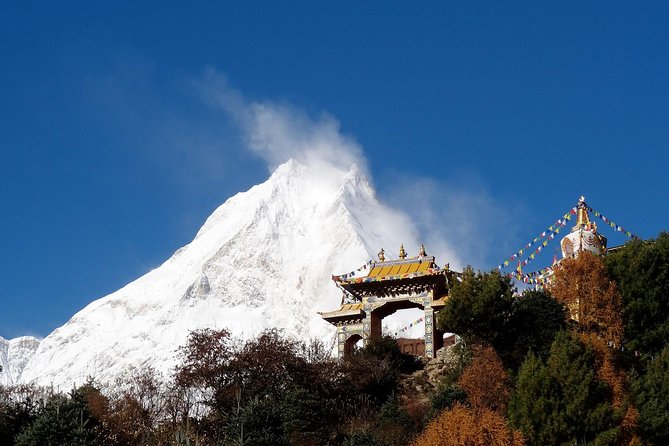
Review · MANASLU CIRCUIT TREKS
Manaslu Trek with Larke Pass
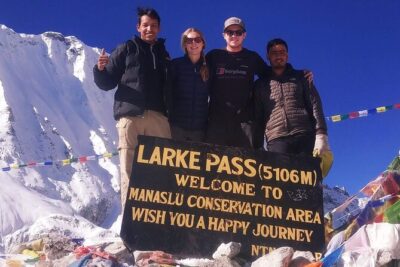
Manaslu starts warm and ends in ice-cold air. What I like most is how this route stays restricted and still feels raw, with big cultural shifts as you climb from subtropical valleys toward the dry, high Tibetan zone. The second standout for me is the headliner: crossing Larke La (5,135m) and then dropping into rhododendron timber before rejoining the Annapurna trail.
Here’s the trade-off: this is not a casual walk. You’re dealing with a long, high-altitude trek up to a major pass and icy sections on the descent, so you’ll want solid pacing, a careful acclimatization mindset, and a guide who keeps the group moving safely through the harder days.
In This Review
- Key things I’d highlight before you go
- Why This Manaslu Route Feels Different From Other Himalaya Treks
- Price and Value: What $1,797 Covers (and Why It’s Not Just a Tour Fee)
- Permits, Licensed Guides, and Why You Can’t Treat Manaslu Like a DIY Trek
- Kathmandu Days 1–2: Getting Oriented Before the Mountains Swallow Your Calendar
- Days 3–7 Along the Budi-Gandaki: Rivers, Villages, and Lots of Crossings
- Days 7–9 Into Tibetan Territory: Mani Stones, “Cooler” Air, and First Big Views
- Day 10 Samagaon Acclimatization: The Breather That Makes the Big Pass Possible
- Days 11–12: Samdo (Desert Path Feel) to Larkya La Phedi
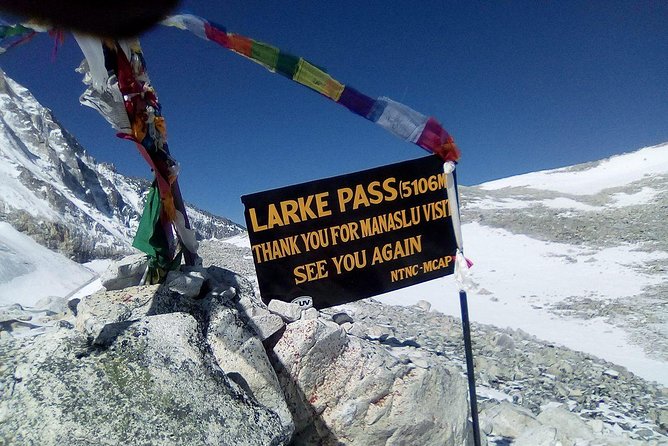
- Day 13 The Pass Day: Larkya La (5,135m) to Bimthang
- Days 14–16: Down to Tilje, Then Dharapani, Then the Finish Line
- Getting Back to Kathmandu: Cultural Dinner and a Clean Departure
- Support Quality: Guides, Porters, and the Kind of Help You Hope You Never Need
- Weather, Cold, and Altitude: What You Should Plan For
- Who This Trek Fits Best (and Who Might Want a Different Option)
- Should You Book This Manaslu Trek with Larke Pass?
- FAQ
- What’s the highest point on this trek?
- Is Manaslu open for independent trekkers?
- What’s included in the trek cost?
- Do I get meals in Kathmandu?
- Is there an acclimatization day?
- Is travel insurance included?
Key things I’d highlight before you go
- Restricted Manaslu region means you’re trekking in a controlled area that still feels less “tour bus.”
- Larke La (5,135m) delivers the dramatic payoff, then you get a long downhill flow through forests.
- Support that shows up when it counts, including fast, overnight organization in at least one real-life urgency story.
- Teahouse/lodge trekking with meals included on trek days helps you avoid daily food logistics.
- A real acclimatization pause at Samagaon before you push toward higher Tibet-border villages.
- Private group format: it’s only your group, so you’re not hiking with a giant random crowd.
More trails out of Kathmandu, boots ready
- Everest Base Camp Trek – 14 Days★ 5.0 · 1,499 reviews
- Everest Base Camp Trek★ 5.0 · 842 reviews
- Everest Base Camp Trekking★ 5.0 · 485 reviews
- Nagarkot Sunrise View and Day Hiking from Kathmandu★ 5.0 · 471 reviews
Why This Manaslu Route Feels Different From Other Himalaya Treks
Manaslu isn’t just “another circuit.” The route climbs upstream along the Budi-Gandaki, and the scenery changes with you in a way you can feel day by day—from sub-tropical forest tones to high, dry air and that Tibetan climatic zone feeling where the villages look and read differently.
Another reason this trek stands out: the area is restricted for individual travelers and requires a special immigration permit plus a licensed guide. That combination usually means fewer trekkers, more consistency in how things are run, and less of the chaotic “everybody does their own thing” vibe you sometimes get elsewhere.
And yes, it’s scenic in the obvious way too. You’re headed toward Mt. Manaslu (8,163m), and the route also keeps putting you in view of nearby peaks that sit along the Tibet border. That matters because it’s not just one big mountain reveal—it’s repeated sight lines as you gain altitude.
Price and Value: What $1,797 Covers (and Why It’s Not Just a Tour Fee)
At $1,797 per person for about 18 days, this package is priced like a full trekking operation, not a bare-bones hike. What you get is the stuff that usually costs money or stress if you arrange it yourself: permits, a guide plus porters, national park fees, and the transportation piece that gets you out of the Kathmandu valley and into the Manaslu starting zone.
Here’s the practical value you’re paying for:
- Airport pickup/drop and Kathmandu hotel stay (3-star category, breakfast included).
- Kathmandu sightseeing by private vehicle on a full day.
- Tea house/lodge stays during the trek with breakfast, lunch, dinner included on trek days.
- A guide and porters with a ratio of 1 porter for every 2 trekkers.
- Permits and park fees included (including TIMS and the special requirements for this restricted region).
What’s not included is also important: travel insurance is listed as essential, meals in Kathmandu are not included, and you’ll cover personal expenses plus tips for staff. If you’re the type who hates estimating daily spending, this package still helps because the bulk of your food and lodging is handled during the trek.
Permits, Licensed Guides, and Why You Can’t Treat Manaslu Like a DIY Trek
This trek’s biggest “watch this” item is legal and logistical. The Manaslu area is restricted, and the trek requires a unique permit issued by the Nepal Government and a licensed guide. You can’t just arrive with a wish and a pair of boots.
What that means for you on the ground:
- You’ll get permit checks at points along the route (for example, the itinerary notes permit checking around Namrung).
- The guide isn’t just for navigation. They’re part of what keeps the trek compliant and smoothly timed.
- If you’re coming from a country where you’re used to independent trekking, this will feel more structured—and that’s usually a good thing on a high pass like Larke La.
In short: the permit system isn’t a paperwork nuisance here; it’s part of how the trek is actually delivered.
Kathmandu Days 1–2: Getting Oriented Before the Mountains Swallow Your Calendar
You start with arrival support at Tribhuvan International Airport, then a drive to your hotel in Thamel. Day 2 is a full cultural setup day that also helps you shake off travel time: Pashupatinath Temple, Boudhnath Stupa, Patan Durbar Square, and Swayambhunath Stupa are on the schedule.
Two reasons I like this approach for trekkers:
- You get your bearings fast in Kathmandu before the long travel day toward the trek start.
- It breaks up the “sit in a hotel room” risk after jet lag.
Swayambhunath is described as more than 2,000 years old, so this isn’t just random temple hopping. It sets you up for the Tibetan-border theme that shows up later on the trail with Mani stones and Buddhist cultural details.




Days 3–7 Along the Budi-Gandaki: Rivers, Villages, and Lots of Crossings
Once you leave Kathmandu, you’re in for a long transfer day: an early drive from Kathmandu toward Arughat, with the schedule calling out 7–9 hours and an overnight around Soti Khola / Aarkhet Bazaar depending on the day’s steps.
Then the trek proper begins by following the Budigandaki/Buri Gandaki River. These early days are all about river rhythm: climb briefly, drop back down, cross, climb again. You pass small villages tucked into hillsides and terraced farmland, then reach spots named for local meaning—like Machhekhaola, described as meaning fish stream.
Highlights and realities from these sections:
- You’ll likely feel the “work” even before altitude gets scary. The constant up-and-down plus river travel adds fatigue.
- Tatopani (hot springs) is one of the mental rewards built into this trek. The itinerary has you heading toward the hot water area after crossing early river segments.
- Exposed and challenging trail sections are mentioned, including exposure around suspension bridges and gorge-style terrain.
By Day 7, you’re heading into higher country Buddhist signals: Mani stones show up more, and the culture and temperature shift as you move into the Tibetan-feeling corridor.
Days 7–9 Into Tibetan Territory: Mani Stones, “Cooler” Air, and First Big Views
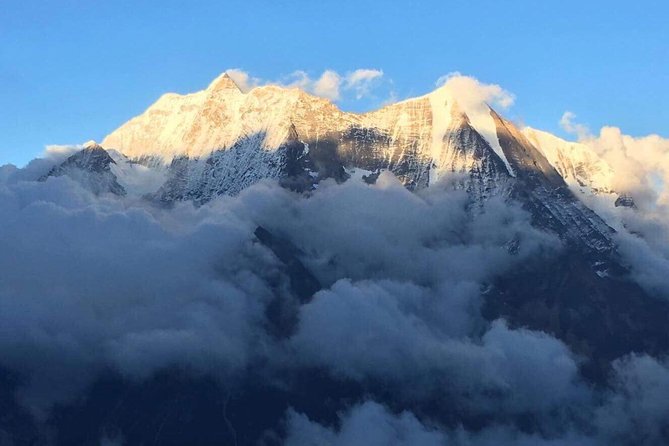
As you go from Deng to Bagarchhap to Namrung, the trek starts to feel like a different world. The itinerary notes clear cultural change and says the trekking turns pleasantly cool after you enter the Tibetan areas.
You also start stacking more mountain moments:
- At or near Deng, you’re in view of Sringi Himal (7,187m).
- Near Namrung (2,550m), you get increasing mountain views and a bigger sense of high-country openness.
- The trail includes multiple river crossings and a shift into alpine territory.
Namrung is also one of those spots where permit checking happens. That’s part of the restricted-region rhythm: you’re moving within a controlled framework, not a free-for-all.
Day 10 Samagaon Acclimatization: The Breather That Makes the Big Pass Possible
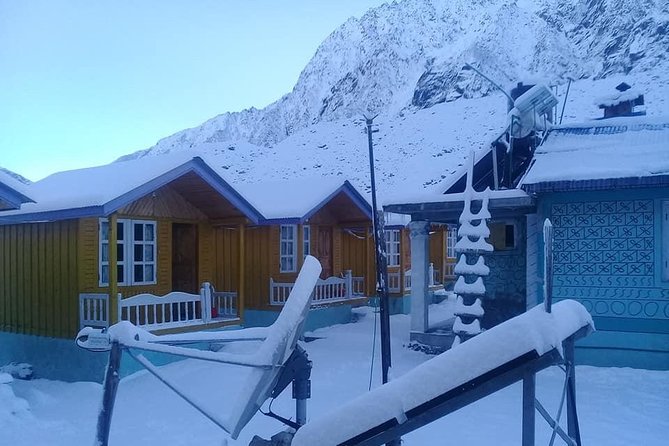
Day 10 is a rest day at Samagaon. That’s not filler. On treks like this, acclimatization is what protects you from the “rush forward then pay for it” pattern.
You’re surrounded by mountains and given time to relax, plus the itinerary includes an optional hike to Manaslu Base Camp. It specifically calls out views of Samdo (Pang phuchuli), Nagdi chuli, Simnang Himal, Manaslu glacier, and the Manaslu icefall, plus a nearby ice lake called Birendra Kunda.
If you’re deciding whether to do this optional hike: I’d treat it as a useful investment in comfort and confidence. You’re not just chasing photos. You’re training your body to move while staying aware of altitude effects.
Days 11–12: Samdo (Desert Path Feel) to Larkya La Phedi
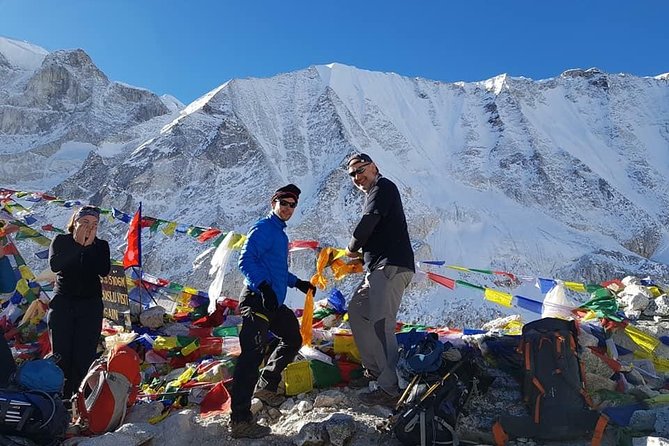
Day 11 moves you to Samdo (3,690m) through a “desert path and windy valley” feel. The itinerary notes the Tibetan border is close, but visitors aren’t allowed to pass it. There’s also a Tibetan refugee village there, which adds a deeper human layer to the high-country setting.
Samdo is also your viewpoint day. You’ll get framed views of Mt. Manaslu, plus Samdo (Pang phuchuli), Nagdi chuli, and the glacier/icefall region.
Then Day 12 is a push toward Dharmashala / Larkya Phedi (4,460m). The itinerary flags the trail as rocky and zigzagging. Before you reach Larkya Phedi there’s a Larkya Bazaar, tied to seasonal fairs and goods brought from Tibet. It’s one of those “local life at altitude” moments that makes the high pass feel less abstract.
Day 13 The Pass Day: Larkya La (5,135m) to Bimthang
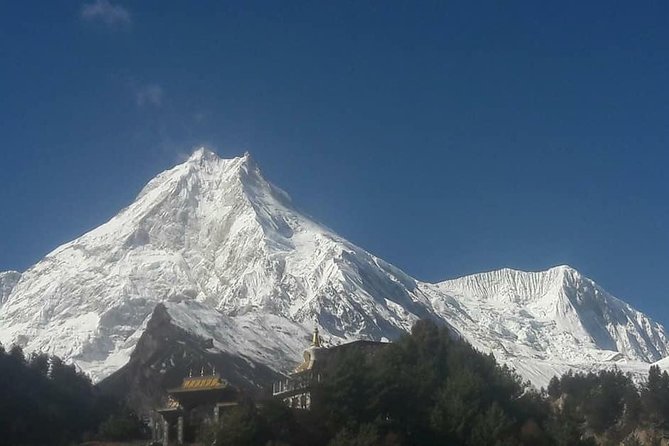
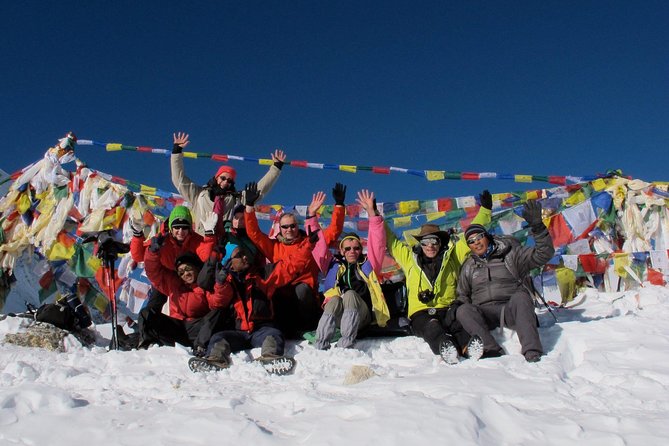
This is the day the trek earns its name: Larkya La at 5,135m. The schedule calls for an early steep ascent on a rocky, windy route, and you carry a packed lunch.
On top, the views are described as including Larkeya peak, sunrise possibilities for Mt. Manaslu, and peaks like Ratna chuli and Cheo Himal. After the pass, you switch to a steep downhill route through rock and ice, and the itinerary notes icy lakes along the way.
Then you reach Bimthang (3,590m), described as a broad and level ablation valley with Mani walls and deserted houses. That “open but still high” feeling helps you reset after a pass, even if your legs will remember the ascent.
Days 14–16: Down to Tilje, Then Dharapani, Then the Finish Line
From Bimthang, Day 14 takes you to Tilje (2,360m) via a high pasture and down the Burdin Khola valley, into an area linked to the base camp for the west side of Manaslu. A ridge at 4,150m is noted as giving excellent views of Manaslu to the southeast and Annapurna II to the southwest.
Then comes the good kind of fatigue relief: you drop into a rhododendron forest and follow a narrower valley trail until you reach Karche (2,785m) and then continue to Tilje. Tilje is described as having an apple orchard that’s famous for local wine—small details like that are why you’ll enjoy this section even if it’s still downhill work.
Day 15 continues to Dharapani (1,860m), crossing a bridge over the Marshyangdi River. Day 16 takes you down to Syange, then uses Jeep/Bus to Besisahar. This is the practical “legs done, wheels on” transition that keeps the trek from turning into one last slog.
Getting Back to Kathmandu: Cultural Dinner and a Clean Departure
Day 17 brings you back toward Kathmandu and includes time for a cultural dinner in the evening. Day 18 is departure day with transfer to the International Airport with enough time to connect to your flight.
This is a nice finish because it gives you a way to decompress without planning extra nights or transport. After Larke La and the long down days, your body will want a simple exit route.
Support Quality: Guides, Porters, and the Kind of Help You Hope You Never Need
One of the most praised aspects here is how well things are run. In at least one real situation, the support team handled urgency fast and organized everything overnight at a reasonable cost, with Bishbu Bhatta named as the person who helped during a tense moment.
That same thread of strong organization comes up alongside the trekking team members. In one case, the guide was named Karma, and the porter is also specifically credited for making the trek smoother.
Even if nothing goes wrong for you, strong support still matters on a restricted, high-altitude route:
- It reduces decision fatigue when the trail narrows or conditions turn colder.
- It helps keep the group on the right schedule for pass timing and safe meal/lodge stops.
- It makes sure the logistics behind permits and checkpoints are handled.
And since this is a private group experience (only your group participates), the support style tends to be more tailored than a huge multi-group trek.
Weather, Cold, and Altitude: What You Should Plan For
Manaslu changes climate as you climb. The route description explicitly shifts from subtropical forest toward dry arctic and high Tibetan climatic zone. Later parts also include icy conditions: Day 13 mentions downhill through rock and ice and icy lakes.
A review story also mentions tent sleeping around 4,500 meters with temperatures as low as -20°C. I can’t promise those exact numbers for your season, but I would absolutely treat cold as a serious planning factor for the Larke La corridor and the high valleys afterward.
The trek also includes a key acclimatization structure: rest at Samagaon (Day 10) and a gradual staircase of altitude before the pass. Respect that rhythm. If you push too fast, you’ll pay for it in energy and comfort.
Who This Trek Fits Best (and Who Might Want a Different Option)
This is best for you if:
- You want a restricted-region trek experience with real cultural transitions rather than a totally mainstream route.
- You can handle a serious day at altitude, including a major pass at 5,135m.
- You want full operational support: permits, a guide, porters, and meals/lodging on trekking days.
It may be less ideal if:
- You’re expecting easy hiking every day. The itinerary includes exposed sections early on and icy, steep conditions near the pass.
- You’re not comfortable with long travel segments before and after the trek.
- You prefer total independence on the trail, because this trek requires a licensed guide and special permits.
Should You Book This Manaslu Trek with Larke Pass?
I’d book it if you want the value of a planned, supported trek that also keeps the Manaslu feel special—restricted access, big cultural shifts, and a real “cross the pass” climax.
Before you commit, do two things:
- Match your fitness to the schedule. The itinerary includes long trek days and the pass day includes steep ascent and downhill through rock and ice.
- Make sure you’re ready for cold at high altitude. Even without exact forecasts, the route’s altitude and at least one extreme cold account you can read about both point to serious winter conditions up high.
If that sounds like your kind of challenge, this is a strong choice—especially for couples or small groups who want a private setting and a guide/porter team that’s been tested by real situations.
FAQ
What’s the highest point on this trek?
The highest point is Larkya La (5,135m) on Day 13.
Is Manaslu open for independent trekkers?
No. Manaslu is described as a restricted-region and requires a special permit from Nepal Government plus a licensed guide.
What’s included in the trek cost?
The package includes airport pickup and drop, Kathmandu hotel (3-star, breakfast), full-day Kathmandu sightseeing, guide and porters, tea house/lodge accommodations with breakfast/lunch/dinner during the trek, and national park fees plus all required trekking permits (including TIMS and special permits).
Do I get meals in Kathmandu?
The package notes that meals in the cities are not included, so you’ll budget for food in Kathmandu.
Is there an acclimatization day?
Yes. There’s a rest/acclimatization day at Samagaon (Day 10), with an optional hike to Manaslu Base Camp.
Is travel insurance included?
No. Travel insurance is not included and it’s listed as essential.
More Trekking Out of Kathmandu






More Tour Reviews in Kathmandu




Just Reviewed in Kathmandu
- Mountain Bike Tour
★ 5.0 · 3 reviews - Annapurna Panaroma
★ 5.0 · 3 reviews - Mount Everest Scenic Flight 50 Minutes
★ 5.0 · 3 reviews - Kathmandu : Swambhunath & Durbar Square Guided Half Day Tour
★ 3.3 · 3 reviews - Chandragiri Cable Car & Monkey Temple Tour – Private/Group
★ 5.0 · 3 reviews - Kathmandu: Shivapuri National Park Hiking Day Trip
★ 3.3 · 3 reviews
Manaslu Circuit Treks, compared.
 ★ 5.0Manaslu Circuit TrekFrom $1,190292 reviews
Manaslu Circuit TrekFrom $1,081184 reviews
★ 5.0Manaslu Circuit Trek:From $1,099106 reviews
 ★ 5.0Manaslu Circuit Trek (15 Days)From $1,65750 reviews
Manaslu Circuit TrekkingFrom $1,49944 reviews
 ★ 5.016 Day Private Manaslu Circuit Trek from KathmanduFrom $1,13542 reviews
★ 5.0Manaslu Circuit TrekFrom $1,90035 reviews
 ★ 5.0Manaslu Circuit Trek 13 DaysFrom $1,40030 reviews
Browse the lists this tour appears in