
Review · MANASLU CIRCUIT TREKS
Tsum Valley and Manaslu Trek
Tsum Valley feels like a world cut off. This trek strings together Buddhist hamlets, monastery stops, and high mountain passes, first inside the once-restricted Tsum region and then across the Manaslu Circuit. I like how it also gives you real Kathmandu context before you start walking, so the culture doesn’t feel tacked on.
What I like most is the mix of day-to-day walking with strong cultural landmarks—Mu Gompa, Rachen Gompa and its nunnery, plus lots of mani walls, chortens, and gompas. The second big win for me is support quality: in recent trips with Accessible Adventures, guide Mahendra and porter Ratskumar were praised for being attentive and well organized, and that matters when the trail gets steep or the weather turns.
One consideration: this isn’t a casual hike. You’ll need moderate fitness, and you should expect cold stretches, plus a steep, slippery Larkya La pass day and basic lodges where there are no village services right at the top.
In This Review
- Key highlights (what makes this trek special)
- Thamel warm-up and Kathmandu permit-day essentials
- From Dhading Besi to Jagat: river gorges, hot springs, and first check points
- Entering the restricted Tsum Valley: Lokpa’s isolation and the permit mindset
- Chumling school and the Tsum way of life: gompas, monasteries, and Tibetan culture
- Nile, Mu Gompa, and Rachen Gompa: spirituality on the trail
- Leaving Tsum for Manaslu: Deng, Namrung, and the mani-wall corridor
- Sama and rest days: glacier views and gompas around Manaslu
- Samdo to Larkya Phedi: crossing into pass country
- Larkya La summit day: slippery footing and big angles
- From Karcha La to Tilje and the return to Kathmandu
- Price and what $1,495 covers (and why it can be good value)
- Who should choose this Tsum Valley and Manaslu trek
- Should you book this trek?
- FAQ
- What is the total duration of the trek?
- Where does the trip start and what happens in Kathmandu?
- What time does the trek start each day?
- What is included in the price?
- Are trekking permits included?
- How many people are in the group?
- What about porter support?
- Do I need to bring my own sleeping bag or jacket?
- Is a visa required for Nepal?
- Is free cancellation available?
Key highlights (what makes this trek special)
- Tsum Valley’s restricted-area feel with permit check points and villages that still feel quiet
- Monasteries with lived-in spirituality at stops like Mu Gompa and Rachen Gompa’s nunnery
- Real village rhythm across small hamlets linked by bridges, forest paths, and river gorges
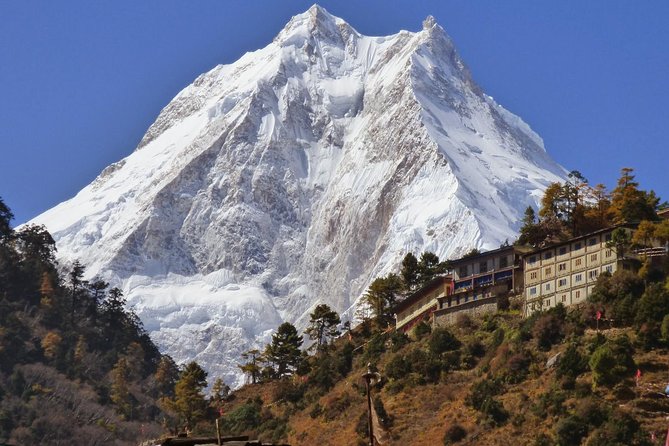
- Manaslu Circuit payoff views including major glacier scenery near Sama and Samdo
- Larkya La Pass challenge with a clear “careful footing” warning and majestic summit angles
- Support that gets you through smoothly (guide and porter teamwork is a recurring theme)
More trails out of Kathmandu, boots ready
- Everest Base Camp Trek – 14 Days★ 5.0 · 1,499 reviews
- Everest Base Camp Trek★ 5.0 · 842 reviews
- Everest Base Camp Trekking★ 5.0 · 485 reviews
- Nagarkot Sunrise View and Day Hiking from Kathmandu★ 5.0 · 471 reviews
Thamel warm-up and Kathmandu permit-day essentials
Your trip starts the easy way: a drive from Tribhuvan International Airport to a hotel in Thamel (about 5 km). You’ll have time to unpack, then you can wander right away—this is the kind of neighborhood where you can find snacks, SIM help, and last-minute small gear needs without stress.
On day two, you’ll meet the team and handle trekking permits and documents before you hit the sites. I like this order. It means you’re not juggling paperwork while your brain is already half in hiking mode.
Kathmandu’s highlights are classic for a reason. You’ll visit Kathmandu Durbar Square at Basantapur (often called Freak Street), where alleyways, shrines, and the Hanuman Dhoka Museum-style area help you get grounded in old Kathmandu. Then it’s off toward Swayambhunath, the Buddhist stupa with big pilgrim energy and city views from up top. You also get Pashupatinath on the outskirts—famous for Hindu worship of Lord Shiva—so you see Nepal’s religious diversity before the mountains take over.
Practical note: you’ll be walking a lot in a short time even early on. Wear shoes you can handle on uneven stone and steps, because Kathmandu never stops being Kathmandu.
From Dhading Besi to Jagat: river gorges, hot springs, and first check points
Days 3 and 4 are your trail warm-up, but “easy start” doesn’t mean flat. You drive partway, then start hiking along the river corridor. The description includes paved road at first to Dhading Besi (the district HQ), then rougher surface after—so day three is a mix of road vibrations and getting your legs used to motion.
On day four, you follow a river gorge with a narrow trail that goes up and down. You cross multiple spots along the way, including Tharo Khola and Yaru Khola, then climb stairs and ridges toward Jagat. I like this segment because the terrain keeps you focused: you’re never bored, but you’re also not yet dealing with high pass cold.
The bonus stop is Tatopani, a hot spring town. It’s a classic “soak your sore feet or your whole mood” moment after a longer day of uneven footing. Then later, when you enter Jagat you’ll show trekking permits at a check post. That’s your first real taste of Tsum’s special access.
What to consider here: suspension bridges and river-side trails are physically tiring, even when the day doesn’t look huge on paper. Slow down on windy bridge spans, keep your pack steady, and let your guide handle the pacing.
Entering the restricted Tsum Valley: Lokpa’s isolation and the permit mindset
Day five is where the vibe changes. You’ll cross into the restricted Tsum Valley area, and you’ll see the isolation right away. The walk takes you past villages including Salleri and Siridibas, then onward through Philim, which is where there’s a checkpoint for entering Tsum.
That checkpoint matters. It makes Tsum feel different from “just another valley trail.” You’re moving through a protected, managed travel route, and you get the sense that fewer people reach these communities.
The route continues to Lokpa, described as sitting between the Budhi Gandaki and Siyar Khola. The point isn’t only the scenery. It’s that Lokpa’s remoteness shapes how people live and how you experience the day—less of a tourist loop, more of a meeting point with everyday life.
The first cultural interaction also happens early. You’re told you can spend a short while interacting with locals before settling in for the night. Keep your expectations flexible: in small mountain communities, timing is local timing.
Chumling school and the Tsum way of life: gompas, monasteries, and Tibetan culture
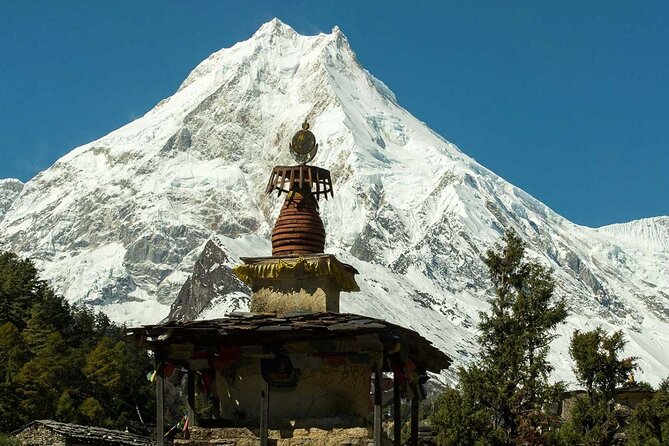
Days six and seven cluster around Chumling, and that’s smart. It gives your body time to acclimate while your eyes adjust to the region. You’ll trek through forest paths, cross channels like Lungwaa and Sarli Khola, and reach the village with Tibetan Buddhist communities and the Ganesh Himal range visible to the east.
Day six also highlights Chumling school, tied to the Tsum community school project. This is one of the points where the trek stops being just scenic and becomes human. Even if you keep things simple—listening more than talking—you’ll notice how education and community effort sit inside the same landscape as prayer flags, gompas, and daily chores.
Day seven stays in the same general pattern around Chumling and the Siyar Khola area, with more chances to observe the rhythm of village life.
One cultural detail worth knowing before you go: the trek info explains that Tsum has its own family customs, including a practice of polyandry where brothers may be married to a single girl. It can be surprising as a visitor, but it also explains why family life here feels distinct from other parts of Nepal and from mainstream expectations.




Nile, Mu Gompa, and Rachen Gompa: spirituality on the trail
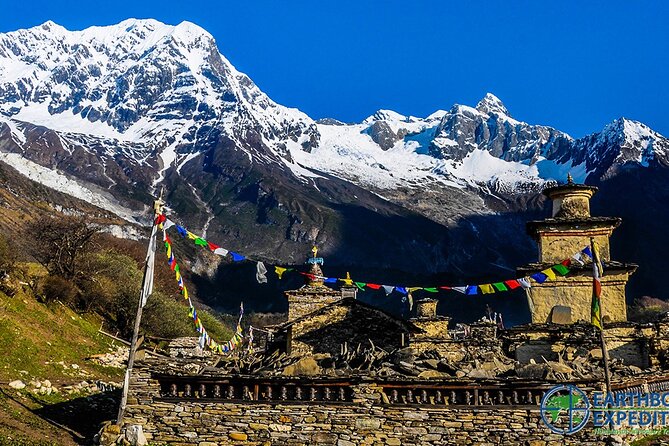
Day eight takes you on a flatter stretch along the north side of the Siyar Khola, passing several secluded villages. The named stops include Lamagaun, Bursi, Lar, Phurbey, Chhule, and Pungdun. You’ll also have the chance to stop at the Rachen Gompa and Milerapa Cave along the way, before continuing toward Nile for the night.
I like this day because it balances walking and pauses. You’re not always fighting steep rises, and you get time to look around before dinner time.
Day nine is a big spiritual anchor: Mu Gompa. It’s described as the monastery and highest point in the valley, established by Drupa Rinpoche, a Bhutanese lama, with meditation caves nearby. The mental image you get from the description is powerful: monks praying and meditating in a place that feels like it has been operating for generations, not staged for visitors.
Day ten continues into Bursi and brings you to Rachen Gompa again, this time with specific mention of an especially old monastery and a nunnery where nuns reside. There’s also a place for lodging for travelers connected with this complex, so it feels like you’re stepping into a working religious center.
What to consider: monastery life isn’t a museum visit. Use quiet behavior. Ask before taking photos. If your guide doesn’t mention it, just assume that respectful distance is the right approach.
Day eleven sends you back down to Chumling, making the day a relative breather on the same trail corridor. You still get the Ganesh Himal horizon as you trek.
Leaving Tsum for Manaslu: Deng, Namrung, and the mani-wall corridor
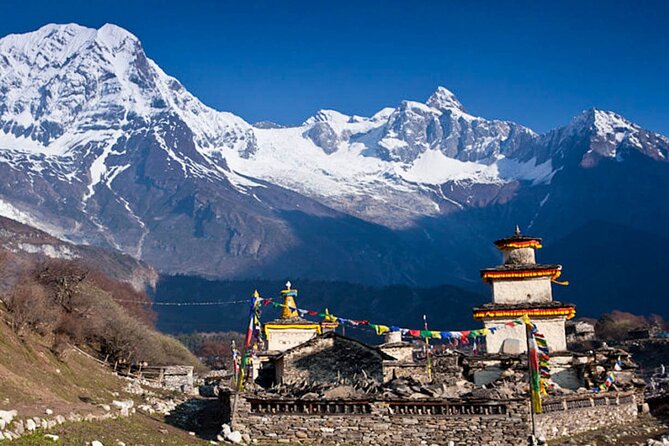
Day twelve is your transition day. You leave Chumling and descend toward Deng, with stops that include Lokpa and a bridge over the Budhi Gandaki. Once you join the Manaslu circuit, the description points out Buddhist stone arches and hints that the trail shifts into the more classic Manaslu rhythm.
Then day thirteen continues through canyon drops and bridges. You’ll cross the Budhi Gandaki River and pass a large waterfall and a wooden bridge out of the canyon. You also move through forests and village areas with ethnic communities living in huts.
A highlight here is Ghap, where the route description calls out beautiful mani walls on the southern side of the river. Those walls aren’t decoration; they’re a trail language—prayers recorded in stone and carried through generations. The day ends at Namrung, where the mountains start feeling more serious.
Sama and rest days: glacier views and gompas around Manaslu
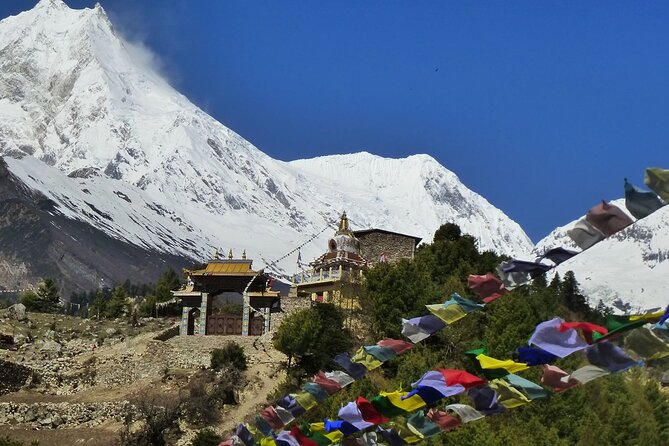
Day fourteen pushes you toward higher country and sets up the kind of views that justify the effort. You’ll climb through forests to Lihi with stupas and barley terraces, then continue through Sho, Lho, Shyala, and onward to Sama. On the way, you’ll explore Ribung Gompa, which is mentioned as a popular stop.
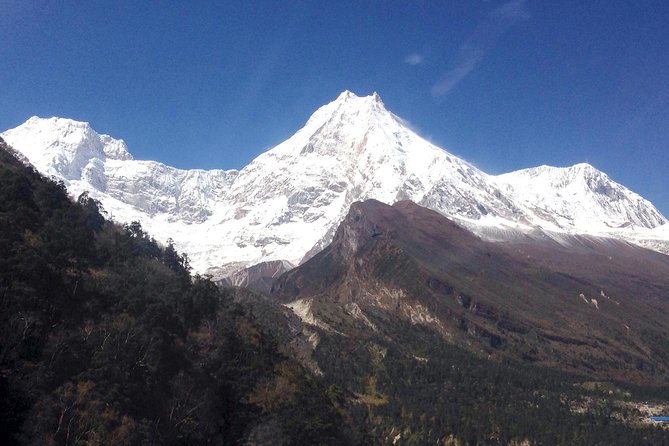
The view theme is clear: you’re told you can see Siring, Ganesh Himal, Himal Chuli, and the big glacier presence ahead, including Manaslu straight ahead from Sama. That’s the moment where the trek shifts from “nice scenery” to “this is a real mountain mission.”
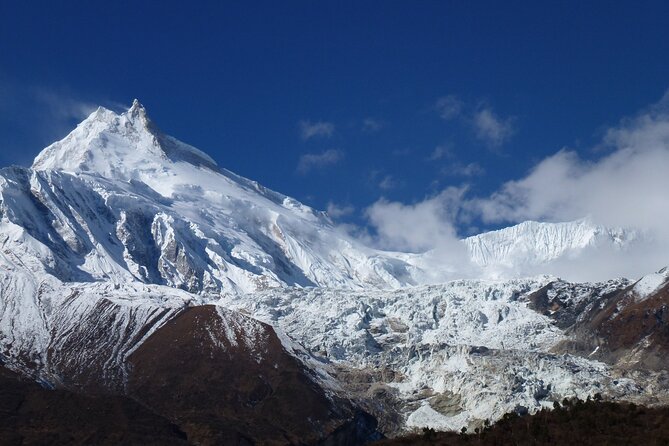
Day fifteen is a rest day at Sama village (the itinerary wording uses Samagaon, but the key idea is the same: you’re staying at the village and loosening up). You can interact with Sherpas and see mani walls with Buddhist texts. You can also visit Pungyen Gompa, described as ancient and sacred to locals, with strong glacier views.
Rest days aren’t just for comfort. They help you adjust before pass country. If you take the rest day seriously—sleep well, drink water, move gently—you’ll feel better later.
Samdo to Larkya Phedi: crossing into pass country
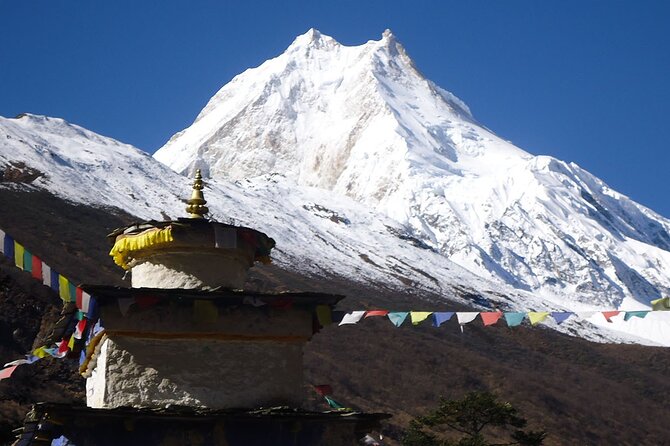
Day sixteen brings you closer to the Tibetan border region. You descend toward the Budhi Gandaki River, then cross a bridge and keep moving on trails described through juniper and birch forest. You pass areas like Kermo Kharka, ascend to a wooden bridge, and reach Samdo in about four hours.
Day seventeen is the climb day toward Larkya La. The trail includes descents through terraced fields and older mani walls and stone arches, plus juniper forestation. Then you get the big visual marker: the Larkya Glacier.
You’ll reach Larkya Phedi, where the description says there’s a small lodge and no settlements. That’s worth planning for. It means you can expect quiet, fewer options, and a stronger focus on sleep and warmth.
Larkya La summit day: slippery footing and big angles
Day eighteen is the pass day. You start by following the moraine toward a small lake, then the route becomes very challenging because it stays on the moraine to a ridge. You’ll see prayer flags near the Larkya La area, and then you transition through grayer slopes toward rustic villages and glacier lakes, plus wildlife sightings.
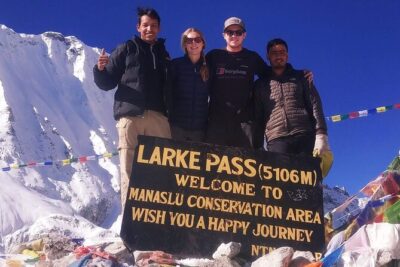
When you reach the summit of Larkya La, the views of Manaslu are described as up close and clear—one of the best views in the entire trek. Then comes the work: the path is slippery, and the description specifically asks you to be extra careful with every step. After the summit area, you descend to grassy moraine and reach Bimthang for the night.
This is the day where your trekking poles (if you use them) and your pacing choices matter most. No hero moves. Small, controlled steps.
From Karcha La to Tilje and the return to Kathmandu
Day nineteen shifts to a softer rhythm. You head toward the small Karcha La pass, then descend through fig trees and rhododendron forests to Tilje.
Day twenty is your back-to-city day. You bid farewell to the team and get dropped off at the airport by representatives, with time to reflect on Tsum’s quiet remoteness and the Manaslu Circuit.
Day twenty-one ends with another airport-area closeout in the itinerary wording. In practice, you should treat this as the final transfer day and plan for the long ride and travel-day energy.
Price and what $1,495 covers (and why it can be good value)
At $1,495 per person, this trek isn’t cheap—but it’s also not “bare bones.” The value comes from what you don’t have to arrange yourself.
Included costs that add up in real life:
- Private ground transport and airport transfers
- Three nights in Kathmandu at a 3-star category hotel with breakfast
- Trekking permits for Manaslu and Tsum Valley, plus Annapurna and Manaslu conservation fee
- Guide and porter support, including the porter ratio (1 porter for 2 people), plus staff food, accommodation, salary, and accidental insurance
- Down jacket and sleeping bag use while trekking, plus a duffle bag
- A first aid medical kit, government taxes/office service charge, and breakfast
The best part for your peace of mind is the staff support system. In the feedback tied to recent trips with Accessible Adventures, the guide and porter were praised for being attentive and for strong organization. That’s exactly what you want when you’re trying to keep energy for walking, not problem-solving.
The parts you should budget separately:
- Travel insurance and international airfare
- Nepal visa on arrival (the info provided lists $40 for a multiple-entry tourist visa good for 30 days, or $100 for 90 days, plus two passport-size photos)
- Cold drinks, bottled or boiled water, snacks, and personal expenses
- Hot shower during the trek (not included)
- Personal trekking equipment and tips
If you already own solid cold-weather layers and sleep gear, you may wonder why the package includes down jacket and sleeping bag use. Still, having them covered removes rental friction and gives you more confidence that your sleep system works for the trip’s temperature swings.
Who should choose this Tsum Valley and Manaslu trek
This trek suits you if you want a cultural-forward mountain experience, not just peaks and photos. You’ll spend serious time around Tibetan-influenced communities, gompas, mani-wall trails, and village life in places that still feel less crowded.
You’ll also like it if you prefer a guided structure with a small group size. The maximum group size is 15 travelers, and that helps keep logistics calm.
It’s a match for people with moderate physical fitness who understand that pass country exists and that Larkya La involves steep, slippery sections.
If you’re looking for guaranteed luxury (hot showers every day, soft beds, zero cold), this isn’t that kind of hike. You’re in lodge country with basics, and the higher you go, the more “carry and cope” becomes your daily rhythm.
Should you book this trek?
I’d book it if your goal is a rare mix: Tsum Valley’s tucked-away monastery culture plus the Manaslu Circuit’s big mountain payoff, capped by Larkya La views. The included permits, guided support, and cold-weather gear use reduce the number of things you must manage yourself.
I’d think twice if you dislike early starts, rough trail days, or steep pass segments where extra care is explicitly required. Also, if you only want fully tourist-comfort routes, the restricted-zone checkpoint rhythm and quieter villages may feel more “real” than you expect—in a good way, but still different.
If you decide to go, do one simple thing before departure: pack your own personal trekking equipment thoughtfully, confirm what your lodge expectations are at each night, and treat rest days as part of your training, not vacation time.
FAQ
What is the total duration of the trek?
The trek is listed as approximately 21 days.
Where does the trip start and what happens in Kathmandu?
You arrive at Tribhuvan International Airport and are driven to a hotel in Thamel. On the second day you meet the team, prepare permits and documents, and visit sites like Kathmandu Durbar Square, Swayambhunath, and Pashupatinath.
What time does the trek start each day?
The meeting/start time is listed as 7:00 am.
What is included in the price?
Included items cover private ground transportation (including airport transfers), three Kathmandu hotel nights with breakfast, twin-sharing lodge accommodation during the trek, guide and porter support, special trekking permits and conservation fees, down jacket and sleeping bag use while trekking, a duffle bag, first aid kit, and taxes/office service charges.
Are trekking permits included?
Yes. The package includes Manaslu and Tsum Valley special trekking permits, plus Annapurna and Manaslu conservation fee.
How many people are in the group?
The tour has a maximum of 15 travelers.
What about porter support?
You get one porter for every two people. Porter food, accommodation, salary, equipment, and accidental insurance are included.
Do I need to bring my own sleeping bag or jacket?
No. You get down jacket and sleeping bag use while trekking as part of the package.
Is a visa required for Nepal?
Yes, you can obtain a visa on arrival at Tribhuvan International Airport. The info provided lists multiple-entry tourist visas for 30 days ($40) and 90 days ($100), plus two copies of passport-size photos.
Is free cancellation available?
Yes. You can cancel for a full refund up to 24 hours in advance of the experience start time. Cancellation cut-off times are based on local time.
More Trekking Out of Kathmandu






More Tour Reviews in Kathmandu




Just Reviewed in Kathmandu
- Mountain Bike Tour
★ 5.0 · 3 reviews - Annapurna Panaroma
★ 5.0 · 3 reviews - Mount Everest Scenic Flight 50 Minutes
★ 5.0 · 3 reviews - Kathmandu : Swambhunath & Durbar Square Guided Half Day Tour
★ 3.3 · 3 reviews - Chandragiri Cable Car & Monkey Temple Tour – Private/Group
★ 5.0 · 3 reviews - Kathmandu: Shivapuri National Park Hiking Day Trip
★ 3.3 · 3 reviews
Manaslu Circuit Treks, compared.
 ★ 5.0Manaslu Circuit TrekFrom $1,190292 reviews
Manaslu Circuit TrekFrom $1,081184 reviews
★ 5.0Manaslu Circuit Trek:From $1,099106 reviews
 ★ 5.0Manaslu Circuit Trek (15 Days)From $1,65750 reviews
Manaslu Circuit TrekkingFrom $1,49944 reviews
 ★ 5.016 Day Private Manaslu Circuit Trek from KathmanduFrom $1,13542 reviews
★ 5.0Manaslu Circuit TrekFrom $1,90035 reviews
 ★ 5.0Manaslu Circuit Trek 13 DaysFrom $1,40030 reviews
Browse the lists this tour appears in