
Review · UPPER MUSTANG & REMOTE TREKS
Upper Mustang Trekking
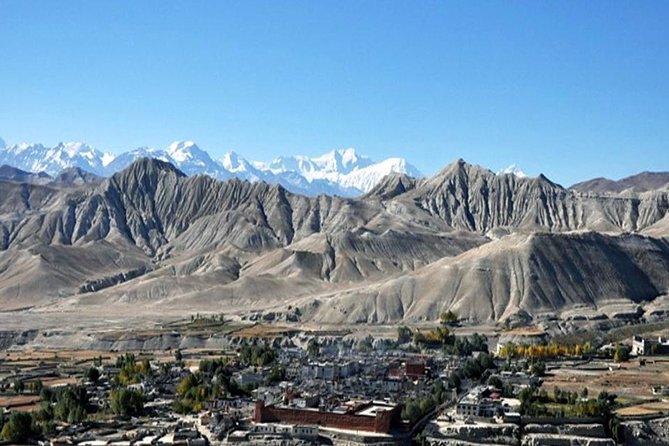
Lo-Manthang makes time feel weird. This Upper Mustang trek focuses on a Tibetan-style walled world between Tibet and the Himalayas, with Lo-Manthang’s old monastery life and quiet restoring artwork in view. I like how Lo-Manthang culture stays front and center, and I like that key permits and TIMS are built into the price, so you spend less time worrying and more time watching.
One thing to consider: this is a short, logistics-heavy trip. You’ll rely on the Kathmandu–Pokhara bus legs and the Pokhara–Jomsom flight (plus good weather), so if conditions are rough, your plan can shift.
In This Review
- Key things I’d watch for
- Upper Mustang and Lo-Manthang: a walled Tibetan world near Tibet
- A 2-day taste that still involves real logistics
- Meeting point and the early 6:15am start at Tribhuvan
- Kathmandu to Pokhara by tourist bus: when comfort beats speed
- Flying to Jomsom: why this trip uses air instead of extra days
- Permits and TIMS: what’s built into the price (and why it matters)
- Lodging in Kathmandu and Pokhara: breakfast included, but don’t expect extras
- Meals: what you get, and what you’ll pay out of pocket
- Your guide and porter: how this trip keeps things manageable
- Culture on the ground: restored monasteries and daily study
- Price and logistics: is $2,666.67 per person good value?
- Common gotchas: weather, short schedule, and tipping
- Who should book this Upper Mustang trekking option
- Should you book this tour, or keep looking?
- FAQ
- What’s the meeting point and start time?
- Is pickup included?
- How long is the experience?
- What transport is included?
- Are permits included?
- What meals and lodging are included?
- What happens if weather is bad?
Key things I’d watch for
- Lo-Manthang’s walled city feel: history told more through myth than paperwork, plus everyday monastery rhythms.
- Permits handled for you: ACAP, Upper Mustang special permit, and TIMS card fees are included.
- Flight time over extra trekking: the Pokhara–Jomsom flight fare is covered to keep the schedule tight.
- Staff support is real: trekking guide plus porter support (one porter for two people).
- Two-base-city stays: you get two nights in Kathmandu and two nights in Pokhara with breakfast included.
- Private group tour: only your group participates, with pickup from Tribhuvan International Airport.
More trails out of Kathmandu, boots ready
- Everest Base Camp Trek – 14 Days★ 5.0 · 1,499 reviews
- Everest Base Camp Trek★ 5.0 · 842 reviews
- Everest Base Camp Trekking★ 5.0 · 485 reviews
- Nagarkot Sunrise View and Day Hiking from Kathmandu★ 5.0 · 471 reviews
Upper Mustang and Lo-Manthang: a walled Tibetan world near Tibet
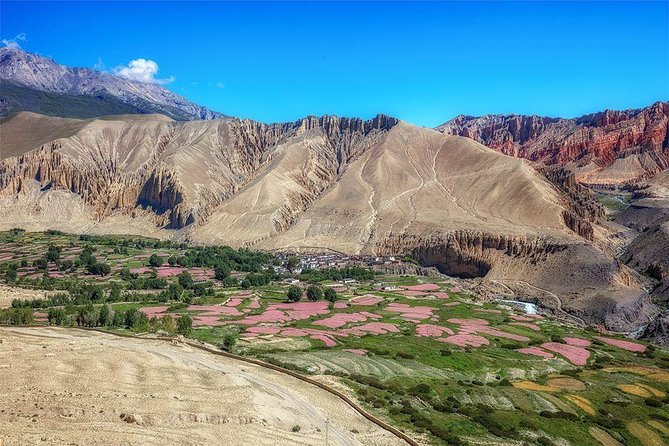
Upper Mustang sits in a special pocket of Nepal, close to the Tibetan cultural sphere, and it feels different from most of the country’s trekking routes. The whole region is tied to a Tibetan kingdom story: Lo-Manthang was part of the Tibetan kingdom of Gungthang until the 1830s. After that, details blur into myths and legends more than neat records, which is part of the attraction.
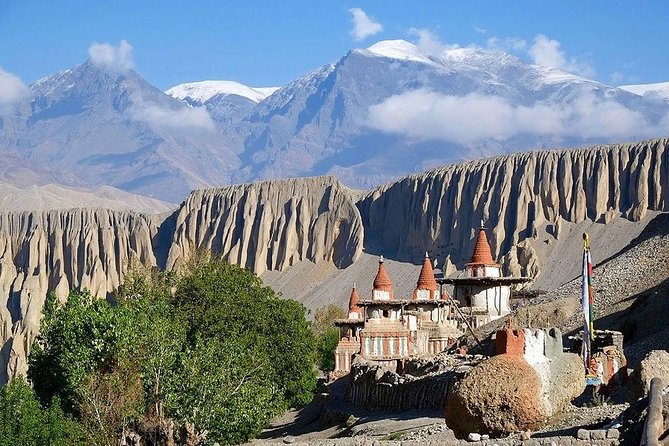
The star stop is Lo-Manthang, the walled city that still clings to older ways. You’re not just seeing walls and stupas; you’re seeing how the area holds onto its identity even as things change. Count on plenty of monastery life in the background, including places where crumbling art is slowly being restored. In the town, you’ll see what daily Buddhist study looks like, with shaved-headed children in robes studying ancient ways.
A detail that helps you understand the human side of the visit: Lo-Manthang has around 275 houses and includes four castes. That’s the kind of grounding fact that makes the scenery feel like a real community, not a theme park.
A 2-day taste that still involves real logistics
The trip title is Upper Mustang Trekking, and the duration is listed as about 2 days. But the included accommodations tell a bigger story: you’re scheduled for two nights in Kathmandu and two nights in Pokhara, both with breakfast included.
So how do you make sense of that? Think of this as a packaged route that organizes the approach, the flight leg(s), and the trekking portion into a broader time window. The key point for you: don’t assume every minute is nonstop trekking. This is more like a planned movement through bases, with time set aside for the trekking/observation part.
You’ll also see a schedule pattern that repeats across the two days: airport pickup by private car or jeep, bus travel between Kathmandu and Pokhara, and the Pokhara–Jomsom flight fare. The practical takeaway is simple: build your day around early starts and travel legs, not just the hiking.
Meeting point and the early 6:15am start at Tribhuvan
If you hate waking up before sunrise, this route will test that. The meeting point is Tribhuvan International Airport, specifically Ring Rd, Kathmandu, with a start time of 6:15 am.
The good news: pickup is included via a private car/jeep, and you also get pickup and drop-off included on the trip days. This matters because Kathmandu traffic can turn time into confetti. With the early airport start, you avoid playing calendar roulette.
Also note the practical “near public transportation” detail: in case you need anything urgent (a charger, a last-minute refill), you’re not stuck somewhere totally isolated.
Kathmandu to Pokhara by tourist bus: when comfort beats speed
The route includes Kathmandu to Pokhara and back by tourist bus. For this kind of itinerary, I like having the bus leg included because you avoid a mini task list of booking, paying, and coordinating separately.
What to watch: lunch and dinner in Kathmandu and Pokhara are not included. Breakfast is covered with your hotel stay, but if you want a sit-down lunch with options, you’ll need to budget for it separately.
This bus hop is also a mental reset. By the time you’re done with the road time and the transfer rhythm, you’re more ready for the flight and trekking day(s). It’s not glamorous, but it’s efficient.




Flying to Jomsom: why this trip uses air instead of extra days
You’ll cover the flight fare for Pokhara to Jomsom (and back through the package route). This is a big deal for value, because it reduces the number of days you must spend moving through rugged country. It’s also why the trip can keep its “short” feel.
There’s a catch: the experience requires good weather. Flights can be sensitive to conditions, especially in mountain regions. If weather forces a change, you won’t just be left hanging—you’ll be offered a different date or a full refund if the experience is canceled due to poor weather.
For you, the smart move is to build flexibility into your calendar. If your schedule is rigid with zero wiggle room, altitude trekking plus flight segments can feel stressful.
Permits and TIMS: what’s built into the price (and why it matters)
This is one of the most important value points in the whole package. You’re not only paying for staff and logistics—you’re also paying for legal access.
Included permits and fees are:
- ACAP (the entry requirement tied to conservation areas)
- Upper Mustang special permit
- TIMS card fee
These items aren’t “extras” you can lightly skip. They are central to the way Upper Mustang access works, and having them included saves you from delays, confusion, and last-minute paperwork headaches.
If you’ve ever tried to coordinate permits on a tight timeline, you already know why this is worth real money. For this route, getting the permits handled is part of what keeps the itinerary smooth.
Lodging in Kathmandu and Pokhara: breakfast included, but don’t expect extras
You get two nights of accommodation in Kathmandu with breakfast, and two nights in Pokhara with breakfast. That means you have a stable rhythm—sleep, eat, prepare, repeat—rather than constant moving.
What’s not included is anything that often costs extra in Nepal: the package notes no WiFi, no hot water, no hot shower, and no laundry bill are included. So if your comfort standard is high, plan for that cost. And if you’re okay with simpler hotel setups, you’ll likely feel fine.
Also, the itinerary is built for travelers with moderate physical fitness. That’s useful information. You’re not being pitched as an ultra-fast summit hunter. But you should still be ready for hiking-time exertion and cold air once you’re higher up.
Meals: what you get, and what you’ll pay out of pocket
Food is partly covered, and it’s good to know exactly where your included meals stop.
Included:
- Breakfast
- Lunch
- Dinner
- Coffee and/or tea
Not included:
- Lunch and dinner in Kathmandu and Pokhara
So in practice, breakfast is covered through the hotel stays. Lunch and dinner are covered during the trek portion (and/or scheduled meal times tied to the plan). If you want extra snacks, drinks, or meals outside those included windows, you’ll pay.
One practical tip: in mountain regions, good tea and coffee are often more than just a treat. They’re part of the comfort routine that helps you stay warm between stops.
Your guide and porter: how this trip keeps things manageable
You’ll travel with a trekking guide plus a porter setup. The porter arrangement is one porter for two people. That’s a helpful balance: you get support without treating you like you’re traveling with a private crew for every step.
The porter helps with carrying during the trekking segment, which can matter a lot if you’re bringing more than the basics. It can also reduce fatigue, letting you focus on pacing and enjoying the views and village stops instead of fighting your bag.
Other support items included:
- First aid kit
- Trekking guide structure that keeps the pace appropriate
- A Sherpa Expedition and Trekking T-shirt
- A Duffel bag
I also like that the trip is described as a private tour/activity. That usually means fewer awkward group dynamics and more room for you to ask questions without waiting for everyone else.
And there’s another human detail worth mentioning: the company’s point person, Ram, has been described as accommodating when dates had to be rearranged. That matters if you’re traveling around seasons, weather windows, or other commitments.
Culture on the ground: restored monasteries and daily study
Upper Mustang isn’t just about buildings. It’s about the living rhythm of places that are still used.
You’re heading into a region known for crumbling monasteries that are slowly being rebuilt. When restoration is happening, you often see both the old and the process: damaged art being restored and the space around it staying active. That restoration effort makes the sights feel current, not frozen in time.
Another vivid detail is the monastery school life: shaved-headed children in robes studying ancient Buddhist ways and teachings. If you’re the type who likes to understand what you’re looking at, these are the moments that make the trip more than a photo run.
And because Lo-Manthang remains stubbornly itself, you’ll likely feel that the cultural experience is not a performance. People go about their study and daily tasks while visitors watch, ask questions, and look around.
Price and logistics: is $2,666.67 per person good value?
At $2,666.67 per person, this isn’t a budget trek. But the price is also doing real work behind the scenes.
Based on what’s included, you’re paying for:
- Hotel nights: two nights in Kathmandu and two nights in Pokhara (each with breakfast)
- Transport legs: tourist bus between Kathmandu and Pokhara
- Flight fare: Pokhara to Jomsom and covered route timing
- Permits and cards: ACAP, Upper Mustang special permit, and TIMS fee
- Staff support: trekking guide and porter (one porter for two people)
- Meals during trekking times: breakfast, lunch, dinner, plus coffee/tea
- Core trip extras: first aid kit, trekking t-shirt, duffel bag
What that means for value: you’re not only paying for the walking days. You’re paying for the whole infrastructure that lets this short-feeling trek happen safely and legally in a restricted region.
Where you might lose value is if you expected everything to be fully covered, including meals in Kathmandu and Pokhara and comfort extras like hot showers, WiFi, or laundry. Those are not included. Also, personal trekking equipment is not included, and neither are personal travel insurance or tips for trekking staff.
So the value story depends on your travel style. If you want a guided, permit-handled, transport-planned experience with minimal hassle, it can feel like good buy-in. If you’re trying to DIY everything and only want the view, it may feel expensive.
Common gotchas: weather, short schedule, and tipping
The biggest “watch out” is weather. The experience requires good weather, and if it’s canceled due to poor weather, you’ll get a different date or a full refund. Still, you should plan your wider trip around the possibility that mountain conditions can force changes.
Second, remember the schedule is short, and the plan includes air and road travel. That’s not bad, but it does mean you’ll spend more time on coordination than on long daily hikes.
Third, tips for trekking staff are not included. If tips are part of your normal travel habits, set aside a budget so it doesn’t surprise you at the end.
Who should book this Upper Mustang trekking option
This tour is a strong match for you if you:
- Want Upper Mustang access with permits handled
- Prefer a private group and straightforward coordination
- Like guided cultural visiting where daily monastery life and restoration are part of what you see
- Have moderate fitness, and you want support from a porter setup (one porter for two people)
It may not be the best fit if you’re trying to cram in sightseeing with no flexibility for weather or if you hate travel days. Also, double-check the overall time window since the package includes two nights in both Kathmandu and Pokhara, even though the headline duration is about two days.
Should you book this tour, or keep looking?
Book it if you want a guided Upper Mustang experience that handles permits, provides base-city lodging with breakfast, and takes care of the major transport legs (bus and flight fare). The price looks steep until you list what’s covered, and then it starts to make sense: you’re buying reduced hassle, legal access, and staff support.
Keep looking if your dates are fixed with zero wiggle room, or if you expect hot showers, WiFi, and all meals to be included everywhere. Also, if you truly want only trekking time and nothing else, this itinerary’s base-city stays mean you’re paying for the whole package, not just trail hours.
If you do book, a smart move is to confirm the real start-to-finish dates you’ll be in Kathmandu and Pokhara. With that clarified, you’ll be able to enjoy what you actually came for: Lo-Manthang’s living monastery world and the stubborn cultural edge of Upper Mustang.
FAQ
What’s the meeting point and start time?
You meet at Tribhuvan International Airport (Ring Rd, Kathmandu) with a start time of 6:15 am.
Is pickup included?
Yes. The tour includes airport pickup and drop-off by private car/jeep.
How long is the experience?
It’s listed as about 2 days.
What transport is included?
The package includes Kathmandu to Pokhara by tourist bus, and it covers the flight fare for Pokhara to Jomsom (with the return route handled within the tour).
Are permits included?
Yes. ACAP and Upper Mustang special permit and the TIMS card fee are included.
What meals and lodging are included?
Breakfast is included, and lunch and dinner are included as part of the tour meals. You also get two nights of accommodation in Kathmandu and two nights in Pokhara, both with breakfast.
What happens if weather is bad?
The experience requires good weather. If it’s canceled due to poor weather, you’ll be offered a different date or a full refund.
More Trekking Out of Kathmandu






More Tour Reviews in Kathmandu




Just Reviewed in Kathmandu
- Mountain Bike Tour
★ 5.0 · 3 reviews - Annapurna Panaroma
★ 5.0 · 3 reviews - Mount Everest Scenic Flight 50 Minutes
★ 5.0 · 3 reviews - Kathmandu : Swambhunath & Durbar Square Guided Half Day Tour
★ 3.3 · 3 reviews - Chandragiri Cable Car & Monkey Temple Tour – Private/Group
★ 5.0 · 3 reviews - Kathmandu: Shivapuri National Park Hiking Day Trip
★ 3.3 · 3 reviews
Upper Mustang & Remote Treks, compared.
 ★ 5.0Upper Mustang Classic Trek with Local guideFrom $2,50015 reviews
 ★ 5.0Nar Phu Valley Trek – 12 DaysFrom $1,60011 reviews
 ★ 5.0Jeep Trip to Upper MustangFrom $2,20010 reviews
 ★ 5.0Lower Mustang Motorbike Tour -8 DaysFrom $1,5009 reviews
 ★ 5.0Kanchenjunga Circuit Trek 19 DaysFrom $2,0009 reviews
Upper Mustang TrekFrom $1,4766 reviews
 ★ 5.0Kanchenjunga South Base Camp Trek – 13 DaysFrom $2,0956 reviews
 ★ 5.0Upper Mustang TrekFrom $2,2055 reviews
Browse the lists this tour appears in