
Review · ANNAPURNA BASE CAMP TREKS
10 Days Annapurna Base Camp Trek from Kathmandu
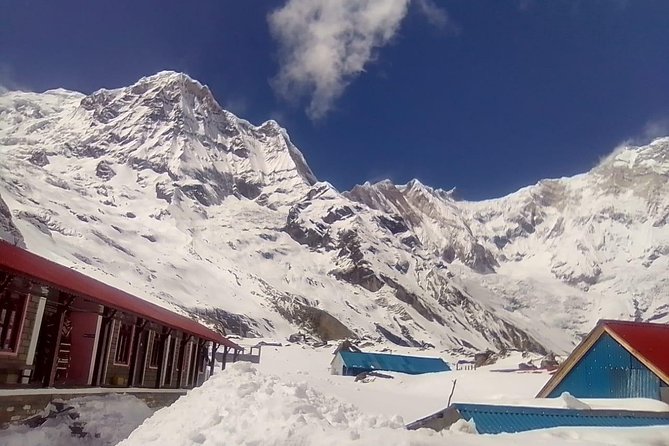
Somewhere between villages and ice, the Himalaya clicks. This 10-day Annapurna Base Camp trek mixes scenic Kathmandu–Pokhara travel with daily walking through Gurung settlements and forest trails. I like that it’s arranged as a true package: hotels in Pokhara plus guesthouses on trek, and an English-speaking trekking guide to keep things organized.
I also love the way the route builds momentum: you start high-contrast mountain viewpoints early, then hit sunrise at Base Camp before heading back down through the same dramatic valleys. One thing to consider: the days add up. Expect solid 5–6 hour hikes most days, plus an altitude-heavy climb on Day 6, and you’ll need to plan for meals since meals and drinks aren’t included.
In This Review
- Key highlights to know before you go
- Kathmandu to Pokhara: starting your Annapurna trek the easy way
- Ghandruk and Chomrong: Gurung villages and the rhythm of the trail
- Toward Bamboo and Doban: suspension bridges and forest hours
- Deurali and the approach to the sanctuary walls
- Machhapuchre Base Camp and the Annapurna Base Camp sunrise moment
- Jhinu Danda hot springs and the ride home to Pokhara
- Price and logistics: what $586.67 really buys you
- Who should book this Annapurna Base Camp trek (and who should reconsider)
- Should you book this Annapurna Base Camp trek with Couch Adventure Nepal?
- FAQ
- What is the meeting time in Kathmandu?
- How long is the Annapurna Base Camp trek?
- What does the tour price include?
- Are meals included?
- What kind of accommodations should I expect?
- Is there an opportunity to see hot springs?
- Will I hike with a private group?
- What is the cancellation window for a full refund?
Key highlights to know before you go
- 6:30am Kathmandu pickup and a straightforward tourist bus connection to Pokhara
- Lakeside Pokhara hotel with easy walking access to Fewa Lake
- Classic village route through places like Ghandruk and Chomrong
- Stone staircases, suspension bridges, and forest trail segments that make the trek feel real, not just scenic
- Machhapuchre Base Camp stop plus a short, crucial climb to Annapurna Base Camp
- People often name guides like Prakash and Bisham as friendly, helpful, and well-run on the trail
More trails out of Kathmandu, boots ready
- Everest Base Camp Trek – 14 Days★ 5.0 · 1,499 reviews
- Everest Base Camp Trek★ 5.0 · 842 reviews
- Everest Base Camp Trekking★ 5.0 · 485 reviews
- Nagarkot Sunrise View and Day Hiking from Kathmandu★ 5.0 · 471 reviews
Kathmandu to Pokhara: starting your Annapurna trek the easy way
Day 1 is all about getting you from city life into mountain mode. You’re picked up from your Kathmandu hotel at 6:30am, then driven to the bus station for a tourist bus to Pokhara. That ride is about 7 hours, which sounds long, but it beats bouncing around with lots of transfers.
When you arrive, you transfer to a hotel in the Lakeside area. It’s positioned so that Fewa Lake is walkable, meaning you can stretch your legs, grab something simple before dinner, and get your bearings without needing extra transport.
Why I think this matters: Annapurna trekkers often underestimate how tiring the first travel day can be. Starting with a structured pickup and a single bus leg helps you conserve energy for the first real hike on Day 2.
A small practical note: the itinerary assumes you’ll be comfortable doing a long bus day and then settling in. If you’re super sensitive to road time, plan to pack small comforts for the bus and keep your evening low-key.
Ghandruk and Chomrong: Gurung villages and the rhythm of the trail
On Day 2, you hike toward Ghandruk. This is one of those places where you feel the culture and architecture of the region right away, and the route uses a stone-paved trekking track to get you into the Annapurna mood.
Expect about 6 hours of walking. It’s enough time to feel like you’re earning the views, but not so much that you’re wrecked for the next day. And after a travel-heavy Day 1, it’s a smart way to start: you’re moving, but you still have energy to enjoy the village atmosphere.
Day 3 focuses on Chhomrong (Chomrong) with stops that break up the climb. You start with an uphill push toward Kimrung Hill, then descend to Kimrung Khola through forest trail. After you work your way back up via another uphill stretch toward Chere Hill, you reach Chomrong after about 6 hours.
What you’re really getting here is variety: forest sections, a river-bend feel, and a village base. If you’ve ever felt bored on trekking routes that are only one kind of terrain, this part usually changes your mind.
Drawback to note: these early days can feel more footwork-heavy than people expect, especially if you’re not used to long descents before the climb. Trekking poles can help a lot for knee stress on the downhills.
Toward Bamboo and Doban: suspension bridges and forest hours
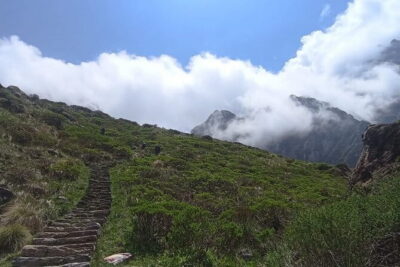
Day 4 is where the scenery starts stacking up. You begin with descent toward the Chomrung River, crossing thousands of stone staircases and a suspension bridge. That mix of steps and bridge time is a signature Annapurna experience: slow and physical, but memorable in a good way.
Then comes the climb. You head back up toward Sinwa Village (about 2 hours) and continue on a mild forest trail to Bamboo. From there, you keep trekking to Doban on the Modi River bank. Total hike time is about 6 hours.
Why this day is valuable: Annapurna trekking isn’t only about the final base camp moment. The “middle valley” days teach you how the mountains and rivers shape the route. You learn the pace your legs like, and you start to understand where the big sightlines will show up later.
What to watch for: walking on stone staircases can be surprisingly tiring even when the altitude isn’t extreme. If you move slowly and consistently, you’ll arrive in better shape for the next day instead of speeding up early and paying for it later.
Deurali and the approach to the sanctuary walls
Day 5 takes you to Deurali. The hike is about 5 hours, on mountain trails that include views along the way. This is a good “steady day” in the itinerary—still trekking, but not overly long.
And importantly, it sets up Day 6. You’re working toward the Annapurna Sanctuary zone, where the air tends to feel sharper and the views get more dramatic.
If you’re sensitive to altitude, Day 5 is where you should focus on pacing: slow breathing, shorter steps, and taking breaks before you feel like you need them. You’re not trying to win a race. You’re trying to keep your body calm.
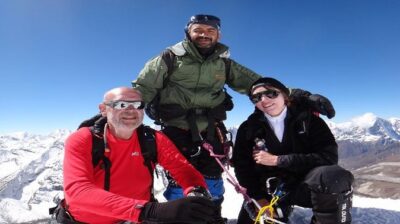
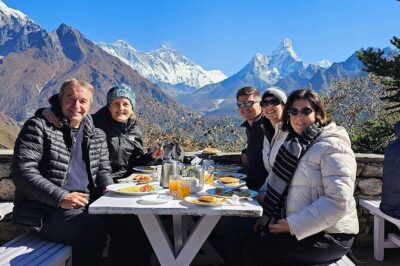
Machhapuchre Base Camp and the Annapurna Base Camp sunrise moment
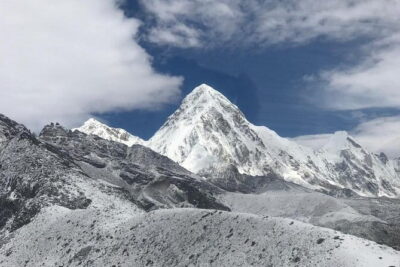
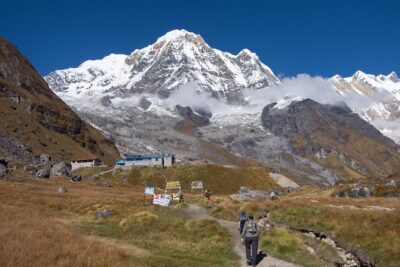
Day 6 is a two-part experience. You trek toward Machhapuchre Base Camp, with views that can include Mt. Hiunchuli, Annapurna South, Annapurna I, Annapurna III, Gandharvachuli, and Gangapurna. Then you do another uphill climb to Annapurna Base Camp, described as about 2 hours to reach the destination.
Total hiking time listed for the day is about 5 hours, but treat the day as altitude-sensitive rather than purely time-based. The base camp area is why people come. Getting there safely is the real win.
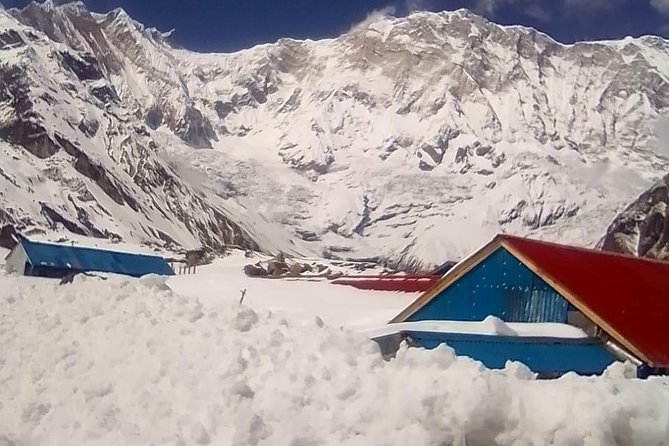
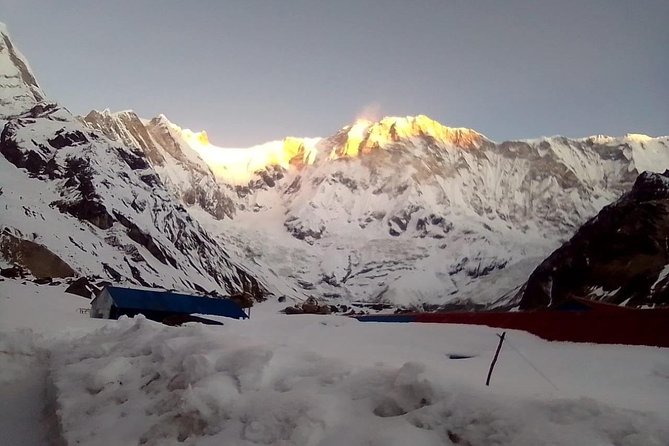
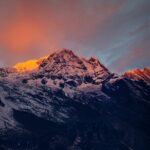
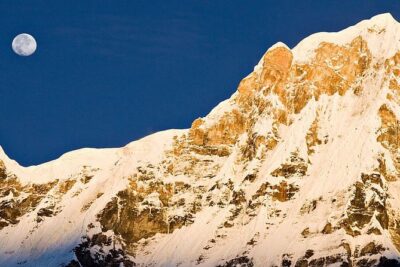
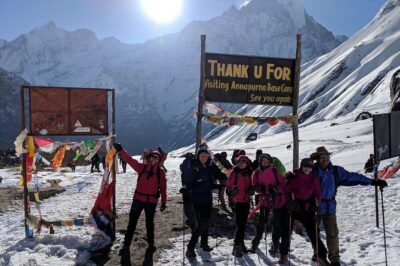
Day 7 is the headline. You start with sunrise from base camp, where the big peaks shift from white to orange. From Base Camp, the view can include a 360-degree panorama featuring Annapurna South, Himchuli, Annapurna I, Gangapurna, Machhapuchre (Fishtail), among others. Then you trek back down to Bamboo over about 6 hours.
This is where the “guided” element matters. A good guide helps you be in the right place at the right time for sunrise and keeps the group moving at a safe pace once you’re back on the trail.
One possible drawback: weather can change quickly in high places. If skies aren’t clear, sunrise can be muted. Still, the view from the sanctuary area and the feeling of reaching the destination tend to remain worth the effort even on less perfect days.
Jhinu Danda hot springs and the ride home to Pokhara
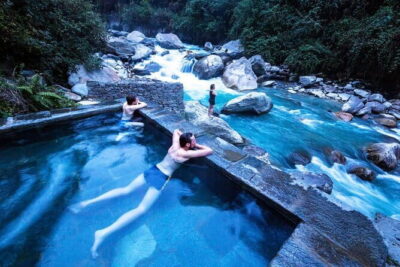
Day 8 turns the dial toward recovery. You hike to Chomrung and then continue down to Jhinu Danda. There’s an optional break if you’re attentive: a hot spring is about 15 minutes from the village, so you can soak tired legs without turning the day into a huge detour.
Day 9 starts with a descent to Nayapul (about 6 hours). From there, you get transferred back to Pokhara by private car (about 1 hour 10 minutes), then moved to your Lakeside hotel for the final night.
Day 10 is your return to Kathmandu. You’re transferred to the bus station and take the tourist bus back, about 7 hours. The trek ends when you’re back in the Kathmandu area.
Why this back half feels good: you don’t just drop from the mountains and hope for the best. You get a real off-ramp—hike down, private car transfer, then a clean bus day home.
Small practical tip: after days of walking, the ride back can feel longer than you expect. Keep water and a light snack handy, even though meals during the trek aren’t included.
Price and logistics: what $586.67 really buys you
This trip is priced at $586.67 per person for approximately 10 days. The value isn’t just in the route. It’s in how much is handled for you and how that reduces decision fatigue.
Included items you should pay attention to:
- Hotel pickup and drop off in Kathmandu
- Tourist bus transfer Kathmandu–Pokhara–Kathmandu
- 2-star accommodation in Pokhara
- Guesthouse accommodation during the trek
- Pokhara–Nayapul–Pokhara transfer by private car
- Trekking permit and TIMS
- An English-speaking trekking guide
- A private trip (only your group participates)
Not included (so you can plan your budget):
- All meals and drinks
- Rescue costs in an emergency
- Gratitude (optional)
Here’s how I think about the cost: $586.67 is the kind of price where the permit paperwork, guide, and transport leg alone can add up fast if you try to DIY it on short notice. If you want a guided route with less friction—plus the peace of mind that permits and basic transfers are already arranged—this pricing often makes sense.
If you prefer to control meal choices tightly (or you’re on a strict budget for food), you’ll want to plan spending for meals during the trek. That’s the main “surprise” expense that can bump the final total.
Who should book this Annapurna Base Camp trek (and who should reconsider)
This trek is described as suitable with moderate physical fitness. That matches the practical reality of the schedule: most hiking days are around 5–6 hours, with a big sightseeing payoff at the end.
I think it’s a strong fit if you:
- Want classic Annapurna highlights without adding extra planning stress
- Like the mix of villages, forests, river valleys, and stone stair sections
- Prefer having an English-speaking guide to handle trail-day logistics
- Value a private setup for your group, rather than joining a random mix of strangers
You might want to reconsider if you:
- Have trouble with long descents (stone steps can be hard on knees)
- Expect the trek to be easy simply because it’s 10 days
- Don’t want to manage altitude carefully on the approach to Base Camp
And based on names that come up in operator feedback—guides like Prakash and Bisham—the human side seems to be a genuine strength: friendly, helpful support and good organization.
Should you book this Annapurna Base Camp trek with Couch Adventure Nepal?
If you want a guided Kathmandu–Pokhara–Annapurna Base Camp experience that stays organized day to day, I’d say it’s a smart option. You get a clean transport plan, permits taken care of, predictable accommodation style, and a route that hits both the classic villages and the high-mountain payoff.
My main check before booking would be your budget for meals and drinks, since those aren’t included. Second, be honest about pace and leg wear—this route includes lots of steps and a demanding Day 6 approach to base camp.
If you show up with moderate fitness, a willingness to take breaks, and a steady pace mindset, you’re very likely to come away with that rare mix: village warmth below, sanctuary walls above, and a sunrise view you’ll remember for a long time.
FAQ
What is the meeting time in Kathmandu?
Pickup in Kathmandu starts at 6:30am.
How long is the Annapurna Base Camp trek?
The itinerary runs for 10 days (approx.).
What does the tour price include?
It includes hotel pickup/drop off, Kathmandu–Pokhara round-trip tourist bus, 2-star accommodation in Pokhara, guesthouse accommodation during the trek, Pokhara–Nayapul–Pokhara transfer by private car, trekking permit and TIMS, and an English-speaking trekking guide.
Are meals included?
No. All meals and drinks are not included and are available to purchase.
What kind of accommodations should I expect?
In Pokhara you get 2-star hotel accommodation. During the trek, you stay in basic guesthouses.
Is there an opportunity to see hot springs?
Yes. On the way to Jhinu Danda, you can visit a hot spring about 15 minutes from the village.
Will I hike with a private group?
Yes. It’s described as a private tour/activity so only your group participates.
What is the cancellation window for a full refund?
You can cancel up to 3 days in advance for a full refund.
More Trekking Out of Kathmandu
More Tour Reviews in Kathmandu
Just Reviewed in Kathmandu
- Mountain Bike Tour
★ 5.0 · 3 reviews - Annapurna Panaroma
★ 5.0 · 3 reviews - Mount Everest Scenic Flight 50 Minutes
★ 5.0 · 3 reviews - Kathmandu : Swambhunath & Durbar Square Guided Half Day Tour
★ 3.3 · 3 reviews - Chandragiri Cable Car & Monkey Temple Tour – Private/Group
★ 5.0 · 3 reviews - Kathmandu: Shivapuri National Park Hiking Day Trip
★ 3.3 · 3 reviews
Annapurna Base Camp Treks, compared.
 ★ 5.0Annapurna base camp trek 5 DaysFrom $699252 reviews
 ★ 5.014-Day Private Annapurna Base Camp TrekFrom $1,090180 reviews
 ★ 5.0Annapurna Base Camp TrekkingFrom $1,779116 reviews
 ★ 5.0Annapurna Base Camp TrekFrom $935111 reviews
★ 5.0Annapurna Base Camp TrekFrom $1,350107 reviews
★ 5.0Annapurna Base Camp TrekFrom $935111 reviews
★ 5.0Annapurna Base Camp TrekFrom $1,350107 reviews
 ★ 5.0Kathmandu to Annapurna Base Camp (ABC) 5-Day TrekFrom $99102 reviews
 ★ 5.0Annapurna Base Camp Trek- 11 DaysFrom $99990 reviews
 ★ 5.0Annapurna Base Camp Trek 12 DaysFrom $80085 reviews
Browse the lists this tour appears in