
Review · ANNAPURNA BASE CAMP TREKS
10 Days Annapurna Base Camp Trek from Kathmandu
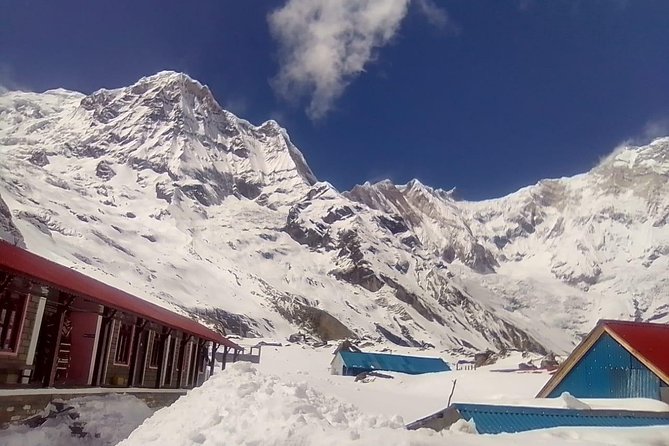
Annapurna Base Camp is the goal. This 10-day trek from Kathmandu is interesting because it combines long scenic transport, village-to-village hiking, and the big payoff of reaching the base camp area with a chance at sunrise views. I like that the plan is handled end-to-end with an English-speaking, government-licensed trekking guide, including permits and an emergency first aid kit. I also like the pacing that starts gently around Pokhara and the Gurung villages before the steeper days. One drawback to consider: the trek still asks for moderate physical fitness, and Day 6 includes route sections known for avalanches, so you’ll want to take safety guidance seriously.
You’ll also appreciate the practical side of this trip. The price covers key logistics like hotel pick-up/drop-off in Kathmandu, Kathmandu–Pokhara and back by tourist bus, Pokhara hotel nights with breakfast, and the official documents you need to hike. At $490 per person, it feels like decent value if you want fewer loose ends and more time thinking about the trail instead of paperwork.
This is a private tour for your group, and the start time is listed as 11:15 am at the meeting point, with hotel pickup included. If you want a well-run trek with clear support, and you’re comfortable hiking day after day, this one fits well.
In This Review
- Key things I’d bet on before you go
- Price and logistics that actually matter: what $490 buys you
- Day 1: Kathmandu to Pokhara Lakeside, and why the long travel day is worth it
- Day 2 to Day 3: Ghandruk and Chhomrong, where the culture shows up
- Day 4: Bamboo village, with the trail turning more up-and-down
- Day 5: Dovan to Deurali, bamboo and rhododendron season energy
- Day 6: The Annapurna Base Camp day—views, effort, and avalanche-aware routing
- Day 7 to Day 8: Coming down past Bamboo to Jhinu Danda
- Day 9: The easiest-feeling day—trail ends, vehicles take over
- Day 10: Pokhara back to Kathmandu—resting your body, not your mind
- Guides and safety: the human factor behind a well-run trek
- Where this trek shines—and who should book it
- Should you book CAN Travels’ 10 Days Annapurna Base Camp trek?
- FAQ
- What’s the start time for the experience?
- Is hotel pick-up and drop-off included?
- How do you travel between Kathmandu and Pokhara?
- What’s included for the trekking guide and permits?
- Is accommodation included during the trek?
- What’s not included in the price, and how does cancellation work?
Key things I’d bet on before you go
- English-speaking licensed guide included, plus emergency first aid basics with the guide.
- Permits and official documents handled for you, so you don’t scramble for paperwork.
- Pokhara is not rushed: 2 nights in a 2-star hotel with breakfast gives you recovery time.
- Village trail variety: Gurung culture at places like Ghandruk and Chhomrong, plus bamboo and rhododendron forest sections.
- Day 6 base camp push: big views, with avalanche-prone route areas you should treat with extra respect.
- Flexible, group-style logistics: private tour for your group, with some shared-vehicle segments depending on the day.
More trails out of Kathmandu, boots ready
- Everest Base Camp Trek – 14 Days★ 5.0 · 1,499 reviews
- Everest Base Camp Trek★ 5.0 · 842 reviews
- Everest Base Camp Trekking★ 5.0 · 485 reviews
- Nagarkot Sunrise View and Day Hiking from Kathmandu★ 5.0 · 471 reviews
Price and logistics that actually matter: what $490 buys you
Let’s talk value in real terms. $490 per person is not cheap, but it covers several expensive-to-fix items:
- Transport: Kathmandu to Pokhara and back by tourist bus with a luxury sofa seat setup.
- Local transfers: arrangements to get you from Pokhara toward Nayapul/Siwai and back toward Kathmandu.
- Lodging in Pokhara: 2 nights in a 2-star labeled hotel with breakfast.
- Trekking support: a government-licensed English-speaking guide.
- Paperwork: trekking permit and all official documents.
- Safety basics: an emergency normal first aid kit with the guide.
- Guide logistics: guide food, accommodation, and expenses are covered.
What’s not covered is important too. Food and drinks during the trek are available on purchase, and gratuities are optional. That means you should budget for meals along the way, plus the extra costs that come with altitude trekking habits like hot drinks, snacks, and the occasional comfort purchase when your legs are done negotiating.
Also notice the mix of “private” and “shared.” This is described as a private tour/activity where only your group participates, but the route includes some transfer segments that could be shared by vehicle (the trek route often uses shared jeeps/buses at certain points). Practically, you’re still guided and scheduled—but you might not always have a vehicle that never stops for anyone else.
Day 1: Kathmandu to Pokhara Lakeside, and why the long travel day is worth it
Your trek begins with hotel pickup and a drive toward Pokhara. The plan puts you on the road for about 7 hours before you reach Pokhara Lakeside. After that, you get rest time—exactly what you want before trekking starts.
Pokhara is useful for one big reason: it acts like a buffer. Instead of jumping straight into trail fatigue, you land in a place where you can settle your body and your gear rhythm. If you’ve never done a trek like this, that matters.
Potential drawback: you’ll feel the travel day in your legs the next morning. This is not a “do nothing” day, it’s a “reset” day. I’d treat it like that—plan for an early night and a calm start.
Day 2 to Day 3: Ghandruk and Chhomrong, where the culture shows up
Day 2 drives from Pokhara to Nayapul, then you begin walking toward Ghandruk via Sauli Bazar. The hike time listed is around 5 to 7 hours, and the trail is described as steep in parts. The payoff is that Ghandruk is a village with a strong sense of place, and from there you get classic Himalayan scenery.
Day 3 continues into Chhomrong, with a trek through Kumrong danda (up and down). Chhomrong is highlighted for typical Gurung people lifestyle and natural attractions. This is one of the reasons I like this trek route: you’re not just climbing stairs for views. You’re moving through communities that live with these mountains as part of daily life.
How to read these days: Day 2 is about finding your hiking pace. Day 3 is where you can start paying attention to the “in-between” moments: village lanes, trail conversations, and the way the trail changes as the elevation and forest type shift.
Possible drawback: steep sections can be slow going. If you’re the type who sprints at the start, you’ll likely pay for it later. Go easy here. You’re building endurance, not winning a race.
Day 4: Bamboo village, with the trail turning more up-and-down
From Chhomrong, Day 4 includes a steep descent to Chhomrong Khola, then a steep climb after crossing. The pattern is described as multiple uphill and downhill segments. The goal is Bamboo by end of day.
This day matters because it teaches your body an important trekking lesson: not every day climbs in one direction. Many ABC routes “edit” your energy level by alternating steep downs and steep ups.
Why it’s valuable: by the time you reach Bamboo, you’re usually more in sync with the effort pattern. You’re also getting surrounded by the kind of forest scenery that makes the trail feel more like a journey than a workout.
What to watch: these alternating climbs and descents can feel harder than the total time suggests. If your knees complain on downhills, take slower steps than you think you need.
Day 5: Dovan to Deurali, bamboo and rhododendron season energy
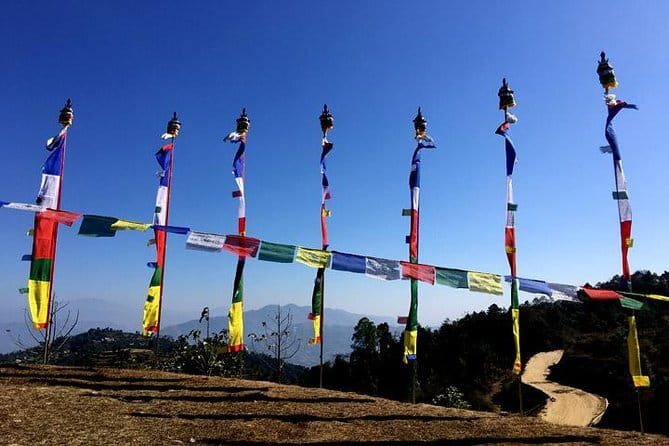
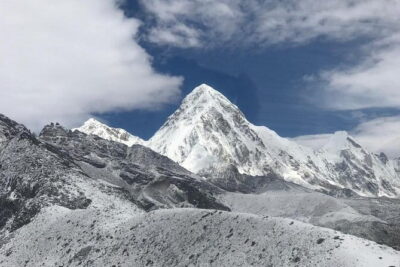
Day 5 heads toward Deurali, with a route described as short and beautiful through bamboo and rhododendron forests. You’ll likely see majestic peaks ahead on the way.
This is a great “gear-check” day. By now you know what pace you can keep for around 6 to 7 hours, and you can adjust how you start mornings, how you take breaks, and how much you eat before you get tired.
Possible drawback: Deurali days can feel colder or more exposed as you gain altitude (the listing focuses on scenery and trail types, not temperature). If you run cold, plan to move steadily and not stop too long in the wind.
Day 6: The Annapurna Base Camp day—views, effort, and avalanche-aware routing
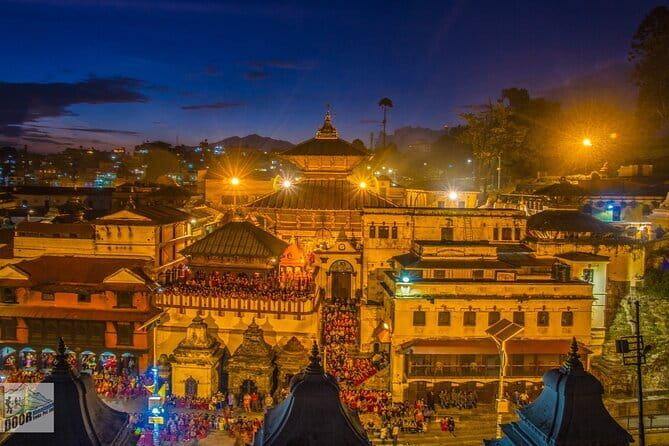
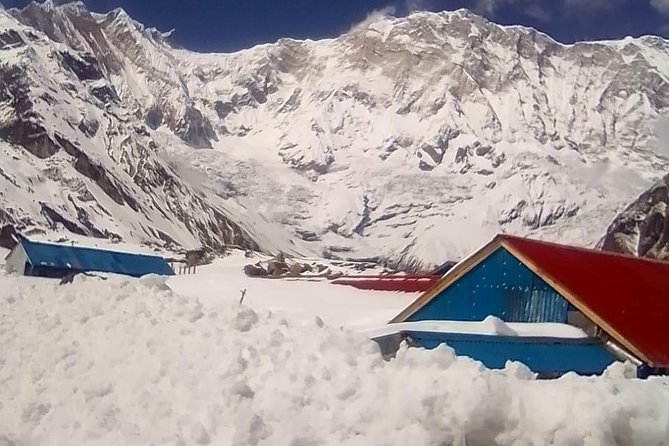
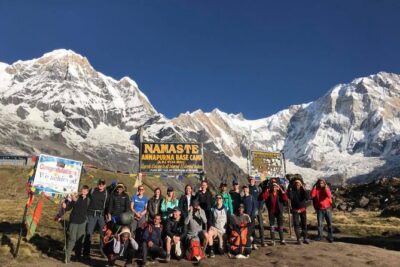
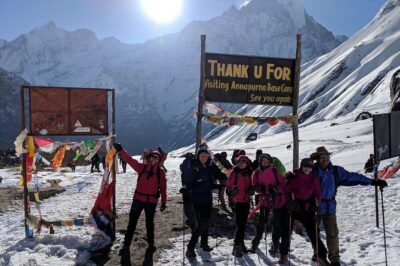
Day 6 is the big one: Deurali to Annapurna Base Camp. The route is described as passing through high alpine forests with stunning Himalayan views of snow-capped peaks. It also notes that you’ll pass through several spots known for avalanches.
That last point is worth underlining. This isn’t to scare you—it’s to remind you that you’re hiking in real mountain terrain, and your guide’s judgement matters. If the group needs to adjust timing or routing around safety conditions, you’ll want to follow that without pushing back.
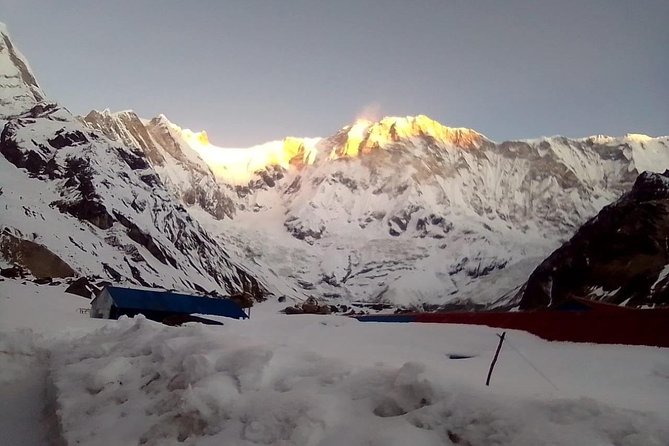
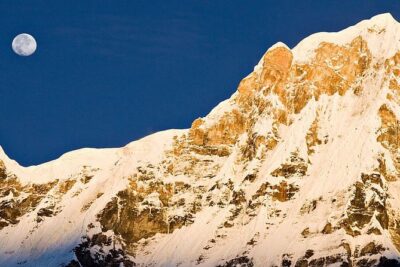
Why this day feels special: it’s the moment where the whole trek makes sense. The base camp area is where the mountains go from “photos” to “scale.” The overview also mentions sunrise views, so if your plan includes an early start or timing for sunrise, it’s there for a reason.
Practical consideration: Day 6 is listed as about 7 hours. It’s not a long day by itself, but it’s the kind where slow, consistent movement beats speed. You’re aiming to arrive with enough energy to enjoy the moment.
Day 7 to Day 8: Coming down past Bamboo to Jhinu Danda
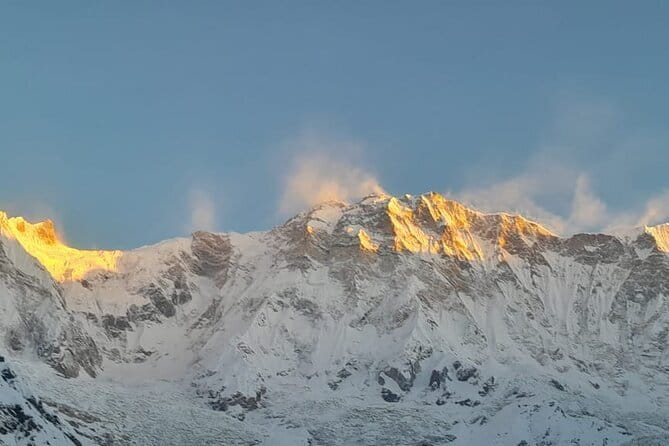
After the base camp time, Day 7 takes you back down to Bamboo. The plan says you’ll have breakfast, then trek down using the same path, with a drop of around 1,700m (that’s the kind of number that explains why downhill feels like both relief and strain).
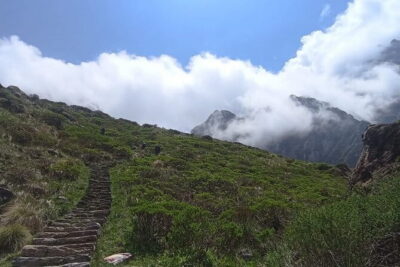
Then Day 8 brings you to Jhinu Danda. It’s a steep ascent to Kuldi Ghar, then more climbing and descending, including stone steps and routes toward Lower Chomrong. The time listed is about 6 hours.
Why this section is a turning point: after base camp, you’re often mentally ready to go faster. Don’t. Your legs may feel better, but the trail is still steep and step-heavy. This is where you keep good form so you don’t pay for it on the final days.
Possible drawback: stepping down a lot after a major effort day can make you sore even if you feel motivated. If you’re sensitive to soreness, I’d plan extra slow foot placement here.
Day 9: The easiest-feeling day—trail ends, vehicles take over
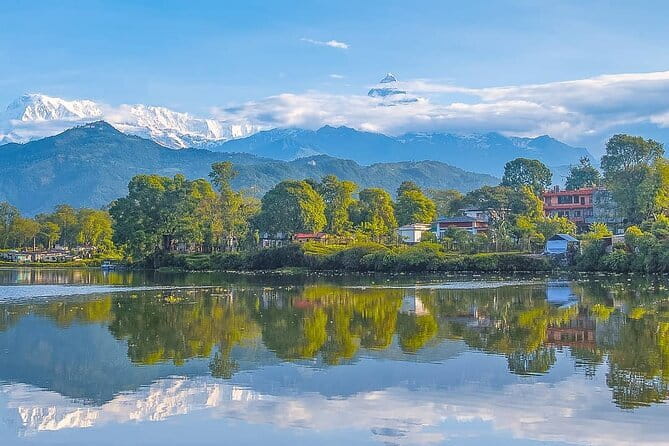
Day 9 is described as one of the easiest days. You trek from the area toward Sawai, then take a shared jeep or bus to Nayapul, followed by a private car/jeep back to Pokhara.
That mix of hiking plus vehicle time is a smart “recovery bridge.” You get movement, but less grinding. You also get a return to a more comfortable routine: a bed, a meal you don’t have to time around the trail, and a reset before Kathmandu.
Why it’s valuable: you’re less likely to arrive exhausted on departure day.
Day 10: Pokhara back to Kathmandu—resting your body, not your mind
Day 10 follows the highway route back through rivers, hills, and small Nepalese settlements. The bus ride is about 7 hours back into Kathmandu Valley. From the tourist bus park, you’ll be dropped in Kathmandu.
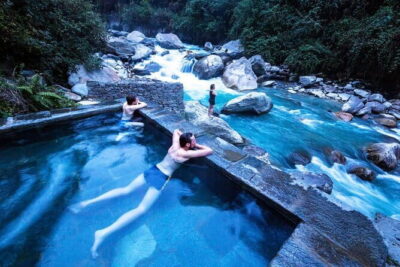
One review also mentions a hot-springs stop on day 10. That’s not listed in the day-by-day summary you provided, so treat it as a possibility rather than a guarantee. Still, if your legs are beat up, it’s worth asking your guide whether time and route allow a soak before you’re fully done with the trek.
Guides and safety: the human factor behind a well-run trek
What stands out from the experiences connected to CAN Travels is that guides aren’t just walkers holding a map—they’re the people keeping the trek smooth.
English-speaking, government-licensed guidance is included, and the emergency first aid kit is with the guide. In practice, that means you’re not handling paperwork puzzles alone and you’re not guessing when conditions change.
The guide names that show up again and again include Krishna, Biru, Milan, Amrit, Deepak, and Prakash. Across those examples, the common threads are:
- attention to safety and comfort
- a proactive feel for the day’s plan
- explanations of local culture and natural features
- a friendly tone that makes hard days easier to manage
That matters because ABC is not a “sit in a bus and look” experience. Your mood affects your pace. A good guide makes the trail feel more understandable, and that keeps you calmer when your body wants to rush.
Where this trek shines—and who should book it
I think this trek is a strong match if you want:
- a structured 10-day plan with fewer logistical headaches
- a guide who handles permits and documents
- village culture stops like Ghandruk and Chhomrong
- forest-and-mountain scenery transitions (bamboo, rhododendron, high alpine forests)
- a serious goal day with the Annapurna Base Camp arrival
It may not be the best fit if:
- you hate steep hiking and prefer flat walking
- you need a trip with lots of leisure time between active days
- you’re looking for meals included in the price (food is on purchase)
And a note on fitness: the itinerary calls for moderate physical fitness. That doesn’t mean you need to be an athlete, but it does mean you should be comfortable hiking for 5 to 7 hours on uneven ground, including up-and-down trail sections.
Should you book CAN Travels’ 10 Days Annapurna Base Camp trek?
If you want a trek where you show up, hike, and return with your goal accomplished—without fighting paperwork or transport details—this is a sensible choice. The included guide, permits, Pokhara hotel nights, and transport add up in a way that’s easier than booking every piece separately. The base camp day is the real magnet, and the planning around it looks organized.
Before you book, I’d ask two quick questions:
- Which guide will you get (names like Krishna, Milan, Amrit, Deepak, Biru, and Prakash are associated with this service)?
- How does the itinerary handle safety and timing on avalanche-aware sections on the base camp day?
If you get clear answers and you’re in for a real hiking routine, you’ll likely be happy with this one.
FAQ
What’s the start time for the experience?
The experience start time is listed as 11:15 am. Hotel pickup is included as part of the experience.
Is hotel pick-up and drop-off included?
Yes. The package includes hotel pick up and drop off.
How do you travel between Kathmandu and Pokhara?
Kathmandu to Pokhara to Kathmandu transfers are included by a luxury sofa seat tourist bus, with about 7 hours on the bus ride as described for each highway segment.
What’s included for the trekking guide and permits?
You get a government-licensed English speaking trekking guide. Trekking permits and all official documents are included, and there’s an emergency normal first aid kit with the guide.
Is accommodation included during the trek?
Pokhara accommodation is included for 2 nights in a 2-star hotel with breakfast. The trek-day food isn’t included, but breakfast is included at the Pokhara hotel.
What’s not included in the price, and how does cancellation work?
Food and drinks are not included (available on purchase), and gratuities are optional. Cancellation is free up to 24 hours in advance for a full refund.
More Trekking Out of Kathmandu
More Tour Reviews in Kathmandu
Just Reviewed in Kathmandu
- Mountain Bike Tour
★ 5.0 · 3 reviews - Annapurna Panaroma
★ 5.0 · 3 reviews - Mount Everest Scenic Flight 50 Minutes
★ 5.0 · 3 reviews - Kathmandu : Swambhunath & Durbar Square Guided Half Day Tour
★ 3.3 · 3 reviews - Chandragiri Cable Car & Monkey Temple Tour – Private/Group
★ 5.0 · 3 reviews - Kathmandu: Shivapuri National Park Hiking Day Trip
★ 3.3 · 3 reviews
Annapurna Base Camp Treks, compared.
 ★ 5.0Annapurna base camp trek 5 DaysFrom $699252 reviews
 ★ 5.014-Day Private Annapurna Base Camp TrekFrom $1,090180 reviews
 ★ 5.0Annapurna Base Camp TrekkingFrom $1,779116 reviews
 ★ 5.0Annapurna Base Camp TrekFrom $935111 reviews
★ 5.0Annapurna Base Camp TrekFrom $1,350107 reviews
★ 5.0Annapurna Base Camp TrekFrom $935111 reviews
★ 5.0Annapurna Base Camp TrekFrom $1,350107 reviews
 ★ 5.0Kathmandu to Annapurna Base Camp (ABC) 5-Day TrekFrom $99102 reviews
 ★ 5.0Annapurna Base Camp Trek- 11 DaysFrom $99990 reviews
 ★ 5.0Annapurna Base Camp Trek 12 DaysFrom $80085 reviews
Browse the lists this tour appears in