
Review · ANNAPURNA BASE CAMP TREKS
10 days Annapurna Base Camp Trek
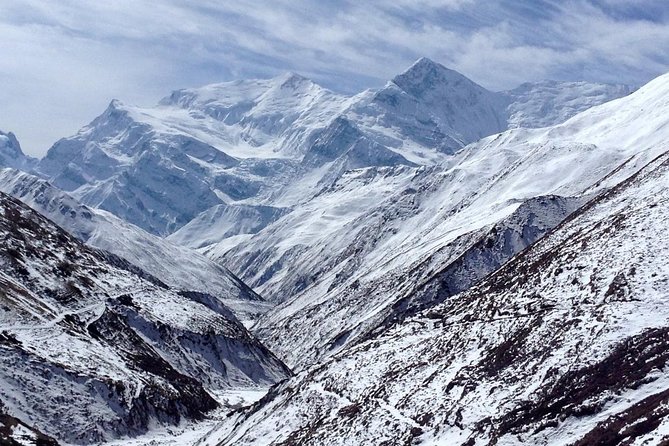
Annapurna Base Camp hits fast, and this trek keeps things organized. I like how the full trip is stitched together from Kathmandu pickup to flights over to Pokhara and pre-booked lodge stops, so you spend less time figuring logistics and more time walking.
I also really appreciate the people side of this experience. Maina from Eve Holidays is named in the feedback as a booking agent who keeps details in order, and the trekking guide Pasang comes up as a steady presence who helps the days feel manageable.
One consideration: a 10-day plan means you still earn the views. The route includes steep days and long descents, so walking poles and a knee-friendly pace are not optional if you want to enjoy yourself.
In This Review
- Key highlights worth your attention
- Why this 10-day Annapurna Base Camp plan fits real travelers
- From Thamel to the Pokhara trail: logistics without the headache
- Days 2–4: Kimche to Ghandruk, then Chhomrong’s ridgeline views
- Days 5–6: Deurali to Annapurna Base Camp via Machhapuchhre Base Camp
- Days 7–8: Down to Jhinu Danda, then the Modi River to Nayapul
- Day 9–10: Pokhara to Kathmandu, plus one last Nepal meal
- Price and what you’re really buying at $1,598
- What it feels like day by day on the trail
- Altitude, fitness, and the steady pace strategy
- Who should book this trek, and who should think twice
- Should you book with Eve Holidays?
- FAQ
- Where does the trek start and end?
- What is the approximate duration?
- What is included in the price?
- What is not included?
- What group size should I expect?
- How fit do I need to be?
- Are permits and park fees handled for me?
- What happens if the trek can’t run due to weather?
Key highlights worth your attention
- Small group size (max 8 travelers): easier to move, ask questions, and keep a comfortable pace.
- Guide + paperwork handled: you get national park fees, TIMS, and permits taken care of.
- Teahouse trekking with included meals: you’re not hunting for meals each night, which matters on steep days.
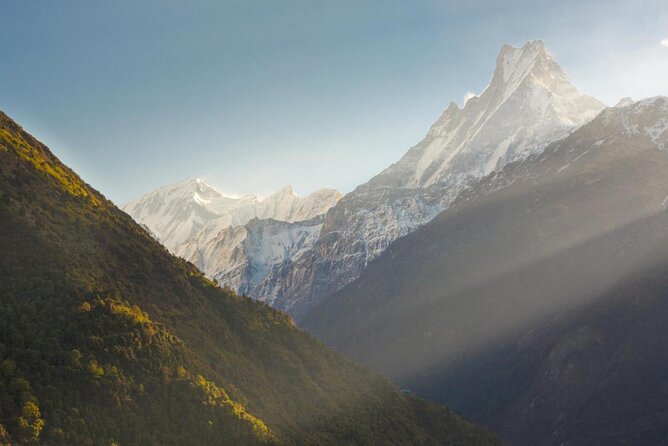
- Memorable summit-day routing: you reach Annapurna Base Camp on Day 6, then continue down toward Jhinu Danda.
- Pokhara hotel downtime: hot shower and decompression time after trekking.
- Clear transport plan: flight to Pokhara, trek exits at Nayapul, then bus/drive back to Kathmandu.
More trails out of Kathmandu, boots ready
- Everest Base Camp Trek – 14 Days★ 5.0 · 1,499 reviews
- Everest Base Camp Trek★ 5.0 · 842 reviews
- Everest Base Camp Trekking★ 5.0 · 485 reviews
- Nagarkot Sunrise View and Day Hiking from Kathmandu★ 5.0 · 471 reviews
Why this 10-day Annapurna Base Camp plan fits real travelers
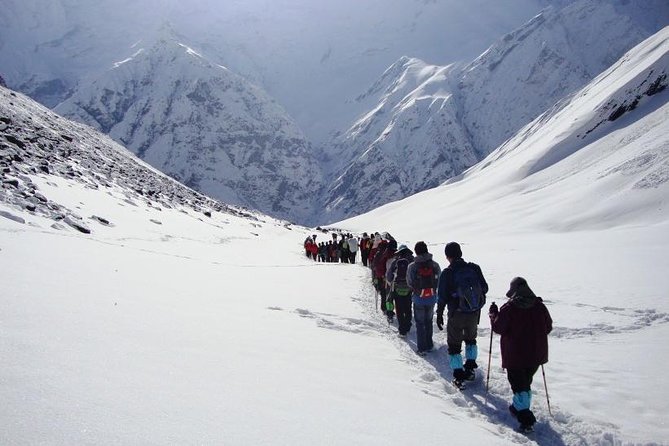
Annapurna Base Camp is the kind of goal that sounds simple until you’re staring at your first long uphill. What makes this particular 10-day setup feel practical is that it doesn’t just throw you onto a trail and wish you luck. The schedule is structured: flights, lodge nights, meals on most trekking days, and a guide to manage the route and daily rhythm.
The other thing I like: it’s not a “stay on one ridge and admire mountains” trip. You’re moving through genuine villages—Ghandruk, Chhomrong, Deurali—and you’re walking forest paths, crossing rivers, and heading through the area that leads into the sanctuary zone. That gives you variety each day, which helps mentally when altitude starts tugging at your sleep and appetite.
From Thamel to the Pokhara trail: logistics without the headache
Day 1 is built for you to land, settle, and not fall behind. You arrive at Tribhuvan International Airport, then a representative meets you and escorts you to your pre-booked hotel in Thamel. After that, you’ve got the rest of the day to rest, freshen up, and get your bearings.
Day 2 is where the trip turns into a trek story. You fly to Pokhara and then start walking from near Kimche, just outside town. This is valuable because it saves you from spending extra days just reaching the trail. Also, the trek starts with a climb-heavy day, which means you get warmed up on a route that’s meant for gradual body adjustment rather than jumping straight into the hardest terrain.
Days 2–4: Kimche to Ghandruk, then Chhomrong’s ridgeline views
Day 2 has you on stone pathways and, for much of the walk, climbing. The route takes you past Kimche Village and onward until Ghandruk. This is a classic rhythm for Annapurna treks: start with effort, build confidence, and arrive at a village base where you can eat, shower if available (often limited), and sleep with a clearer head.
A knee note here matters. The walk description specifically warns that it can be tough on knees because of the climbing/footwork demands. My practical advice: bring poles if you have them, and use them on descents as much as ascents. Your knees will notice.
Day 3 adds a bigger emotional payoff. You rise first, cross the Kimrong Khola by bridge, then climb toward Taulung. After that comes a long steep ascent that joins the main trail toward Chhomrong. The high point above the main valley is described as a place for soaring vultures, griffons, and lammergeiers—those are big, dramatic birds, and it can feel like the sky is actively part of the show.
Chhomrong itself is a strong stopping point: it’s the last major settlement before the sanctuary zone, and it’s known for alpine lodge views. If you’re someone who likes to end a day with a good photo and a comfortable place to decompress, this stop delivers.
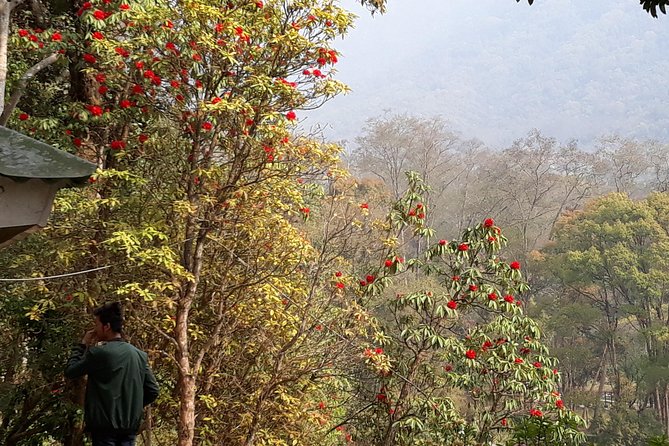
Day 4 is another “views plus forest hiking” day. You descend to cross the Chommrong Khola on a suspension bridge, then keep climbing steeply. You pass through oak and rhododendron forests—exactly the kind of changing scenery that helps you keep walking when your mind starts bargaining.
You reach Sinuwa (2350m) for a teahouse stay on top of the ridge, then the route continues more gradually toward Kuldigharth (2470m) and lunch at the Bamboo Hotel (2340m). After lunch you push toward Dovan, walking through wet bamboo forest into the accommodation area.
Practical takeaway: days like this are the reason a good guide and steady group pacing matter. When the path gets steep and the scenery keeps shifting, you want someone who can help you keep your energy in the right place.
Days 5–6: Deurali to Annapurna Base Camp via Machhapuchhre Base Camp
Day 5 starts after breakfast at the lodge, and it’s described as a route through waterfalls, caves, forests, and villages toward Deurali. This day can feel like a transition: you’re leaving behind the earlier village character and moving closer to the higher trekking environment. If you’re prone to feeling “almost there” fatigue, Day 5 is where you’ll want to manage your pace and not sprint because you’re excited.
Then Day 6 is the big one. You walk to Annapurna Base Camp via Machhapuchhre Base Camp, and then you descend down to Machhapuchhre Base Camp at a lower altitude for the night.
Reaching Annapurna Base Camp on Day 6 is a smart structure because it keeps you from spending too many days lingering at the same altitude zone. You get the goal day, and then you have a controlled descent immediately after. That can help you feel less wiped out than treks where the route stays high for too long.
One more practical note: the itinerary implies a long effort day that still includes a descent afterward. So treat the Base Camp day like a marathon leg, not like a relaxed sightseeing stroll. Hydrate, eat when it’s available, and keep your focus on steady steps. The views are the reward, but your energy is what gets you there.




Days 7–8: Down to Jhinu Danda, then the Modi River to Nayapul
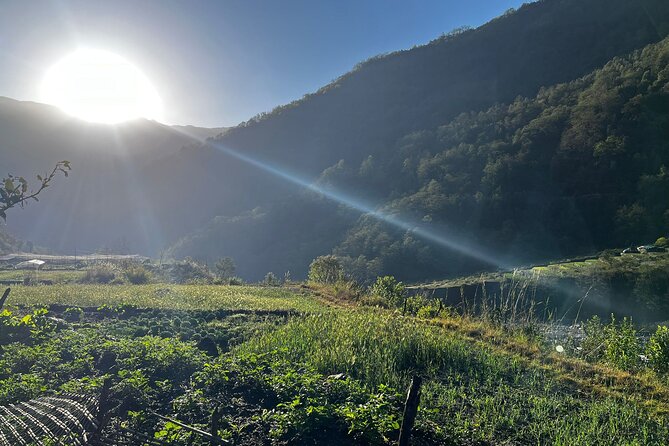
After Base Camp, many treks feel mentally tricky because you might think the hardest part is over. Day 7 corrects that idea gently by taking you through rhododendron forest and toward the Chhomrong River and Chhomrong Village, ending at Jhinu Danda for overnight.
You reach Jhinu Danda after a 6-hour walk in the description, so it’s still active. But the payoff of continuing down is real: you’re reducing altitude pressure and letting your body reset while still staying on a trek path that feels like you’re progressing toward civilization.
Day 8 is your exit day, and it’s designed to give you a final trek “hit” and then a proper reset in Pokhara. You descend to the Kimrong Khola, cross it, and tackle a short ascent. Then you follow the Modi River until you reach Nayapul, where you meet the bus and drive back to Pokhara.
Once you’re in Pokhara, you get the best kind of reward: a hot shower and time to relax in the hotel, or stroll around the lakeside. After days of limited amenities, that kind of downshift matters. You’re not just ending a trek; you’re letting your body catch up.
Day 9–10: Pokhara to Kathmandu, plus one last Nepal meal
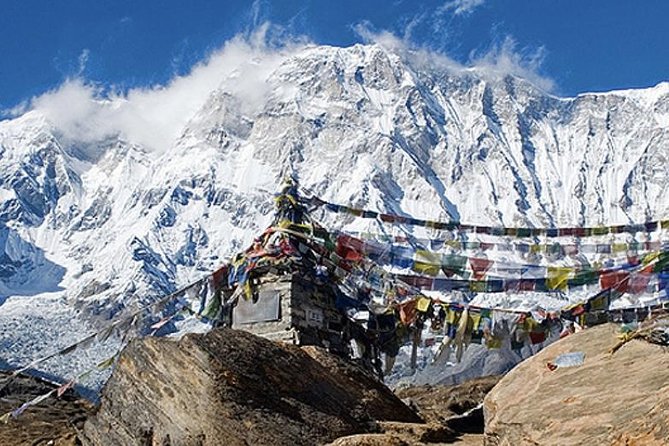
On Day 9 you drive from Pokhara back to Kathmandu in a tourist bus. In the evening, there’s a farewell dinner with a representative from Eve Holidays at a traditional Nepalese restaurant. This is a nice closure touch. It’s not the summit, but it is a chance to compare notes with your guide and feel the trip “wrap” instead of disappearing into airport transfers.
Day 10 gives you leisure time to explore Kathmandu on your own, then you’re dropped at the airport for your flight time. This part is valuable because it turns the end of your trek into real travel. You can see how Kathmandu works, grab souvenirs, and avoid feeling rushed at the end of a physically demanding trip.
Price and what you’re really buying at $1,598
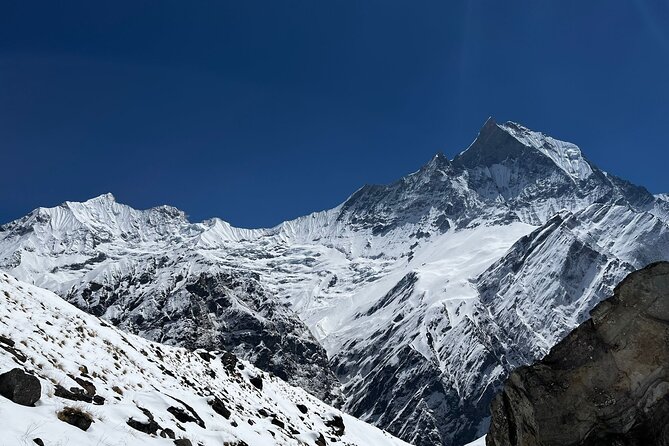
At $1,598 per person, the price isn’t just for “walking in mountains.” You’re paying for a bundled service that typically costs real money in time and stress if you try to assemble it yourself.
Here’s what your money covers, based on the included list:
- 9 nights accommodations across hotels and lodges on a twin-share basis
- Kathmandu–Pokhara flights plus airport departure taxes
- National park fees and TIMS
- Professional trekking guide, including guide salary, food, and accommodation
- All paperwork and permits
- All ground transport in a private vehicle (plus the described bus/tourist transport segments)
- Trekking equipment
- Meals: Breakfast (9), Lunch (6), Dinner (8)
What this means for you: you can plan around hiking and recovery instead of spending your energy bargaining for permits, trying to match arrival times to lodge availability, or scrambling last-minute for maps and route clarity.
The one thing to watch: the “Not Included” section says food and drinks are not included unless specified. Even with meals included on most days, you’ll likely want snacks, tea/coffee, or other drinks on top. Budget for that so you’re not surprised when you’re hungry at trail-side stops.
What it feels like day by day on the trail
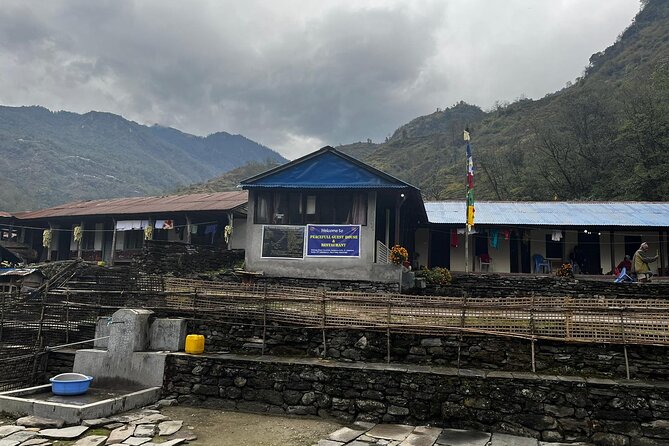
This trek has a clear pattern: climb, cross a river, pass through a village or forest zone, then end at a lodge where you can eat and sleep.
- Early days (Kimche to Ghandruk to Chhomrong) put you into a climbing-and-descending rhythm, including stone pathways, bridge crossings, and steep sections that test your knees.
- Mid trek (toward Deurali and the Base Camp day) leans more into higher-altitude scenery and a more “expedition feel,” especially with the mention of Machhapuchhre Base Camp in the route.
- Final trek days focus on descent and continuity: rhododendron forest, river-following sections like the Modi River, and a clean exit to Nayapul.
That variety is part of the value. You’re not repeating the same hike day after day. You’re moving through different textures—bamboo forest, oak and rhododendron forests, village trails, river corridors—which helps you stay mentally engaged.
Altitude, fitness, and the steady pace strategy
The trip says it’s for travelers with moderate physical fitness. That’s realistic for a 10-day trek that includes multiple 5–6 hour days and a major Base Camp push.
But “moderate” doesn’t mean “no discomfort.” Your body will feel the schedule. Here’s how I’d plan it:
- Keep your pace slow enough that you can breathe through your effort.
- Use poles on downhills to protect knees (the itinerary already flags knee strain risk).
- Eat and drink regularly even when you don’t feel like it. On trek days, hunger and thirst can arrive late.
Also, it’s a maximum of 8 travelers, which usually helps with traffic on the trail. You’ll still share paths with others, but your group pacing is easier to manage than big tours.
Who should book this trek, and who should think twice
This works well for:
- First-time Annapurna hikers who want structure and a guide who handles permits and route logistics
- People who like teahouse trekking with included meals rather than self-planning everything
- Travelers who want a real challenge but still want an easier back half with a Pokhara hotel reset
You might think twice if:
- You have knee issues or weak downhill mobility and don’t want to use poles or slow your pace
- You want a fully free-form trek where you control every detail (this trip is designed as a guided bundle)
If you fit in the first group, you’re likely to feel the value quickly. The trek is a challenge, but it’s not chaotic.
Should you book with Eve Holidays?
If your goal is Annapurna Base Camp with clean logistics and a small-group feel, this is a strong option. The price makes sense because flights, permits, guide support, lodge/hotel nights, and most meals are included. The route also hits the key milestones in a way that keeps you moving toward the goal and then exiting smoothly.
My call: if you prepare for steep walking and you show up with poles and patience, you’ll enjoy the best part of this trek—big Himalayan views earned the honest way, plus a comfortable return to Pokhara when you’re ready to stop walking.
FAQ
Where does the trek start and end?
The experience starts and ends in Kathmandu. You fly to Pokhara for the trekking portion, then after reaching Nayapul you return to Pokhara and drive back to Kathmandu.
What is the approximate duration?
It’s listed as 10 days (approx.).
What is included in the price?
The package includes 9 nights accommodation (hotels and lodges), Kathmandu–Pokhara flights with airport departure taxes, national park fees and TIMS, a professional trekking guide, ground transportation in comfortable private vehicles, guide food and accommodation, all paperwork and permits, trekking equipment, and meals (9 breakfasts, 6 lunches, 8 dinners). Pickup is offered.
What is not included?
Food and drinks are not included unless specified. The tour also lists trekking equipment as included, but other personal items or extras are not mentioned.
What group size should I expect?
The maximum is 8 travelers.
How fit do I need to be?
The tour notes that travelers should have a moderate physical fitness level.
Are permits and park fees handled for me?
Yes. National park fees and TIMS are included, and the paperwork and permits are listed as handled.
What happens if the trek can’t run due to weather?
The experience requires good weather. If it’s canceled due to poor weather, you’ll be offered a different date or a full refund.
More Trekking Out of Kathmandu






More Tour Reviews in Kathmandu




Just Reviewed in Kathmandu
- Mountain Bike Tour
★ 5.0 · 3 reviews - Annapurna Panaroma
★ 5.0 · 3 reviews - Mount Everest Scenic Flight 50 Minutes
★ 5.0 · 3 reviews - Kathmandu : Swambhunath & Durbar Square Guided Half Day Tour
★ 3.3 · 3 reviews - Chandragiri Cable Car & Monkey Temple Tour – Private/Group
★ 5.0 · 3 reviews - Kathmandu: Shivapuri National Park Hiking Day Trip
★ 3.3 · 3 reviews
Annapurna Base Camp Treks, compared.
 ★ 5.0Annapurna base camp trek 5 DaysFrom $699252 reviews
 ★ 5.014-Day Private Annapurna Base Camp TrekFrom $1,090180 reviews
 ★ 5.0Annapurna Base Camp TrekkingFrom $1,779116 reviews
 ★ 5.0Annapurna Base Camp TrekFrom $935111 reviews
★ 5.0Annapurna Base Camp TrekFrom $1,350107 reviews
 ★ 5.0Kathmandu to Annapurna Base Camp (ABC) 5-Day TrekFrom $99102 reviews
 ★ 5.0Annapurna Base Camp Trek- 11 DaysFrom $99990 reviews
 ★ 5.0Annapurna Base Camp Trek 12 DaysFrom $80085 reviews
Browse the lists this tour appears in