
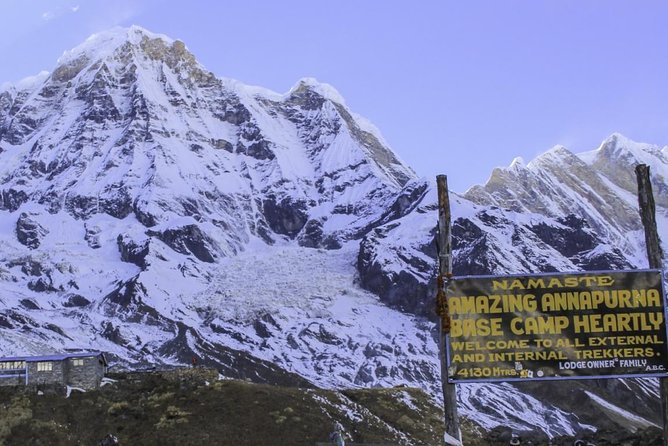
Review · ANNAPURNA BASE CAMP TREKS
10 Days Annapurna Base Camp Trekking
Annapurna Base Camp feels close enough to touch. This classic trek is built around Annapurna Base Camp and the approach through the Annapurna Sanctuary, with real Nepali village time in places like Ghandruk and Chhomrong. I like that it’s a route for hikers who want the big goal but still need a tighter schedule than longer ABC options, and the day you reach the Base Camp sits right next to the dramatic Machhapuchhre (Fishtail) region.
I also appreciate the practical way this trip is run: airport pickup, private transfers, English-speaking government-licensed guide support, and a porter set-up (one porter for two people) so you’re not hauling everything yourself. One drawback to plan for: the package includes meals and lodging, but it does not include hot showers, hot water for bathing, or extra drinks like soda and mineral water—so your “comfort budget” is worth setting aside.
In This Review
- Key points before you go
- Why Annapurna Base Camp still earns its reputation at 4,130m
- Price and Logistics: what $1,290 covers (and what it doesn’t)
- Day 1 in Kathmandu: a clean start with pickup and a hotel base
- Day 2: the flight to Pokhara and the easy start toward Ghandruk
- Day 3: Chhomrong brings you into the Annapurna South viewpoint zone
- Day 4: Deurali via Kuldi, Bamboo, and the Modi Khola valley work
- Day 5: Deurali to Annapurna Base Camp, with Machhapuchhre Base Camp lunch
- Day 6: the downhill return to Bamboo (great for legs, tricky for knees)
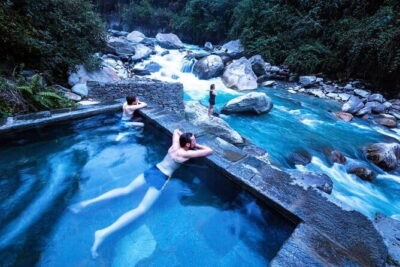
- Day 7: Jhinu Danda hot springs for sore-leg relief
- Day 8: Naya Pul to Pokhara, then a real evening to breathe
- Day 9 to 10: Kathmandu, a cultural dinner, and the airport drop
- Guides, porters, and the support style you’ll feel daily
- What to pack for ABC when hot showers are not included
- Weather and mountain-view expectations you can actually plan for
- Who this 10-day Annapurna Base Camp trek suits best
- Should you book this Annapurna Base Camp package
- FAQ
- What is the starting time and meeting point for this trek?
- How long is the Annapurna Base Camp trek on this package?
- Is the Kathmandu to Pokhara flight included, and is there a return flight?
- What trekking permits are handled for me?
- Are meals included during the trek?
- Do I need a visa for Nepal?
- Can I cancel and get a full refund?
Key points before you go
- Flights save a full day: Kathmandu to Pokhara by air, then a return flight back to Kathmandu
- Village trekking, not just altitude: Ghandruk and Chhomrong give you everyday Gurung community life and stone-step trails
- Tea house meals are included on the trek: breakfast, lunch, and dinner during trekking days
- Machhapuchhre Base Camp is on the way: lunch with major mountain scenery before pushing to Annapurna Base Camp
- Hot springs at Jhinu Danda: a real recovery stop after the descent days
- Private tour with your group only: you’re not mixed into a random crowd mid-trek
More trails out of Kathmandu, boots ready
- Everest Base Camp Trek – 14 Days★ 5.0 · 1,499 reviews
- Everest Base Camp Trek★ 5.0 · 842 reviews
- Everest Base Camp Trekking★ 5.0 · 485 reviews
- Nagarkot Sunrise View and Day Hiking from Kathmandu★ 5.0 · 471 reviews
Why Annapurna Base Camp still earns its reputation at 4,130m
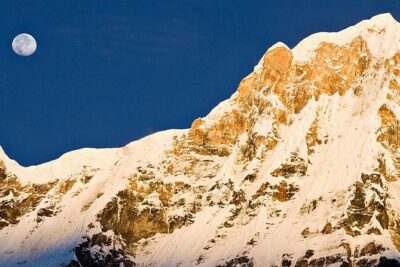
Annapurna Base Camp isn’t just another “see a mountain” checklist stop. You walk from warm low hills into colder high country where villages thin out, the air gets sharper, and the Annapurna Sanctuary starts to feel like a world of its own. The final approach is especially memorable because the scenery turns from wide views to a close, heavy feeling of glaciers, moraines, and steep faces towering above you.
On this route, you’re not only chasing Annapurna. You also have the Machhapuchhre (Fishtail) corridor in your path. That matters because Machhapuchhre is revered in Nepal and it changes the vibe of the trek—from pure summit ambition to something more cultural and visual. Even if the weather is cloudy, the mountains still have a way of pulling you forward.
Price and Logistics: what $1,290 covers (and what it doesn’t)
At $1,290 per person for a 10-day trek, this package is priced in the “full-service” category. What you’re paying for is not just the trekking days. The inclusions list stacks up: 3 hotels in Kathmandu and Pokhara with breakfast, domestic flights both ways (Kathmandu–Pokhara–Kathmandu), private transportation, the licensed guide and porter support, and meals (breakfast, lunch, dinner) at tea houses during the trek.
You also get permits handled through a trekking information management system (TIMS), plus all government taxes and office expenses. Those behind-the-scenes items can be a headache on your own, so it’s part of the value you’re buying.
What to budget separately:
- Nepal entry visa fee (listed as $40, obtainable on arrival with two passport photos)
- International airfare and travel insurance
- Food in Kathmandu and Pokhara (lunch/dinner) and drinks during the trek (tea/coffee, cold drinks, and bottled water are not included)
- Hot shower/hot water, and battery charging/camera charging are not included
- Tips for guide and porter
That last point is one of the few “soft unknowns” for new trekkers. The trip includes staff salaries, food, accommodation, and insurance, but tips are still your responsibility in most trekking cultures—and this one explicitly lists tips as not included.
Day 1 in Kathmandu: a clean start with pickup and a hotel base
Your first day is simple by design. A representative meets you outside the international arrival gate, then you’re transferred to a Kathmandu hotel and you can settle in. This is a helpful start if you’re arriving jet-lagged, because you’re not figuring out transport or finding check-in locations on day one.
Staying in a standard Kathmandu hotel (3 category) with breakfast also means you have a comfortable “reset” night before the trekking rhythm begins. You’re likely to keep things low-key on Day 1—good call—because the altitude jump starts the moment you fly the next morning.
Day 2: the flight to Pokhara and the easy start toward Ghandruk
Day 2 is all about timing and altitude management. You fly from Kathmandu to Pokhara early, with an important detail: the flight offers magnificent Himalayan views from the right side of the airplane. You can’t control aircraft seating perfectly, but when you check in, it’s worth asking where you might sit to maximize your chances.
From Pokhara, you drive toward Nayapul and begin walking to Ghandruk. The first day of the trek is described as easy—wide road walking with uphill climbing at the end. That’s a smart pacing choice. Getting your legs warm without crushing your calves on the first day makes the rest of the week more enjoyable.
Ghandruk is a Gurung community village, and that’s a big part of why this trek works. You’re not just in a corridor of views; you’re walking through a living place. If you have time in the evening, there’s mention of visiting the Gurung museum, which can add context to what you’re seeing.




Day 3: Chhomrong brings you into the Annapurna South viewpoint zone
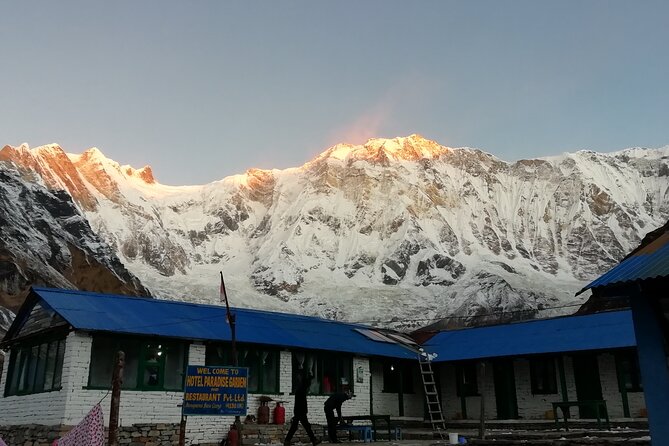
The trek from Ghandruk to Chhomrong is one of those classic “momentum days.” You start with steep-to-gentle transitions that keep you moving, and the highlight is the mountain line-up you’re walking under. The route notes breathtaking views of Annapurna South, Hiunchuli, Machhapuchhre (Fishtail), and Gangapurna.
You’ll also get a sense of trail rhythm: steep descents and then uphill segments, with Chhomrong positioned on the lap of the Annapurna massif. That location matters psychologically. Chhomrong is a village where you’ll feel like you’re already in the shadow of major peaks, not just approaching them.
Reality check: the trail profile includes tricky steps and descents. Even when the day length is listed around 4–6 hours, your legs may still feel it, especially if you go out too fast in the morning.
Day 4: Deurali via Kuldi, Bamboo, and the Modi Khola valley work
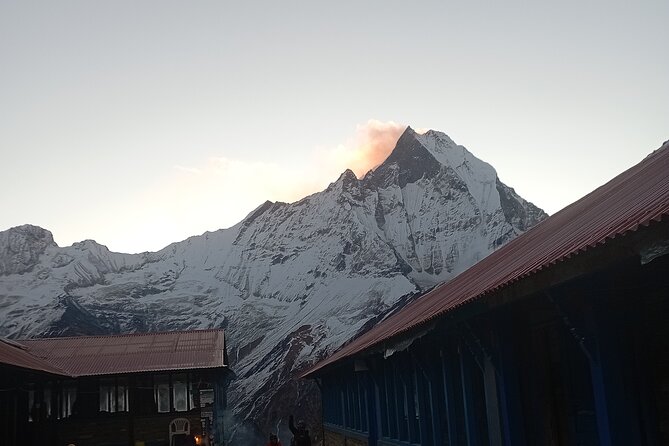
Day 4 is where the trek starts to feel more “serious” in a physical way. You cross a suspension bridge early and then start trekking uphill above the Modi Khola on its west bank. After reaching Kuldi via Tilche and Sinuwa, you’ll deal with steep stone staircases heading toward bamboo for lunch.
This is a day for steady pacing. Dense bamboo forest sections and frequent stream crossings can be beautiful, but they also slow you down. The route’s described pattern—ascending continuously with occasional drops—means you keep working even if the terrain changes under your feet.
You end the day at Deurali after passing Hinko Cave (with Deurali about 30 minutes away). The altitude climbing here is meaningful, and it’s one reason many people like this itinerary: it doesn’t just “teleport” you to high altitude. It builds you into it.
Day 5: Deurali to Annapurna Base Camp, with Machhapuchhre Base Camp lunch
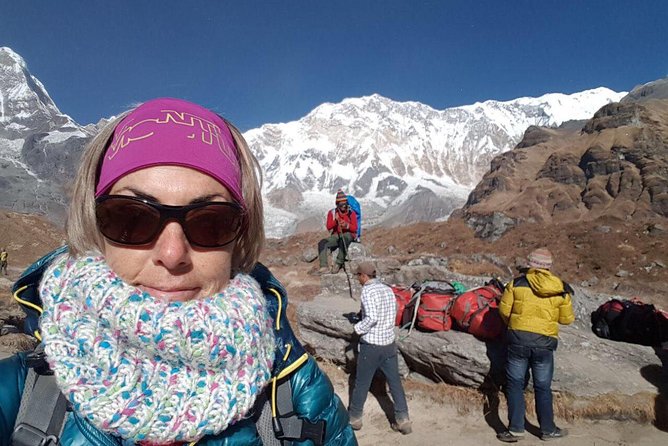
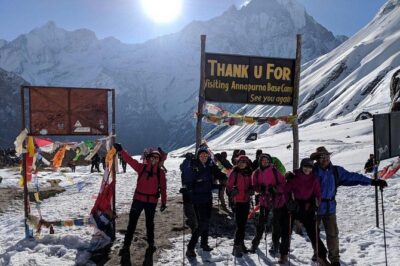
Day 5 is the centerpiece. You’re going from Deurali to Annapurna Base Camp at 4,130m, and the route passes through Machhapuchhre Base Camp around 3,700m. Plan for around 6–7 hours, and expect this to be the most demanding day of the trek.
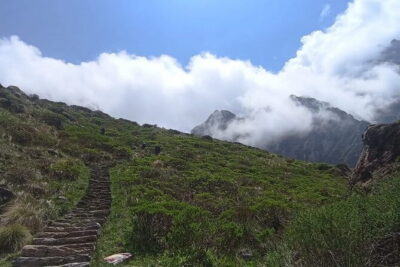
The path starts with a gentle climb through steep stone staircases. It goes through areas like Bagar and an avalanche zone before you turn left toward Machhapuchhre Base Camp. Stopping for lunch there is not a random break—it’s the kind of pause that helps you reset before the final push.
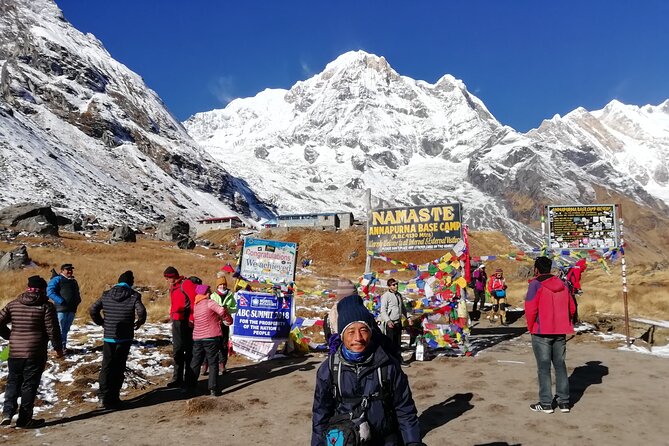
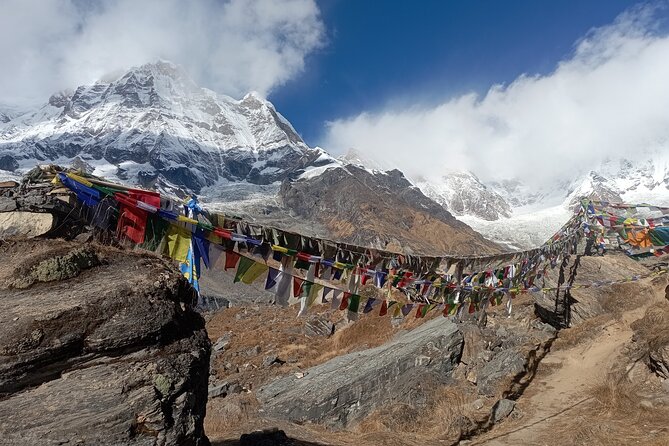
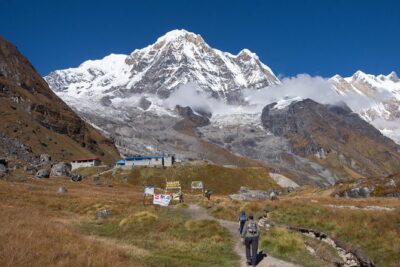
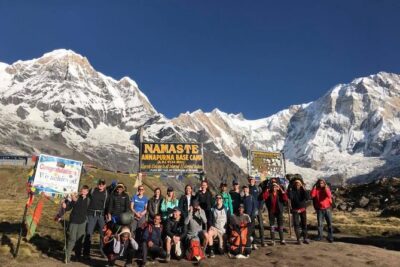
Then you continue into the Annapurna Sanctuary. The description notes that settlement and vegetation thin out, and the path widens as you enter the Sanctuary. When you arrive at ABC, the payoff is a “close” view of icy glaciers and moraines, plus a 360-degree view of the giant Himalayan range.
One practical note: weather can shape the experience. A past trip highlight mentions that even with cloudy skies, hikers still managed to see mountains and catch a sunrise moment when the sky opened up. So if your first attempt at views doesn’t land right away, don’t panic. Keep moving, and keep your focus on the next hour, not the next second.
Day 6: the downhill return to Bamboo (great for legs, tricky for knees)
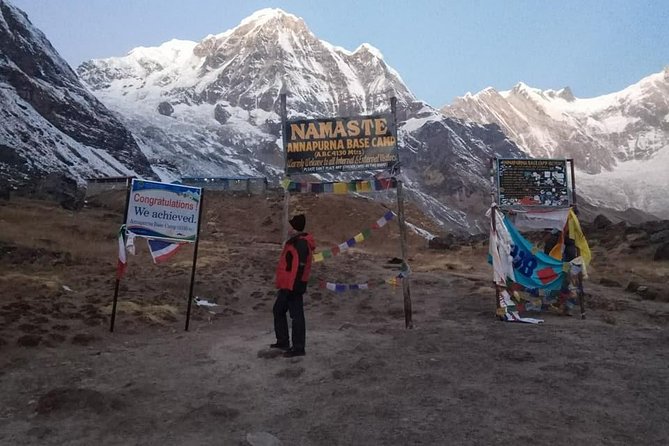
After reaching the summit-style moment of ABC, Day 6 turns into a “reverse the route” day. You retrace your steps back toward Bamboo, and it’s mostly downhill. In many ways, it’s easier than Day 5 because you’re not forcing altitude gain—yet downhill can still wear you out.
Downhill trekking taxes knees and ankles because your body has to control every step. Even if the day is listed around 6–8 hours, keep your stride short and slow, and treat this as recovery rather than a time trial.
Spending the night at Bamboo keeps the schedule balanced. You’re not rushing back to civilization; you’re taking the trek’s geography seriously, one valley level at a time.
Day 7: Jhinu Danda hot springs for sore-leg relief
Day 7 is a welcome change of pace. You start trekking toward Khuldighar, then descend toward Chhomrong Khola. From there, you continue down to Jhinu Danda, where you can soak in natural hot water springs.
This is the day that makes people feel like the whole trip is worth it. Hot springs don’t erase the effort, but they can help you relax tight muscles and reset for the final travel leg. The route also notes walking through rain forests and farms along the way, so you’ll likely feel more “green Nepal” and less high-alpine dust.
It’s a good day to keep your energy practical: don’t go chasing extra side trips if you’re exhausted. You want enough in the tank to enjoy the soak and sleep well.
Day 8: Naya Pul to Pokhara, then a real evening to breathe
Day 8 is about exiting the trekking loop. You walk from Jhinu Danda to Naya Pul (around 5 hours trekking), then drive back to Pokhara. The description highlights an easy and pleasant walking section along the Modi Khola riverbank, with lunch likely on the way.
You’ll pass through areas like Shauli Bazaar and Birethanti (with Birethanti described as a riverside village busy with trekkers starting and finishing). That’s where the trek energy turns into “last day” energy.
Pokhara is your chance to reset. The plan includes free evening time for relaxation and last-minute shopping. This is a nice buffer before your flight back to Kathmandu.
Day 9 to 10: Kathmandu, a cultural dinner, and the airport drop
You fly from Pokhara to Kathmandu in the morning, then head to a Thamel-area hotel for your final night. Thamel is practical for shopping and getting dinner options near you.
Day 9 also includes a cultural dinner with a Nepali family to celebrate successful completion of the trip. That kind of dinner can be a meaningful way to connect with local life beyond mountain scenery, and it fits the cultural rhythm this itinerary is already built around.
Day 10 is departure-day simple: an airport transfer that’s timed so you leave for the international airport about three hours earlier than your flight time.
Guides, porters, and the support style you’ll feel daily
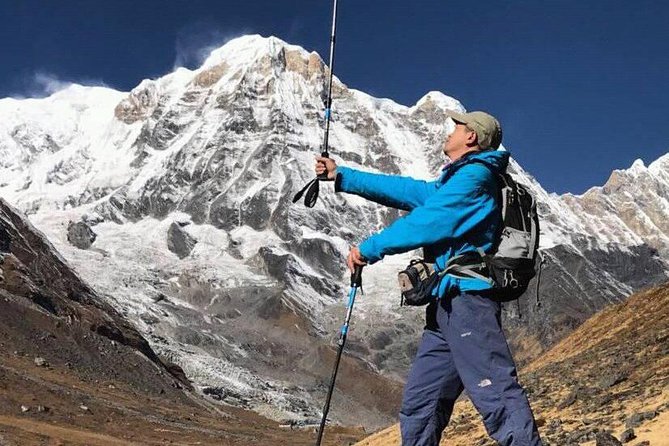
This trek is set up with a government-licensed, English-speaking trained guide, and the package specifies that the guide’s salary, food, drinks, accommodation, and insurance are included. That matters because good guiding is about more than narration—it’s route decisions, pacing, and keeping the day’s effort realistic.
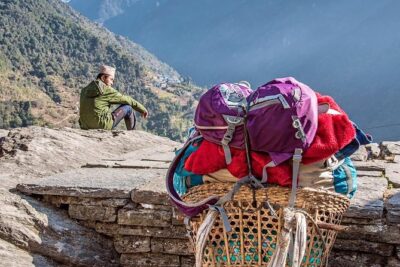
You also get a porter (one porter for two people). This is a big deal for comfort. Even if you’re fit, carrying your entire load up stone steps at altitude can turn “enjoyable trekking” into “survive the day.”
The trip also has a reputation in past experiences for warm, attentive service. One review highlights a guide named Ganesh as a best-friend type presence during the trek. Another mentions a service experience that felt perfect from airport pickup through the full Kathmandu/Pokhara flow. You can’t guarantee any one staff member on any given date, but the pattern tells you what this operator is aiming for: smooth logistics plus human support.
What to pack for ABC when hot showers are not included
Since hot showers and hot water are not included, you’ll want to pack with that reality in mind. Think “quick cold/wipe-down comfort” rather than full spa expectations.
Bring layers you can adjust because temperature swings are real at altitude. Even if you’re walking hard, you’ll likely get cold during breaks and in the morning.
Also, plan for limited charging options. The package explicitly does not include camera battery charging. If you rely on phone navigation, photos, or e-readers, bring enough battery power and a way to keep devices charged before you’re stuck.
Finally, keep money for small essentials. The inclusions don’t cover tea/coffee, cold drinks, bottled water, sweet things, or phone calls, and those add up fast when you’re tired and want a treat.
Weather and mountain-view expectations you can actually plan for
For a trek like this, you need two mindsets at the same time. First: you can have crystal-clear views from ABC and Machhapuchhre Base Camp. Second: clouds can roll in and you might get partial visibility—or a brief window of clarity.
That’s why it helps to keep your schedule focused and your patience intact. The trek has structured nights at tea houses along the route, which means you’re not constantly losing the chance to rest when conditions shift. You’ll also have multiple chances to see big peaks: Ghandruk/Chhomrong days bring the Annapurna South and Hiunchuli view lines, and Day 5 is the main event.
If you’re the type who plans around “worst weather possible,” you’ll enjoy the mountains more, even when the sky doesn’t fully cooperate.
Who this 10-day Annapurna Base Camp trek suits best
This is a strong fit if you:
- Want a classic ABC goal without turning it into an ultra-long expedition
- Prefer village days (Ghandruk, Chhomrong) alongside high-altitude scenery
- Like structured support: guide, porter, permits, flights, and teahouse meals
- Need pacing that’s challenging but not chaotic
It may not be ideal if your main idea of a trek is mostly flat walking and frequent comfort upgrades. The route includes stone staircases, steep descents, and real altitude changes. You’ll want moderate physical fitness, as the trip notes, and you’ll likely feel the effort even on the “easier” days.
Should you book this Annapurna Base Camp package
I’d book it if you want a well-run, supported trek that handles most moving parts for you: airport pickup, Kathmandu and Pokhara hotels, domestic flights, TIMS permit handling, and a guide/porter set-up with tea house meals included. At this price point, you’re paying for convenience and reduced planning stress, not just walking time.
Skip or think twice if you hate paying extra for basics like drinks, and if you expect hot showers and warm bathing to be standard. Also, if you’re extremely sensitive to knee strain, you should plan to take downhill days slowly—Day 6 is a perfect example.
If you can bring a realistic comfort mindset and show up ready to work, this route gives you the emotional arc of ABC without wasting days getting there. And when the mountains finally open up—clouds willing—it’s the kind of view that sticks.
FAQ
What is the starting time and meeting point for this trek?
The meeting point lists a start time of 6:15 am. Day 1 includes a Kathmandu airport representative pickup outside the international arrival terminal gate.
How long is the Annapurna Base Camp trek on this package?
The duration is listed as 10 days, approximately.
Is the Kathmandu to Pokhara flight included, and is there a return flight?
Yes. The package includes both-way flights from Kathmandu to Pokhara and back to Kathmandu.
What trekking permits are handled for me?
The trip includes the trekking information management system (TIMS) permit.
Are meals included during the trek?
Yes. Tea house/lodge accommodations include breakfast, lunch, and dinner during the trekking days.
Do I need a visa for Nepal?
Nepal entry visa fee is not included, but the information provided says you can issue the visa upon arrival at Kathmandu Airport with 2 passport size photos and $40.
Can I cancel and get a full refund?
You can cancel up to 24 hours in advance of the experience for a full refund. If you cancel less than 24 hours before the start time, the amount paid will not be refunded.
More Trekking Out of Kathmandu






More Tour Reviews in Kathmandu




Just Reviewed in Kathmandu
- Mountain Bike Tour
★ 5.0 · 3 reviews - Annapurna Panaroma
★ 5.0 · 3 reviews - Mount Everest Scenic Flight 50 Minutes
★ 5.0 · 3 reviews - Kathmandu : Swambhunath & Durbar Square Guided Half Day Tour
★ 3.3 · 3 reviews - Chandragiri Cable Car & Monkey Temple Tour – Private/Group
★ 5.0 · 3 reviews - Kathmandu: Shivapuri National Park Hiking Day Trip
★ 3.3 · 3 reviews
Annapurna Base Camp Treks, compared.
 ★ 5.0Annapurna base camp trek 5 DaysFrom $699252 reviews
 ★ 5.014-Day Private Annapurna Base Camp TrekFrom $1,090180 reviews
 ★ 5.0Annapurna Base Camp TrekkingFrom $1,779116 reviews
 ★ 5.0Annapurna Base Camp TrekFrom $935111 reviews
★ 5.0Annapurna Base Camp TrekFrom $1,350107 reviews
 ★ 5.0Kathmandu to Annapurna Base Camp (ABC) 5-Day TrekFrom $99102 reviews
 ★ 5.0Annapurna Base Camp Trek- 11 DaysFrom $99990 reviews
 ★ 5.0Annapurna Base Camp Trek 12 DaysFrom $80085 reviews
Browse the lists this tour appears in