
Review · ANNAPURNA BASE CAMP TREKS
12 Days Annapurna Base Camp Trek
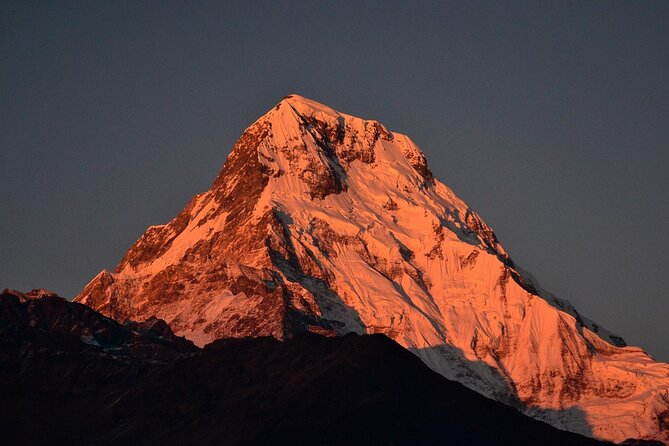
Annapurna Base Camp steals your breath. This 12-day trek from Kathmandu and Pokhara takes you to about 4,130 m through rhododendron forests, terraced fields, and Gurung and Magar villages with teahouse nights. I especially love the Poon Hill sunrise and the steady, human pace of mountain teahouses, but you should plan for altitude and a brutally steep start with thousands of stone steps.
Everest High Pass Adventures takes care of the setup that can feel stressful at home: pickup is offered, you’ll get a trek briefing, and permits are handled so you can focus on walking. The support style matters too—people highlight guides like Mandip Ji for calm, attentive help and real mountain know-how when conditions change.
This is described as a moderate trek, which is good news, but it still asks for stamina, layered clothing, and a willingness to start early. And since the experience requires good weather, you should treat the mountain views as something you’ll earn day by day, not something you can guarantee.
In This Review
- Key things that make this trek worth your time
- Getting started in Kathmandu: permits, briefing, and getting your bearings
- Pokhara as your reset button: lake views before the mountains
- Day 3 to Ulleri: the 3,000-step reality check (and why it’s worth it)
- Day 4 to Ghorepani: forests, waterfalls, and a cool alpine mood
- Day 5 to Poon Hill: sunrise over Annapurna, Dhaulagiri, and Machapuchare
- Day 6 to Chhomrong: terraced climbs and Gurung village views
- Day 7: bamboo and gorge walking toward the Annapurna region
- Day 8: reaching Annapurna Base Camp, with Deurali and MBC along the way
- Day 9: sunrise again, then the long descent toward Bamboo
- Day 10: Chhomrong backtrack, then Jhinu Danda hot springs
- Day 11: return toward Pokhara, plus your lakeside victory lap
- Day 12: back to Kathmandu, and the choice to fit your flight
- What this trek is like in real life: altitude, pacing, and the value of being moderate
- Teahouse meals and nights: comfort you can count on
- Price and value: what $1,200 covers and what you should budget separately
- Your guide and support team: why people mention Mandip Ji
- Who should choose this trek, and who might want a different fit
- Should you book this Annapurna Base Camp trek?
- FAQ
- Where does the trek start and where does it end?
- How long is the Annapurna Base Camp trek?
- What is the highest altitude mentioned for this trek?
- Is pickup offered?
- Is this tour private?
- What’s included in the price?
- What is not included?
- Is there a fitness requirement?
- Does weather affect the trek?
- Are service animals allowed?
Key things that make this trek worth your time
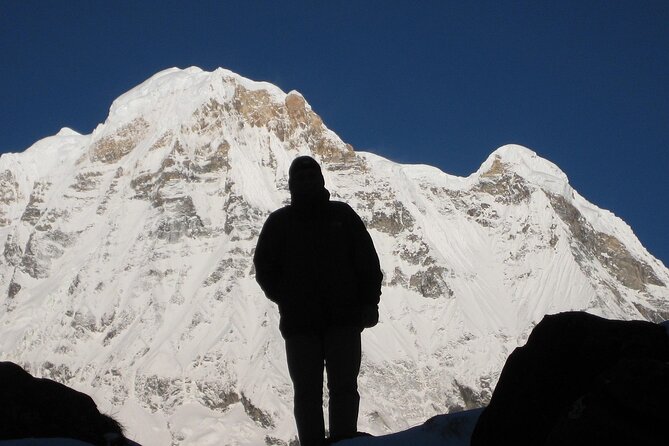
- Poon Hill dawn views over Annapurna, Dhaulagiri, and Machapuchare
- Teahouse life with simple meals and a comfortable rhythm after long hiking days
- Culture on the trail through Gurung and Magar villages and terraced farmland
- Real payoff at Jhinu Danda with riverside hot springs after the long walk down
- Guided logistics done for you with briefing and permit preparation, run by Everest High Pass Adventures
More trails out of Kathmandu, boots ready
- Everest Base Camp Trek – 14 Days★ 5.0 · 1,499 reviews
- Everest Base Camp Trek★ 5.0 · 842 reviews
- Everest Base Camp Trekking★ 5.0 · 485 reviews
- Nagarkot Sunrise View and Day Hiking from Kathmandu★ 5.0 · 471 reviews
Getting started in Kathmandu: permits, briefing, and getting your bearings
Day 1 begins in Kathmandu, after you arrive at Tribhuvan International Airport. You’ll be greeted and transferred to a hotel in the Thamel area, then meet your guide for a trek briefing and permit preparation.
This first day is more than a formality. Trek permits and local rules can be fiddly, and having them lined up early makes the trek feel clean and calm. I like that the day is structured so you’re not scrambling for paperwork or trying to figure out logistics on little sleep.
Pokhara as your reset button: lake views before the mountains
On Day 2 you move to Pokhara, either by a 6–8 hour overland drive or a quick 25-minute flight. Once there, you get the gateway feeling—Phewa Lake nearby and views of the Annapurna range that remind you what you’re training for.
The practical value of Pokhara is that it helps you transition. Kathmandu is a city; Pokhara feels like a hub for hikers, with an easy place to eat, rest, and get mentally ready. If you’re sensitive to altitude, arriving with enough rest also matters. (You’re not climbing yet, but your body is still adjusting.)
Day 3 to Ulleri: the 3,000-step reality check (and why it’s worth it)
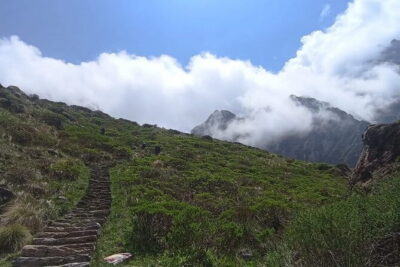
Day 3 starts with a drive of about 1.5 hours to Nayapul, your trek start point. You’ll walk through Birethanti and Tikhedhunga, then tackle the main early challenge: a steep ascent of over 3,000 stone steps to reach Ulleri.
This section is famous for a reason. You’ll feel it in your legs right away, but it also gives you an early “shape” for the trek: short bursts of effort, steady breathing, and a rhythm you can repeat. The big drawback is obvious—if you rush, your pace can blow up before you even reach the main viewpoints.
Tip: plan to climb slower than you think you need. The trail later repeats this pattern often enough that saving energy early helps.
Day 4 to Ghorepani: forests, waterfalls, and a cool alpine mood
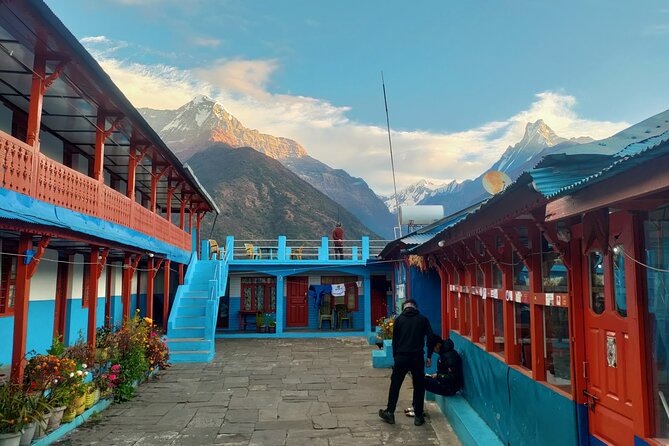
On Day 4, the trail continues uphill through dense rhododendron and oak forests. You’ll pass waterfalls and Magar villages before arriving in Ghorepani, a popular base for panoramic views.
This is one of the nicer days for many hikers because it’s “scenic work.” Forest walking can be mentally easier than exposed climbs, and waterfalls give you frequent little moments to catch your breath. The downside is that forest weather can change fast—bring layers, and keep an eye on cloud cover.




Day 5 to Poon Hill: sunrise over Annapurna, Dhaulagiri, and Machapuchare
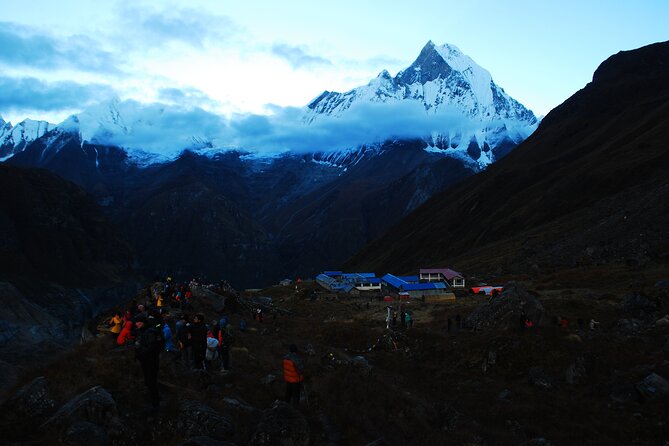
Day 5 is an early start: hike to Poon Hill for sunrise, then descend back to Ghorepani for breakfast. From there, you’ll continue trekking through forests toward the next area.
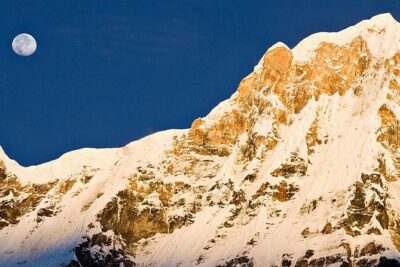
This is where the trip often turns from effort to amazement. A sunrise viewpoint gives you contrast—dark peaks on the horizon, then light catching Annapurna’s curve and neighboring giants. The route specifically mentions views of Dhaulagiri, Annapurna, and Machapuchare, and that trio is a big reason people choose this trek.
If you hate early mornings, be aware this is one of the few truly wake-you-up moments. But if you like photography or just want to see the mountains in proper light, it’s a highlight for good reason.
Day 6 to Chhomrong: terraced climbs and Gurung village views
On Day 6, the trail descends steeply to a stream, then climbs again through terraced farmland and forest to reach Chhomrong. Chhomrong is a large Gurung village with stunning views of Annapurna South and the sacred mountain area.
Chhomrong matters because it’s both scenic and cultural. You see how communities live at altitude, and you’ll feel the trekking route shift from forest-to-meadow to something more open and exposed. The drawback is the day is a push: steep down, then steep up again. You’ll want to manage your knees on the descent and keep your effort steady on the climb.
Day 7: bamboo and gorge walking toward the Annapurna region
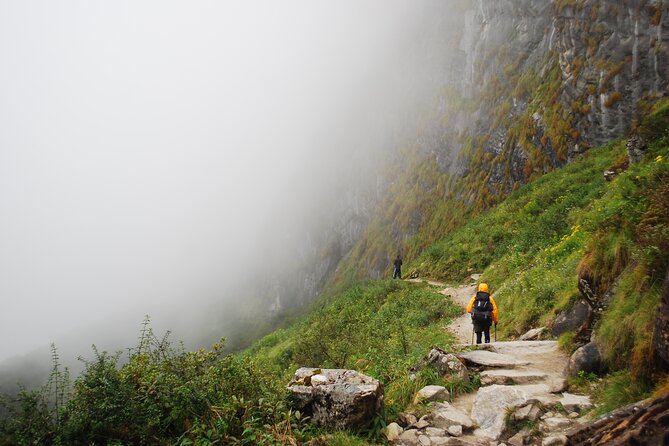
Day 7 starts by descending to the river, then climbing back up to Sinuwa. From there, you walk through bamboo forests and through Bamboo and Dovan before reaching Himalaya, described as sitting in a quiet gorge.
This day is a breather in the sense that it’s not only about stone steps and exposed ridges. Bamboo forest walking can be peaceful, and the gorge setting tends to feel sheltered. Still, you’re not done with effort—distance adds up, and “quiet” can still mean a long day on your feet.
Day 8: reaching Annapurna Base Camp, with Deurali and MBC along the way
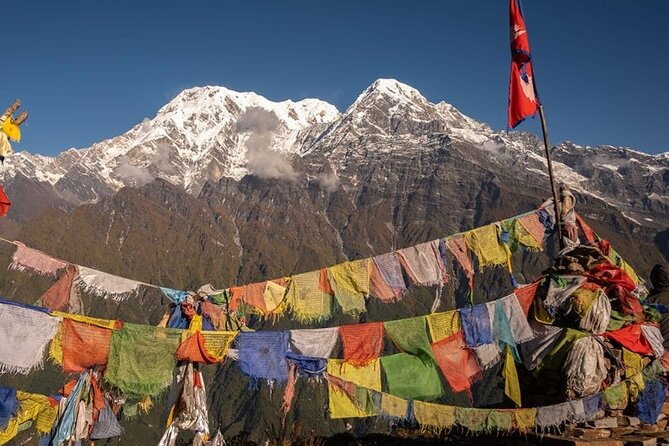
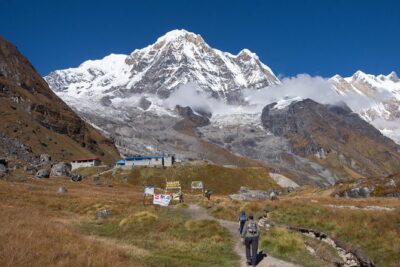
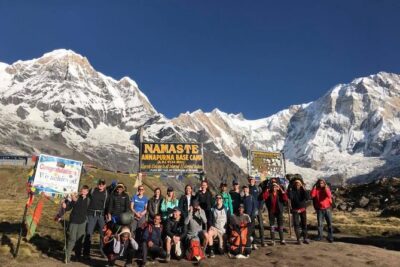
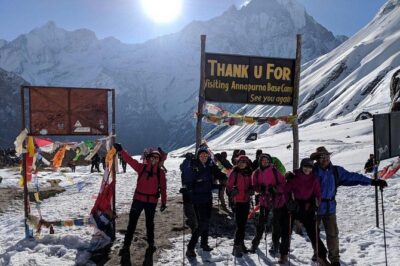
Day 8 is the summit moment without calling it a summit. You ascend past Deurali and MBC, and the forest gives way to open alpine meadows. After a gradual climb, you arrive at Annapurna Base Camp, surrounded by towering peaks, with time for sunset there.
This is the day you’ve been building toward. Base Camp is where the Annapurna region stops feeling like a distant picture and becomes a real place you can stand inside. If you’re prone to cold, keep in mind Base Camp conditions can feel serious even if the hike itself is manageable. Layers, gloves, and a warm layer for evening matter.
A practical mindset helps here: go slow on the ascent, drink water regularly, and don’t treat Base Camp as a place to sprint around. The goal is to enjoy the views and let your body settle.
Day 9: sunrise again, then the long descent toward Bamboo
Day 9 begins with an early sunrise over the Annapurna range. Then you descend the same general route—MBC, Deurali, and Dovan—toward the forested area of Bamboo.
The ascent is harder, but the descent can be just as tiring. The route specifically notes the descent is easier but long, and that’s exactly the point: legs can feel fine for the first hour, then get heavy. Slow down, use a steady pace, and keep your steps controlled.
If you’re thinking about comfort and knee-saving, this is the day to be extra careful.
Day 10: Chhomrong backtrack, then Jhinu Danda hot springs
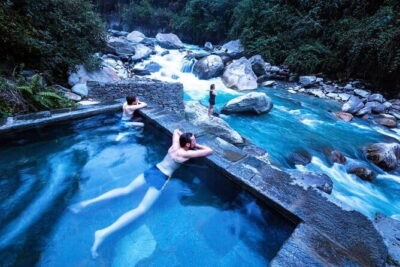
Day 10 includes trekking uphill to Chhomrong, then a steep descent to Jhinu Danda. In the afternoon, you get the reward that makes people smile even when their thighs complain: natural hot springs by the riverside.
This is one of the best “recovery days” you can hope for. The hot springs aren’t magic, but they do help you feel human again after days of downhill effort. The riverside setting adds a nice decompression effect—quiet water, tired muscles, and the feeling you actually finished something.
Day 11: return toward Pokhara, plus your lakeside victory lap
Day 11 brings you back toward Pokhara. You’ll take a short trek to Siwai or Nayapul, then drive back to Pokhara. You can celebrate with a lakeside dinner, a massage, or simply relaxing while you reflect on what you did.
This is where your mind catches up to your body. After a trek, “short” still feels like walking, but it’s not the grind of the high trail. A massage or real rest can be a smart move if you want your legs to behave on Day 12.
Day 12: back to Kathmandu, and the choice to fit your flight
On Day 12 you fly or drive back to Kathmandu. Depending on your flight schedule, you can head straight to the international airport or add an extra night in the city.
I like that the plan gives flexibility. If you have a late flight, it’s usually easier on everyone to avoid rushing and to keep your final day relaxed.
What this trek is like in real life: altitude, pacing, and the value of being moderate
This trek reaches about 4,130 meters, with the highest “big moment” centered around Annapurna Base Camp. The route is described as moderate, which usually means you’re not doing technical climbing, but you still do serious walking at altitude.
So what does moderate really mean for you? It means you can plan for a steady hiking rhythm—long enough to change your legs, not so technical that you need ropes or special climbing skills. It also means you can focus on practical altitude habits: go slow, drink, eat, and avoid the temptation to overpace on good-feeling mornings.
The other reality is time and energy. Even if the trek is well-established, you’ll still get days with steep sections, long descents, and early starts. This is why the supportive guide and smooth logistics matter. You want your attention on your body and the trail, not on how to untangle permits and transport.
Teahouse meals and nights: comfort you can count on
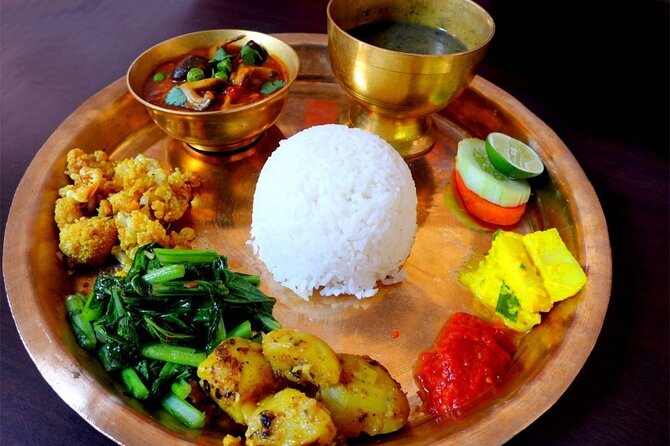
The trek uses local teahouses for meals during the journey, and the trip includes meals in the package. Teahouse trekking usually means simple choices, warm drinks, and basic rooms—no one expects a spa.
But the value is real. After long walking days, a predictable routine helps. You arrive, eat, and rest without hunting for restaurants. That rhythm is part of what makes multi-day treks feel satisfying rather than chaotic.
One practical note: because the itinerary emphasizes sunrise hikes and later arrivals, your meal timing will matter. If you can, ask your guide about when breakfast is served on early days so you don’t end up eating too late (or too rushed).
Price and value: what $1,200 covers and what you should budget separately
The listed price is $1,200 per person for about 12 days in Nepal, with pickup offered. What stands out is what’s included: meals, excess baggage (as listed), WiFi on board, and government fees/entrance fees.
That inclusion matters on treks because permits and fees can be a surprise expense. Having them bundled usually makes planning simpler, and it reduces the risk of last-minute payment issues.
What’s not included: public transportation and airport/departure tax. If you’re connecting from far away or planning additional city days, you’ll want to factor those costs in.
Is $1,200 good value? For a guided, permit-handled trekking package with meals, it can be. If you were to book the trek components yourself, you’d likely spend time coordinating guides, paperwork, and transport. Here, you pay for convenience plus on-the-ground support.
Your guide and support team: why people mention Mandip Ji
A recurring theme in the feedback is that the service feels personal and responsive. People highlight fast, professional communication when questions come up, and they praise guides who are friendly, helpful, and caring—not just there to lead a line on a map.
One guide name shows up clearly: Mandip Ji. The feedback describes him as calm, very knowledgeable about the mountains, polite, and attentive, with an ever-smiling style. That matters because Annapurna is not just scenery—it’s a living route where weather can shift, energy varies day to day, and decisions like pacing and rest stops are worth having a steady voice for.
Since this is a private tour/activity, you’re not sharing the experience with strangers in a way that could turn into awkward group dynamics. Your guide can adapt to your pace and questions.
Who should choose this trek, and who might want a different fit
This trek fits you if:
- you want a classic Annapurna route with well-known highlights like Poon Hill and Base Camp
- you’re comfortable with early starts and long hiking days
- you prefer guided logistics that handle permits and transfers
- you want teahouse trekking rather than camping-style roughing it
You might consider a different option if:
- you struggle with steep climbs right away (Day 3 includes more than 3,000 stone steps)
- you’re sensitive to altitude and don’t have a plan for slow pacing
- you can’t travel during periods where weather might affect visibility (good weather is required)
Should you book this Annapurna Base Camp trek?
If you want the Annapurna “greatest hits” with a guided setup that handles permits and transport, this is a strong choice. I like the structure: Kathmandu and Pokhara set you up, the trek builds day by day, and the finish includes hot springs and an easy return to city life.
Book it if you value sunrise viewpoints, teahouse comfort, and cultural villages along the way—and if you’re ready for the leg work that comes with “moderate.” Pass if your plan can’t handle early mornings or if altitude makes you nervous without a slow, careful approach.
FAQ
Where does the trek start and where does it end?
The experience starts at the listed meeting point in Kathmandu (P924+79, Kathmandu, Nepal) and ends back at the same meeting point.
How long is the Annapurna Base Camp trek?
It runs for about 12 days.
What is the highest altitude mentioned for this trek?
The overview states an altitude of about 4,130 meters.
Is pickup offered?
Yes, pickup is offered.
Is this tour private?
Yes. It’s a private tour/activity, so only your group participates.
What’s included in the price?
Meals and government fees/entrance fees are included, along with WiFi on board. The package also lists excess baggage as included.
What is not included?
Public transportation and airport/departure tax are not included.
Is there a fitness requirement?
You should have moderate physical fitness level.
Does weather affect the trek?
Yes. The experience requires good weather, and if it’s canceled due to poor weather, you’ll be offered a different date or a full refund.
Are service animals allowed?
Yes, service animals are allowed.
More Trekking Out of Kathmandu






More Tour Reviews in Kathmandu




Just Reviewed in Kathmandu
- Mountain Bike Tour
★ 5.0 · 3 reviews - Annapurna Panaroma
★ 5.0 · 3 reviews - Mount Everest Scenic Flight 50 Minutes
★ 5.0 · 3 reviews - Kathmandu : Swambhunath & Durbar Square Guided Half Day Tour
★ 3.3 · 3 reviews - Chandragiri Cable Car & Monkey Temple Tour – Private/Group
★ 5.0 · 3 reviews - Kathmandu: Shivapuri National Park Hiking Day Trip
★ 3.3 · 3 reviews
Annapurna Base Camp Treks, compared.
 ★ 5.0Annapurna base camp trek 5 DaysFrom $699252 reviews
 ★ 5.014-Day Private Annapurna Base Camp TrekFrom $1,090180 reviews
 ★ 5.0Annapurna Base Camp TrekkingFrom $1,779116 reviews
 ★ 5.0Annapurna Base Camp TrekFrom $935111 reviews
★ 5.0Annapurna Base Camp TrekFrom $1,350107 reviews
 ★ 5.0Kathmandu to Annapurna Base Camp (ABC) 5-Day TrekFrom $99102 reviews
 ★ 5.0Annapurna Base Camp Trek- 11 DaysFrom $99990 reviews
 ★ 5.0Annapurna Base Camp Trek 12 DaysFrom $80085 reviews
Browse the lists this tour appears in