
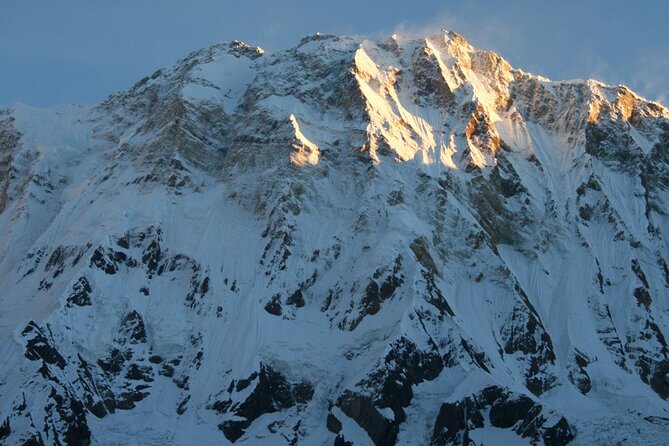
Review · ANNAPURNA BASE CAMP TREKS
14-Day Annapurna Base Camp Trek from Kathmandu
Annapurna Base Camp comes at you fast. This trek strings together big change after big change: terraced villages, rhododendron and bamboo forests, and then cooler middle hills with prayer flags and chortens before you push into the alpine heights with mountain views that keep multiplying. I like that it feels like one long nature and culture walk, not just a hike to a dot on a map, with that nonstop Himalayan scenery doing most of the talking.
Two things I’d put near the top: the small group size (max 14), which makes the pacing and logistics feel calmer, and the way sunrise viewing is built in via Poonhill, giving you a real payoff day without stretching every single hour. In the field, the guide teams behind this route—names like Suraj, Amrit, Raj, Bhim, Indra, and Pralad—are known for staying focused on safety, keeping you informed, and motivating the group when the stairs start adding up.
One drawback to consider: this is not a flat stroll. You’ll climb and descend on steep trails and stone stairways, and the route tops out at Annapurna Base Camp at 4170m, so you need a reasonable level of fitness and common-sense altitude management. Also, the trek porter isn’t automatically included unless you add it, so if you prefer a lighter pack, plan for that decision early.
In This Review
- Key things that make this Annapurna trek worth your time
- Price and what you’re actually getting for $950
- Day 1 in Kathmandu: airport pickup and a free evening buffer
- Kathmandu Valley sightseeing (Day 2): temples, stupa views, and shop time
- The drive to Pokhara (Day 3): river views and mountain sightings
- Trek Day 4: Tikhedunga via Birethanti, gentle start with village life
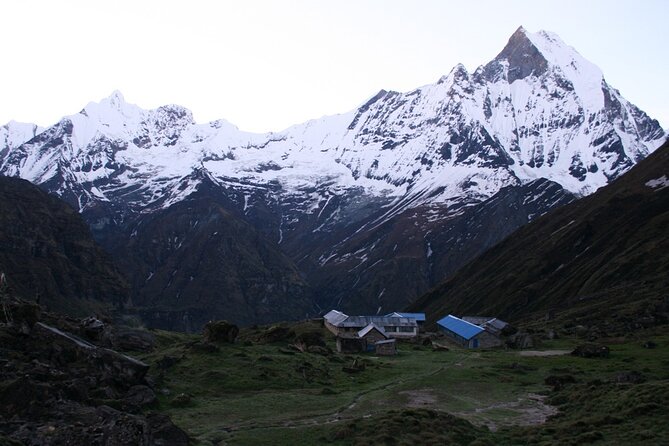
- Trek Day 5: Ulleri climb to rhododendron forests and Machhapuchhare views
- Trek Day 6: Poonhill sunrise day, then down to Tadapani
- Trek Day 7: Chomrong gateway and the middle-hills feeling
- Trek Day 8: stone stairways, bamboo country, and Sinuwa at 2350m
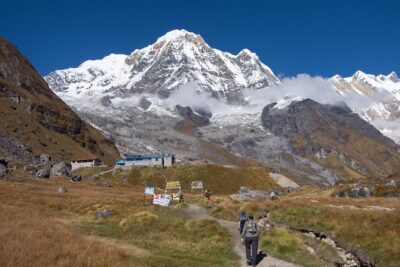
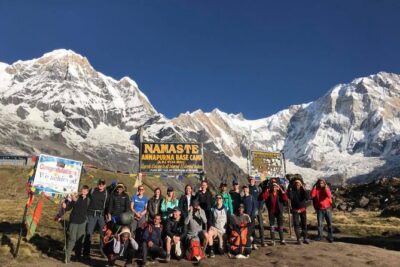
- Trek Day 9: into the sanctuary and the last push to Base Camp at 4170m
- Day 10: Base Camp visit and a practical return to Dovan (about six hours)
- Day 11: Bamboo to Chhumrong stairs, then hot springs relief
- Day 12: from Chhumrong area back toward Nayapul, then Pokhara by car/van
- Day 13: return drive to Kathmandu and the green-rural scenery
- Day 14: transfer to the international airport
- Who should book this Annapurna Base Camp trek
- The practical tradeoffs to keep in mind
- Should you book this $950 Annapurna Base Camp trek?
- FAQ
- What does the tour price include?
- Are permits included for Annapurna Base Camp?
- Do I need travel insurance?
- Is the porter included automatically?
- How many people are in the group?
- Where does the tour start and end?
Key things that make this Annapurna trek worth your time
- Village-to-alpine route design: terraced hills to rhododendron woods to higher sanctum terrain
- Poonhill sunrise built in: a major view moment early in the climb cycle
- Strong support system: an experienced guide, plus the team approach emphasized on past departures
- Focused acclimatization pacing: you gain height, then shift to easier segments and rest days
- Comfort touches where it counts: hot springs on the return loop (Day 11)
- Permits included: Annapurna conservation entry and TIMS are part of the package cost
More trails out of Kathmandu, boots ready
- Everest Base Camp Trek – 14 Days★ 5.0 · 1,499 reviews
- Everest Base Camp Trek★ 5.0 · 842 reviews
- Everest Base Camp Trekking★ 5.0 · 485 reviews
- Nagarkot Sunrise View and Day Hiking from Kathmandu★ 5.0 · 471 reviews
Price and what you’re actually getting for $950
At $950 per person for about 14 days, the value here is that you’re paying for a full, planned rhythm: Kathmandu start, transport to the trek region, a guided multi-day trek, and a structured return. It’s not just the hike itself.
The package includes 13-night accommodations during the tour, plus a Kathmandu sightseeing day (Day 2). It also includes the important paperwork side of things: Annapurna conservation entry and TIMS permit. On the ground, you get ground transportation from Kathmandu to Pokhara and back by tourist bus, an experienced guide, and even the sightseeing entrance fees on Day 2.
Meals are partly covered: you’ll get breakfast on 12 days, lunch on 9 days, and dinner on 8 days. That matters because trekking days can add up fast on the money side, and food availability at altitude can be a moving target. You’ll still need to handle any meals not specified, and drinks are not included—so keep some cash or a plan for non-included food.
What’s not included is also important to budget realistically: Nepal entry visa, travel insurance (compulsory), international airfare, and tips for guide/porter/driver. The trek porter is optional and not automatically included if you need one. If you’re the type who wants to hike with minimal load, that porter line is worth factoring into your real trip cost.
Day 1 in Kathmandu: airport pickup and a free evening buffer
Your trek starts the easy way. On Day 1, you’re met and greeted by an airport representative who’s on standby for pickup and transfers you to your hotel. That’s a small detail, but it matters on day one in Nepal—less stress, more time to get organized.
Then you get an evening free. This is smart. You’ll likely arrive tired, and it gives you time to do the boring-but-critical tasks: settle in, double-check your documents, and sort out trekking gear before it becomes a problem.
Kathmandu Valley sightseeing (Day 2): temples, stupa views, and shop time
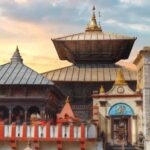
On Day 2, after breakfast, you go sightseeing in Kathmandu Valley with a professional guide. The route includes Kathmandu Durbar Square, the Monkey Temple, Pashupatinath Temple, and Boudhanath Stupa. This day does two jobs at once: it helps you understand Nepal’s spiritual landscape before you head into the mountains, and it gives you something satisfying to do while your body is still fresh.
You also get time to shop your trekking equipment after the tour. That’s useful because not everyone arrives fully set up.
One more practical note: this day includes sightseeing with admission ticket free as listed, which helps keep the first day costs predictable.
The drive to Pokhara (Day 3): river views and mountain sightings
Day 3 is a scenic transfer. You drive for about 6 hours along the Trisuli and Marsyangdi River to reach Pokhara. The drive is described as pretty good, and you’ll get views of Ganesh Himal and Manaslu from the road.
Pokhara is positioned as a “city of lakes,” with cultural and natural sites like lakes, caves, and Buddhist and Hindu temples. You get the benefit of starting your trek area feeling like you’ve moved into a different Nepal—more relaxed, more scenic, and often easier to mentally switch from city mode to hiking mode.
Trek Day 4: Tikhedunga via Birethanti, gentle start with village life
The trekking proper starts on Day 4. You drive about 1.5 hours to Nayapul, then hike to Tikhedunga (1577m) via Birethanti (1065m). This is an easier opening segment: mostly flat-out hiking and a gentle feel as you pass small villages and settlements.
Why I like this kind of start for an ABC route: it helps you learn what your body does with daily walking before the route turns steep.
Trek Day 5: Ulleri climb to rhododendron forests and Machhapuchhare views
On Day 5, the pattern shifts. After breakfast, you ascend steeply for about 2 hours, then climb more gently past Ulleri (2070m) and Banthanti.
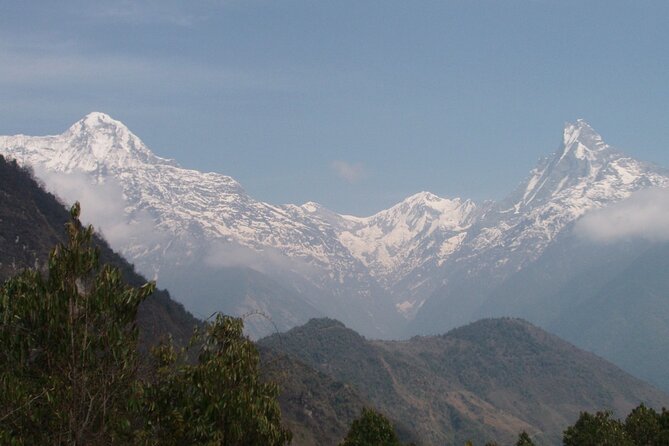
This day’s payoff is views—especially the mountain framing you get of Machhapuchhare (Fish Tail), Hiunchuli, and Annapurna to the south. Then you move into rhododendron and shadowy forests with birds around you, ending at your camp.
The key consideration: this is when the stairs-and-legs reality starts to show up. If your fitness isn’t great yet, you’ll want to take steady steps and avoid forcing speed just because the views are stunning.
Trek Day 6: Poonhill sunrise day, then down to Tadapani
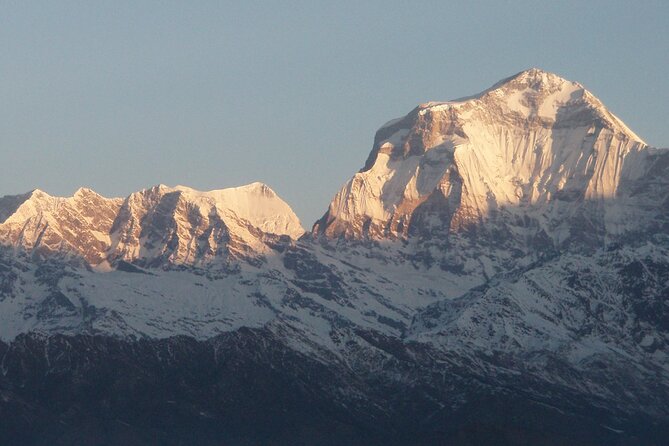
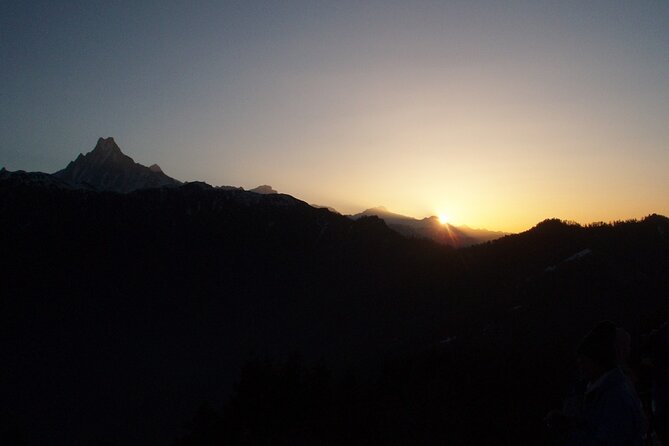
Day 6 is built around Poonhill (3232m). The morning hike targets sunrise views across a wide set of peaks: Dhaulagiri, Tukuche, Nilgiri, Varaha Shikhar, and multiple Annapurna summits including Annapurna I and South, plus Machhapuchhare and others.
Then you hike down to Ghorepani, have hot breakfast, and continue to Tadapani (2650m). A big theme is forest color—this stretch is often linked to blooming rhododendron in spring, so you may see the forest turn into a bright patchwork depending on the season.
Why this works: it gives you a huge morning reward and still allows an overall net-travel rhythm that supports acclimatization. You’re gaining altitude, but you’re also learning how your body handles the day.
Trek Day 7: Chomrong gateway and the middle-hills feeling
Day 7 starts with descending gently through rhododendron and oak forests, then moving into a steeper section and flatter segments before you reach Chomrong—described as a gateway to Annapurna Base Camp. Chomrong sits at the base of Himalchuli, which makes it feel like you’re arriving at the “start of the serious section,” even if you’re not at the sanctuary gate yet.
You’ll also hear lots of birds along the way around Kim rung Khola.
This is a good day to pace yourself emotionally. The views are great, but the real idea is that you’re positioning for the longer, higher terrain coming next.
Trek Day 8: stone stairways, bamboo country, and Sinuwa at 2350m
On Day 8 you take hot breakfast, then deal with a stone stairway descent for about 1.5 hours, cross the Chhomrong Khola via a suspension bridge, and climb out of the side valley.
After that, the route swings through forests of bamboo, rhododendron, and oak along the west bank of the Modi Khola. You climb on a rocky path to Sinuwa (2350m).
Then comes a long descent with deep bamboo and rhododendron forest before reaching Bamboo and walking gently onward to Dovan and Himalaya.
This is where the ABC walk starts to feel more “surrounding yourself in the mountain ecosystem” than “just walking from point to point.” You’ll likely notice the air feels different and the scenery keeps changing texture—forest density, trail surface, and the way the valley opens.
Trek Day 9: into the sanctuary and the last push to Base Camp at 4170m
Day 9 widens the valley and becomes less steep, and you can see the sanctuary gates ahead. The path crosses two avalanche tracks on a narrow trail against cliff sides, then you reach Bagar (3310m), a green meadow with abandoned hotels.
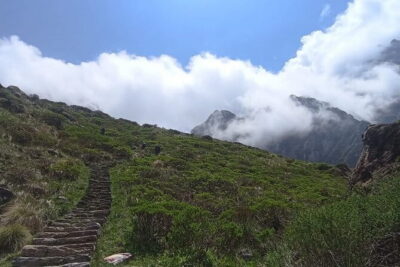
From there, the normal trail follows the left side of the valley through alpine meadows, with gentle uphill sections. After enough time, you approach Annapurna Base Camp (4170m).
And yes, you do reach it on this day—this is the destination that turns all the earlier walking into one big “wow” moment.
A realistic consideration: after several days of stairs and uneven trails, the last approach can feel mentally bigger than physically. Keep your pace controlled, drink when you can, and don’t treat this as a race.
Day 10: Base Camp visit and a practical return to Dovan (about six hours)
After breakfast on Day 10, you visit the base camp and surrounding views. The description here is very direct: the Himalaya views from the base camp are amazing.
Then you trek back to Dovan, taking about six hours. The route is easier going down, and the itinerary makes a sensible choice for many bodies: it notes that going down from Annapurna Base Camp in a single day can be hard for some due to fatigue and shaky legs, so they route you through Sinuwa instead of forcing a harder straight shot.
This is the kind of planning I appreciate. At ABC height, tired legs are real. A more thoughtful descent can make the difference between feeling proud and feeling wrecked.
Day 11: Bamboo to Chhumrong stairs, then hot springs relief
Day 11 starts with trekking back through forests of rhododendron, oak, and bamboo. After Bamboo, the trail goes steeply up for about an hour, then stays flatter until Sinuwa.
You gradually descend to Chhumrong Khola and then follow a stone staircase for almost an hour to reach Chhumrong. The final part heads steeply down to Jhinudanda, and you finally enter guest house rooms.
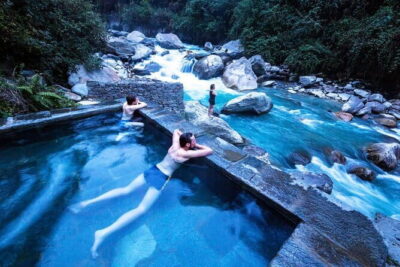
Then you get the treat that makes the return feel human: you can go to the hot springs for a refreshing bath in warm natural hot water.
This is not a luxury add-on. After days of descending, warm water can reduce the “I need a new pair of legs” feeling.
Day 12: from Chhumrong area back toward Nayapul, then Pokhara by car/van
Day 12 is the transition out of the mountains. After breakfast, the first part is descent, then you find flat land until Birethati. You stop for lunch at Birethati, and then walk about 30 minutes to Nayapul, where a car/van is waiting to take you back to civilization—Pokhara.
This day can feel strange: you’ll be happy to be back in a more stable routine, but you may also feel a little empty because the trail has been your day’s structure.
Day 13: return drive to Kathmandu and the green-rural scenery
On Day 13, you take a tourist bus at 7 AM after breakfast and drive back to Kathmandu. The ride is described as fantastic as you pass satellite towns, rural settlements, gushing rivers, and terraced green landscapes.
After about 6 hours, you arrive in Kathmandu.
Day 14: transfer to the international airport
Day 14 is simple: you’re transferred to the international airport for final departure.
That’s the end of the loop. And the way the itinerary is staged means you’re not forced to do an immediate mountain-to-airport jump the next morning—you have that final travel day buffer.
Who should book this Annapurna Base Camp trek
This ABC route is best for people who want a guided, structured trek with a clear acclimatization rhythm and a strong focus on getting to Annapurna Base Camp (4170m) safely and well. It also suits you if you like variety: villages, forest types, and the cultural middle hills with Buddhist and animistic elements like prayer flags and chortens.
It’s also a good match if you’re traveling with a group and appreciate a small cap (14 travelers max). If you’re the type who likes learning how the landscape changes—sub-tropical forest birds and waterfalls earlier, then rhododendron and higher alpine terrain later—this route gives you that shift.
If you’re chasing an ultra-fast summit-and-go experience, this probably isn’t your style. The route is paced for the trek itself, plus the sunrise and acclimatization logic.
The practical tradeoffs to keep in mind
- Altitude matters: you reach Base Camp at 4170m, and you’ll do multiple ups and downs, so plan for fatigue.
- Physical reality: multiple steep climbs and stone stairways are part of the plan.
- Porter choice: porter support is not automatically included, so consider whether you want to add help.
- Meals and drinks: the plan covers many meals, but not all; drinks are not included.
- Softer logistics day-by-day: most days build toward comfort via hot meals, guesthouse stays, and a structured return.
Should you book this $950 Annapurna Base Camp trek?
If you want a guided ABC trek that focuses on getting you to Base Camp with an acclimatization-minded route, and you don’t want to stitch together permits, transport, and day-by-day logistics yourself, this looks like a solid buy for the price. The included TIMS and conservation entry, the Kathmandu sightseeing day, and the guided structure are the big value anchors.
I’d tell you to book if you’re comfortable with moderate fitness expectations and you’re okay with the fact that descent days can be tiring too. I’d think twice if you want minimal walking, or if you know you need porter support to enjoy the trek. In that case, budget for extra help early.
FAQ
What does the tour price include?
The package includes 13-night accommodations, Kathmandu sightseeing (with entrance ticket free on Day 2), Annapurna conservation entry and TIMS permit, ground transport Kathmandu–Pokhara–Kathmandu by tourist bus, an experienced guide, and meals listed as breakfast (12), lunch (9), dinner (8).
Are permits included for Annapurna Base Camp?
Yes. The tour includes Annapurna conservation entry and a TIMS permit.
Do I need travel insurance?
Yes. Travel insurance is listed as compulsory, but it is not included in the tour price.
Is the porter included automatically?
No. A trekking porter is listed as not included, with an option to bring one if you need it.
How many people are in the group?
The tour has a maximum group size of 14 travelers.
Where does the tour start and end?
It starts with pickup/meeting at Tribhuvan Airport, Kathmandu, Nepal, and ends with a transfer to the international airport on Day 14 for your departure.
More Trekking Out of Kathmandu
More Tour Reviews in Kathmandu
Just Reviewed in Kathmandu
- Mountain Bike Tour
★ 5.0 · 3 reviews - Annapurna Panaroma
★ 5.0 · 3 reviews - Mount Everest Scenic Flight 50 Minutes
★ 5.0 · 3 reviews - Kathmandu : Swambhunath & Durbar Square Guided Half Day Tour
★ 3.3 · 3 reviews - Chandragiri Cable Car & Monkey Temple Tour – Private/Group
★ 5.0 · 3 reviews - Kathmandu: Shivapuri National Park Hiking Day Trip
★ 3.3 · 3 reviews
Annapurna Base Camp Treks, compared.
 ★ 5.0Annapurna base camp trek 5 DaysFrom $699252 reviews
 ★ 5.014-Day Private Annapurna Base Camp TrekFrom $1,090180 reviews
 ★ 5.0Annapurna Base Camp TrekkingFrom $1,779116 reviews
 ★ 5.0Annapurna Base Camp TrekFrom $935111 reviews
★ 5.0Annapurna Base Camp TrekFrom $1,350107 reviews
★ 5.0Annapurna Base Camp TrekFrom $935111 reviews
★ 5.0Annapurna Base Camp TrekFrom $1,350107 reviews
 ★ 5.0Kathmandu to Annapurna Base Camp (ABC) 5-Day TrekFrom $99102 reviews
 ★ 5.0Annapurna Base Camp Trek- 11 DaysFrom $99990 reviews
 ★ 5.0Annapurna Base Camp Trek 12 DaysFrom $80085 reviews
Browse the lists this tour appears in