
Review · ANNAPURNA BASE CAMP TREKS
14 days Annapurna Base Camp Trek
One steep morning at Poon Hill can change your whole mood. This 14-day Annapurna Base Camp trek mixes classic mountain trekking with real Kathmandu heritage stops, then gives you a village-to-sanctuary walk that feels human, not staged. I like that you get a structured plan with permits handled and real logistical support, plus a sunrise option that’s built into the rhythm of the trek. I also love how the route layers viewpoints, from early light at Poon Hill to the big amphitheater feel at Annapurna Base Camp.
The one drawback to plan for: this is a lot of walking with some brutal stone steps, and your pace will be shaped by the trail, not by comfort. If you’re not ready for long days and chilly early mornings, you’ll feel it—especially around the Chhomrong area with the long step descents and climbs.
In This Review
- Quick hits before you go
- Entering Kathmandu with temples you’ll remember
- Pokhara lakeside: the calm before the stairs
- From Nayapul to Ulleri: terraced views and a hard uphill mood
- Ghorepani and the rhododendron-pine corridor
- Poon Hill sunrise: worth the early alarm
- Tadapani to Chhomrong: rice fields, rivers, and sharp views
- The long step day: Chhomrong River down, Sinuwa and Bamboo Village up
- Hinku Cave and Macchapuchare Base Camp: basecamp feeling without ABC pressure
- Annapurna Base Camp: the sanctuary moment, with an optional 3 A.M. sunrise
- Return trek plus the hot springs at Jhinu
- Back to Kathmandu and then home
- Price and logistics: where the $1,028.41 really goes
- Lodges, meals, and what you should expect each night
- Guide and porter setup: how this trek stays manageable
- Who this trek suits best
- Should you book this Annapurna Base Camp trek?
- FAQ
- FAQ
- What is the start point and start time for this trip?
- How long is the Annapurna Base Camp trekking experience?
- Are airport transfers and transportation included?
- Are trekking permits included in the price?
- Is a porter included, and how much can the porter carry?
- Is sunrise at Annapurna Base Camp included?
- What about tipping, site entrance fees, and cancellation?
Quick hits before you go
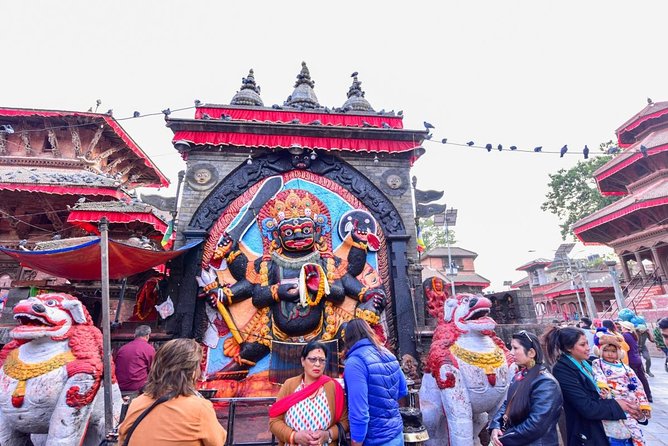
- Kathmandu heritage before the trail: Durbar Square, Swayambhunath (Monkey Temple), and Boudhanath with set time blocks
- Poon Hill sunrise timing: an early start to catch first light, then you’re back to breakfast before continuing
- Stone-step reality: expect long descents (including 2000+ steps around Chhomrong/river crossings) and the uphill follow-up
- Nature details you can actually spot: rhododendron and bamboo forests, plus a good chance of seeing lemurs near Bamboo Village
- Annapurna Base Camp with a choice: optional very-early wake-up for sunrise, otherwise enjoy the day at ABC
- Support that reduces admin: permits, transport, trek leader, and a porter system (18 kg capacity shared between two clients)
More trails out of Kathmandu, boots ready
- Everest Base Camp Trek – 14 Days★ 5.0 · 1,499 reviews
- Everest Base Camp Trek★ 5.0 · 842 reviews
- Everest Base Camp Trekking★ 5.0 · 485 reviews
- Nagarkot Sunrise View and Day Hiking from Kathmandu★ 5.0 · 471 reviews
Entering Kathmandu with temples you’ll remember
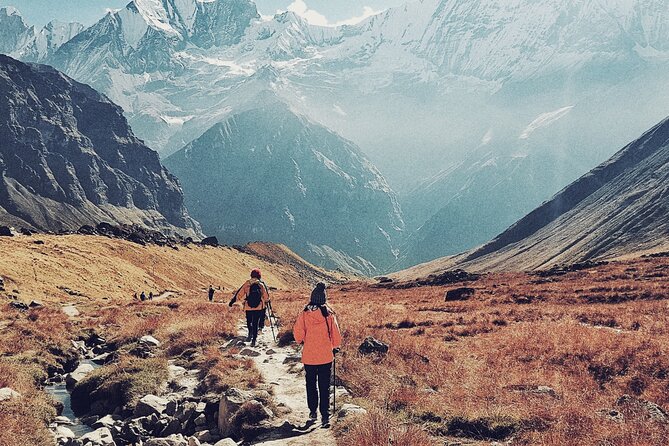
Your trip starts in Kathmandu, with a welcome and a transfer to a hotel in Thamel. After that, the plan is simple: get your bearings, then use the next day to hit the big UNESCO-grade sights without rushing.
Kathmandu Durbar Square is first. You’ll walk through an area packed with old monuments and carved stone work, right in the center of the city. It’s only about an hour in the schedule, so treat it like a focused walk: look up, slow down at the details, then keep moving so you don’t miss the next stops.
Next come two major Buddhist sites. Swayambhunath sits on a hill and is known as the Monkey Temple. Even if you’re not into religious architecture, the setting works: white dome and gilded details up on top, plus wide views over the Kathmandu Valley below. Then you finish with Boudhanath, one of the largest stupas in the world, with the prayer-flag look and the whole “sit and watch” vibe. The schedule gives you about two hours here, which is just enough time to do a slow circuit and people-watch.
Tip: Because entrance fees to these UNESCO sites are listed as not included, you’ll want a little cash or card plan ready for tickets.
Pokhara lakeside: the calm before the stairs
After Kathmandu sightseeing, the itinerary shifts gears to Pokhara. You get a Lakeside block with about four hours to loosen up, stretch your legs, and enjoy the lake setting. This isn’t just a break; it’s your buffer before the trekking starts.
Pokhara is where you’ll feel the difference between city pace and mountain pace. You’ll likely do some light shopping for anything you forgot, and it’s also a good time to mentally rehearse your next routine: early starts, walking all day, and paying attention to your breathing.
The main value here is that you don’t go straight from temples to trail without a decompression day.
From Nayapul to Ulleri: terraced views and a hard uphill mood
Day 4 begins with a drive to Nayapul, the gateway into the Annapurna region. From there, the trek starts toward Ulleri, and the trail gradually reveals terraced farm fields as you climb.
The route takes you up through places like Tikhedhunga, then transitions into a more demanding stretch where the trail is described as hard and straight uphill. That’s a good heads-up for what Ulleri day feels like: it’s not a casual warm-up stroll.
Plan for day-one trekking soreness even if you feel fit. The Annapurna Base Camp approach is moderate overall, but your legs still need a few days to “wake up” for the combination of dirt, steps, and altitude.
Ghorepani and the rhododendron-pine corridor
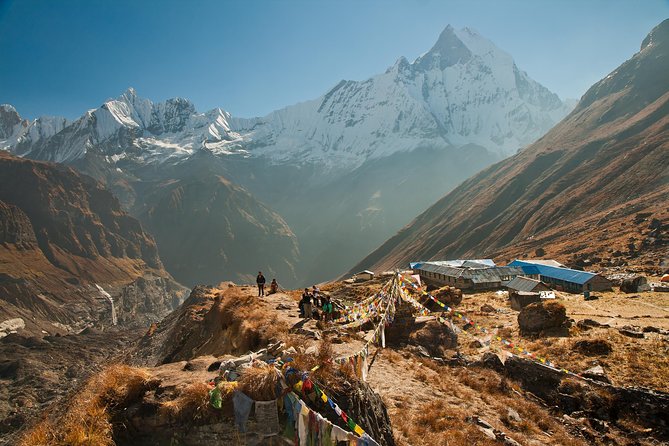
On Day 5, you continue toward Ghorepani, walking through forested sections with rhododendron and pine. There are little bridges along the way, plus a general sense that the trail is more shaded and scenic than purely exposed ridge-walking.
You end up in the Ghorepani area with views that can include Mt. Dhaulagiri (listed at 8167 m) and other peaks, depending on weather. The route also mentions a viewpoint from upper Ghorepani, which is a reminder that in this region, the scenery often arrives right when you stop for a breath.
On a practical level: forests mean better footing and less sun load, but damp air can also make mornings chilly. Wear layers you can manage while moving.




Poon Hill sunrise: worth the early alarm
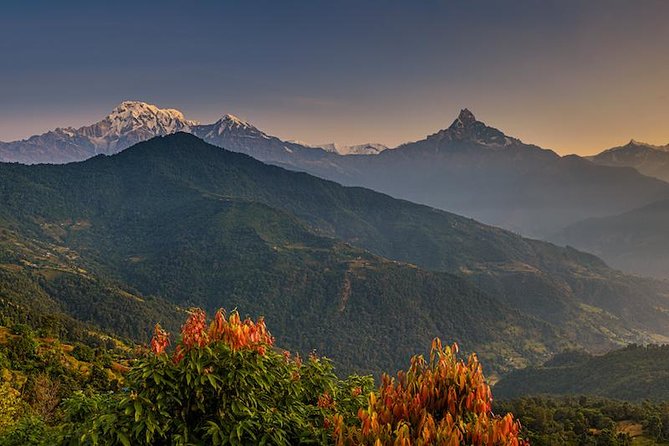
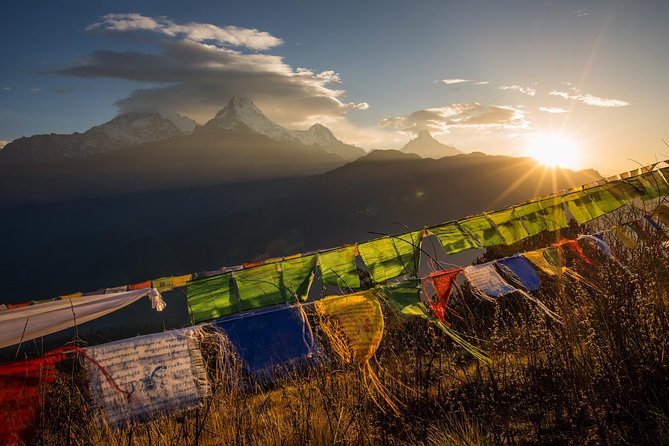
Day 6 is built around sunrise from Poon Hill (3210 m). You start very early to catch the first ray of light, then you’ll return to Ghorepani for breakfast before continuing onward.
This is the trek’s “big reward for effort” day. Poon Hill is famous for panoramic mountain views, including Annapurna and Dhaulagiri mentioned in the route, and you also get cultural context as you pass through villages along the way.
Key consideration: the schedule is early enough that you should treat it like a mini expedition. If you hate waking up in the dark, this is the part of the trek you’ll feel most.
After that, you head toward Tadapani (2650 m). Your walking continues through rhododendron forest, so you get a mix of viewpoint payoff and classic forest trekking.
Tadapani to Chhomrong: rice fields, rivers, and sharp views
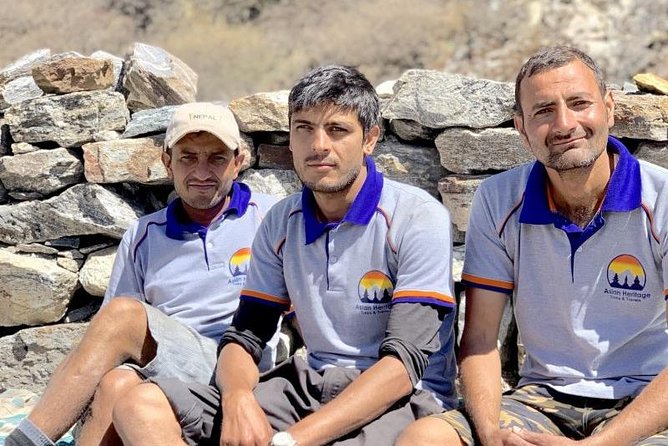
Day 7 moves you from Tadapani down and across the Kimrung River, then it’s walking alongside rice fields and small riverbank settlements. The route then climbs to Chhomrong.
Chhomrong is where the scenery starts to look more dramatic. The plan calls out great views of Fishtail and Annapurna South from Chhomrong. That matters because you’re reaching a staging area where the entire route’s feel changes. You’re no longer just in the “approach” stage.
A drawback to note: by now, the trekking days stack up. Even on a moderate trail, you’re doing long hours and elevation gains that add up fast.
The long step day: Chhomrong River down, Sinuwa and Bamboo Village up
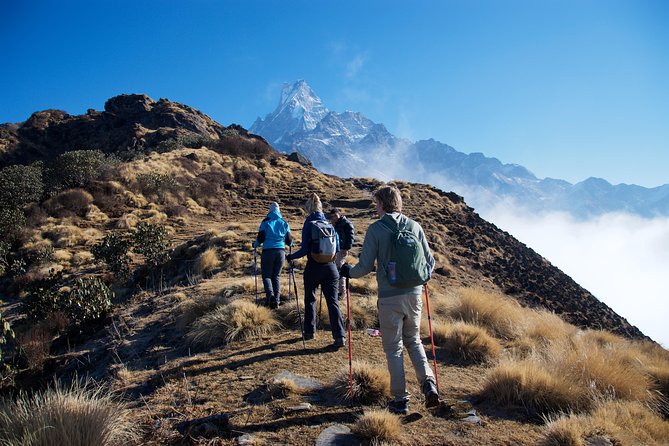
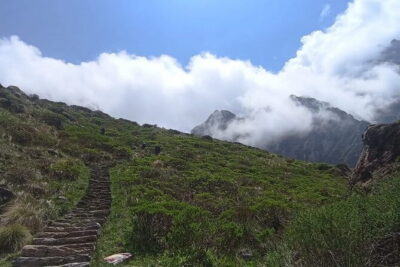
Day 8 is described as short distance but long and tiring. You start with a serious descent: 2000+ stone steps to cross the Chhomrong River. Then you climb hard to Sinuwa, rest, and descend again through rocky steps and bamboo forests to reach Bamboo Village (2300 m).
This day has two “you’ll remember it” elements:
- The step count: this isn’t just “some steps.” It’s the kind of day where your knees feel like they have opinions.
- The lemur chance: Bamboo Village is noted for large lemur colonies. If luck is with you, you may spot one hanging around in the trees.
Even if you don’t see lemurs, bamboo forests usually mean calmer walking and a different soundscape. It’s a break from the harsher sun and open stretches.
Hinku Cave and Macchapuchare Base Camp: basecamp feeling without ABC pressure
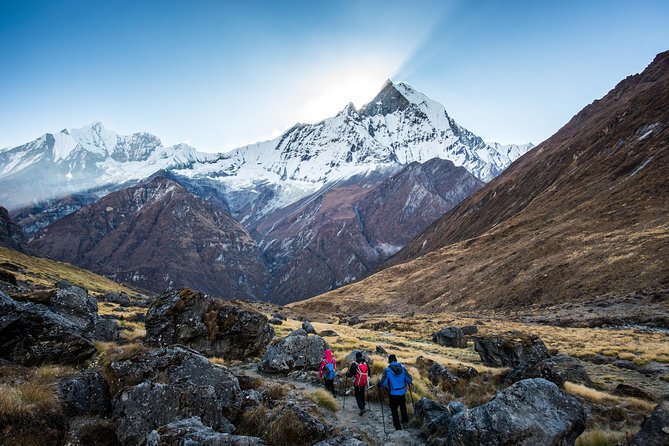
Day 9 continues the trek through rhododendron and bamboo forests. You go toward Deurali and then toward Hotel Himalayan (the route mentions crossing Hotel Himalaya). After that, there’s a steep climb through a drier forest before reaching Hinku Cave.
From Hinku Cave the trail drops closer to the river, then climbs again to Deurali (2920 m). Then you move along Modi Khola before reaching Macchapuchare Base Camp (MBC). This is a “bridge” moment: you’re near the bigger mountain viewpoints, but not at the final ABC stage yet.
One standout detail: the route mentions an amazing view of Fishtail Mountain that changes its shape depending on your viewing angle. That’s classic Annapurna-region mountain behavior—what looks like one peak becomes several shapes as you walk around it.
Annapurna Base Camp: the sanctuary moment, with an optional 3 A.M. sunrise
Day 10 is the big one. The plan notes that if you want to watch sunrise at ABC, you’ll need a very early wake-up around 3 A.M. and hike for about two hours, with altitude as a factor so you’ll want to move carefully.
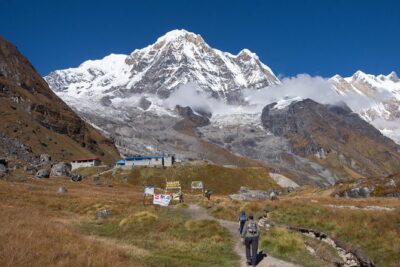
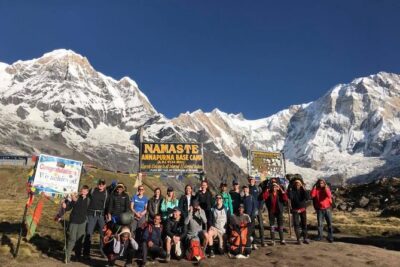
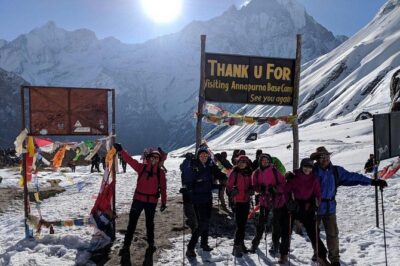
When you arrive, Annapurna Base Camp is described as uniquely spectacular, including views of Machhapuchhre and multiple other named peaks (Hiunchuli, Annapurna South, Annapurna I, Annapurna III, Gandharvachuli, Gangapurna). It’s also called Annapurna Sanctuary because of an oval-shaped plateau ringed by mountains.
This is where trekking turns from “walk and survive” into “look and breathe.” Even if clouds roll in, you’ll usually get partial views. But don’t treat weather like a guarantee—build your mood for variety.
Practical tip: sunrise hikes at altitude can make people careless. Keep your steps measured, sip water, and don’t chase speed.
Return trek plus the hot springs at Jhinu
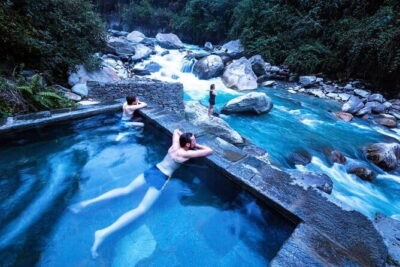
Day 11 turns you back down. You descend past small settlements such as Himalaya, Dovan, and Bamboo, then climb up stone staircases to Sinuwa. From there you descend down to Jhinu, which features hot springs.
Hot springs at the end of a long return day are one of the best recovery tools you’ll get on this route. Even if you go in stiff and grumpy, a warm soak can reset you for the last day.
Then Day 12 finishes the trek loop. You descend stone steps and move through villages, farmlands, and tea houses, heading back to Nayapul where a private jeep (as described) transfers you to Pokhara.
This last day is easier in tone, but you’ll still feel the earlier pounding in your legs.
Back to Kathmandu and then home
Day 13 is the final handoff: breakfast in Pokhara, then drive back to Kathmandu. In the late afternoon you arrive and settle in for the night.
Day 14 is departure day. You get a transfer to Kathmandu International Airport about three hours before your flight and help with check-in at the hall.
That timing is useful. At altitude and after trekking, you don’t want a late scramble before a flight.
Price and logistics: where the $1,028.41 really goes
The price is listed at $1,028.41 per person for roughly 14 days. The best way to judge value is to look at what’s already bundled, not just what’s included on paper.
What you’re getting that saves real money and stress:
- Kathmandu hotels on breakfast basis (4-star Yatri Suites & Spa or similar, plus Hotel Crystal Palace or similar)
- 8 nights in lodge accommodations during the trek on a room-only basis
- Permits for the Annapurna Conservation Area and TIMS, plus other necessary permits
- Transportation tied to the schedule (airport transfers, driving segments, jeep transfer back from Nayapul)
- A licensed English-speaking trek leader
- Porter support: one porter can carry up to 18 kg, shared between two clients
- Staff costs and local taxes
What’s not included (and you should budget for):
- Personal gear and personal expenses
- Food and drinks during trekking (lodge meals are not included)
- Tips for guide, porter, and drivers
- Entrance fees for UNESCO heritage sites in Kathmandu
- Donations at temples/schools if you choose to give
- Emergency rescue evacuation insurance
So the value angle is clear: you pay for the structure, permissions, and support system. Your main remaining variable costs are food, drinks, and your choices on tickets/tips.
Lodges, meals, and what you should expect each night
Throughout the trek, you’re staying in local available lodges with room-only accommodation. That means you’ll likely buy meals on-site and choose your comfort level by what you can access at each stop.
Because the trek passes through villages at regular intervals, you’ll have chances to eat and recharge. Still, expect basic conditions rather than hotel-level comforts.
One planning note: trekking plus cold nights can make you forget to eat enough in the day. The itinerary includes breakfasts at set points, but your daytime fueling on trail will matter if you want the mountain moments to feel good, not punishing.
Guide and porter setup: how this trek stays manageable
Support is a big deal on the Annapurna Base Camp walk. This package includes:
- An experienced, English-speaking, government-licensed trek leader
- Porter coverage with a defined weight limit (18 kg total per porter, shared between two clients)
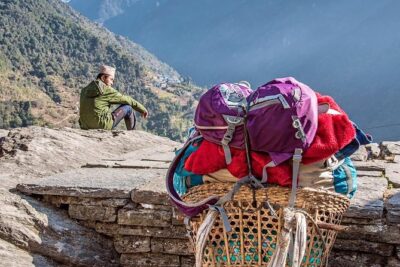
In practice, this matters because it reduces the daily friction. You’ll still carry a daypack, but you won’t be dragging a heavy load up every stepped stretch.
Also, because the tour is private and only your group participates, you should expect a bit more flexibility in how you pace stops, as long as weather and trail conditions allow.
And if you’re concerned about communication: the experience provider’s team responses show they follow up and answer questions quickly, which tends to translate into fewer surprises when you arrive.
Who this trek suits best
This is a moderate trekking plan, but it’s still a trekking plan. The additional info calls for moderate physical fitness and notes that a large distance hiking is required.
I’d point it toward you if:
- You want a classic Annapurna Base Camp route with built-in scenic moments
- You like a mix of culture days in Kathmandu and a full trekking arc in the mountains
- You want guided support and a porter system so you can focus on walking and acclimatizing
I wouldn’t pick this if:
- You have knee or joint limits that don’t handle lots of steps
- You hate early mornings and aren’t comfortable with optional very-early sunrise timing
Should you book this Annapurna Base Camp trek?
If your priority is a well-organized, permit-covered Annapurna Base Camp trek that also gives you real Kathmandu heritage time, this looks like a strong match. The structure is clear: Kathmandu culture, Pokhara recovery, then a multi-day trek that builds viewpoints step by step—plus a hot springs recovery day.
Before you say yes, be honest about the step-heavy days and your ability to handle early starts. If that part is manageable for you, this is the kind of itinerary that turns the long trek into a chain of good moments, not just a grind.
FAQ
FAQ
What is the start point and start time for this trip?
It starts at Tribhuvan Airport in Kathmandu, Nepal, with a start time of 8:30 am.
How long is the Annapurna Base Camp trekking experience?
The duration is listed as 14 days (approximately).
Are airport transfers and transportation included?
Yes. The package includes all transportation as mentioned in the itinerary, including transfers such as picking you up at the airport and later transferring you around the route.
Are trekking permits included in the price?
Yes. The price includes Annapurna Conservation Area permits, TIMS, and other necessary permits.
Is a porter included, and how much can the porter carry?
Yes. One porter can carry 18 kilo of luggage, shared between two clients.
Is sunrise at Annapurna Base Camp included?
It’s optional. The schedule notes that if you want to watch sunrise at ABC, you’ll need to wake up around 3 A.M. and hike about two hours to reach ABC.
What about tipping, site entrance fees, and cancellation?
Tipping is not included, and entrance fees for UNESCO heritage sites in Kathmandu are also not included. For cancellation, you can cancel up to 6 days in advance for a full refund; 2–6 days before can get a 50% refund; less than 2 days before is not refunded.
More Trekking Out of Kathmandu






More Tour Reviews in Kathmandu




Just Reviewed in Kathmandu
- Mountain Bike Tour
★ 5.0 · 3 reviews - Annapurna Panaroma
★ 5.0 · 3 reviews - Mount Everest Scenic Flight 50 Minutes
★ 5.0 · 3 reviews - Kathmandu : Swambhunath & Durbar Square Guided Half Day Tour
★ 3.3 · 3 reviews - Chandragiri Cable Car & Monkey Temple Tour – Private/Group
★ 5.0 · 3 reviews - Kathmandu: Shivapuri National Park Hiking Day Trip
★ 3.3 · 3 reviews
Annapurna Base Camp Treks, compared.
 ★ 5.0Annapurna base camp trek 5 DaysFrom $699252 reviews
 ★ 5.014-Day Private Annapurna Base Camp TrekFrom $1,090180 reviews
 ★ 5.0Annapurna Base Camp TrekkingFrom $1,779116 reviews
 ★ 5.0Annapurna Base Camp TrekFrom $935111 reviews
★ 5.0Annapurna Base Camp TrekFrom $1,350107 reviews
 ★ 5.0Kathmandu to Annapurna Base Camp (ABC) 5-Day TrekFrom $99102 reviews
 ★ 5.0Annapurna Base Camp Trek- 11 DaysFrom $99990 reviews
 ★ 5.0Annapurna Base Camp Trek 12 DaysFrom $80085 reviews
Browse the lists this tour appears in