
Review · ANNAPURNA BASE CAMP TREKS
Adventurous Annapurna Base Camp Trekking
Few treks hit this much wonder in two weeks. This Annapurna Base Camp journey mixes classic mountain scenery with real village days, then lands you in the famous Annapurna Sanctuary for close-up views of Annapurna I and beyond. I love how the route builds in payoff: Kathmandu and Pokhara for warm-up and recovery, then the trek ramps up through Ulleri, Ghorepani, and the Gurung settlements.
Two things I especially like for your planning: you get proper permits handled (including ACAP and TIMS), and you’re not doing this like a lone-wolf expedition—there’s a professional guide plus a porter setup (one porter for every two people). One consideration: you’re still traveling in mountain weather, so you’ll want realistic expectations around timing and the ability to see the best views, especially with early starts.
In This Review
- Key highlights you’ll feel on this trek
- A classic Annapurna trek with a “real life” rhythm
- Kathmandu Valley days: temples, squares, and easy acclimation
- Pokhara warm-up: river roads, lakeside walking, and a mental reset
- Ulleri’s first big test: steps, bridges, and lodge night one
- Ghorepani ridgeline: rhododendron forests and Dhaulagiri/Annapurna range views
- Poon Hill sunrise and the Tadapani viewpoints: the trek’s classic payoff
- Chhomrong and Ghandruk: Gurung settlements, river sounds, and big mountain framing
- Annapurna Base Camp: the day you’ll remember for years
- Sunrise return and the long descent rhythm: losing elevation without losing momentum
- Hot springs at Jhinu and the final village-to-Pokhara transition
- Price and value: what $1,650 buys you (and what it doesn’t)
- Weather reality and your best strategy for better views
- Who this trek fits best
- Should you book this Annapurna Base Camp trek?
- FAQ
- What’s included in the trek package?
- Do I need travel insurance?
- Is airport pickup or meeting assistance provided?
- What permits are covered?
- What gear should I bring?
- What happens if the trek can’t run due to weather?
Key highlights you’ll feel on this trek
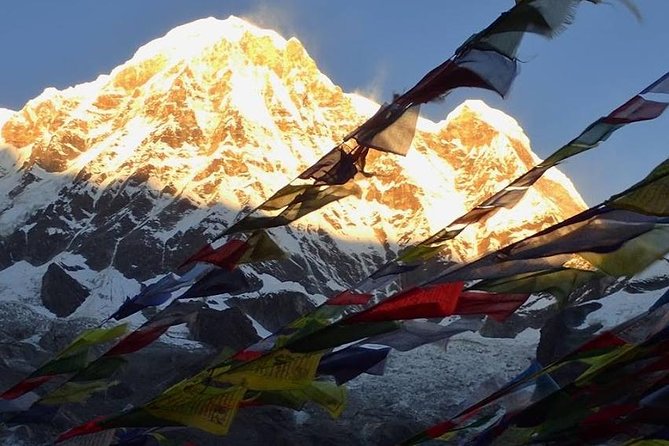
- Poon Hill sunrise for wide views over Annapurna and Machapuchare (Fishtail)
- Annapurna Base Camp overnight for the closest-feeling amphitheater views
- Gurung villages and daily culture in places like Chhomrong and Ghandruk
- Pokhara time in the lake-city before you fly or drive home
- Guide + porter support that helps keep the trek fun instead of punishing
- Permits included (TIMS and Annapurna Conservation Area Permit)
More trails out of Kathmandu, boots ready
- Everest Base Camp Trek – 14 Days★ 5.0 · 1,499 reviews
- Everest Base Camp Trek★ 5.0 · 842 reviews
- Everest Base Camp Trekking★ 5.0 · 485 reviews
- Nagarkot Sunrise View and Day Hiking from Kathmandu★ 5.0 · 471 reviews
A classic Annapurna trek with a “real life” rhythm
The best Annapurna trips don’t just move from point A to point B. They pace you so your body adapts and your eyes can keep up. Here you start in Kathmandu, shift to Pokhara, then gradually climb into the foothills and village trails before you reach the Annapurna Sanctuary.
I also like that the trek is built around recognizable beats: Ulleri’s climb, Ghorepani’s ridge views, sunrise at Poon Hill, then the steady descent-and-climb pattern through Chhomrong and Ghandruk. By the time you reach Annapurna Base Camp, you’re not overwhelmed—you’re ready.
And yes, you’re going for mountains. But you’re also going for the daily in-between: forests, suspension bridges, lodges, river noise, and the way mountain life changes as altitude rises.
Kathmandu Valley days: temples, squares, and easy acclimation
Your trip starts in Kathmandu with airport pickup and a first hotel night. After a welcome dinner, you’ll meet your trekking crew, which matters more than it sounds—once you know who you’ll travel with, the rest feels smoother.
Then you get a day of sightseeing in the Kathmandu Valley. You’ll visit four world heritage sites: Pashupatinath Temple, Kathmandu Durbar Square, Swayambhunath (Monkey Temple), and Boudhanath. This gives you two practical benefits: you see major landmarks without juggling tickets, and you build a cultural buffer before the hike begins.
The one thing to keep in mind is pacing. Kathmandu sightseeing is full-on, even when it’s not physically hard. If you’re prone to feeling worn out quickly, try to keep your evening energy calm so you can wake up early for the Pokhara transfer.
Pokhara warm-up: river roads, lakeside walking, and a mental reset
On day three you head to Pokhara by tourist bus, traveling alongside the Trisuli and Marshyangdi rivers. You pass rural villages and scenic stretches on the way, so it doesn’t feel like a dead transit day.
Once you arrive, you check into your hotel and do two gentle activities: boating on Fewa Lake and a short walk around Phewa Lake. This is a smart move in a trek itinerary. You get time to decompress, you sleep better, and you return to trekking mode without feeling like you skipped straight to altitude.
Pokhara is also your psychological reset point. You’ll remember this later when the trail goes from relaxed villages to longer climbs.
Ulleri’s first big test: steps, bridges, and lodge night one
The trek proper starts after breakfast when you drive to Nayapul. From there, you hike your way up, crossing rivers and moving through forest and waterfall scenery. Birthanthi is where your permits are checked, so don’t plan to start the day “light” on focus—this is when paperwork becomes real.
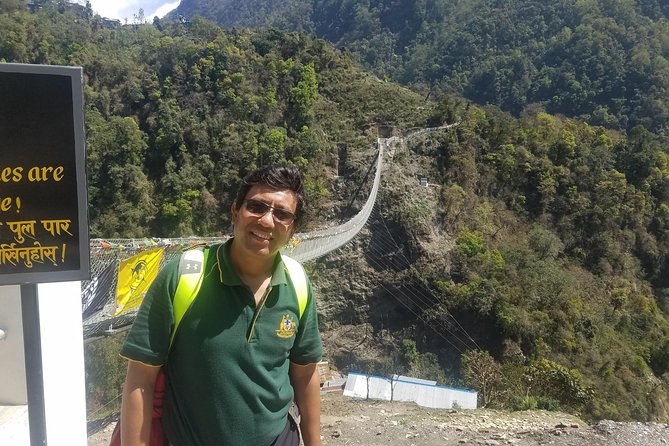
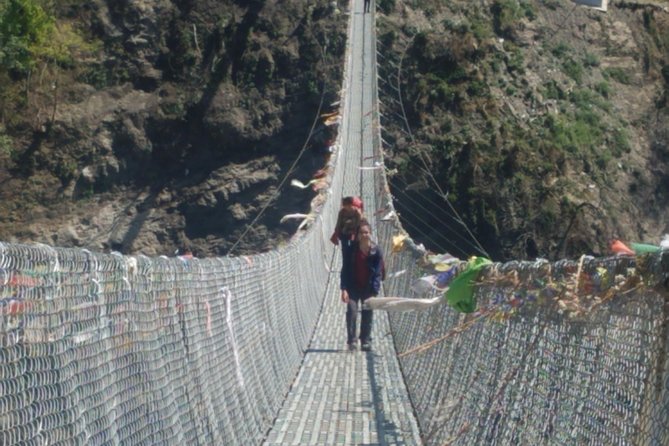
You continue to Thikhe Dhunga and Ulleri, and this is where you’ll feel the trek’s shape. You cross the Bhurungdi river, then reach two suspension bridges at Tikhedungda. After that, the famous Ulleri hill climb hits: you climb almost 3000 steps to reach Ulleri and your lodge for the night.
That step-count detail is important. This day is manageable for a lot of travelers, but it’s also the day that proves your pace matters. If you go too fast early, you pay later.




Ghorepani ridgeline: rhododendron forests and Dhaulagiri/Annapurna range views
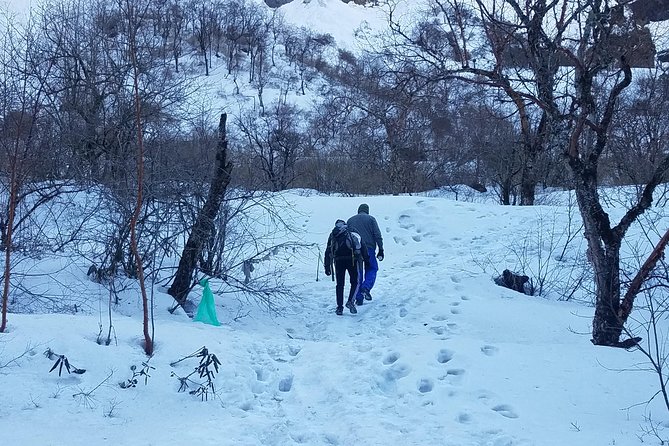
From Ulleri, the trail gradually rises and you start getting glimpses of Annapurna South and Hiun Chuli from the top. You’ll move through dense rhododendron and oak forests and pass through Banthanti and Nangethani.
Then you reach Ghorepani, where a short extra trek gets you to a ridge for panoramic views of the Dhaulagiri and Annapurna ranges. This matters because it’s your first real “wow” from higher ground, and it sets expectations for what sunrise and base camp will deliver later.
Also, expect this stretch to be a bit slower and more stop-and-photo friendly. The ridge views are a reward for steady walking, not a one-time glance. If you want the best experience, keep your breaks short but frequent.
Poon Hill sunrise and the Tadapani viewpoints: the trek’s classic payoff
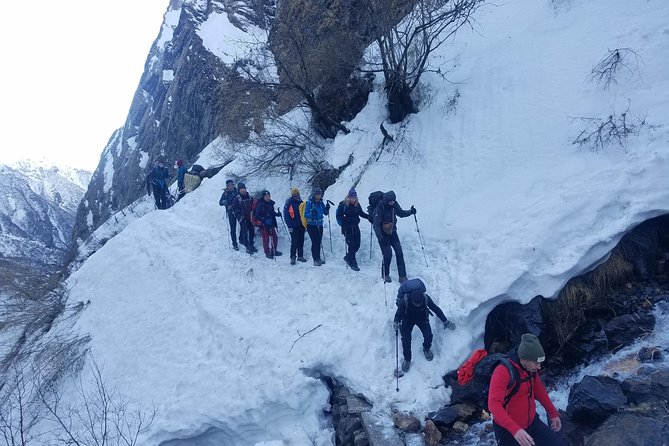
This is the morning jump you plan for in advance. You’ll get a wakeup call to hike toward Poon Hill (3210m) for sunrise. You go in the dark with torch light, reach Poon Hill after about 45 minutes, then spend around half an hour taking in the panoramic view of the Dhaulagiri and Annapurna ranges.
Going for sunrise means you trade sleep for a wider, clearer mountain picture. If you’re not a morning person, bring a mindset: this is one of the best returns you’ll get per hour on the trek.
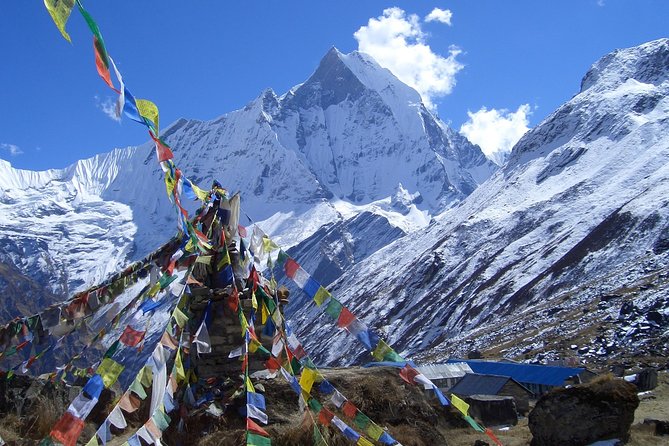
After sunrise, you descend to breakfast and then continue trekking toward Tadapani (2650m) via Deurali and Banthanti. Along the way, you might spot monkeys and birds. Tadapani itself becomes another viewpoint stop, with close views of Annapurna South, Hiun Chuli, and the Fishtail.
This is also a day where your energy management pays off. You’re stacking good viewpoints, so pace yourself so your legs don’t crash before dinner.
Chhomrong and Ghandruk: Gurung settlements, river sounds, and big mountain framing
Days seven and eight shift you into the Gurung culture zone. You go downhill for about two hours toward Chhomrong, then you rest there. Chhomrong is described as a bigger Gurung settlement, and you’ll notice that the trek transitions from forest-only hiking to village life with more community rhythm.
What I like about this part of the trek is the variety. You’re not stuck only climbing. You’re descending, crossing streams, then gradually lifting back up into settlements. That “up-down” motion helps you feel progress without one brutal grind.
The next day pushes you to Ghandruk. You get a morning view from Chhomrong before continuing through Bamboo and Dovan. This route runs through a deep gorge along the Modi river and you’ll hear the river noise as you walk. You might see wildlife too, including monkeys and Himalayan goats.
This is a great section for staying present. The sounds, the gorge feel, and the village backdrop keep you engaged on days when your body is working but your brain could otherwise go on autopilot.
Annapurna Base Camp: the day you’ll remember for years
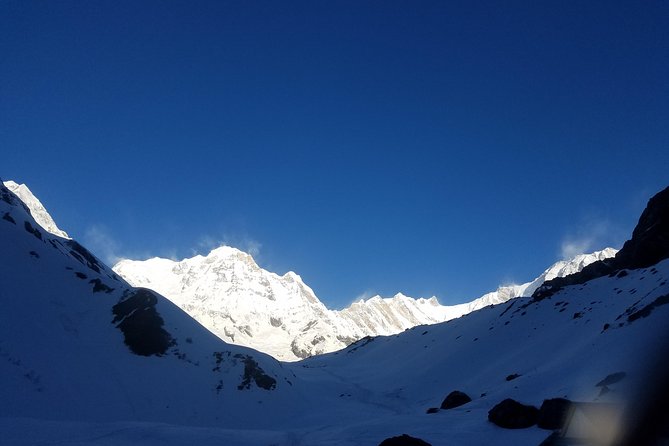
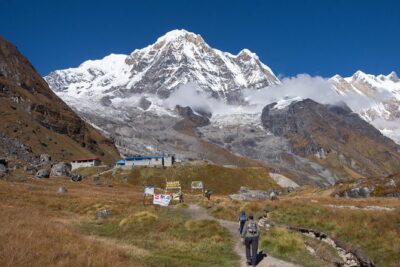
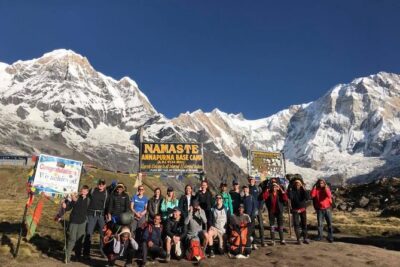
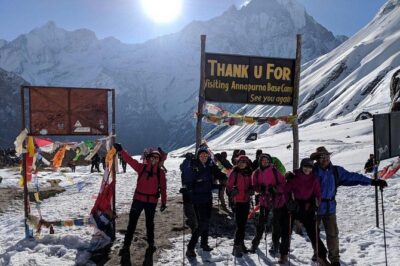
Now you’re heading to the final destination: Annapurna Base Camp. The walking brings you into an area surrounded by snow-capped peaks, and the feeling changes when you reach the base camp zone. It’s not just pretty. It’s a sense of being set into a high-altitude bowl.
In the afternoon you also go for a close view of the Annapurna I glacier and see major peaks called out on this route, including Annapurna South, Hiun Chuli, Machapuchare (Fishtail), and Annapurna III. Even if the weather shifts during your time there, this day is built around getting those glacier-and-peak perspectives.
This is the day where having a guide helps. Your guide can help manage timing so you’re not just rushing to a spot—you’re moving in a way that increases your odds of getting strong views.
Sunrise return and the long descent rhythm: losing elevation without losing momentum
You wake up early again for a sunrise view, then take photos as the rays hit the Himalayas. Breakfast follows, and then you start returning downhill.
You hike back to Bamboo, losing almost 2000 meters in about 6–7 hours. That’s a big descent and it’s the kind of day that can feel tougher than the climb if your knees aren’t happy. Bring trekking poles if you use them. If you don’t, consider trying them here. Your legs will thank you.
The key is keeping your steps controlled. Long descents reward calm footwork, not speed.
Hot springs at Jhinu and the final village-to-Pokhara transition
Later you climb briefly toward Khuldighar, noted for an experimental sheep farm area, then the trail trends through gradual up and down toward Sinuwa. From there you move again toward Chhomrong and then descend steeply to Jhinu.
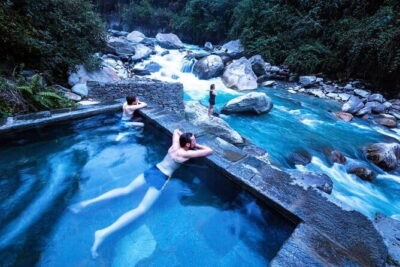
Jhinu is where the itinerary gives you a reward: you drop bags and head down to the hot springs on the way to Modi Khola river. After days of walking, a warm soak is one of the simplest morale boosters in the Himalaya.
Then comes the last trek day: you descend, cross the river, and follow flatter trail toward Birethanti before returning to Nayapul by vehicle. You check into a hotel in Pokhara and get a happy hour to celebrate. After that, you either drive or fly onward to Kathmandu depending on your schedule and budget.
Price and value: what $1,650 buys you (and what it doesn’t)
At $1,650 per person for about 14 days, the big value here is not just the trek itself. You’re paying for the full system around the trek: land transfers, Kathmandu sightseeing, hotel stays in Kathmandu and Pokhara, a professional guide, and the porter support (one porter for every two people).
You also get permits handled for the trekking area, including ACAP and TIMS. That’s not a small line item if you were trying to arrange everything yourself. On top of that, meals are included on multiple days (breakfast, lunch, dinner where specified), so you’re not constantly budgeting for food choices in remote stops.
What’s not included is also clear, and you should plan for it:
- personal expenses and soft/hard drinks
- tips
- travel insurance (mandatory to book)
- medical evacuation coverage (not included)
- sleeping bag and down jacket
One more practical note: the tour is described as private, meaning it’s only your group. That can be a plus for comfort and coordination if you like traveling with a fixed crew.
Weather reality and your best strategy for better views
This trek is weather-dependent. The cancellation terms specifically note good weather is required, which tells you the operator knows the mountain views can be impacted. That same reality applies even when you’re not canceling—fog and cloud cover can soften what you see at sunrise or at higher camp.
So build your strategy around flexibility:
- Start early when early starts are built in. Sunrise hikes are part of the design.
- Keep expectations realistic on sight-distance days; mountains can hide their face.
- Focus on the overall experience too: village life, bridges, forests, and the rhythm of walking matter even if visibility isn’t perfect.
Also, the trip length gives you time to absorb conditions. You’re not rushing through the Annapurna region in a single punishing week.
Who this trek fits best
This works best if you can handle a steady hiking schedule at moderate fitness levels. You’ll be trekking day after day with some long walking hours and at least one major step day early on, plus a big descent near the end.
It’s also a strong fit if you want:
- a guided experience with permits handled
- a porter system that reduces load pressure
- classic Annapurna highlights like Poon Hill and Annapurna Base Camp
- Kathmandu and Pokhara time so the trip feels complete, not just a trail grind
If you want a totally independent, minimalist trek where you carry everything, this isn’t the model. This one is built to be adventurous but well managed.
Should you book this Annapurna Base Camp trek?
If you want the classic Annapurna highlights with less logistical stress, I’d say yes. The combination of Poon Hill sunrise, a real night at Annapurna Base Camp, Gurung village days, and the Pokhara finish gives you a full arc from culture to high-mountain payoff.
I’d think twice only if you know you’re strongly sensitive to early mornings or you’re not comfortable with long stair and descent days. Otherwise, the structure, porter support, and included permits make this a smart way to do a serious trek without turning it into an administrative nightmare.
If you book, pack for cold mornings, protect your knees on descents, and lean into the daily rhythm. Annapurna rewards the steady.
FAQ
What’s included in the trek package?
The package includes land transfers as per the itinerary and Kathmandu day sightseeing, accommodations in Kathmandu and Pokhara, a professional guide, one porter for every two people, TIMS, and the Annapurna Conservation Area Permit (ACAP). Meal coverage includes breakfast/lunch/dinner where specified in the itinerary.
Do I need travel insurance?
Yes. Travel insurance is listed as a mandatory condition of booking. Medical evacuation in case of emergency is not included.
Is airport pickup or meeting assistance provided?
Yes. In Kathmandu, staff will receive you at the airport, and the meeting point is Kathmandu Guest House Saathgumti-16, Kathmandu 44600, Nepal. The trek also returns to the meeting point at the end.
What permits are covered?
TIMS and the Annapurna Conservation Area Permit (ACAP) are included.
What gear should I bring?
Sleeping bag and down jacket are not included, so you’ll need to bring them if you don’t already have them. Personal items, soft/hard drinks, and tips are also not included.
What happens if the trek can’t run due to weather?
The experience requires good weather. If it’s canceled due to poor weather, you’ll be offered a different date or a full refund. There is free cancellation up to 24 hours in advance for a full refund.
More Trekking Out of Kathmandu






More Tour Reviews in Kathmandu




Just Reviewed in Kathmandu
- Mountain Bike Tour
★ 5.0 · 3 reviews - Annapurna Panaroma
★ 5.0 · 3 reviews - Mount Everest Scenic Flight 50 Minutes
★ 5.0 · 3 reviews - Kathmandu : Swambhunath & Durbar Square Guided Half Day Tour
★ 3.3 · 3 reviews - Chandragiri Cable Car & Monkey Temple Tour – Private/Group
★ 5.0 · 3 reviews - Kathmandu: Shivapuri National Park Hiking Day Trip
★ 3.3 · 3 reviews
Annapurna Base Camp Treks, compared.
 ★ 5.0Annapurna base camp trek 5 DaysFrom $699252 reviews
 ★ 5.014-Day Private Annapurna Base Camp TrekFrom $1,090180 reviews
 ★ 5.0Annapurna Base Camp TrekkingFrom $1,779116 reviews
 ★ 5.0Annapurna Base Camp TrekFrom $935111 reviews
★ 5.0Annapurna Base Camp TrekFrom $1,350107 reviews
 ★ 5.0Kathmandu to Annapurna Base Camp (ABC) 5-Day TrekFrom $99102 reviews
 ★ 5.0Annapurna Base Camp Trek- 11 DaysFrom $99990 reviews
 ★ 5.0Annapurna Base Camp Trek 12 DaysFrom $80085 reviews
Browse the lists this tour appears in