

Review · ANNAPURNA BASE CAMP TREKS
Annapurna Base Camp Short trek
Huge mountains, tight timing, real village trails. This Annapurna Base Camp short trek takes you from Kathmandu to Pokhara and up into the Annapurna foothills, with a classic finish at 4,130m for sunrise views. Along the way you’ll walk through rhododendron, oak, and bamboo forests, cross suspension bridges, and pass rivers that look calm until you’re standing next to them. Many people rave about the team too, with guides like Jog Gurung showing up again and again in feedback.
Two things I really like about this trip: first, the trek is run with a clearly human, hands-on guide and porter team—people specifically name guides such as Jog and Ganesh, and porters like Osman and Hori, for being attentive and helpful. Second, the logistics feel simplified for you: two nights in Pokhara with breakfast, and then 3 meals a day with lodge/hotel nights along the route. One thing to consider: it’s still a serious trek. You’ll be on rocky trails, long stair sections, and steep up-and-down walking for multiple days, plus altitude at the end.
In This Review
- Key things to know before you go
- Why this Annapurna Base Camp Short Trek works (even if you’re short on time)
- Price and logistics: what your $897.44 is really buying
- Kathmandu to Pokhara: the long drive that sets the tone
- Pokhara to Ghandruk and Kimrong: first big scenery hit
- Chomrong, Sinuwa, and Deurali: the “stairs and bridges” reality check
- The push to Annapurna Base Camp: Machhapuchhre gets personal
- Sunrise at ABC and the long downhill back to Sinuwa
- Jhinu Danda hot springs: why the last days feel worth it
- Nayapul to Pokhara and the ride back to Kathmandu
- Guide and porter service: the biggest reason this trek feels easy
- What you should pack for ABC short trek days
- Should you book the Annapurna Base Camp short trek with this operator?
- FAQ
- How high does this Annapurna Base Camp trek go?
- Where does the trip start?
- Is pickup included?
- What permits are included?
- Are meals included during the trekking days?
- How many nights are included in Pokhara?
- Is travel or medical insurance included?
- Is the trek private?
- What about tips?
- Can I cancel for a full refund?
Key things to know before you go
- Sunrise at Annapurna Base Camp (4,130m): early start, big payoff, and cold mornings that feel worth it.
- Village-to-forest-to-meadow trekking: you change scenery often, not just climb and climb.
- Suspension bridges and stone stair descents: fun to cross, less fun on sore knees.
- Pokhara as a reset button: two hotel nights before and after help you start the trek fresher.
- A guide/porter team that answers questions: names like Jog, Ganesh, Osman, Hori, and Phoindra show up in strong feedback.
- Hot springs at Jhinu Danda: your reward day after the tougher walking stretches.
More trails out of Kathmandu, boots ready
- Everest Base Camp Trek – 14 Days★ 5.0 · 1,499 reviews
- Everest Base Camp Trek★ 5.0 · 842 reviews
- Everest Base Camp Trekking★ 5.0 · 485 reviews
- Nagarkot Sunrise View and Day Hiking from Kathmandu★ 5.0 · 471 reviews
Why this Annapurna Base Camp Short Trek works (even if you’re short on time)
The Annapurna Base Camp trek has a reputation for a reason: it hits a lot of Nepal in one circuit. You get Himalayan views (Annapurna Range is the star, with Machhapuchhre and Dhaulagiri on the long-view horizon), plus the daily rhythm of village life, where stone paths, fields, and small settlements sit under towering peaks. Even if you choose a shorter route, you still feel like you’re moving through the Annapurna region, not just hiking a straight line.
The “short” part matters. You’re not spending weeks trekking. Instead, you pack several big walking days into about 8 days, with rides between sections to keep the overall pace realistic. That balance is great if you want the ABC experience without turning your vacation into a months-long training camp.
Still, don’t kid yourself about effort. This is not a casual walk. You’ll deal with stairs, river crossings by suspension bridge, and long days like 6–8 hours on the trail. If you’re the type who hates downhill, prepare for the fact that many days are down as much as they’re up.
Price and logistics: what your $897.44 is really buying
At $897.44 per person, the value question isn’t just the headline number. You’re paying for a ready-made trek package that includes the stuff that can make independent trekking stressful: permits, a professional guide, meals, and overnight accommodations along the route.
Here’s what’s included that matters on the ground:
- Two nights in Pokhara with breakfast
- TIMS permits (required trek documentation)
- One professional trekking guide (with insurance, meals, and allowances)
- Three meals per day along the trekking days, plus overnight hotel/lodge accommodation on the trail
Also worth noting: the tour offers pickup, and you’ll get a mobile ticket. Those details don’t sound exciting, but they cut down friction when you’re trying to coordinate flights, rides, and check-ins.
What’s not included (and you should plan for):
- Travel/medical insurance and emergency evacuation
- Personal expenses like phone use, alcohol, donations
- Tips for guides and porters (they’re expected)
If you’re trying to save money by skipping these services, you’ll quickly pay for the missing pieces in time, planning, and on-the-ground headaches. If you want your trek to feel organized and human, this price fits the reality of trekking with a guide and team.
Kathmandu to Pokhara: the long drive that sets the tone
Most of your first day is about transition. You start at Tribhuvan Airport in Kathmandu, then drive to Pokhara via the Prithvi highway. Plan for a long ride. The upside is that you’re not staring at a wall; you pass terraced farmland, multiple cities, and the Trishuli river, all of which help you get oriented to Nepal’s geography.
When you reach Pokhara, the trip shifts gears. You set your luggage, and you’re free to enjoy Pokhara’s lakeside vibe—some people like boating or cycling, and it’s a good place to loosen up after travel days. Meals aren’t included this day, so it’s a straightforward “get in, get fed, get ready” rhythm.
This is also where Pokhara does its job. Two nights with breakfast means you’re not trekking on Day 1 while still tired from arrival. You’ll sleep at a lower elevation, reset your body, and prep for the early, chilly starts to come.
Pokhara to Ghandruk and Kimrong: first big scenery hit
The trek officially begins after more driving. You go to Ghandruk in the Gurung region, with a drive of about 3 hours. Ghandruk is the kind of place where the views arrive fast: you get big sightings of the Annapurna range and Machhapuchhre (6,993m) in the mix. Cherry blossoms are mentioned as a highlight in that area, depending on season.
Then the day turns into walking. After you descend through forested trails, you reach Kimrong river, climb back up, and continue to Kimrong village. Expect around 4 hours of walking plus BLD included (breakfast, lunch, dinner).
What I like about this day is that it’s a warm introduction to what the route does well: it mixes forests, hills, and village sections so you’re not stuck with only one kind of terrain. What to watch for is the early fatigue from changing elevations and footwork on uneven trails. If you go slow on purpose today, you’ll thank yourself later.




Chomrong, Sinuwa, and Deurali: the “stairs and bridges” reality check
You’ll walk from Kimrong toward higher country with days that can feel long on paper and longer in practice. One stretch takes about 6 hours of walking to reach Deurali, with Chhomrong (around 2,310m) also in the story.
This is where the route introduces two things you should expect:
- Stone stair sections that can test your knees, especially on the return days.
- Suspension bridge crossings—exciting for a minute, then you’re back to climbing.
After leaving Chhomrong, there’s a long descent through stone steps, then a bridge crossing, and then more uphill to Sinuwa. From there, you’ll find bamboo forest and hillside walking, then continue through bamboo areas before reaching Deurali.
The reason I think this day matters is simple: it trains your trail rhythm. If you keep your pace steady and don’t sprint during uphill moments, you can stay comfortable through the long walking. And since your meals are included and you’re staying in lodges, you don’t have to solve logistics on the fly.
The push to Annapurna Base Camp: Machhapuchhre gets personal
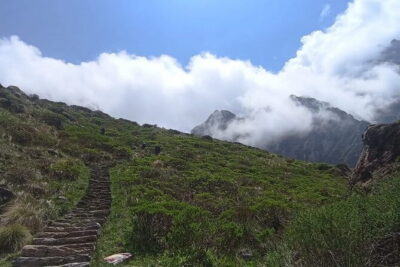
This is the day you’ve been building toward. You start early and the walking includes rocky trails with lots of up-and-down sections. Then you reach wide grassland and meadow stretches where the mountains look bright and close, even before you arrive.
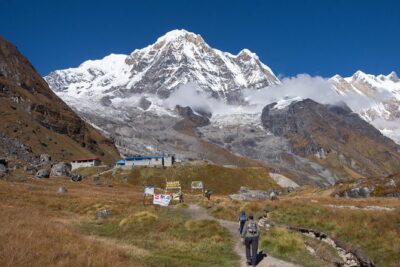
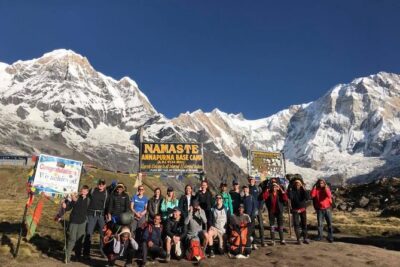
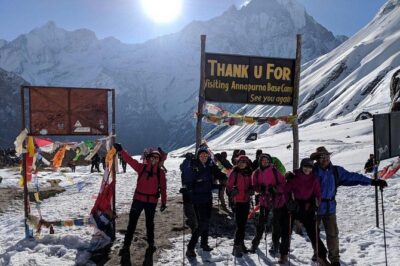
As you continue, you’ll walk beside a river and eventually hit a long staircase leading to Machhapuchhre Base Camp. Even if you’re not visiting a separate “base camp” long enough to linger, that stop gives you a front-row view of the fishtail mountain (Machhapuchhre). From there, you slowly continue to Annapurna Base Camp at 4,130m. The walking time on this day is listed around 8 hours, and BLD is included.
What I like here is the emotional change. Earlier days feel like “getting there.” On the ABC approach, the mountain views become more than a reward—they start directing your attention. You also get more variety in your final day than some treks: grasslands, riverside sections, and stairs all show up before you reach the base camp area.
The consideration: you’ll be tired by the time you arrive. Cold air, thin-feeling altitude, and fatigue can make it hard to enjoy every minute if you treat it like a checklist. Keep moving with purpose, rest when you can, and plan on taking a few quiet moments at base camp instead of trying to do everything at once.
Sunrise at ABC and the long downhill back to Sinuwa
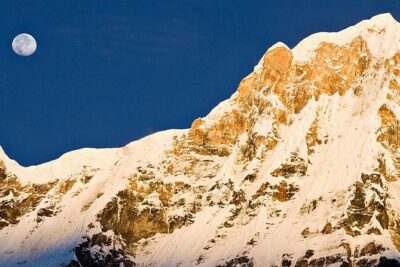
The next morning is the headline moment. You head out early for sunrise, watching the light hit the Annapurna ranges. This is the part of the trek that people talk about because it’s not just “a view.” It’s a whole mood change: cold air, dim light, then that moment when peaks start looking sharp and dramatic.
After breakfast at base camp, you retrace your path. The walk back starts as uphill and flat-feeling work and then becomes easier in general because it’s described as downhill toward the Deurali and Sinuwa area. Expect about 7 hours of walking and another BLD day.
This return day is where your planning matters most if you have sensitive knees. Downhill is when steps start to feel like they’re negotiating with your legs. If you can, take shorter steps, keep your weight controlled, and stay alert on stone surfaces.
Also, remember the altitude. Even though it’s easier physically than the climb up, you’re still walking at elevation. Drink water, pace yourself, and treat “downhill” as still being real walking.
Jhinu Danda hot springs: why the last days feel worth it
After reaching Sinuwa, the route turns into the classic “stairs again” day. You drop down through long stairs to cross a suspension bridge, then climb another series of long stairs to Chhomrong. From there, you take a different return path home.
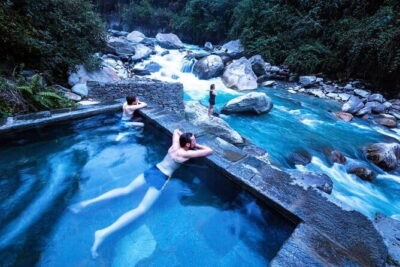
Then comes JhinuDanda, known for its natural hot springs. The itinerary specifically calls out a dip in the hot springs so you can recover and feel human before the final descent. You’ll continue downhill to reach an inn for the night. This day is listed around 6 hours of walking, with BLD included.
I love this recovery moment because it’s practical, not just scenic. Your muscles have been working hard for days, and the trek doesn’t end abruptly with only more stairs. You’re given a chance to reset before the final push toward the road.
Nayapul to Pokhara and the ride back to Kathmandu
Your last morning is described as pleasant farmland walking with no climbs. You move through terraced landscapes and then reach Nayapul. The walking time here is short—about 2 hours—and the reward is that you shift from trail time to vehicle time.
From Nayapul, you drive back to Pokhara on winding roads beside the Modi Khola. The ride takes about 3 hours. You rest your luggage at the hotel and have time to enjoy Pokhara again. Breakfast is included for this day.
Then you finish with the long drive back to Kathmandu. Along the way you get views of hills, white rivers, and terraced farmland, and there are lunch and toilet stops. When you reach Kathmandu, you can freshen up and stroll around Thamel for souvenirs and nightlife.
This wrap-up matters because it gives you a gentle landing after trekking. You’re not jumping straight from high altitude into a chaotic travel day. You get a buffer.
Guide and porter service: the biggest reason this trek feels easy
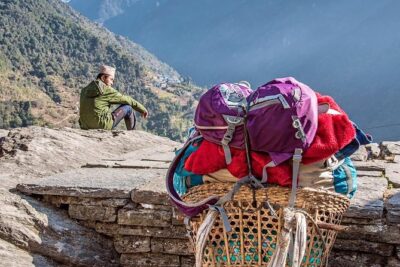
You’ll see the same pattern in the feedback again and again: people remember the team more than they remember any single photo. Names that show up include Jog Gurung and Jog Bahadur Gurung, plus guides like Ganesh. Porters mentioned include Phoindra Gurung, Osman, and Hori, and one person also highlighted a team connected with someone named Calvin.
In practical terms, that kind of team support changes your daily experience. When your guide answers questions clearly, helps manage breaks, and keeps the group organized, you can focus on walking and breathing instead of guessing what’s next. People also specifically praised being attentive and helpful, including during days when weather changed and conditions got rough.
One more useful detail: the operator is described as hospitable, and one review also pointed to an eco-conscious approach. Even if you don’t track every policy, it usually means less wasteful thinking on the trail and more care in how things are managed.
What you should pack for ABC short trek days
The data you were given doesn’t list gear, so I’ll keep this to practical basics you can use without guessing what’s provided. Your days range from cool mornings at altitude to warmer midday walking in lower forest sections.
Plan for:
- Layering clothes (cold at dawn, warmer later)
- Sturdy hiking shoes with grip for stone steps
- A warm layer for sunrise at 4,130m
- Rain protection (Nepal weather can shift fast)
- A small daypack for water and snacks
- Power bank or charging plan for your phone since communication matters in cities
Also, bring a realistic mindset: this trek includes multiple long walking days and stair-heavy sections. If you treat it like a hike marathon, you’ll enjoy it more.
And don’t forget personal expenses. Tips are expected, and phone use, snacks, or drinks beyond included meals are on you.
Should you book the Annapurna Base Camp short trek with this operator?
I’d say book it if you want three things: a classic Annapurna Base Camp experience, less stress on logistics, and a trek team that’s known for being responsive.
You should especially consider it if:
- You want guide support and included meals/lodges so you don’t spend energy on planning every day.
- You value the kind of service where the guide and porters are consistently described as attentive, friendly, and professional.
- You like the idea of combining trekking with Pokhara reset time (two nights with breakfast before the hike and more time afterward).
Skip this type of plan if:
- You’re looking for something gentle with minimal stairs.
- You don’t want to pay for required trek permits and guide/porter logistics.
- You’re not comfortable walking for 6–8 hours on mixed terrain.
If you read that and thought, okay, I can handle long days for a few spectacular mornings and a hot-spring recovery day, then you’ll likely enjoy this trek a lot.
FAQ
How high does this Annapurna Base Camp trek go?
The highest point is Annapurna Base Camp at 4,130m.
Where does the trip start?
The start point is Tribhuvan Airport in Kathmandu, Nepal.
Is pickup included?
The experience states that pickup is offered.
What permits are included?
The trek includes TIMS permits.
Are meals included during the trekking days?
Yes. It includes 3 meals per day during the trekking days, plus overnight accommodation in hotel/lodge along the trail.
How many nights are included in Pokhara?
It includes two nights in Pokhara with breakfast.
Is travel or medical insurance included?
No. Travel/medical insurance and emergency evacuation cost are not included.
Is the trek private?
Yes. It’s described as a private tour/activity, meaning only your group participates.
What about tips?
Tips for guides and porters are not included and are expected.
Can I cancel for a full refund?
You can cancel up to 24 hours in advance for a full refund. If you cancel less than 24 hours before the start time, the amount paid is not refunded.
More Trekking Out of Kathmandu






More Tour Reviews in Kathmandu




Just Reviewed in Kathmandu
- Mountain Bike Tour
★ 5.0 · 3 reviews - Annapurna Panaroma
★ 5.0 · 3 reviews - Mount Everest Scenic Flight 50 Minutes
★ 5.0 · 3 reviews - Kathmandu : Swambhunath & Durbar Square Guided Half Day Tour
★ 3.3 · 3 reviews - Chandragiri Cable Car & Monkey Temple Tour – Private/Group
★ 5.0 · 3 reviews - Kathmandu: Shivapuri National Park Hiking Day Trip
★ 3.3 · 3 reviews
Annapurna Base Camp Treks, compared.
 ★ 5.0Annapurna base camp trek 5 DaysFrom $699252 reviews
 ★ 5.014-Day Private Annapurna Base Camp TrekFrom $1,090180 reviews
 ★ 5.0Annapurna Base Camp TrekkingFrom $1,779116 reviews
 ★ 5.0Annapurna Base Camp TrekFrom $935111 reviews
★ 5.0Annapurna Base Camp TrekFrom $1,350107 reviews
 ★ 5.0Kathmandu to Annapurna Base Camp (ABC) 5-Day TrekFrom $99102 reviews
 ★ 5.0Annapurna Base Camp Trek- 11 DaysFrom $99990 reviews
 ★ 5.0Annapurna Base Camp Trek 12 DaysFrom $80085 reviews
Browse the lists this tour appears in