
Review · ANNAPURNA BASE CAMP TREKS
Annapurna base Camp trek 10 Days
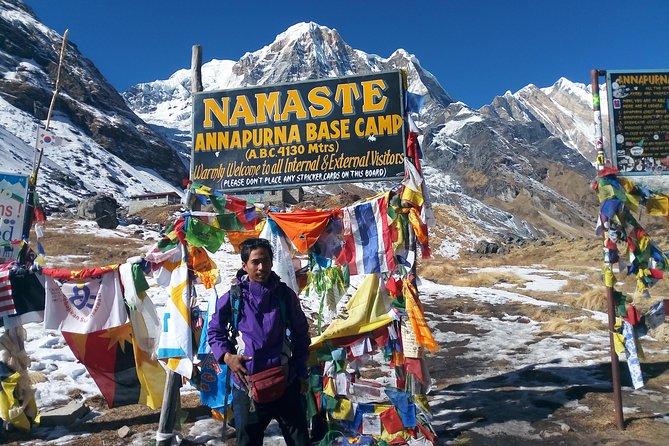
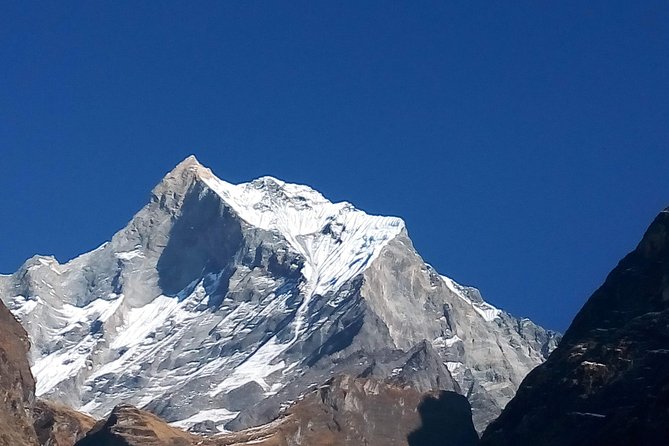
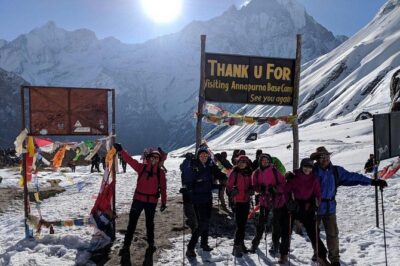
Annapurna Base Camp is a mountain amphitheatre. This trek puts you right in the middle of huge Himalayan scenery, with classic viewpoints from Poon Hill and then the bowl-like setting at Annapurna Base Camp (4,130m). You’ll also see the famous peaks in the region, including sacred Machhapuchhre (Fishtail Mountain), which is off-limits for climbing.
Two things I really like about this experience are the chance to see Gurung villages up close and the way the route tracks changing plants and wildlife as you rise to a high mountain destination. One thing you should consider before booking: the trip summary says duration is 2 days (approx.), while the day-by-day plan runs about 10 days from Kathmandu to the trek and back—so double-check your exact dates with the operator.
In This Review
- Key highlights worth your attention
- The Annapurna Base Camp feeling: peak bowl at 4,130m
- Kathmandu and Pokhara: getting your bearings before you start walking
- Into Ghandruk: the first taste of Annapurna village life
- A practical consideration
- Ghandruk to Sinuwa: climbing with changing scenery and tempo
- Sinuwa to Deurali: the altitude staircase toward the base camp bowl
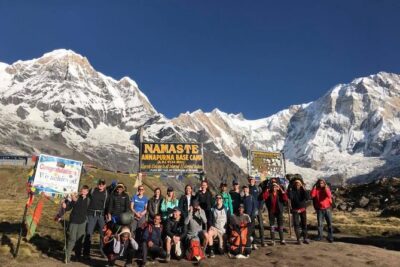
- Deurali to Annapurna Base Camp: reaching 4,130m at last
- The one downside to plan for
- Base Camp to Bamboo: stepping down without losing the magic
- Bamboo to Jhinu Hot Spring: the recovery you can actually feel
- The final push back toward Pokhara and Thamel
- Logistics and guide quality: why the trip feels calm
- Price and value: what $853.34 gets you
- Who this trek fits best
- Should you book this Annapurna Base Camp trek?
- FAQ
- Where do I meet for the trek?
- Is this a private trek?
- How long is the trek, really?
- What altitude does the trek reach?
- What views can I expect on the route?
- Does the trek pass through villages?
- Can beginners join without mountaineering experience?
- What is the cancellation policy for a full refund?
Key highlights worth your attention

- Poon Hill viewpoints: You get named views of Annapurna South, Hiunchuli, Nilgiri, and Machhapuchhre.
- A real village-to-mountain trek: You pass through Gurung settlements as you gain altitude.
- Clear, high point goal: Annapurna Base Camp at 4,130m is the anchor for the whole route.
- Sacred Machhapuchhre detail: You learn why this peak is treated as off-limits.
- Hot spring recovery day: Jhinu Hot Spring is part of the descent game plan.
- Private, organized experience: You start in Thamel, Kathmandu (5:00am) and end back there.
More trails out of Kathmandu, boots ready
- Everest Base Camp Trek – 14 Days★ 5.0 · 1,499 reviews
- Everest Base Camp Trek★ 5.0 · 842 reviews
- Everest Base Camp Trekking★ 5.0 · 485 reviews
- Nagarkot Sunrise View and Day Hiking from Kathmandu★ 5.0 · 471 reviews
The Annapurna Base Camp feeling: peak bowl at 4,130m
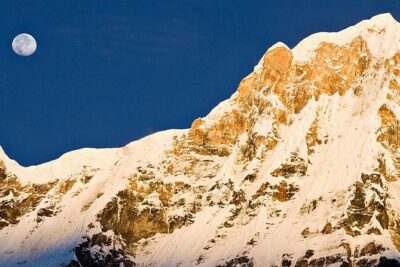
The best way to describe Annapurna Base Camp is as a place that feels “contained.” Instead of scattered views, you reach a spot where the peaks form a natural amphitheatre around you. When you’re sitting at the base level of the Annapurna massif, the mountain scale feels real in a way that photos never fully capture.
If you like seeing the biggest names of the range, this trek helps you do that twice. First, you have the Poon Hill viewpoint moment where you can spot several major peaks in the Annapurna region. Then you return to the highest destination at Annapurna Base Camp itself, centered at 4,130m.
Also, there’s a cultural layer baked into the scenery. You’re not just hiking a skyline—you’re moving through a landscape tied to local beliefs, and the trek explicitly notes that Machhapuchhre is sacred (connected to Shiva) and therefore closed to climbing. That detail changes how you look at the mountain: it’s not a conquest, it’s a presence.
Kathmandu and Pokhara: getting your bearings before you start walking
Your trek starts in Thamel, Kathmandu, with pickup at 5:00am. That early start matters. It means you’ll spend less time dithering and more time using the daylight for planning, packing, and meeting your team. Thamel is also a smart staging area because it’s close to public transportation, so getting in and out of the city is easier than if you were dropped somewhere remote.
The next day includes a free and arrangement day. That’s useful. A trek this altitude-focused needs you to handle small stuff quickly—simple logistics, comfort items, and making sure you’re truly ready before the long driving day and the first real walk.
Then comes the Kathmandu to Pokhara transfer: a drive of 6–7 hours to Pokhara (820m). You’re going from capital chaos into a quieter lake-city vibe, which usually feels like a reset before you head up the mountain stair-step. After Pokhara, you’ll drive again toward the trek entry area and begin hiking.
Into Ghandruk: the first taste of Annapurna village life
After the Pokhara transfer, the route goes from the road into a trail approach via Nayapul. Then the first big hiking block is to Ghandruk (1940m), around 5–6 hours.
Ghandruk is the kind of place you hike toward because it represents life at mid-altitude. Instead of immediately going straight to high views, the trail starts by giving you a human scale: village settings, local routines, and the feeling that people live here year-round, not just during trek season.
This is also where you start to notice the “gear shift” from walking on flat routes to walking with altitude in the background. Even if you’re not gasping yet, you’re building rhythm. The route’s structure matters: you’re not thrown into a brutal day 1.
A practical consideration
Because you’re walking hours on Day 4, you’ll want to treat Day 3 and your free day in Kathmandu as part of preparation, not leftover leisure. If you sleep badly or move too slowly, it can show up later as fatigue.




Ghandruk to Sinuwa: climbing with changing scenery and tempo
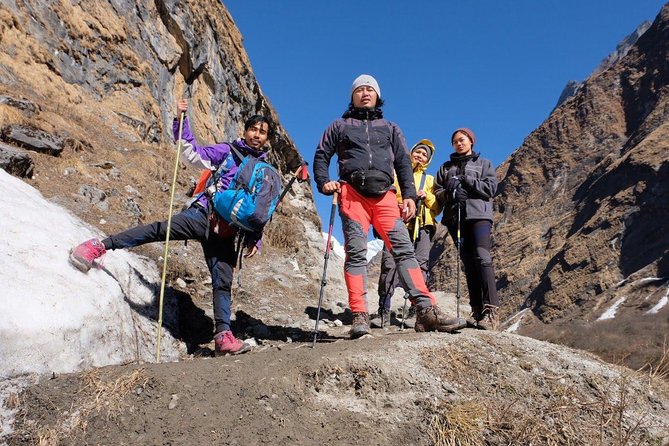
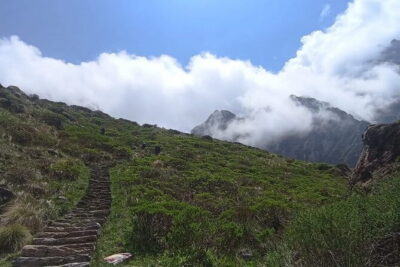
The next day moves you from Ghandruk to Sinuwa (2,360m), again about 5–6 hours. The altitude gain here is meaningful—about 420 meters—but the bigger value is how the day feels: steady uphill without that jarring, sudden jump.
This middle section is where the trek earns its “nature + culture” promise. The route describes you passing through local Gurung villages and being exposed to diverse flora and fauna as you climb. Translation: you’re not only looking at peaks. You’re moving through a living environment where plants and animal life change with altitude.
If you’re someone who likes to learn on the move, this stretch is usually when guides (like Prakash, who is specifically praised for being informative and attentive) can make the scenery feel more readable. You’ll likely notice details faster when you know what you’re looking at.
Sinuwa to Deurali: the altitude staircase toward the base camp bowl
From Sinuwa to Deurali (3,230m) the day is listed at 6 hours. This is one of the route’s clearer “stair-step” moves—another solid push upward before the final approach.
By this point, your body starts responding to altitude cues. Even if you’ve hiked before, your walking time changes from how fast you can go to how steady you can be. That’s not a bad thing. It’s often the difference between a trip you manage calmly and a trip you fight.
You’ll also start thinking about the “why” behind the schedule. Deurali acts like a staging area on the way to Annapurna Base Camp. It’s not just another overnight point; it’s a checkpoint that makes reaching 4,130m feel plausible instead of random.
Deurali to Annapurna Base Camp: reaching 4,130m at last
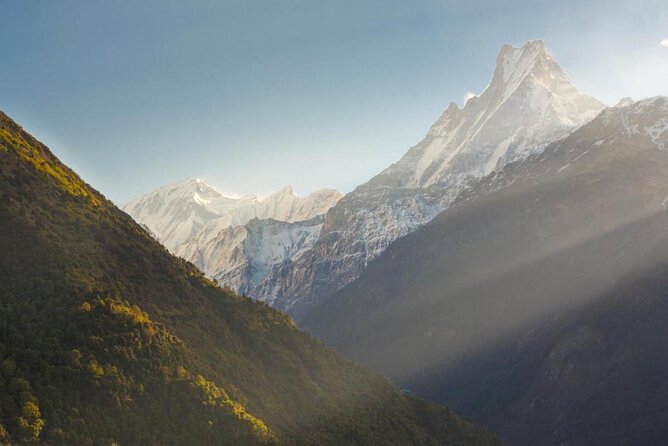
The big goal day is Deurali to Annapurna Base Camp (4,130m), about 5 hours. After days of rising through village zones and mid-altitude terrain, the final push is when the whole route clicks.
This is the day for the amphitheatre moment—being centered by pristine peaks that surround you. The trek’s description also highlights the way the view works: peaks form a natural bowl, so your “best photo angle” isn’t just one spot. It’s all around you, depending on how you turn your head and where the light hits.
If Machhapuchhre is on your peak list, this is the emotional payoff. Earlier viewpoints already hinted at it, but at Annapurna Base Camp the sacred mountain feels like part of the bigger picture, not just a distant silhouette.
The one downside to plan for
Days like this can be demanding even when the hours sound reasonable. The elevation you reach (4,130m) means you may feel the air differently. Go slower than you think you need to, and let the climb be about finishing, not racing.
Base Camp to Bamboo: stepping down without losing the magic
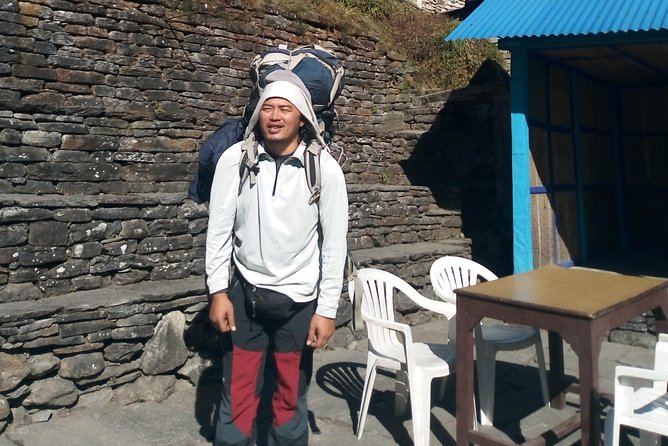
After reaching Annapurna Base Camp, the next move is to Bamboo (2,340m), around 6 hours. That altitude drop is big, but the point isn’t only relief. It’s also reset time—your legs get a break from the high point, but you’re still hiking.
This is a great day for pacing. You’re coming down from the emotional high of base camp, so it’s easy to get distracted, take it too casually, and then run out of energy later. A steady rhythm usually works best.
Bamboo to Jhinu Hot Spring: the recovery you can actually feel
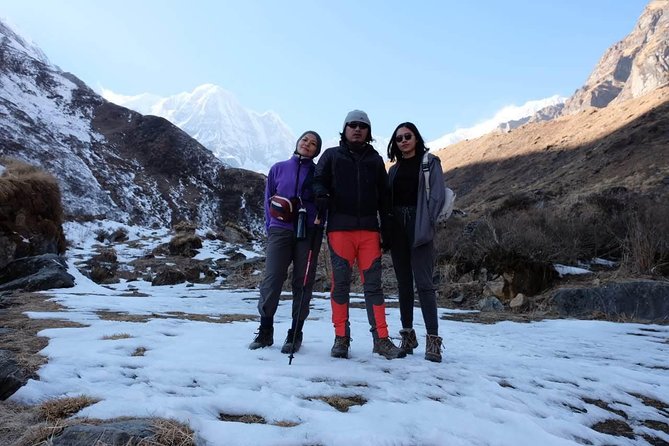
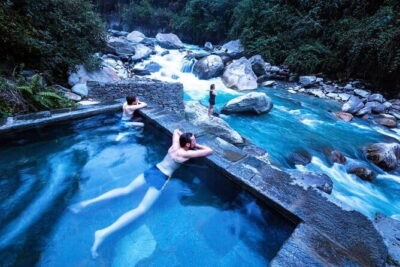
Then you head to Jhinu Hot Spring (1,780m), about 5 hours. Hot springs after a mountain trek are more than a nice bonus. They’re a practical part of getting your body ready for the final transit day.
Even if you don’t think you’ll care, you’ll likely notice the difference in how your feet feel after days of changing altitude. This is where the trip gets a “reward for the work” ending, with a specific place to aim for instead of finishing the day whenever you feel like it.
The final push back toward Pokhara and Thamel
Your Day 10 wraps up with Jhinu Hot Spring to Nayapul and then a drive to Pokhara (820m) listed at 7 hours. Your activity ends back at the meeting point in Thamel, Kathmandu, so there’s more travel involved after reaching Pokhara than the hiking portion alone.
Because the day includes a long drive, your strategy is simple: treat it like travel recovery. Don’t plan extra activities right after. You’ll enjoy the finish more if you save your energy for sleeping and recharging.
Logistics and guide quality: why the trip feels calm
This is a private tour/activity, meaning it’s only your group. That tends to make the trek feel smoother because the schedule is less about squeezing into other people’s pacing and more about managing your own day.
You also start at 5:00am, and the structure of the route suggests that early mornings are part of making the trekking blocks work. If you’re the type who hates early starts, bring a plan: sleep early the night before and keep your morning routine simple.
One of the strongest signals from guest experiences is that the guide support is not just a job—it’s part of the trip’s tone. Prakash is specifically mentioned as professional, funny, and a relaxed presence. People also describe him as informative and attentive, which matters because Annapurna includes both scenic excitement and physical effort. A good guide helps you focus on what you can control.
Porters are also part of the trek support picture. That can make a big difference in how you feel at the end of each walking block, especially on days with more altitude gain.
Finally, the operation uses a mobile ticket and confirmation at booking time. Near public transportation, Thamel is easy to stage from and easy to return to.
Price and value: what $853.34 gets you
At $853.34 per person, this isn’t a budget-only trek. It’s priced like a supported experience with real coordination: Kathmandu-to-Pokhara and drive segments, defined trekking days with time estimates, and the presence of a guide (with porters on board).
The value shows up in three places:
First, you’re paying for direction and organization. When you’re hiking high ground, you want the schedule to be clear and the team to handle the moving parts.
Second, the route includes multiple “anchors” that people remember: a named viewpoint setup at Poon Hill, a major altitude finish at Annapurna Base Camp (4,130m), and a distinct recovery stop at Jhinu Hot Spring.
Third, the private setup tends to reduce the stress of matching other people’s pace. Even if the trek is physically demanding, a calm, attentive team can make it feel manageable.
What to watch: the trip summary duration doesn’t match the longer day-by-day trek plan. That’s not a deal-breaker, but you should confirm the actual start and end dates with Nepal Himalayan Hiker (P) Ltd. before you commit.
Who this trek fits best
This is for you if you want a classic Annapurna experience without needing mountaineering skills. The trek is described as suitable for people with no mountaineering background, and the pacing is built around multiple mid-altitude stages rather than one giant jump to the top.
It’s also a good match if you care about more than the summit photo. The route specifically includes Gurung villages and mentions flora and fauna, which usually means the journey feels educational and alive, not just athletic.
Where it might not fit: if you want a very gentle stroll with minimal altitude impact, you’ll still be reaching 4,130m. Even if the walking hours are reasonable, the height is real. This is a trek for people ready to walk daily and respect the mountains.
Should you book this Annapurna Base Camp trek?
I’d book this trek if you want an organized, private Annapurna experience built around two big scenic moments—Poon Hill and Annapurna Base Camp—plus a meaningful cultural route through Gurung villages and a restorative finish at Jhinu Hot Spring.
I’d pause and double-check dates if you’re relying on the “2 days (approx.)” duration shown in the summary. The detailed plan clearly runs across many more days from Kathmandu to the trail and back, so make sure your booking matches the hike you’re actually expecting.
If you confirm the schedule, you’ll likely appreciate the steady structure and the calm professionalism associated with guides like Prakash, along with porter support that takes pressure off your load.
FAQ
Where do I meet for the trek?
You meet in Thamel, Kathmandu 44600, Nepal. The start time is 5:00am, and the activity ends back at the same meeting point.
Is this a private trek?
Yes. It’s listed as a private tour/activity, so only your group participates.
How long is the trek, really?
The itinerary runs as a multi-day plan from Kathmandu to Pokhara, then hiking to Annapurna Base Camp and back with a hot spring stop, ending back at Thamel. However, the summary shows 2 days (approx.), so you should confirm the exact total days with the operator.
What altitude does the trek reach?
The highest point listed is Annapurna Base Camp at 4,130 meters (13,549 ft).
What views can I expect on the route?
You can expect named peak views from Poon Hill, including Annapurna South, Hiunchuli, Nilgiri, and Machhapuchhre (Fishtail Mountain). At Annapurna Base Camp, the peaks form a natural amphitheatre around you.
Does the trek pass through villages?
Yes. The route description says you pass through local Gurung villages.
Can beginners join without mountaineering experience?
The information says most travelers can participate, and one note describes the plan as suitable even for people without trekking or mountaineering experience.
What is the cancellation policy for a full refund?
You can cancel up to 3 days in advance for a full refund. Canceling within 3 days doesn’t qualify for a refund.
More Trekking Out of Kathmandu






More Tour Reviews in Kathmandu




Just Reviewed in Kathmandu
- Mountain Bike Tour
★ 5.0 · 3 reviews - Annapurna Panaroma
★ 5.0 · 3 reviews - Mount Everest Scenic Flight 50 Minutes
★ 5.0 · 3 reviews - Kathmandu : Swambhunath & Durbar Square Guided Half Day Tour
★ 3.3 · 3 reviews - Chandragiri Cable Car & Monkey Temple Tour – Private/Group
★ 5.0 · 3 reviews - Kathmandu: Shivapuri National Park Hiking Day Trip
★ 3.3 · 3 reviews
Annapurna Base Camp Treks, compared.
 ★ 5.0Annapurna base camp trek 5 DaysFrom $699252 reviews
 ★ 5.014-Day Private Annapurna Base Camp TrekFrom $1,090180 reviews
 ★ 5.0Annapurna Base Camp TrekkingFrom $1,779116 reviews
 ★ 5.0Annapurna Base Camp TrekFrom $935111 reviews
★ 5.0Annapurna Base Camp TrekFrom $1,350107 reviews
 ★ 5.0Kathmandu to Annapurna Base Camp (ABC) 5-Day TrekFrom $99102 reviews
 ★ 5.0Annapurna Base Camp Trek- 11 DaysFrom $99990 reviews
 ★ 5.0Annapurna Base Camp Trek 12 DaysFrom $80085 reviews
Browse the lists this tour appears in