
Review · ANNAPURNA BASE CAMP TREKS
Annapurna Base Camp Trek 10 Days
Annapurna Base Camp hits fast. What makes this trek feel special is the combination of a government-licensed guiding team—Sudam and Ganesh are repeatedly highlighted—and real support on the trail through a porter who carries up to 25 kg for you. It’s a classic “see the peaks, meet the people” route that also includes smart planning: Kathmandu to Pokhara by tourist bus, then organized hiking days back toward Naya Pul.
I love that the trip is structured around key milestones, not guesswork: permits are handled (ACAP and TIMS), meals are included during the trek, and you’re given essential cold-weather gear like a sleeping bag and a down jacket. One consideration: this is still a serious high-altitude walk, with steep ascents and long travel days, so you’ll want moderate fitness and a calm plan for slow going.
In This Review
- Key things that matter most on this ABC trek
- Entering the Annapurna experience through Kathmandu, then Pokhara
- Luxury tourist bus days: when comfort actually helps
- Ghandruk to Chhomrong: village trekking with real peak views
- From Chhomrong Khola to Khuldighar and The Himalayan Hotel
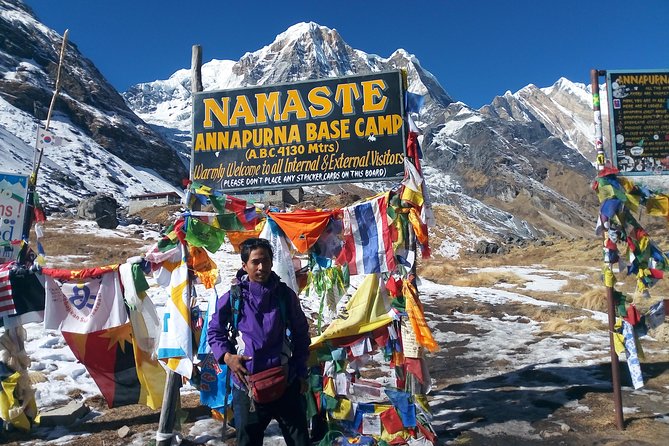
- Deurali, Bagar, and the run to 4,130 m Annapurna Base Camp
- Sunrise at ABC, then back down to Bamboo
- Jhinu Danda and the Modi Khola: the way back feels different
- Pokhara leisure day and a scenic return to Kathmandu
- Price, permits, and what $996 buys you in real trekking terms
- Who should choose this ABC trek—and who should reconsider
- Should you book this Annapurna Base Camp trek?
- FAQ
- What’s the total duration of the Annapurna Base Camp trek?
- Where does the tour start and when?
- Is transportation included in the price?
- Are trekking permits included?
- Will I have a porter and how much can they carry?
- What meals and equipment are included?
Key things that matter most on this ABC trek

- Sudam and Ganesh guiding support: praised for being attentive, professional, and good at keeping your group moving.
- Porter help (25 kg max): less weight on your back changes how you feel on steep days.
- ACAP + TIMS are included: fewer last-minute headaches before you reach the trekking trail.
- Sunrise at Annapurna Base Camp: the itinerary builds in an early-morning payoff at 4,130 m.
- Pokhara mid-trip reset: you get a real breather day to recover and enjoy the lake city.
- Small group size (max 16): enough organization without feeling like a crowded conveyor belt.
More trails out of Kathmandu, boots ready
- Everest Base Camp Trek – 14 Days★ 5.0 · 1,499 reviews
- Everest Base Camp Trek★ 5.0 · 842 reviews
- Everest Base Camp Trekking★ 5.0 · 485 reviews
- Nagarkot Sunrise View and Day Hiking from Kathmandu★ 5.0 · 471 reviews
Entering the Annapurna experience through Kathmandu, then Pokhara
Your trek starts in Kathmandu, with an airport pickup and hotel transfer plus Kathmandu sightseeing by private vehicle. That matters more than it sounds. After a flight, the last thing you want is trying to organize your bearings. Here, you’re already plugged into the local flow.
Then comes the shift to Pokhara by tourist bus—about 6–7 hours. On paper, that’s just transport. In real trekking terms, it’s a useful buffer. Pokhara sits lower than the Annapurna trail head, so you get a gentler start before the hiking climbs begin. It’s also where your brain starts switching from “travel mode” to “trek mode,” because you’re not jumping straight into altitude the moment you arrive.
Luxury tourist bus days: when comfort actually helps
This itinerary leans on road travel twice: Kathmandu to Pokhara by tourist bus, and later transfers between Pokhara and the trailhead area. The first bus day is long, but the plan calls it a luxury tourist bus, and that’s not just marketing. When you’re about to hike for days, arriving with fresh legs is a real advantage.
I also like that the day structure uses time well. Day 1 is built for travel and settling in. You won’t be trying to cram sightseeing and a difficult trek on the same day, which is the classic way people end up tired before the real work starts.
And when you return at the end, you have options: a scenic flight or bus back to Kathmandu from Pokhara. Either way, the goal is the same—give you one last chance for mountain views before you switch back to city energy.
Ghandruk to Chhomrong: village trekking with real peak views
Day 2 drives from Pokhara to Ghandruk (about 3–3.5 hours). Ghandruk sits at roughly 1,940 m, and it’s a great place to feel the Annapurna region change from lowland travel to mountain walking. You’re not yet at the steepest part, but you’re already in that “I’m really here” altitude zone.
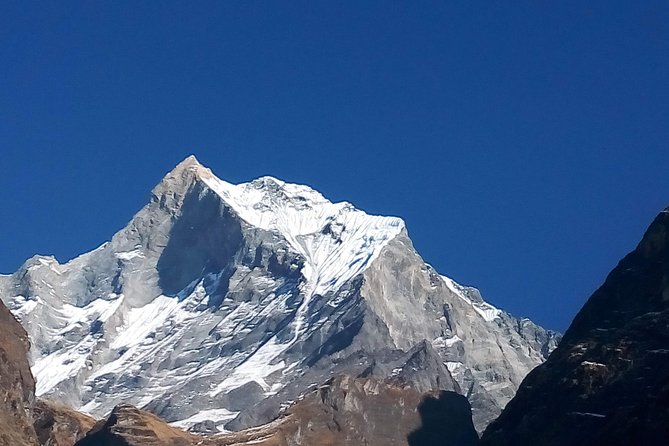
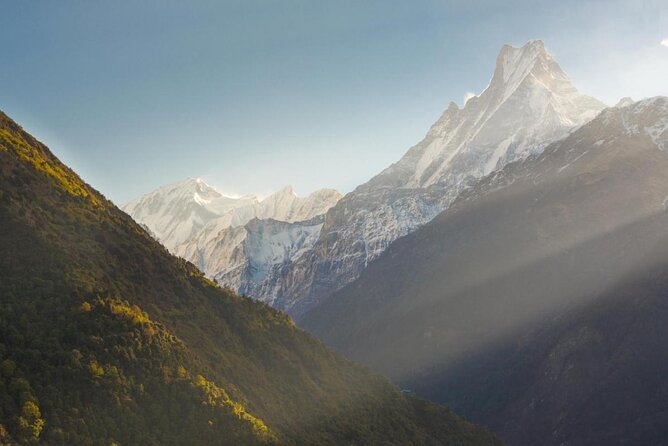
Day 3 pushes you toward Chhomrong, with a trekking climb from Ghandruk that’s timed to give you strong sightlines. You’ll trek uphill for around an hour to Kimrungdanda, where the views are set up for Annapurna South, Hiunchuli, Fishtail (Machhapuchhre), and Gangapurna. Then you continue on to Chhomrong, in about a 6-hour day.
The practical value here: you start building your rhythm with a day that’s scenic and structured. You’ll learn how your body handles steady uphill and you’ll see the peaks early enough to stay motivated when the trail gets more demanding later.
From Chhomrong Khola to Khuldighar and The Himalayan Hotel
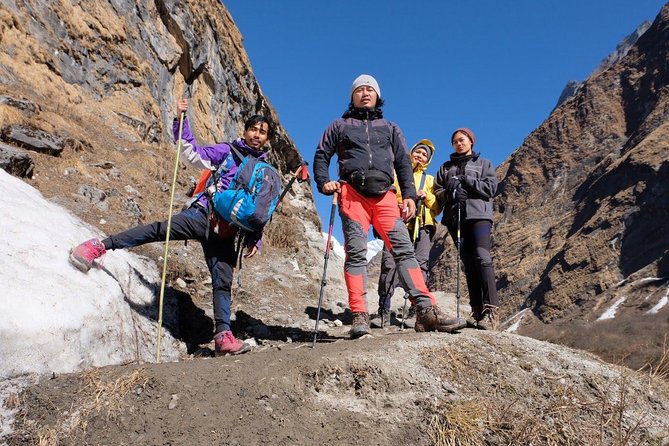
On Day 4, the route begins with a descent out of Chhomrong—thousands of steps down to the Chomrong Khola. Then you cross a suspension bridge and work your way up again to Khuldighar at about 2,380 m, where you stay at or near The Himalayan Hotel.
This is one of those days that teaches you how trekking works on the Annapurna circuit-style rhythm: down first, then up. Even if the numbers look manageable, the effort can surprise you because your legs take a beating on long step sections, especially after you’ve already climbed the previous day.
What I like about this part of the route is the variety. You get forest-to-river-valley motion, you practice crossing and changing terrain, and you still end the day at a logical staging point for the higher base-camp push.
Deurali, Bagar, and the run to 4,130 m Annapurna Base Camp
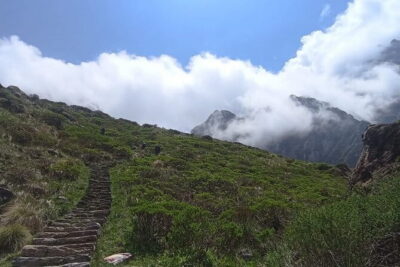
Day 5 is the big gear-shift day. After an hour’s walk from Himalaya, the route reaches Deurali and then continues through a mix of gentle climbing and steeper segments. You’ll pass through areas described as a river bed climb and then a steep trail toward Bagar, and along the way, the vegetation and surroundings change as the approach gets closer to base camp.
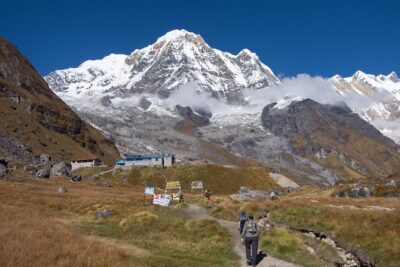
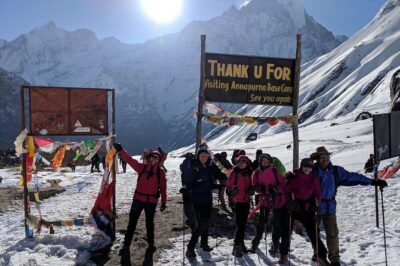
The highlight is arriving at Annapurna Base Camp at 4,130 m. The trek description emphasizes forested vegetation disappearing as you near ABC from Machhapuchhre Base Camp. That’s exactly the kind of change you want to experience on this trek: it’s not just “higher,” it’s visually and physically different.
And it’s not only about reaching a point on a map. ABC is the moment where your effort converts into scale. You’re standing at the base of the Annapurna massif, with commanding views of peaks including Annapurna I and Machapuchare/Fishtail. That perspective is the emotional payoff for the steep days you’ll have before and after.
Sunrise at ABC, then back down to Bamboo
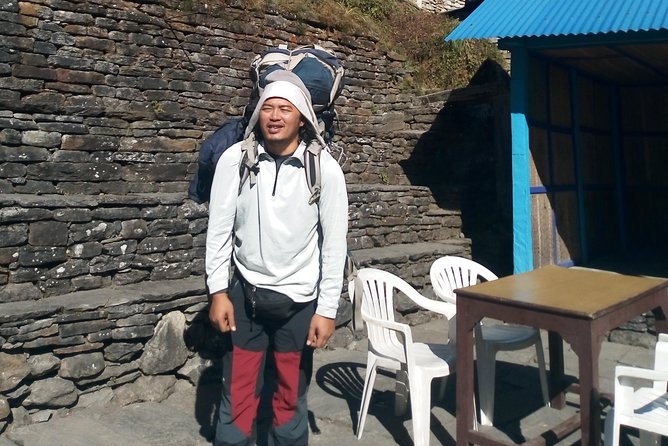
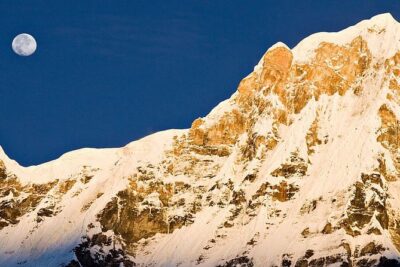
On Day 6, you wake up early to enjoy the beauty of the mountains at sunrise from Annapurna Base Camp. Then you descend back the same way you came. This is a common trekking reality: the best way down is often the same trail you used up.
The day is long—about 8 hours—and the trade-off is worth understanding. Going down can feel easier than going up, but it’s still hard on your knees and ankles. You’ll move steadily, and you’ll appreciate the fact that you’re not fighting unknown routes or scrambling through map problems. The plan is clear: sunrise, then descend, then reach Bamboo for the night.
The “same trail” piece has another benefit: it reduces uncertainty. At high altitude, uncertainty is mentally tiring. You’ll know what comes next, which helps you keep your pace calm.
Also, this is where the guide support really matters. People consistently credit the guiding team (including Sudam and Ganesh) for staying on top of group needs. When you’re tired, that kind of steady leadership reduces stress.
Jhinu Danda and the Modi Khola: the way back feels different
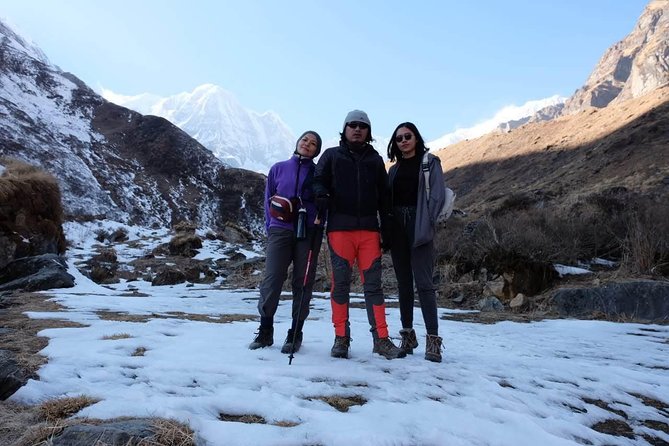
Day 7 brings you toward Jhinu Danda. The route description notes a pattern of climbing up to Kuldighar, then trekking downhill to Chhomrong Khola. From there you work uphill through stone steps for about an hour before reaching Chhomrong—so expect a day that still has elevation changes, even though you’re “coming down” overall.
Day 8 continues the descent toward Naya Pul. You’ll hike along the side of Modi Khola for about 4–5 hours before reaching Birethanti, then transfer to Pokhara by private vehicle. This is the point where the trek starts to feel more like a long, satisfying walk than a fight for each meter.
The practical reason this matters: after weeks of altitude stress and step work, lower elevations let your body reset. This is also a great time to appreciate the region’s human side—villages and footpath communities—without feeling like every bend is a crisis.
Pokhara leisure day and a scenic return to Kathmandu
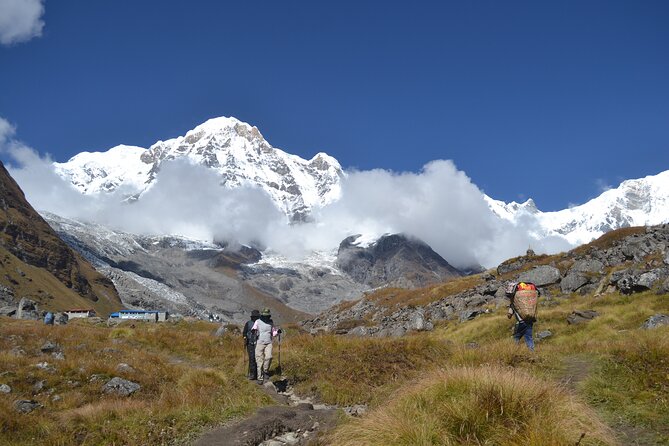
Day 9 is your leisure day in Pokhara. You can choose your own pacing, which is exactly what you want after a trek. Pokhara is famous for its lakes, so the route suggests headliners like Phewa Lake and Begnas Lake. The goal is recovery: sleep in, eat well, hydrate, and let your legs unclench.
Then on Day 10, you return to Kathmandu either by scenic flight or by bus. If you choose the flight, you’ll get your last chance to view the Annapurna region mountains—time-boxed beauty that feels worth it when you’re thinking about the trek you just finished.
Price, permits, and what $996 buys you in real trekking terms
At $996.00 per person for a 10-day itinerary, value depends on what’s included and how much uncertainty the operator removes. In this case, the package covers key cost centers:
- Guides and porter support: an professional trekking guide with government license, plus a porter system (2 guests per porter, 25 kg max). That porter detail is huge for comfort. Carrying less changes your trekking mood.
- Permits: ACAP (Annapurna Conservation Area Project Permit) and TIMS are included. These are core requirements for trekking in the region and saving you from last-minute paperwork is worth money.
- Essential cold-weather equipment: sleeping bag and down jacket are provided. You might still have personal layers, but the big cold-weather items aren’t an extra scramble.
- Transport: Kathmandu-to-Pokhara by tourist bus, Pokhara to Nayapul by private vehicle, and Nayapul back to Pokhara, plus the return to Kathmandu by flight/bus. You’re not arranging transfers on your own while tired.
- Meals: breakfast (8), lunch (8), dinner (8) are included across the trek days.
- Care for the team: insurance for guide and porter and a first aid kit with emergency rescue help covered by your travel insurance.
One subtle value point: the group size is capped at 16 travelers. That usually means the guides can manage pacing and attention without feeling stretched thin. Based on what’s been consistently praised, Sudam and Ganesh bring a supportive, organized feel that makes the hike more enjoyable and less stressful.
Who should choose this ABC trek—and who should reconsider
This trek is listed for travelers with moderate physical fitness. That’s a fair description for the Annapurna Base Camp region: you don’t need to be a mountaineer, but you do need stamina for steep days, long walks, and altitude effects around 4,130 m.
You’ll likely love this tour if:
- you want a guided route with ACAP and TIMS handled
- you appreciate porter support for keeping your load reasonable
- you want a trek that includes a real city recovery break in Pokhara
- you value a team that stays organized and responsive, as highlighted by praise for guide Sudam and Ganesh
You might reconsider if:
- you know you struggle with step-heavy descents (Day 4 includes a huge number of steps)
- you’re looking for a low-effort vacation style trek (this route is structured, but it’s still work)
- you want a completely independent, choose-your-own-adventure trail experience (this is planned and paced)
Should you book this Annapurna Base Camp trek?
If you want the classic ABC experience with fewer moving parts, I’d say this one is a strong bet. The biggest reasons are simple: you get licensed guide leadership, porter help that reduces daily strain, and permits and core equipment handled. Add in the emotional payoff of sunrise at base camp and the built-in Pokhara recovery day, and you have a trek that feels both epic and manageable.
My suggestion for making the call: book if you can handle long days of walking and you’re comfortable with altitude. If you’re unsure, be honest about your fitness before you go—because the only thing you can’t outsource on a trek is your pacing mindset. Go slow, listen to your body, and you’ll be in the right place for those Annapurna views.
FAQ
What’s the total duration of the Annapurna Base Camp trek?
The trek runs for about 10 days.
Where does the tour start and when?
It starts at The Great Adventure Treks & Expedition Pvt. Ltd in Kathmandu (Chhusya Galli, Kathmandu 44600, Nepal) at 8:15 am and ends back at the meeting point.
Is transportation included in the price?
Yes. You travel from Kathmandu to Pokhara by tourist bus, you also use private vehicles for parts of the route (Pokhara to Nayapul and Nayapul to Pokhara), and you return to Kathmandu by scenic flight or bus.
Are trekking permits included?
Yes. The package includes the Annapurna Conservation Area Project Permit (ACAP) and the TIMS card.
Will I have a porter and how much can they carry?
Yes. A porter is included, with a system of 2 guests per porter. The maximum porter load is 25 kg.
What meals and equipment are included?
Meals include breakfast (8), lunch (8), and dinner (8). Necessary equipment such as a sleeping bag and a down jacket is included.
More Trekking Out of Kathmandu
More Tour Reviews in Kathmandu
Just Reviewed in Kathmandu
- Mountain Bike Tour
★ 5.0 · 3 reviews - Annapurna Panaroma
★ 5.0 · 3 reviews - Mount Everest Scenic Flight 50 Minutes
★ 5.0 · 3 reviews - Kathmandu : Swambhunath & Durbar Square Guided Half Day Tour
★ 3.3 · 3 reviews - Chandragiri Cable Car & Monkey Temple Tour – Private/Group
★ 5.0 · 3 reviews - Kathmandu: Shivapuri National Park Hiking Day Trip
★ 3.3 · 3 reviews
Annapurna Base Camp Treks, compared.
 ★ 5.0Annapurna base camp trek 5 DaysFrom $699252 reviews
 ★ 5.014-Day Private Annapurna Base Camp TrekFrom $1,090180 reviews
 ★ 5.0Annapurna Base Camp TrekkingFrom $1,779116 reviews
 ★ 5.0Annapurna Base Camp TrekFrom $935111 reviews
★ 5.0Annapurna Base Camp TrekFrom $1,350107 reviews
★ 5.0Annapurna Base Camp TrekFrom $935111 reviews
★ 5.0Annapurna Base Camp TrekFrom $1,350107 reviews
 ★ 5.0Kathmandu to Annapurna Base Camp (ABC) 5-Day TrekFrom $99102 reviews
 ★ 5.0Annapurna Base Camp Trek- 11 DaysFrom $99990 reviews
 ★ 5.0Annapurna Base Camp Trek 12 DaysFrom $80085 reviews
Browse the lists this tour appears in