
Review · ANNAPURNA BASE CAMP TREKS
Annapurna Base Camp Trek
Annapurna looks different at 4,130 meters. In this 11-day short trek run by Nepal Mountain Trekkers, I liked how the team, with guide Shiva and porter Bishal, keeps you moving while you chase big views. I also love the bonus of Jhinu Danda hot springs after hiking. One thing to plan for: steep climbs and high altitude can feel like a grind if your fitness is only average.
You start in Thamel at Hotel Green Horizon, then get briefing time with your guide before the trek leg begins. The group stays small (up to 15), and there’s airport pickup and drop-off included, so you spend less time sorting logistics and more time on the mountains.
Another plus is that the basics are handled: permits are included (TIMS and ACAP), and trekking gear like a sleeping bag and down jacket is available on rent. With all that set up for you, the real decision is yours: take it slow, drink water, and respect the pace the trail sets.
In This Review
- Key highlights worth your attention
- How Kathmandu and Pokhara Set the Tone for Your Annapurna Start
- Pokhara Lakeside: Where You Rehearse for Mountain Life
- Day 3 to 4: Jhinu Danda Hot Springs and the Bamboo-Lodge Climb
- Day 5 to 6: Deurali, Waterfalls, and Machhapuchhre Base Camp Views
- Overnight at 4,130 m: When Annapurna Feels Personal
- Day 7 to 8: Sunrise, Avalanche-Prone Terrain, and the Second Jhinu Stop
- Day 9: The Walk Out to Nayapool, Plus the Comfort of Gravity
- Day 10 to 11: Back to Kathmandu and a Final Walk Through Durbar Square
- Guides, Porters, Permits, and Gear: The Work Behind the Views
- Price Worth Checking: What $906.67 Covers (and What It Doesn’t)
- Who This Short ABC Trek Fits Best (and Who Should Slow Down)
- Should You Book This Annapurna Base Camp Trek?
- FAQ
- What is the duration of the Annapurna Base Camp trek?
- How high do you reach at Annapurna Base Camp?
- Is airport pickup and drop-off included?
- What permits are included?
- Does the trek include meals?
- Are meals included in Kathmandu and Pokhara?
- Can I cancel for a full refund?
Key highlights worth your attention
- A small team feel: max 15 travelers, with a professionally trained English-speaking guide and a porter setup (1 porter for 2 trekkers, max 30 kg).
- Warm-water recovery: Jhinu Danda’s natural hot springs come twice in the plan, including a dedicated stop on the return.
- Machhapuchhre Base Camp route: you reach Annapurna Base Camp via Machhapuchhre Base Camp, with major peak views along the way.
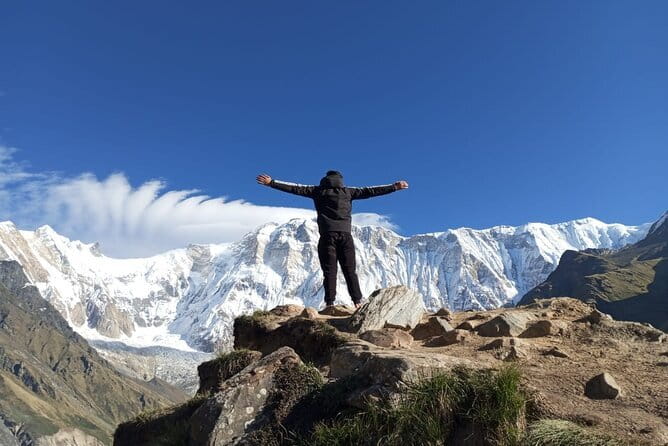
- Overnight at Annapurna Base Camp (4,130 m): the best part is often nightfall and early light, not just the daytime photos.
- Permits and gear included: TIMS + ACAP fees, plus sleeping bag and down jacket rental.
More trails out of Kathmandu, boots ready
- Everest Base Camp Trek – 14 Days★ 5.0 · 1,499 reviews
- Everest Base Camp Trek★ 5.0 · 842 reviews
- Everest Base Camp Trekking★ 5.0 · 485 reviews
- Nagarkot Sunrise View and Day Hiking from Kathmandu★ 5.0 · 471 reviews
How Kathmandu and Pokhara Set the Tone for Your Annapurna Start
Day 1 is a straightforward welcome. You land at Tribhuvan International Airport, and a representative picks you up and drives you to your Kathmandu hotel after immigration. If you’ve never been to Nepal before, that first smooth step matters. It means you’re not hunting for transportation while you’re still jet-lagged.
You stay at Hotel Green Horizon in Thamel, the classic hub for travelers. I like that your trek doesn’t start with a foggy scramble. Instead, you get guide introductions and trek briefings, so you know what’s coming and how the days are organized.
On Day 2, you leave Kathmandu for Pokhara. The plan includes stop time in the Kathmandu Valley along the way and a spiritual-temple visit en route, then you arrive in Pokhara and settle into your hotel. In the evening, Lakeside is right there for an easy first meal, a walk, and a bit of mountain-watching.
Pokhara Lakeside: Where You Rehearse for Mountain Life
Pokhara is your breather city, and Lakeside is where most people naturally drift—cafés, lakeside views, and souvenir shopping all within easy reach. You’ll likely feel the altitude difference mentally right away, because you’re switching from city pace to trekking-day pace.
This is also where you can get your head straight about the trail. Even before you start walking, pay attention to how your body reacts to cooler air and higher focus. The trek days ahead include long hiking stretches, and the success trick is steady effort, not sprinting uphill.
If you want a simple plan for your downtime: sleep well, eat something you normally tolerate, and keep your water habits consistent. Your trek starts soon, and hydration matters most when you’re already tired.
Day 3 to 4: Jhinu Danda Hot Springs and the Bamboo-Lodge Climb
You begin trekking on Day 3 from Nayapul, the starting point for the Annapurna region trek route. From there, you follow trails alongside the Modi River toward Jhinu Danda. The hiking style here is gradual ascent through small settlements, with constant river companionship. You’ll also see terraces and the kind of footpath steps that become familiar fast.
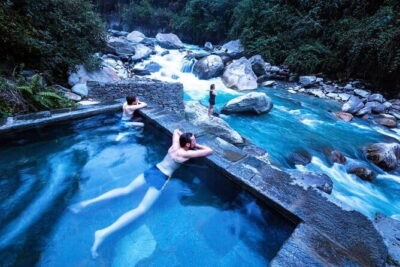
Jhinu Danda is special for two reasons. First, the trail effort pays off with natural hot water spring access at the base of the ridge. Second, it’s a real cultural and village setting—less about isolated views, more about daily life in the hills. This is the kind of stop that makes the trek feel human again after big uphill days.
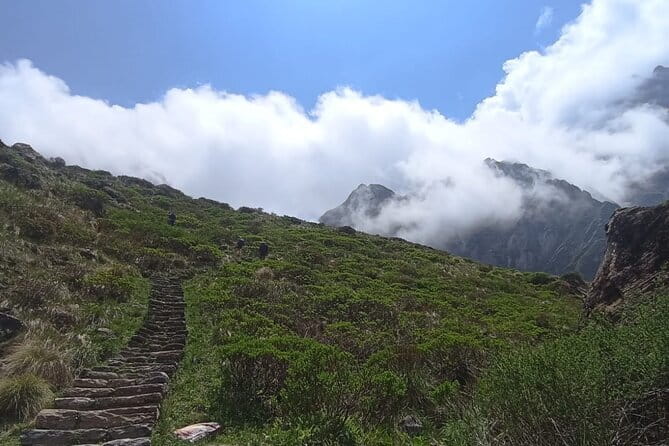
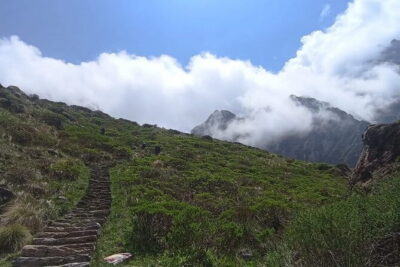
On Day 4, you push higher toward Chhomrong village and across the Chhomrong River area, with stone stair sections followed by climbs to the ridge above the Modi River. This is where the scenery shifts into bamboo and rhododendron country, with terraces and forest trails. Expect rougher ground and the kind of hiking that forces you to pay attention with every step.
You move onward through bamboo forest and past smaller settlements to reach Siruwa, then later Bamboo for overnight. The route includes a rather steep marching segment toward Bamboo, and the plan often positions you to continue to a Bamboo Lodge Restaurant area for the night. If you’re not used to steady uphill effort, this is the day to keep your pace calm and breathing controlled.
Day 5 to 6: Deurali, Waterfalls, and Machhapuchhre Base Camp Views
Day 5 is a “get ready for the big push” day. It’s shorter than the previous uphill days, with a gradual climb through rhododendron and oak forest. You cross streams and pass waterfall sections along the way, then arrive at Dovan for a night.
From there, Day 5’s second half is about climbing toward Deurali. The trail turns steeper and the vegetation gets sparser as you gain height. You’ll also get impressive river views opening up—especially as the terrain becomes rockier and the walk feels more exposed.
Deurali itself is where the trek starts to feel less like forest walking and more like mountain travel. You move toward the Hinku cave area, then continue until you reach Deurali village for overnight.
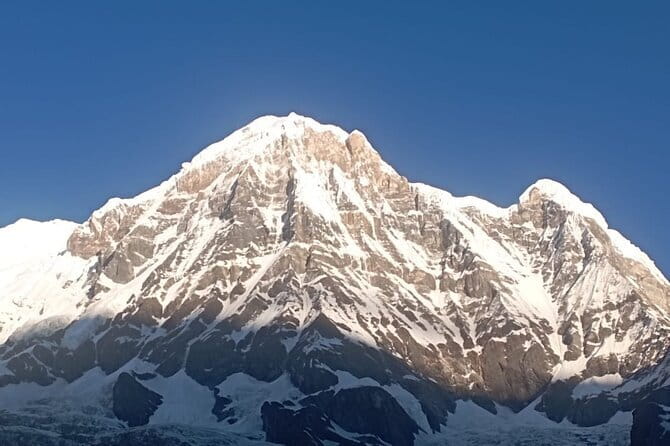
Day 6 is a major milestone: you reach Annapurna Base Camp through Machhapuchhre Base Camp. The approach includes passing the settlement of Bagar and continuing along strenuous terrain to Machhapuchhre Base Camp. Here, the views sharpen: you get Fishtail Mountain (Machhapuchhre) plus a cluster of peaks including Hiuchuli, Annapurna South, Annapurna I, Annapurna III, Gagapurna, and more.
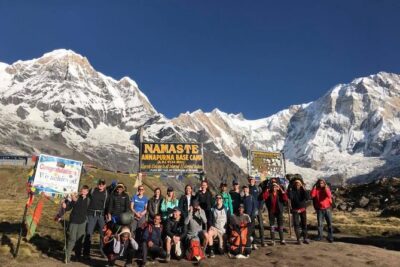
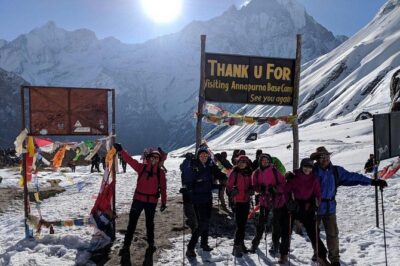
Then you branch away toward the Annapurna Base Camp area. Vegetation becomes sparse, and the path widens as you turn toward the base camp. The moment you arrive is the classic ABC payoff: towering Annapurna views with nothing between you and the peaks. You stay overnight right at this altitude—4,130 meters—so the experience becomes bigger than a single photo stop.




Overnight at 4,130 m: When Annapurna Feels Personal
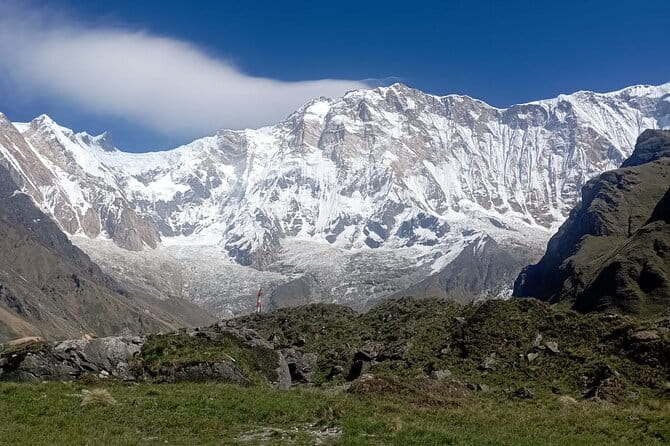
Reaching base camp is the headline, but what I think matters most is staying there. You’re not just walking into a view and leaving. You’re spending time at altitude, watching the mountain change through the day.
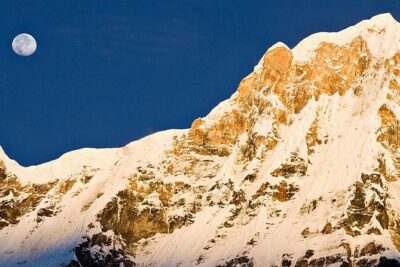
The plan includes overnight at Annapurna Base Camp, so you’ll get time for the quieter moments. That’s when the Himalayan peaks stop looking like a far-off poster and start looking like real, looming geography. Even if you’ve seen photos before, the scale hits different in person.
A practical note: if you’re prone to getting headaches or feeling short of breath at elevation, treat base camp time gently. Keep your effort low, take breaks when offered, and pay attention to how your body is doing before you push harder for extra sightseeing.
Day 7 to 8: Sunrise, Avalanche-Prone Terrain, and the Second Jhinu Stop
After the big Day 6, Day 7 shifts into return mode. You leave the Annapurna foothills behind and head back toward Bamboo, using a relatively easier downhill trail alongside the Modi River. The plan also calls out a sunrise moment over the Himalayas, and that’s one of the best reasons to keep your energy for the walk-out day.
This section includes areas described as prone to avalanche. That doesn’t mean you need fear; it means conditions matter. Follow the guide’s pace and don’t treat every step like it’s a casual stroll.
You also pass through Dovan and Deurali again, with rhododendron and bamboo forest lower down. The wooden bridge section helps break up the monotony of a long descent, and it’s a good reminder that trails here are still tied closely to river crossings.
Day 8 retraces the same main trek approach toward the return trail. Expect around 6 hours of hiking with an uphill segment to Khuldighar village. Khuldighar includes a helipad, which is a useful landmark when you’re trying to understand where you are on the broader route.
From there you continue through Sinuwa, past Tilche and Chhomrong, then toward Taulung. Taulung is a junction point, with paths leading toward Landruk, Tadhapani, and Kot Danda—useful if you’re the type who likes understanding the larger trail network.
Then you finish at Jhinu Danda again. This time the natural hot water springs stop is a chance to relax after the return hiking day. In a trek where many nights are about recovery, that hot-water reset can feel like a small victory.
Day 9: The Walk Out to Nayapool, Plus the Comfort of Gravity
Day 9 is where you feel the trek turning a corner into “we’re almost done.” You trek down from Jhinu Danda to the Modi Khola valley, following the route through New Bridge.
The trail here includes stone stair sections, hillside paths, farms and crops, and repeated bridge crossings. It’s a long day of movement, but it tends to feel steadier because you’re working with downhill rhythm and wider valley views. The mountain stays in sight, but the green, inhabited side of the region becomes more obvious as you lower elevation.
You end at Nayapool, marking the close of the physical trekking portion. That’s not the end of the story, but it is the end of the hardest part.
Day 10 to 11: Back to Kathmandu and a Final Walk Through Durbar Square
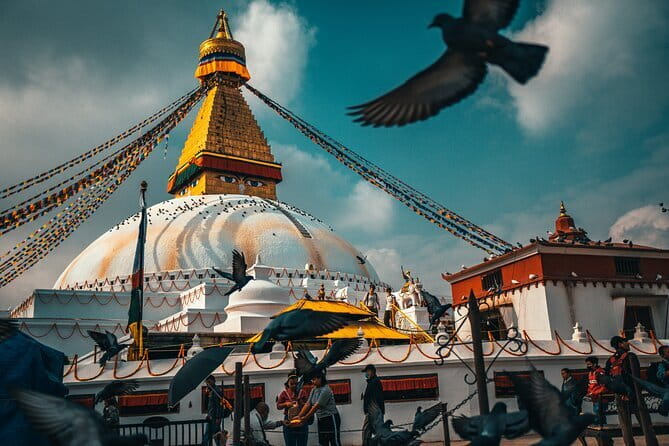
Day 10 shifts back to city time. You drive back from the Pokhara valley to Kathmandu, with scenic views along the way. Once in Kathmandu, you head to your hotel and then have time to visit Kathmandu Durbar Square.
Durbar Square is a good last stop because it connects the trek to the country’s broader culture. You can also wander in busy Thamel streets for souvenirs and last-minute snacks, which is handy if you want to bring home something small and practical.
Day 11 ends officially with a transfer to Tribhuvan International Airport at least three hours before your onward flight. That buffer matters, especially if your trip timing is tight.
Guides, Porters, Permits, and Gear: The Work Behind the Views
What makes this trek feel smoother is how many details are handled for you. Your package includes airport pickup and drop service, a professional English-speaking trekking guide, and an assistant guide plus a porter system.
The porter rule is clear: 1 porter for every 2 trekkers, with a maximum load of 30 kg. That’s the difference between carrying a lighter day pack and hauling everything yourself for nearly the whole trek. Even if you’re strong, your legs will still thank you.
Permits are also included: TIMS card and Annapurna Conservation Area (ACAP) fees. That’s one less thing to track while you’re focused on altitude and trail timing.
Gear rental is another underrated part of value. You get sleeping bags and down jackets made available on rent. It doesn’t mean you should ignore your own preferences, but it does mean you’re less likely to arrive unprepared for cold nights.
Finally, there’s a first aid medical box included. That doesn’t eliminate risk, but it shows the trip is operating with basic safety gear in place. And there’s a farewell dinner included, which is a nice way to mark the end of a physically intense stretch.
Price Worth Checking: What $906.67 Covers (and What It Doesn’t)
At $906.67 per person, this is not a budget stroll, but it does stack up as a value-focused package when you look at what’s included. You get 3 nights in Kathmandu and 2 nights in Pokhara, plus all lodging and food during the trek with breakfast, lunch, and dinner included.
Permits (TIMS and ACAP) are included, along with VAT and a company service charge. You also get professionally trained guide support and porter help, and you get sleeping bag and down jacket rental access. Even the farewell dinner is part of the deal.
What’s not included is just as important to plan for. Visa fees are not included. International flights and extra baggage charges are not included. Meals in Kathmandu and Pokhara are not included, so keep a little money set aside for city food. Travel insurance and rescue operation costs are not included either, and tips for guides and porters are not included.
If you already know you’ll need to buy permits, arrange guides, and source cold-weather gear, this package can look more reasonable than building everything separately.
Who This Short ABC Trek Fits Best (and Who Should Slow Down)
This trek is listed for travelers with moderate physical fitness. That’s a good match if you can handle multi-hour walking days and don’t mind steep trail stretches. Some days on this route are described as longer hiking days, including sections through bamboo and rhododendron forests, rough paths, and stair-heavy segments.
You should also be comfortable with altitude realities. Annapurna Base Camp is at 4,130 meters, and the route passes through higher, colder terrain as you approach the base camp area. If you’re new to altitude or you’ve struggled with breathing on hills before, it’s smart to be honest with your guide and go slow from the start.
The small group size (up to 15) makes it better for people who want a shared experience without a huge crowd. It also helps with pace control, especially on a trail that can feel busy in peak seasons.
Should You Book This Annapurna Base Camp Trek?
I’d book this if you want an ABC experience that feels organized and supportive from day one. The combination of Shiva’s guiding, Bishal’s porter support, included permits, trek meals, and cold-weather gear rental means you can focus on walking smart and soaking in the views. The hot springs at Jhinu Danda are also a strong reason to choose this specific short trek format.
I’d think twice if you’re expecting an easy hike. Even as a short version, this route includes long walking days and steep sections, plus an overnight at high altitude. If that sounds like too much, you might still love Nepal—but you’d probably prefer a lower-elevation trek.
FAQ
What is the duration of the Annapurna Base Camp trek?
The trek lasts about 11 days.
How high do you reach at Annapurna Base Camp?
You reach Annapurna Base Camp at an altitude of 4,130 meters above sea level.
Is airport pickup and drop-off included?
Yes. The package includes airport pickup and drop service.
What permits are included?
The tour includes trekking permits: a TIMS card and Annapurna Conservation Area (ACAP) fees.
Does the trek include meals?
Yes. All lodging and foods during the trek are included, with breakfast, lunch, and dinner.
Are meals included in Kathmandu and Pokhara?
No. Foods in Kathmandu and Pokhara are not included.
Can I cancel for a full refund?
Yes. You can cancel up to 24 hours in advance for a full refund. If you cancel less than 24 hours before the start time, the amount paid is not refunded.
More Trekking Out of Kathmandu






More Tour Reviews in Kathmandu




Just Reviewed in Kathmandu
- Mountain Bike Tour
★ 5.0 · 3 reviews - Annapurna Panaroma
★ 5.0 · 3 reviews - Mount Everest Scenic Flight 50 Minutes
★ 5.0 · 3 reviews - Kathmandu : Swambhunath & Durbar Square Guided Half Day Tour
★ 3.3 · 3 reviews - Chandragiri Cable Car & Monkey Temple Tour – Private/Group
★ 5.0 · 3 reviews - Kathmandu: Shivapuri National Park Hiking Day Trip
★ 3.3 · 3 reviews
Annapurna Base Camp Treks, compared.
 ★ 5.0Annapurna base camp trek 5 DaysFrom $699252 reviews
 ★ 5.014-Day Private Annapurna Base Camp TrekFrom $1,090180 reviews
 ★ 5.0Annapurna Base Camp TrekkingFrom $1,779116 reviews
 ★ 5.0Annapurna Base Camp TrekFrom $935111 reviews
★ 5.0Annapurna Base Camp TrekFrom $1,350107 reviews
 ★ 5.0Kathmandu to Annapurna Base Camp (ABC) 5-Day TrekFrom $99102 reviews
 ★ 5.0Annapurna Base Camp Trek- 11 DaysFrom $99990 reviews
 ★ 5.0Annapurna Base Camp Trek 12 DaysFrom $80085 reviews
Browse the lists this tour appears in