
Review · ANNAPURNA BASE CAMP TREKS
Annapurna Base Camp Trek -13 Days
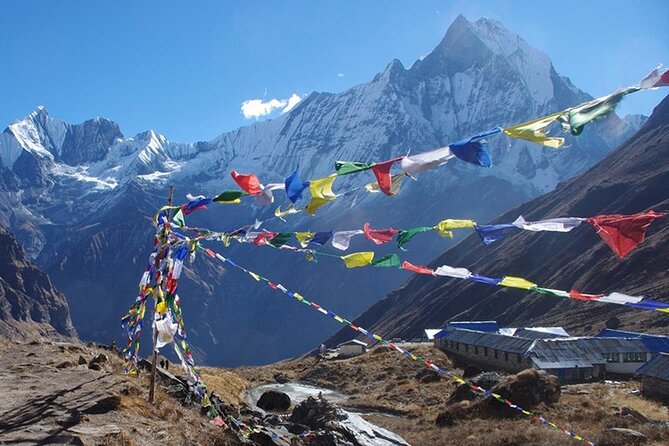
Annapurna Base Camp comes at you quickly. This $1,200 private package keeps the admin handled with TIMS and ACAP permits, plus tea-house stays and all trek meals, so you can focus on the walking and views. One trade-off: you still pay for your Nepal visa (and your international flights, insurance, and tips).
What makes this one feel more “organized” than typical DIY trekking is the people behind it. In past trips linked to Himalayan Adventure Treks and Tours, I keep seeing fast communication and careful planning tied to owner Bhagwat Simkhada, with lead guides such as Prakash and porters like Surman and Perlad showing up again and again in the feedback. Since it’s private, it’s just your group on the trek, not a mixed free-for-all.
In This Review
- Key things that matter on this Annapurna Base Camp trek
- Price and Logistics: what $1,200 really buys
- Day 1 in Kathmandu: arrival pickup and an easy landing
- Day 2: the Pokhara Valley intro and a low-key evening walk
- Day 3: Nayapul to Tirkhedhunga (and Ulleri if you want the extra push)
- Day 4: steep start, village trails, and big mountain sightings
- Day 5: Poon Hill sunrise brings the show on a plate
- Day 6: Chhomrong at the foot of Annapurna (and yes, pizza exists)
- Day 7: stone stairs, bamboo and rhododendron, plus a nettle warning
- Day 8: approaching Base Camp, with Hiunchuli views and 4170m air
- Day 9: sunrise at Base Camp, then down to Bamboo
- Day 10: forests, Sinuwa, then the hot spring reward at Modi Khola
- Day 11: waterfalls, streams and terraces, back to Birethanti
- Day 12: from the trail back to the cable car and a farewell dinner
- Day 13: departure day with airport transfer timing
- Guides and porters: how this team approach reduces real stress
- Tea-house meals and the rhythm of included food
- What you need to be ready for physically
- Who this private Annapurna Base Camp trek is best for
- Should you book this Annapurna Base Camp trek?
- FAQ
- How many days is the Annapurna Base Camp trek?
- Where does the trip start and end?
- What time does the experience start?
- Are permits included?
- Will I have a guide and porter during the trek?
- Are accommodations included during the trekking days?
- Are meals included while trekking?
- Is vegetarian food available?
Key things that matter on this Annapurna Base Camp trek
- Private service with a porter ratio: you get an experienced guide and porters at 1 porter for 2 clients.
- Permits handled for you: TIMS and the ACAP permit are included.
- All meals during the trek: breakfasts, lunches, and dinners are covered in the trekking portion.
- Real logistics, not guesswork: airport pickup, Kathmandu and Pokhara hotel nights, and land transfers are included.
- You get a gear buffer: there’s a duffle bag included that gets returned after the trek.
More trails out of Kathmandu, boots ready
- Everest Base Camp Trek – 14 Days★ 5.0 · 1,499 reviews
- Everest Base Camp Trek★ 5.0 · 842 reviews
- Everest Base Camp Trekking★ 5.0 · 485 reviews
- Nagarkot Sunrise View and Day Hiking from Kathmandu★ 5.0 · 471 reviews
Price and Logistics: what $1,200 really buys
At $1,200 per person, the smart way to judge value here is by counting what’s bundled. You’re not just paying for a guide and the trail. Your package includes:
- Two nights in Kathmandu and two nights in Pokhara in 3* hotels with breakfast
- All land transfers between cities and trek start/finish areas
- Tea-house/lodge accommodations for the trek days
- All trek meals (breakfast, lunch, dinner during the trekking portion)
- TIMS and ACAP permits, plus “all necessary paper works”
- An experienced guide and porters, with practical support built into the plan
- A duffle bag (returned after the trek)
- A farewell dinner in Kathmandu with a cultural performance
What’s not included is also clear and important for budgeting: the Nepal visa fee, international flights, travel and rescue insurance, and personal expenses like phone calls, laundry, battery charging, bottled/boiled water, and tips for your guide and porter.
If you already know you want a guided, private ABC trek with fewer moving parts, this price can feel fair. If you’re trying to do everything as lean as possible, you’ll need to compare against the cost of permits, meals, lodging, guide, and transfers you’d otherwise arrange yourself.
Day 1 in Kathmandu: arrival pickup and an easy landing
You arrive at Tribhuvan International Airport (TIA) and a company representative meets you. From there, it’s a private vehicle transfer to your hotel in Kathmandu, with an overnight stay and time to settle.
This day sounds simple, but it’s not filler. It helps you avoid the common trekking mistake: arriving tired, then spending the first night figuring out how to get organized. You also get a chance to meet your trek partners and confirm details with the operator.
Day 2: the Pokhara Valley intro and a low-key evening walk
After a drive from Kathmandu, you spend the day in Pokhara—about half a day dedicated to travel and orientation, with your afternoon opening up for views and a relaxed stroll.
Pokhara is framed here as a warm introduction to Nepal’s mountain world: you’ll get glimpses of the Annapurna and Dhaulagiri ranges, and you’ll have time for an evening walk around Fewa Lake. That walk matters because it’s your mental reset before the first real climb days. You’re training your body for uphill work, but you’re also training your head to enjoy the slow pace.
Day 3: Nayapul to Tirkhedhunga (and Ulleri if you want the extra push)
Your trek starts after a short car drive to Nayapul (1050m). Then you begin hiking toward Tirkhedhunga (1570m), often via Birethanti (1065m)—and the route includes an option to continue up toward Ulleri.
In practical terms, this is a “get going” day, but it’s not flat. The terrain is enough to wake up your legs. The itinerary even notes that you’ll reach Tikhedhunga with time and energy if you add Ulleri. If you’re the type who likes setting an early rhythm, this is where you do it.
Day 4: steep start, village trails, and big mountain sightings
Day 4 begins with a steep ascent for the first couple of hours, then eases into walking through village areas like Ulleri (2070m) and Banthati.
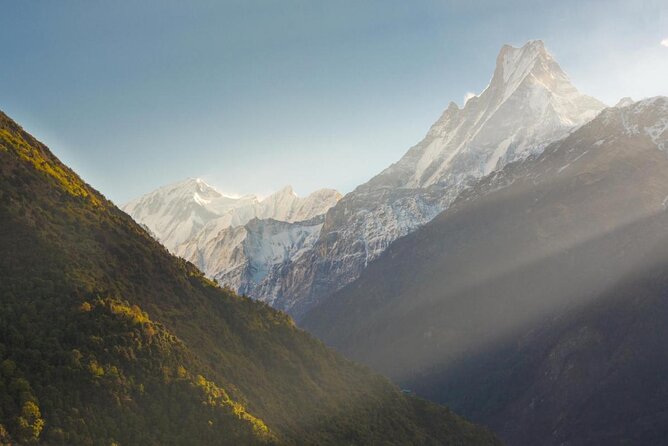
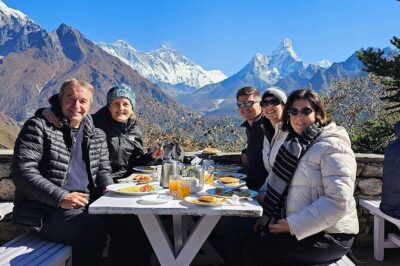
This is also a day of mountain recognition. On the way, you can see Machhapuchhare (Fish Tail), Himchuli, and Annapurna South, along with other peaks. That’s useful because once you start seeing these shapes repeatedly, you stop “watching mountains” and start understanding where you are in the bigger ABC area.
Day 5: Poon Hill sunrise brings the show on a plate
Early morning hike to Poon Hill (3210m) is the big sunrise day, with views that include Mt. Dhaulagiri (8167m) and a long list of named peaks: Tukuche Peak, Nilgiri, Varaha Shikhar, Annapurna I and South, Annapurna III and IV, plus Machhapuchhare and Lamjung Himal.
Here’s the practical side: you’ll need to be ready for cold early starts and the kind of walking where you feel the altitude quickly. But the payoff is that this sunrise gives you a “map” view. You’ll return to the Annapurna region with a clearer sense of angles and ridgelines.
Day 6: Chhomrong at the foot of Annapurna (and yes, pizza exists)
Trek from Tadapani to Chhomrong takes roughly 5–6 hours over about 7–8 kilometers. The route runs through forests and villages, then climbs into Chhomrong village, which is a classic base for resting and regrouping.
A couple details I’d highlight for your expectations:
- Chhomrong is known for pizza, which is a fun comfort-food break on a serious trekking route.
- You can enjoy Annapurna range views directly from the village.
This is also where many trekkers feel the shift from “day hikes” to “real trek mode.” Plan hydration, take small snacks regularly, and keep your pace steady. If you push too hard today, it shows later.
Day 7: stone stairs, bamboo and rhododendron, plus a nettle warning
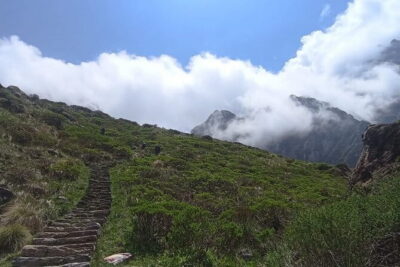
Leaving Chhomrong, the trail starts with stone stairs, then continues along a rocky section that includes a specific caution: sting nettles. From there you move into forests of bamboo and rhododendron, with a stop around Himalaya (2920m.).
You’ll also pass through areas like Sinuwa and a check post at 2350m. The point of these checkpoints isn’t just bureaucratic. They often signal that the trail is active and monitored, and it helps with pacing because you know what’s coming next.
Day 8: approaching Base Camp, with Hiunchuli views and 4170m air
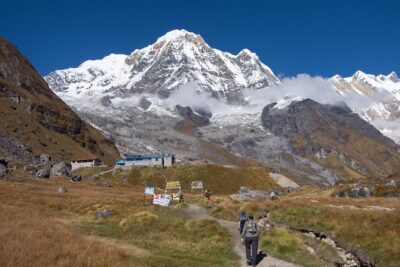
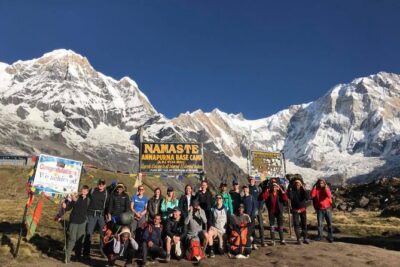
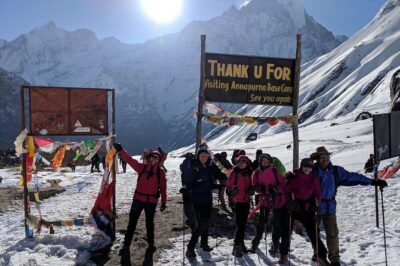
This day is one of the key “transition” days: the route follows alpine forest toward Annapurna Base Camp (4170m).
It’s also a strong viewpoint day. You can see Hiunchuli, Annapurna South, Annapurna I, Gangapurna, and Machhapuchhare from the surrounding ridges and trail bends.
When you get close to Base Camp, you’ll feel the air change. Even if the walking isn’t steep, the altitude makes it feel slower. The more you pace yourself earlier in the trip, the easier this day tends to feel.
Day 9: sunrise at Base Camp, then down to Bamboo
Day 9 starts with breakfast and a walk down toward Bamboo. The itinerary lists about 5–6 hours.
This is where you should aim for smart energy use. You already did the ascent into Base Camp, so the goal now is controlled descent: keep your steps short, take care on stone and packed-earth sections, and don’t treat the descent as a chance to “power walk.” Your knees will remember the difference.
Day 10: forests, Sinuwa, then the hot spring reward at Modi Khola
The trek descends and climbs in sections. You’ll pass through forests and rhododendron, oaks, and bamboo again, then do a steep up to Kuldi Ghar. The walking becomes flatter into Sinuwa, then you descend to Chhomrong Khola and tackle more stone stair sections into Chhomrong.
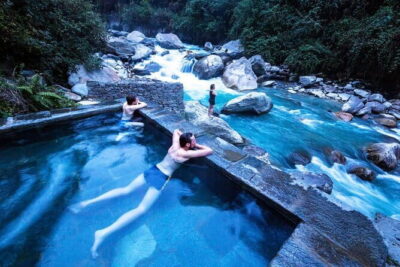
The payoff comes near the end: after a steep descent to Jhinudanda, you then walk down for about 20 minutes to reach the Hot Spring at the bank of the Modi Khola. If your body is stiff from repeated stairs, this is the kind of recovery moment that makes tomorrow’s walking feel less punishing.
Day 11: waterfalls, streams and terraces, back to Birethanti
The trail keeps you moving with a mix of descent and gentle ascent. You’ll observe waterfalls early on, then cross streams and terraces as you climb toward Birethanti (1025m) and then walk toward Nayapul via forest sections while following the Modi river.
This day is about regaining mobility. Your body will still be tired, but it’s often emotionally rewarding because it feels like you’re closing the loop.
Day 12: from the trail back to the cable car and a farewell dinner
After trekking ends, you shift back into travel mode around Birethanti to Damauli, Dumre, Muglin, and Kurintar. The highlight here is the stop at Manakamana Temple via Nepal’s first cable car.
Then the day continues with the drive toward Kathmandu through places like Naubishe, climbing to Thankot (described as the gateway to Kathmandu). In the evening, you get the farewell dinner at an authentic Nepalese restaurant, with a cultural performance.
This is a nice structure: you get a transportation wrap-up, a cultural moment, and a meal that doesn’t feel like you’re eating on the edge of a hiking schedule.
Day 13: departure day with airport transfer timing
On departure day, a representative takes you to the airport about 3 hours before your scheduled flight. That timing matters in Nepal because the “buffer” is part of how you reduce stress. It also gives you time to plan your next trip before heading home.
Guides and porters: how this team approach reduces real stress
One of the best signs in the details is that the operator builds a support system, not just a guide with a whistle. You’ll have:
- An experienced, helpful, friendly guide
- Porters with the specific ratio of 1 porter for 2 clients
- Medical supplies, including a first aid kit
- Arrangement of travel rescue
- Duffle bag handling that’s returned after the trek
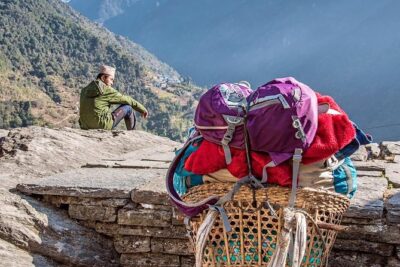
And based on the names that show up in the feedback, it’s not random staffing. Guides such as Prakash and Bharat/Bharat Simkada appear in the story, with porters like Surman and Perlad praised for being supportive and safety-focused.
Even if you’re a strong walker, you’ll still appreciate having someone who keeps the plan moving, manages pacing, and knows where questions belong. That’s what turns a hard trek into a manageable one.
Tea-house meals and the rhythm of included food
You’re not stuck buying every meal on your own. The package includes:
- Breakfast (12)
- Lunch (9)
- Dinner (9)
That matters because meals on trekking routes can be a moving target—especially when weather, crowds, or trail timing shift. Having meals arranged reduces decision fatigue. It also helps you eat often enough to keep trekking energy steady.
Diet options are addressed too: you can request vegetarian options when booking, and you should do that early.
What you need to be ready for physically
This trek is listed for people with moderate physical fitness. “Moderate” still means you should expect long days with uphill starts, stone stairs, and multiple days in a row where altitude is a factor.
Practical tips that the itinerary itself points out:
- Stay hydrated
- Dress appropriately
- Plan for early mornings when needed (especially around sunrise days)
Also, your pacing will matter most on the days with descents and stairs. If you’ve never hiked on uneven stone for hours, bring trekking poles if you use them. The plan gives you enough time on most days, so slow and steady wins.
Who this private Annapurna Base Camp trek is best for
This version fits best if you want:
- A private trek with only your group
- Less logistical stress through transfers, permits, and meals included
- Support from an organized guide/porter team (1 porter per 2 clients)
- Strong sightseeing structure, including Pokhara preview and Poon Hill sunrise
It’s also a good fit for couples and solo travelers who don’t want to manage permits or meals day by day. If you hate being on a schedule at all, note that the trek includes early sunrise planning and set daily walking segments.
Should you book this Annapurna Base Camp trek?
I’d book it if you want Annapurna Base Camp with the hardest part handled: logistics, permits, meals, and a supportive team. The value is strongest for people who don’t want to assemble a trek like a project manager, and who appreciate clear structure from Kathmandu to Pokhara and back.
Skip it or think twice if you’re trying to travel with very tight flexibility on dates and you’re not planning for the extra costs not included (visa, international flights, travel insurance, tips, personal spending). The trek itself is still a trek, not a comfort cruise.
FAQ
How many days is the Annapurna Base Camp trek?
The package runs for about 13 days.
Where does the trip start and end?
It starts at Tribhuvan Airport in Kathmandu, Nepal, and ends back at the same meeting point.
What time does the experience start?
The listed start time is 7:00 am.
Are permits included?
Yes. TIMS and the ACAP permit are included, along with the necessary paper works.
Will I have a guide and porter during the trek?
Yes. You’ll trek with an experienced guide and porters. The package states 1 porter for 2 clients.
Are accommodations included during the trekking days?
Yes. Lodges/tea houses are included during the trek.
Are meals included while trekking?
Yes. The package includes breakfast, lunch, and dinner during the trekking portion.
Is vegetarian food available?
A vegetarian option is available if you advise the operator at booking.
More Trekking Out of Kathmandu
More Tour Reviews in Kathmandu
Just Reviewed in Kathmandu
- Mountain Bike Tour
★ 5.0 · 3 reviews - Annapurna Panaroma
★ 5.0 · 3 reviews - Mount Everest Scenic Flight 50 Minutes
★ 5.0 · 3 reviews - Kathmandu : Swambhunath & Durbar Square Guided Half Day Tour
★ 3.3 · 3 reviews - Chandragiri Cable Car & Monkey Temple Tour – Private/Group
★ 5.0 · 3 reviews - Kathmandu: Shivapuri National Park Hiking Day Trip
★ 3.3 · 3 reviews
Annapurna Base Camp Treks, compared.
 ★ 5.0Annapurna base camp trek 5 DaysFrom $699252 reviews
 ★ 5.014-Day Private Annapurna Base Camp TrekFrom $1,090180 reviews
 ★ 5.0Annapurna Base Camp TrekkingFrom $1,779116 reviews
 ★ 5.0Annapurna Base Camp TrekFrom $935111 reviews
★ 5.0Annapurna Base Camp TrekFrom $1,350107 reviews
★ 5.0Annapurna Base Camp TrekFrom $935111 reviews
★ 5.0Annapurna Base Camp TrekFrom $1,350107 reviews
 ★ 5.0Kathmandu to Annapurna Base Camp (ABC) 5-Day TrekFrom $99102 reviews
 ★ 5.0Annapurna Base Camp Trek- 11 DaysFrom $99990 reviews
 ★ 5.0Annapurna Base Camp Trek 12 DaysFrom $80085 reviews
Browse the lists this tour appears in