
Review · ANNAPURNA BASE CAMP TREKS
Annapurna Base Camp Trek
Annapurna Base Camp is the kind of plan that changes you. This trek mixes big Himalayan days with a smart ramp-up: temple time in Kathmandu, a scenic run to Pokhara, then the build toward Annapurna Base Camp and Poon Hill sunrise. You end with the welcome kind of recovery—Jhinu Danda hot spring dips—before heading back down.
I especially like how the route gives you repeated view payoffs, not one lone “someday maybe” moment. And I like the human support baked in: you get a porter (1 porter for 2 trekkers) plus walking poles and a medical kit, which matters when your legs start negotiating. The only real drawback to plan for is effort: it’s a strong fitness requirement with early starts, steep sections, and altitude gains over multiple days.
In This Review
- Key Points Worth Booking For
- Why Annapurna Base Camp Feels Special Even Before You Start Climbing
- Price and Inclusions: What $1,623 Buys (and What It Doesn’t)
- What’s included
- What’s not included
- Small-Group Rhythm: Kathmandu, Pokhara, and the Trek’s Pace
- Kathmandu Sightseeing Day: Four Sacred Stops You’ll Remember
- The Move to Pokhara: Bus Views, Flight Options, and Why It Matters
- Nayapul to Your First Real Annapurna Glimpses
- Rhododendron Forest to Ghorepani: Tea, Pain, and the Mountain Reward
- The Poon Hill Sunrise Day: Torch Light for a Big Return
- Tadapani to Chhmommorng: Gurung Village Life and Gentle Climbing
- Bamboo, Sinuwa, and Ghandruk Views: Easy Day, Smart Timing
- Dobhan to Deurali via Himalaya and Hinku Cave
- Machhapuchhre Base Camp to Annapurna Base Camp: The Main Event
- The Long Downhill to Bamboo and Khuldighar
- Jhinu Danda Hot Spring: The Reward That’s Also Recovery
- Back to Nayapul, Then Pokhara: More Time Than You Think
- Return to Kathmandu: Bus, Private Car, or a Fast Flight
- Who Should Do This Trek (and Who Should Reconsider)
- A Quick Notes on Guides and Support You’ll Want to Ask About
- Should You Book This Annapurna Base Camp Trek?
- FAQ
- What is the starting meeting point and start time?
- How do I get from Kathmandu to Pokhara on this trek?
- What trekking support is included?
- Are meals included during the trek?
- Will I pass through hot springs on the route?
- What happens if the weather is bad?
- Is the trek refundable if I cancel?
Key Points Worth Booking For
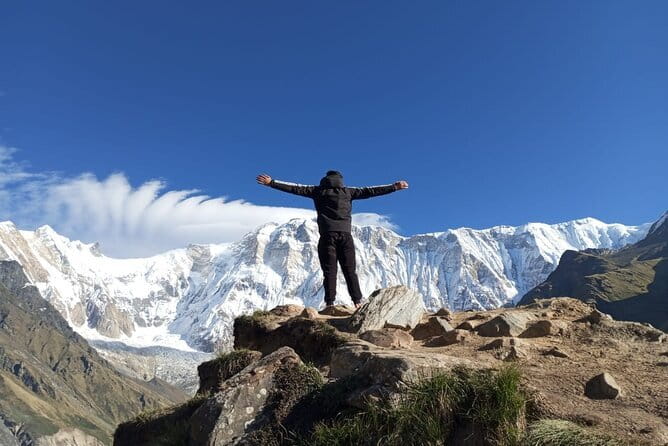
- Poon Hill sunrise: torch-up hike from Ghorepani, then a sunrise show over Dhaulagiri and the Annapurna range
- Base Camp day payoff: views that roll in from Machhapuchhre Base Camp onward before you reach Annapurna Base Camp
- Jhinu Danda hot spring reset: a real chance to soak tired legs after the long descent
- Small group size (max 10): easier logistics and a calmer trekking pace than huge groups
- Included gear and support: down jacket, sleeping bag, walking poles, and a porter ratio designed to help
More trails out of Kathmandu, boots ready
- Everest Base Camp Trek – 14 Days★ 5.0 · 1,499 reviews
- Everest Base Camp Trek★ 5.0 · 842 reviews
- Everest Base Camp Trekking★ 5.0 · 485 reviews
- Nagarkot Sunrise View and Day Hiking from Kathmandu★ 5.0 · 471 reviews
Why Annapurna Base Camp Feels Special Even Before You Start Climbing
The Annapurna Base Camp trek isn’t just about standing in front of mountains. It’s about how the mountain keeps arriving in layers. You get early hints from the Nayapul trail, wider views on the way through rhododendron country, then a big mood shift once Poon Hill sunrise turns the sky into a spotlight over the Dhaulagiri and Annapurna ranges.
And then there’s the classic sequence: morning sunrise, daytime hiking, tea breaks, and the gradual “oh wow” moments that come without you having to hunt them down. By the time you reach Machhapuchhre Base Camp and then push onward to Annapurna Base Camp, you’re not only tired—you’re also ready for it.
Price and Inclusions: What $1,623 Buys (and What It Doesn’t)
At $1,623 per person for a trip around 15 days, the value mostly comes from what’s packaged for you: the trek infrastructure and the support that makes the trail feel manageable.
What’s included
You get:
- Down jacket and sleeping bag (returned after the trek)
- Walking poles
- Porter support: 1 porter for every 2 trekkers
- Trekking permits/paperwork and entrance fees for sightseeing
- Medical kit
- Meals on trek days: breakfast (14), lunch (10), dinner (9)
- Airport pickup and drop-off in a private vehicle (Kathmandu)
- A lot of the heavy lifting around coordination and timing
What’s not included
Plan to budget separately for:
- Lunch and dinner in Kathmandu
- Anything not listed in inclusions
- International airfare, Nepal visa fee, and travel/rescue insurance
- Personal expenses during tea house stays
- Tipping
So here’s the practical way to think about it: you’re paying for less decision-making on the logistics, plus equipment and a porter. That matters on a trek where energy is the currency.




Small-Group Rhythm: Kathmandu, Pokhara, and the Trek’s Pace
This trip runs as a maximum of 10 travelers, which helps in two ways. First, it’s easier for the group and guide to manage timing and tea-house availability. Second, it keeps the trip from feeling like a moving conveyor belt.
You start with an early meeting at 6:15 am at the Hotel Thamel Park Pvt. Ltd. area, and the first days are about getting you positioned rather than worn out. Day 1 is airport pickup and a Thamel hotel stay, then a briefing. Day 2 is Kathmandu sightseeing. Day 3 is your transfer to Pokhara (bus at 7:00 am, or you can choose private vehicle/flight options). That sequence matters: it lets you land, reset, and then climb into the trek.
Kathmandu Sightseeing Day: Four Sacred Stops You’ll Remember
If you’ve never seen Kathmandu’s temple cluster work in real life, Day 2 is where you get oriented fast. You hit four major sites that each bring a different texture of Nepal.
- Swayambhunath (Monkey Temple): a viewpoint kind of site where the city feels like it’s laid out below you
- Pashupatinath: known for the cremation area, which is powerful and must be approached with respect and quiet attention
- Boudhanath: Buddhist monastery vibes, including the kind of visual repetition (stupas/temple details) that makes you slow down
- Kathmandu Durbar Square: an old palace area that gives you the sense of Kathmandu’s long timeline
You’ll also appreciate the small day-to-day practicality of staying in Thamel. Day 1 drops you near the action, so after your airport arrival you can grab food close by and take a short walk toward Ason, one of Nepal’s older markets (about a 15-minute walk).
The Move to Pokhara: Bus Views, Flight Options, and Why It Matters
On Day 3, the experience gives you choices, which I like because travel comfort can make or break your motivation for the trek.
- Overland by bus: leaves at 7:00 am, stops for lunch, and gives you long stretches of scenery along the Trishuli River
- Private vehicle: available on request if you want less road time and more control
- Flight: about 30 minutes if you want to cut the bumpy-road factor quickly
Then there’s a little breathing space in Pokhara—your Day 3 includes time labeled as Explore. It’s not just a transfer day. It’s a chance to get used to being in a more relaxed base-city before you start walking seriously.
Nayapul to Your First Real Annapurna Glimpses
Day 4 is where the trek energy becomes real. You take a short drive from Pokhara to Nayapul, then start hiking with an easier tone at first—stone paved steps through small villages.
What I like about this first day is how it plants anticipation. Just below Ulleri, you get your first big glimpse of Annapurna South and Himchuli. It’s not the final show, but it’s enough to make your brain click into trekking mode.
If you’re carrying lots of gear, this first segment is also where you find your stride. Start steady. Don’t sprint the first day just because the trail feels friendly.
Rhododendron Forest to Ghorepani: Tea, Pain, and the Mountain Reward
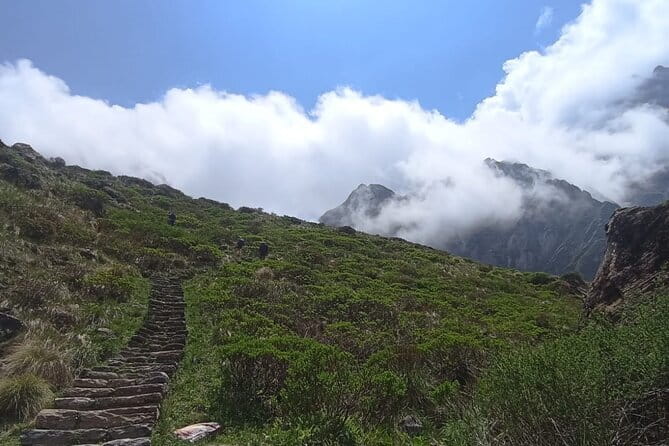
Day 5 is labeled “tough yet wonderful,” and that’s a fair description. You hike through dense rhododendron forest, and if you’re trekking in spring, you can catch the rhododendrons blooming in a multi-color display (the trek notes highlight seven-color spring blooms).
Then comes Ghorepani, where the payoff lands in a simple way: mountain views that make you forget some of the walking. You’ll also have a classic trekking moment—enjoying a hot cup of tea with the mountains laid out in front of you.
This is one of the subtle values of Annapurna Base Camp treks. The tea-house rhythm doesn’t just feed you. It gives you mental pacing.
The Poon Hill Sunrise Day: Torch Light for a Big Return
Day 6 is special because it turns early effort into a clean reward. You wake up early, torch light in hand, hike about one hour to Poon Hill, and then stack your sunrise memories in layers.
From Poon Hill, you can collect sunrise views across Dhaulagiri and the Annapurna Himalayan ranges. After that, you return to Ghorepani for breakfast and trek onward toward Tadapani, with mountain views continuing along the way.
Two practical tips for this day:
- Wear what you can hike in comfortably. You’ll be cold before sunrise and warm on the climb.
- Bring a headlamp or a good torch setup so you’re not juggling light and steps.
Tadapani to Chhmommorng: Gurung Village Life and Gentle Climbing
Day 7 focuses on an ascending section until Kimrong, then gentler trekking onward to Chhmommorng, described as a small Gurung village.
This is where the trek begins to feel less like a single long uphill push and more like a series of transitions. The mountain stays in view in different angles, but your body gets more moments of recovery between elevation gains.
If you like cultural pauses as much as viewpoint stops, this is the day where that balance starts.
Bamboo, Sinuwa, and Ghandruk Views: Easy Day, Smart Timing
Day 8 is an easier day. You trek toward Bamboo, passing Sinuwa (2360m), which offers wonderful views of Annapurna and Ghandruk village.
I like these “easier” days because they help you stay ahead of fatigue. You’re not just banking energy—you’re also letting your body adjust to the trekking pace without white-knuckling every step.
Dobhan to Deurali via Himalaya and Hinku Cave
Day 9 goes into the “long steep stone staircase” category to Dobhan (2600m), then up to Himalaya (2920m). You also pass Hinku Cave before reaching Deurali.
This is the kind of day where your strategy matters more than your mood. Take shorter steps. Let the staircase work for you by keeping your breathing steady.
Also, stone staircases tend to punish knees on the descent later, so good trekking form now helps later.
Machhapuchhre Base Camp to Annapurna Base Camp: The Main Event
Day 10 is the big one, and it’s described as slightly hard but highly rewarding.
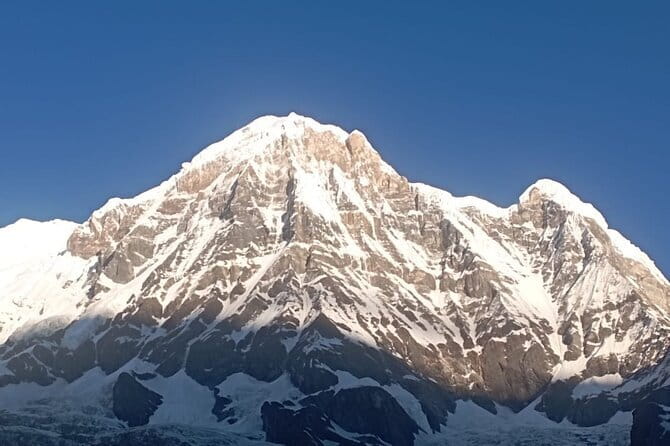
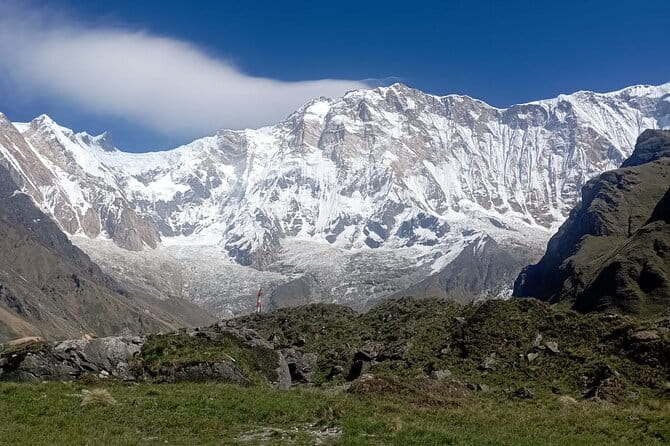
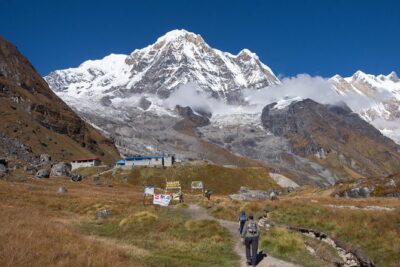
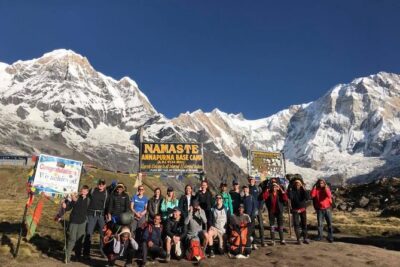
You first climb to Machhapuchhre Base Camp, with views of Machhapuchhre plus peaks such as Mt. Hiunchuli, Annapurna South, Annapurna I, Annapurna III, Gandharvachuli, and Gangapurna. Then you push onward to Annapurna Base Camp for more magnificent views, including Machhapuchhre and major Annapurna peaks.
Here’s what that means for your experience: you’re not arriving to a single instant. You’re building toward it—base camp views are enhanced by the earlier panorama you earn along the way.
If you’re nervous about making it, this is also the day where having a supportive plan matters. You’ll feel the altitude and effort, but you’ll also feel the route’s logic.
The Long Downhill to Bamboo and Khuldighar
Day 11 is long yet easy, with most of the trail downhill as you trek to Bamboo. Day 12 continues the story: early breakfast, trekking up to Khuldighar (2540m) and then a long downhill to Chhomorng, and further downhill toward Jhinu Danda.
Downhill days are tricky. They feel easy until your quads start complaining. Use your included poles, and keep your steps short and controlled.
Jhinu Danda Hot Spring: The Reward That’s Also Recovery
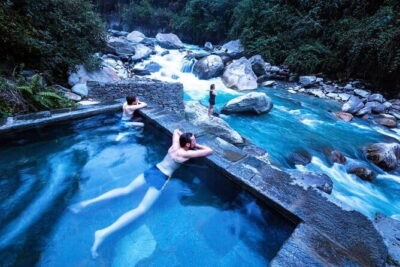
Day 12 ends with something you’ll remember in a different way than a viewpoint. Jhinu Danda is a natural hot spring place, and you can take a dip in the hot water pond to refresh tired legs.
This is one of the best “value for effort” parts of the itinerary. After days of stairs and elevation shifts, hot spring time isn’t a gimmick. It’s a practical recovery moment that can help you enjoy the rest of the trek and the return trip.
Back to Nayapul, Then Pokhara: More Time Than You Think
Day 13 begins with trekking down to Nayapul. Then you drive back to Pokhara. You get free time to walk around the city yourself.
Also, there’s a useful optional shortcut built into the trek plan: if you want to skip trekking, you can drive back to Pokhara directly from Jhinu Danda.
That flexibility is worth noting if your schedule or energy level is unpredictable.
Return to Kathmandu: Bus, Private Car, or a Fast Flight
Day 14 is your move back to Kathmandu. The bus leaves at 8:00 am and stops for lunch along the way. If you’d rather skip road time, you can arrange a private vehicle, or you can choose a flight for about 30 minutes.
Once you arrive in Kathmandu, you’ll have last shopping time in Thamel.
Day 15 is simple: transfer to the airport for your returning flight.
Who Should Do This Trek (and Who Should Reconsider)
This trek fits best if you:
- Have strong physical fitness and are comfortable hiking daily
- Like a mix of cultures (Kathmandu temples) and outdoors (trek and views)
- Want a guided plan with permit paperwork, equipment, and porter support
- Enjoy sunrise moments and long viewpoint days
You should think twice if you:
- Want a purely “easy walking vacation.” This is not that.
- Know you struggle with early mornings, steep stone stairs, or long downhill days.
- Are planning around strict schedules, because the experience requires good weather and the trip won’t be refundable if you cancel.
A Quick Notes on Guides and Support You’ll Want to Ask About
One thing I like about this itinerary is how clearly it’s designed around human support. You’re not just dropped in the mountains with a route description.
Past trekkers have specifically highlighted guides like Niren, Gobinda Subedi, and Nawin, along with porter Keshab. I can’t promise the exact same team for your dates, but it’s a good sign that the company’s staff quality shows up in the way people describe the experience: patient guidance, friendliness, and expertise—especially helpful if it’s your first real trek.
When you book, ask your operator to confirm:
- Who your guide will be
- The porter arrangement for your exact group size
- What you should pack for cold mornings and trekking days
Should You Book This Annapurna Base Camp Trek?
If your goal is a classic Annapurna Base Camp experience with a strong mix of views and practical recovery, I think this trek makes a lot of sense. The combination of Poon Hill sunrise, the staged big-day route through Machhapuchhre Base Camp, and the Jhinu hot spring finish gives you a full arc, not just a single “reach the point” mission.
Book it if:
- You want guided logistics and less guesswork on permits and timing
- You’re willing to train a bit for daily hiking
- You value small-group pacing (max 10)
Consider another option if:
- You’re looking for a low-effort trek
- You’re not able to handle early starts and steep sections
- You’re unsure about weather-dependent timing and flexibility
FAQ
What is the starting meeting point and start time?
The meeting point is Hotel Thamel Park Pvt. Ltd. (Chaksibari Marg 594-16, Kathmandu), and the start time is listed as 6:15 am.
How do I get from Kathmandu to Pokhara on this trek?
You can travel by bus (leaves at 7:00 am, includes a stop for lunch), or by private vehicle on request, or by flight (about 30 minutes).
What trekking support is included?
The tour includes a porter (1 porter for 2 trekkers), plus walking poles, a medical kit, and trekking permits/paperwork. You also receive a down jacket and sleeping bag that are returned after the trek.
Are meals included during the trek?
Yes. The trek includes breakfast (14), lunch (10), and dinner (9). Meals in Kathmandu are not included.
Will I pass through hot springs on the route?
Yes. Jhinu Danda is listed as a natural hot spring area, and you can take a dip in the hot water pond to refresh after the long descent.
What happens if the weather is bad?
The experience requires good weather. If it’s canceled due to poor weather, you’ll be offered a different date or a full refund.
Is the trek refundable if I cancel?
This experience is non-refundable and cannot be changed for any reason, so cancellation will not result in a refund.
If you tell me your travel month and current fitness level (for example: how many hours you can hike comfortably), I can help you gauge how intense each of the uphill and downhill days is likely to feel for you.
More Trekking Out of Kathmandu






More Tour Reviews in Kathmandu




Just Reviewed in Kathmandu
- Mountain Bike Tour
★ 5.0 · 3 reviews - Annapurna Panaroma
★ 5.0 · 3 reviews - Mount Everest Scenic Flight 50 Minutes
★ 5.0 · 3 reviews - Kathmandu : Swambhunath & Durbar Square Guided Half Day Tour
★ 3.3 · 3 reviews - Chandragiri Cable Car & Monkey Temple Tour – Private/Group
★ 5.0 · 3 reviews - Kathmandu: Shivapuri National Park Hiking Day Trip
★ 3.3 · 3 reviews
Annapurna Base Camp Treks, compared.
 ★ 5.0Annapurna base camp trek 5 DaysFrom $699252 reviews
 ★ 5.014-Day Private Annapurna Base Camp TrekFrom $1,090180 reviews
 ★ 5.0Annapurna Base Camp TrekkingFrom $1,779116 reviews
 ★ 5.0Annapurna Base Camp TrekFrom $935111 reviews
★ 5.0Annapurna Base Camp TrekFrom $1,350107 reviews
 ★ 5.0Kathmandu to Annapurna Base Camp (ABC) 5-Day TrekFrom $99102 reviews
 ★ 5.0Annapurna Base Camp Trek- 11 DaysFrom $99990 reviews
 ★ 5.0Annapurna Base Camp Trek 12 DaysFrom $80085 reviews
Browse the lists this tour appears in