
Review · ANNAPURNA BASE CAMP TREKS
Annapurna Base Camp Trek
The Annapurna Base Camp trek feels big, but not chaotic. This small-group route (max 10) takes you from Kathmandu’s Thamel to Pokhara and up through rhododendron forests toward Annapurna Base Camp without you hunting for beds or figuring out timing day to day. What I like most is the all-setup guidance and the way the days are structured around manageable hiking time (about 4 to 7 hours), while your meals and lodging on the trek are handled.
One thing to consider: this is a moderate high-altitude trek, so you’ll need to pace yourself and take acclimatization seriously, even if you’re fit.
In This Review
- Key highlights that matter on this Annapurna trek
- Getting value for $925: what’s included, what it means
- Day by day: from Thamel to Annapurna Base Camp (and back down)
- Day 1: Thamel arrival and orientation
- Day 2: Kathmandu to Pokhara, then a guesthouse night
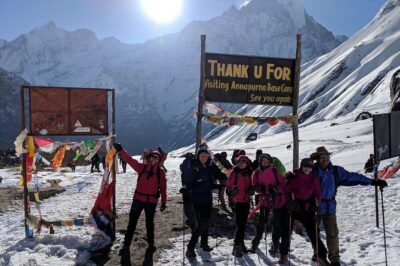
- Day 3: Nayapool to Birethani via Modi River villages
- Day 4: Ulleri to Banthanti, then Ghorepani
- Day 5: Poon Hill viewpoint day (3210m) in time for photos
- Day 6: Tadapani area to Chhomrong via Gurung village
- Day 7: Chhomrong to Sinuwa (suspension bridge + steep climb)
- Day 8: Dovan to Himalaya through bamboo and rhododendron
- Day 9: Deurali to Machhapuchhre Base Camp (surrounded views)
- Day 10: Sunrise from ABC, then return mostly downhill
- Day 11: Chhomrong lunch stop (views built into the village)
- Day 12: Jhinu Danda and natural hot springs
- Day 13: Malekhu lunch stop for fish and river-town vibes
- Day 14: Pashupatinath on the way back to Kathmandu
- What the hiking days feel like in real life
- Guides and service: what I’d watch for before you go
- Teahouses and meals: included food, included rhythm
- Altitude reality check (without the scare tactics)
- Who this trek suits best
- Should you book this Annapurna Base Camp trek?
- FAQ
- How many days is the Annapurna Base Camp trek?
- What group size is this trek limited to?
- Are meals included on the trek?
- What about transportation from the airport and around Nepal?
- Where does the trek start after reaching Pokhara?
- What are some included sightseeing stops?
- What fitness level do I need?
- If weather is bad, what happens?
Key highlights that matter on this Annapurna trek
- Max 10 hikers with a professional guide for more personal attention on the trail
- Meals and lodging coverage: all meals on the trek, plus some meals and stays in Kathmandu/Pokhara
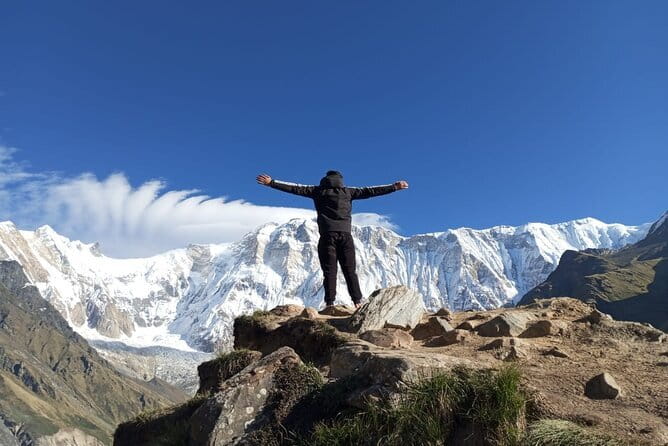
- Poon Hill included (short early hike to a 3210m viewpoint—great for sunrise-style views)
- Teahouse rhythm: you sleep in simple places each night, with regular village stops instead of nonstop exertion
- Jhinu Danda hot springs stop gives you a recovery moment after trekking days
- Service flexibility: guides named in feedback include Suvi, Tulsi, Krishna, and Anil, with an example of upgrading porter support when someone wasn’t feeling well
More trails out of Kathmandu, boots ready
- Everest Base Camp Trek – 14 Days★ 5.0 · 1,499 reviews
- Everest Base Camp Trek★ 5.0 · 842 reviews
- Everest Base Camp Trekking★ 5.0 · 485 reviews
- Nagarkot Sunrise View and Day Hiking from Kathmandu★ 5.0 · 471 reviews
Getting value for $925: what’s included, what it means
At $925 per person for roughly 14 days, what makes this feel like good value isn’t just the total price. It’s the fact that the expensive parts of travel friction are handled: guide, transfers, and most of your day-to-day costs on the trail.
Here’s what you should expect your money to cover:
- Professional guide (the core “stress reducer” on a high-demand trek)
- Round-trip shared transfers (you’re not left to solve logistics alone)
- Accommodation as planned, with teahouses on trek and teahouses/hotels in Kathmandu and Pokhara
- Meals: the package lists breakfast (13), lunch (10), dinner (10), with lunch/dinner in Kathmandu/Pokhara not included
- Mobile ticket, plus pickup offered (helpful when you land tired and want someone to point you the right direction)
What you’ll still need to budget for:
- Lunch and dinner in Kathmandu and Pokhara aren’t included, so plan on eating a few times on your own.
- A quick temple stop at Pashupatinath is noted as a short photo moment and is not included as an admission cost.
If you like the idea of hiking with freedom, but you hate the hassle of arranging lodging and meals on your own in Nepal’s mountain towns, this is built for you.
Day by day: from Thamel to Annapurna Base Camp (and back down)
This trek has a classic Annapurna rhythm: you’ll start low, gain altitude gradually, reach the high point area, then return mostly downhill. The schedule is paced for active trekkers who can comfortably hike several hours a day.
Day 1: Thamel arrival and orientation
You land at Tribhuvan International Airport, meet the airport rep, and get a private tourist vehicle drop to your hotel. You can rest or meet the team at their office to go over details.
Why this day matters: if you want your trekking days to feel calm, Day 1 should be low-stress. Having an airport rep means you’re not wandering around Kathmandu figuring out what happens next.
Day 2: Kathmandu to Pokhara, then a guesthouse night
After breakfast, you travel by tourist bus to Pokhara: about 200 km, roughly six hours, with lunch taken during the ride. Overnight is at a guesthouse in Pokhara.
Pokhara is the staging hub. Even if you’re eager to start trekking, the value of this night is that you’ll sleep somewhere comfortable before heading toward Nayapool and the trail start.
Day 3: Nayapool to Birethani via Modi River villages
From Pokhara, it’s about one hour by drive to Nayapool, then the trek begins with a short walk along the Modi River to Birethani. You’ll find lots of small teahouses along the route.
Practical tip: Day 3 is a great day to establish your water routine and test your walking pace. You’re not rushed; you’re getting your legs used to sustained walking.
Day 4: Ulleri to Banthanti, then Ghorepani
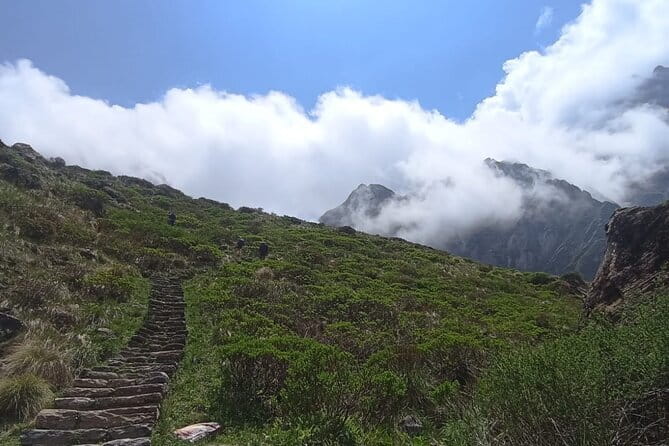
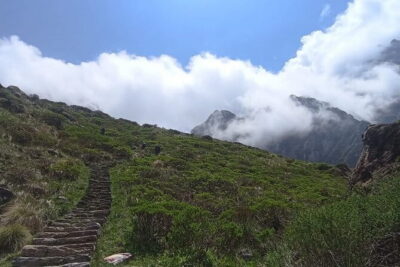
From Ulleri, the trail climbs gently through rhododendron and oak forests to Banthanti, then continues to Ghorepani.
This is one of those “pretty but useful” days. Forest walking keeps it shaded and steady, and Ghorepani gives you a solid base for the next morning’s viewpoint hike.
Day 5: Poon Hill viewpoint day (3210m) in time for photos
Today starts with a short hike to Poon Hill, the famous viewpoint on this route. You’ll climb to the top at 3210m (about a 45-minute walk), and the viewpoint is described as a photographer’s paradise.
You’ll love this day if you:
- want a big payoff without a huge altitude commitment
- enjoy the mix of hiking and views
- like early-morning effort followed by a relaxed breakfast and recovery
Day 6: Tadapani area to Chhomrong via Gurung village
After breakfast at Tadapani, you move downhill gradually through rhododendron forests, cross the Kimsung River, then ascend toward a Gurung village called Gurjung. From there, a straight climb takes you to Chhomrong.
Chhomrong is one of those key villages where the scenery starts to feel serious. It’s also a good “legs and lungs check” before the deeper high-altitude stretch.
Day 7: Chhomrong to Sinuwa (suspension bridge + steep climb)
From Chhomrong, there are stone steps that lead down to Chhomrong Khola, then you cross a suspension bridge. After that you take a steep climb to Sinuwa, with an easy downhill segment before you reach the next stop.
This is a day where technique matters. Going down the steps is where your knees get opinions. Take your time, shorten your stride, and use trekking poles if you have them.
Day 8: Dovan to Himalaya through bamboo and rhododendron
The walk from Dovan to Himalaya is described as quieter because big noises are not allowed near a temple area along the way. You’ll go through bamboo forests, then switch into rhododendron forests.
That shift in vegetation is a subtle but real advantage. Different forest types change how the walk feels—shade, air, and footing often all vary.
Day 9: Deurali to Machhapuchhre Base Camp (surrounded views)
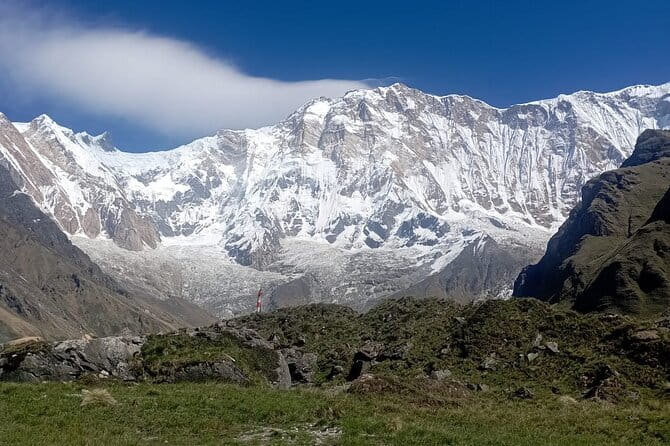
From Deurali, you pass through a river bed and climb to Machhapuchhre Base Camp. The description emphasizes being surrounded by mountains with views of Annapurna, Machhapuchhre, Gangapurna, Himchuli, and more.
This is the day you’ll start noticing the trek turning from “scenery” into “mountain space.” You feel the scale more than you can capture with a camera.
Day 10: Sunrise from ABC, then return mostly downhill
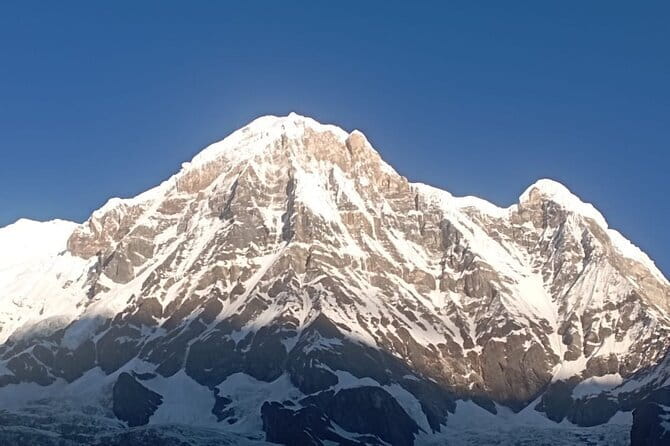
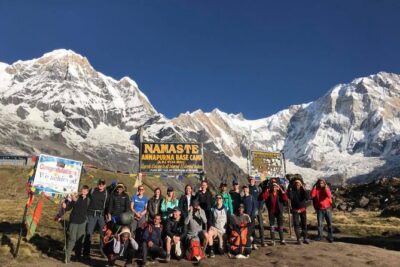
After a spectacular sunrise from Annapurna Base Camp, you head back along the same trail through MBC, Deurali, Himalaya, Bamboo, and back to Sinuwa. This segment is described as mostly downhill and an easy walk.
Easy doesn’t mean “ignore your body.” Downhill is still hard on muscles, just in a different way. Hydrate well and keep your breathing steady even if the path feels gentle.
Day 11: Chhomrong lunch stop (views built into the village)
You stop in Chhomrong for lunch. The village is spread across a hillside with strong views of the Annapurnas and Machupachare.
This is a morale day. You’ve already earned the big summit moment; now you get to keep enjoying the drama of the mountains as you work your way out.
Day 12: Jhinu Danda and natural hot springs
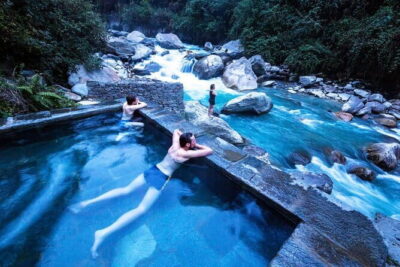
Today includes Jhinu Danda and a natural hot spring with ponds where you could take a bath. It’s about 20 minutes walking distance from your hotel in Jhinu Danda.
This is the kind of stop that makes the return hike feel human again. After trekking days, soaking can feel like resetting your legs.
Day 13: Malekhu lunch stop for fish and river-town vibes
You stop in Malekhu for lunch for about 30 minutes. It’s described as famous for different fish species and their products.
This is a nice cultural contrast: a break from mountains, more river town energy.
Day 14: Pashupatinath on the way back to Kathmandu
On your final day, you’re driven via Pashupatinath Temple. You get a brief chance for photos (not a long stop).
Why this ending works: it ties the mountain journey back to Nepal’s living spiritual centerpiece—short, photogenic, and then you’re on the road.
What the hiking days feel like in real life
This trek is best described as moderate, with daily hiking typically between 4 and 7 hours. That range matters because it tells you the operator is building a schedule around achievable walking time—not marathon days that burn out people who signed up for a “once-in-a-lifetime” trek.
A few practical points I’d plan for:
- You’ll do several consecutive stair-and-slope sections. Your legs will feel it even on “easy downhill.”
- You sleep in teahouses, which means simple rooms and common mountain comforts rather than luxury. The upside is you don’t have to plan lodging on the fly.
- Food is mostly handled on trek. Since breakfast and dinners are covered in the package, you can focus on eating well instead of constantly searching menus.
If you’re the type who wants to be outdoors every day but still appreciates structure, the pacing is a strong match.
Guides and service: what I’d watch for before you go
One of the most praised aspects in the feedback you provided is the professional care of the team. Named guides include Suvi, Tulsi, Krishna, and Anil. One example also mentions a porter named Sumon.
The practical value of that matters most in moments like:
- You land and you’re tired or unsure what’s next
- You start feeling unwell and need support
- You want communication that’s clear and not hand-wavy
If you want to get the best version of this trek, set expectations early:
- tell your guide your comfort level and pace preferences
- ask questions on Day 1 so you don’t waste energy later
- be honest about energy levels so adjustments (like added porter support) can happen when they’re still helpful
Teahouses and meals: included food, included rhythm
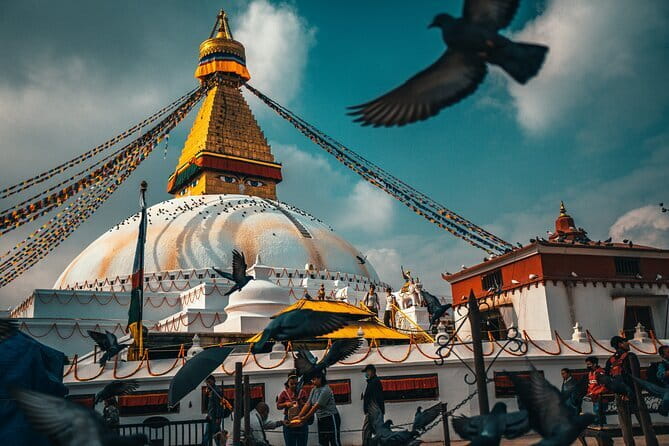
The trekking meal plan is one of the biggest quality-of-life wins here. With all meals on the trek included (and breakfasts/lunches/dinners listed across the days), you don’t have to budget every meal in the mountain villages, and you don’t have to worry about finding something to eat right when you’re hungry.
Still, remember: lunch and dinner in Kathmandu and Pokhara aren’t included. Plan on two paid meals in those cities. It’s a small tradeoff for a trek that’s largely handled.
On the trail, teahouses also create a “rhythm.” You’ll arrive, settle, eat, and sleep—repeat. That predictability helps you focus on acclimatization and hiking instead of logistics.
Altitude reality check (without the scare tactics)
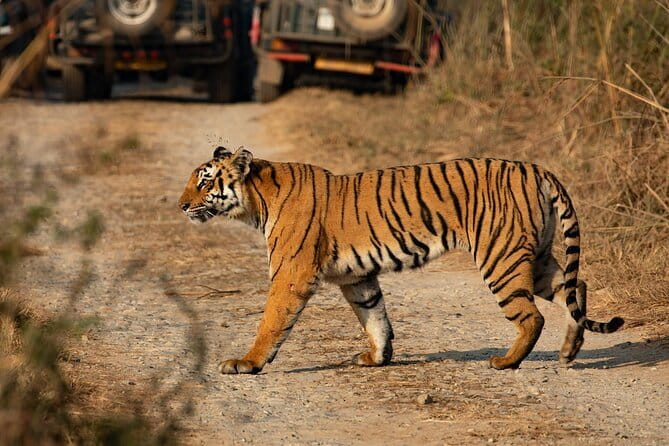
The route is described as moderate high-altitude, and the itinerary reaches the 3210m zone at Poon Hill plus higher mountain areas around Base Camp. That means you should prepare for:
- slower pacing as altitude climbs
- more frequent breaks than you’d take at home
- being careful on steep sections, especially when you’re winded
The good part: the trek is paced across many days, and the schedule includes rest-and-recovery opportunities in villages and at teahouses. It’s not a rushed, straight-to-the-top push.
Who this trek suits best
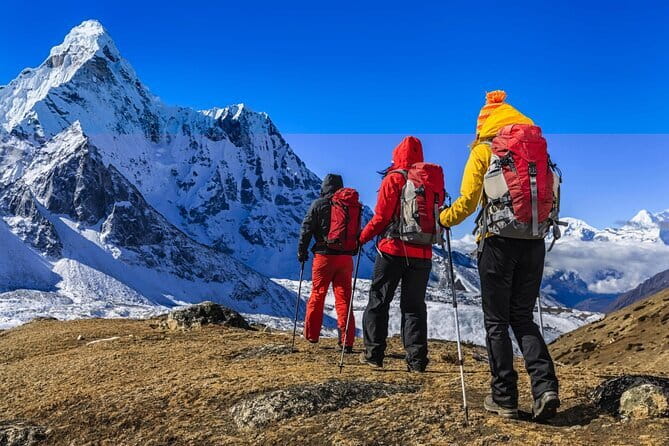
This trek is ideal for active people who want:
- a guided high-altitude trek without getting lost or struggling to find good lodging
- a small group (max 10) for a more personal feel
- a schedule that balances effort with recovery (4–7 hours most days)
- strong sightseeing moments like Poon Hill and the Annapurna Base Camp sunrise
It’s also a good fit if you’re newer to longer trekking and want help with day-to-day decisions.
You might think twice if:
- you want a fully independent trek with no structure
- you’re not comfortable with altitude and moderate daily hiking demands
Should you book this Annapurna Base Camp trek?
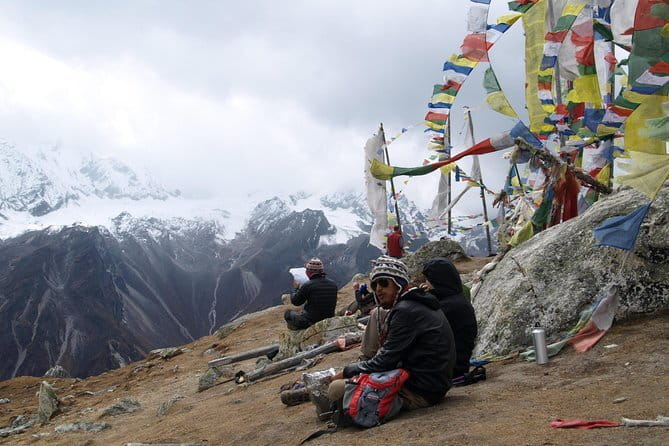
If you want the Himalaya experience with less chaos, I’d say yes—especially if you’re drawn to the idea of having meals and lodging handled on the trail and getting a knowledgeable guide (names mentioned in feedback include Suvi, Tulsi, Krishna, and Anil). The small-group cap (max 10) and the included Poon Hill viewpoint are also meaningful bonuses.
Book it if:
- you’re an active traveler who can hike several hours a day
- you value logistics support as much as the views
- you’d rather pay for structure than spend energy on planning
Hold off or ask extra questions if:
- altitude makes you nervous and you don’t have a clear plan to pace yourself
- you prefer total independence over guided organization
- you’re counting on every meal being included, since Kathmandu/Pokhara lunches/dinners are not part of the package
FAQ
How many days is the Annapurna Base Camp trek?
It runs for about 14 days.
What group size is this trek limited to?
The maximum group size is 10 travelers.
Are meals included on the trek?
Yes. The package lists breakfast (13), lunch (10), and dinner (10). Lunch and dinner in Kathmandu and Pokhara are not included.
What about transportation from the airport and around Nepal?
Pickup is offered, and there are round-trip shared transfers. You’ll also have an airport representative meet you at Tribhuwan International Airport, with a private tourist vehicle drop to your hotel.
Where does the trek start after reaching Pokhara?
After traveling from Kathmandu to Pokhara, the trek starts from Nayapool, reached by drive from Pokhara (about one hour).
What are some included sightseeing stops?
Poon Hill is included, and the itinerary also includes Jhinu Danda for natural hot springs. There’s also a short photo stop at Pashupatinath Temple on the final day (admission not included).
What fitness level do I need?
You should have a moderate physical fitness level since this is a moderate high-altitude trek with days of hiking typically between 4 and 7 hours.
If weather is bad, what happens?
The experience requires good weather. If it’s canceled due to poor weather, you’ll be offered a different date or a full refund. You can cancel up to 24 hours in advance for a full refund.
More Trekking Out of Kathmandu
More Tour Reviews in Kathmandu
Just Reviewed in Kathmandu
- Mountain Bike Tour
★ 5.0 · 3 reviews - Annapurna Panaroma
★ 5.0 · 3 reviews - Mount Everest Scenic Flight 50 Minutes
★ 5.0 · 3 reviews - Kathmandu : Swambhunath & Durbar Square Guided Half Day Tour
★ 3.3 · 3 reviews - Chandragiri Cable Car & Monkey Temple Tour – Private/Group
★ 5.0 · 3 reviews - Kathmandu: Shivapuri National Park Hiking Day Trip
★ 3.3 · 3 reviews
Annapurna Base Camp Treks, compared.
 ★ 5.0Annapurna base camp trek 5 DaysFrom $699252 reviews
 ★ 5.014-Day Private Annapurna Base Camp TrekFrom $1,090180 reviews
 ★ 5.0Annapurna Base Camp TrekkingFrom $1,779116 reviews
 ★ 5.0Annapurna Base Camp TrekFrom $935111 reviews
★ 5.0Annapurna Base Camp TrekFrom $1,350107 reviews
★ 5.0Annapurna Base Camp TrekFrom $935111 reviews
★ 5.0Annapurna Base Camp TrekFrom $1,350107 reviews
 ★ 5.0Kathmandu to Annapurna Base Camp (ABC) 5-Day TrekFrom $99102 reviews
 ★ 5.0Annapurna Base Camp Trek- 11 DaysFrom $99990 reviews
 ★ 5.0Annapurna Base Camp Trek 12 DaysFrom $80085 reviews
Browse the lists this tour appears in