
Review · ANNAPURNA BASE CAMP TREKS
Annapurna Base Camp Trek
Annapurna Base Camp earns its legend. I like this trek’s structure: you get a culture warm-up in Kathmandu, then two big sunrise moments at Poon Hill and Annapurna Base Camp, with an overnight at the base camp itself. I also appreciate how the itinerary uses lodge stops to keep the days realistic, not random.
I especially like the human support built into the trip. Guides such as Pradeep, Bikas, Birendra, Aashman, and assistant staff like Santosh come up again and again in feedback, with porters helping with comfort and pacing. That matters when the trail gets stair-heavy or when someone needs a slower rhythm.
One consideration: the trek is not gentle. You’ll tackle long hiking days and at least one brutal stair section (including 3400 steps), so if you have weak knees or you’re starting from scratch fitness-wise, you’ll want to train before you go.
In This Review
- Key things to know before you commit
- Route Overview: what this Annapurna Base Camp trip actually includes
- Kathmandu setup: temples, briefing, and getting your bearings
- Pokhara: the gentle reset before the trail starts
- From Nayapul to Ulleri: the first real taste of effort
- Ghorepani and the Poon Hill sunrise: the view day that anchors the trip
- Rhododendron to Chhomrong: bridges, terraced fields, and a classic Annapurna feel
- Bamboo and the river crossings: where the trail rhythm changes
- Deurali and Hinku Cave area: the chilly, steeper middle
- The ABC day: Machapuchare Base Camp, big views, and one overnight at the goal
- Sunrise at ABC and the descent to Doban: why the return days still matter
- Back to Chhomrong, then Jhinu Danda: steps again, plus a gentler village finish
- Pokhara return and Kathmandu celebration: wrapping the story, not rushing it
- Price and logistics: is $995 actually good value?
- Guides and porters: the big difference between a trek and an ordeal
- What to pack and how to plan your body (without guessing)
- Who this trek fits best
- Should you book this Annapurna Base Camp trek?
- FAQ
- How long is the Annapurna Base Camp Trek?
- Where does the trek start and end?
- What’s included in the $995 price?
- Is pickup included?
- Is this a private tour?
- Does the itinerary include sunrise viewing?
- What fitness level do I need?
- Is travel insurance and tipping included?
- What is the cancellation policy?
Key things to know before you commit
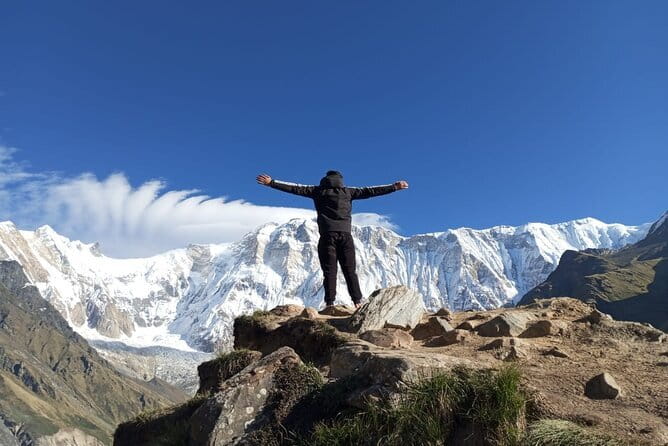
- Two sunrise setups: early Poon Hill views and an ABC sunrise day
- Kathmandu briefing + gear check: you’ll meet your guide and review equipment before trekking
- A classic Annapurna rhythm: forest trails, terraced villages, and steady lodge-to-lodge movement
- Lodges every night after the trek starts: expect a mostly predictable sleep routine in mountain villages
- Support that adapts: guidance and porter help have been praised, including plan changes during rough weather
More trails out of Kathmandu, boots ready
- Everest Base Camp Trek – 14 Days★ 5.0 · 1,499 reviews
- Everest Base Camp Trek★ 5.0 · 842 reviews
- Everest Base Camp Trekking★ 5.0 · 485 reviews
- Nagarkot Sunrise View and Day Hiking from Kathmandu★ 5.0 · 471 reviews
Route Overview: what this Annapurna Base Camp trip actually includes
This is a 15-day guided trek through Nepal’s Annapurna region, built around lodge stays and pre-set walking days. You start in Kathmandu, reposition to Pokhara, then begin trekking from the Nayapul area toward Annapurna Base Camp (ABC).
For value, the price is not just a “walk and hope” deal. You’re paying for permits/entrance fees, most meals, and the logistics that otherwise eat up your time and energy: transfers, guide support, and day-by-day direction across villages where you don’t want to guess.
Kathmandu setup: temples, briefing, and getting your bearings
Your first two days are about Kathmandu more than trekking. Day 1 includes an airport meet-up with your name on a sign, private car transfer to the hotel, then a welcome dinner at a cultural restaurant with a Nepali dance show. It’s a good way to land without immediately feeling like you’re behind.
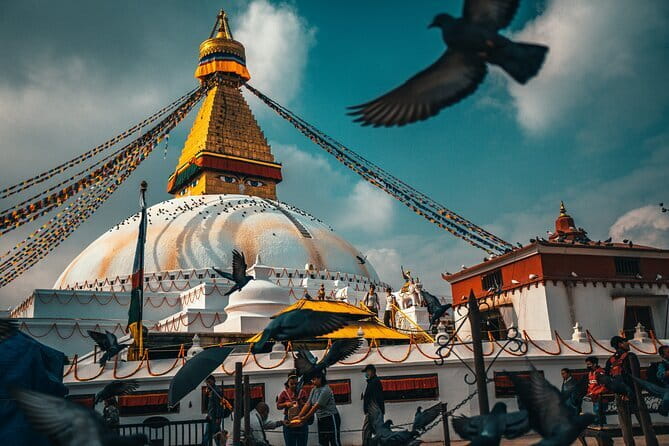
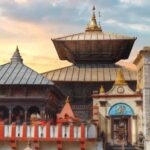
Day 2 is the Kathmandu Valley highlights day: Pashupatinath, Bouddhanath, Swayambhunath (Monkey Temple), and Kathmandu Durbar Square. Practical takeaway: you’ll arrive to the trek already understanding the religious mix you’ll see everywhere in Nepal. You’ll also do a trekking briefing, meet your guide, and check your equipment—exactly the kind of early organization that prevents headaches later.
Pokhara: the gentle reset before the trail starts
On Day 3 you ride from Kathmandu to Pokhara by tourist bus, roughly 7–8 hours with breaks near Malekhu and Ghansikuwa. You’ll likely reach Pokhara around mid-afternoon, then have time to relax and eat near Fewa Lake.
Why this matters: Pokhara is not the “finish line” here. It’s your buffer day before your body learns the rhythm of stairs and uphill grades. If you’re the kind of person who gets anxious on travel days, this buffer can make the trek feel calmer on Day 4.
From Nayapul to Ulleri: the first real taste of effort
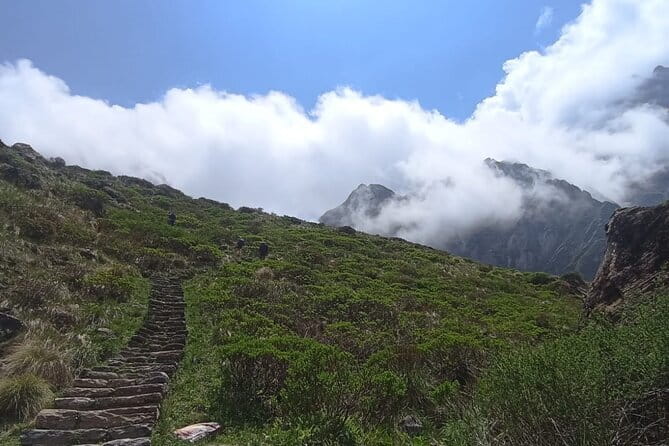
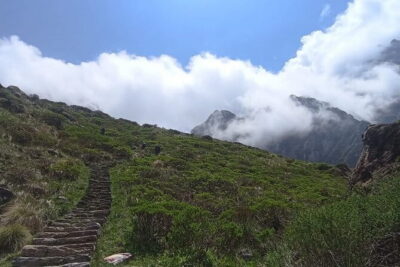
Day 4 transitions from transport to trekking. You go to Nayapul, start walking through valley forest, cross Bhurungdi Khola, then push up to Tikhedhunga. The big test comes right away: the program calls out 3400 steps and boulders, then you finish in Ulleri.
The pro: you get a clear sense of the day’s difficulty early, so you can settle into pacing before fatigue stacks up. The caution: that step climb can be rough if you start too fast—especially if your calves are tight from travel.
Ghorepani and the Poon Hill sunrise: the view day that anchors the trip
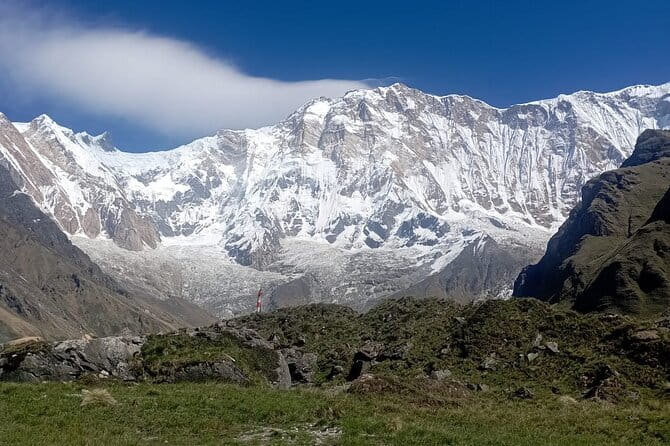
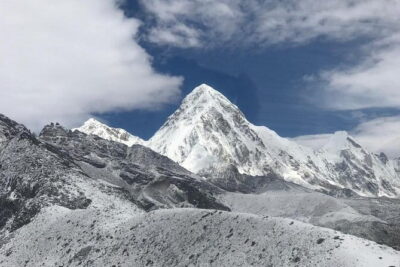
Day 5 starts with breakfast and an ascent to Ghorepani, plus mountain teases along the way. The itinerary mentions views of Mt. Annapurna South and Nilgiri, and you’ll continue upward toward upper Ghorepani for wider panoramas.
Day 6 is the payoff day. You go up early to Poon Hill for sunrise over the Annapurna and Dhaulagiri ranges, then return for breakfast in Ghorepani before hiking through rhododendron forests and cascading waterfalls to Tadapani.
This section is popular for a reason: you’re not just hiking through wilderness—you’re getting planned viewpoints at the times when the light makes mountains look dramatically closer. It’s also a nice way to build confidence before ABC.
Rhododendron to Chhomrong: bridges, terraced fields, and a classic Annapurna feel
Day 7 moves from forest into terraced farmland, then includes a suspension bridge before you reach Chhomrong for overnight. The program notes varied terrain with waterfalls along the way, ending under the shadow of Mt. Annapurna.
Why it works: Chhomrong is a major “character town” on this route. You’ll feel like you’re moving deeper into the Annapurna Sanctuary, not just repeating valley paths. The downside is the day can feel busy on timing because bridges and stair segments can slow your pace.
Bamboo and the river crossings: where the trail rhythm changes
Day 8 starts by descending from Chhomrong with many stone steps to the Chhomrong Khola River, then you cross on a swinging bridge. After climbing to Sinuwa through Kuldihar, you continue with a gentle descent to Bamboo for the night.
What you should watch for: river crossings and step-downs. This is the kind of day where good footwear matters, and where keeping your ankles relaxed helps. If you’re carrying a heavy pack, this is also a spot where you’ll feel it in your legs.
Deurali and Hinku Cave area: the chilly, steeper middle
Day 9 includes a chilly bamboo forest and a steep uphill stretch, then it shifts into a drier forest climb. The itinerary references reaching Himalaya Hotel, later continuing up until Hinku Cave, then descending to a river and ascending again to Deurali.
Deurali is described with mountain views including Mt. Dhaulagiri, and waterfalls as the scenery changes. The big practical point: this is where the trek starts to feel like a real expedition day, not a gentle walk-through village scenery.
The ABC day: Machapuchare Base Camp, big views, and one overnight at the goal
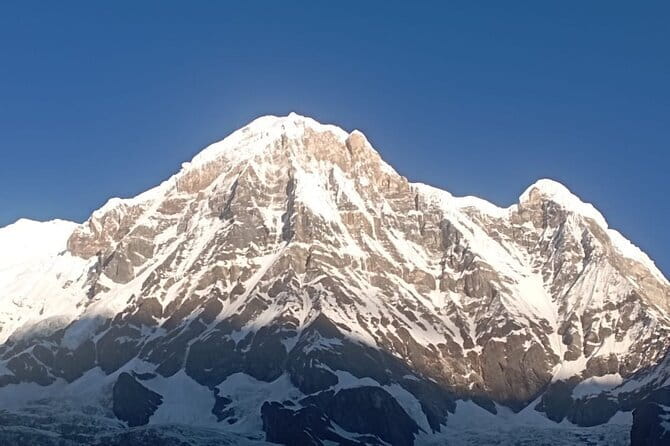
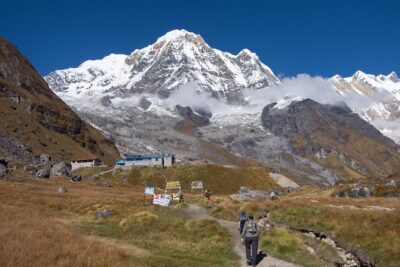
Day 10 is the signature day: you ascend steadily along a valley trail, with rocky cliffs and occasional steep sections. After a relatively flatter stretch, you climb to Machapuchare Base Camp (MBC), where the program highlights views of Mt. Hiunchuli, Annapurna South, Annapurna I, Annapurna III, and several other named peaks like Gandharvachuli and Gangapurna.
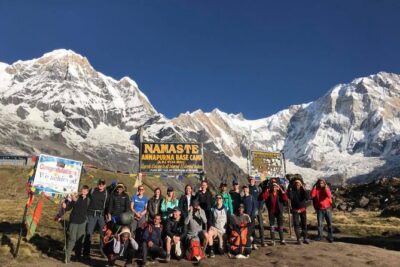
Then you continue to Annapurna Base Camp, and the program notes it as a “lifetime experience,” surrounded by magnificent peaks. You’ll sleep at ABC overnight.
A subtle but important detail: you’re not just reaching a point and leaving. You’re staying there, which gives your mind time to absorb what you’ve been walking toward.
Sunrise at ABC and the descent to Doban: why the return days still matter
Day 11 starts early for a sunrise experience at ABC—described as the pinnacle of the journey—then you head downhill. You descend quickly to MBC, then pass through Deurali and Himalayan Hotel, before finishing at Doban.
Day 11 is shorter in feel compared to the ascent days because it’s described as a downhill trek overall. Still, downhill can be just as tiring on knees and quads, especially on stone paths.
Back to Chhomrong, then Jhinu Danda: steps again, plus a gentler village finish
Day 12 is a return day. You go back toward Chhomrong, pause for lunch, negotiate the stone steps again, then continue down to Jhinu Danda. The route is described with farmland and rainforest, making the later part feel like a more relaxed stroll compared with the steep climb segments.
This day sets up your final trekking hours before you hit the road again.
Pokhara return and Kathmandu celebration: wrapping the story, not rushing it
Day 13 brings the road transition. After breakfast at Jhinu Danda, you trek to Nayapul, then drive back to Pokhara. You’ll have lunch along the way and spend the night in Pokhara.
Day 14 goes back to Kathmandu either by flight or by drive from Pokhara. You get transportation from the airport to your hotel, plus a free day for exploring or souvenir shopping. A farewell dinner is planned so you can share trekking stories with your group before departure.
Day 15 is your airport departure day with an early representative meet-up.
Price and logistics: is $995 actually good value?
At $995 per person for an approx. 15-day trek, you’re paying for more than a guide’s time. The included items list covers all fees and taxes, required permits and entrance fees, and meals: 14 breakfasts, 10 lunches, and 10 dinners. The program also includes pickups/transfers described in the Kathmandu start and finish.
What is not included is also clear: personal nature expenses, anything not mentioned in the program, bars and beverage bills, travel insurance, and tipping.
So here’s the value logic: ABC treks can get expensive once you add permits, food, transport between cities, and a guide/porter team. If you’re the kind of traveler who wants the route planned end-to-end and doesn’t want to negotiate logistics mid-trip, this price starts to make sense quickly.
Guides and porters: the big difference between a trek and an ordeal
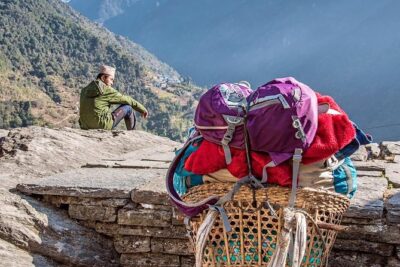
The most praised aspect in the feedback pattern is guide and porter support. Names that come up include Pradeep, Bikas, Santosh, Birendra, Lal, and Aashman. The repeated theme is that the team stays attentive: pacing, comfort, and making sure people understand the region and what’s coming next.
This matters because Annapurna isn’t one steady grade. You’ll deal with stairs, forests, river crossings, and multiple “start early” days. One review specifically mentions a guide helping with knee pain and keeping motivation up. Another mentions that when snow affected plans, the team made a flexible change of plan for an 8-year-old on the trek.
If you want a trek that feels supported instead of stressful, this is the part you’re really buying.
What to pack and how to plan your body (without guessing)
The program includes an equipment check in Kathmandu, which is a big hint: bring your gear and be ready to adjust. Since the itinerary includes cold early starts and steep stair days, plan for layers and footwear that can handle both uphill and downhill.
Also, train for your legs and not just your cardio. Day 4 includes 3400 steps, and multiple days include long stair segments and descents. Even if you’re strong at jogging, downhill mechanics and stair fatigue can surprise you.
Who this trek fits best
This itinerary is listed for travelers with moderate physical fitness. It also says the experience is a private tour/activity, meaning only your group participates.
I’d say this trek is a strong match if you:
- want a guided route with permits, meals, and day-by-day direction
- like the idea of both culture time (Kathmandu) and mountain time (ABC)
- can handle long walking days with stair-heavy sections
If you’re very new to hiking, you can still go—but don’t wing it. You’ll need a training plan focused on endurance plus knee-friendly technique.
Should you book this Annapurna Base Camp trek?
If you want Annapurna Base Camp plus sunrise moments at Poon Hill and a team-led trek with clear logistics, this one is easy to recommend. The structure (Kathmandu briefing, Pokhara reset, lodge-to-lodge trekking) helps you focus on the views instead of route problems.
I’d only hesitate if you know stairs and downhill grind your knees, or if you’re not ready for a full 15-day commitment. But if you can prepare and you like the idea of being cared for by a guide team such as Pradeep/Bikas/Santosh, this trek has the kind of support that turns a tough goal into a memorable one.
FAQ
How long is the Annapurna Base Camp Trek?
The trip is listed as 15 days approximately.
Where does the trek start and end?
It starts in Kathmandu, Nepal and returns to Kathmandu at the end (with travel from Pokhara on Day 14 and an airport transfer on Day 15).
What’s included in the $995 price?
The price includes all fees and taxes, required permits/entrance fees, and meals: 14 breakfasts, 10 lunches, and 10 dinners.
Is pickup included?
Yes. The itinerary includes an arrival airport meet-up and hotel transfer in Kathmandu, plus transportation to your hotel after returning to Kathmandu.
Is this a private tour?
Yes. It’s listed as a private tour/activity, so only your group participates.
Does the itinerary include sunrise viewing?
Yes. Sunrise viewing is built in for Poon Hill (Day 6) and for Annapurna Base Camp (Day 11).
What fitness level do I need?
The listing says travelers should have moderate physical fitness.
Is travel insurance and tipping included?
No. Travel insurance and tipping are not included.
What is the cancellation policy?
You can cancel up to 3 days in advance for a full refund. If you cancel less than 3 full days before the start time, you don’t get a refund.
More Trekking Out of Kathmandu
More Tour Reviews in Kathmandu
Just Reviewed in Kathmandu
- Mountain Bike Tour
★ 5.0 · 3 reviews - Annapurna Panaroma
★ 5.0 · 3 reviews - Mount Everest Scenic Flight 50 Minutes
★ 5.0 · 3 reviews - Kathmandu : Swambhunath & Durbar Square Guided Half Day Tour
★ 3.3 · 3 reviews - Chandragiri Cable Car & Monkey Temple Tour – Private/Group
★ 5.0 · 3 reviews - Kathmandu: Shivapuri National Park Hiking Day Trip
★ 3.3 · 3 reviews
Annapurna Base Camp Treks, compared.
 ★ 5.0Annapurna base camp trek 5 DaysFrom $699252 reviews
 ★ 5.014-Day Private Annapurna Base Camp TrekFrom $1,090180 reviews
 ★ 5.0Annapurna Base Camp TrekkingFrom $1,779116 reviews
 ★ 5.0Annapurna Base Camp TrekFrom $935111 reviews
★ 5.0Annapurna Base Camp TrekFrom $1,350107 reviews
★ 5.0Annapurna Base Camp TrekFrom $935111 reviews
★ 5.0Annapurna Base Camp TrekFrom $1,350107 reviews
 ★ 5.0Kathmandu to Annapurna Base Camp (ABC) 5-Day TrekFrom $99102 reviews
 ★ 5.0Annapurna Base Camp Trek- 11 DaysFrom $99990 reviews
 ★ 5.0Annapurna Base Camp Trek 12 DaysFrom $80085 reviews
Browse the lists this tour appears in