
Review · ANNAPURNA BASE CAMP TREKS
Annapurna Base Camp Trek
Annapurna Base Camp pulls you in fast. This trek blends Gurung village life with huge mountain drama in Nepal’s Annapurna Conservation Area, with Machhapuchhre (the fish-tail peak) hanging over the horizon. I love the way the trip is guided by Damu and his Mission Summit team, and I really look forward to the early Poon Hill hike plus the final push up to Annapurna Base Camp at about 4,130m.
I also like the practical pacing built into the route, with altitude steps that make the hard days feel more manageable (Hille → Ghorepani → Tadapani → Sinuwa → Deurali, then ABC). One possible drawback: lunch, dinner, and bottled water aren’t included, so you’ll want to budget for most of your daily food and drinks.
In This Review
- Key highlights at a glance
- Why Annapurna Base Camp feels worth the effort
- Day 1 to Day 2: landing in Kathmandu, then dropping to Pokhara
- Days 3 to 5: Hille, Ghorepani, and Poon Hill’s early light
- Days 6 to 8: Sinuwa, Deurali, and the push to Annapurna Base Camp
- Days 9 to 10: Bamboo, Chomrong, and Jhinu-Danda
- Day 11 to Day 13: Nayapul, Pokhara again, and a Kathmandu rest day
- Price and logistics: what $769.24 really covers
- Weather and altitude: the part you should plan for (even if it’s not sunny)
- Who this trek fits best (and who should reconsider)
- Should you book Annapurna Base Camp with this operator?
- FAQ
- How long is the Annapurna Base Camp trek?
- Where does the tour start and end?
- What are the main included items in the package?
- What is not included in the price?
- Is this a private tour?
- What fitness level do you need?
- Are service animals allowed?
- What is the cancellation rule?
Key highlights at a glance
- Damu’s on-the-ground planning: clear daily timing and answers to questions, including smart responses to weather changes
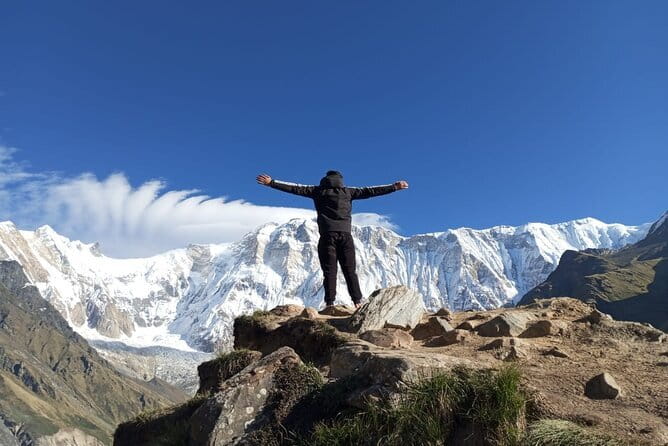
- Poon Hill sunrise: an early morning hike that sets the tone for the whole trek
- Altitude progression that makes sense: gradual gains, with a dip to Sinuwa before going up again to Deurali
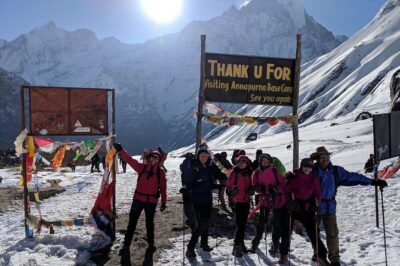
- Annapurna Base Camp at ~4,130m: the emotional payoff day, after hours of steady climbing
- Real-world weather contingency: past trips included unexpected snow and even cancelled helicopter plans
- Value that depends on your spending habits: breakfast and fees are included, but lunch, dinner, snacks, and bottled water are on you
More trails out of Kathmandu, boots ready
- Everest Base Camp Trek – 14 Days★ 5.0 · 1,499 reviews
- Everest Base Camp Trek★ 5.0 · 842 reviews
- Everest Base Camp Trekking★ 5.0 · 485 reviews
- Nagarkot Sunrise View and Day Hiking from Kathmandu★ 5.0 · 471 reviews
Why Annapurna Base Camp feels worth the effort
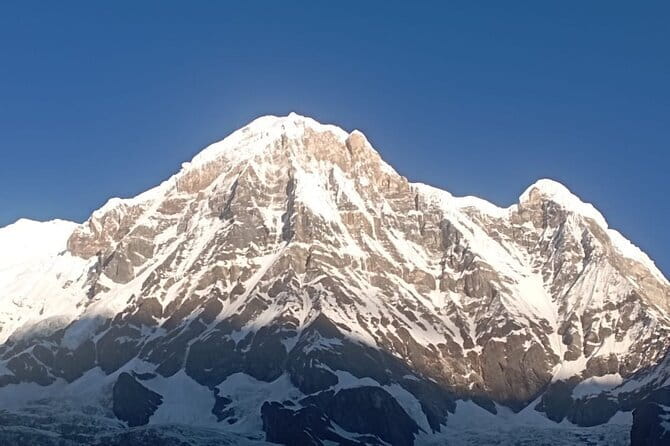
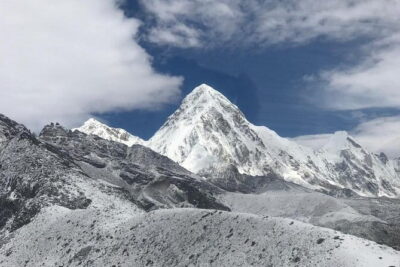
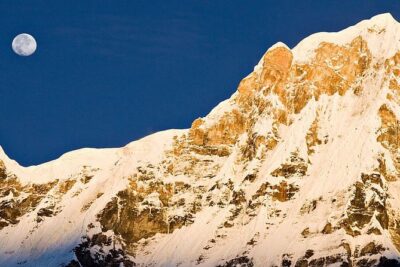
The Annapurna Region is famous for a reason. You’re trekking through an area that’s actively protected, and you get a mix of mountain scale and village texture—not just rock and sky. Along the way, you pass through places tied to Gurung culture, and you’ll keep seeing peaks from the Annapurna range, including the distinctive fish-tail silhouette of Machhapuchhre above Pokhara.
What I like about this specific itinerary is that it’s not purely a straight-up endurance march. It builds in variety. You start with road time into Pokhara, then you move into a trail that ramps up gradually. Even better, the route includes Poon Hill in the middle, so you get a major viewpoint moment before Annapurna Base Camp.
One more thing: this tour is private, so you’re not getting shuffled into a random crowd. You’re doing the trek with your group, guided and supported as one unit.
Day 1 to Day 2: landing in Kathmandu, then dropping to Pokhara
Your trek starts in Kathmandu at about 1,350m. Day 1 is arrival day. You likely won’t do anything intense here. Think of Kathmandu as your buffer. It gives you time to settle in, sort out any small needs, and prepare for the first long road segment.
Day 2 is a full drive to Pokhara. It’s about 220 km and around 6 hours, and you go from roughly 1,350m down to about 860m. That drop matters. For trekking, lower altitude at the start helps you feel less “heavy” right away.
This is also one of the comfort perks: the tour uses an air-conditioned vehicle for the road legs. On days when you’re sitting for hours, AC can make the difference between arriving fresh-ish and arriving grumpy.
Days 3 to 5: Hille, Ghorepani, and Poon Hill’s early light
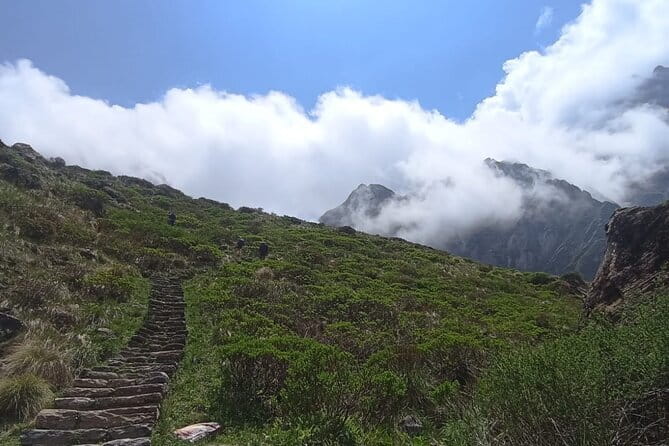
Day 3 is where the trek starts in earnest. You drive to Nayapul, then hike to Hille village (around 1,496m) in about 4 hours. This day is a good warm start. It’s long enough to wake up your legs, but not so long that you’re cooked before your first big altitude push.
Day 4 takes you to Ghorepani at about 2,840m. The trek time is listed at roughly 7 hours. This is the day that begins the real altitude feeling. Higher elevations don’t just mean cold; they also mean slower breathing and a different kind of fatigue. If you tend to sprint on climbs, this is the time to slow down and keep your effort steady.
Day 5 is a two-part day:
- Morning hike to Poon Hill
- Then trekking to Tadapani (about 2,520m)
Poon Hill is famous for a reason. The early start gives you that classic first-light viewpoint experience before the day moves on. Even if you’ve seen photos, the real thing hits differently when you’re standing there in the chill, watching peaks reveal themselves one layer at a time.
Then you drop a little in altitude by moving to Tadapani (2,520m). That’s not “wasted” distance. It helps you keep climbing later without your body feeling like it’s doing everything at once.
Days 6 to 8: Sinuwa, Deurali, and the push to Annapurna Base Camp
Day 6 takes you to Sinuwa at around 2,340m in about 5 hours. The key detail here is the dip. Going from Tadapani (2,520m) to Sinuwa (2,340m) gives your system a breather. For many trekkers, that small recovery day is what keeps the later climbs from feeling brutal.
Day 7 is your higher step: trek to Deurali (about 3,230m) in roughly 7 hours. This is a long grind day. At these elevations, the climb feels steep even when the trail is just steady. This is where pacing and patience matter more than speed.
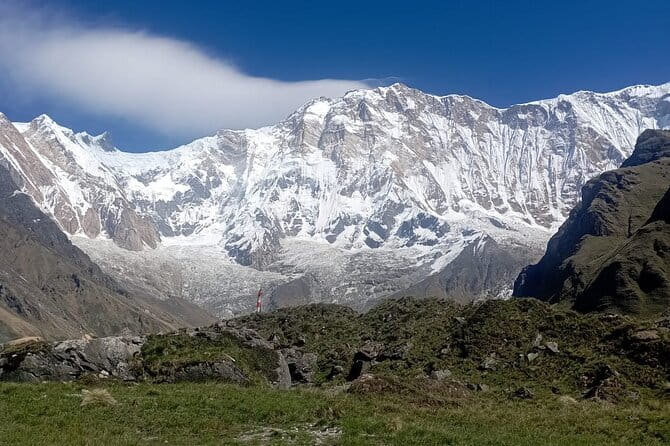
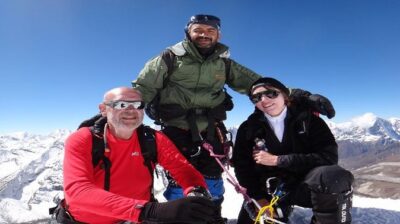
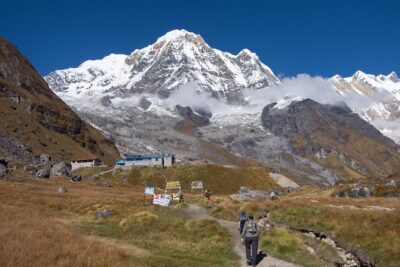
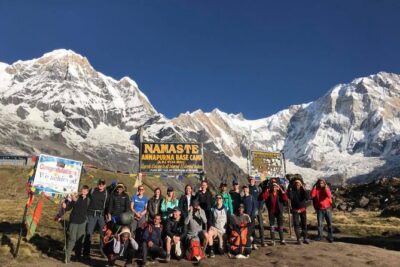
Day 8 is the big one: you trek to Annapurna Base Camp at about 4,130m in around 4 hours. Compared with some earlier days, the hike time looks shorter on paper, but don’t let that fool you. At altitude, every stop and every breath counts. This is the day you’re moving from “working hard” to “soak it in and celebrate.” The route sets you up for this by building up slowly and giving you a couple of in-between adjustments.
Days 9 to 10: Bamboo, Chomrong, and Jhinu-Danda
Day 9 goes down to Bamboo (about 2,050m) in around 6 hours. Descent days can feel easier mentally, but your body still works. Knees and ankles get tested on downhills, especially after you’ve been high for days. If you’ve got any knee sensitivity, this is a day to take steps carefully.
Day 10 continues the descent route to Jhinu-Danda (about 1,700m) via Chomrong, with about 6 hours of trekking time. Chomrong is part of the classic Annapurna story. It’s one of the places where you’ll likely feel the mountains closer because the trail format becomes more dramatic and the views open up at different angles.
Jhinu-Danda is lower, and that’s exactly what you want after the base camp altitude. By the time you reach this area, your body gets a chance to reset. You’re not done yet, but it becomes less about climbing and more about recovering for the last travel legs.
Day 11 to Day 13: Nayapul, Pokhara again, and a Kathmandu rest day
Day 11 combines trekking and driving. The plan is: trek to Nayapul, then drive back to Pokhara for about 8 hours. This is a long day, but it’s also practical. You’re not adding extra nights in transit; you’re using the final descent to connect back to vehicle time.
Day 12 is the drive back to Kathmandu. The itinerary doesn’t give a specific hour count here, but it’s the same idea: you’re trading trail fatigue for road time and returning to the city environment.
Day 13 is a rest day in Kathmandu. I like that the plan doesn’t pack in “one more thing” right after you finish the trek. This is your chance to wash off dust, eat properly, and catch up on rest.
Day 14 is the final departure day. By then, you’ve had time to land your feet in the city again instead of rushing out immediately after the trek ends.
Price and logistics: what $769.24 really covers
The price is listed at $769.24 per person for the 14-day program (approx.). What’s included matters more than the headline number.
Included:
- Breakfast
- Air-conditioned vehicle
- All fees and taxes
Not included:
- Lunch
- Dinner
- Snacks
- Bottled water
- Coffee and/or tea
- Alcoholic beverages
So how’s this value? If you’re the type who travels with a clear budget, this can be good value because the heavy logistics are handled (road transfers and required fees). If you tend to spend freely on drinks and meals, your final cost may creep up, since food and water are mostly on you.
Here’s how I’d think about it: you’re paying for the coordination plus the big comfort win on travel days (AC). You’re still responsible for daily fuel on the trek, especially since bottled water is not included.
Also note the tour uses a mobile ticket, which is convenient if you hate hunting for paper confirmations.
Weather and altitude: the part you should plan for (even if it’s not sunny)
Annapurna Base Camp trekking is famous. That also means it’s not predictable in the way a beach holiday is predictable. Cold snaps happen, and storms can change plans. Even if the season looks right on paper, you still need flexibility.
From past experiences connected with this trek style, two surprises show up:
- Unexpected snow during the trek, even when spring weather was expected
- Cancelled helicopter plans due to bad weather conditions
You can’t control the weather. But you can control your readiness. I recommend you bring a mindset that says: slow down, dress in layers, and be willing to adjust plans if conditions change. When a team has already handled surprises like snow and flight/air movement cancellations, you’re more likely to get practical decisions rather than panic.
On the altitude side, the itinerary gives you several “body management” moments: climbs to Ghorepani and Deurali, a dip to Sinuwa, then the final jump to base camp. That rhythm helps.
If you’re worried about altitude, don’t try to “win” the trek. Move steadily. Take breaks when you need them. Treat each steep day as an instruction: your job is to finish, not to prove something.
Who this trek fits best (and who should reconsider)
This tour calls for moderate physical fitness. That’s a helpful label. It usually means you’re walking multiple hours a day, including long days like the 7-hour climbs and the multi-hour descent segments.
This trek also makes sense if you:
- Want a classic Annapurna route with a big viewpoint hit (Poon Hill) before reaching base camp
- Prefer a private setup where your guide can pace the day around your group
- Want an operator that provides clear planning and support, including a guide who communicates well
It may feel like a stretch if you:
- Get uncomfortable with long days on foot
- Have limited flexibility for weather changes (storms can slow things down or force reroutes)
Good to know: service animals are allowed, and the meeting area is described as being near public transportation.
Should you book Annapurna Base Camp with this operator?
If you want Annapurna Base Camp with strong trip management, this booking is worth your attention. The combination of AC transfers, included breakfast, and a guide-led plan that handles real weather disruption is the kind of “boring logistics” that pays off on mountains.
I’d book it if you’re okay budgeting separately for lunch, dinner, snacks, and bottled water. If you want every meal handled inside the package price, you may feel nudged to spend extra each day.
My final advice: pick this trek for the big altitude payoff and the classic Annapurna rhythm—not for a luxury vacation feel. If you go in with that mindset, you’re set up for a memorable, honest mountain journey.
FAQ
How long is the Annapurna Base Camp trek?
The trek runs for about 14 days.
Where does the tour start and end?
It starts in Kathmandu, Nepal, and ends back at the meeting point.
What are the main included items in the package?
The package includes breakfast, an air-conditioned vehicle for the transport legs, and all fees and taxes.
What is not included in the price?
Lunch, dinner, snacks, bottled water, coffee and/or tea, and alcoholic beverages are not included.
Is this a private tour?
Yes. It’s described as a private tour/activity, with only your group participating.
What fitness level do you need?
You should have a moderate physical fitness level.
Are service animals allowed?
Yes, service animals are allowed.
What is the cancellation rule?
You can cancel up to 24 hours in advance for a full refund. If you cancel less than 24 hours before the experience starts, the amount paid won’t be refunded.
More Trekking Out of Kathmandu
More Tour Reviews in Kathmandu
Just Reviewed in Kathmandu
- Mountain Bike Tour
★ 5.0 · 3 reviews - Annapurna Panaroma
★ 5.0 · 3 reviews - Mount Everest Scenic Flight 50 Minutes
★ 5.0 · 3 reviews - Kathmandu : Swambhunath & Durbar Square Guided Half Day Tour
★ 3.3 · 3 reviews - Chandragiri Cable Car & Monkey Temple Tour – Private/Group
★ 5.0 · 3 reviews - Kathmandu: Shivapuri National Park Hiking Day Trip
★ 3.3 · 3 reviews
Annapurna Base Camp Treks, compared.
 ★ 5.0Annapurna base camp trek 5 DaysFrom $699252 reviews
 ★ 5.014-Day Private Annapurna Base Camp TrekFrom $1,090180 reviews
 ★ 5.0Annapurna Base Camp TrekkingFrom $1,779116 reviews
 ★ 5.0Annapurna Base Camp TrekFrom $935111 reviews
★ 5.0Annapurna Base Camp TrekFrom $1,350107 reviews
★ 5.0Annapurna Base Camp TrekFrom $935111 reviews
★ 5.0Annapurna Base Camp TrekFrom $1,350107 reviews
 ★ 5.0Kathmandu to Annapurna Base Camp (ABC) 5-Day TrekFrom $99102 reviews
 ★ 5.0Annapurna Base Camp Trek- 11 DaysFrom $99990 reviews
 ★ 5.0Annapurna Base Camp Trek 12 DaysFrom $80085 reviews
Browse the lists this tour appears in