
Review · ANNAPURNA BASE CAMP TREKS
Annapurna Base Camp Trekking – 14 Days
Mountains on a schedule make sense.
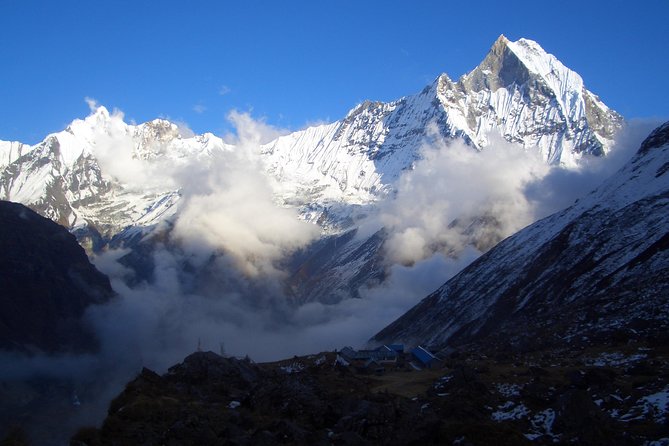
The Annapurna Base Camp trek packs wild terrain changes fast, from rice-terrace greenery up into glacial country, right near the south face of Annapurna I. I love how this 14-day plan builds acclimatization time instead of rushing to 4,000m+ just to say you were there, and I also like the way the team runs logistics so you can focus on walking and taking in the views. One consideration: tea house trekking still means long days, cold nights, and altitude awareness at Annapurna Base Camp (~4,130m).
Two things I’d highlight as “good value for your brain and legs”: first, you get a government-licensed English-speaking Sherpa guide and a porter system (one porter for every two trekkers), so pacing and comfort stay realistic. Second, the package handles the annoying essentials—permits, conservation fees, ground transfers, and full-board meals during the trek—so you’re not constantly calculating what’s missing. The main trade-off is that drinks and meals in cities aren’t included, and you’ll want to budget for water and extras.
If you’re choosing this because you want an easy trek, temper expectations. This is manageable for a moderate fitness level, but you’ll still earn every viewpoint with steady climbs, especially after the mid-trek altitude jump.
In This Review
- Key things that make this ABC trek work in real life
- From Thamel to Pokhara: the Kathmandu setup that sets your pace
- Pokhara to Hile: easing into the Modi Kola valley
- Ghorepani and Tadapani: the long climb that teaches you patience
- Chhomrung to Machhapuchre Base Camp: where altitude becomes a factor
- Annapurna Base Camp day: 4,130m is where your pace pays off
- The descent via Bamboo and Jhinu Danda: tired legs, better sleep
- Food, water, permits, and what you’ll spend on top of $1,250
- Who this trek fits best (and what to watch)
- Should you book Annapurna Base Camp Trekking – 14 Days?
- FAQ
- What’s the meeting point for this trek?
- How long is the Annapurna Base Camp trek?
- Is this a tea house/lodge trek?
- How much altitude do you reach?
- What’s included in the $1,250 price?
- Are meals and drinks included during the trek and in cities?
- Do I need travel insurance?
- What should I do about drinking water?
- What happens if weather is bad or the minimum number of travelers isn’t met?
Key things that make this ABC trek work in real life
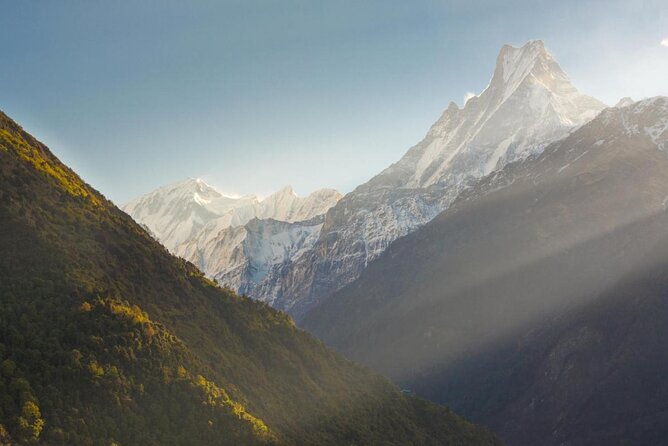
- Built-in acclimatization rhythm: the itinerary is paced to reduce altitude stress at ABC and on the higher passes of the route.
- Tea houses with full-board included: you sleep in local lodges and eat included meals, which keeps each day simple.
- A real support team: reviews put attention on guides like Ngima/Nima and Mingma, with support that feels patient and practical (and yes, it matters on steep days).
- Porters handled thoughtfully: one porter for two trekkers helps keep loads reasonable.
- Cold-water planning made easier: Euro-guard filters are available, plus the package encourages you to refill often (bring your own bottle).
- Permits and conservation fees included: TIMS and Annapurna Conservation Fee are covered, so you’re not scrambling at the trailhead.
More trails out of Kathmandu, boots ready
- Everest Base Camp Trek – 14 Days★ 5.0 · 1,499 reviews
- Everest Base Camp Trek★ 5.0 · 842 reviews
- Everest Base Camp Trekking★ 5.0 · 485 reviews
- Nagarkot Sunrise View and Day Hiking from Kathmandu★ 5.0 · 471 reviews
From Thamel to Pokhara: the Kathmandu setup that sets your pace
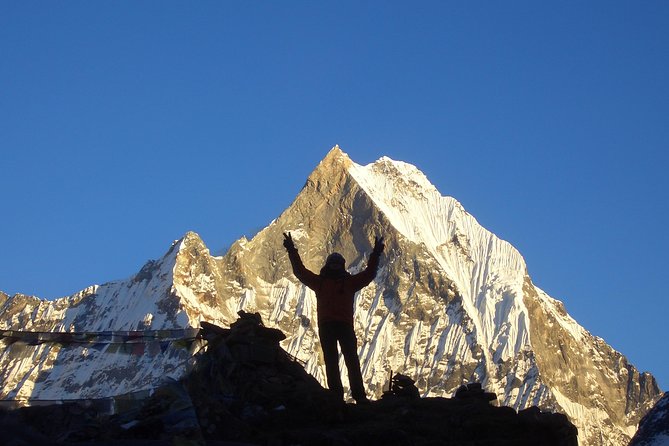
Your trek starts in Thamel, a convenient Kathmandu base with easy access to transport and food before you head up into the mountains. Expect pickup offered, plus airport-to-hotel style convenience handled by an air-conditioned vehicle—helpful when you’re tired from travel or just want your first day to be low-effort.
In Kathmandu, you stay for two nights in Hotel Holy Himalaya (twin-share, bed and breakfast). I like this kind of “buffer stay” because it gives you time to:
- get over jet lag
- pick up last-minute gear
- ask your guide how you should pace your breathing for the altitude ahead
From a value standpoint, these city nights matter. They prevent the common mistake of arriving and immediately jumping into a hard travel day. You’re also getting proper lodging before the trek starts, which is a big quality-of-life factor when you know nights at higher elevations can be cold.
Then comes the drive to Pokhara (about 900m/2,953ft). This is the big mental shift day. You go from dense city energy to the calmer rhythm of lakeside Nepal. It’s also where your “tape measure” for the trek starts to kick in—you’ll feel how every extra meter above sea level adds effort.
Pokhara to Hile: easing into the Modi Kola valley
Day one of walking begins with a drive to Nayapul (around 1,010m/3,313ft), then a trek up to Hile (about 1,400m/4,593ft) that takes roughly three hours. This is the section I consider your warm-up, and that’s exactly how you should treat it.
The route moves from lower river-terrace living into the early stages of gorge travel. It’s not just scenic fluff. The climb is steady, and your body gets to practice “slow is smooth.” If you’ve done plenty of hikes in cooler weather, this will still feel different. If you haven’t, this day is your chance to learn how to walk at a pace where you can keep talking.
Night at Hile also gives you a gentle transition into tea house life—simple rooms, family-run vibe, and meals that keep you fueled for the next longer push. The practical benefit here: you’re not stuck wondering how tea houses work while you’re already gasping from altitude.
Ghorepani and Tadapani: the long climb that teaches you patience
The trek to Ghorepani (around 2,855m/9,365ft, roughly 6–7 hours) is one of the first “this is real” days. This is where you’ll feel the difference between a stroll and an actual mountaineering-style walk—more uphill effort, slower steps, and more frequent breaks.
Why Ghorepani works well on a 14-day plan: it’s high enough to matter, but not so high that you’ll need to treat it like the final altitude test. You’re still learning how your breathing changes. And you get a night at an elevation that sets you up for what comes next.
Then you move to Tadapani (about 2,610m/8,561ft, around 5 hours). The point of dropping a bit in elevation is subtle but useful. It keeps your day-to-day discomfort manageable while still advancing you toward the higher center of the route.
This is also where rhododendron and bamboo country starts to feel more present. You’re walking through a Nepal that changes texture often—less “single mountain view,” more “layer upon layer of scenery.” I like this phase because it keeps your eyes busy when your legs start doing the counting.
Potential drawback here: total hiking time. If you rush, you’ll arrive tired and altitude-ready. If you pace well, this becomes a satisfying training loop for the days above 3,500m.
Chhomrung to Machhapuchre Base Camp: where altitude becomes a factor
The route to Chhomrung (around 2,040m/6,692ft, about 4 hours) is a key transition. Chhomrung is famous for reasons, but you don’t need mythology. You just need to respect the fact that it’s part of the stepping-stone climb toward higher camps.
Then you head to Dovan (about 2,550m/8,365ft, 4–5 hours). This is one of those stretches where the trail often feels more “workmanlike.” You’ll focus on rhythm: step, breath, water, repeat. It’s also a good day to use the included energy strategy. The package includes snack support (Snickers, Mars, Bounty) plus fresh fruit while you’re trekking, which can help you stay consistent without constantly paying extra at every stop.
Next comes the big jump: Machhapuchre Base Camp (about 3,700m/12,137ft, roughly 4–5 hours). This is not just higher—it’s also colder, and the air feels thinner enough that you’ll notice it without needing to be told.
Here’s how you should think about this day:
- Keep your effort easy enough to avoid sprinting
- Expect slower pacing at every turn
- Use breaks strategically (don’t just “push through”)
The value of having a guide you trust is real here. A well-run group knows when to shorten stride, when to stop, and when to let the air do its work while you rest.




Annapurna Base Camp day: 4,130m is where your pace pays off
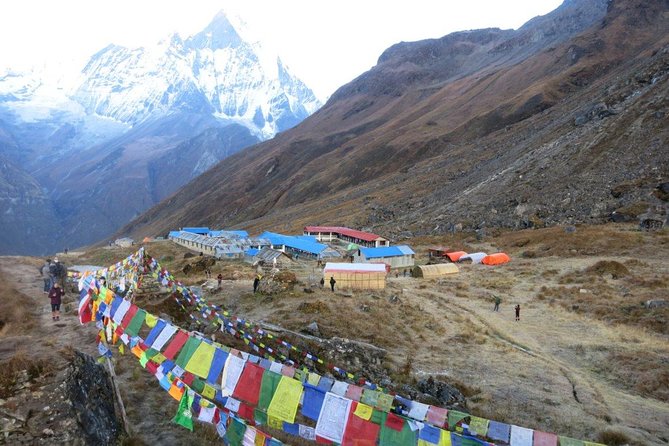
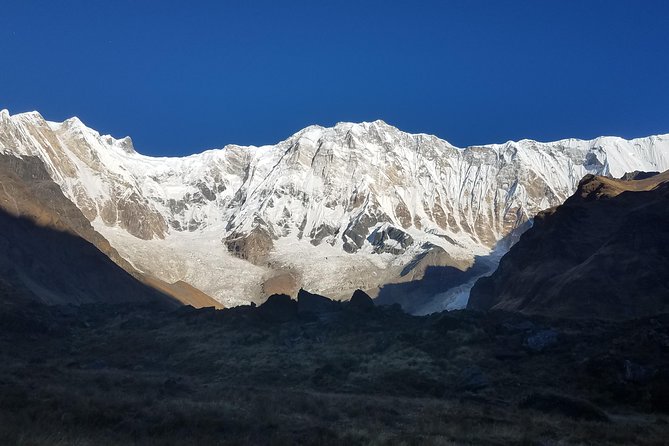
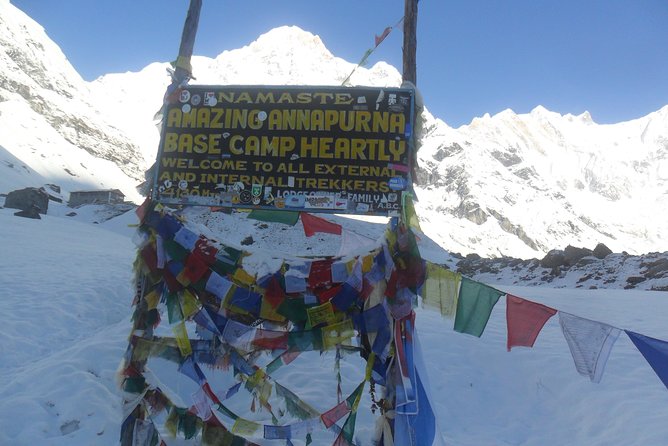
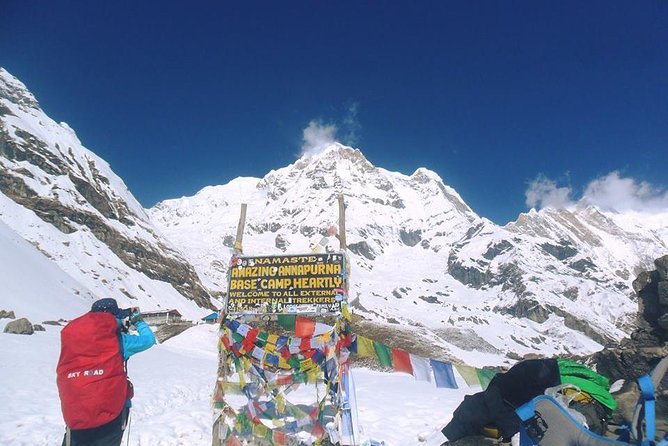
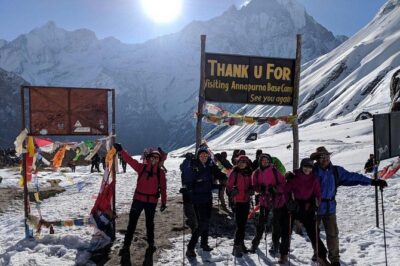
The highlight day is the trek to Annapurna Base Camp (about 4,130m/13,547ft, roughly 2–3 hours). Yes, the walking time is shorter than other days, but don’t let that fool you. At altitude, “short” can still feel heavy.
This is the glacial basin feeling: a high-and-wild setting at the base of major peaks, with the sense that you’re near the drama line of the Himalaya. You’re close to the kind of terrain used by expeditions targeting Annapurna’s big faces. Even if you’re not here to climb, you’ll understand why this place draws serious teams.
What matters most on this day is how you got there. The itinerary’s slow-and-steady design is what makes the final push feel achievable rather than punishing.
A practical note: ABC is a place where wind can change comfort fast, and temperatures drop at night. Pack for warmth and expect you’ll want layers you can put on quickly. Also, keep drinking. The package asks you to reach about 3 liters a day while trekking—hard at altitude, but easier if you treat it as a schedule.
When you do reach the base camp area, take your time just sitting and breathing. Don’t rush to check boxes. The best part isn’t the photo; it’s that moment when the thin air and big peaks finally feel like a single story.
The descent via Bamboo and Jhinu Danda: tired legs, better sleep
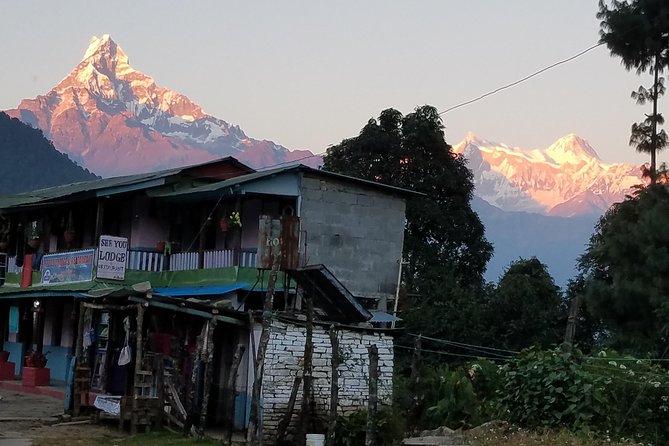
From ABC you go down to Bamboo (about 2,340m/7,676ft, roughly 4–5 hours). Downhill sounds easier, but it can beat up knees. This is where smart foot placement matters more than pushing speed.
Bamboo is also a psychological win. You’re no longer climbing toward the altitude test; you’re working your way back to comfort. It’s a relief, and your body usually rewards you with better sleep.
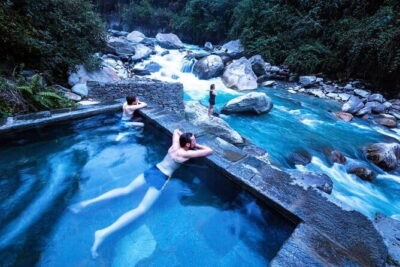
Then the route continues to Jhinu Danda (about 1,780m/5,839ft, around 5 hours). Jhinu Danda is especially popular because it offers the option to soak in hot springs (the famous idea people associate with this area). Your included program doesn’t promise a hot spring activity, but the location is well-known for it, so if you want a recovery moment, this is the kind of stop where it becomes possible.
After Jhinu Danda, you trek to Nayapul-Pokhara area (about 900m/2,953ft, 5–6 hours). This is your final big walking stretch that ends your mountain loop and sets you up for the drive back to Kathmandu (about 1,345m/4,412ft).
That final drive day is one of those underappreciated benefits of a well-run package. You aren’t stuck hunting transportation or negotiating logistics. You simply finish the trek and get back to civilization.
Food, water, permits, and what you’ll spend on top of $1,250
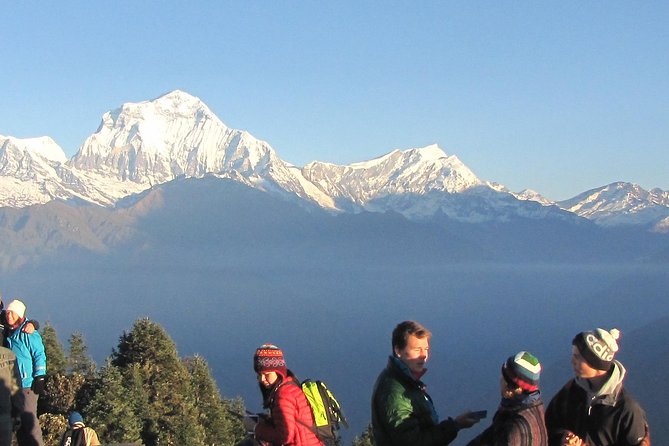
This trek costs $1,250 per person, and the best question isn’t whether it’s expensive—it’s what you’re buying with it.
In your price, you’re getting:
- accommodation in Kathmandu and Pokhara (two nights each, twin share, bed and breakfast)
- lodge accommodation on the trek (nine nights), with full board meals included
- an English-speaking Sherpa guide (government trained/licensed)
- porters (one porter for two trekkers)
- permits and fees (TIMS, Annapurna Conservation Fee, and required documentation)
- energy snacks and fresh fruit on trek days
- a first aid medicine kit
- ground transfers Kathmandu–Pokhara–Phedi and Nayapul–Pokhara–Kathmandu
What’s not included is just as important:
- your personal travel insurance
- Nepal entry visa fee
- lunch and dinner in cities (budget about $10–14 per meal in tourist restaurants)
- beverages (soft drinks, mineral water, boiled water, beer)
- tips for guide, porters, and driver (customary)
Drinks and extras are where many people overshoot their budgets. On the trek, meals are included, so you’re mostly paying for snacks, chocolate bars, and drinks you want beyond what’s served. Prices increase as you go farther from the trailhead, so it helps to treat purchases like “fun choices,” not daily necessities.
Water is one of the easiest parts of this plan. Euro-guard filters are available, so you can refill your bottle instead of constantly buying plastic. Bring your own bottle and plan to drink consistently, not only when you feel thirsty.
Who this trek fits best (and what to watch)
This Annapurna Base Camp trek is aimed at people with moderate physical fitness. That means you can handle sustained walking, steep sections, and long days. It also means you should be comfortable with the altitude reality: the higher you go, the more you slow down, and that’s not a failure—it’s the system working.
This is a great fit if:
- you want careful acclimatization and a realistic pace
- you like tea house trekking where logistics are handled
- you prefer walking with a guide who can manage comfort and timing
- you value support for families or mixed-experience groups (feedback highlights that guides and team stay attentive even with teenagers)
What to consider if you’re sensitive:
- nights get cold, especially around higher elevations
- downhill days can feel rough on legs
- beverages add up fast if you buy more than basics
- it’s a non-refundable booking, so choose your dates carefully
Should you book Annapurna Base Camp Trekking – 14 Days?
I’d book this if you want a well-paced Annapurna Base Camp trek where permits, guides, porters, food, and transfers are taken care of, and the schedule respects altitude. The $1,250 price makes sense when you compare it to the cost of doing the same trek with your own guide, your own permits, and your own transport hassle.
Skip or rethink it if you want a do-it-your-own itinerary, want guaranteed luxury at altitude, or you’re likely to struggle with long hiking days and cold nights.
If you’re the kind of person who likes clear planning, steady walking, and mountains that actually change around you day by day, this is a strong choice.
FAQ
What’s the meeting point for this trek?
The meeting point is Thamel, Kathmandu 44600, Nepal, and the activity ends back at the same meeting point.
How long is the Annapurna Base Camp trek?
The duration is 14 days approximately.
Is this a tea house/lodge trek?
Yes. It’s a tea houses/lodge trek, and accommodation is included throughout the trek.
How much altitude do you reach?
Annapurna Base Camp is about 4,130m, and you’ll also reach high points like Machhapuchre Base Camp at about 3,700m.
What’s included in the $1,250 price?
Included items cover Kathmandu and Pokhara accommodations (two nights each on a twin-share bed and breakfast basis), lodge accommodation on the trek with full board meals, an English-speaking Sherpa guide, porter support (one porter for two trekkers), permits and conservation fees, first aid kit, energy snacks and fruit, and ground transfers.
Are meals and drinks included during the trek and in cities?
Meals are included during the trek (full board meals). Lunch and dinner in cities aren’t included, and beverages are not included in the package.
Do I need travel insurance?
You need personal travel insurance, and the provider strongly recommends specialized coverage for remote-area risks like emergency evacuation and medical treatment.
What should I do about drinking water?
The trek provides Euro-guard filters for refilling. You should still bring your own bottle and drink at least 3 liters per day.
What happens if weather is bad or the minimum number of travelers isn’t met?
This experience is non-refundable and can’t be changed. If it’s canceled due to poor weather, you’ll be offered a different date or a full refund. If it’s canceled because the minimum number of travelers isn’t met, you’ll be offered a different date/experience or a full refund.
More Trekking Out of Kathmandu






More Tour Reviews in Kathmandu




Just Reviewed in Kathmandu
- Mountain Bike Tour
★ 5.0 · 3 reviews - Annapurna Panaroma
★ 5.0 · 3 reviews - Mount Everest Scenic Flight 50 Minutes
★ 5.0 · 3 reviews - Kathmandu : Swambhunath & Durbar Square Guided Half Day Tour
★ 3.3 · 3 reviews - Chandragiri Cable Car & Monkey Temple Tour – Private/Group
★ 5.0 · 3 reviews - Kathmandu: Shivapuri National Park Hiking Day Trip
★ 3.3 · 3 reviews
Annapurna Base Camp Treks, compared.
 ★ 5.0Annapurna base camp trek 5 DaysFrom $699252 reviews
 ★ 5.014-Day Private Annapurna Base Camp TrekFrom $1,090180 reviews
 ★ 5.0Annapurna Base Camp TrekkingFrom $1,779116 reviews
 ★ 5.0Annapurna Base Camp TrekFrom $935111 reviews
★ 5.0Annapurna Base Camp TrekFrom $1,350107 reviews
 ★ 5.0Kathmandu to Annapurna Base Camp (ABC) 5-Day TrekFrom $99102 reviews
 ★ 5.0Annapurna Base Camp Trek- 11 DaysFrom $99990 reviews
 ★ 5.0Annapurna Base Camp Trek 12 DaysFrom $80085 reviews
Browse the lists this tour appears in