
Review · ANNAPURNA BASE CAMP TREKS
Annapurna Base Camp Trekking
If you want Himalayas without the headache, this is the kind of trip to choose. You get a private guide, most logistics handled, and a route that moves you from Kathmandu heritage sites to Pokhara, then up to Annapurna Base Camp with a sensible pace for a moderate-fitness trek.
I especially like that the package includes accommodation and meals (3-star hotels in Kathmandu and Pokhara, plus teahouses on trek). It also means you’re not constantly doing math at every stop—buying food, negotiating rooms, tracking permits.
One drawback to plan for: the tour lists many comfort items as not included. That includes hot water, cold drinks, phone use, and things like bottled/boiled water, plus sightseeing entrance fees in Kathmandu—so bring cash and expect to pay for extras along the way.
In This Review
- Key things I’d focus on before you go
- Entering Nepal’s Kathmandu-to-Annapurna Rhythm
- Price and Logistics: What $899 Buys (and What It Doesn’t)
- Day 1 and Day 2 in Kathmandu: Temples, Prep, and Easy Focus
- The Pokhara Transfer: Your First Big Change of Scenery
- Trek Days 4–5: Ulleri and Ghorepani Build Your Trek Legs
- Day 6: Poon Hill Sunrise and the Rhododendron Groove to Tadapani
- Day 7–8: Chhomrong’s Big Views and the Bamboo, Cold-Air Feel
- Day 9: Deurali’s Steady Climb and Rocky-Edge Walking
- Day 10–11: The Annapurna Base Camp Payoff and the Downhill Reality
- Day 12–14: Jhinu Danda Hot Springs, Pokhara Again, and Kathmandu by Bus
- Guide and Porter Support: How Comfort Looks on a Trek
- Fitness and Timing: What Moderate Really Means Here
- Should You Book This Annapurna Base Camp Trek?
- FAQ
- Is airport pickup included?
- What kind of accommodation do you get in Kathmandu and Pokhara?
- Are meals during the trek included?
- Do you need to handle permits yourself?
- What should I expect to pay for that is not included?
- Can I cancel for a full refund?
Key things I’d focus on before you go
- Private guide time: you’re not sharing your questions with a big group.
- All meals during the trek: teahouse breakfast/lunch/dinner remove a lot of stress.
- Poon Hill sunrise: a high-reward early start with big reward views.
- Porter support (2 trekkers : 1 porter): your pack stays lighter over long days.
- Permits handled: ACAP and TIMS paper work are included.
- Early starts: plan for mornings around 6:30–6:45.
More trails out of Kathmandu, boots ready
- Everest Base Camp Trek – 14 Days★ 5.0 · 1,499 reviews
- Everest Base Camp Trek★ 5.0 · 842 reviews
- Everest Base Camp Trekking★ 5.0 · 485 reviews
- Nagarkot Sunrise View and Day Hiking from Kathmandu★ 5.0 · 471 reviews
Entering Nepal’s Kathmandu-to-Annapurna Rhythm
This trip works because it builds momentum. Day 1 is airport pickup and hotel time in Kathmandu (about 1,300 m). Day 2 is Kathmandu valley sightseeing tied to World Heritage sites, so you get context for Nepal before you ever start walking uphill.
On Day 2, you’ll hit four standout heritage areas: Pashupatinath Temple, Boudhanath Stupa, Patan Durbar Square, and Swayambhunath (Monkey Temple). That mix matters. Kathmandu isn’t just pretty temples. It’s the spiritual and cultural backdrop for how trekking communities live, work, and host guests.
A simple plus: the tour also schedules trekking prep alongside the sightseeing day. That’s useful because you’ll be thinking about boots, layers, and weather by the time you roll to Pokhara.
Price and Logistics: What $899 Buys (and What It Doesn’t)
At $899 per person for roughly 14 days, the value is strongest in the parts that usually cost time and energy. You’re paying for a private guide, porter coverage, transport, hotels, most meals, and the permit process.
Here’s what’s included that you actually feel on the ground:
- Airport pickup in Kathmandu
- 3-star hotels in Kathmandu and Pokhara with breakfast
- Teahouse accommodation plus breakfast, lunch, and dinner during the trek
- Transport by tourist coach Kathmandu → Pokhara → Kathmandu
- An English-speaking trekking guide plus porters (listed as 2 trekkers : 1 porter) carrying your luggage
- ACAP and TIMS permits plus required taxes/paperwork
And here’s what you should budget for, because it’s not covered:
- Hot water and cold drinks (including soda)
- Phone calls, laundry, beer, bar bills
- Entrance fees for sightseeing in Kathmandu
- Lunch and dinner in Kathmandu/Pokhara outside trek days
- Battery recharge, shower items, and water like bottled/boiled water
Practical takeaway: if you want a smooth trek, pack for the basics and bring a little extra spending money. The trekking days are “included,” but daily life still has add-ons.
Day 1 and Day 2 in Kathmandu: Temples, Prep, and Easy Focus
Day 1 is straightforward: a representative picks you up from Tribhuvan International Airport and transfers you to your hotel. The whole point is to get you sleeping early and ready for a packed Day 2.
Day 2 is a full sightseeing day across major World Heritage sites:
- Pashupatinath Temple: a famous Hindu complex on the Bagmati River with ritual life right beside the water.
- Boudhanath Stupa: huge, visually striking, and important for Tibetan Buddhist practice.
- Patan Durbar Square: royal complex feel, courtyards, and temples around bronze and stone artwork.
- Swayambhunath Stupa: the Monkey Temple hill viewpoint watching over the valley.
I like this setup because it keeps your first day in Nepal meaningful. It also gives you a warm-up for altitude-adaptation routines—slow movement, hydration, and taking breaks—before trek walking begins.
The Pokhara Transfer: Your First Big Change of Scenery
On Day 3, you drive from Kathmandu to Pokhara. You leave early—hotel pickup around 6:30 am and the tourist bus to Pokhara departs roughly 7:00–7:30 am. Pokhara is smaller and calmer than Kathmandu, which helps if you need your head clear for the trek.
This matters because the day after (Day 4) is when you begin actual trekking. Pokhara acts like a “reboot” from the city to the mountains.
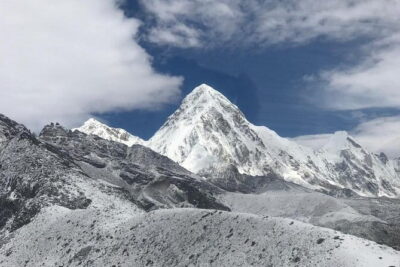
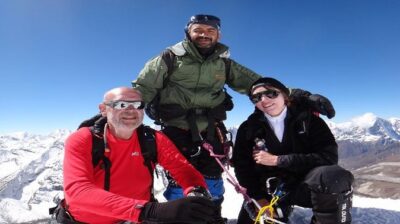
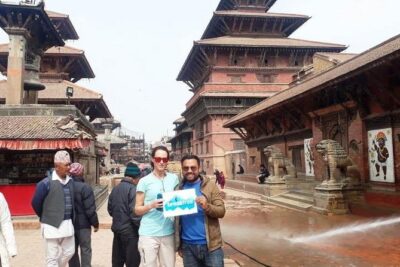
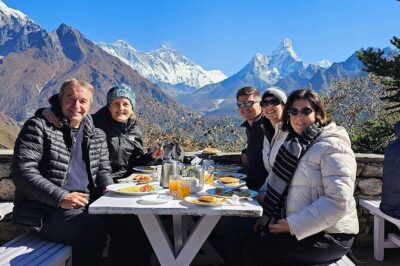
Trek Days 4–5: Ulleri and Ghorepani Build Your Trek Legs
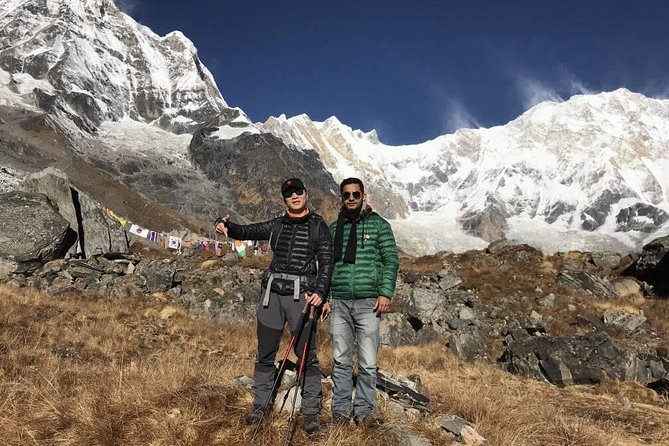
Day 4 is the launch day: drive from Pokhara to Nayapul, a short walk along the Modi Khola, then onward through villages like Birethanti (1,015 m) and up toward Hille and Tikhedhunga. The day is listed around 5–7 hours.
Day 4’s value is psychological. You’re not dropped immediately into extreme climbs. You start with valley walking and get used to stair-like trail sections and uneven surfaces.
Day 5 continues uphill toward Ulleri, described as a Magar village at about 2,070 m, then progresses through oak and rhododendron forests toward Banthanti, Nangethanti, and finally Ghorepani around 2,840 m. The trek time is about 4–5 hours.
What to watch: you’ll likely feel this day in your legs because it’s about stepping higher, not just walking long distances. If you pace yourself early, Day 6 will feel much better.
Day 6: Poon Hill Sunrise and the Rhododendron Groove to Tadapani
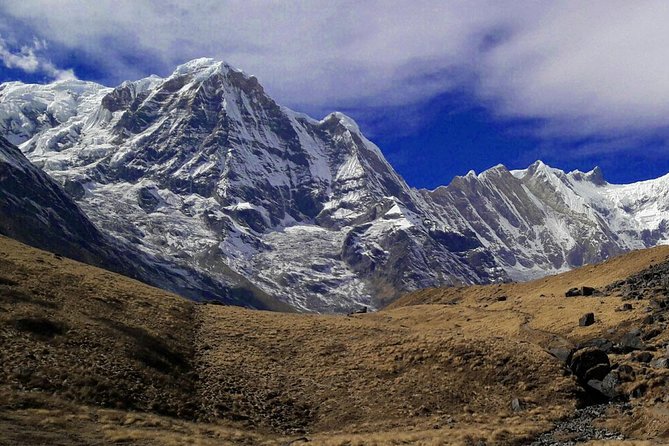
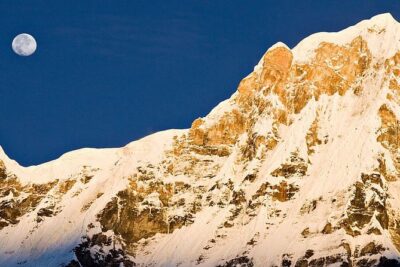
Day 6 is one of the biggest reasons people do Annapurna Base Camp. You start very early to reach Poon Hill (around 3,210 m) for sunrise. The view is framed as close-up mountain spectacle, especially for ranges like Annapurna and Dhaulagiri.
After sunrise, you return for breakfast in Ghorepani, then trek onward toward Tadapani, taking you through rhododendron forests, waterfalls, and ridges. You finish around 2,700 m after about 6–7 hours.
I like this part of the itinerary because it’s structured. It gives you one major “wow” moment early, then it gives you a full trekking day that still feels scenic, not repetitive.
Day 7–8: Chhomrong’s Big Views and the Bamboo, Cold-Air Feel
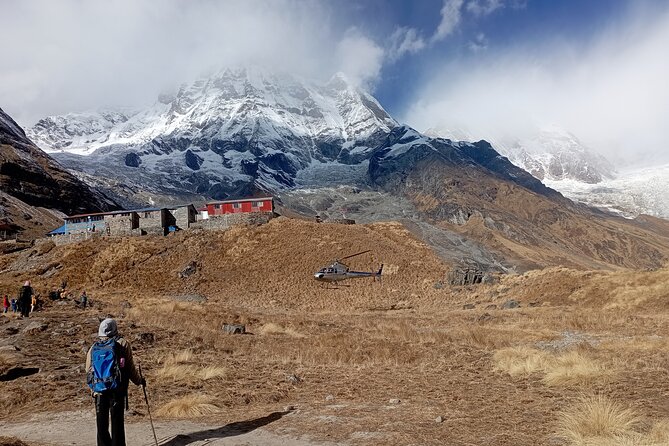
Day 7 goes from Tadapani to Chhomrong (about 5–6 hours, around 2,170 m). It starts with a steep descent through rhododendron forests, then the trail eases and you reach Gurjung, then continue toward Chhomrong, a village positioned below the giant Annapurna massif.
Day 7 is a trail mechanic’s day. Suspension bridges show up, terraced fields appear, and the walking mix helps keep your mind engaged. If you’re sensitive to downhill, take it slow on the early drop.
Day 8 moves from Chhomrong to Dovan (about 5–6 hours). This day is described with a bamboo forest feel—damp and cold—then a steeper climb before the forest opens out again. You pass areas like Himalaya Hotel and Hinku Cave, then descend to a river and head uphill to Dovan.
What I like here is the shift in texture. The trail doesn’t stay the same flavor all day. You get sunlit stretches, then colder damp forest air, then back to wide open viewpoints later. It keeps you alert.
Day 9: Deurali’s Steady Climb and Rocky-Edge Walking
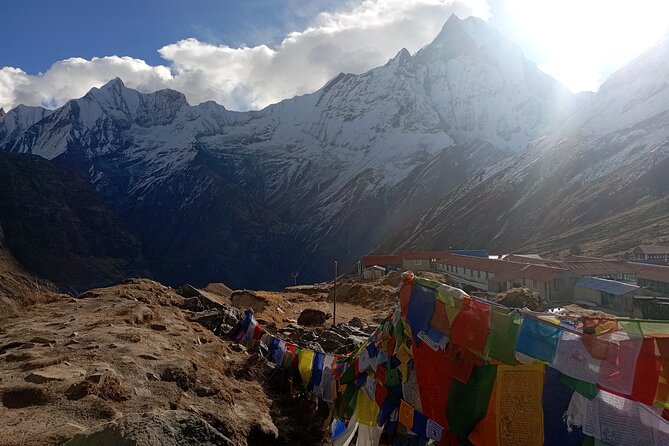
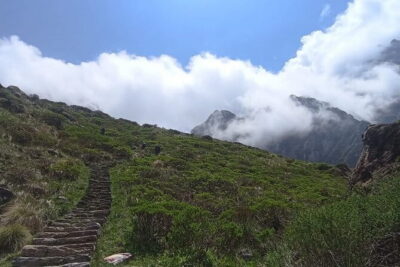
Day 9 is Dovan to Deurali (about 5–6 hours). The route follows a valley trail with a steady climb. The description emphasizes rocky cliff edges and steep sections.
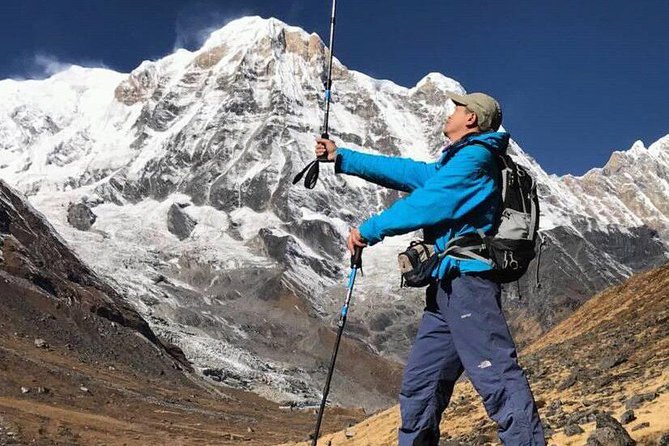
This is a day where your trekking technique matters more than your speed. Keep your steps deliberate. Use trekking poles if you have them. And don’t feel pressure to “win” the day.
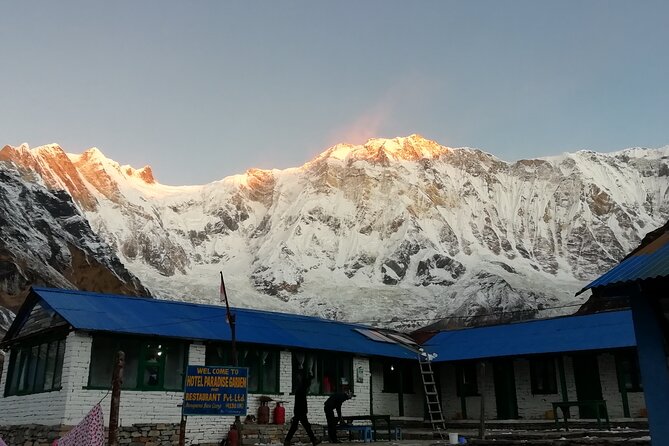
Also, Deurali is where the trek starts to feel more alpine and less village-like. That’s when weather can change fast—so keep layers accessible.
Day 10–11: The Annapurna Base Camp Payoff and the Downhill Reality
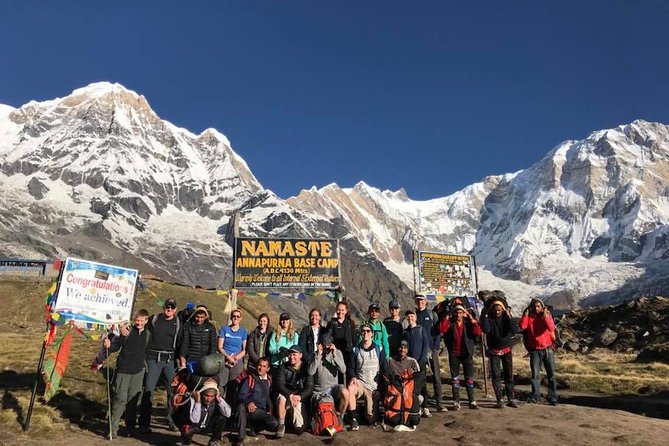
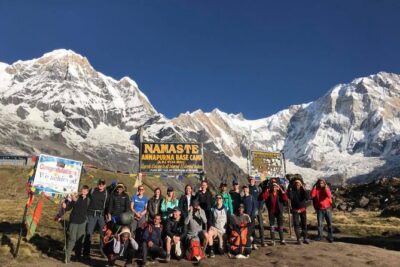
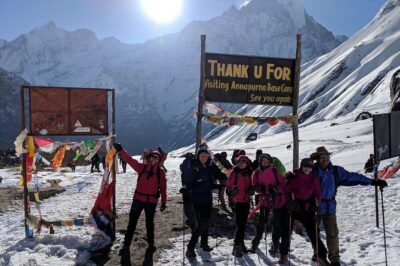
Day 10 is the big goal: you trek to Annapurna Base Camp in about 5–7 hours. The itinerary language stresses rapid ascent to the base camp area. Expect a strong sense of arrival—this is the moment you’ve been building toward since the first Kathmandu morning.
The real practical tip for Day 10 is pacing. When you’re close, it’s easy to sprint. Don’t. Save energy for the fact that the next day turns into a long descending effort.
Day 11 starts at base camp and heads downhill. The itinerary notes you pass Machhapuchhre Base Camp, Deurali, Himalayan Hotel, Doban, then finish at Bamboo for the night. The plan is about 7 hours.
Downhill is deceptively tiring. Your knees do the work your pride doesn’t want to admit. If you’ve ever hiked a steep trail and felt your shins protest, this is that day.
Day 12–14: Jhinu Danda Hot Springs, Pokhara Again, and Kathmandu by Bus
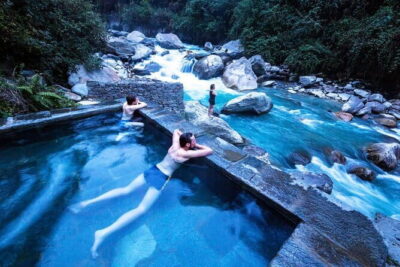
Day 12 is Bamboo to Jhinu Danda Hot Spring (about 5 hours). The hot springs stop is one of those simple pleasures that makes the whole trek feel human again—soaking tired legs and shifting from “walking mode” to “recovery mode.”
Day 13 finishes the trek and returns you to Pokhara. The itinerary says you’ll drive back to Pokhara after completing the trekking segment, with about 5 hours of drive time.
Day 14 is back to Kathmandu, again by tourist bus—around 7–9 hours.
This ending is a good one for two reasons:
- you don’t cut straight from mountain to airport stress
- you get time to reset your body before the Kathmandu wrap-up
Guide and Porter Support: How Comfort Looks on a Trek
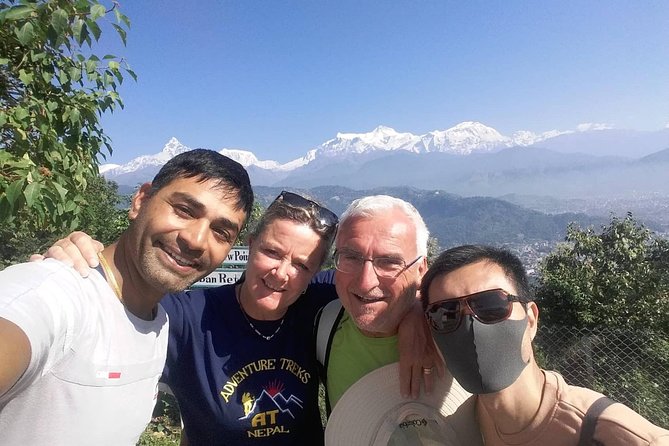
This is a private tour, so you’re not stuck in a slow-or-fast group dynamic. That matters on a trek where conditions can change. A private guide can also help you adapt your day if you’re feeling better (or worse) than expected.
The porter setup is also a big deal. The plan lists 2 trekkers : 1 porter, and it says porters handle carrying luggage, plus their salary, insurance, equipment, and food/lodging costs. In real terms, it makes you lighter and more consistent on steep days.
I also noticed names popping up in feedback for the people involved. Bishnu Bhatta and Vishnu show up as guides described as caring and helpful. Prem dai also gets a friendly mention in one review-style note. Those aren’t small details; on treks, the tone of the guide can make the difference between stress and steady progress.
One more comfort note from the feedback theme: several comments highlight food handling and general care. That’s important because stomach issues can ruin a trek. Having a guide who pays attention to basics is exactly what you want.
Fitness and Timing: What Moderate Really Means Here
The tour asks for a moderate fitness level. That aligns with a trek that includes multiple 4–7 hour hiking days and at least one early start for sunrise viewing.
Altitude is part of the story even if you’re not given every elevation number for every segment. You’ll reach Poon Hill (~3,210 m) and end up at Annapurna Base Camp. Even if you’re physically fine at home, trekking altitude can still slow you down. Plan on shorter steps and slower breathing on climbs.
If you’re thinking about monsoon timing, the positive feedback you have here specifically mentions going during monsoon as a magical experience with lush greenery and raindrops. That sounds lovely, but it also means you should expect slick trails and plan your gear accordingly. Wet days can be more tiring than dry days.
Should You Book This Annapurna Base Camp Trek?
I’d book it if you want Annapurna Base Camp plus Kathmandu heritage days, and you prefer a setup where you’re not managing permits, transport, and day-to-day meals. The combination of private guide + porter support + included teahouse meals is where this tour earns its keep.
I’d think twice if you’re the type who needs certain comfort items on hand. This package doesn’t include hot water, many drinks/snacks, phone use, laundry, or some sightseeing entrance fees. If you hate surprise expenses, budget for extras.
Best fit:
- first-time trekking in Nepal and you want fewer moving parts
- couples or small groups who like private attention
- hikers with moderate fitness who can handle long days and some steep downhill
If you can handle early starts, a bit of uneven ground, and budgeting for add-ons, this trek reads like a very practical way to reach the Annapurna goal without turning your vacation into logistics homework.
FAQ
Is airport pickup included?
Yes. The tour includes pickups from the international airport in Kathmandu and transfer to your hotel.
What kind of accommodation do you get in Kathmandu and Pokhara?
You stay in 3-star hotels in Kathmandu and Pokhara, with breakfast included.
Are meals during the trek included?
Yes. During the trek you get teahouse accommodation with breakfast, lunch, and dinner.
Do you need to handle permits yourself?
No. The tour says it includes the necessary paper work and permits, including ACAP and TIMS, plus government and local taxes.
What should I expect to pay for that is not included?
Not included items include hot water, cold drinks, phone calls, laundry, beer and bar bills, and entrance fees for sightseeing in Kathmandu. Also not included are bottle or boiled water and shower-related items.
Can I cancel for a full refund?
Yes. Free cancellation is available up to 24 hours in advance for a full refund, based on the experience’s local time.
More Trekking Out of Kathmandu
More Tour Reviews in Kathmandu
Just Reviewed in Kathmandu
- Mountain Bike Tour
★ 5.0 · 3 reviews - Annapurna Panaroma
★ 5.0 · 3 reviews - Mount Everest Scenic Flight 50 Minutes
★ 5.0 · 3 reviews - Kathmandu : Swambhunath & Durbar Square Guided Half Day Tour
★ 3.3 · 3 reviews - Chandragiri Cable Car & Monkey Temple Tour – Private/Group
★ 5.0 · 3 reviews - Kathmandu: Shivapuri National Park Hiking Day Trip
★ 3.3 · 3 reviews
Annapurna Base Camp Treks, compared.
 ★ 5.0Annapurna base camp trek 5 DaysFrom $699252 reviews
 ★ 5.014-Day Private Annapurna Base Camp TrekFrom $1,090180 reviews
 ★ 5.0Annapurna Base Camp TrekkingFrom $1,779116 reviews
 ★ 5.0Annapurna Base Camp TrekFrom $935111 reviews
★ 5.0Annapurna Base Camp TrekFrom $1,350107 reviews
★ 5.0Annapurna Base Camp TrekFrom $935111 reviews
★ 5.0Annapurna Base Camp TrekFrom $1,350107 reviews
 ★ 5.0Kathmandu to Annapurna Base Camp (ABC) 5-Day TrekFrom $99102 reviews
 ★ 5.0Annapurna Base Camp Trek- 11 DaysFrom $99990 reviews
 ★ 5.0Annapurna Base Camp Trek 12 DaysFrom $80085 reviews
Browse the lists this tour appears in