
Review · ANNAPURNA BASE CAMP TREKS
Annapurna Base Camp Trekking
A mountain trek with real meaning starts here. The Annapurna Base Camp route links Kathmandu city culture with days of forest trails, rhododendron colors, and classic Himalayan viewpoints, ending at 4130m in the quiet amphitheater of the Annapurna Sanctuary.
I really like two things about this trip: the way it mixes big scenery days with slower village moments (think Gurung villages like Chhomrong and Ghandruk), and how the pacing stays travel-friendly with bus rides, private vehicle transfers, and full board meals once you’re on trek. I also like that key permits are included (ACAP and TIMS), so you’re not scrambling at the last minute.
One consideration: you’re trekking to high altitude with long uphill/downhill days, including a very step-heavy stretch (the route notes around 2500 steps on one day). If altitude issues or knee stress are a concern for you, you’ll need to go slow and pack smart.
In This Review
- Key highlights at a glance
- Kathmandu and Pokhara First: where your trek really starts
- Day-by-day trek: what each section feels like
- Day 4: Pokhara to Ulleri via Naya Pul and the Ulleri Stairs
- Day 5: Ghorepani and the big mountain framing
- Day 6: Poon Hill, then Tadapani
- Day 7: Chhomrong, Gurung village life, and the Annapurna wall
- Day 8: Ghandruk, about 2500 steps, and bamboo cold
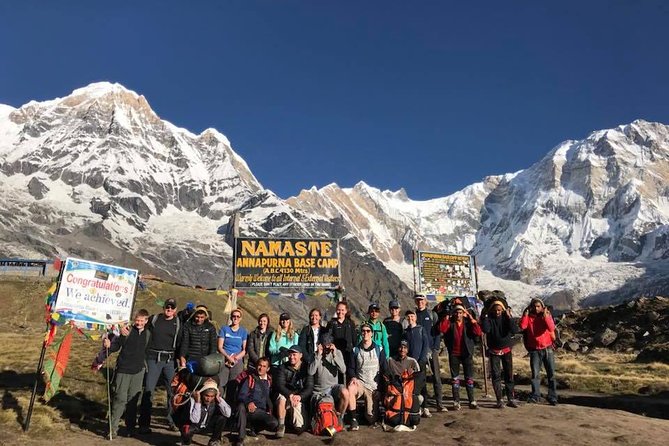
- Day 9: Annapurna Base Camp and the sanctuary feeling
- Day 10: Retracing to Ghandruk, views still strong
- Day 11: Bamboo to Chhomrong Khola and Jhinu Danda hot springs
- Day 12: Back to Pokhara, with the Ghandruk museum stop
- Day 13: Pokhara to Kathmandu and a farewell dinner
- Day 14: Airport drop
- What’s included, and what that means for your time
- The permits and permits’ real-world value
- Physical reality: how to prepare without overthinking
- Price and logistics: is $1,600 really fair?
- Who this trek suits best
- Should you book this Annapurna Base Camp trek?
- FAQ
- What is the duration of the Annapurna Base Camp trekking experience?
- Where does the experience start and end?
- What is the price per person?
- Is this a private trek or a group tour?
- What permits are included for the trek?
- What accommodation type is provided during the trek and in cities?
- How do you travel between Kathmandu and Pokhara?
- Are meals included while trekking?
- Are tipping and travel insurance included?
- What’s the highest point on the trek?
- Can you cancel for a full refund?
Key highlights at a glance
- Pokhara setup + Phewa Lake stroll: you get a proper breather city before hiking starts.
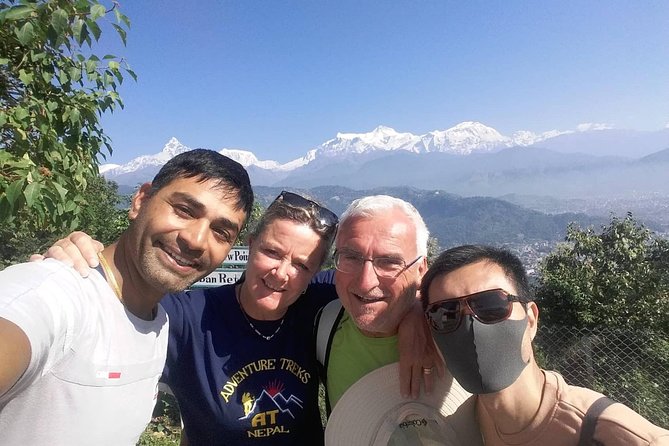
- Poon Hill viewpoint win: a big, panoramic payoff early in the trek.
- Classic Gurung villages: Chhomrong and Ghandruk add culture to the views.
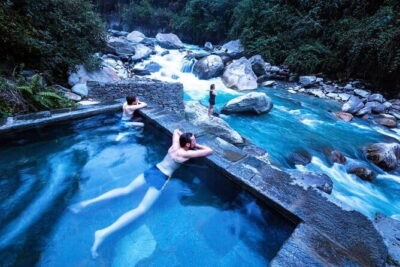
- Hot spring stop at Jhinu Danda: a real reward after trekking days.
- Annapurna Base Camp at 4130m: the goal is the quiet, iconic sanctuary area.
- All meals during trek: full-board with tea/coffee keeps logistics simple.
More trails out of Kathmandu, boots ready
- Everest Base Camp Trek – 14 Days★ 5.0 · 1,499 reviews
- Everest Base Camp Trek★ 5.0 · 842 reviews
- Everest Base Camp Trekking★ 5.0 · 485 reviews
- Nagarkot Sunrise View and Day Hiking from Kathmandu★ 5.0 · 471 reviews
Kathmandu and Pokhara First: where your trek really starts
This trip doesn’t toss you straight onto a trail. It begins in Kathmandu, the City of Temples, with an airport pickup and a simple hotel check-in. If you land during the day, you can wander Thamel—use it for small shopping and gear checks. If you arrive at night, you’re better off resting. Kathmandu is loud and busy, and you’ll thank yourself later when your legs start asking questions.
Day 2 is Kathmandu Valley sightseeing with a local guide focused on UNESCO sites: stupas, temples, and palaces. The tour can be personalized by your interests, and route planning is handled by the city guide. This matters because it saves time and reduces the “what do I do now?” stress before you head into trekking mode.
Then comes Pokhara. You take a tourist bus from Kathmandu to Pokhara (about 6 hours). The bus ride is long, but it’s also part of the rhythm of Nepal travel: towns, terraced farmland, and rivers roll past while you’re not yet dealing with steep switchbacks. Once you arrive, you check into a hotel and can walk around Phewa Lake in the evening. It’s a nice reset day—less pressure, more time to get your bearings.
Pokhara also sets expectations. It’s known for activities like paragliding, zip flyer, and bungy jumping, and it’s the jumping-off point for Annapurna treks. You’ll still keep your adventure serious on the mountain, but the city gives you a softer landing.
Day-by-day trek: what each section feels like
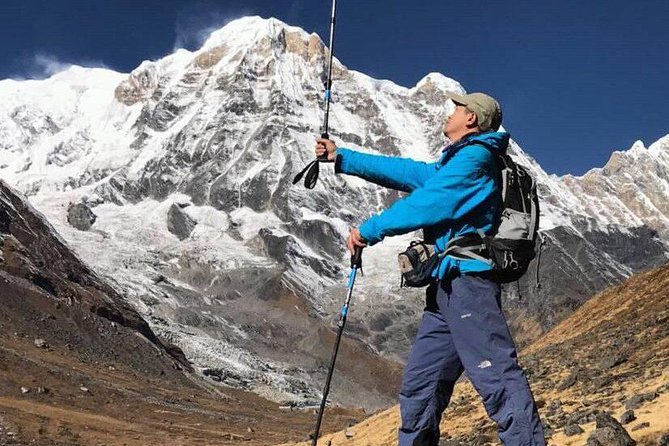
The trek portion is where the “why” clicks. You go from forest paths and stair-trail work into higher, thinner vegetation, until the Annapurna Sanctuary starts to feel like a world of its own.
Day 4: Pokhara to Ulleri via Naya Pul and the Ulleri Stairs
You drive from Pokhara to Naya Pul, the starting area. Then you begin walking through oak and rhododendron forest. This is where the trek starts to feel very Nepal: bridge crossings, boulders, steps, small villages—plus that classic rhododendron trail color that shows up as soon as you’re moving uphill at a steady pace.
The route mentions the Ulleri Stairs and time spent reaching Ulleri through Tikhedunga. When you arrive, it’s afternoon. That’s useful. You get some daylight hiking, but you’re not wiped out before dinner and sleep.
Day 5: Ghorepani and the big mountain framing
After breakfast you head toward Ghorepani, passing through Banthanti and Nangethanti. This day stays in forest terrain with oak and rhododendron. You stop for lunch in Nangethanti, and then continue to Ghorepani.
What you’re really chasing here is viewpoint access and mountain framing. Ghorepani is described as offering the perfect view of Dhaulagiri and the Annapurna ranges. Even if clouds decide to play games, it’s the kind of place where you’ll see enough to feel like you’re getting closer to the real center of the story.




Day 6: Poon Hill, then Tadapani
This is a highlight day. You start with Poon Hill, a famous viewpoint noted for rewarding panoramic views of Dhaulagiri, the Annapurna ranges, and nearby peaks. Even if sunrise conditions aren’t perfect, the structure of this day helps: you get a payoff early, before you continue to the next village stage.
After Poon Hill you trek to Tadapani, walking uphill and downhill through forest and rocky steps. It’s a useful training day for what’s ahead: you’re building stamina while still getting time in forests instead of only going straight up.
Day 7: Chhomrong, Gurung village life, and the Annapurna wall
You move after breakfast with a downhill trail first, then through rhododendron and oak forest. You arrive at Chhomrong in the afternoon.
Chhomrong is described as a beautiful Gurung village on the lap of the Annapurna massive. This is where the cultural side becomes practical, not just decorative. You’re sleeping in a village setting, eating full-board meals, and spending time in a place where trekking is part of life.
The views are also strong. You’ll see Annapurna South and Machhapuchhre. That pairing matters: Machhapuchhre (Fishtail) becomes one of the “signature shapes” you keep seeing again and again as you climb.
Day 8: Ghandruk, about 2500 steps, and bamboo cold
Today has a lot of footwork. The route notes around 2500 steps, plus a mix of down and up sections. You drop toward Chhomrong Khola, then climb up toward Khuldighar (at 2,380m) and onward to Sinuwa.
The description calls out steep trekking trails and a gorge, plus bamboo areas that can feel damp and cold. Then you continue uphill again through rhododendron forest to the Himalaya Hotel, where you get glacier views.
This is the day I’d call “plan-your-feelings.” If your legs are fine, you’ll feel powerful. If your knees are grumpy, you’ll still make it—but it will be step management, not hero moves.
Day 9: Annapurna Base Camp and the sanctuary feeling
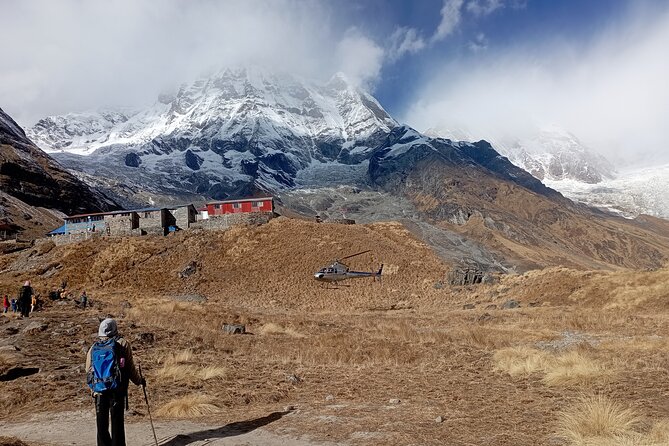
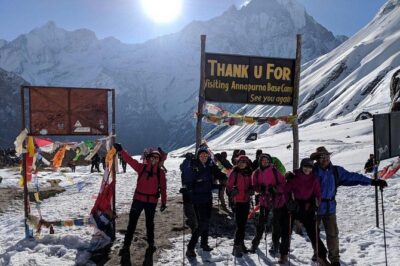
This is the mission day. The route climbs through Hinko Cave, Deurali, and the Machhapuchare Base Camp area. Vegetation thins as you go, and the trail becomes more about altitude, air, and view windows than dense forest.
You pass waterfalls and get valley views along the way. The description notes that about two hours after Machhapuchare Base Camp, you reach Annapurna Base Camp.
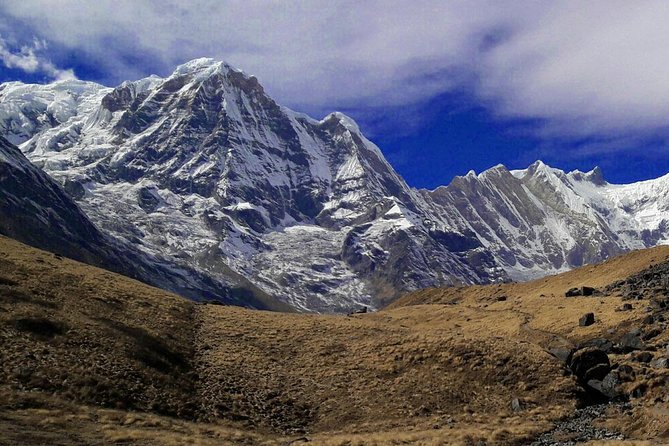
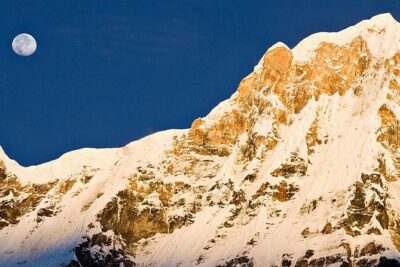
From the base camp area you can see Machhapuchhre, Annapurna South, Annapurna I, Annapurna III, Hiunchuli, Gandharvachuli, and Gangapurna. It’s a long list, but what matters for you is the mental switch: you stop “trekking through places” and start “being at the destination.”
Day 10: Retracing to Ghandruk, views still strong
Today is easier in comparison because it’s downhill. You retrace parts of the route back toward Ghandruk, passing Bamboo along the way.
Even though this is a retrace day, the scenery stays worth it because you’re watching the mountains from slightly different angles. Downhill days can trick you—your body moves faster than your mind thinks—so take breaks before you feel cooked.
Day 11: Bamboo to Chhomrong Khola and Jhinu Danda hot springs
You continue retracing: from Bamboo you go uphill to Chhomrong Khola, then take a downhill trekking trail to Jhinu Danda.
This is where your reward shows up. You get an opportunity to dip into a hot spring. After days of walking—especially with steep step sections—that warm water becomes more than a fun extra. It’s recovery.
Day 12: Back to Pokhara, with the Ghandruk museum stop
From Jhinu Danda you trek downhill back toward Ghandruk, then further down toward Kimche and Nayapul. The route specifically notes a museum visit in Ghandruk where you’ll learn about Gurung culture and tradition.
Then you head to Pokhara by jeep or bus. This is a nice transition day: you finish your trek effort in the morning/early afternoon, and by evening you’re back in the more relaxed city rhythm.
Day 13: Pokhara to Kathmandu and a farewell dinner
You drive from Pokhara to Kathmandu (about 6 hours). Scenery changes from lush forest to areas with less vegetation as you move back toward the city. You check into a hotel.
The evening includes a farewell dinner at a typical Nepali restaurant, with Nepali dance. This is a good way to close the loop: you’ve done the mountain, now you sit with the local performance culture that makes Nepal feel like Nepal.
Day 14: Airport drop
You finish with a private vehicle drop to the airport. You’re back at the meeting point in Kathmandu, so you’re not dealing with tricky last-minute travel links.
What’s included, and what that means for your time
This is priced for a package-style trek where a lot of the moving parts are handled for you. At $1,600 per person for about 14 days, the value comes from what’s bundled rather than just the trekking itself.
Here’s what you’re getting:
- Twin sharing accommodation in Kathmandu and Pokhara (breakfast plan)
- Twin sharing guesthouse lodging during the trek
- Airport pickup and hotel drop-offs with a private vehicle
- Tourist bus Kathmandu–Pokhara round-trip
- Guided Kathmandu Valley sightseeing
- Full board meals during trekking (breakfast, lunch, dinner) with tea/coffee
- A Nepal Government certified English-speaking local trekking guide
- ACAP permit and TIMS permit card
- Medical kit coverage and guide insurance (for the guide’s care and logistics)
- Farewell dinner
- A trip accomplishment certificate
- Mobile ticket
What this means for you in plain terms: fewer decisions, less admin. You can focus on walking, acclimatizing as you go, and taking in viewpoints without constantly worrying about paperwork.
Two items are worth respecting even though they’re not highlighted as “details”:
- Tipping is expected and is not included.
- Travel and rescue insurance isn’t included. So you should plan your own coverage for high-altitude trekking and evacuation risk.
The permits and permits’ real-world value
You’re trekking with ACAP permit and a TIMS permit card. That’s not just paperwork for a checkbox. It helps with proper authorization for trekking in the Annapurna region and supports the management system around the trail network.
Also, your guide being English-speaking and local-certified matters because the trail is not like a marked theme park path. You’ll want someone who knows how to read conditions, explain what you’re seeing, and keep things moving when weather or trail flow changes.
Physical reality: how to prepare without overthinking
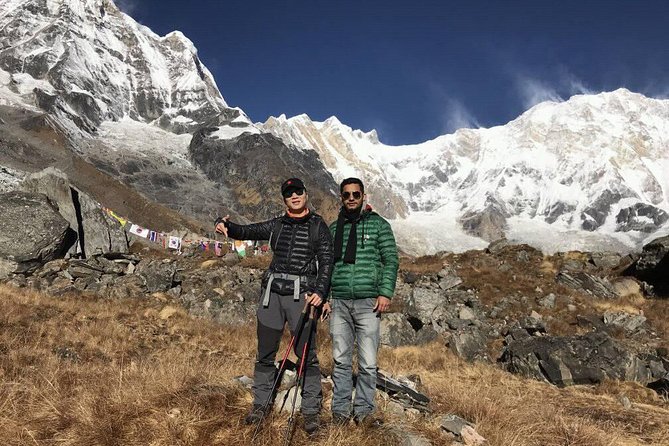
The trip is aimed at travelers with moderate physical fitness. That’s a good sign: it’s not pitched as a hardcore technical climb. Still, you’re doing a multi-day trek with steep moments, rocky steps, and altitude gain up to 4,130m.
The best preparation is simple:
- Train for steady walking and stair work before you go.
- Plan for days that feel like they have both downhill and uphill inside the same long stretch.
- Pack for cold at higher elevations and for damp bamboo sections when the trail drops into those colder forest zones.
If you have knee issues, start using trekking poles (if you already use them at home). And if altitude is a concern for you, take the trip’s guidance seriously: slow pace beats bravery.
Price and logistics: is $1,600 really fair?
$1,600 for a 14-day Annapurna Base Camp package is not cheap, but it’s not random either. You’re paying for:
- Multi-city transfers (Kathmandu ↔ Pokhara by tourist bus, plus airport and local private vehicle transfers)
- Kathmandu Valley guiding
- Permit coverage (ACAP + TIMS)
- Full-board meal support during the trek
- A local trekking guide and a medical kit element as part of the service
- Lodging handled as twin sharing for the whole program
Where the value can feel strongest is when you’d otherwise spend time and effort sorting permits, guide logistics, and meal plans. When those pieces are already organized, you lose less time. That matters on a trek, where small delays can become big fatigue.
Where you should be honest with yourself: this price is for the trekking package, not for your international flights, visa, or travel/rescue insurance. Those costs can add up, so check your full trip budget early.
Who this trek suits best
This Annapurna Base Camp trek is a great fit if you want:
- A classic route that mixes Poon Hill viewpoint time with the final Annapurna Base Camp destination
- A guided structure so you don’t manage everything day by day
- City-to-trek flow: Kathmandu culture, Pokhara recharge, then the mountain goal
It may not be ideal if you:
- Hate long days of walking with uneven terrain
- Need private single-room accommodations throughout (the package lists twin sharing)
- Are very sensitive to altitude and want a more flexible acclimatization approach (the route goes up to base camp, and you should plan carefully)
Should you book this Annapurna Base Camp trek?
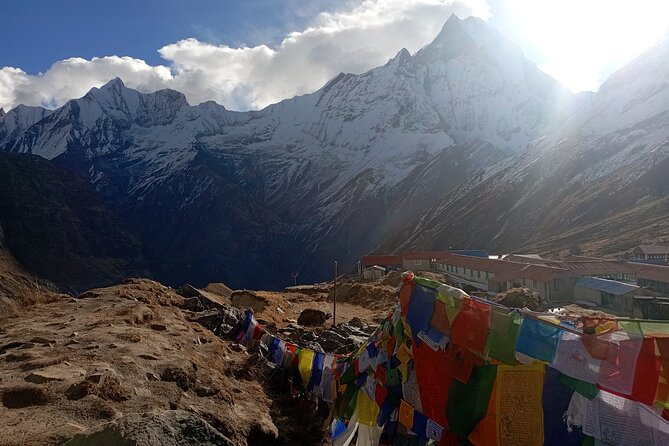
If you want the classic Annapurna story—forests, rhododendron color, Gurung villages, Poon Hill views, a hot-spring reward, and the big 4130m finish—this package looks like a solid way to do it without constant logistics headaches.
I’d book it if you’re ready for physical effort and you like a structured itinerary with meals and permits handled. I’d think twice if you’re on the fence about altitude or you’d rather self-manage the route, because this is private and guided, with twin sharing lodging and a set rhythm.
One last practical note: cancellation is listed as free up to 24 hours before the experience start time, which gives you some breathing room if your plans shift. Still, altitude timing is always the real constraint, so once you’re close to departure, don’t leave everything to the last minute.
If you want, tell me your hiking experience level and your travel month, and I’ll suggest how to pack for the cold bamboo sections and the base camp altitude.
FAQ
What is the duration of the Annapurna Base Camp trekking experience?
The duration is listed as 14 days (approx.).
Where does the experience start and end?
It starts at Tribhuvan International Airport area in Kathmandu and ends back at the same meeting point.
What is the price per person?
The price is $1,600.00 per person.
Is this a private trek or a group tour?
It’s listed as a private tour/activity, and only your group will participate.
What permits are included for the trek?
The package includes an ACAP Permit and a TIMS Permit card.
What accommodation type is provided during the trek and in cities?
You get twin sharing accommodation with a breakfast plan in Kathmandu and Pokhara, and twin sharing guesthouse accommodation during the trekking days.
How do you travel between Kathmandu and Pokhara?
You travel by tourist bus from Kathmandu to Pokhara and back to Kathmandu.
Are meals included while trekking?
Yes. The trip includes full board meals (breakfast, lunch, and dinner) during the trekking period, with tea/coffee.
Are tipping and travel insurance included?
No. Tips to your guide and porter are expected but not included, and travel and rescue insurance is not included.
What’s the highest point on the trek?
The final destination is Annapurna Base Camp at about 4,130m.
Can you cancel for a full refund?
Yes. Free cancellation is available if you cancel at least 24 hours in advance for a full refund.
More Trekking Out of Kathmandu






More Tour Reviews in Kathmandu




Just Reviewed in Kathmandu
- Mountain Bike Tour
★ 5.0 · 3 reviews - Annapurna Panaroma
★ 5.0 · 3 reviews - Mount Everest Scenic Flight 50 Minutes
★ 5.0 · 3 reviews - Kathmandu : Swambhunath & Durbar Square Guided Half Day Tour
★ 3.3 · 3 reviews - Chandragiri Cable Car & Monkey Temple Tour – Private/Group
★ 5.0 · 3 reviews - Kathmandu: Shivapuri National Park Hiking Day Trip
★ 3.3 · 3 reviews
Annapurna Base Camp Treks, compared.
 ★ 5.0Annapurna base camp trek 5 DaysFrom $699252 reviews
 ★ 5.014-Day Private Annapurna Base Camp TrekFrom $1,090180 reviews
 ★ 5.0Annapurna Base Camp TrekkingFrom $1,779116 reviews
 ★ 5.0Annapurna Base Camp TrekFrom $935111 reviews
★ 5.0Annapurna Base Camp TrekFrom $1,350107 reviews
 ★ 5.0Kathmandu to Annapurna Base Camp (ABC) 5-Day TrekFrom $99102 reviews
 ★ 5.0Annapurna Base Camp Trek- 11 DaysFrom $99990 reviews
 ★ 5.0Annapurna Base Camp Trek 12 DaysFrom $80085 reviews
Browse the lists this tour appears in